

Journalist

Kim Hee-su김희수
khs@ajupress.com
ReporterMinistry of Foreign Affairs, Seoul City Hall & Defense, Foreign Affairs
Kim Hee-su is a bilingual reporter at AJU Press, covering defense and foreign affairs. Before joining AJP in 2025, she worked at The Korea Times, where she wrote interview stories, including a profile of North Korean defector Kim Gum-hyok, and produced digital content. She also previously worked as a researcher for KBS News 9’s International News Department, supporting correspondents in 10 countries around the world. She graduated from the University of Toronto in Canada with a double major in Book and Media Studies and East Asian Studies.
"I'm driven by storytelling."
Latest by Kim Hee-su
-
 Seoul says defense chiefs' meeting in Philippines not yet confirmed SEOUL, October 14 (AJP) - A possible meeting between South Korean Defense Minister Kang Shin-chul and U.S. Defense Secretary Pete Hegseth later this month remains uncertain, as Washington has yet to confirm its attendance at a regional defense gathering, South Korea's defense ministry said Wednesday. An official from the ministry's spokesperson's office told AJP that Kang is expected to attend the ASEAN Defense Ministers' Meeting Plus (ADMM+) in the Philippines in late October, but Hegseth's attendance remains unclear. "We are going, but we don't yet know whether the U.S. side will attend," the official said. "For now, we are only discussing the possibility of meeting if they come," the official added, stressing that even the format of a potential meeting has not been decided. The clarification came after a report on Wednesday that the two defense chiefs were in discussions over a possible first face-to-face meeting on the sidelines of the ADMM+, scheduled for around Oct. 27–30. Kang told a media outlet earlier in the day that the two sides were discussing a possible meeting, although no specific arrangements had been announced. The potential talks come as Seoul and Washington remain divided over whether the conditions for transferring wartime operational control (OPCON) from the United States to South Korea have been met. Kang acknowledged that the two countries still have some differences in perspective over the conditions for the transfer, according to Yonhap. South Korea has sought to complete the full operational capability (FOC) verification process for its future combined command this year, a key step toward determining a target year for the OPCON transfer. The issue is expected to be discussed at the annual Security Consultative Meeting (SCM), which the two allies are considering holding in December, later than usual. The defense ministry has said the SCM schedule remains under discussion with Washington and that no specific date has been finalized. 2026-10-14 16:28:54
 -
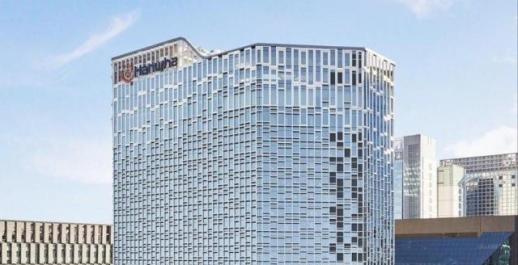 Hanwha expands independent board chairs across affiliates SEOUL, October 14 (AJP) - Hanwha Group is expanding the appointment of independent directors as board chairs across its major listed affiliates to strengthen corporate governance and protect shareholder interests, the company said Wednesday. Hanwha Corp. appointed independent director Kwon Ik-hwan as its new board chair Wednesday. Hanwha Solutions has had an independent director serving as board chair since 2024. Kwon, a former senior prosecutor who joined Hanwha Corp.'s board in 2022, has served on the company's internal transactions, audit and ESG committees. Hanwha Systems and Hanwha Ocean are also moving forward with similar appointments, with plans to complete the process in October and November, respectively. Hanwha Aerospace and Hanwha Engine aim to appoint independent board chairs in the first half of 2027, following adjustments to their board structures in response to changes in corporate law. Alongside the appointments, Hanwha plans to establish special advisory committees composed entirely of independent directors to review major decisions involving potential conflicts of interest among shareholders or significant public concern. The group will also establish dedicated board secretariats to support board operations and provide directors with information needed for independent decision-making. "These measures respond to public calls for a greater role for boards of directors and reflect our decision to place the highest priority on enhancing shareholder value," a Hanwha Group official said. "We will strengthen our competitiveness in global markets by advancing our corporate governance and continue to build investor confidence," the official added. 2026-10-14 10:37:37
 -
 A one-legged billboard takes aim at South Korea's political divide SEOUL, October 13 (AJP) - A country should be closing gaps in national security and properly compensating those injured in its service instead of trading blame, says an advertising director who decided to take matters into his own hands. For Yi Je-seok, that meant putting a wounded soldier on a billboard that could barely stand on its own. Yi, the founder of Jeski Social Campaign and an advertising director known professionally as Jeski, staged a guerrilla billboard campaign following last month's land mine explosions near the inter-Korean border. Dubbed the "One-Legged Billboard," the installation depicted a South Korean soldier with a severely injured leg, struggling to balance on a single supporting pole. Its message: "Land mines blow off ankles, while politics holds the nation back." The slogan uses Korean wordplay to connect soldiers' physical injuries with political obstruction. Another read: "National security is not a partisan issue." "At first, I thought about using it to mark mine-danger areas," Yi told AJP in a phone interview Tuesday. "But then it would just say, 'This place is dangerous,' and that would be the end of it. I wanted politicians to wake up. That's why I added the message about politics holding us back." Yi installed the temporary billboards on Oct. 10 and 11 in military border areas around Gimpo and Paju, as well as near the Ministry of National Defense in Seoul's Yongsan district. The campaign followed two land mine explosions on Sept. 21 inside the Demilitarized Zone (DMZ). Three South Korean service members were injured, two seriously, while clearing a route near the Military Demarcation Line ahead of a planned United Nations Command inspection. Yi said the political disputes that followed were overshadowing the safety of the people serving there. "We should be thinking about how to prevent gaps in our national security and how to compensate the people who were injured," he said. "But instead, everyone is busy insulting one another, arguing about who was right and who was wrong." The campaign video deliberately paired audio of politicians arguing during parliamentary proceedings with the image of a wounded soldier standing alone. His unstable posture was meant to convey both the physical consequences of a land mine explosion and a country struggling with its political divisions. "The left and right legs are out of sync. They're fighting each other, and the country can't even walk forward," Yi said. An uncomfortable image The soldier on the billboard was not a victim of the September explosions. Yi said the figure was created using artificial intelligence, and the original design was considerably more graphic. "I originally wanted to show a soldier standing there with one leg completely gone," he said. He reconsidered because he feared the depiction could be interpreted as demeaning people with disabilities. "We had to be very careful," he said. "If you get that kind of expression wrong, it could end up disparaging someone because of their physical condition." The final version showed a badly injured leg instead — a compromise that Yi acknowledged had weakened the image's impact. "We softened it little by little as we considered those concerns," he said. Even so, some online viewers questioned whether the advertisement made light of injured soldiers' suffering. Yi acknowledged those reactions but argued that the discomfort was part of what made the image difficult to ignore. "Of course it's uncomfortable to look at. It's not a pleasant scene," he said. "It's someone's injury. Someone's sacrifice." "When people hear that someone was injured, they don't necessarily grasp what that means unless they actually see it." He wanted viewers to confront the reality behind reports of military casualties. "People tend to forget things that are not directly in front of them," he said. "I wanted them to look at this incident again." Packed like picnic equipment Getting the billboards into place required another kind of creative exercise. Yi said his team erected them without prior authorization, filmed them and quickly dismantled them as security personnel approached. "This is what we call a guerrilla campaign," he said. "The security guards come after us, we run away, put something up and disappear." To transport the installation without attracting attention, the team divided it into several pieces. "We folded the pictures like portable screens and wrapped the poles in picnic mats," he said. "We disguised everything as picnic equipment." The brief installations were designed to leave behind footage even after the physical billboards were gone. "A lot of what we do is basically a protest performance," Yi said. "If someone came into your house to protest against you, would you welcome them?" It was far from his first campaign involving the peninsula's divisions. "North Korea is an issue I've been dealing with for a very long time," he said. "I've produced many works over the years concerning inter-Korean relations, national security and North Korean human rights." He recalled placing a poster depicting North Korean leader Kim Jong-un behind prison bars outside a North Korean embassy. "I'm the guy who went to a North Korean embassy and put up a poster saying Kim Jong-un belongs in prison," he said. "I got spotted and had to escape in a rental car." His work has also brought him into military institutions through the front door. According to his research institute, Yi was appointed the South Korean Army's first promotional commissioner in 2013 and delivered a lecture on creativity at the South Korea-U.S. Combined Forces Command in 2024. He gained international recognition in 2007 when his "Chimney Gun" advertisement won a Gold Pencil at The One Show advertising awards in the United States. The work turned a factory smokestack into the barrel of a handgun to highlight the dangers of air pollution. Yi said he would continue developing campaigns on North Korea and national security, though he declined to discuss upcoming projects. He acknowledged that his advertisements might not provide answers to the questions they raise. "I'm just the one blowing the whistle." 2026-10-13 17:43:44
 -
 Hanwha brings space-based solar power vision to film SEOUL, October 13 (AJP) - A new film project unveiled at the Busan International Film Festival's Asian Contents & Film Market will explore space-based solar power, with Hanwha Group joining as its first brand partner. The project will use space-based solar power as its main theme, with Hanwha seeking to present its vision for a sustainable future through cinematic storytelling rather than conventional corporate advertising. Hanwha said the films will be set in a future where space-based solar power is widely used, turning what may be an unfamiliar technology into stories that audiences can more easily relate to. The initiative also reflects Hanwha's efforts to reach a broader public. The group has traditionally focused heavily on business-to-business industries and said film could provide a more familiar way to communicate the values behind its technologies and businesses to audiences in South Korea and overseas. "The starting point of this project is to help audiences understand what Hanwha values and the kind of world we hope to create through our businesses and technologies," said Park Ji-young, vice president of Hanwha's Communication Committee. Cinema by Brand was jointly created by Innocean and ACFM to connect companies with filmmakers and develop independent film stories based on a brand's values and philosophy. Three projects have been selected: "Solar Poet" by Edmund Yeo, "Moonset" by Hong Eui-jeong and "The New Mission" by Lee Jin-ho. The films are expected to be produced in 2027 and released to audiences in South Korea and overseas. Hanwha said the selected works will focus not only on the technology itself but also on themes such as memory, emotion, life and the future, using space as the setting for each story. 2026-10-13 16:04:32
 -
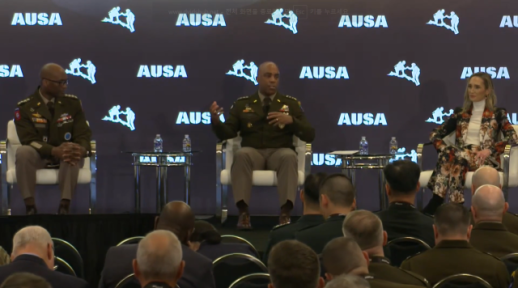 USFK chief calls for more dispersed drills across South Korea SEOUL, October 13 (AJP) - U.S. Forces Korea Commander Gen. Xavier Brunson has called for changes to large-scale South Korea-U.S. military exercises, saying the allies need more dispersed training across the Korean Peninsula as North Korea gains battlefield experience from the war in Ukraine. Speaking Monday at the Association of the United States Army's annual meeting in Washington, Brunson said the allies currently conduct two major command-post exercises each year but need to move beyond that model. “The two big exercises every year in Korea focus on large command posts,” Brunson said. “We've got to move away from that.” He suggested conducting exercises across a much wider area, from Jeju in the south to Gyeonggi Province in the north, rather than concentrating forces and command functions in fixed locations. Brunson linked the need for change to lessons from the war in Ukraine, where drones and other modern battlefield technologies have made fixed positions increasingly vulnerable. He said the allies should disperse their forces so they are harder to target, adding, “We won't be moored in place.” Brunson also pointed to North Korea's participation in the Ukraine war, saying one of his most pressing concerns is that North Korean forces are gaining real combat experience and applying lessons from the battlefield to their own military training and capabilities. He said the United States and South Korea should therefore find better ways to train between their two major annual exercises instead of focusing most preparations around those large events. USFK recently conducted a strategic exercise without troops in which personnel traveled by helicopter to examine how forces could move across South Korea during a crisis, Brunson said. His remarks point to possible changes in how the allies conduct their exercises, with geographically dispersed training potentially being added to the existing command-post exercise structure. Brunson also highlighted South Korea's defense industrial base while discussing USFK's concept for a regional sustainment hub, which is aimed at improving the ability of U.S. forces to maintain operations in the Indo-Pacific. South Korea has what Brunson described as world-class defense manufacturing capacity that could support that effort. The plan includes using South Korean companies for maintenance, repair and overhaul of U.S. military equipment while building a broader network of supply and repair capacity across the region. 2026-10-13 10:48:52
 -
 Can the Korea-U.S. alliance withstand a test of political trust? SEOUL, October 12 (AJP) - For all the assurances of an ironclad alliance and public displays of presidential rapport, South Korea-U.S. ties appear increasingly vulnerable to the whims of an American president who boasts about having a good relationship with North Korean leader Kim Jong-un. The U.S. military commitment remains intact, with about 28,500 troops stationed in South Korea. Seoul and Washington continue to coordinate on North Korea, share intelligence and maintain combined defense arrangements. But that operational continuity sits alongside growing political uncertainty as tariff pressure and demands for greater burden-sharing test the alliance under Trump's America First policy. North Korean missile launches on Monday illustrated how closely the allies still cooperate on immediate military threats. South Korea's Joint Chiefs of Staff said North Korea fired multiple ballistic missiles from the Pyongyang area toward the East Sea at around 9:20 a.m., with at least one type flying more than 900 kilometers. Seoul and Washington tracked the launches and shared information from the outset, while South Korea, the United States and Japan exchanged missile data. The harder question is how far that cooperation extends when Seoul needs Washington's support in managing disputes with Pyongyang. One test has been the recent controversy over North Korean military activity near the Military Demarcation Line, or MDL, and a land mine explosion inside the Demilitarized Zone that injured three South Korean officers. The case underscored South Korea's reliance on the United Nations Command. Under the armistice framework, the UNC retains a central role in overseeing compliance with the agreement, limiting Seoul's ability to handle some incidents entirely on its own. Yet that framework offers limited leverage if North Korea sees more advantage in testing the Lee Jae Myung government's response than in cooperating. “If I were in charge of North Korea's policy toward the South, I would not cooperate. I would keep probing the South over the Military Demarcation Line and see how it responds,” said Lim Sung-jae, a North Korea studies scholar. “If that creates internal conflict in the South and problems within the government, wouldn't that work to North Korea's advantage?” he added. Lim said small incidents around the MDL could persist because they impose relatively little cost on North Korea while allowing Pyongyang to test Seoul's military and political response. “There is not much the United Nations Command can actually do under its own banner in the current situation,” Lim said. “It can tell North Korea to comply with the Armistice or propose talks over the MDL, but North Korea can simply ignore it.” That limitation becomes more consequential as Washington takes a more transactional approach to its relationship with Seoul, he said. “Under President Trump, the alliance itself appears to be shifting from a security alliance toward a more transactional relationship based on interests,” Lim said. “From that standpoint, I don't think the United States is likely to step in very deeply on every Korean Peninsula issue.” Seoul is thus left with a difficult balance: managing a neighbor with an incentive to keep probing while relying on an ally whose willingness to engage in each dispute may depend on a narrower calculation of U.S. interests. The Lee administration has sought to draw a line between disagreements with Washington and the health of the alliance itself. Unification Minister Chung Dong-young said Monday that there was “absolutely nothing wrong” with the South Korea-U.S. alliance, while acknowledging that allies do not always have identical interests. “An alliance shares values, but interests can be aligned or conflicting,” Chung said, adding that other U.S. allies were also negotiating with Washington over security and trade while seeking to protect their national interests and autonomy. Intelligence cooperation has nevertheless become a point of friction. A senior U.S. administration official said last week that Washington expects South Korea to “uphold the standards of our decadeslong alliance,” particularly on intelligence and counterintelligence matters. The comments followed scrutiny of Chung's public mention earlier this year of a suspected North Korean uranium enrichment facility in Kusong. South Korea's National Intelligence Service also said it was excluded from a June meeting with the United States and Japan on North Korean cyber threats, raising questions about trilateral intelligence cooperation. Those concerns have added to a wider debate in Seoul over whether defense, intelligence, tariffs and industrial policy can still be handled as separate areas of the relationship. National Security Adviser Wi Sung-lac acknowledged the problem in February, saying U.S. tariff pressure was negatively affecting follow-up security consultations, including discussions on nuclear-powered submarines. A bilateral package included South Korea's pledge to invest $350 billion in the United States in exchange for reduced U.S. tariffs, alongside separate security commitments and follow-up negotiations on nuclear-powered submarines and nuclear fuel-cycle rights. “President Trump's transactional style and frequent linkage of economic and security issues have eroded trust in the U.S.-ROK relationship,” a joint report by the Asan Institute for Policy Studies and the Center for Strategic and International Studies said. The report said the alliance's core military structure remains in place: U.S. troops are still stationed in South Korea, joint exercises continue and Washington's extended deterrence commitments remain intact. But tariff negotiations, burden-sharing disputes and questions over U.S. troop deployments are making Seoul less certain about how firmly Washington will uphold those commitments. Asan Institute President Choi Kang and CSIS Korea Chair Victor Cha also noted that Washington's approach could give South Korea greater room to strengthen its own defense capabilities, even as it raises questions about the alliance's long-term reliability. For Seoul, the challenge is to turn that room into greater capacity to act while preserving the cooperation on which its security still depends. The military machinery remains in place, but the question is whether the political hands that guide it remain equally reliable. 2026-10-12 17:52:29
 -
 South Korea to tighten military service benefits for artists SEOUL, October 12 (AJP) - South Korea plans to tighten eligibility for alternative military service granted to artists, including raising the threshold for international competition winners from second place to first, the Military Manpower Administration said Monday. The agency unveiled the plan during a National Assembly audit, saying it would “strengthen the eligibility criteria in consideration of changes in South Korea’s national standing and fairness in military service.” Under the proposed changes, artists competing in designated international competitions would have to finish first to qualify for the benefit, instead of the current standard that allows second-place finishers to qualify. The government also plans to reduce the number of recipients from domestic traditional arts competitions by consolidating categories, cutting the number of eligible winners per competition from two or three to one. The MMA said 86.6 percent of arts personnel designated over the past five years qualified through competitions held in South Korea, and said it would review the list of recognized international competitions to focus on more prestigious events. “We will reorganize the competitions by taking into account their status, fairness of judging and competitiveness,” the agency said. “We will gather expert opinions and consult relevant ministries to establish reasonable criteria,” it added. The move comes amid broader scrutiny of South Korea’s arts and sports personnel system, which allows eligible artists and athletes to fulfill their military obligation through alternative service rather than standard active-duty service. The MMA also said it would revise eligibility standards for athletes following controversy over remarks and actions by some South Korean players at the 2026 Aichi-Nagoya Asian Games. The agency said it would “revise the eligibility criteria in consideration of social acceptance” and explore ways for arts and sports personnel to make greater public contributions by using their professional skills during their service period. The MMA plans to revise the rules by December, with a related policy study due in mid-November. It also plans tighter oversight of social service personnel, including stronger penalties for violations and an electronic attendance system. 2026-10-12 16:30:58
 -
 North Korea fires multiple ballistic missiles: JCS SEOUL, October 12 (AJP) - North Korea fired multiple ballistic missiles from the Pyongyang area toward the East Sea on Monday morning, with at least one type traveling more than 900 kilometers, South Korea’s military said. The Joint Chiefs of Staff said it detected the launches from around 9:20 a.m. and that South Korean and U.S. intelligence authorities were conducting a detailed analysis of the missiles’ specifications. “At around 9:20 a.m. today, our military detected multiple ballistic missiles launched from the Pyongyang area toward the East Sea,” a JCS official said. “The detected missiles flew more than 900 kilometers, and South Korea and the United States are closely analyzing their exact specifications.” “We need a more detailed analysis,” the JCS official said when asked whether the missiles could be hypersonic or intermediate-range weapons. South Korea’s military said it has strengthened surveillance and readiness for possible additional launches, while South Korea, the United States and Japan are closely sharing information on the North Korean missiles. The military is also examining the possibility that Monday’s launches were intended partly as a show of force following South Korea’s successful test of a domestically developed hypersonic missile on Oct. 8. The JCS said its preliminary assessment included the possibility that Pyongyang was responding to the South Korean test while also seeking to demonstrate progress in its own missile capabilities under its five-year defense development plan. It stressed that further analysis was underway. President Lee Jae Myung oversaw South Korea’s first publicly disclosed test of its domestically developed hypersonic missile last week, four days before Monday’s North Korean launches. Monday’s launches also came nine days after North Korea fired a ballistic missile from the Wonsan area toward the East Sea on Oct. 3. The latest launches come amid heightened military tensions on the Korean Peninsula following a series of missile tests by both Koreas and a recent land mine explosion inside the Demilitarized Zone that injured three South Korean officers. 2026-10-12 11:47:22
 -
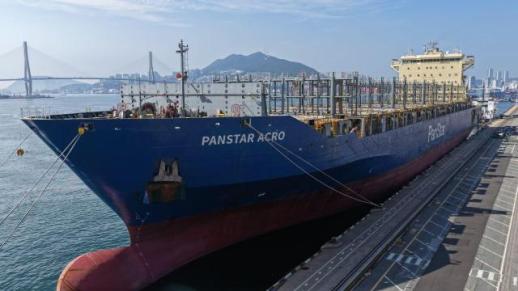 Korea maps Artic shipping route but commercial viability in question SEOUL, October 12 (AJP) - South Korea’s first container ship to complete an Arctic round trip returned safely to Busan on Sunday, but failed to fill the empty containers, highlighting the commercial challenge behind the shipping milestone. The PanStar Acro returned home after a 50-day voyage between Asia and Europe via the Northern Sea Route without a major incident. But its failure to secure import cargo underscored the difficulty of turning a successful trial into a viable regular service. The vessel carried only 1,743 twenty-foot equivalent units, or TEUs, of empty containers on its return leg, according to Ministry of Oceans and Fisheries data obtained through the office of People Power Party lawmaker Kang Seung-gyu on Oct. 11. The containers were booked for transport by six domestic companies. It had departed Busan New Port on Aug. 22 with 737 TEUs of export cargo, including chemicals, used vehicles and auto parts, alongside 202 TEUs of empty containers — a total of 939 TEUs. The ministry had initially said the return shipment would include about 1,300 TEUs of empty containers as well as import cargo. The ship ultimately secured no import cargo and returned with a larger load of empty containers. The shortfall has also raised questions over the cargo transport incentive available to the participating shipping company. The Korea Shipowners’ Association set aside a basic voyage subsidy of 3 billion won and a separate cargo incentive of up to 1 billion won to ease the operator’s financial burden. Under the incentive structure, combined round-trip container cargo volumes of at least 1,000 TEUs but below 2,000 TEUs qualify for 500 million won. Volumes of 2,000 TEUs or more qualify for 1 billion won. The ship carried 737 TEUs of loaded export cargo and no loaded import cargo. Whether the empty containers count toward the incentive thresholds will therefore be critical to determining the payout. The voyage nevertheless marked an operational milestone for South Korea’s Arctic shipping ambitions. The 2,758-TEU PanStar Acro entered Arctic waters on Aug. 31 and sailed through the Chukchi, East Siberian, Laptev, Kara and Barents seas. It called at Felixstowe in Britain on Sept. 12 and Rotterdam in the Netherlands the following day, before reaching Gdansk in Poland on Sept. 18. It then returned through the Arctic to Busan, arriving six days later than its originally scheduled Oct. 5 return. The Northern Sea Route runs along Russia’s Arctic coast and offers a shorter connection between Asia and Europe than conventional shipping routes farther south. Retreating sea ice has encouraged interest in its commercial potential. South Korean vessels have previously sailed through Arctic waters. In 2013, a Hyundai Glovis-chartered vessel transported naphtha from Russia’s Ust-Luga port to Gwangyang, and another Korean vessel used the route in 2016. The latest voyage was the first round trip through the Arctic by a South Korean container ship, providing operational data as the government works toward launching a regular service in 2030. The ministry plans to examine sailing distance, transit time, operating costs and fuel consumption to assess the route’s economic feasibility. The cargo shortfall adds another consideration: whether operators can secure sufficient freight in both directions. The government also plans to gradually deploy larger container ships, aiming to achieve economies of scale by around 2035. The initiative forms part of a broader effort to develop Busan into a major maritime hub and strengthen the southern coastal economy. The port lies near the Asian gateway to the Northern Sea Route and could serve as a logistics hub if Arctic shipping expands. A ceremony welcoming the PanStar Acro is scheduled at Busan Port on Tuesday. 2026-10-12 10:04:12
 -
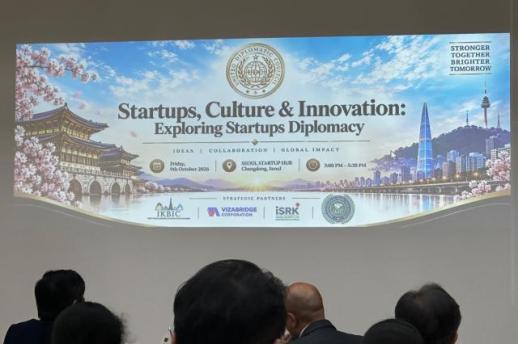 IKBIC forum seeks stronger India-Korea startup, business ties SEOUL, October 11 (AJP) - An India-Korea business forum in Seoul brought together diplomats, business leaders and startup representatives from more than 10 countries to discuss investment, market access and cross-border cooperation. The India-Korea Business and Innovation Corridor, or IKBIC, hosted the event on Oct. 9 at Seoul Startup Hub Changdong with several partner organizations, including Indian Students and Researchers in Korea and the Indian Economic Trade Organization. “The future of India-Korea collaboration will depend on trust, strategic partnerships and the effective mobilization of resources,” said Baig, managing director of IKBIC. He added that IKBIC aims to support Korean startups and businesses entering India while helping Indian companies establish and expand their presence in South Korea. “India and South Korea have complementary strengths that can create new opportunities for innovation, investment and industrial cooperation,” said Bonhi Gu, former commissioner of Invest Seoul and senior adviser to IKBIC. Gu pointed to India’s young talent pool and growing digital infrastructure, alongside South Korea’s strengths in semiconductors, manufacturing and other high-tech sectors. “The Government of India and the Embassy are happy to extend the necessary support within our mandate,” said Razeem K., first secretary for commerce and investment at the Indian Embassy in Seoul, highlighting the importance of platforms that help businesses navigate practical market-entry challenges. A key outcome of the forum was the signing of memoranda of understanding between IKBIC and the Korea Trade Consultant Association, and between IKBIC and the Indian Economic Trade Organization. The agreements aim to strengthen institutional cooperation and improve market access and business connections between India and South Korea. “Collaboration should not be limited to India and South Korea, but should also extend to Africa,” said Sierra Leone Ambassador Paul S. Massaquoi, calling for broader economic engagement and investment. IKBIC said it plans to continue supporting startups and companies seeking to enter both markets while expanding cooperation with trade organizations, diplomatic missions and international business networks. 2026-10-11 09:50:50