

Journalist

Kim Hee-su김희수
khs@ajupress.com
ReporterMinistry of Foreign Affairs, Seoul City Hall & Defense, Foreign Affairs
Kim Hee-su is a bilingual reporter at AJU Press, covering defense and foreign affairs. Before joining AJP in 2025, she worked at The Korea Times, where she wrote interview stories, including a profile of North Korean defector Kim Gum-hyok, and produced digital content. She also previously worked as a researcher for KBS News 9’s International News Department, supporting correspondents in 10 countries around the world. She graduated from the University of Toronto in Canada with a double major in Book and Media Studies and East Asian Studies.
"I'm driven by storytelling."
Latest by Kim Hee-su
-
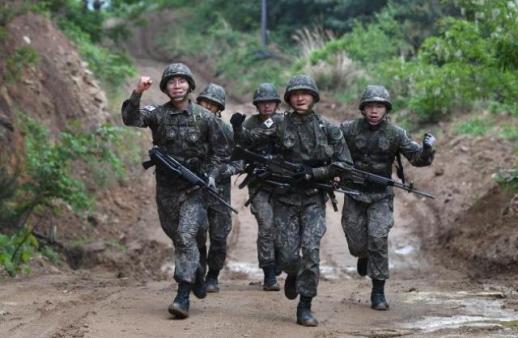 South Korea rethinks military privileges as medals collide with fairness SEOUL, October 08 (AJP) - Military service has long been one of South Korea’s most unforgiving tests of fairness, with disputes over who serves and who does not capable of ending public careers. Now the government is revisiting a decades-old system that allows selected athletes and artists to pursue their careers instead of entering regular military service, as a shrinking recruitment pool adds urgency to longstanding questions over privilege. Defense Minister Kang Shin-chul told a parliamentary audit Wednesday that the ministry’s goal was to gradually reduce the benefits and ultimately abolish them. Culture Minister Choi Hwi-young said his ministry would consult the sports and arts communities before discussing comprehensive reforms with defense and conscription authorities. The latest reckoning followed South Korea’s men’s football gold at the Aichi-Nagoya Asian Games, which made most of the squad eligible for alternative service. Celebrations quickly gave way to criticism after several players openly emphasized the military benefit. Yang Min-hyeok said he had played with the exemption in mind, captain Lee Gi-hyuk remarked that he would not have to serve, and Park Seung-soo posted a locker-room photograph wearing a cap associated with military discharge. Their reactions revived a question that extends well beyond football. How much should sporting or artistic achievement count against an obligation borne by other young men? Commonly described as an exemption, the benefit is formally a route to alternative service. Selected athletes and artists continue working in their fields for 34 months and must complete military training and 544 hours of community service using their skills. They are excused from regular military service, rather than all service obligations. Former competitive shooter Kim Ji-young, 29, said the system deserved reconsideration but cautioned against treating abolition as the only answer. “In the past, achieving strong results at international competitions carried significant meaning in terms of promoting the country, but with military manpower declining and public concern over fairness growing, it is time to reconsider the purpose and criteria of the system.” The emergence of globally influential popular culture has further complicated the justification. “With popular culture artists such as BTS also raising Korea’s global profile, we need to discuss how far the concept of promoting national prestige should extend,” Kim said. “The athletes’ achievements should absolutely be respected. But military service benefits are a separate issue from rewarding individual achievement,” he added. “Rather than simply abolishing the system, we could consider gradually narrowing eligibility or applying stricter criteria.” Introduced in 1973, the program groups athletes and artists under the same service category, although their paths to eligibility differ considerably. Athletes generally qualify by winning an Olympic medal or an Asian Games gold. Artists can qualify through high placements in designated music and dance competitions, including certain domestic events and international contests held in South Korea. A separate route covers practitioners trained in designated intangible cultural heritage. Those differences have produced distinct arguments over fairness. In sports, the debate centers on which achievements warrant the benefit. In the arts, it also concerns access to qualifying competitions and confidence in their judging. Government figures disclosed during an October 2025 parliamentary audit showed that 76 of the 86 artists who qualified between 2021 and July 2025 did so through competitions held in South Korea. Only 10 qualified through events overseas. Three Korea-based international dance competitions accounted for 22 successful applicants. At the Korea International Modern Dance Competition, Korean nationals represented an average of 84 percent of participants, while their share of prize winners exceeded 70 percent each year. The figures raised questions about how broadly international some qualifying events were. Earlier disputes had already exposed the difficulty of scrutinizing results issued abroad. At Germany’s 2014 Tanzolymp dance competition, three Korean men were named joint winners in a category for which only two could receive the service benefit. The outcome prompted disputes over competition categories and judging, followed by administrative decisions and litigation over eligibility. The competition was subsequently removed from the list of qualifying events. The episode illustrated the complications that arise when an artistic judgment by an overseas organizer determines a legal entitlement in South Korea. For artists outside the eligible fields, the more fundamental question is why certain forms of achievement receive recognition while others do not. Video director Kim Min-gyu, 45, said the program’s narrow definition of artistic achievement left practitioners in film, photography and popular music with few comparable opportunities. “The arts are an extremely broad field. Classical musicians can qualify through certain competitions, but when have you seen someone in popular music receive the same benefit?” he said. “For younger artists and university students, it can be frustrating when everyone is grouped together as working in the arts, but only certain fields receive the benefit.” Kim questioned whether outright abolition could weaken an incentive for international achievement, while arguing that unequal access across disciplines had undermined the system’s credibility. Opinion is also divided within sports. Taekwondo instructor Choi Min-su, 25, who previously performed with a demonstration team, favors retaining the benefit for Olympic medalists while removing the Asian Games provision. “I think an Olympic medal could still justify it because you are competing at the global level,” Choi said. “For an athlete, going into the military at the time when they are in their best form can have a major impact on their career.” He saw less justification for extending the same benefit to an Asian Games gold medal, suggesting stronger financial or pension rewards instead. “For the Asian Games, I think the military benefit could be abolished,” he said. Former shooter Kim said recipients also had a responsibility to recognize how their relief at avoiding regular service might sound to those without that option. “Those who receive military benefits need to think carefully about how their words and actions may be perceived by the public,” he said, calling for sports education to emphasize social responsibility alongside performance. The government has yet to agree on a timetable or replacement framework. Kang’s remarks nevertheless point toward a more fundamental reconsideration than another adjustment to qualifying competitions. At issue is whether a system created to reward national prestige can retain public support when the definition of that prestige has broadened and the number of young men available to serve has narrowed. This article was contributed to by AJP reporter Joonha Yoo. 2026-10-08 17:40:36
 -
 Hyundai Rotem eyes Egypt hydrogen tram project SEOUL, October 08 (AJP) - Hyundai Rotem has signed a memorandum of understanding with Egypt’s National Authority for Tunnels, or NAT, to explore supplying hydrogen-electric trams for Egypt’s new administrative city east of Cairo, the company said Thursday. The agreement was signed Wednesday during a Korea-Egypt business roundtable in Seoul attended by Egyptian Transport Minister Kamel al-Wazir, South Korean Industry Minister Kim Jung-kwan, South Korean Ambassador to Egypt Kim Wan-jung and Hyundai Rotem CEO Lee Yong-bae. Under the MOU, Hyundai Rotem and NAT will continue discussions on introducing hydrogen-electric trams to Egypt’s new capital. The project is currently undergoing a preliminary feasibility study. If it moves forward, Hyundai Rotem plans to provide an integrated package covering rolling stock, operations, railway systems and maintenance. Egypt’s New Administrative Capital is being built about 35 kilometers east of Cairo and is designed to accommodate more than 6 million residents once completed. Authorities are considering a hydrogen tram line stretching about 28 kilometers and the introduction of 44 trainsets, according to Hyundai Rotem. The agreement could mark Hyundai Rotem’s first overseas deployment of its hydrogen-electric tram if the project is finalized. The company said it also expects the project to create opportunities for Korean suppliers involved in vehicle production as well as companies providing hydrogen production and refueling infrastructure. Hydrogen-electric trams generate electricity through onboard hydrogen fuel cells and do not require overhead power lines. Hyundai Rotem said the vehicles emit only water during operation and can also filter fine dust from incoming air. The company said it plans to combine its hydrogen tram technology with hydrogen-related solutions from HTWO, Hyundai Motor Group’s hydrogen business brand and platform, as it seeks more opportunities in overseas markets. “Egypt’s New Administrative Capital is a representative future-city project where new rail mobility such as hydrogen-electric trams can be introduced,” a Hyundai Rotem official said. “We will work closely with NAT to develop a hydrogen tram business model optimized for local operations and continue cooperation until the project is finalized.” 2026-10-08 14:50:31
 -
 Hanwha joins Korea's reusable rocket push SEOUL, October 08 (AJP) - Hanwha Aerospace has been selected as the system integrator for South Korea’s next-generation reusable launch vehicle, but its detailed responsibilities have yet to be finalized, a company official told AJP Thursday. South Korea aims to develop the reusable rocket by 2032 as a separate project from its existing Nuri launch vehicle program. “We have been selected as the system integrator for the reusable launch vehicle, but which company is responsible for which specific components is yet to be decided,” the Hanwha Aerospace official said. The official stressed that Nuri’s upcoming sixth and seventh launches and the next-generation launch vehicle are separate projects, cautioning against assuming that Hanwha’s expanding role in Nuri would translate directly into the same division of work for the new rocket. South Korea plans to invest about $1.7 billion in the next-generation launch vehicle program through 2032. The Korea AeroSpace Administration, or KASA, revised the program late last year to develop a methane-powered reusable rocket, replacing an earlier expendable design. The new rocket will have nine 80-ton-class methane engines on its first stage and one 80-ton-class engine on its upper stage. The first stage is designed to return to Earth for reuse, while the upper-stage engine will be able to shut down and restart in space to deliver satellites to different orbits. KASA said the project aims to establish a low-cost, high-frequency launch capability and develop South Korea’s main space transportation system for the 2030s. Flight testing is scheduled to begin in 2031, ahead of two lunar missions planned for 2032. 2026-10-08 10:29:00
 -
 Hanwha moves toward driver's seat as Nuri completes fifth launch SEOUL, October 07 (AJP) - South Korea’s fifth Nuri rocket lifted off on schedule and delivered its five main satellites into orbit, with Hanwha Aerospace quietly taking a growing share of the credit as the space program moves toward private-sector leadership. Nuri lifted off from the Naro Space Center in Goheung at 12:25 p.m. Wednesday and successfully placed all five main microsatellites into orbit. Nine of the 10 smaller CubeSats aboard were also released, while one failed to deploy. The Korea AeroSpace Administration, or KASA, declared the launch a success, saying the rocket completed its planned flight despite the deployment failure. The achievement did little to lift Hanwha Aerospace shares, which closed at 983,000 won, down 3.91 percent, or 40,000 won, from the previous session. What exactly did Hanwha do? Nuri was developed primarily by the state-run Korea Aerospace Research Institute, or KARI, over more than a decade. Hanwha initially participated by manufacturing and assembling key components, including the rocket’s engines. Nuri uses six liquid-fueled engines: four 75-ton-class engines on the first stage, one 75-ton engine on the second and a smaller 7-ton engine on the third. Hanwha’s responsibilities have since expanded well beyond individual components. Selected as the system integrator for the Nuri advancement program, the company is increasingly responsible for bringing together the engines, structures, electronic systems and work of hundreds of suppliers into a functioning launch vehicle. For the fifth Nuri rocket, Hanwha oversaw overall production, final assembly and supplier quality control. KARI continued to supervise the program and lead launch operations. From the factory to the control room The most visible change during the fifth launch was inside the control room. A total of 42 Hanwha employees participated in launch operations, 10 more than during Nuri’s fourth flight. Hanwha personnel worked at 20 of the launch control center’s 22 consoles, with 18 employees directly operating equipment used to prepare, test and launch the rocket. KARI researchers had handled most of those tasks during earlier launches. The aim is to enable private companies to provide launch services, gradually reducing dependence on the government research institute. KARI describes the repeated Nuri launches as serving two purposes: improving the rocket’s reliability and transferring launch technology to private industry. The fifth flight also presented a more complicated task. Nuri carried five main microsatellites requiring separate releases into orbit, alongside 10 CubeSats. The satellite section weighed about 1,071 kilograms, up from about 960 kilograms on the fourth launch. To protect the satellites during deployment, KARI introduced a new low-shock separation device — the mechanism that secures a satellite during launch and releases it in space. The previous system produced a separation shock of around 2,000 g on the shock-response scale. The new device was designed to halve that to about 1,000 g, according to KARI officials. The five main satellites were released individually at intervals of about 35 to 40 seconds. Between releases, the rocket’s upper stage changed orientation to reduce the risk of collisions. Developed under the KARI-led program, the separation system illustrates the division of responsibilities during the transition. As system integrator, Hanwha is increasingly tasked with incorporating such changes into the rocket it manufactures and assembles. Moving into the driver’s seat Hanwha’s role is expected to expand further with Nuri’s sixth launch. Under KARI’s plan, the rocket stages will be assembled at the system integrator’s own facility, then transported by sea to the Naro Space Center for final assembly. Hanwha is also expected to operate nearly all the launch-control consoles covered by the technology-transfer program. The handover is advancing one launch at a time. Hanwha began by building engines and components, moved on to integrating the rocket and is now taking on more of the work required to launch it. KARI still leads the countdown. With each flight, Hanwha is moving closer to taking the controls. 2026-10-07 18:04:22
 -
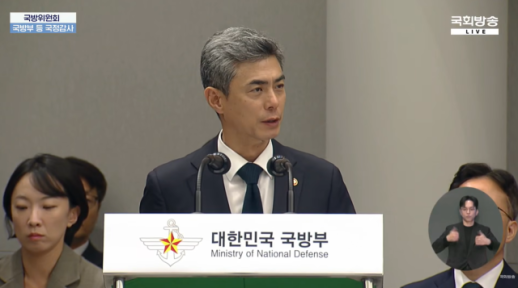 South Korea defense chief wants to scrap military exemption program SEOUL, October 07 (AJP) - South Korea’s defense minister said Wednesday the country should gradually scale back and ultimately abolish special military service arrangements for elite athletes and artists amid controversy fueling debate over fairness in the conscription system following the Asian Games. “Gradually reducing it and ultimately abolishing it is the Defense Ministry’s goal,” Defense Minister Kang Shin-chul said during the National Assembly’s annual audit of the ministry in Seoul. His remarks went a step further than the ministry’s position a day earlier, when it said it was considering reducing or abolishing supplementary service programs for artists and athletes as part of broader defense reforms. The debate resurfaced after South Korea’s men’s football team secured a fourth consecutive Asian Games gold medal by beating host Japan 1-0 at the 2026 Aichi-Nagoya Games on Saturday, making 20 of the 23 players eligible for alternative military service. Several players subsequently drew criticism for remarks or social media posts emphasizing the military-service benefit. Yang Min-hyeok said after the final that the medal or championship itself had not been his main concern and that he had played with the military-service exemption in mind. Captain Lee Gi-hyuk held up his gold medal and said, “I’m not going to the military,” while Park Seung-soo posted a locker-room photo of himself wearing a military discharge-style cap. The players later apologized amid public criticism. Kang expressed regret over the controversy, saying military duty should be treated with respect given the sacrifices of service members and reservists. Instead of active-duty service, eligible athletes and artists undergo basic military training and serve in their respective fields as arts and sports personnel for 34 months, while completing 544 hours of public service. Active-duty service, by comparison, lasts 18 months in the Army and Marine Corps, 20 months in the Navy and 21 months in the Air Force. The ministry has cited fairness among those subject to conscription, South Korea’s shrinking pool of military-age personnel and public opinion as factors behind its review of the system. The issue was among several defense priorities raised during Wednesday’s audit, which also focused heavily on the recent land mine explosion inside the Demilitarized Zone. Kang said North Korea appeared to have been “considerably rattled” by Seoul’s response after Pyongyang rejected South Korea’s conclusion that North Korean mines caused the Sept. 21 blast. He pointed to the fact that Pyongyang waited about a day after Seoul announced the results of its investigation and conducted a mine-clearing operation before issuing a response. Kang also said Seoul was paying attention to the fact that the statement came from North Korea’s Foreign Ministry. North Korea on Tuesday accused Seoul of staging the incident and warned of an “immediate and powerful counteraction” if South Korean forces intrude even “a millimeter” into territory claimed by Pyongyang. South Korea’s military concluded this week that antipersonnel mines deliberately planted by North Korean troops south of the Military Demarcation Line caused the explosion, which injured three South Korean officers, two of them seriously. The Defense Ministry told lawmakers Wednesday that it plans to conduct joint investigations with the United Nations Command into North Korean incursions across the MDL, formally identify Armistice Agreement violations and demand that Pyongyang halt such activity and restore affected areas. The ministry also reiterated plans to seek inter-Korean military talks aimed at preventing accidental clashes, reconciling differing understandings of the MDL and restoring military communication channels. 2026-10-07 13:08:27
 -
 Hanwha's AI energy system named Fast Company tech pick SEOUL, October 07 (AJP) - Hanwha’s AI-based energy management system has been named to Fast Company’s 2026 “Next Big Things in Tech” list in the Applied AI category, the company said Tuesday. Energy Fluo™, developed by TransGrid Energy, a subsidiary of Hanwha FutureProof, uses artificial intelligence to monitor power infrastructure, energy storage systems, cooling equipment and IT systems in real time and help operators optimize energy use. According to Hanwha, the system can reduce electricity operating costs by between 5 percent and 25 percent depending on site conditions. Rather than simply recommending ways to cut power consumption, Energy Fluo integrates power generation, battery storage, cooling systems and other infrastructure into a single platform, allowing operators to manage electricity production, storage and consumption across an entire facility. “Data center power grids have become too complex to manage through fragmented, individual systems,” said Park Young-chun, CEO of TransGrid Energy. “Energy Fluo helps operators flexibly allocate more power to data center equipment within available capacity while enabling integrated management of the entire facility,” he said. Fast Company selects its annual Next Big Things in Tech list across 31 categories, recognizing technologies it sees as having the potential to drive innovation and shape the future. Companies named to last year’s list included Google, Volvo and Samsung Electronics, according to Hanwha. 2026-10-07 10:44:51
 -
 DMZ mine case exposes gaps in how Korea's military boundary is mapped SEOUL, October 06 (AJP) - The Military Demarcation Line has bisected the Korean Peninsula since 1953. More than seven decades later, South Korea, the United Nations Command and North Korea are realizing they may not be using exactly the same references to locate it on the ground. For Seoul, the rude awakening came after South Korea and the UNC concluded that North Korean mines planted about 10 meters south of the MDL caused last month’s explosions that injured three South Korean soldiers. GPS measurements placed both blast sites and another North Korean resin-bodied antipersonnel mine discovered nearby south of the line, according to the South Korean military. Investigators concluded that the mines had been deliberately buried in violation of the Korean Armistice Agreement. The boundary itself has not changed. The maps, coordinates and surviving markers used to identify it, however, do not always align. “The MDL applied by our military has not changed,” a Joint Chiefs of Staff official said, while acknowledging differences in how the line is located on the ground. Some surviving markers sit slightly north or south of the boundary shown on modern military maps, officials said. South Korea’s military also cannot establish precisely which reference North Korea uses. The problem traces back to the Korean Armistice Agreement signed on July 27, 1953. The agreement fixed the MDL on an attached military map, roughly following the final line of contact between opposing forces. Both sides were required to withdraw 2 kilometers, creating the approximately 4-kilometer-wide Demilitarized Zone. A total of 1,292 signs were installed to mark the boundary under the supervision of the Military Armistice Commission. Only about 200 remain identifiable after decades of weather, vegetation growth and terrain changes, according to South Korea’s military. Locating the boundary now requires translating references from 1950s maps and physical markers into modern digital coordinates. South Korea uses an MDL represented on military maps established with the U.S. National Geospatial-Intelligence Agency in 2004. The UNC generated a separate set of coordinates through its “MDL Project” in 2016. The two references are close but do not overlap perfectly everywhere. South Korean officials believe North Korea may rely on surviving markers and other reference points for its own operational understanding of the boundary. The Defense Ministry described the issue Tuesday as “complex,” saying military operations must account for the South Korean and UNC references as well as Pyongyang’s possible interpretation. The risks have grown as North Korea expands fencing, minefields, roads and other fortifications near the line. North Korean troops crossed south of the MDL more than 50 times this year while conducting border work, compared with nine cases in 2024 and 17 last year, according to the JCS. South Korean troops have repeatedly responded with warnings and warning shots. Seoul proposed inter-Korean military talks in November 2025 to clarify the boundary amid concerns that differing interpretations could trigger an accidental clash. Pyongyang did not respond. South Korea and the UNC have also been working through a joint task force to reconcile their references, the ministry said. The UNC’s role stems from the armistice itself. South Korea was not a signatory: the UNC commander-in-chief signed on the allied side, while the Korean People’s Army and Chinese People’s Volunteers signed on the other. The command consequently remains closely involved in armistice matters inside the DMZ, including the MDL. Its formal authority, however, does not guarantee North Korean cooperation. Reaching a common understanding would require more than replacing missing signs, said Im Seong-jae, a visiting researcher at Dongguk University’s Institute for North Korean Studies. The parties would need to agree on how the original boundary translates into modern coordinates and applies on the ground. “North Korea is unlikely to respond to a proposal to sit down and redraw or resurvey the MDL,” Im said. Without agreement, differing perceptions could continue to create risks inside the DMZ, he added. For Seoul, the immediate options include removing North Korean mines confirmed south of the line, warning against further violations and monitoring activity near the boundary. Resolving the underlying discrepancy would ultimately require Pyongyang to join talks. The task is to establish a shared reference for an existing boundary. Until the parties agree on where it runs, a difference of only a few meters can carry military consequences. 2026-10-06 17:56:05
 -
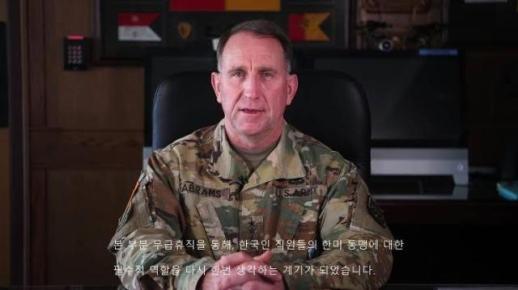 Former USFK commander warns against timeline-based OPCON transfer SEOUL, October 06 (AJP) - A former commander of U.S. Forces Korea warned that transferring wartime operational control from Washington to Seoul according to a fixed timetable could increase military risks if key conditions are not fully met. Retired Gen. Robert Abrams, who led USFK from November 2018 to July 2021, said on a Center for Strategic and International Studies podcast Monday that the existing conditions-based transition plan was designed to strengthen both the allies’ combined defense posture and deterrence against North Korea. “From my perspective and experience, I think there's a lot of risk that hasn't been properly been explained to everyone about hastening this (OPCON transfer) and putting it on a timeline,” Abrams said. “Time-based fundamentally just increases risk and the risk is because there's still going to be operational shortfalls on the ROK military side,” he added, referring to South Korea by the acronym of its official name, the Republic of Korea. Abrams said the conditions-based approach was intended to ensure South Korea has the capabilities needed to lead the combined defense, warning that moving ahead on a fixed timetable could leave critical gaps in readiness and deterrence. He stressed that Seoul and Washington “need to make sure that we have sufficient force and capability on the peninsula and in the region to be able to adequately deter North Korea.” The allies agreed in 2014 to pursue a conditions-based OPCON transition rather than setting a specific deadline. The framework requires South Korea to demonstrate its ability to lead the allies' combined defense, secure key capabilities to respond to North Korean threats and ensure that the regional security environment is conducive to the transfer. Gen. Xavier Brunson, the current USFK commander, has previously stressed that military readiness should not be overridden by political considerations in determining the timing of the transition. He cited the first quarter of 2029 last year as a target for meeting the required conditions, while Seoul has internally considered completing the transfer as early as 2027 or 2028. Abrams also challenged a previous assessment that South Korea had completed 92 percent of the requirements for the OPCON transition in 2020. “Let me just be clear. That is not consistent with the facts,” Abrams said. “I was the commander in Korea in 2020 ... and they were nowhere close to being 92 percent.” While noting that he does not have access to classified information on South Korea's current progress, Abrams said he was “fairly assured that there's still a number of shortfalls.” Abrams said he understood Seoul's desire to accelerate the transfer in the name of sovereignty but cautioned that an emphasis on unilateral military authority could have broader implications for the allies' current command and cooperation structure. He also raised concerns that an OPCON transition, coupled with possible changes in the U.S. force posture in South Korea, could create greater room for North Korea to misread the allies' intentions. Abrams pointed to misunderstanding, miscalculation and mistake as major factors that can lead to renewed hostilities, warning that there is currently significant room for Pyongyang to misinterpret developments surrounding the alliance. The former commander said the ultimate decision on the OPCON transition would be made by political leaders and diplomats, while military commanders should continue providing advice aimed at reducing risk and strengthening deterrence and defense. 2026-10-06 13:52:54
 -
 Seoul weighs overhaul of military service benefits for elite athletes, artists SEOUL, October 06 (AJP) - South Korea's Defense Ministry said Tuesday it is considering reducing or abolishing the special alternative military service system for elite athletes and artists, citing concerns over fairness and the country's shrinking pool of military personnel. The ministry said possible changes to the arts and sports personnel program will be included in discussions for its broader defense reform plan. "We plan to pursue measures, including the reduction or abolition of supplementary service programs such as the arts and sports personnel system, after comprehensively considering fairness among those subject to military duty, the declining pool of military manpower and public consensus," a ministry official said during a regular briefing. The remarks came amid renewed controversy over military service benefits granted to athletes following the Asian Games. Under South Korea's current system, athletes who win gold medals at the Asian Games or medals at the Olympics may be designated as arts and sports personnel rather than serving the standard period of active military duty. South Korea's men's football team secured a fourth consecutive gold medal by beating Japan 1-0 at the 2026 Aichi-Nagoya Asian Games, making 20 of the 23 players eligible for the benefit, excluding three who had already completed their military service. The victory, however, sparked backlash after several players openly celebrated the military-service benefit, including Yang Min-hyeok, who said after the final that he had played with the exemption in mind, and Park Seung-soo, who posted a photo wearing a military discharge-style cap. Although often described as a "military exemption," recipients remain subject to military obligations under an alternative service arrangement. The ministry also expressed strong displeasure over recent comments from parts of the sports community surrounding the issue. "We find some of the remarks made within the sports community deeply regrettable," the official said. "Military service is a sacred duty that all members of our society should respect and value together," the official added, calling for greater recognition of the sacrifices made by active-duty troops and reservists. The ministry did not provide a specific timetable for changing the system, saying any overhaul would be considered as part of the government's broader defense reform framework. 2026-10-06 13:45:32
 -
 Seoul demands inter-Korean military talks to resolve MDL dispute SEOUL, October 06 (AJP) -South Korea renewed its call Tuesday for military talks with North Korea to reconcile differing interpretations of the Military Demarcation Line, after a military investigation concluded that North Korean mines planted south of the line had injured South Korean troops. The Ministry of Defense said Seoul’s proposal last November for military talks, including discussions on the demarcation line, remains valid. “Military talks between the South and North are necessary to resolve the fundamental issue, as discrepancies over the MDL have become a root cause of various military problems,” a ministry official told reporters. The remarks came a day after the military released its final investigation findings and used controlled explosions to destroy North Korean mines near the blast site in the western Demilitarized Zone. Seoul described the operation as its first physical removal of a North Korean minefield south of the demarcation line. The military warned that clearance operations would continue unless North Korea removed the remaining mines itself. Defense Minister Kang Shin-chul rejected suggestions Tuesday that Seoul’s response had been too passive, describing the clearance operation as a firm response to an unprecedented situation. “Our fellow service members suffered serious injuries from mines North Korea installed under the pretext of ‘fortifying the border’ while carrying out legitimate operations,” Kang told reporters at the Defense Ministry in Seoul. “All responsibility lies with North Korea.” Further clearance operations would be conducted following assessments by the Joint Chiefs of Staff and the United Nations Command, he said. Kang also called for dialogue to resolve differences between the demarcation line as understood by South Korea, North Korea and the UNC. “These are matters that need to be checked against one another, which is why I believe North Korea needs to come out, either on the ground or at the negotiating table,” he said. South Korea and the UNC have been working through a Joint Chiefs of Staff-led task force since earlier this year to reconcile their respective references for the line, according to the defense ministry. Aligning those references would make talks with Pyongyang more efficient, the ministry said, but would not be a prerequisite for inter-Korean military dialogue. The timing of any fresh initiative would depend on the broader security situation and other factors. 2026-10-06 13:20:05