

Journalist

Kim Hee-su김희수
khs@ajupress.com
ReporterMinistry of Foreign Affairs, Seoul City Hall & Defense, Foreign Affairs
Kim Hee-su is a bilingual reporter at AJU Press, covering defense and foreign affairs. Before joining AJP in 2025, she worked at The Korea Times, where she wrote interview stories, including a profile of North Korean defector Kim Gum-hyok, and produced digital content. She also previously worked as a researcher for KBS News 9’s International News Department, supporting correspondents in 10 countries around the world. She graduated from the University of Toronto in Canada with a double major in Book and Media Studies and East Asian Studies.
"I'm driven by storytelling."
Latest by Kim Hee-su
-
 DMZ blast mystery: Why troops entered a mine area SEOUL, September 28 (AJP) - Why South Korean troops were clearing a new route through an unverified mine area ahead of a planned United Nations Command inspection when a blast seriously injured three officers on Sept. 21 remains a mystery. Investigators are racing to find definitive answers before the case becomes a new flashpoint in inter-Korean relations and South Korea’s ideological divide. The blast occurred as troops were opening a route toward an area near the Military Demarcation Line, or MDL, where changes in the terrain had prompted South Korea’s military and the UNC to plan an on-site inspection. A joint South Korean-UNC team entered the Demilitarized Zone on Sunday, six days after the blast, but could not reach the exact site. The team spent the day searching for mines and extending an access route. About 40 personnel took part in the operation. Here are four key questions about the accident and the military’s response. Q1: Why did South Korean troops have to clear a route before the UNC inspection? The military says no existing route led to the area the UNC wanted to inspect. South Korean forces detected terrain changes near the MDL and shared information on several locations with the UNC. The command determined that an on-site inspection was needed, according to the Joint Chiefs of Staff. But the area could not be reached by an established search route. “It was a new area with no existing search route,” a JCS official said at a Defense Ministry briefing Monday. “Because it had not been accessed for decades, we had no choice but to clear a route.” The UNC wanted to inspect the area in person, the JCS said, so troops first had to create physical access to it. “What the UNC requested was to go to the site and see it directly,” the official said. “So clearing a search route had to come first.” South Korean troops reportedly cleared about 200 meters of new route on the day of the blast. The area was covered with thick vegetation and lay close to the MDL. Q2: How dangerous was the operation, and what had been coordinated with the UNC? The military was aware of the significant risks in the area. The JCS describes it as an “unverified mine area,” meaning it is not a sector where South Korean troops have operated continuously since the 1953 armistice and where the locations of all possible mines are known. The military says the area could contain mines laid decades ago, as well as explosives displaced by later changes in terrain or other conditions. Other risks included the site’s proximity to the MDL, limited visibility through dense vegetation and the difficulty of monitoring some parts of the area directly from South Korean positions. The JCS said it also uses satellite and other imagery where direct surveillance is difficult. A former South Korean Army noncommissioned officer who served for more than seven years with the 25th Infantry Division, including in a search unit responsible for the sector, told AJP on condition of anonymity that surveillance in the area near the blast site had been interrupted for an extended period. A nearby guard post was among those withdrawn and dismantled under the 2018 inter-Korean military agreement before being restored years later, the former officer said. “There was a surveillance gap of roughly five years,” the former officer said. “We cannot know exactly what happened in that area during that period, so that gap also needs to be examined.” Under the 2018 agreement, South and North Korea each agreed to withdraw 11 guard posts inside the DMZ. Ten were demolished, while one was preserved without troops or weapons. South Korea later restored all 11 positions after the agreement unraveled, completing the work in May 2025. The JCS said South Korean forces and the UNC had communicated through senior and working-level channels since the day of the blast and had agreed on arrangements for the investigation. It rejected suggestions that a lack of coordination with the UNC alone had delayed the probe. The military has disclosed few details about the specific risk assessment conducted before the Sept. 21 operation, citing operational security. Q3: Were unmanned equipment or existing routes considered as alternatives? The military says there was no existing route to the site. Asked by AJP whether troops could have reached the area without first entering the unverified mine zone, the JCS said it had not been accessed for decades and that a new route therefore had to be opened. The military has given less detail about whether unmanned systems were considered. Asked whether robots or other unmanned equipment could have been used, the JCS said the option had not been discussed separately with the UNC for this operation. The official said robotic systems are used in some other areas but did not say whether they had been considered and ruled out in this case. The military had other ways to monitor the broader area, including satellite and other imagery. But the UNC had requested an inspection on the ground. Remote surveillance could show changes in the terrain, but under the plan adopted by the two sides, troops still had to reach the site in person. Q4: How did the mine get there? That remains the central unanswered question. The military has not formally confirmed the type of explosive, though it says a land mine remains the leading possibility. The JCS said Monday that several personnel reported seeing objects near the blast site resembling a North Korean-style wooden-box mine. Other accounts described material that appeared to be mostly plastic. Officials cautioned against identifying the mine before the site is examined. Several scenarios remain possible. The explosive could have been a mine laid decades ago. Because the area has not been regularly accessed since the armistice, the military says mines from the Korean War or later periods cannot be ruled out. Another possibility is that it was a North Korean mine. The blast occurred only several dozen meters from an area where North Korean troops are suspected of laying mines near or south of the MDL. But proximity alone does not show that North Korea recently placed the mine involved in the blast. Even if investigators determine that the mine was North Korean, they will still need to establish how and when it reached the site. A stream runs near the area, raising the possibility that a mine laid elsewhere was carried there by heavy rain or changing terrain. Investigators will also examine whether it was placed there more recently. The military has sent equipment worn by the injured troops, material containing explosive residue and fragments removed during surgery to the National Forensic Service for analysis. As of Monday, the JCS said it had not received an official forensic result. Investigators will need evidence from the blast site, including fragments, the mine’s material and explosive composition, its position and the surrounding terrain, to determine what exploded and whether it had been there for decades, was washed into the area or was placed there more recently. Until then, the military says it is keeping all possibilities open. 2026-09-28 17:59:14
 -
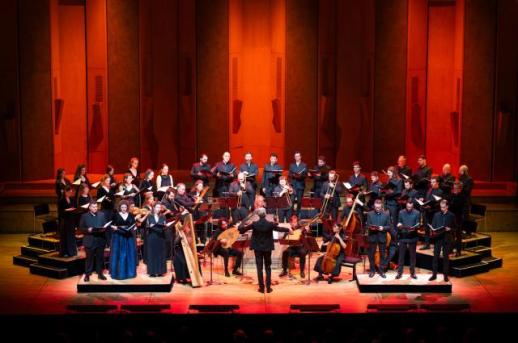 Le Poème Harmonique to make Korea debut at Hanwha Classic 2026 SEOUL, September 28 (AJP) - Hanwha Group will bring French Baroque ensemble Le Poème Harmonique to South Korea in November for its first performances in the country. The ensemble, led by conductor Vincent Dumestre, will open the Hanwha Classic 2026 tour at Changwon 3.15 Art Center on Nov. 22, followed by a performance at Geoje Arts Center on Nov. 24 and Seoul Arts Center on Nov. 26, Hanwha said Monday. The expansion to South Gyeongsang Province marks the first time in the event's 14-year history that Hanwha Classic will stage performances in Changwon and Geoje, where some of the group's major business operations are based. Founded in 1998, Le Poème Harmonique specializes in Baroque and early music, combining secular and sacred repertoire with elements of theater and dance. Dumestre has received France's Order of Arts and Letters at the Officer rank and the National Order of Merit at the Knight rank for his contribution to the arts. This year's program, titled "Music of the Sun King," will focus on court music from the reign of France's Louis XIV in the 17th century. The ensemble will also use period instruments including the theorbo and lirone to recreate the sound of the French court. The program has been selected as part of the French Embassy in Korea's cultural and arts events marking the 140th anniversary of diplomatic relations between South Korea and France. Hanwha Classic was launched in 2013 with a performance by German conductor Helmuth Rilling and has since invited leading early-music figures and ensembles, including William Christie, Marc Minkowski and Jordi Savall. "We are pleased to bring world-class Baroque music to audiences in South Gyeongsang Province through Hanwha Classic, which has continued for 14 years," a Hanwha official said. Tickets are priced at 50,000 won ($37) for all seats and are available through the Seoul Arts Center website and NOL Ticket. AJP Takeaways - Le Poème Harmonique will make its Korea debut at Hanwha Classic 2026 with concerts in Changwon, Geoje and Seoul. - The ensemble will perform 17th-century French Baroque music under conductor Vincent Dumestre. - The series marks 140 years of Korea-France diplomatic ties and expands to South Gyeongsang Province for the first time. 2026-09-28 17:47:03
 -
 DMZ blast probe slows due to mine-like objects SEOUL, September 28 (AJP) - South Korean troops reported seeing what appeared to be wooden-box mines near the site of last week's explosion inside the Demilitarized Zone, the military said Monday, while stressing that the type and origin of the explosive have yet to be confirmed. The Joint Chiefs of Staff said the assessment was based on accounts from multiple personnel who were at the scene when the explosion occurred. Some described objects whose shape resembled a wooden-box mine, while other accounts suggested the material appeared largely plastic, the JCS said. The military said the differing descriptions would have to be checked against evidence from the site before any conclusion could be drawn. The JCS also said it has not yet received an official forensic result from the National Forensic Service, despite media reports suggesting an initial analysis had identified characteristics linked to a North Korean mine. "We have not officially received the result," a JCS official said, adding that the military would disclose its findings after combining the forensic analysis with the ongoing field investigation. The investigation has been slowed by the difficulty of reaching the exact blast site. A joint investigation team that entered the area Sunday was unable to reach the point of explosion, and another operation was underway Monday in an effort to advance the investigation. "It was a new area with no existing search route," a JCS official said. "Because it had not been accessed for decades, we had no choice but to clear a route." The official said the UNC had requested a direct inspection of the site, making access-route preparation necessary before the joint inspection. "What the UNC requested was to go to the site and see it directly," the official said. "So clearing a search route had to come first." Asked whether unmanned equipment or other alternatives had been considered instead of sending troops into the area, the official said, "We did not separately discuss the use of such equipment for this operation," adding that robotic systems are used in some other areas. The JCS described the location as an "unverified mine area," saying it is a sector where South Korean troops have not operated regularly since the 1953 armistice. The military said mines could have been laid there decades ago or introduced later, but stressed that the cause of the explosion and how the suspected mine came to be there remain under investigation. The military also rejected suggestions that the field investigation had been deliberately delayed, saying safety conditions had to be secured before investigators could enter the area. It said any changes to operational procedures or additional safety measures would be considered once the investigation is completed. AJP Takeaways - South Korean troops reported wooden-box mine-like objects near the DMZ blast site, but the JCS said the explosive’s type, origin and possible North Korean link have not yet been confirmed. - The DMZ blast investigation has been delayed by difficult access to an unverified mine area, where troops have had to clear a new search route before the United Nations Command can inspect the site. - The JCS is awaiting National Forensic Service findings and field evidence to determine whether the explosive was an older mine, a later emplacement or another device, while reviewing possible safety and operational changes. 2026-09-28 12:13:16
 -
 Lee calls for renewed Korea-Mexico trade talks SEOUL, September 26 (AJP) - South Korean President Lee Jae Myung called for renewed trade talks with Mexico, pushing for a comprehensive trade agreement. Speaking at a Korea-Mexico business forum in Mexico City on Friday, Lee said Mexico is South Korea’s largest trading and investment partner in Latin America, with Korean companies including Samsung, LG, SK and Kia maintaining significant operations in the country. Bilateral trade reached $20.6 billion last year. “A Korea-Mexico trade agreement will clearly provide a solid foundation for taking our economic cooperation to the next level,” Lee said. Despite those ties, the two countries have yet to conclude a comprehensive trade agreement. A presidential official said Lee was referring to stalled negotiations for a comprehensive economic partnership agreement, or CEPA, which would cover trade, investment and broader economic cooperation. Lee said a trade agreement could give companies greater certainty as they expand business amid changes to the North American trade environment, including uncertainty surrounding the U.S.-Mexico-Canada Agreement. He also called for closer cooperation in advanced industries and supply chains. The president highlighted biotechnology, health care, artificial intelligence data centers and power systems as potential areas for expanded cooperation, saying Mexico’s manufacturing base and access to the North American market could complement South Korea’s technology and industrial capabilities. “For Korean companies, Mexico is more than a production base. It is an important strategic partner linking North America and global markets,” Lee said. The forum brought together executives from major South Korean companies, including SK, LG, LS, Samsung Electronics and Naver, as well as representatives from small and midsized businesses. The event followed a summit between Lee and Mexican President Claudia Sheinbaum that produced agreements to deepen cooperation in areas including AI, defense and aerospace. AJP Takeaways - President Lee Jae Myung called for renewed Korea-Mexico trade talks aimed at reaching a comprehensive trade agreement. - Lee highlighted Mexico as South Korea’s largest trade and investment partner in Latin America and a strategic gateway to North America. - South Korea and Mexico are seeking deeper cooperation in supply chains, AI, biotechnology, energy, defense and aerospace. 2026-09-26 16:56:38
 -
 Trump, Xi set AI talks, oppose tolls on global waterways SEOUL, September 26 (AJP) - U.S. President Donald Trump and Chinese President Xi Jinping agreed to establish a new dialogue on advanced artificial intelligence and oppose tolls on international waterways, a position that could add pressure on Iran over its control of the Strait of Hormuz. The agreements were among a series of trade, security and technology measures announced after Xi’s state visit to Washington this week, according to a White House fact sheet released Friday. The two leaders agreed to establish a U.S.-China dialogue on what they called “super intelligence,” or SI, to discuss the risks and benefits of emerging AI technologies. They also agreed to set up a bilateral communication channel for incidents involving the technology, with another round of exchanges planned by November. On global security, Trump and Xi discussed Russia, North Korea and Iran and agreed that Tehran must not obtain a nuclear weapon. They also agreed that no country or institution should be allowed to impose tolls on international waterways. The White House did not explicitly name Iran or the Strait of Hormuz in the toll provision, but the statement came immediately after its reference to Iran’s nuclear program. The wording comes as Tehran seeks to maintain control over traffic through the key waterway amid the continuing Iran war. The agreement could put China, a major partner of Iran, in an increasingly delicate position. Beijing has maintained close strategic ties with Tehran but also depends heavily on maritime trade and energy imports that pass through the Strait of Hormuz. Disruptions or higher shipping costs therefore pose risks to China’s own economic interests. China had already called for the strait to reopen. During talks with his Iranian counterpart on Sept. 16, Chinese Foreign Minister Wang Yi urged all parties to take steps toward reopening Hormuz and protecting international shipping, energy transportation and supply chain stability. The summit also produced new economic commitments. The two countries agreed to recommend lower tariffs on $30 billion worth of non-sensitive goods in each direction, covering U.S. exports such as agricultural products, seafood and medical devices and Chinese exports including small appliances and toys. China also agreed to import at least 10 million metric tons of U.S. coal annually in 2027 and 2028, while the two sides said they would continue talks on shortages involving rare earths and other critical minerals. The two leaders also agreed to pursue what the White House described as a “constructive relationship of strategic stability” based on respect, fairness and reciprocity, while Trump called for trilateral arms control negotiations involving the United States, China and Russia. AJP Takeaways - Trump and Xi agreed to launch a new dialogue on advanced AI and oppose tolls on international waterways. - The waterways pledge could add pressure on Iran over the Strait of Hormuz, a key route for global energy shipments. - The U.S. and China also announced new tariff, energy and critical minerals commitments after Xi’s Washington visit. 2026-09-26 16:34:31
 -
 Seoul, Kyiv clash over secrecy of North Korean prisoner transfer SEOUL, September 26 (AJP) - South Korea on Saturday reaffirmed that it handled the transfer of two North Korean prisoners of war from Ukraine according to legal and humanitarian principles, as Seoul and Kyiv offered conflicting accounts over whether the move was supposed to remain secret. A presidential office official, speaking to reporters in Mexico City during President Lee Jae Myung’s state visit, declined to directly respond to Ukraine’s denial that it had agreed to keep the transfer confidential. “Our approach has been consistent, guided by the individuals’ wishes, relevant laws and humanitarian considerations,” the official said. The dispute emerged after Ukrainian President Volodymyr Zelenskyy revealed during his address to the United Nations General Assembly in New York on Wednesday that Kyiv had transferred the two soldiers to South Korea. “Recently, we sent two North Korean prisoners of war to the Republic of Korea,” Zelenskyy said. He also described the difficulties Ukrainian troops faced in capturing North Korean soldiers alive. The two soldiers were captured by Ukrainian forces in Russia’s Kursk region in January 2025 after being deployed there as part of North Korea’s support for Moscow’s war. Both later expressed a desire to go to South Korea. Seoul had previously declined to confirm whether or when they had arrived, citing concerns for the safety of the soldiers and their families in North Korea. South Korean officials said the government had been consulting Ukraine and other parties while respecting the soldiers’ wishes and following international law and humanitarian principles. Lee criticized Zelenskyy’s disclosure on Thursday, saying Ukraine had broken an agreement to keep the transfer confidential. “Ukraine disclosed the transfer in breach of a non-disclosure agreement,” Lee wrote on X, adding that he regretted the decision. He described the case as highly sensitive because of its potential impact on diplomacy, national security and the security situation on the Korean Peninsula. A senior South Korean presidential official later said Kyiv had informed Seoul before Zelenskyy’s speech that the soldiers could be mentioned, but had not clearly explained how the matter would be presented. Seoul had told Ukraine that the transfer itself should not be made public, the official said, arguing that the two sides had an understanding that the process would be handled quietly. Dmytro Lytvyn, a communications adviser to Zelenskyy, said there had been no agreement requiring Ukraine to keep the transfer secret. “There was no such agreement,” he said, adding that concealing where prisoners had been sent would have been inappropriate. Another source in the Ukrainian presidential office told RBC-Ukraine that Kyiv had not promised confidentiality and argued that the Ukrainian public had a right to know how prisoner-related matters were handled. The source said Ukraine had disclosed the transfer itself without revealing sensitive details of the process. The issue had been under discussion for months. Seoul has maintained that it would accept North Korean soldiers who choose to come to South Korea. The presidential office on Saturday avoided engaging further with Kyiv’s conflicting account, instead reiterating that its handling of the case had been guided by the same legal and humanitarian principles throughout. AJP Takeaways - Seoul and Kyiv are disputing whether the transfer of two North Korean prisoners from Ukraine to South Korea was meant to remain confidential. - President Volodymyr Zelenskyy publicly revealed the transfer at the U.N., while President Lee Jae Myung said Ukraine had breached a non-disclosure understanding. - South Korea says it handled the case based on the prisoners’ wishes, relevant law and humanitarian considerations. 2026-09-26 15:41:05
 -
 Alcohol-related deaths rise among Korean women as health costs climb SEOUL, September 26 (AJP) - Alcohol-related deaths among South Korean women have risen over the past decade, as health care costs linked to drinking and smoking continue to climb. The alcohol-related death rate among women reached 3.1 per 100,000 people in 2025, up from 2.4 in 2015, according to the National Data Office. The increase was particularly pronounced among women in their 50s, whose rate rose to 6.6 from 4.3 over the same period. High-risk drinking among women has also increased. The rate among women aged 19 and older stood at 8.6 percent in 2024, up from 6.6 percent in 2014. High-risk drinking is defined as consuming at least five drinks per occasion for women, or seven for men, at least twice a week. The trend is part of a broader shift in South Korea's drinking patterns. A Korea Disease Control and Prevention Agency analysis released in July found that high-risk drinking declined among men across all age groups over the past decade but increased among women in every age group from their 30s upward. Women in their 20s to 40s also recorded relatively high levels of binge and high-risk drinking. The KDCA found that smoking, depression and perceived stress were among the factors associated with a greater likelihood of high-risk drinking, although the analysis covered adults overall rather than women alone. Smokers were 2.6 times more likely than nonsmokers to report high-risk drinking. A government report on South Korea's progress toward the Sustainable Development Goals also pointed to longer-term social changes that may help explain the rise in drinking among women, including greater workforce participation, changing gender roles and stress from work and child care. The report also cited growing exposure to positive portrayals of drinking in media. Men still recorded higher levels of alcohol-related deaths and high-risk drinking, but both have declined over the longer term. The male high-risk drinking rate fell to 18.6 percent in 2024 from 20.7 percent in 2014. The changing drinking patterns come as the financial burden of alcohol- and smoking-related illnesses grows. Medical spending linked to drinking and smoking reached 8.48 trillion won ($6.24 billion) in 2025, up 28.2 percent from 6.61 trillion won in 2021, according to National Health Insurance Service data obtained by Rep. Nam In-soon. Alcohol-related treatment costs topped 4 trillion won for the first time last year, reaching 4.04 trillion won, while smoking-related costs stood at 4.44 trillion won. Combined spending over the five years from 2021 through 2025 reached 37.35 trillion won. The data do not identify a single reason for the increase, but much of the burden is concentrated among older Koreans. People aged 60 and above accounted for 64.2 percent of alcohol-related medical costs and 76.5 percent of smoking-related costs last year. Overall health insurance medical spending also rose 7.6 percent in 2025, suggesting that population aging and broader growth in medical spending are part of the backdrop to the rising costs. AJP Takeaways - Alcohol-related deaths among South Korean women have risen over the past decade, alongside higher rates of high-risk drinking. - Recent data link high-risk drinking to factors including smoking, stress and depression, while women in their 30s and older have seen increases. - Medical costs tied to drinking and smoking reached 8.48 trillion won in 2025, with older Koreans accounting for most of the burden. 2026-09-26 12:53:23
 -
 Chuseok traffic builds as Busan-to-Seoul trip stretches to 7 hours SEOUL, September 26 (AJP) - Highway congestion intensified across South Korea on Saturday afternoon, the third day of the Chuseok holiday, as more travelers headed back toward Seoul. According to the Korea Expressway Corp., estimated travel time to the Seoul tollgate as of 1 p.m. was seven hours and 50 minutes from Busan, seven hours and 30 minutes from Ulsan, six hours and 50 minutes from Mokpo and Daegu, six hours and 30 minutes from Gwangju, five hours from Gangneung and three hours and 30 minutes from Daejeon. Travel times toward Seoul had increased by between 50 minutes and one and a half hours compared with 9 a.m. as return traffic picked up across the country. Traffic heading away from the capital remained relatively lighter. Travel from Seoul was estimated at five hours and 30 minutes to Busan, five hours and 10 minutes to Ulsan, four hours and 30 minutes to Daegu, three hours and 40 minutes to Mokpo, three hours and 20 minutes to Gwangju and two hours and 50 minutes to Gangneung. Heavy traffic was reported on several major highways toward Seoul, including the Gyeongbu, Seohaean and Jungbu Naeryuk expressways, with long stretches of slow-moving traffic near cities including Cheongju and Chungju. The expressway operator expects return traffic toward Seoul to peak between 4 p.m. and 5 p.m. before easing around 2 a.m. to 3 a.m. Sunday. Traffic heading out of the Seoul metropolitan area is expected to ease between 7 p.m. and 8 p.m. About 5.9 million vehicles are expected to use roads nationwide Saturday. Around 380,000 vehicles are projected to leave the Seoul metropolitan area, while 520,000 are expected to travel toward it. Congestion also began spreading to major roads inside Seoul in the afternoon. Sections of Gangbyeonbuk-ro and Olympic-daero were experiencing slow traffic as more vehicles entered the capital. AJP Takeaways - Chuseok return traffic worsened Saturday, pushing the Busan-to-Seoul trip to seven hours and 50 minutes by 1 p.m. - Travel times toward Seoul increased by up to 1½ hours from the morning as more holiday travelers headed home. - Return traffic is expected to peak between 4 p.m. and 5 p.m. and ease early Sunday. 2026-09-26 10:17:27
 -
 Iran offers seven-day Hormuz reopening plan, rejects nuclear concessions SEOUL, September 26 (AJP) - Iran has presented the United States with a seven-day plan to reopen the Strait of Hormuz if Washington meets a series of conditions, while signaling that any agreement on the waterway would not lead to concessions over Tehran’s nuclear program. Iranian Foreign Minister Abbas Araghchi said Friday that Tehran had delivered the proposal to Washington through Qatar and that normal shipping could resume within seven days once the United States begins carrying out the required measures. “The choice is now up to the United States,” Araghchi told reporters at the United Nations headquarters in New York, adding that Iran would not give up what it considers its sovereign rights under pressure. Araghchi said Washington could complete the required steps within four to five days. Iran would then reopen the strait on the sixth day, followed by talks between the two sides on mutually agreed issues on the seventh. He said the measures were not new but had already been included in a ceasefire memorandum signed by the two countries in June. Iran says it wants the fighting to stop, restrictions on its ports lifted, frozen funds released and some U.S. oil sanctions eased before it reopens the strait. Araghchi said most of those conditions were already part of a June deal, but talks later broke down over how to carry it out. Tehran, however, is drawing a line between the Hormuz negotiations and its nuclear program. “The Strait of Hormuz will remain closed until the United States meets all of Iran’s conditions,” a senior Iranian official told Reuters on condition of anonymity. The official said Iran would not make nuclear concessions even if Washington accepted Tehran’s proposal on the strait. Iran maintains that detailed nuclear negotiations can begin only after Washington first meets its demands. Tehran has also refused to give up its claimed right to enrich uranium or send its highly enriched uranium stockpile abroad, although it has previously indicated that it could consider diluting its most highly enriched material. Iranian President Masoud Pezeshkian has said he hopes Tehran and Washington can reach an agreement to end hostilities before the Nov. 3 U.S. midterm elections. AJP Takeaways - Iran has offered a seven-day plan to reopen the Strait of Hormuz if the United States meets its conditions. - Tehran says any Hormuz deal would not include concessions on Iran’s nuclear program. - Iran’s demands include an end to hostilities, access to frozen funds and relief from U.S. oil sanctions. 2026-09-26 10:01:19
 -
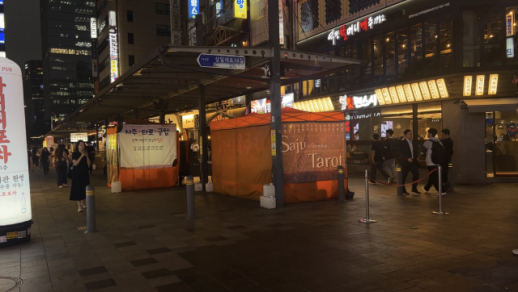 What's in a face? In Korea, seemingly a lot SEOUL, September 23 (AJP) -A gifted physiognomist played by Song Kang-ho sits at the center of the 2013 Korean film The Face Reader, able to divine a person's character and destiny simply by looking at a face. His gift eventually draws him into a struggle over the Joseon throne. After studying the face of Prince Suyang, he sees the makings of a ruthless usurper. His judgment proves accurate. But knowing what is coming does not mean he can stop it. Despite his efforts to protect the young King Danjong, Suyang seizes power anyway. The belief that a face can reveal something deeper about its owner remains surprisingly visible in South Korea. In Jongno, downtown Seoul, a row of small fortune-telling tents sat along the street, offering answers about love, money, careers and the future for prices low enough to tempt a curious passerby. A face reading cost just 10,000 won ($7). The practice is known as gwansang, or Korean face reading. Part of a broader East Asian tradition of physiognomy, it rests on the belief that character, fortune and even the course of a person's life can be interpreted through physical appearance. Traditional readers examine the eyes, nose, mouth, ears and facial structure, but may also consider complexion, expressions, voice and mannerisms. The practice came to Korea from China and developed over centuries into its own form of folk divination. Gwansang has long occupied a familiar place in Korean culture alongside saju, which interprets fortune through a person's birth date and time. It survives in street tents, fortune-telling shops and everyday expressions about whether someone has a "good face," or one associated with wealth, leadership or luck. It also survives in a society that is otherwise among the world's most technologically advanced — a coexistence of old belief and modern skepticism that helps explain its enduring appeal. Physiognomy is not regarded as a scientifically validated way to determine personality or destiny, and modern psychology generally treats such systems as pseudoscientific. Yet people continue to seek readings, sometimes out of belief, sometimes curiosity and sometimes simply for entertainment. To see what the practice looks like today — and how much people still put into it — three AJP reporters had their faces read at two very different places. One was a neatly furnished face-reading shop near Ewha Womans University, where a session cost 30,000 won. The other was a 10,000-won tent in Jongno. I tried both. Same face, two readings The Ewha reader, in his 70s and introducing himself as Johnny, said he had worked around the university district for 28 years, including about eight years at his current location. Students from Ewha, Yonsei and Sogang universities had visited him, he said, along with professors seeking advice ahead of important events. Foreign customers, particularly Japanese visitors as well as people from the United States and Canada, also came, though language barriers sometimes made readings difficult. Sitting across from him, I gave him little to work with. He asked my age, then began moving methodically from one part of my face to another. He described me as ambitious and highly driven, someone more inclined to lead than remain in a supporting role. Experience and credentials would matter, he said, and my work would involve constant movement. Connections with other people could also play an important role in my career and financial fortune. Then came one recurring piece of advice: smile more. According to the reader, smiling would "recharge" my energy, while my tendency to give too much of myself to others could leave me drained. He also described me as impatient, generous toward people I cared about and more likely to internalize criticism than immediately confront it. Hours later, under a tent in Jongno, the surroundings were different. So was the reading. For one-third of the price, the Jongno reader focused less on movement or overseas work and more on personality, relationships and money. The reader said I had a strong sense of my own world and was not naturally someone who moved easily through social relationships, although I had recently been trying to become more open and socially engaged. Pointing to my nose, eyebrow line and cheekbones, the reader described me as strongly self-directed and said I could do well in a leadership role, even if relationships with others did not always come easily. I was also capable of earning money, the reader said, but might not be especially good at holding onto it. There were noticeable differences. The Ewha reader emphasized networking and the fortune that could come through other people. The Jongno reader placed greater weight on independence and difficulty fitting into groups. But several themes overlapped. Both described a strong-willed personality. Both linked my future to movement and work beyond a narrow routine. And both told me to smile more. Eyebrows, cheekbones and the space between the eyes The readings of the other two reporters showed how quickly seemingly minor facial details could become broader narratives about personality and fate. At the Ewha shop, the reader focused on the narrow space between one male reporter's eyebrows, saying it suggested sensitivity to small things and a tendency to be affected by other people's comments. He told the reporter to stay active, accumulate experience and find a mentor who could keep him on course. He later described him as having a strong need for recognition and advised him not to reveal everything he was thinking. At the Jongno tent, the third reporter received an even more detailed reading. The reader described him as strong-minded and unlikely to change course easily once he had made up his mind. His small mouth, the reader said, suggested he might not always look after his own interests, while other features pointed to someone better suited to independent work or an international environment. When the reporter mentioned that he had spent part of his childhood abroad, the reader said that fit what could be seen in his face. The reader also compared some of his features with mine, using differences in our mouths, cheekbones and overall face shape to explain why the two of us supposedly possessed different temperaments. But one piece of advice was becoming strikingly familiar. Smile more. Smiling, the reader said, would lift his cheekbones and soften the lower part of his face. The readings made one thing clear: gwansang can produce a remarkably detailed story from an ordinary face. Whether people believe that story is another matter. A Korean woman surnamed Kim interviewed in Myeongdong said she firmly believed there was something to face reading. "Once you reach your 50s, you are responsible for the face you have," she said, arguing that expressions and appearance could reflect how a person had lived. Negative thoughts could show on a person's face, she said, linking the idea to the Korean saying that smiling brings good fortune. Interestingly, she placed more faith in gwansang than in saju. Saju was something she might look at for fun, she said, while a person's face and expressions could actually change according to how they lived. Two men in their 60s encountered on the street offered a very different response. One said he had never had his face read and did not believe in it. Why not? "I go to church," he said. Among foreign visitors approached near the Jongno tents, the cultural distance was more obvious. Stefano, 35, and Ashah, 25, from California had some familiarity with related practices such as tarot or palm reading, but neither was eager to step into a tent. One said face readers could simply be studying a customer's expressions and body language, then adjusting their interpretation in response. "It's a pseudoscience," she said, describing it less as an ability to read destiny than an ability to read people. Another family visiting from Florida — Terrence, Shivani and their daughter Inara — knew even less about gwansang. Terrence said he had never heard of it and would not seek out a reading even during a difficult period in his life. "I don't like the idea that my destiny is determined by something else," he said, arguing that such thinking could weaken a person's sense of control. He compared fortune-telling with gambling and said he would do neither. His wife took a somewhat different view. She said she believed destiny could exist, but that individuals still chose how to pursue their purpose. Physical changes could sometimes reflect stress or health, she said, but that did not mean someone else could interpret a person's future from them. Despite the low 10,000-won price, none of the foreigners AJP approached around the Jongno tents chose to walk in for a reading. That contrasted with three young Chinese travelers interviewed in Myeongdong. They had only limited knowledge of face reading, but showed greater curiosity. One said she might want to ask about her romantic future and when she might meet a boyfriend. The reactions pointed to the peculiar space gwansang occupies today. Belief is no longer necessary for the practice to survive. Familiarity, curiosity and the simple desire to hear a story about oneself may be enough. Back in Jongno, the tents remained open as pedestrians passed. Eventually, a woman pulled back the entrance flap and went inside. For a while, she was the only customer at the tent where I had sat earlier. Two face readers, two prices and two very different surroundings had produced different versions of the same face. But their simplest prescription was identical. Smile more. 2026-09-23 17:13:27