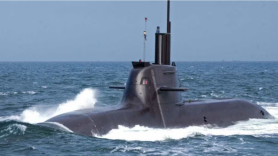
The remarks weaken speculation that Ottawa could split its planned order of up to 12 submarines between South Korea's Hanwha Ocean and Germany's Thyssenkrupp Marine Systems (TKMS) as a political compromise between the two finalists.
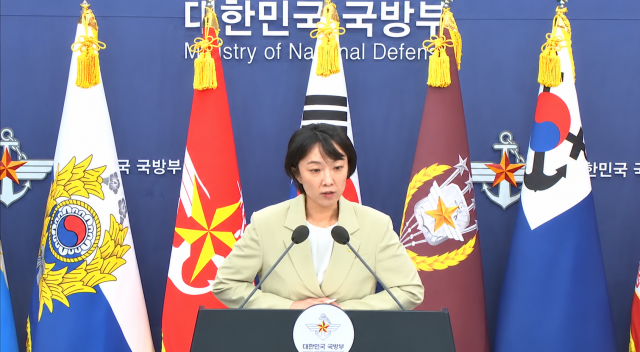
South Korea's Defense Ministry responded cautiously Tuesday as Canada moved closer to selecting a preferred bidder.
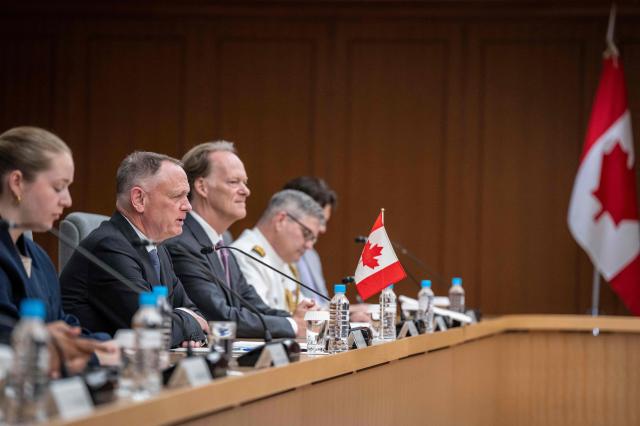
Canadian broadcaster CTV reported Monday that Defense Minister David McGuinty had downplayed the prospect of dividing the order during a visit to Japan last week.
"When you split any kind of fleet, it adds costs in many ways," McGuinty said. "You have to maintain, sustain and support two different fleets, which creates more complexity for any country."
Although McGuinty stopped short of formally ruling out the option, saying Ottawa was still evaluating all factors before making a final decision, his remarks marked the clearest indication yet that the Canadian government sees significant disadvantages in buying submarines from both bidders.
Bloomberg previously reported that Canadian officials had explored an unusual compromise under which German-built submarines would operate from the Atlantic coast while South Korean vessels would be based on the Pacific coast.
Such an arrangement would distribute industrial benefits while preserving defense ties with both Europe and Asia. But it would also leave the Royal Canadian Navy operating two separate submarine classes requiring different maintenance systems, supply chains, spare parts inventories and training pipelines.
Jeong Kyung-woon, a research fellow at the Korean Association of Military Studies, told AJP in March that such a split would undermine the economic assumptions underpinning both bids.
"Current pricing is based on an order for all 12 submarines," Jeong said. "If Canada signs two separate contracts for six boats each, total procurement costs would inevitably increase. A program that costs 100 as a single order could easily become 120 when divided."
The financial impact, he said, would extend well beyond procurement.
"Operating two different submarine classes would require separate logistics systems, maintenance facilities and training programs," Jeong said. "Lifecycle maintenance costs would rise substantially while the Royal Canadian Navy's operational efficiency would decline."
He added that while Canada could still choose to divide the order if it were prepared to accept higher costs and lower efficiency, such a decision would be difficult to justify.
"Unless Canada intends to buy submarines as if bargaining in a marketplace, I do not believe a split order is likely," another defense analyst, speaking on condition of anonymity, told AJP.
McGuinty's comments largely echoed those assessments, giving official weight to concerns defense analysts had raised for months.
The shift toward a likely single supplier does not, however, indicate which bidder currently has the upper hand.
Analysts cited by CTV described the competition as "too close to call," suggesting Ottawa is still weighing the broader industrial, economic and strategic packages accompanying the rival proposals.
Even after a preferred bidder is announced, negotiations will continue.
Stephen Fuhr, Canada's secretary of state for defense procurement, said Ottawa will negotiate with the selected company to convert memorandums of understanding and industrial commitments into binding agreements covering local production, employment, maintenance, technology transfer and long-term industrial cooperation.
For South Korea, the fading prospect of a split order presents both risk and opportunity.
It reduces Hanwha Ocean's chances of securing part of the contract if Germany ultimately prevails. Conversely, a winner-take-all decision would allow the successful bidder to secure the entire fleet of up to 12 submarines—along with decades of maintenance work, upgrades and strategic industrial cooperation.
CTV reported that the preferred-bidder announcement could slip by several days. Citing government sources, it said Ottawa still intends to make a decision before Prime Minister Mark Carney departs for the NATO summit in Ankara, Türkiye, on July 7.
Fuhr had previously indicated that the government expected to announce its preferred bidder around the end of June, allowing for a short delay.
With the possibility of a split order rapidly fading, Canada's decision will determine not only the future composition of its submarine fleet but also which long-term defense industrial ecosystem it chooses to join for decades to come.

Copyright ⓒ Aju Press All rights reserved.