

Journalist

Kim Hee-su김희수
khs@ajupress.com
ReporterMinistry of Foreign Affairs, Seoul City Hall & Defense, Foreign Affairs
Kim Hee-su is a bilingual reporter at AJU Press, covering defense and foreign affairs. Before joining AJP in 2025, she worked at The Korea Times, where she wrote interview stories, including a profile of North Korean defector Kim Gum-hyok, and produced digital content. She also previously worked as a researcher for KBS News 9’s International News Department, supporting correspondents in 10 countries around the world. She graduated from the University of Toronto in Canada with a double major in Book and Media Studies and East Asian Studies.
"I'm driven by storytelling."
Latest by Kim Hee-su
-
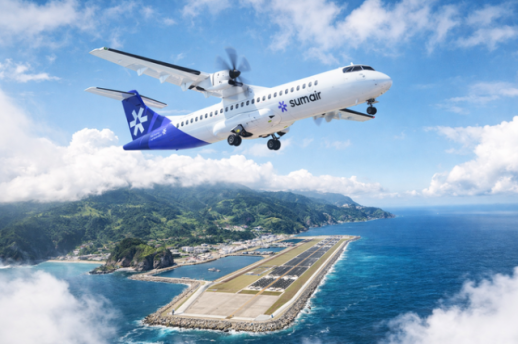 Sumair launches South Gyeongsang tour package from Gimpo SEOUL, September 18 (AJP) - Regional airline Sumair has launched a package tour connecting Seoul-area travelers with smaller cities in South Gyeongsang Province, combining flights, accommodation, meals and local guides. The airline said Friday it partnered with the Gyeongnam Tourism Foundation and Hadong Nolluwa Cooperative to launch the three-day “South Coast Local Tour,” covering Sacheon, Namhae and Goseong. Sumair has operated four daily round trips between Gimpo and Sacheon since beginning commercial service in March. The new package will run from Oct. 9 to 11 and is priced at 250,000 won ($180) per person. The fare includes round-trip Sumair flights, local transportation, accommodation, meals and a guide. The itinerary includes the Sacheon Sea Cable Car, Darangee Village and traditional bamboo fishing weirs in Namhae, as well as Sangjogam in Goseong. “We launched the South Coast Local Tour to make it easier for travelers from the Seoul metropolitan area to experience destinations along the southern coast through faster and less tiring air travel,” a Sumair official said. The airline said it plans to continue working with regional partners to expand tourism demand through its Gimpo-Sacheon route. AJP Takeaways - Sumair launched a three-day South Gyeongsang package tour covering Sacheon, Namhae and Goseong. - The 250,000 won package includes round-trip flights, transportation, accommodation, meals and a local guide. - The tour builds on Sumair’s Gimpo-Sacheon service as the airline works with regional partners to boost local tourism. 2026-09-18 13:10:12
 -
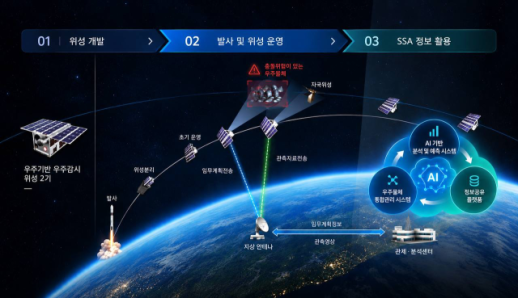 Hanwha Systems joins national AI-based space surveillance project SEOUL, September 18 (AJP) - Hanwha Systems has begun developing an AI-powered space situational awareness system aimed at detecting and tracking objects in orbit and assessing collision and reentry risks. The company said Friday it signed a contract with the Korea Astronomy and Space Science Institute on Sept. 9 to participate in the development of South Korea’s national Space Situational Awareness system, or K-SSA. The project comes as the rapid growth of satellites in low Earth orbit raises the risk of collisions with artificial and natural objects in space, increasing the need for systems capable of protecting national space assets and predicting potential hazards. Under the project, Hanwha Systems will develop a space-based surveillance satellite and an AI-powered ground system that will collect, integrate and analyze information on objects in orbit. The surveillance satellite will be a small spacecraft operating at an altitude of about 480 kilometers. Equipped with an optical camera designed for space situational awareness, it will detect and track artificial and natural objects and gather data needed to assess collision and reentry risks. “The space industry is rapidly expanding beyond simply developing and operating satellites toward the safe use and management of space,” Song Sung-chan, head of Hanwha Systems’ space business division, said. AJP Takeaways - Hanwha Systems is developing an AI-powered space situational awareness system under South Korea’s K-SSA program. - The project includes a 480-kilometer-orbit surveillance satellite and an AI-based ground system for tracking space objects. - The system is designed to assess collision and reentry risks and strengthen protection of South Korea’s space assets. 2026-09-18 11:38:23
 -
 Six of 17 drone demos falter as Seoul rules out separate probe SEOUL, September 17 (AJP) - South Korea's Defense Ministry said Thursday it does not plan a separate investigation into six drone demonstrations that went awry at a military-hosted technology event, leaving participating companies to determine what went wrong as questions mount over the reliability of systems intended for future battlefield use. Six of 17 demonstrations failed to go as planned during the inaugural 2026 Defense Drone Technology Exhibition held Wednesday at the Seungjin Training Ground in Pocheon, north of Seoul, according to the ministry. The other 11 demonstrations were successful, including all systems currently operated by the Defense Ministry or military, ministry spokeswoman Jeong Bit-na said during a regular briefing Thursday. She later clarified that the military-operated systems were not necessarily fully deployed weapons and included equipment being used by test units. Among the systems that ran into trouble was a medium-sized jet-powered drone developed by Korea Aerospace Industries (KAI), which crashed shortly after takeoff. A direct-impact attack drone, rotary-wing swarm drones and a drone-launched air-to-ground guided weapon also failed to complete their demonstrations as planned. The ministry pushed back against descriptions of the event as a failure, saying its purpose was partly to expose technological shortcomings before systems reach operational units. “Some prototypes from private companies did not successfully complete their demonstrations, but we see this not as a failure but as part of the process of developing better technology,” Jeong said. “Actual battlefield environments involve various variables, including frequencies, weather and terrain, and identifying unexpected technical challenges during testing is an important reason for holding demonstrations like this,” she added. The explanation, however, raised questions over who would determine the causes of the malfunctions and how closely the military should examine systems that could eventually be used by South Korean troops. Asked whether the ministry was investigating why the six demonstrations went wrong, Jeong said there would be no separate military inquiry. “We opened the military training ground, and we are not separately investigating the causes,” she said. “The companies will have to conduct their own analyses and use the findings for further technological development.” One possible factor raised by participating companies was radio-frequency interference. Jeong said some companies suspected interference from civilian frequencies may have affected their systems as large crowds gathered at the site, stressing that the explanation was the companies' assessment and had not been confirmed by an official investigation. Some systems had operated normally during rehearsals a day earlier but encountered problems during the main event, when more than 1,000 people were present, according to a ministry official. The event was intended to give private companies a rare opportunity to test prototypes outside laboratories and under conditions closer to actual military operations. Reporters at Thursday's briefing questioned whether drones designed for battlefield use should be vulnerable to interference from an ordinary crowd in the first place. If mobile phones or other civilian signals were enough to disrupt control or navigation, the problem could carry greater implications for systems expected to operate in far harsher electromagnetic environments. Electronic warfare has become a defining feature of drone combat. North Korea has repeatedly carried out GPS jamming against South Korea, while the war in Ukraine has demonstrated how electronic warfare can disrupt drone navigation and communications. Ukraine, where drones have become central to battlefield operations, plans to produce more than 7 million drones this year. Its Defense Ministry has also accelerated procurement through DOT-Chain Defence, a digital weapons marketplace that allows combat units to choose drones and other equipment directly with allocated government funds. Ukrainian forces had received 485,000 drones and other pieces of equipment through the platform by late May, with the average delivery time for in-stock equipment later shortened to nine days. Seoul is pursuing its own rapid drone buildup. The Defense Ministry plans to introduce around 60,000 domestically produced training drones and train 500,000 service members as so-called “drone warriors,” while seeking faster ways to bring civilian technologies into military use. Wednesday's problems came less than a month after two medium-sized loitering munitions under development by the Agency for Defense Development crashed into the sea shortly after being launched from the amphibious assault ship ROKS Marado on Aug. 25. An initial investigation found that a misaligned door on the launcher caused uneven thrust and destabilized the aircraft during launch, while the drones themselves had operated normally. The two episodes have sharpened questions over how quickly Seoul should move from prototype development to public demonstration and eventually battlefield deployment as it races to expand drone capabilities. The Defense Ministry indicated Thursday that it would continue opening military environments to private developers rather than scale back testing after the mishaps. It plans to expand testing and demonstration opportunities beyond the Army to the Navy, Air Force and Marine Corps, arguing that exposing problems early is part of accelerating technological development. AJP Takeaways - Six of 17 drone demonstrations faltered at a Defense Ministry-hosted event, with companies left to identify the causes. - Possible radio-frequency interference raised concerns over whether military drones can withstand tougher electronic warfare conditions. - Seoul is still accelerating its drone buildup, targeting around 60,000 training drones and 500,000 “drone warriors.” 2026-09-17 17:58:36
 -
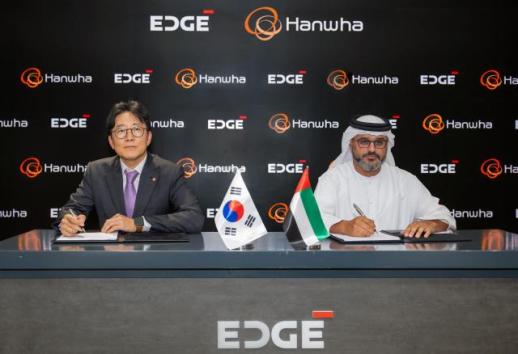 Hanwha, EDGE team up on integrated UAE air defense network SEOUL, September 17 (AJP) - Hanwha Systems and the UAE’s EDGE Group have agreed to jointly develop an integrated air defense network for the UAE. Hanwha Systems said Thursday the two sides signed a term sheet at EDGE headquarters in Abu Dhabi on Tuesday outlining the direction of the project and a phased review of weapons systems that could be introduced. Hanwha Systems has supplied multifunction radars, while Hanwha Aerospace has provided launchers, canisters and missile components for Cheongung-II exports to the UAE in 2022, Saudi Arabia in 2024 and Iraq in 2025. With EDGE, Hanwha plans to expand into a multilayered air defense network covering short-, medium- and long-range threats. “This agreement marks a turning point in the partnership between Hanwha and EDGE, moving beyond one-off weapons supplies toward sharing integrated air defense technologies and industrial capabilities,” Hanwha Systems CEO Yang Ki-won said. “We will gradually expand technology cooperation and localization to help strengthen the UAE’s defense industrial base,” Yang said. EDGE Group CEO Hamad Al Marar said the partnership is focused on expanding the UAE’s independent defense capabilities and local industrial base beyond the procurement of individual weapons systems. “EDGE will work with Hanwha to build a foundation for sustainable industrial cooperation,” Al Marar said. AJP Takeaways - Hanwha Systems and EDGE Group agreed to cooperate on an integrated air defense network for the UAE. - The partnership could include a local joint venture, production, maintenance and other localization efforts. - Hanwha plans to expand from individual weapons sales to a multilayered air defense network covering short-, medium- and long-range threats. 2026-09-17 11:02:00
 -
 Cockpit seniority remains final stumbling block to Asiana-KAL merger SEOUL, September 16 (AJP) - The integration of Asiana Airlines under Korean Air's wing is on course for liftoff as a single national full-service carrier in December — except for one major piece of unfinished business in the cockpit. Asiana flight numbers are set to begin switching from the OZ code to Korean Air's KE code in November, while the long-delayed mileage integration plan has cleared its final regulatory hurdle. The two airlines, however, have yet to resolve one of the most sensitive personnel issues in the merger - combining pilot seniority lists built under markedly different recruitment and promotion systems. The dispute has already spilled into the streets, with Korean Air pilots holding rallies this week as their union presses the company to negotiate the rules for integrating seniority. Unlike promotions in many workplaces, pilot advancement depends heavily on position in a seniority queue. Each pilot is assigned a place on a seniority list that helps determine when he or she can enter training for a captain upgrade or move into a higher internal rank. Pilots higher on the list generally receive those opportunities earlier, while those further down must wait. Because advancement affects both career progression and pay, being pushed back even several months on a combined list can have consequences lasting years. New data provided to AJP by the Korean Air Pilots Union (KAPU) shows how differently the two airlines constructed those lists. The Korean Air data covers 1,371 pilots who have received or are awaiting regular employee numbers, including 702 with military flying backgrounds, 82 with previous low-cost carrier experience and 587 from other civilian flying backgrounds. Among them, 74 civilian-background pilots had yet to receive regular employee numbers, according to the data. A separate KAPU dataset covers 488 Asiana pilots, including 184 from military backgrounds and 304 from civilian backgrounds. One of the clearest differences lies in how the two carriers treated military and civilian experience. At Asiana, military-background pilots were historically placed roughly four years ahead of civilian-background pilots in the seniority structure, according to union data. The gap was far wider than at Korean Air, where the difference was about 10 months, making the treatment of military and civilian experience one of the most contentious issues in combining the lists. Under Asiana's system, a military-background pilot who received an employee number in 2016 could rank at roughly the same level as a civilian-background pilot from 2012. That four-year gap becomes sensitive in the merger because preserving Asiana's existing internal order could place some military-background Asiana pilots ahead of Korean Air pilots on the combined list, potentially delaying the latter's future captain upgrades. “The biggest problem is that the company won’t even discuss seniority integration as part of collective bargaining. We have our own proposals, but the company simply says it is a management issue and refuses to put it on the table,” said Park Sang-mo, KAPU’s vice chairman for external affairs. Park said pilot groups typically take the lead in negotiating how seniority lists should be combined rather than leaving management to determine the ranking unilaterally. The dispute is further complicated by how the seniority queue is determined. For Korean Air pilots, a regular employee number effectively sets their place in the seniority queue, but that number can differ from the employee number assigned when they first join the airline. Asiana pilots, meanwhile, are assigned their regular employee numbers upon joining. This creates another point of contention over whether seniority should be based on the initial joining date or the date the regular employee number was issued. “Normally, the pilot unions work out an integrated seniority list and bring it to the company,” Park said. “That is how the process is supposed to work, but in our case, the company came up with its own formula and simply presented it to us.” Park said the union has raised the issue in negotiations for about a year, but the company has continued to reject seniority integration itself as a bargaining item. KAPU also argues that the proposed approach could disadvantage some Korean Air pilots with previous civilian flying experience because their seniority would be calculated from the date they received a regular employee number rather than the date they first joined the airline. They say some Korean Air pilots could be placed about 10 months lower on the combined list than if their original entry dates were recognized. The issue is particularly sensitive because the two carriers historically recruited civilian pilots under different requirements. Korean Air required civilian applicants to have roughly 1,000 hours of flying experience, while Asiana's threshold was significantly lower, at around 300 hours. Korean Air says its merger formula would still leave its civilian-background pilots ahead in the promotion queue. The airline says the gap between military- and civilian-background pilots is about nine months at Korean Air, compared with roughly four years at Asiana. On that basis, Korean Air says its civilian pilots would remain about three years and three months ahead on average after the lists are combined. The effects are not uniform on the Asiana side either. An Asiana senior captain with four years in the rank, for example, could have expected to advance to the next captain grade in January 2028 under Asiana's existing timetable. Under the post-merger Korean Air schedule, that transition would instead come in September 2028, about nine months later. Until then, the pilot would see little immediate pay benefit from the merger. The example illustrates why individual pilots can view the same integration formula differently depending on their current rank and position in the promotion cycle. Some may benefit relatively quickly from Korean Air's pay structure, while others could wait longer for their next promotion. Choi Do-sung, chairman of the Asiana Pilots Union (APU), was reluctant to comment in detail on the dispute between Korean Air and its pilots, saying he did not want to add to tensions ahead of the merger. “Given that we are the airline being absorbed, we think the company’s plan is reasonable overall and does not create any major problems for pilots,” Choi said. APU does not plan separate collective action over the seniority integration. “The company explained it to both airlines and notified us without any negotiations or agreement over the seniority issue,” Park said. “That is the essence of the problem.” The two carriers are scheduled to formally merge on Dec. 17. “Pilots work as two people together in the cockpit,” Park said. “If they are carrying unresolved dissatisfaction with each other, how can there be genuine integration?” Korean Air says its proposal is designed to preserve each airline’s existing seniority structure while minimizing disruption for pilots on both sides. AJP Takeaways - Pilot seniority remains unresolved ahead of the Korean Air-Asiana merger. - Military-civilian ranking gaps differ sharply between the two airlines. - KAPU wants negotiations, while APU broadly accepts the company’s plan. 2026-09-16 18:15:47
 -
 Defense nominee apologizes over martial law SEOUL, September 16 (AJP) - Defense Minister nominee Kang Shin-chul apologized Tuesday for the military’s role during the Dec. 3, 2024 martial law declaration, while signaling support for the government’s push to overhaul South Korea’s military academies. Speaking at his confirmation hearing at the National Assembly, Kang said he felt a “deep sense of responsibility” as one of the military’s highest-ranking officers at the time and apologized to the public. Kang was serving as deputy commander of the South Korea-U.S. Combined Forces Command and was a four-star Army general when martial law was declared. His remarks came after Rep. Kim Byung-joo of the ruling Democratic Party said Kang could not entirely avoid moral or political responsibility given his senior position in the military. Then-President Yoon Suk Yeol declared emergency martial law on Dec. 3, 2024, sending troops to the National Assembly. Lawmakers voted to lift the decree, and Yoon ended martial law several hours later. The Constitutional Court removed him from office in April 2025. Kang responded that the military had undermined the constitutional order and said he bore responsibility as one of its most senior officers, even though he was outside the chain of command involved in the martial law operation. The presidential office said when Kang was nominated that a government task force and a Defense Ministry audit had found no evidence that he was involved in the martial law operation. Kang also used the hearing to signal that he intends to continue the government’s military education reform agenda, including plans to integrate the Army, Navy and Air Force academies. “I have the will to reform the military academies,” Kang said when asked whether he remained committed to creating an integrated military academy. The Lee Jae Myung administration has proposed creating a four-year integrated military academy at the Jaundae military complex in Daejeon, bringing together the three service academies under a new structure. The proposal has faced opposition from some retired officers and academy alumni. Kang, a graduate of the Korea Military Academy, said the priority should be producing capable officers rather than focusing on criticism of the reform. “The current plan is not complete in my view,” Kang said, adding that there are multiple ways to pursue integration and that different opinions should be considered before a final model is settled. Kang also voiced support for the transfer of wartime operational control, or OPCON, from the United States to South Korea, another major defense issue facing the next minister. He said the process has been pursued by successive governments and that South Korea has made significant progress in meeting the conditions required for the transfer. “The conditions have been substantially met, and I believe the environment is now in place,” Kang said. Kang is among six Cabinet nominees named in President Lee Jae Myung’s Aug. 30 reshuffle, with the National Assembly holding a series of confirmation hearings this week for key ministerial posts. AJP Takeaways - Defense Minister nominee Kang Shin-chul apologized for the military’s role during the Dec. 3, 2024 martial law declaration. - Kang backed military academy reform but said the current merger plan needs further review. - He also supported the conditions-based transfer of wartime operational control to South Korea. 2026-09-16 15:19:39
 -
 India's Ramayana comes alive on Seoul stage through rhythm, gesture and Odissi SEOUL, September 15 (AJP) - Eight dancers stepped onto the stage in deep purple and silver costumes, their bare feet striking the floor as the sound of ankle bells followed almost every movement. The rhythm was distinctive. Knees bent low, wrists turned sharply and elbows shifted into angular positions, while fingers repeatedly formed delicate shapes, at times with three fingers extended. A slight movement of the eyes or fingertips could change the mood of a scene. For nearly the entire performance, there were no elaborate stage props. Yet the stage rarely felt empty. That was the language of Odissi on display Tuesday evening at Ewha Womans University’s Samsung Hall in western Seoul, where the 2026 Sarang Festival of India in Korea opened with “Siya Ram ... the eternal saga,” a full-length dance drama based on the Ramayana, one of India’s most revered epics. Presented by the Nrityantar Dance Ensemble and choreographed and directed by noted Odissi dancer Madhulita Mohapatra, the production followed Sita and Rama through love, exile, abduction, sacrifice, war and eventual reunion. Ramayana, Rama is the prince of Ayodhya and Sita his wife, whose relationship lies at the heart of the epic. Their story begins with love and marriage but is soon tested when Rama is sent into exile for 14 years. Sita chooses to accompany him, only to be abducted by Ravana, the powerful king of Lanka. Rama’s search for her ultimately leads to war and, after a long separation, their reunion. Tuesday’s production told that familiar Indian story largely through Sita’s eyes, placing greater emphasis on her memories, separation and endurance. Rather than treating her simply as the figure waiting to be rescued, the performance followed her emotional journey through love, fear, captivity and resilience. “A movement of the hand can tell a story, a glance can express an emotion, a sculptural pose can suddenly bring to life images that have adorned Indian temples for centuries,” Indian Ambassador to Korea Gourangalal Das said. Odissi is one of India’s classical dance traditions, originating in the eastern state of Odisha. Closely associated with the region’s temple heritage, it is known for sculptural poses, lyrical movements and expressive storytelling. “The performance felt lively overall, but much of it also had a calm and restrained quality, and so did the music,” said Most Ven. Bogeom Woneung, head monk of Gongdeokwon, a Korean Buddhist temple in India, and host of the YouTube channel Bogeom Sunim’s World Buddhist Journey. Some Korean audience members said they were initially unfamiliar with the art form but became increasingly drawn in as the story unfolded. “Indian culture felt quite different to me, so the performance was unfamiliar at first. But even though the dance team was made up entirely of women, the stage never felt empty, and I liked how the tension built as the story progressed. I was especially fascinated by the movements of their fingertips,” said Lee So-heun, 26, a Seoul resident. All eight performers were women, with the ensemble filling the stage through synchronized movement, shifting formations and expressive gestures rather than elaborate sets or props. “It was an extraordinary performance. It was something I had never seen anywhere else,” said Cho Sung-rae, who is in his mid-60s and attended after hearing about the event through an acquaintance. “It was a beautiful show. It was a pleasure to see a performance from my country here in Korea,” said Abinaya, 29, an Ewha Womans University student from India who has lived in Korea for three and a half years. The performance offered Seoul audiences a vivid glimpse of India’s classical dance tradition. 2026-09-15 21:24:40
 -
 Seoul mulls contingency as Saudi disruption complicates cold-season oil supplies SEOUL, September 15 (AJP) - International oil prices climbed again Tuesday on supply concerns ahead of colder weather after drone attacks crippled Saudi Arabia's main oil pipeline bypassing the dysfunctional Strait of Hormuz. Brent crude rose $1.24 to $106.93 a barrel in early trading, while U.S. West Texas Intermediate gained $1.29 to $102.65, as traders weighed how long Saudi Arabia's East-West Pipeline could remain offline and whether alternative export routes could compensate for the disruption. The strain is showing up even more dramatically in shipping costs. The Baltic Exchange's benchmark Middle East Gulf-to-China route for very large crude carriers, or VLCCs, reached a time-charter-equivalent rate of about $862,150 a day on Sept. 10. A separate Gulf of Oman-to-China VLCC route reached a record Worldscale 450, equivalent to roughly $11.50 per barrel. For a typical VLCC carrying about 2 million barrels of crude, a freight rate of $11.50 per barrel translates into roughly $23 million for a single voyage. The additional burden does not stop there. An executive at Emirates National Oil Co., or ENOC, said cargo insurance alone could add about $10 million, while war-risk premiums and other expenses could push total transit costs to between $10 million and $20 million as risks around Hormuz intensify. The soaring transport bill significantly raises the delivered cost of Middle Eastern crude even before it reaches a refinery. Saudi Arabia had already begun directing more barrels back through Hormuz before the pipeline shutdown. Total Saudi crude exports rose to nearly 4 million barrels per day during the first 10 days of September, from around 3 million barrels per day in August, according to tanker-tracking data compiled by Bloomberg, Vortexa and Kpler. Roughly 1 million barrels per day were shipped through Hormuz, with most of the remainder moving through the Red Sea port of Yanbu. Riyadh is now seeking to increase Hormuz shipments further. The East-West Pipeline has long given Saudi Arabia a way to bypass Hormuz. The roughly 1,200-kilometer pipeline stretches from the kingdom's oil-producing east to Yanbu on the Red Sea and has capacity of up to 7 million barrels per day. Drone attacks last week forced Saudi Arabia to shut the pipeline, and repairs are expected to take several weeks. For South Korea, the outage adds a new risk to an oil supply chain already forced to adapt to months of disruption in the Middle East. The government said Monday that domestic refiners have secured more than 90 percent of their crude needs for September and October based on year-earlier levels and that the Saudi pipeline shutdown is unlikely to cause an immediate supply shortage. The Ministry of Trade, Industry and Resources nevertheless held an emergency meeting with refiners and shipping companies to review crude supplies, tanker movements and contingency measures. The government has been preparing alternative transportation routes through the Suez Canal and Egypt's SUMED pipeline while seeking additional crude supplies from outside the Middle East. It is also prepared to use its strategic oil reserve swap program if supply conditions deteriorate. "The government will communicate closely with oil refiners and maritime shippers while closely monitoring supply conditions to prevent any inconvenience to the public," Vice Industry Minister Moon Shin-hak said Monday. South Korea also maintains emergency crude inventories above the minimum level recommended by the International Energy Agency. "We currently have no issues with our oil reserves. The volume of reserves we hold exceeds the level recommended by the International Energy Agency," an official at Korea National Oil Corp. said. IEA members are required to hold emergency oil stocks equivalent to at least 90 days of the previous year's net imports, with the required amount calculated for each country based on its own net oil imports. Still, the main Gulf shipping artery has not returned anywhere close to normal. Kpler recorded just four commodity vessels transiting the Strait of Hormuz on Monday, down from 10 on Sunday and far below the roughly 125 large commercial vessels that crossed the waterway each day before the U.S.-Iran war began on Feb. 28. Some vessels are believed to be sailing with their Automatic Identification System, or AIS, transponders switched off, meaning visible ship-tracking data may understate actual flows. The result is an increasingly difficult squeeze: Saudi Arabia needs to push more crude through Hormuz after losing its principal bypass route, just as overall commercial traffic through the strait remains a fraction of prewar levels. For South Korea, supplies through October may be largely secured. The bigger concern is what happens afterward if the Saudi pipeline remains impaired, Hormuz traffic fails to recover and higher freight and insurance costs carry into the winter demand season. AJP Takeaways - Saudi Arabia is pushing more crude through Hormuz after drone attacks shut its key East-West Pipeline bypass. - Brent crude topped $106 a barrel as VLCC freight and war-risk insurance costs surged to record levels. - South Korea says more than 90 percent of September-October crude needs are secured, limiting immediate supply concerns. - Seoul is preparing reserve swaps, alternative routes and non-Middle Eastern supplies if disruptions extend into winter. 2026-09-15 17:22:49
 -
 Central Asia Emerges as Key Industrial Partner for South Korea The five countries of Central Asia are no longer just seen as resource suppliers or emerging export markets. With abundant energy, critical minerals, a young population, and a demand for industrial modernization, they are emerging as new industrial partners for South Korean companies, expanding into manufacturing, infrastructure, and the digital economy.Each country has distinct strengths. Kazakhstan is expanding its refining, petrochemical, logistics, and manufacturing sectors based on oil, natural gas, uranium, and copper. South Korean companies, including Samsung Electronics, LG Electronics, and POSCO International, have broadened their activities, ranging from Lotte to construction firms.Uzbekistan, with the largest population in Central Asia, has a manufacturing base in automotive, machinery, and textiles, along with rich deposits of gold, uranium, copper, and natural gas. South Korean companies such as Hyundai Construction, Hyundai Engineering, POSCO International, Korean Air, and Lotte have established a strong presence there.In Turkmenistan, a major natural gas producer, South Korean firms like Hyundai Engineering, Hyundai Construction, and Daewoo Engineering have built a presence centered around gas processing, petrochemical, and fertilizer plants.Kyrgyzstan, with its gold and hydropower resources, is seeing South Korean companies expand into consumer goods, finance, and heating equipment. In Tajikistan, South Korean engineering and ICT firms are exploring new markets in hydropower, power grids, solar energy, energy storage systems, transportation infrastructure, and digital government.The future challenge is to move beyond exports and one-time plant contracts. There is a need to connect the joint development and processing of critical minerals, local production, technology transfer, and workforce training into a cohesive industrial ecosystem. By combining South Korea's manufacturing technology and business experience with Central Asia's resources and growth potential, the relationship can evolve from 'Korea sells, Central Asia buys' to a long-term industrial partnership where both invest, produce, and enter third-country markets together.In Kazakhstan, South Korean companies have established a broad business base ranging from electronics manufacturing and confectionery to trade and large infrastructure projects.Samsung Electronics Central Eurasia has expanded its business beyond simple electronics sales to local production. In December 2024, it signed a joint production agreement for TVs and began manufacturing Samsung TVs and washing machines at the Silk Road Electronics plant in Karaganda Province in 2025. Most recently, in August 2026, it signed an agreement with Kazakhmys to apply Samsung's enterprise mobile technology to geological exploration and field operations.LG Electronics Kazakhstan has been operating in the local electronics and home appliance market for a long time. Most recently, in April 2026, it signed an agreement with Kazakhstan's intellectual property authority to strengthen joint responses against counterfeit products distributed through online platforms.LOTTE Rakhat is one of the largest South Korean manufacturing companies in Kazakhstan, producing and selling confectionery products such as chocolate and snacks. According to the Kazakhstan Stock Exchange, as of July 1, 2026, LOTTE Rakhat recorded operating revenue of 55.04 billion tenge and a net profit of 3.47 billion tenge.SK Ecoplant participated in the construction of the Almaty Ring Road (BAKAD), Kazakhstan's first large-scale public-private partnership (PPP) project. The road, which spans 66 kilometers, has a total project cost of approximately $740 million, with construction costs reaching about $540 million. Since the road's opening in June 2023, SK Ecoplant and the Korea Expressway Corporation have also been involved in its operation for 16 years.In KyrgyzstanThe scale of South Korean companies' presence in Kyrgyzstan is relatively smaller than in Kazakhstan or Uzbekistan, but they are expanding their business base in various sectors, including direct sales, consumer goods, finance, and heating equipment.Atomy Kyrgyzstan operates a local subsidiary in Bishkek, selling cosmetics, health supplements, food, and household goods through direct sales. As of September 2026, approximately 190 products are registered on Kyrgyzstan's online mall, establishing a localized distribution network beyond simple exports.Aekyung Industrial's Kerasys hair care products are also sold in Kyrgyzstan. Although Aekyung does not disclose individual sales figures for Kyrgyzstan, Kerasys sales in the CIS region have grown at an average annual rate of 18.4% from 2020 to 2025, with a 37% increase in the first five months of 2026 compared to the same period last year. These figures represent the overall performance in the CIS region, not just Kyrgyzstan.BNK Finance, supported by Korean BNK Capital, is conducting more direct local financial operations. The company began operations in Kyrgyzstan in 2022, and its loan balance surpassed 400 million som in July 2025, increasing to 404.3 million som by the end of that month. It currently offers consumer finance, auto loans, mortgage loans, and small business loans.In TajikistanSouth Korean companies in Tajikistan are primarily focused on government-led energy, transportation, and digital infrastructure projects rather than consumer goods.Youngin Energy is responsible for project management consulting for the second phase of a power supply project supported by the South Korean government, which runs from 2023 to 2026. The total project scale promoted by KOICA is $14 million, including the construction of new substations, expansion of existing substations, and the establishment of approximately 60 kilometers of transmission and distribution lines. Upon completion, it is expected to supply electricity to 15 villages and over 8,000 residents.Yushin Engineering participated in a feasibility study for a new railway connecting Zhaloliddin Balkhi and Panji Poyon in southern Tajikistan, in collaboration with South Korean transportation research institutions.Korea IT Consulting is involved in the Tajik government’s digital transformation project. The company was selected as the project management consulting firm for an ODA project worth a total of $6.5 million, which will run from 2024 to 2028. In August 2026, KOICA and the Tajik government officially launched the project, which includes a consortium involving Korea IT Consulting and FutureNuri.In TurkmenistanSouth Korean companies in Turkmenistan have primarily built their business base around large-scale energy and industrial projects led by the government.Hyundai Engineering, Hyundai Construction, and LX International, then known as LG International, participated in a consortium for the construction of the Kiyanly Gas Chemical Complex with Japanese companies. This facility is designed to process 5 billion cubic meters of natural gas annually and produce 400,000 tons of ethylene and 80,000 tons of polypropylene. According to Japan's Toyo Engineering, the consortium's contract value exceeds $800 million, with the total investment in the project around $3 billion.Hyundai Engineering has continued its collaboration with the Turkmen government even after the complex's construction. It is currently pursuing the second phase of the Kiyanly Polymer Plant's normalization project and subsequent operation and maintenance contracts. Additionally, Hyundai Engineering has undertaken several petrochemical projects in Turkmenistan, including a $1.3 billion desulfurization facility project at the Galkynysh gas field and a $470 million project at the Turkmenbashi Oil Refinery.Hyundai Construction has also built a significant business presence in Turkmenistan by participating in the Kiyanly Gas Chemical Complex consortium alongside Hyundai Engineering, LG International, and Toyo Engineering.Daewoo Engineering is currently executing one of the largest new projects by a South Korean company in Turkmenistan. In May 2025, Daewoo Engineering signed a final EPC contract for the construction of the Turkmenabat Mineral Fertilizer Plant, valued at $784 million, including VAT, which is approximately 1.08 trillion won at the time of the exchange rate. The plant is designed to produce 350,000 tons of phosphate fertilizer and 100,000 tons of ammonium sulfate annually, with a construction period of 37 months after the groundbreaking.In UzbekistanUzbekistan has one of the longest histories of South Korean companies' presence in Central Asia and boasts the most diverse range of business sectors. South Korean firms are active in industries ranging from power generation and gas processing to textiles, hotels, and aviation.Hyundai Construction participated in the construction of the Talimarjan Combined Cycle Power Plant alongside POSCO Daewoo. Completed in 2017, this project was valued at $862 million and added a total generation capacity of 929 MW. At the time of completion, the new power facilities were expected to account for about 6.6% of Uzbekistan's total electricity production.Hyundai Engineering has been involved in some of the largest gas projects in Central Asia in Uzbekistan. It participated in the basic design (FEED) of the Kandym gas field development project and subsequently secured an EPC contract worth $2.66 billion for the same project. The completed Kandym gas processing facility can process 8.1 billion cubic meters of natural gas annually. According to Hyundai Engineering, approximately 10,000 jobs were created during construction, and about 2,000 permanent jobs were established after completion.POSCO International has been a representative long-term player in Uzbekistan's cotton industry since 1996. It established spinning mills in Ferghana in 2006 and in Bukhara in 2008, currently producing about 50,000 tons of cotton yarn annually. In March 2022, it expanded its business scope by securing 5,210 hectares of cotton farmland in the Ferghana region for raw material cultivation.Korean Air has also participated in the development of Uzbekistan's aviation and logistics industry beyond passenger transport. In 2008, it began developing a complex logistics center at Navoi International Airport in collaboration with Uzbekistan Airways and started cargo flights from Navoi.* This article has been translated by AI. 2026-09-15 16:04:10
 -
 Asiana losing "OZ" code but mileage valid for 10 years under KAL wing SEOUL, September 15 (AJP) -Asiana Airlines will begin losing its “OZ” flight code in November as flights shift to Korean Air’s “KE,” but its mileage will remain valid for at least a decade after the carriers fully integrate in December, according to Korean Air and the antitrust regulator. Korean Air said Monday it will carry out the flight-number conversion, known as re-accommodation, from Nov. 2 to Dec. 3 for passengers who already hold Asiana reservations or tickets for flights departing on or after Dec. 17, when the integrated carrier is set to launch. The monthlong process will transfer Asiana booking and ticketing information into Korean Air’s system in stages rather than switching all reservations at once. A Korean Air official told AJP that because of the large volume of booking data, the timing of the change will vary by route. “Some routes will already have been changed to KE, while others may still remain under OZ for a while,” the official said. “The purpose of the monthlong period is to gradually complete the conversion.” Passengers checking reservations during the transition could therefore see either an OZ or KE flight number, depending on the route and timing of the conversion. Korean Air said affected customers will be notified individually through KakaoTalk messages, text messages or email so they can check their new reservation and ticket information before departure. The airline will also provide frequently asked questions on its website and mobile app covering major changes related to the integration. The Korean Air official said the conversion will primarily mean a change in the airline code and flight number rather than a major change to passengers’ itineraries. “The departure and arrival points will remain the same, and you can basically think of it as the flight number changing,” the official said. Some departure times could be adjusted slightly as Korean Air aligns the two carriers’ schedules, but major changes are not expected, the official said. The number of flights is also not expected to change as a result of the re-accommodation process. Another major piece of the integration is handling Asiana mileage after the merger. Under final approval from Korea's Fair Trade Commission on Tuesday, existing Asiana mileage will remain separately usable for 10 years after the Dec. 17 merger. Customers who choose not to convert their miles will be able to use them on Korean Air-operated routes for bonus tickets, seat upgrades, cash-and-mile payments and shopping under Asiana’s existing redemption standards. Passengers who prefer to convert their Asiana mileage into Korean Air SKYPASS miles can do so at a 1-to-1 ratio for miles earned through flights. Miles accumulated through credit cards and other partners will be converted at a ratio of 1 Asiana mile to 0.82 Korean Air mile. Customers can apply for conversion at any time during the 10-year period, although their entire remaining balance must be converted at once. Any Asiana mileage left after the 10-year period will be automatically converted into Korean Air miles. Korean Air is also required to maintain or expand opportunities for customers to use their mileage. For popular long-haul routes to the Americas, Europe and Oceania, bonus-seat availability must be maintained at no less than the highest level recorded by the two airlines over the past decade, based on 2023 performance, for the next 10 years. The airline plans to provide an online tool allowing customers to compare the benefits of retaining their existing Asiana mileage with those of converting it to Korean Air miles. With flight numbers switching from OZ to KE and the mileage framework now approved, two of the most visible parts of Asiana’s identity are entering their final transition ahead of the merger. AJP Takeaways - Asiana’s “OZ” flight code will begin shifting to Korean Air’s “KE” from November ahead of the Dec. 17 merger. - Asiana mileage can remain separately usable for 10 years or be converted into Korean Air SKYPASS miles. - Korean Air plans to maintain mileage redemption options and long-haul bonus-seat availability during the integration. 2026-09-15 14:13:07