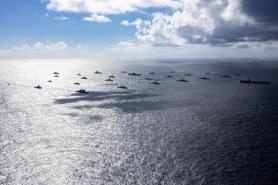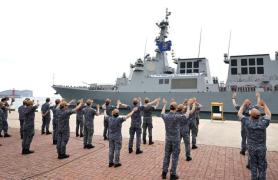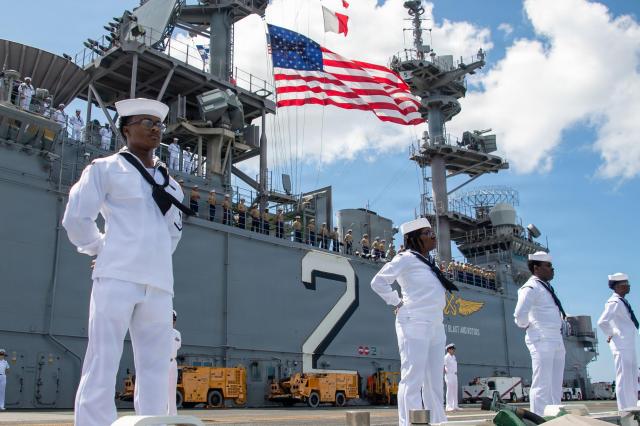
The biennial exercise, known as RIMPAC, began Wednesday and will run through July 31 in waters off Hawaii and across the Pacific, according to the U.S. Defense Department.
About 30,000 personnel from multiple countries are taking part. The Pentagon described the exercise as “a unique training opportunity” for allies and partners to strengthen their collective capabilities and promote a free and open Indo-Pacific.
South Korea, which has participated in RIMPAC since 1990, is serving for the first time as commander of the combined maritime component, overseeing operations by the multinational naval forces participating in the drill.
The commander of the U.S. Third Fleet serves as the head of the combined task force, while subordinate commands include the combined maritime and air components and a combined joint special operations task force.
South Korea dispatched the 8,200-ton Jeongjo the Great, its newest Aegis destroyer, from Jeju Naval Base earlier this month. The 3,000-ton Dosan Ahn Chang-ho submarine and a P-8A maritime patrol aircraft are also participating for the first time.
U.S. Navy Vice Adm. Jeffrey Jablon said at a press briefing in Hawaii on Wednesday that the exercise involves 30 countries, 31 surface ships, five submarines and about 200 aircraft, according to Defense One.
Jablon said between 30 and 35 tests involving unmanned systems would be conducted and form a major part of this year’s exercise, without providing further details.
He added that the war between the United States and Iran had not affected the exercise.
This year marks the 30th RIMPAC. Led by the U.S. Third Fleet, the exercise is designed to protect Pacific sea lanes, strengthen joint responses to maritime threats and improve interoperability among participating forces.

Copyright ⓒ Aju Press All rights reserved.