

Journalist

Kim Hee-su김희수
khs@ajupress.com
ReporterMinistry of Foreign Affairs, Seoul City Hall & Defense, Foreign Affairs
Kim Hee-su is a bilingual reporter at AJU Press, covering defense and foreign affairs. Before joining AJP in 2025, she worked at The Korea Times, where she wrote interview stories, including a profile of North Korean defector Kim Gum-hyok, and produced digital content. She also previously worked as a researcher for KBS News 9’s International News Department, supporting correspondents in 10 countries around the world. She graduated from the University of Toronto in Canada with a double major in Book and Media Studies and East Asian Studies.
"I'm driven by storytelling."
Latest by Kim Hee-su
-
 U.S. bidder challenges Hanwha with higher offer for Austal USA SEOUL, September 09 (AJP) - A U.S.-led investment group has emerged as a rival to Hanwha in the race for Austal USA, offering as much as $1.35 billion for the American shipbuilding business, above the South Korean defense group's earlier proposal. “Austal has received a non-binding indication of interest from a syndicate led by Wildcat Resources LLC” to acquire Austal USA, the Australian shipbuilder said in a filing to the Australian Securities Exchange on Wednesday. The proposal values Austal USA at between $1.25 billion and $1.35 billion on a cash-free, debt-free basis and is conditional on four weeks of due diligence. Wildcat has indicated that it “intends to operate the company as a standalone platform,” retaining the Austal brand and its U.S. operations, Austal said. AJP Takeaways - Wildcat Resources has offered $1.25 billion to $1.35 billion for Austal USA, topping Hanwha’s earlier bid. - Hanwha Defense USA has proposed $1.05 billion to $1.2 billion and is seeking to expand its U.S. shipbuilding footprint. - Austal USA builds vessels for the U.S. Navy and Coast Guard and operates key facilities in Alabama and California. The new approach puts the Wildcat-led group in direct competition with Hanwha Defense USA, which made a preliminary bid for Austal's U.S. operations last month. “Hanwha Defense USA has made a preliminary, non-binding offer to acquire Austal's U.S. business,” company spokesperson James Hewitt said in a statement. Hanwha's proposal values Austal USA at between $1.05 billion and $1.2 billion, meaning Wildcat's offer is higher at both ends of the range. Austal previously said Hanwha's proposal was also on a cash- and debt-free basis and subject to due diligence and other conditions. “Any deal will be contingent on due diligence that permits a thorough evaluation of Austal USA's operations and financials, including newly disclosed information,” Hewitt said. “Hanwha has made it a priority to significantly contribute to revitalizing American shipbuilding and is exploring a range of options to expand our footprint in the United States,” he added. Hanwha has been seeking to deepen its presence in the U.S. naval shipbuilding and defense market. It has already built a 19.9 percent economic interest in Austal and acquired Philly Shipyard in 2024. Austal USA is particularly attractive because of its role in major U.S. naval programs. The company operates a shipyard in Mobile, Alabama, where it builds vessels for the U.S. Navy and Coast Guard, and employs around 3,500 workers. It also has ship repair and support operations, including facilities in San Diego. Austal said its board and advisers will consider the Wildcat proposal. No binding transaction has been agreed with either bidder. 2026-09-09 17:19:48
 -
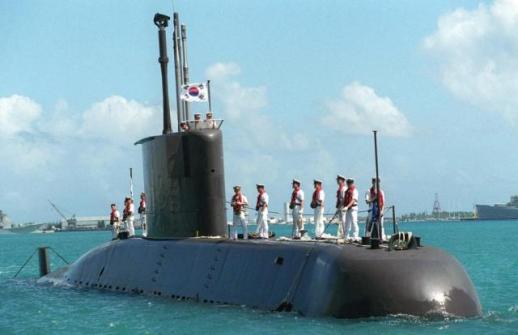 Seoul's nuclear sub project reaches IAEA, yet nowhere with Washington SEOUL, September 08 (AJP) - South Korea has moved to clear a major safeguards hurdle for its nuclear-powered submarine program, formally opening consultations with the International Atomic Energy Agency. But substantive negotiations cannot advance far until Washington provides clearer guidance on how Seoul can secure nuclear fuel for the submarines. IAEA Director General Rafael Grossi said Monday that South Korea "has formally notified the Secretariat of its intention to start consultations" on an arrangement under Article 14 of its Comprehensive Safeguards Agreement with the agency. Seoul has also submitted relevant declarations to the IAEA and reaffirmed its commitment to meeting its obligations under the Nuclear Non-Proliferation Treaty, the safeguards agreement and the Additional Protocol, Grossi said. He added that he expects consultations to continue "in the same spirit of transparency." The notification represents a concrete step forward from June, when Grossi described discussions with Seoul as being at a preliminary stage. South Korea is not negotiating a new safeguards agreement with the IAEA. The two sides must instead work out a separate arrangement under Article 14 of their existing agreement, which has governed the application of nuclear safeguards in South Korea since 1975. Article 14 allows nuclear material normally subject to IAEA safeguards to be used in a non-proscribed military activity such as naval nuclear propulsion, provided South Korea and the agency agree on how the temporary non-application of safeguards will work. Under the existing agreement, the arrangement must set out, as far as possible, the period or circumstances during which safeguards will not apply and require Seoul to keep the IAEA informed of the quantity and composition of the nuclear material involved. Normal safeguards would have to be reapplied once the nuclear material is returned to a peaceful nuclear activity. The negotiations could cover the submarine reactor, nuclear fuel and shore-based infrastructure while establishing mechanisms to protect sensitive military information. Grossi stressed in June that the safeguards framework would depend on the specific submarine design, fuel and supporting infrastructure. Establishing a system capable of addressing proliferation concerns would therefore take time, he said. Australia offers a glimpse of how lengthy and technically detailed the process could become. Australia began formal negotiations with the IAEA on an Article 14 arrangement in May 2023, but the talks remained ongoing as of June this year. The two sides have discussed issues including advance notification, reporting and verification, the duration and circumstances of the arrangement, the point at which normal safeguards would resume and safeguards for facilities and sites associated with the submarine program. South Korea could face a similarly detailed process before reaching a final arrangement. Yet the bigger unresolved issue lies outside the IAEA: how South Korea and the United States will reach an agreement on securing nuclear fuel for the submarines. The government plans to use uranium enriched to below 20 percent and launch its first nuclear-powered submarine in the mid-2030s, with operational deployment planned for the late 2030s. Washington formally backed Seoul's submarine ambitions following the summit between President Lee Jae Myung and U.S. President Donald Trump last October. A joint fact sheet released in November said the United States had approved South Korea's construction of nuclear-powered attack submarines and would work with Seoul on requirements for the project, including ways to source the fuel. Turning that political commitment into an actual fuel supply arrangement has proved more complicated. The Foreign Ministry said in June that nuclear fuel for submarines constitutes a military use of nuclear energy and therefore needs to be handled separately from negotiations over South Korea's civilian uranium enrichment and spent fuel reprocessing rights under the bilateral nuclear cooperation agreement. The government has said importing submarine fuel from the United States is among the options under consideration and that a separate arrangement with Washington would be needed. Yet bilateral security negotiations, including discussions concerning the nuclear-powered submarine program, have stalled. A presidential official said last week that South Korea-U.S. negotiations on security issues were "not currently progressing," referring in part to Seoul's plan to build nuclear-powered submarines under last year's bilateral agreement. The official did not elaborate on what was holding up the talks or when substantive negotiations on the submarine program might resume. "It is possible to operate a submarine using the kind of nuclear fuel used in nuclear power plants," Suh Kune-yull, an emeritus professor of nuclear engineering at Seoul National University, said, noting that submarine fuel options are not limited to highly enriched uranium and that higher enrichment mainly allows a reactor to operate longer before refueling. South Korea therefore does not necessarily need the highly enriched uranium used by U.S. nuclear submarines, he said, although the fuel concentration ultimately chosen would have implications for reactor design, endurance and refueling requirements. Suh also stressed that securing the fuel itself is only part of the issue. "What to do with it afterward is another issue, and discussions would have to follow," Suh said, referring to the handling of spent nuclear fuel after its use aboard the submarines. The IAEA notification moves Seoul's nuclear-powered submarine program into a more formal safeguards phase, but it resolves neither the technical details of that framework nor the more immediate question of fuel access. Progress toward an operational submarine will ultimately depend on two negotiations moving forward in parallel: a detailed Article 14 arrangement with the IAEA and a separate deal with Washington that gives South Korea a viable source of nuclear fuel. AJP Takeaways - South Korea has formally started IAEA consultations on safeguards for its nuclear-powered submarine program. - The main hurdle remains securing nuclear fuel through a separate agreement with the United States. - Seoul must advance both IAEA safeguards talks and U.S. fuel negotiations before the program can move forward. 2026-09-08 16:29:02
 -
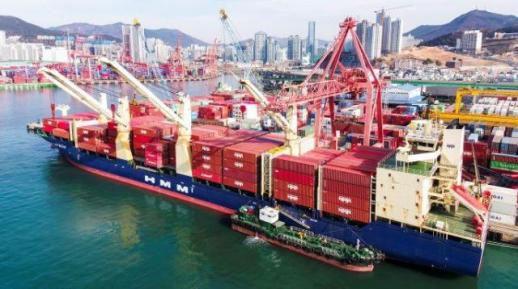 HMM lands $3.5 billion long-term shipping contract with Vale SEOUL, September 08 (AJP) - HMM has signed a 4.7 trillion won ($3.5 billion) long-term shipping contract with Brazilian mining giant Vale, locking in cargo for eight new bulk carriers for 25 years as South Korea's largest container shipper expands stable earnings outside its mainstay container business. The agreement is HMM's third major long-term contract with Vale following two 10-year deals signed in May and September last year worth a combined 1.07 trillion won, the South Korean carrier said Tuesday. Under the latest contract, each vessel will operate for 25 years beginning in 2030. The contract is worth 4.697 trillion won, equivalent to 43.13 percent of HMM's consolidated revenue of 10.89 trillion won in 2025, according to a regulatory filing. The agreement runs from April 1, 2030, through Oct. 31, 2056, although each vessel will operate under a 25-year contract from the time it enters service. Vale also has an option to extend the contract by up to five years. The deal marks HMM's third major long-term contract with Vale following two 10-year agreements signed in May and September last year worth a combined 1.07 trillion won. HMM had announced in June that it would order eight 210,000-ton Newcastlemax bulk carriers for the contract, equipped with the world's first engines capable of running on methanol, ethanol and conventional fuel oil. The ships will also be built "LNG- and ammonia-ready," allowing future conversion to liquefied natural gas or ammonia propulsion. They will carry rotor sails that harness wind to supplement engine propulsion, among other equipment designed to improve fuel efficiency and reduce carbon emissions. The deal advances HMM's effort to reduce its dependence on volatile container freight rates by expanding long-term contracts with large, creditworthy cargo owners. Since CEO Choi Won-hyuk took office at the end of March last year, the carrier has sought to streamline its bulk shipping fleet while reducing its reliance on short-term chartered vessels and securing more long-term cargo commitments. HMM's bulk division posted operating profit of 240 billion won in the first half of this year, extending a sharp improvement that began in the fourth quarter of 2025. The carrier has also broadened its non-container portfolio beyond conventional dry bulk carriers and tankers into liquefied-gas carriers, pure car and truck carriers and multipurpose vessels. Its bulk fleet expanded to 61 vessels as of the first half of this year from 44 at the end of March 2025. "HMM will continue strengthening its stable earnings base by expanding the share of long-term contracts and restructuring its business portfolio, while expanding businesses centered on high profitability and future growth," a company official said. Under the latest contract, HMM will transport cargo mainly between Brazil and destinations including China. Payments will be made within 10 business days after loading for each voyage. The final contract value could change depending on exchange rates, fuel prices, shipping routes and vessel operating days, HMM said. HMM shares were down 1.86 percent at 21,150 won as of 1:40 p.m. Tuesday. 2026-09-08 13:57:43
 -
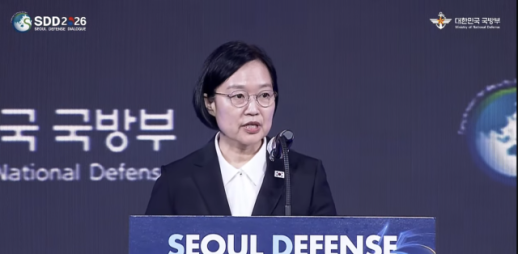 PM Han vows to turn peace on Korean Peninsula into regional stability SEOUL, September 08 (AJP) - Prime Minister Han Seong-sook said Tuesday that South Korea will work to turn peace on the Korean Peninsula into broader stability in Northeast Asia and contribute to global peace and shared prosperity. “The peace we seek to build on the Korean Peninsula will not remain confined to the peninsula,” Han said in a keynote speech at the Seoul Defense Dialogue in Seoul. “We will build a foundation that connects peace on the Korean Peninsula to stability in Northeast Asia and, ultimately, contributes to global peace and shared prosperity,” she said. Han said growing global interconnectedness has made overseas conflicts increasingly consequential for South Korea, even when the country itself is not directly involved in war. “We live in an era when wars elsewhere can have significant economic repercussions and affect people’s livelihoods even if no war breaks out in our own country,” Han said. “The world is more closely connected than ever, yet paradoxically, conflict and fragmentation are deepening.” She stressed that peace is closely tied to economic security and growth. “When peace is shaken, the foundation for growth is also shaken,” Han said. “Peace and coexistence are not ideals, but realistic choices for our people and our national interests.” The prime minister said the government’s vision of an “indispensable Korea” does not mean a country seeking to move ahead alone. Rather, she said, South Korea aims to strengthen its independent defense capabilities and deterrence while pursuing pragmatic diplomacy centered on the national interest, seeking common interests and promoting peaceful coexistence and shared prosperity through trust and dialogue. Han also pledged to use South Korea’s advanced manufacturing capabilities, competitive defense industry, experience with democratization and global cultural influence to help build a safer and more prosperous world. “We will also fulfill our responsibilities in peacekeeping, humanitarian assistance, disaster response and reconstruction,” she said. Describing the Seoul Defense Dialogue as a forum to discuss “how countries can create common interests in an era of turmoil,” Han said South Korea would take a leading role. “South Korea will lead the way,” she said. “We will demonstrate through responsible action that coexistence can lead to shared interests.” AJP Takeaways - PM Han said Korean Peninsula peace should support stability in Northeast Asia and global prosperity. - She called peace and coexistence practical choices for South Korea’s security, economy and national interests. - Han pledged stronger deterrence, pragmatic diplomacy and a greater role in global security. 2026-09-08 12:07:42
 -
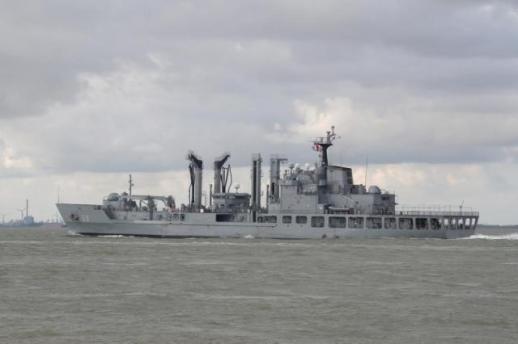 Seoul's Hormuz dilemma puts Tokyo on notice SEOUL, September 07 (AJP) - The heat from Washington is rising on Seoul to contribute to reopening the Strait of Hormuz, and Tokyo is increasingly feeling it too as Japan braces for the possibility that it could be next in line for a U.S. call to act. South Korea has yet to decide whether to send military assets to the strategic waterway, but the Trump administration has become increasingly explicit in demanding support from an ally heavily dependent on Middle Eastern energy. The dilemma is being watched closely in Japan, which faces an even greater exposure to Hormuz and many of the same questions over how far a U.S. ally should go in sharing the burden of keeping vital sea lanes open. The South Korean Ministry of National Defense said Monday that no specific form of military contribution has been decided, stressing that discussions remain under way with the United States and other partners. “The government is closely consulting with the international community, including the United States, on practical ways to contribute to freedom of navigation in the Strait of Hormuz and the swift restoration of peace and stability in the Middle East,” a Defense Ministry official said. “No specific measures have been decided at this point.” “The review has likely already been completed, and South Korea is expected to provide some form of support. The government appears to be gauging reactions before making a move,” a source familiar with the discussions said on condition of anonymity. The ministry said Seoul has also been holding consultations with Britain and France without disclosing details. The comments came as Washington sharpened its public pressure. A White House official said Sunday that the United States was “still waiting” for South Korea to deploy resources to the region, pointing directly to the country's reliance on Middle Eastern oil. The Pentagon separately reiterated President Donald Trump's expectation that allies help defend freedom of navigation through Hormuz. Trump has repeatedly singled out South Korea since the war with Iran began on Feb. 28. He said in March that South Korea, Japan, China and other countries dependent on the strait would “have to get involved a little bit,” while emphasizing that Washington had long helped defend South Korea. The rhetoric has become more pointed. Trump said late last month that he would “remember” what he described as South Korea's reluctance to assist the United States over Iran. He also recently shared a Washington Post opinion column urging him to pressure Seoul to sell its Cheongung-II, or M-SAM II, air defense system to Ukraine, adding to perceptions that Washington expects a broader security contribution from its ally. The implication has not been lost on Tokyo. Japan and South Korea sit in remarkably similar positions as two of Washington's closest Asian allies and major importers of Middle Eastern energy. Japan's dependence is even greater. Around 93 percent of Japan's crude oil imports pass through the Strait of Hormuz, compared with roughly 61 percent for South Korea. The disparity leaves Tokyo vulnerable to the same argument Washington is already making to Seoul: countries whose economies depend on the waterway should contribute more directly to keeping it open. Japanese media have increasingly framed South Korea's deliberations as a possible precedent. A Korean deployment, even one limited to surveillance, logistics or mine-clearing support, could make it harder for Tokyo to resist similar pressure from Washington. Japan has so far avoided committing Self-Defense Force assets to an active operation. Its government has instead emphasized diplomacy, safe navigation and close coordination with international partners while insisting that no deployment decision has been made. Tokyo, however, has not remained outside discussions. Japan has taken part in consultations over a possible multinational mission led by Britain and France, reflecting concerns that prolonged disruption to Hormuz would pose an immediate threat to the country's energy security. The legal and political hurdles are higher for Japan. Its postwar constitutional framework and security legislation impose tighter restrictions on Self-Defense Force operations in active conflict zones, particularly where a mission could amount to the use of force. Mine-clearing after hostilities subside would be one of the more legally feasible options, while operating amid active combat would be far more complicated. South Korea faces fewer constitutional constraints but carries its own political risks. Iran has warned that any South Korean military action directed against it would be considered participation in the war. Seoul therefore has strong incentives to draw a clear distinction between protecting commercial shipping and taking part in combat operations. Defense experts said a narrowly defined deployment could offer a middle course. “We have reached a point where it is time to consider a deployment,” Choi Ki-il, a professor of military studies at Sangji University and head of the Korea Defense Industry Research Institute, told AJP. Choi said any mission should focus on protecting South Korean vessels and crews and supporting freedom of navigation rather than taking part in direct combat against Iran. “Even if we deploy, our role should be limited to protecting our own ships,” Choi said. He said maritime patrol aircraft, warships or logistics support assets could be considered depending on what the government determines is necessary. Among the assets reportedly under consideration are the Navy's P-8A Poseidon maritime patrol aircraft and the 11,000-ton ROKS Soyang fast combat support ship. The P-8A can conduct wide-area maritime surveillance, while the Soyang can provide fuel, ammunition and other supplies to naval forces at sea. The Defense Ministry stressed Monday that no specific assets, timing or scale have been decided. A multinational framework could give Seoul greater political room. Britain and France have been leading discussions over a defensive force aimed at protecting civilian shipping and supporting mine-clearing operations in and around the strait. “If South Korea participates, it should not do so independently, but as part of a coalition force,” Kim Hong-yoo, a professor at Kyung Hee University and a policy committee member of the Korea Defense Industry Association, told AJP. Kim said a coalition format could allow South Korea to take on support functions without leading a separate Korean operation. Coalition fleets can include not only combat vessels but logistics and other support ships, he said. The National Security Council would likely become involved once a deployment decision is made because the government would then have to determine which forces could be spared without undermining South Korea's own defense posture, Kim said. President Lee Jae Myung's state visit to France adds another layer to the deliberations. Lee is scheduled to hold summit talks with French President Emmanuel Macron on Tuesday. France, together with Britain, has played a leading role in discussions over a multinational Hormuz mission, making the issue a possible subject for discussion even though neither government has confirmed it will be on the summit agenda. A coalition-based contribution could give Seoul a way to respond to Washington without appearing to join a unilateral U.S.-led military campaign against Iran. The same formula could eventually become relevant to Japan. Tokyo's domestic debate already reflects competing instincts. Conservative voices have argued that Japan cannot indefinitely rely on other countries to protect a waterway indispensable to its economy and have called for a Maritime Self-Defense Force contribution. Others argue that Japan should avoid being pulled into a widening war and instead use its long-standing diplomatic channels with both Washington and Tehran. The debate ultimately goes beyond Hormuz. Washington's pressure on Seoul is becoming a broader test of how the United States expects its Asian allies to share security responsibilities outside Northeast Asia. South Korea and Japan have long relied on the U.S. military to deter threats closer to home. The Trump administration is increasingly asking what they are prepared to do in return when American strategic interests and global trade routes are at risk elsewhere. A South Korean decision to send even limited assets could therefore change more than Seoul's relationship with Washington. It could establish a new benchmark for Asian allied burden-sharing. Tokyo would then have to explain why Japan, whose economy depends even more heavily on Hormuz, should remain on the sidelines. For Seoul, the immediate challenge is finding a contribution substantial enough to satisfy Washington without crossing the line into direct participation in the Iran war. For Tokyo, the harder question may be what happens if South Korea moves first. AJP Takeaways - Washington is intensifying pressure on South Korea to contribute to reopening the Strait of Hormuz. - Tokyo is watching Seoul closely as Japan could face the same U.S. demand given its even heavier dependence on Middle Eastern oil. - South Korea is weighing limited roles such as maritime surveillance, logistics and coalition support rather than direct combat. - A Korean deployment could set a precedent for how Washington expects its Asian allies to share security burdens beyond their home region. 2026-09-07 17:52:06
 -
 S. Korea, US, Japan launch Freedom Edge without US carrier SEOUL, September 07 (AJP) - South Korea, the United States and Japan began their annual Freedom Edge exercise Monday near Jeju Island, with the five-day multidomain drill set to run without a U.S. aircraft carrier for a second straight year. The five-day exercise, which runs through Sept. 11, involves major naval and air assets from the three countries, South Korea's Joint Chiefs of Staff said. Six warships, including Aegis destroyers, as well as maritime patrol aircraft, fighter jets and aerial refueling aircraft are expected to take part. South Korea is participating with two 7,600-ton Aegis destroyers, the ROKS Seoae Ryu Seong-ryong and ROKS Yulgok Yi I. Japan has deployed the 7,700-ton Aegis destroyer JS Atago, the 5,100-ton destroyer JS Asahi, a P-1 maritime patrol aircraft, an SH-60K helicopter and F-15 fighter jets, according to Japan's Joint Staff. The U.S. Navy's 7th Fleet said Sept. 3 that the Aegis destroyer USS Benfold had arrived in Busan, raising expectations that the 6,900-ton warship could also participate in the exercise. Maritime missile defense involving Aegis-equipped warships from all three countries has traditionally been a central component of Freedom Edge. A U.S. aircraft carrier, however, is unlikely to participate for a second consecutive year. U.S. carriers joined the first two Freedom Edge exercises in June and November 2024, but Washington's carrier deployments in the region have been constrained as the prolonged war with Iran draws more U.S. military assets toward the Middle East. The nuclear-powered USS George Washington, previously based in Japan, has been sent to the Middle East under the Trump administration. The USS Abraham Lincoln, which had been operating in the region for an extended period, is returning to its home port in San Diego after being relieved by the George Washington. "The three countries will strengthen their operational capabilities and joint response capabilities across various domains, including maritime, air and cyber, and maintain a robust and stable cooperative relationship through the exercise," South Korea's JCS said. Freedom Edge was launched after the leaders of South Korea, the United States and Japan agreed at their 2023 Camp David summit to conduct regular multidomain exercises. This week's exercise marks the fourth iteration and is aimed at improving interoperability among the three militaries across multiple domains. "This exercise is an annual defensive exercise conducted in accordance with international law and norms to enhance deterrence and response capabilities against North Korea's nuclear and missile threats and to safeguard regional peace and stability," the JCS said. Japan and the United States, however, have framed the exercise in broader regional terms, including security challenges across the Indo-Pacific. Japan's Joint Staff said last month that the exercise is intended to demonstrate the three countries' "unwavering commitment to peace and stability in the Indo-Pacific region," while the United States has similarly said Freedom Edge and continued trilateral cooperation underscore their commitment to safeguarding a free and open Indo-Pacific. AJP Takeaways - South Korea, the U.S. and Japan launched their annual Freedom Edge multidomain exercise near Jeju Island. - The drill includes Aegis destroyers, aircraft and missile-defense training, but no U.S. aircraft carrier for a second straight year. - Seoul emphasizes North Korean threats, while Washington and Tokyo frame the exercise around broader Indo-Pacific security. 2026-09-07 13:55:08
 -
 Russia ships Vostok oil as South Korea tests Arctic route SEOUL, September 07 (AJP) - Russia has shipped the first crude oil from its Vostok Oil project through the Arctic, highlighting Moscow's push to expand the Northern Sea Route just as South Korea conducts its first trial voyage by a container ship along the same corridor. The first batch of crude from Vostok Oil, a major development project in Russia's Arctic Taimyr region, was loaded Friday at a newly built terminal in Sever Bay onto the ice-class tanker Valentin Pikul, according to Russian state oil company Rosneft. Another tanker, the Akademik Gubkin, was waiting nearby to dock at the terminal, Rosneft CEO Igor Sechin said during a ceremony broadcast on Russian state television and watched remotely by Russian President Vladimir Putin. The shipment marks the start of crude exports from one of Russia's most ambitious energy projects and could increase cargo volumes along the Northern Sea Route, the Arctic shipping corridor connecting Europe and Asia along Russia's northern coast. Russian Deputy Prime Minister Alexander Novak said oil produced from the project would be delivered to buyers in the Asia-Pacific region and the West. Rosneft expects Vostok Oil to supply 30 million metric tons of crude to the global market in the second half of next year and increase annual shipments to 50 million tons by 2030, equivalent to about 1 million barrels per day, according to Bloomberg estimates. Sechin said annual output could eventually reach 100 million tons if demand and economic conditions allow. The development comes as South Korea is testing the commercial potential of the same Arctic maritime corridor. The PanStar Acro, the first South Korean container ship to embark on a trial voyage through the Northern Sea Route, entered Arctic waters on Aug. 31 after departing Busan New Port on Aug. 22. The vessel is sailing westward along Russia's northern coast and is expected to pass through the Vilkitsky Strait around Sept. 10. The strait, located between Russia's Taimyr Peninsula and the Severnaya Zemlya archipelago, is a key passage along the Northern Sea Route. The geographic overlap is notable as the Vostok Oil project is also based in the Taimyr region, placing Russia's emerging Arctic oil export infrastructure close to a key section of the route currently being tested by the South Korean vessel. The PanStar Acro is scheduled to arrive at the British port of Felixstowe around Sept. 14, although its timetable has already been delayed from an earlier Sept. 9 arrival as the ship reduces speed in response to weather and sea ice conditions. The Arctic section of the voyage stretches about 6,400 kilometers. The broader northeastern route from Busan to Rotterdam covers roughly 13,000 kilometers, about 7,000 kilometers shorter than the conventional route through the Suez Canal. But the voyage is also demonstrating the operational challenges that remain before Arctic shipping can become a reliable commercial alternative. South Korea's Ministry of Oceans and Fisheries and the ship operator have prepared special safety measures for the trial. After calling at Felixstowe and other European ports, the PanStar Acro is scheduled to return to Busan through the Arctic route. The South Korean government plans to analyze data from the round trip, including sailing distance, travel time, fuel consumption, operating costs and schedule reliability, to assess the safety and economic viability of the route. AJP Takeaways - Russia has begun Vostok Oil exports via the Northern Sea Route. - South Korea is testing the same Arctic route with the PanStar Acro. - Seoul will assess its safety, cost and commercial viability. 2026-09-07 10:56:17
 -
 Iran warns S. Korea against Hormuz deployment as U.S. pressure builds SEOUL, September 06 (AJP) - Iran has warned that any South Korean military involvement in the Strait of Hormuz would be regarded as participation in the war, as Washington steps up pressure on Seoul to contribute. The unnamed official made the warning in an interview with Al Mayadeen, a Lebanon-based media outlet close to Hezbollah, according to a report Thursday. “If South Korea takes action against Iran in the Strait of Hormuz, it will be considered direct military aggression and participation in the war,” the official said. The official also urged Seoul not to give in to U.S. pressure to cooperate with what Tehran described as Washington’s military operations, arguing that South Korea should not sacrifice its own interests and reputation for U.S. policy in the region. The warning comes as South Korea weighs possible military and nonmilitary contributions to securing freedom of navigation through the Strait of Hormuz, a key waterway for global energy supplies and particularly important to South Korea, which receives more than 60 percent of its crude oil imports through the route. Seoul says no final decision has been made. The presidential office said Thursday that South Korea could consider military options as long as they do not significantly undermine readiness on the Korean Peninsula. Possible options reportedly under consideration include deploying P-8A maritime patrol aircraft, a naval logistics support vessel or mine-clearing personnel. Any deployment involving South Korean troops would also have to take domestic legal and political considerations into account, including possible approval from the National Assembly. Pressure from Washington over Hormuz has persisted since the U.S.-Israel war with Iran began on Feb. 28. Trump first called on countries heavily dependent on Gulf energy, including South Korea and Japan, to help secure the strait in March, arguing that those benefiting most from the shipping route should contribute to keeping it open. Washington and Seoul subsequently held discussions over a possible South Korean naval contribution. Trump renewed the criticism late last month, singling out South Korea while recounting what he described as Seoul’s reluctance to assist the United States over Iran. Trump said Aug. 30 that when he asked South Korea whether it could “help a little bit” with Iran, Seoul responded that it would prefer not to, adding that he would “remember” the response. The pressure appeared to broaden beyond the Middle East on Friday, when Trump shared a Washington Post opinion column on Truth Social calling for South Korea to sell its domestically developed Cheongung-II air defense missile system to Ukraine. The column by conservative commentator Marc Thiessen argued that Trump should pressure Seoul to provide the system, also known as the M-SAM II, as an interim solution to Ukraine’s shortage of air defense interceptors. Trump shared the column without adding his own comment. The move has drawn attention in Seoul because the Cheongung-II is a core element of South Korea’s own missile defense architecture, designed in part to counter North Korean ballistic missile threats. It also comes as Washington has increasingly linked allied support to a broader expectation that partners shoulder more of the security burden, whether in the Middle East or Ukraine. South Korean officials are now facing pressure to balance those alliance expectations with concerns over military readiness, domestic opposition and the risk of worsening relations with Tehran. Seoul, however, has sought to frame any possible role in Hormuz around protecting international shipping rather than joining combat operations against Iran. “The government is closely communicating with the international community, including relevant countries, for the swift restoration of peace and stability in the Middle East and the free passage of all vessels, including ours, through the Strait of Hormuz,” a Foreign Ministry official said. The issue could also surface during President Lee Jae Myung’s talks with French President Emmanuel Macron in France on Tuesday. France and Britain have been among the countries discussing a multinational mission to help secure the Strait of Hormuz, including possible mine-clearing operations, and Seoul has participated in consultations over the initiative. AJP Takeaways - Iran warned any South Korean military role in Hormuz could be treated as participation in the war. - Seoul is weighing military and nonmilitary options as Trump presses allies to help secure the strait. - U.S. pressure has widened, with Trump also amplifying calls for South Korea to sell Cheongung-II missiles to Ukraine. 2026-09-06 16:56:33
 -
 'Busan sickness' fuels Taiwan travel boom to Busan SEOUL, September 06 (AJP) - Flights between Busan and Taiwan have surged this year as a growing number of Taiwanese travelers visit South Korea’s southern port city, fueled by expanding direct routes and strong demand. A total of 6,609 flights operated between Busan and Taiwan through July, already matching the full-year total for 2024 and reaching 82.9 percent of the 7,976 flights recorded in all of 2025, according to aviation statistics from Korea Airports Corp. Passenger traffic has grown even faster. Some 1.14 million passengers traveled on Busan-Taiwan routes during the first seven months of this year, surpassing the 1.06 million recorded in all of 2024. The full-year figure for 2025 stood at 1.33 million. Airlines have responded by adding flights and launching new services. Taiwanese carriers including EVA Air and Starlux Airlines have expanded their presence, while South Korean carriers have also increased frequencies. Nine airlines currently operate between Busan and Taiwan Taoyuan International Airport near Taipei, while direct services also connect Busan with Kaohsiung and Taichung. Most flights between Busan and Taiwan are reported to have load factors of more than 80 percent. The popularity of Busan has even spawned a new expression on Taiwanese social media, “Busan sickness,” referring to travelers who miss the city after returning home and feel compelled to visit again. Taiwanese travelers were the largest group of foreign visitors to Busan this year. Of the 2.93 million foreign tourists who visited the city through July, about 605,000 were from Taiwan. Busan’s food, combination of mountains and sea, ease of travel and growing network of direct flights are among the factors credited with attracting Taiwanese visitors. Rising demand from Taiwanese travelers has led airlines to expand direct services, further boosting Busan's appeal as a destination. “With no restrictions on traffic rights, it is relatively easy for airlines to launch routes or add flights, and the greater choice of direct services appears to have attracted even more Taiwanese travelers,” an aviation industry official said. Tourism authorities are also stepping up promotions, with Busan targeting repeat Taiwanese visitors through its “Busan sickness” campaign and Taiwan holding a roadshow in Busan last month to attract more South Korean travelers. AJP Takeaways - Busan-Taiwan passenger traffic topped 1.14 million through July. - Airlines are adding direct flights as demand and load factors remain high. - “Busan sickness” reflects strong Taiwanese interest in revisiting Busan. 2026-09-06 15:02:44
 -
 Lee heads to France for state visit to deepen strategic cooperation SEOUL, September 06 (AJP) - President Lee Jae Myung left for France on Sunday for a state visit aimed at expanding cooperation in advanced industries and strengthening ties with Europe. The visit comes at the invitation of French President Emmanuel Macron, who asked Lee during his trip to South Korea in April to co-chair the Lumière Summit, an international film and audiovisual industry gathering in southern France. Lee is scheduled to attend the summit with Macron in Saint-Paul-de-Vence on Monday before traveling to Paris for a two-day state visit beginning Tuesday. Following an official welcoming ceremony, Lee will hold a one-on-one luncheon with Macron at the Élysée Palace, followed by an expanded summit involving delegations from both countries. The two leaders are expected to discuss ways to deepen cooperation in advanced technology sectors including artificial intelligence, space, nuclear energy and biotechnology. Seoul also hopes to expand exchanges involving young people and science and technology, while creating more opportunities for Korean cultural content in the European market. Lee will also attend a Korea-France business roundtable involving more than 20 companies from the two countries and a state dinner hosted by Macron and his wife. The trip comes as South Korea and France mark the 140th anniversary of diplomatic relations this year. His trip is also taking place as search efforts continue in Nepal for nine South Koreans who remain missing following severe flooding. “I will continue to receive updates while in France and make sure that all necessary measures are taken,” Lee said before his departure, adding that he would also carry out his diplomatic responsibilities “for the national interest and future generations.” On the final day of his visit Wednesday, Lee is scheduled to meet French National Assembly President Yaël Braun-Pivet and OECD Secretary-General Mathias Cormann. He is also expected to hold a luncheon with members of the Korean community in France. AJP Takeaways - Lee Jae Myung is visiting France to deepen South Korea-France strategic cooperation. - Talks will cover advanced industries, technology, business and cultural exchanges. - The trip marks 140 years of diplomatic ties between South Korea and France. 2026-09-06 14:34:16