

Journalist

Kim Hee-su김희수
khs@ajupress.com
ReporterMinistry of Foreign Affairs, Seoul City Hall & Defense, Foreign Affairs
Kim Hee-su is a bilingual reporter at AJU Press, covering defense and foreign affairs. Before joining AJP in 2025, she worked at The Korea Times, where she wrote interview stories, including a profile of North Korean defector Kim Gum-hyok, and produced digital content. She also previously worked as a researcher for KBS News 9’s International News Department, supporting correspondents in 10 countries around the world. She graduated from the University of Toronto in Canada with a double major in Book and Media Studies and East Asian Studies.
"I'm driven by storytelling."
Latest by Kim Hee-su
-
 Dementia to affect more than 1 in 10 elderly Koreans by 2040 SEOUL, September 06 (AJP) - More than one in 10 South Koreans aged 65 or older are projected to have dementia by 2040 as the country’s population ages rapidly, government estimates showed Sunday. The dementia prevalence rate among people aged 65 and older is expected to reach 10.34 percent in 2040, according to projections by the Ministry of Health and Welfare based on national population forecasts and a nationwide epidemiological survey on dementia. The rate fell slightly from 9.17 percent in 2020 to 9.09 percent last year, but is expected to rise again over the coming years. By 2050, the prevalence rate is projected to climb to 11.81 percent, with about 2.23 million dementia patients among an elderly population of 18.91 million. Medical spending on dementia has also been rising. According to the Health Insurance Research Institute under the National Health Insurance Service, medical expenses for dementia patients aged 40 and older surpassed 1 trillion won ($741 million) for the first time in 2012 and rose above 2 trillion won in 2016 and 3 trillion won in 2020. The figure reached 3.34 trillion won in 2023, up 141.4 percent from a decade earlier. The increase was particularly pronounced among elderly women. In 2023, men aged 80 and older accounted for 52 percent of total dementia-related medical spending among male patients. For women, those aged 80 and older accounted for 82 percent of the total. Women in their 80s alone accounted for 1.3 trillion won in medical expenses, while those aged 90 and older accounted for 683.9 billion won. Dementia-related medical costs are expected to continue rising as South Korea’s population ages. Depending on the projection model, total medical expenses are forecast to reach between about 3.7 trillion won and 4.4 trillion won by 2030. “The number of people with dementia is expected to continue increasing and reach 1.3 to 1.5 times the 2023 level by 2030,” the researchers said. People aged 80 and older are expected to account for more than half of all dementia patients, while women are projected to make up about 65 percent of the total, they added. AJP Takeaways - More than 1 in 10 South Koreans aged 65 or older are projected to have dementia by 2040. - Dementia-related medical spending reached 3.34 trillion won in 2023, up 141.4 percent from a decade earlier. - People aged 80 and older and women are expected to account for most dementia cases as South Korea ages. 2026-09-06 11:25:11
 -
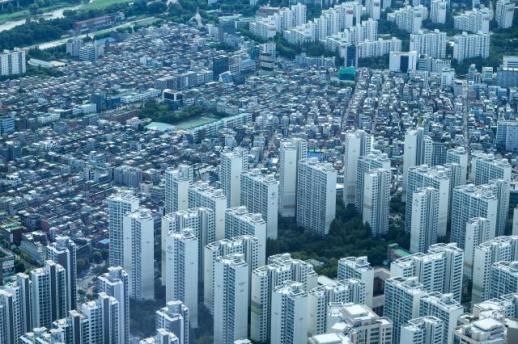 High-priced Seoul apartments face broader property tax reach by 2030 SEOUL, September 06 (AJP) - South Korea's comprehensive real estate holding tax could apply to high-priced apartments in nearly every Seoul district by 2030 if the recent pace of home price increases continues, according to a new simulation. The analysis, based on data from KB Kookmin Bank, examined 125 apartment complexes, selecting the five highest-priced complexes in each of Seoul's 25 districts. It was provided to Rep. Shin Dong-wook of the main opposition People Power Party. Under a scenario in which Seoul apartment prices continue rising by 11 percent a year, the same pace recorded between June 2025 and May 2026, apartments subject to the comprehensive real estate holding tax would be found in 22 of Seoul's 25 districts by 2030. Only Gangbuk, Geumcheon and Dobong districts would have none among the complexes examined. The number of taxable complexes in the sample would rise from 78 this year to 101 by 2030. The comprehensive real estate holding tax is imposed on owners of high-value real estate above a specified deduction threshold, in addition to the ordinary property tax charged by local governments. The simulation reflects the government's proposed tax changes from 2027, including a basic deduction of 1.4 billion won for owner-occupied homes and 1.2 billion won for properties where the owner does not live. The tax burden could also rise sharply if home prices maintain their current trajectory. For the 125 complexes studied, the combined tax burden for owners who do not live in their properties is estimated to increase from 58.9 billion won this year to 526.2 billion won in 2030, nearly nine times the current level. For owner-occupied homes, the figure is projected at 334.7 billion won. Even if annual home price growth slows to 5.5 percent, half the recent pace of 11 percent, the tax burden would still increase substantially. Under that scenario, 82 of the 125 complexes across 19 districts would be subject to the tax by 2030, while the combined tax bill for non-owner-occupied properties would reach 292.6 billion won, about five times this year's level. “If housing prices continue rising, the tax could increasingly affect ordinary homeowners across Seoul rather than only owners of the city's most expensive properties,” Shin said. AJP Takeaways - Seoul’s comprehensive real estate holding tax could reach 22 of 25 districts by 2030. - The number of taxable apartment complexes could rise from 78 this year to 101 by 2030. - Tax bills could climb sharply even if annual home price growth slows to 5.5 percent. 2026-09-06 10:28:35
 -
 Seoul faces rising debt burden despite improved debt ratio SEOUL, September 06 (AJP) - South Korea's debt burden is set to grow through 2030, even as its national debt-to-GDP ratio is projected to improve. The country's national debt is forecast to reach 1,734.1 trillion won ($1.28 trillion) by 2030, up from 1,412.8 trillion won this year, according to the Ministry of Planning and Budget's 2026 to 2030 fiscal plan. Of that amount, 1,312.3 trillion won, or 75.7 percent, is expected to be classified as deficit-financing debt, up from 1,025.2 trillion won and 72.6 percent this year. Deficit-financing debt refers broadly to borrowing without corresponding financial assets that can be used for repayment. Unlike debt incurred to finance loans or other assets, it must ultimately be serviced largely through future government revenue, including taxes. That makes its continued increase particularly important for the government's long-term fiscal position. The rising debt stock is also pushing up the cost of servicing it. Annual interest payments on national debt are projected to climb from 36.5 trillion won this year to 53.3 trillion won in 2030, crossing the 50 trillion won mark for the first time. Interest costs as a share of gross domestic product are expected to rise from 1.3 percent to 1.5 percent over the same period. Yet the government's headline debt indicator is expected to improve. National debt as a share of GDP is projected to fall from 50.6 percent this year to 48.3 percent in 2027 before edging up to 49 percent in 2030. The government attributes the improvement largely to stronger nominal economic growth and increased revenue, including higher tax receipts associated with the semiconductor boom. The ratio, however, does not capture all of the potential fiscal risks facing the government. Government-guaranteed debt, which is not counted as direct national debt unless the government is required to repay it, is expected to rise from 27.7 trillion won this year to 157.3 trillion won in 2030. Its ratio to GDP would increase from 1 percent to 4.4 percent. Such guarantees become a government liability if the public institutions or funds that borrowed the money are unable to repay their obligations. Much of the expected increase comes from government-backed financing for strategic industries and investment programs. The guaranteed balance of bonds issued by the Advanced Strategic Industry Fund is projected to rise from 6.4 trillion won this year to 78.5 trillion won in 2030 as the government expands investment in areas including artificial intelligence and AI data centers. New Korea-US strategic investment bonds are also expected to contribute to the increase. Debt held by major public institutions is also expected to increase sharply. The combined liabilities of 37 major public institutions are projected to rise from 778.3 trillion won this year to 997.4 trillion won in 2030, an increase of 219.1 trillion won in four years. A major contributor is Korea Land and Housing Corp., or LH, as the state housing developer takes on a larger role in expanding housing supply. Its debt alone is projected to rise from 197.5 trillion won this year to 372.8 trillion won by 2030. The risk would become more pronounced if economic growth or tax revenue weakens, particularly if the semiconductor cycle cools or indebted public institutions face difficulty meeting their obligations. AJP Takeaways - South Korea’s national debt is projected to reach 1,734.1 trillion won by 2030. - Deficit-financing debt is expected to account for 75.7 percent of total national debt by 2030. - Government guarantees and public institution debt are also set to rise, increasing long-term fiscal risks. 2026-09-06 09:53:42
 -
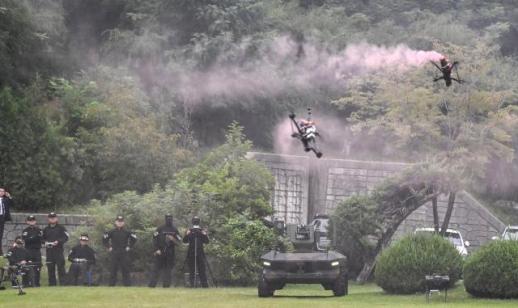 Seoul joins global arms race with record defense spending SEOUL, September 03 (AJP) - South Korea is joining a global rearmament push by packaging the largest military spending increase in nearly two decades against widening geopolitical conflict, changing warfare and U.S. pressure on allies to shoulder more of their own defense The government has proposed a record 73.28 trillion won ($54.0 billion) defense budget for 2027, up 8.2 percent from this year, with much of the additional money directed toward missile defense, drones, artificial intelligence and capabilities needed for greater military autonomy. The increase outpaces China's 7 percent rise in central government defense spending for 2026. Beijing allocated 1.91 trillion yuan this year and has yet to announce its 2027 budget. Japan, meanwhile, is seeking a record 8.9 trillion yen defense budget for fiscal 2027 as it continues a five-year military buildup centered increasingly on drones, missiles and other unmanned systems. South Korea's headline record comes with an accounting caveat. Starting in 2027, the government will include force operations, defense capability improvement and military manpower administration under a single defense-expenditure measure, making direct comparisons with previously reported totals less straightforward. The broader direction, however, is unmistakable. Global military expenditure rose 2.9 percent to $2.89 trillion in 2025, marking an 11th consecutive annual increase, according to the Stockholm International Peace Research Institute. Spending in Europe alone jumped 14 percent as Russia's war in Ukraine continued to drive rearmament across the continent. Recent conflicts are also changing what militaries are spending their money on. During the war with Iran, U.S. Admiral Brad Cooper told Congress that the United States and its allies had intercepted more than 1,500 missiles and 6,000 drones, putting heavy pressure on stocks of costly air-defense interceptors. The Pentagon has since moved to expand production of key missile defenses including Patriot PAC-3 and THAAD interceptors. Ukraine has demonstrated the challenge on an even larger scale. Russia launched nearly 1,500 drones at Ukraine over just four days in late August, more than half of them jet-powered, according to Ukrainian President Volodymyr Zelenskyy. Ukraine itself is on track to produce between 6 million and 7 million small first-person-view attack drones this year, or roughly 500,000 a month. The scale of drone warfare has created a two-sided problem for militaries: they need large quantities of inexpensive unmanned systems for surveillance and attack while developing cheaper ways to stop enemy drones without exhausting far more expensive missile inventories. South Korea's 2027 spending plan is built increasingly around those pressures while addressing threats specific to the Korean Peninsula. Spending on force operations will rise 5.9 percent to 50.04 trillion won, while the defense capability improvement budget, used largely to acquire and develop weapons, will jump 13.8 percent to 22.71 trillion won. The latter will increase by about 2.8 trillion won, the largest annual gain on record. Particularly striking is the increase tied to South Korea's push for greater military autonomy and the transfer of wartime operational control, or OPCON, from the United States. Funding designated for OPCON transition and self-reliant defense will surge 34.9 percent from 9.02 trillion won this year to 12.17 trillion won in 2027. The government plans to accelerate deployment of medium-altitude reconnaissance drones and the L-SAM long-range missile defense system, expand production of the KF-21 fighter jet and begin work on a nuclear-powered submarine program. The budget also incorporates lessons from drone-heavy conflicts. Funding for artificial intelligence and manned-unmanned teaming systems will increase 55.5 percent, while spending on drone and counter-drone capabilities will rise 18.8 percent. The military plans to develop swarm and loitering attack drones while expanding laser-based and other counter-drone defenses, reflecting the growing need to counter large numbers of relatively inexpensive aerial threats without relying exclusively on costly interceptors. The buildup comes at an important moment for the future of the South Korea-U.S. alliance. President Lee Jae Myung recently nominated Kang Shin-chul, a former deputy commander of the South Korea-U.S. Combined Forces Command, as defense minister. Kang said Thursday that Seoul should pursue OPCON transition in a way that strengthens the alliance. The allies are in the second stage of a three-stage conditions-based transition process, and Seoul aims to complete the full operational capability assessment this year. The Lee administration wants to regain wartime operational control before Lee's term ends in 2030 and is seeking to establish a target year during the allies' annual Security Consultative Meeting this fall. The accelerating military buildup is unfolding alongside Lee's push to ease tensions with North Korea. Lee said Wednesday that conditions should be created for renewed dialogue between Washington and Pyongyang and called for the Korean Peninsula's decades-old armistice system eventually to be replaced by a permanent peace framework based on cooperation and prosperity. South Korean intelligence authorities have also detected signs that both North Korea and the United States may be interested in returning to dialogue, although no specific contacts have been confirmed. Beyond external threats, however, South Korea faces another defense challenge that additional spending alone cannot solve: a rapidly shrinking pool of military-age personnel. The 2027 proposal seeks to nearly double the number of full-time reservists from 3,700 to 7,000, expand the use of civilians for noncombat duties and invest more heavily in AI and unmanned systems to reduce reliance on manpower. That demographic pressure has also become central to Seoul's wider debate over military reform. The Defense Ministry is pushing to create a unified Armed Forces Academy by integrating the Army, Navy and Air Force academies. At a recent public hearing, Kim Hong-chul, director general for defense policy at the ministry, said South Korea's pool of available military manpower is projected to shrink from about 349,000 to roughly 204,000 by 2040, forcing the military to reduce its standing force of about 500,000 to somewhere between 350,000 and 400,000. The prospect has intensified debate over whether a smaller military should focus as heavily on improving the quality and specialization of individual personnel as on replacing manpower with technology. Kim Se-jin, secretary-general of defense policy group Mirae Saenggak, argued that population decline makes the capabilities of individual officers more, rather than less, important. "As our population declines, the capabilities of each individual officer become more important in future warfare," he said, arguing for greater specialization in military education rather than consolidation. AJP Takeaways • Korea joins global rearmament: Seoul's proposed 2027 defense budget rises 8.2 percent to a record 73.28 trillion won as China, Japan and European countries also raise military spending. • Drones reshape the spending race: Wars in Ukraine and Iran have exposed the need for both mass-produced attack drones and cheaper defenses against them, pushing Seoul toward drones, lasers and AI-enabled systems. • OPCON drives military investment: Spending tied to wartime operational control transition and self-reliant defense will jump 34.9 percent as South Korea accelerates missile defense, KF-21 production and a nuclear-powered submarine program. • Demographics become a security constraint: A shrinking military-age population is forcing Seoul to rely more heavily on reservists, civilians, AI and unmanned weapons while reopening debate over how the armed forces train future officers. 2026-09-03 18:02:06
 -
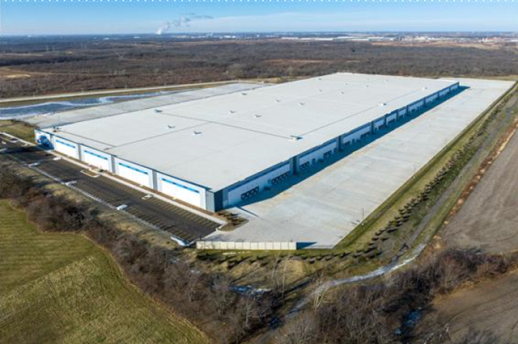 Korea-backed mega logistics center begins operations near Chicago SEOUL, September 03 (AJP) - A massive logistics center jointly developed by a South Korean logistics company and the Korea Ocean Business Corp. has begun full-scale operations in Elwood, Illinois, near Chicago, as Seoul expands its overseas logistics network. The Ministry of Oceans and Fisheries said Thursday that the Elwood logistics center was built through a joint investment by the Korean logistics company and the state-run Korea Ocean Business Corp (KOBC). The facility sits on a 295,000-square-meter site and has a total floor area of 103,000 square meters, roughly equivalent to 14 soccer fields. It is equipped with 130 loading docks for large trucks and other infrastructure designed to handle high volumes of cargo. The ministry highlighted the center's location as one of its key advantages. Elwood lies about 72 kilometers southwest of downtown Chicago and within 5.5 kilometers of the CenterPoint Intermodal Center, one of the largest logistics hubs in the United States. Its access to major rail and road networks allows cargo to be delivered to destinations across much of the country within two days, according to the ministry. The project was supported under the government's overseas logistics market development program, which has provided assistance to Korean logistics companies seeking to expand abroad since 2011. Under the program, five to 10 companies are selected each year to receive up to 200 million won ($147,394) each to help cover feasibility study costs for overseas projects. The Elwood project received such support in 2022 before moving forward with the investment. The facility also forms part of Seoul's broader effort to secure overseas logistics assets amid growing concerns over global supply chain disruptions. The government and KOBC have also set up a 1 trillion won fund to help Korean logistics companies secure overseas assets and strengthen supply chains. Seoul plans to establish 40 public-private logistics centers overseas by 2030. Logistics centers backed by Korean public institutions will be designated as shared overseas facilities through Korea Trade-Investment Promotion Agency (KOTRA), giving small and midsized Korean companies access to logistics services at lower costs. "We expect this project to enhance the competitiveness of Korean logistics companies while providing stable logistics services to Korean importers and exporters operating in the United States," said Kim Hye-jung, director general for shipping and logistics policy at the ministry. AJP Takeaways · Korea-backed logistics center begins operations near Chicago, expanding Seoul’s U.S. logistics network. · The 103,000-square-meter facility has 130 loading docks and access to major rail and road networks. · Seoul aims to establish 40 public-private overseas logistics centers by 2030. 2026-09-03 17:31:24
 -
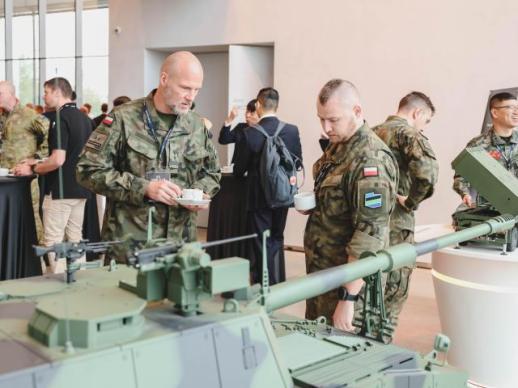 Hanwha unveils next-gen K9 with drones, wheeled variants SEOUL, September 03 (AJP) - Hanwha Aerospace has unveiled a next-generation operating concept for its K9 self-propelled howitzer that integrates fire-guidance drones to improve battlefield responsiveness. The concepts were presented at the fifth K9 User Club in Tartu, Estonia, from Sept. 2 to 4. More than 200 military and industry representatives from seven K9 user nations, South Korea, Estonia, Poland, Norway, Finland, Romania and Australia attended, along with observers from Spain and Sweden. “The K9 has established itself as an outstanding and highly capable artillery system. Its performance, reliability, and operational capabilities have earned the trust of a growing number of NATO allies and partner nations,” said Major General Viktor Kalnitski, Deputy Commander of the Estonian Defence Forces. Under the new operating concept, vertical takeoff and landing drones can detect and track targets, generate coordinates and transmit them directly to the K9 fire-direction system. The drones can also remain over the target area to observe impacts and conduct battle damage assessments. Hanwha said the system is designed to shorten the “sensor-to-shooter” cycle and reduce reliance on forward observers operating in exposed positions. The company also outlined wheeled artillery concepts incorporating K9A2 technologies, including its fully automated turret, building on Hanwha Defense USA's recent selection for the U.S. Army's Mobile Tactical Cannon prototype program. Hanwha also introduced its TOMMS digital support platform, which helps K9 operators manage spare-parts orders and deliveries. The company plans to use maintenance and operational data to anticipate parts needs and keep more vehicles ready for service. “The K9 User Club has become much more than an annual gathering,” said Peter JK Bae, senior executive vice president and head of Hanwha Aerospace's MRO Business Division. More than 2,400 K9-family systems have been ordered by over 10 countries worldwide, according to Hanwha. Australia is scheduled to host the next K9 User Club in 2027. AJP Takeaways · Hanwha unveiled a next-generation K9 concept integrating fire-guidance drones to speed up targeting and battlefield response. · Wheeled K9 variants are also under development, building on Hanwha Defense USA’s selection for the U.S. Army’s Mobile Tactical Cannon program. · More than 2,400 K9-family systems have been ordered worldwide, with Australia set to host the next K9 User Club in 2027. 2026-09-03 14:45:14
 -
 Defense nominee: OPCON transfer will strengthen alliance SEOUL, September 03 (AJP) - South Korea's defense minister nominee Kang Shin-chul said Thursday that the transfer of wartime operational control would be pursued in a way that strengthens the alliance with the United States. Kang made the remarks to reporters as he arrived Thursday at the Defense Convention in Seoul's Yongsan district, where he will prepare for his parliamentary confirmation hearing. Asked whether the government could complete the Full Operational Capability (FOC) assessment for the future Combined Forces Command within this year as planned, Kang stressed the importance of the alliance in the OPCON transition process. "The OPCON transfer is possible because the South Korea-U.S. alliance exists," Kang told reporters. "Without the alliance, the very concept of transferring OPCON would not exist." Seoul and Washington have been pursuing a conditions-based transfer of wartime operational control from the U.S.-led Combined Forces Command to a future command led by a South Korean four-star general. FOC verification is one of the key steps in assessing South Korea's readiness to lead combined wartime operations. Kang was more cautious when asked about the government's controversial proposal to integrate the Army, Navy and Air Force academies. "I understand that there are various opinions and concerns," Kang said. "I believe they all come from a desire to serve the military, and we will work to foster outstanding personnel." Pressed on whether the proposed integration could be withdrawn, Kang stopped short of giving a direct answer. "Whatever form the service academies took in the past, wherever they were located or whatever they were called, they were the academies of the Republic of Korea," he said. "The academies of the future will likewise belong to no one else but the Republic of Korea." Asked how he would respond if his views conflicted with those of the president, the commander-in-chief, Kang said, "For change to happen, there are things that must not change, and for things not to change, there are things that must change." "I will distinguish clearly between the two and move forward in a way that brings about genuine change," he added. Kang also faced questions over whether he had any involvement in former President Yoon Suk Yeol's Dec. 3, 2024, martial law declaration. "I understand that the presidential chief of staff has already given a clear answer to that question," Kang said. When announcing the Cabinet reshuffle last month, Presidential Chief of Staff Kang Hoon-sik said last month that a constitutional order task force and a Defense Ministry audit had found no evidence linking Kang Shin-chul to the Dec. 3 martial law attempt. Kang, a retired Army general and graduate of the Korea Military Academy's 46th class, has held several senior military posts, including director of strategic planning and chief director of operations at the Joint Chiefs of Staff and deputy commander of the South Korea-U.S. Combined Forces Command. Kang, who was nominated for defense minister on Aug. 30 and recently returned from Saudi Arabia, after he retired from ambassador to Saudi Arabia in January this year. "I feel a burden that is difficult to put into words," he said. "I know how heavy the responsibility of serving as defense minister is, which makes it feel even greater. But I will fulfill the mission entrusted to me." AJP Takeaways · Kang Shin-chul vowed to pursue OPCON transfer in a way that strengthens the South Korea-U.S. alliance. · The defense minister nominee avoided a direct answer on the proposed integration of the Army, Navy and Air Force academies. · Kang denied involvement in the Dec. 3 martial law attempt, citing earlier government findings clearing him of links. 2026-09-03 11:04:35
 -
 U.S. moves to deploy multi-domain forces to South Korea SEOUL, September 02 (AJP) - The United States is moving to deploy elements of its Multi-Domain Task Force (MDTF) to South Korea, potentially strengthening the U.S. military’s ability to counter China’s anti-access and area-denial capabilities in the region, according to reports and sources Wednesday. The Wall Street Journal reported last month that the U.S. Army, under acting Army Chief of Staff Gen. Christopher LaNeve, was moving MDTF forces from Europe to South Korea, citing Army officials. If confirmed, the move would likely involve elements of the 2nd Multi-Domain Task Force, which is headquartered in Germany and primarily operates in the European theater. The scale and composition of the forces being transferred have not been disclosed. The U.S. military is believed to be taking concrete steps toward stationing MDTF capabilities in South Korea, with indications that some personnel or assets may have already arrived in an advance capacity, according to sources familiar with the matter. The MDTF is a theater-level formation designed to conduct operations across multiple domains, including land, sea, air, space, cyberspace and the electromagnetic spectrum. The U.S. Army describes the MDTF as a maneuver force capable of synchronizing precision effects and long-range fires across domains to penetrate an adversary’s anti-access and area-denial (A2/AD) networks. China and Russia have developed extensive A2/AD capabilities aimed at preventing U.S. forces from entering contested areas or limiting their ability to operate effectively once there. The MDTF was created in part to counter such strategies by integrating capabilities including cyber and electronic warfare, intelligence, space operations and long-range precision fires. The U.S. Army established its first MDTF under I Corps in Washington state. The 2nd MDTF is based in Germany, while the 3rd MDTF is stationed in Hawaii. Gen. Xavier Brunson, commander of U.S. Forces Korea, has repeatedly called for MDTF capabilities to be stationed on the Korean Peninsula. At a press briefing in August last year, Brunson said he had considered bringing an MDTF, particularly its Multi-Domain Effects Battalion, to Korea because such capabilities could help U.S. forces “see, sense and understand” the battlefield environment more effectively. He reiterated the call in May during a keynote speech at the Association of the United States Army’s LANPAC symposium in Hawaii, saying he hoped to see an MDTF deployed to South Korea. AJP Takeaways · The U.S. is moving MDTF forces to South Korea, potentially from Germany. · MDTFs are designed to counter China and Russia’s A2/AD capabilities. · USFK chief Gen. Xavier Brunson has repeatedly backed an MDTF deployment to Korea. 2026-09-02 18:13:56
 -
 Korean planes are newer after Muan crash. Is flying safer? SEOUL, September 02 (AJP) - South Korea's airliners are spending a record 17.45 trillion won on safety this year, up more than 30 percent from 2025, in a clear sign of heightened investment following the Jeju Air disaster that killed 179 of the 181 people aboard nearly two years ago. Whether spending more alone can prevent another deadly accident is far less certain, experts say. The Ministry of Land, Infrastructure and Transport said Wednesday that 17 domestic airlines, Incheon International Airport Corp. and Korea Airports Corp. invested a combined 13.31 trillion won ($9.83 billion) in aviation safety in 2025. The figure rises to 17.45 trillion won in 2026, up 31.1 percent. The bulk went to aircraft purchases. Operators plan to spend 7.07 trillion won introducing 60 new aircraft this year, compared with 3.88 trillion won for 43 aircraft in 2025. The number means roughly three-quarters of the increase in overall safety investment between the two years can be explained by higher spending on new aircraft alone. The timing makes the 2026 figures particularly significant in assessing how the industry responded to the Muan disaster. Jeju Air Flight 7C2216 crashed at Muan International Airport on Dec. 29, 2024, killing 179 of the 181 people aboard after the aircraft belly-landed, overran the runway and struck a structure supporting the airport's localizer antenna. Much of the industry's 2025 spending, particularly aircraft purchases, maintenance programs and infrastructure projects, would have been planned before or around the time of the accident. The 2026 plans therefore offer a clearer indication of how operators adjusted investment priorities after the disaster, although the headline figure alone says little about how much additional money is being directed at specific safety weaknesses. Hwang Ho-won, president of the Korea Institute of Aviation Safety Technology, or KIAST, cautioned against treating the disclosure system itself as a response to the crash. "The safety investment disclosure system is not directly related to the Muan accident," Hwang told AJP. "Its purpose is to encourage airlines and other operators to invest more in safety by making public how much they are spending." The system was designed to make safety spending visible to passengers and encourage aviation businesses to maintain or increase investment. But what qualifies as "safety investment" is broad enough to complicate comparisons. "There is debate over whether everything included under the disclosure system represents pure safety investment or whether it also includes related expenditures," Hwang said. "If you define safety too broadly, the numbers can become inflated," he said. "We need to look at spending that actually and directly contributes to safety in order to determine whether real safety investment has increased." Hwang said the indicators are being reviewed to better distinguish expenditures with a direct impact on aviation safety. That distinction has become more important because the government expanded the categories included in the figures. The 13.31 trillion won reported for 2025 was 115.5 percent higher than the 6.18 trillion won recorded in 2024. Much of that apparent surge, however, reflected changes in accounting. The disclosure was expanded to include the cost of introducing new aircraft as well as broader personnel expenses covering pilots, cabin crew and other safety-related employees. Of the 2025 total, 3.88 trillion won went toward 43 new aircraft and 3.38 trillion won was attributed to safety-related personnel. Another 3.38 trillion won went toward aircraft maintenance, repair and modification, including preventive maintenance, while 1.88 trillion won was spent on engines and parts and 225 billion won on maintenance facilities and equipment. Preventive maintenance accounted for 92.7 percent of maintenance, repair and modification spending. The official definition extends across almost every major part of airline operations. It covers aircraft purchases, preventive maintenance, engines and spare parts, maintenance hangars and equipment, safety management systems and employee training. For airport operators, it also includes runways and taxiways, navigation systems, bird-strike prevention facilities and firefighting, rescue and snow-removal equipment. Several of those categories have drawn heightened scrutiny since the Muan disaster, particularly bird-strike risks, emergency response, airport infrastructure and the design of the localizer structure beyond the runway. Yet more than a year and a half after the crash, investigators have still not published a final report establishing its cause. The Aviation and Railway Accident Investigation Board's publicly available findings remain limited to its preliminary report issued in January 2025. Without a final determination, it remains difficult to say what additional investment could have prevented Flight 7C2216 or which measures would be most effective in preventing a similar disaster. Researchers at KIAST and Korea Aerospace University have also cautioned against judging airlines simply by the size of their safety budgets. "It is necessary to consider the characteristics of each operator as well as the scale when comparing safety investments," they said. Greater investment is generally expected to improve safety, but the relationship is not necessarily proportional, they noted. That makes measures such as safety investment per 10,000 flights and spending per aircraft potentially more revealing than the headline total. By total spending in 2025, full-service carriers Korean Air and Asiana Airlines invested 7.22 trillion won and 1.88 trillion won, respectively, together accounting for 68.4 percent of the industry's total. Among low-cost carriers, Trinity Air recorded the largest investment at 990.62 billion won, followed by Jeju Air at 977.57 billion won, Eastar Jet at 559.02 billion won and Jin Air at 407.99 billion won. Measured by safety investment per 10,000 flights, Parata Air ranked highest at 793.22 billion won, followed by Air Premia at 553.21 billion won and Korean Air at 490.73 billion won. On a per-aircraft basis, Korean Air led with 43.26 billion won, followed by Eastar Jet at 27.95 billion won and Asiana Airlines at 27.58 billion won. More detailed 2026 and 2027 investment plans for individual airlines and airport operators are scheduled to be disclosed Thursday. Those figures should provide a clearer picture of whether the industry's higher spending is concentrated mainly on fleet expansion and operating costs or whether more money is being directed toward maintenance, training, bird-strike prevention and airport infrastructure after the Muan disaster. For passengers and regulators, the more important question may ultimately be not how much the aviation industry labels as safety spending, but where the money goes — and whether it actually reduces the risks that lead to accidents. AJP Takeaways · South Korea’s aviation industry plans to raise safety spending by 31.1% to 17.45 trillion won in 2026. · Much of the increase comes from new aircraft purchases and broader accounting, making the direct link to the Muan Jeju Air crash unclear. · Detailed 2026 plans will show whether more money is going to maintenance, training, bird-strike prevention and airport infrastructure. 2026-09-02 18:03:40
 -
 S. Korea denies Korea-owned tanker hit in Hormuz SEOUL, September 02 (AJP) - A tanker struck by rockets in the Strait of Hormuz was not owned by South Korea's Sinokor Merchant Marine and had no Korean crew aboard, a South Korean shipping industry group said Wednesday, disputing an earlier Financial Times report that described the vessel as South Korean-owned. The Korea Shipowners' Association said in a statement that the Senegal Prosperity, which was recently attacked while transiting the strategic waterway, was wholly owned by a foreign shipowner and that Sinokor had no beneficial ownership of the vessel. “According to information confirmed through a Sinokor official, the Senegal Prosperity, which was attacked yesterday, is 100 percent owned by an overseas shipowner, and Sinokor Maritime does not hold beneficial ownership of the vessel,” the association said. It added that there were no South Korean nationals among the crew. “The vessel had no Korean crew members aboard, and the entire crew consisted of foreign nationals,” the association said, adding that the tanker had been sub-chartered to an overseas oil company. The clarification follows an FT report that two oil tankers were hit in the Strait of Hormuz on Monday night, identifying them as the Senegal Prosperity, which it described as owned by South Korea's Sinokor, and the Saudi-owned Sidr. The FT cited maritime security analysts and cautioned at the time that poor communications in the Gulf had made it difficult to formally verify the ships' identities. A government source earlier gave AJP a similar account of the ownership arrangement. “Sinokor chartered the vessel from another shipping company and then sub-chartered it to another operator,” the source said. “So, based on what we have found so far, it is not a South Korean vessel.” The Ministry of Oceans and Fisheries has separately said the Senegal Prosperity is Liberian-flagged, is not registered as a South Korean vessel and carried no Korean crew members. The attack came amid renewed U.S.-Iran fighting after U.S. forces on Sept. 1 struck Iranian Revolutionary Guard Corps targets, including air defense sites, radar systems, maritime assets and mine-laying capabilities. Washington said the strikes followed recent IRGC attempts to attack commercial shipping in the Strait of Hormuz and U.S. forces, while Tehran has also carried out attacks on American military targets in the region. The party responsible for striking the Senegal Prosperity has not been identified. AJP Takeaways · Senegal Prosperity is foreign-owned, not Sinokor-owned, a Korean shipping group said. · No South Korean crew were aboard the Liberian-flagged tanker. · The attacker remains unidentified amid renewed U.S.-Iran clashes. 2026-09-02 10:05:33