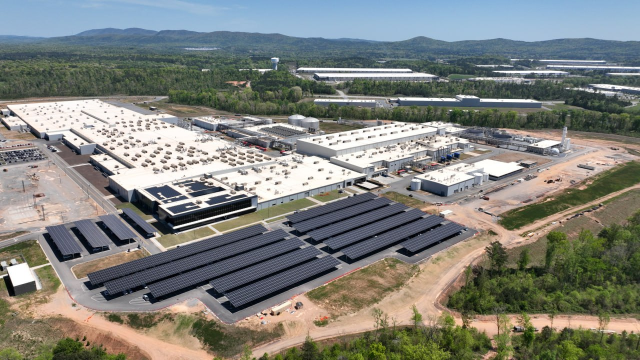
With the completion, Hanwha Qcells has finalized the construction of its U.S. “solar hub,” an integrated solar manufacturing base that covers the full value chain from ingots and wafers to cells and modules.
The company said its U.S. production capacity now stands at 3.3 gigawatts each for ingots, wafers and cells, and 8.6 gigawatts for modules, making it the largest silicon-based solar module manufacturer in North America.
The completion of the solar hub is expected to strengthen the company’s profitability by expanding benefits from U.S. clean energy policies.
The company also expects its U.S.-made modules to gain a price premium in the American market, as the use of U.S.-made cells is considered important for solar project developers seeking to qualify for the Domestic Content Bonus Credit under the U.S. Inflation Reduction Act.
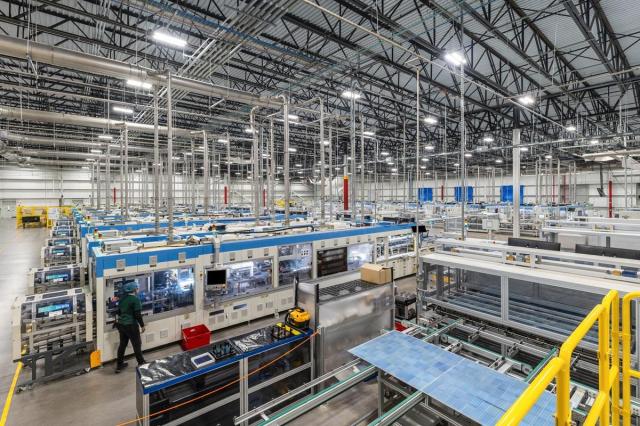
Hanwha Qcells said it has maintained a strong position in the U.S. solar module market. Citing global research firm Wood Mackenzie, the company said it held a 38.5 percent share of the U.S. residential module market and a 15.5 percent share of the commercial module market in 2025.
The figures marked the company’s eighth consecutive year at No. 1 in the U.S. residential module market and its seventh consecutive year at No. 1 in the commercial module market.
“The completion of the U.S. solar hub is a milestone that reflects the technological and business capabilities Hanwha Qcells has steadily built despite external uncertainties and market changes,” said Park Seung-deok, CEO of Hanwha Qcells.
“It is also significant in that we have established a strategic base to move beyond solar manufacturing and become a comprehensive renewable energy company,” he said.

Copyright ⓒ Aju Press All rights reserved.