Anthropic said late Friday it had suspended access to its newest models, Fable 5 and Mythos 5, after receiving a U.S. government order barring access by foreign nationals on national security grounds. The company said the order did not provide detailed evidence explaining the security concerns.
The decision marks one of Washington's most direct interventions yet in frontier AI development.
Until now, U.S. restrictions had largely targeted high-end chips, semiconductor equipment and advanced computing infrastructure, particularly in relation to China. The Anthropic case suggests the government may now seek to regulate access to the AI models themselves.
Industry officials said the move could amount to the creation of a government approval system for frontier AI, under which companies may need permission before allowing foreign users — or even foreign employees — to access their most powerful systems.
Anthropic said it suspended access for all users because it could not immediately distinguish U.S. citizens from foreign nationals in real time. The restrictions also apply to foreign employees inside the United States.
The administration's concerns appear to center on whether Mythos 5 could be "jailbroken," allowing users to bypass safety guardrails designed to prevent misuse for cyberattacks, biological weapons development or other harmful purposes.
Those concerns are not unfounded.
The International AI Safety Report 2026 warned that AI systems are already capable of discovering software vulnerabilities and generating malicious code, adding that criminal organizations and state-backed actors are using general-purpose AI in cyber operations.
But some experts questioned the rationale behind the order.
Katie Moussouris, chief executive of Luta Security, said she had reviewed the research paper that prompted the administration's action and argued the issue had been mischaracterized.
"It is not a jailbreak," she said, describing it instead as a defensive safeguard designed to limit misuse.
"If national defense is the goal, this is an own goal," she added.
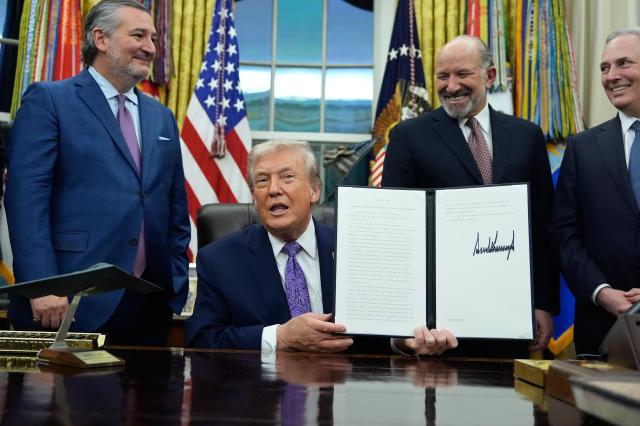
Reuters and The Wall Street Journal reported Monday that Amazon CEO Andy Jassy had raised security concerns about Anthropic’s latest AI model with senior U.S. officials.
Amazon is Anthropic’s major investor and cloud partner, with Reuters reporting that it added $5 billion to its earlier $8 billion investment in April.
Some analysts, however, warned that similar vulnerabilities exist in competing models and said the intervention could establish a precedent for broad government oversight of AI development.
The move also highlights Washington's increasingly contradictory position.
While restricting access to Anthropic's newest systems, intelligence agencies are reportedly continuing work on a classified contract that would allow the National Security Agency to use Anthropic technology for intelligence analysis and cybersecurity.
The government increasingly views advanced AI as both a national security risk and a strategic national asset.
The timing is particularly sensitive for Anthropic.
Founded in 2021 by former OpenAI researchers, Anthropic has emerged as one of OpenAI's biggest challengers. Menlo Ventures estimated the company accounted for 40 percent of enterprise large language model spending in 2025, ahead of OpenAI's 27 percent.
Anthropic has also reportedly filed confidentially for an initial public offering after a recent funding round valued the company at nearly $1 trillion.
Analysts said prolonged restrictions on its flagship models could hurt user confidence, weigh on its valuation and provide an opening for rivals such as OpenAI, Google and Meta.
The implications extend well beyond the United States.
Many governments and corporations rely heavily on U.S.-developed AI models for business operations, research, cybersecurity and public services. If access can be abruptly revoked under national security rules, countries may accelerate efforts to build sovereign AI capabilities.
Anthropic launched Project Glasswing in April, a multinational cybersecurity initiative that now includes about 150 organizations using Claude Mythos Preview to identify software vulnerabilities.
The project's first 50 participants collectively discovered more than 10,000 high- and critical-severity security flaws, demonstrating the growing role of frontier AI in defensive cybersecurity.
Partners now span more than 15 countries and include operators of critical infrastructure across power, water, healthcare, communications and hardware industries.
Anthropic estimates that, for many participants, a successful cyberattack on their systems could affect more than 100 million people.
In South Korea, Samsung Electronics, SK hynix and SK Telecom were reportedly among organizations eligible to participate. The Ministry of Science and ICT also secured access through the Korea Internet & Security Agency.
An official at the ministry said Seoul was assessing the implications of the U.S. measure.
"We are in the process of confirming the facts regarding the U.S. government's export controls on Mythos and are currently discussing specific response measures," the official said.
SK Telecom said it was also evaluating the situation.
"We have been communicating with Anthropic since the U.S. government's measure and are working to understand the situation," a company official said.
The episode is likely to intensify calls for South Korea to strengthen domestic AI security capabilities and accelerate efforts to build independent AI infrastructure.
Critics also warn that broad restrictions on foreign nationals could undermine trust in U.S. AI companies and ultimately weaken an industry that depends heavily on global talent.
The Anthropic case may therefore represent something larger than a dispute over one AI model.
It could mark the moment Washington shifted from controlling the hardware that powers artificial intelligence to controlling the intelligence itself.

Copyright ⓒ Aju Press All rights reserved.