
Journalist

Jun sungmin
-
 Rival Parties Clash Over Allegations Against Seoul Mayor Candidate in National Assembly Hearing On May 18, rival parties engaged in a heated exchange during a meeting of the National Assembly's Administrative Safety Committee, focusing on allegations against Jeong Won-o, the Democratic Party's candidate for Seoul mayor, as well as issues related to audit standards and the GTX-A rebar omission incident. The committee convened to discuss various allegations against Jeong, resulting in a contentious atmosphere. Members of the People Power Party displayed signs reading, "Jeong Won-o, who was arrested for assault 31 years ago, answer us!" This prompted Democratic Party members to respond, asserting, "This is spreading false information," and questioning, "How did the committee come to this?" After intervention from committee chair Kwon Chil-seung, the signs were removed, allowing the meeting to proceed. People Power Party member Seo Beom-soo questioned Jeong's past, stating, "He was released after a detention review for a serious incident. Does the ruling document mention May 18?" In response, Democratic Party member Lee Hae-sik countered, "The ruling document states it was for political reasons." Additionally, People Power Party member Woo Jae-jun asked acting police chief Yoo Jae-sung whether forcing a female employee at a bar to stay overnight and threatening her could be classified as attempted rape. When Yoo hesitated to respond due to the political implications, Woo asserted, "I do not view this as an assault case but rather as an attempted rape case," expressing regret over candidates exploiting the May 18 incident. Fellow party member Choi Soo-jin echoed this sentiment, calling it offensive to use the May 18 incident to cover personal issues. The parties also clashed over the GTX-A rebar omission incident. Democratic Party member Chae Hyun-il stated, "The ultimate responsibility for safety in Seoul lies with the mayor," and noted that construction proceeded despite knowledge of the rebar omission. Lee Hae-sik described the incident as an attempt by Oh Se-hoon, the People Power Party candidate, to cover up the rebar omission, accusing him of evading responsibility. Oh has previously attributed the issue to the construction company, Hyundai Engineering. In response, People Power Party member Park Soo-min argued that the matter had already been reported to relevant authorities and questioned whether all issues needed to be reported directly to the mayor. Regarding the timing of the report on the GTX-A rebar omission, which occurred after Oh's resignation, there were differing views. Im Chun-geun, head of the Seoul City Urban Infrastructure Department, explained that a thorough review of site applicability was necessary. However, Democratic Party member Lee Kwang-hee criticized this, stating, "If that is the case, the deputy mayor who received the report should be here. Are you disregarding the National Assembly?" People Power Party member Jo Eun-hee stated that documents related to the GTX-A project show that the city is required to submit monthly progress reports to the Korea Railroad Corporation, declaring, "This is a clear case of spreading false information, and we plan to report Jeong and others." Woo Jae-jun added, "If the report has already been made, how can it be considered a cover-up?" The discussion also turned to the completion ceremony for the Audit Garden at Gwanghwamun Square, where the Democratic Party launched an offensive against Oh. Democratic Party secretary Yoon Geon-young criticized Oh for attending the ceremony on May 12, while he was in an acting capacity, claiming it was a clear violation of election law. He accused Oh of wasting hundreds of billions of taxpayer money and noted that the event was removed from YouTube after it became controversial. In response, Jo Eun-hee defended the event, stating, "The entire nation expresses gratitude to those who helped our country, and it seems the Democratic Party is envious of the Audit Garden," asserting that there is no violation of election law, as confirmed by the election commission's interpretation. 2026-05-18 14:19:50
 -
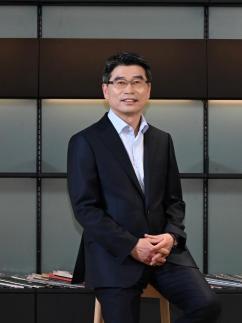 Kia's Song Ho-sung Discusses Atlas Robot Deployment and IPO Plans Song Ho-sung, president of Kia, outlined plans for the deployment of Boston Dynamics' humanoid robot, Atlas. In a recent investor presentation in Hong Kong and Singapore, he stated that the initial focus for Atlas will be on mass deployment in U.S. factories over the first one to two years to gather data and ensure stability. He emphasized that Atlas will first be used in processes that are particularly strenuous and challenging for workers.Once the effectiveness of Atlas is demonstrated in specific processes, Song noted that the similar layouts of automobile assembly plants worldwide would allow for easy expansion to other facilities.Regarding the anticipated initial public offering (IPO) of Boston Dynamics, Song remained noncommittal. He said, "Internally, we have not yet decided on the timing of the IPO or whether to pursue external funding," adding that it is still too early to provide specific details.In June 2021, Hyundai Motor Group established a put option clause when acquiring Boston Dynamics from SoftBank. This clause stipulates that if Boston Dynamics does not go public within four or five years of the acquisition, Hyundai will buy back the 20% stake held by SoftBank at a pre-agreed price. The deadline for this is next month on June 20, leading to speculation that Boston Dynamics may list on the Nasdaq.Additionally, regarding investment ratios in robotics production entities, Song stated, "Investment decisions will be based on the expected benefits for both Hyundai and Kia." He emphasized that while Kia's participation in humanoid production has not yet been determined, the investment ratios will likely be based on the anticipated benefits for each party involved. 2026-05-18 14:18:00
 -
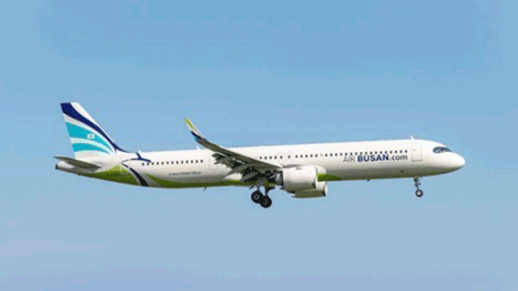 Air Busan Flight Diverts to Kaohsiung Due to Strong Crosswinds An Air Busan passenger flight en route from Busan to Taipei encountered strong crosswinds while attempting to land at Taoyuan International Airport, leading to two aborted landing attempts. The aircraft subsequently diverted to Kaohsiung Airport. According to local media reports, Air Busan flight BX791 departed Gimhae International Airport in Busan on May 16, intending to land at Taoyuan International Airport. However, during the landing approach, the aircraft experienced significant turbulence due to strong winds and was unable to complete the landing. Footage released by local media showed the plane descending close to the runway, followed by a puff of white smoke before it ascended again. Some reports suggested that the tail of the aircraft may have brushed the runway, but there has been no official confirmation regarding any contact or damage to the aircraft. After two unsuccessful landing attempts, flight BX791 abandoned its landing at Taoyuan and redirected to Kaohsiung Xiaogang Airport, where it landed safely. At the time, strong winds were reported in northern Taiwan. Hwa Shi News noted that gusty winds were observed in the Taoyuan area on the evening of May 16. A current pilot explained on local broadcasts that if landing is deemed difficult, it is standard safety procedure to either ascend again or divert to another airport.* This article has been translated by AI. 2026-05-18 14:15:00
 -
 Financial Sector Expands Bug Bounty Program, Offering Up to 10 Million Won for Reports 금융감독원과 금융보안원이 금융권 보안취약점 신고포상제, 이른바 ‘버그바운티’를 올해 대폭 확대한다. 가상자산사업자와 법인보험대리점(GA)까지 참여 대상을 넓히면서 점검 대상 금융회사는 지난해 32개사에서 올해 70개사로 두 배 이상 늘었다. On May 18, the Financial Supervisory Service and the Financial Security Agency announced a significant expansion of their bug bounty program aimed at identifying security vulnerabilities in the financial sector. The program will now include virtual asset providers and corporate insurance agencies (GA), increasing the number of participating financial institutions from 32 last year to 70 this year. The joint initiative, titled the “2026 Financial Sector Security Vulnerability Reporting Reward Program,” aims to proactively identify and address security weaknesses in digital financial services operated by financial companies. Under the bug bounty program, external participants, including white-hat hackers, can report newly discovered security vulnerabilities on financial company websites, mobile apps, and home trading systems (HTS) to receive rewards after evaluation. This year, the scope of participation has expanded to include not only traditional financial institutions such as banks, investment firms, and insurance companies but also virtual asset providers and GAs. As a result, the number of services eligible for vulnerability detection has increased to 306 across 70 companies, representing a 119% increase from the previous year. Eligible participants must be South Korean citizens and can apply through the Financial Security Agency’s “Financial Sector Software Supply Chain Security Platform” until August 31. The vulnerability reporting period runs from June 1 to August 31, and rewards of up to 10 million won will be given for each reported vulnerability after evaluation. Additional incentives will be provided to outstanding reporters. Financial authorities have noted that the need for security assessments is growing due to the increased use of artificial intelligence (AI), cloud transitions, and the spread of open-source software development in the financial sector. The initiative aims to enable financial companies to proactively respond to cyber threats by identifying unknown vulnerabilities early through the involvement of external experts.* This article has been translated by AI. 2026-05-18 14:12:27
 -
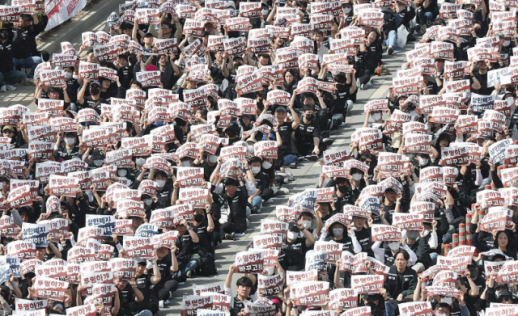 Court Limits Samsung Electronics Union's General Strike, Mandates Wafer Management A court has imposed restrictions on the general strike planned by the Samsung Electronics Union. The Suwon District Court ruled that, considering the nature of semiconductor processes, wafer management and safety-related tasks must be maintained at normal levels even during strike actions. This decision comes as the union has announced a general strike starting on May 21, and it is expected to impact ongoing labor negotiations. On May 18, the court's Civil Division 31, led by Chief Judge Shin Woo-jung, partially granted an injunction filed by Samsung Electronics against the Samsung Electronics branch of the Samsung Group Corporate Labor Union and the National Samsung Electronics Labor Union, prohibiting illegal strike actions. The court stated that the union is obligated to maintain staffing levels, operating hours, and operational scale equivalent to normal weekdays or weekends during the strike period. It also recognized the disaster prevention and drainage facilities claimed by Samsung as safety protection facilities under labor law, noting that failure to maintain these facilities could pose significant risks of explosion or toxic gas leaks. The court classified wafer management tasks as essential security operations that cannot be halted during a strike. These security operations include managing internal piping, handling cleaning agents for mask cleaning equipment, monitoring wafer discharge and congestion, overseeing process defects, and managing AI center systems. The court explained that due to the continuous operation of the semiconductor process and the characteristics of wafers, any delay in subsequent processes could lead to significant risks of wafer degradation. It warned that even temporary shutdowns could result in substantial losses, including yield declines and reactivation costs. The court pointed out that even if wafer-related tasks are based on active production activities, a halt in these tasks could lead to the degradation or spoilage of raw materials and products, which the labor law aims to prevent. In response to the union's demand to halt the input of new wafers, the court noted that this implied a stance of "If we strike, reduce our workload, and then there will be no issues," which directly infringes on the employer's freedom to operate and business rights. Considering Samsung's significant role in the global semiconductor supply chain, the court stated that damage to facilities or degradation of raw materials and products could lead to production delays in related industries such as automotive, home appliances, and information technology. This could result in significant harm or imminent risks that cannot be remedied through monetary compensation. The court also prohibited the Samsung Electronics branch of the corporate union and its head, Choi Seung-ho, from occupying or locking down facilities or obstructing worker access. However, it did not accept a separate injunction request against the National Samsung Electronics Labor Union and its acting chair, Woo Ha-kyung. Samsung's requests to prohibit member intimidation, calls to participate in the strike, and to prevent interference with employees were denied. The court ordered indirect coercion in case of violations of its decision. If the union violates the obligations to maintain safety protection facilities and security operations or the prohibition against occupation, it will be required to pay 100 million won per day for violations, while Choi and Woo will each owe 10 million won. This ruling is seen as imposing some restrictions on the union's general strike methods. However, as the strike itself is not limited for members outside of key process personnel, the potential for production disruptions remains. Meanwhile, Samsung Electronics and the union are engaged in last-minute negotiations under the mediation of the Central Labor Relations Commission on the same day. The union has announced its intention to begin the general strike on May 21.* This article has been translated by AI. 2026-05-18 14:09:56
 -
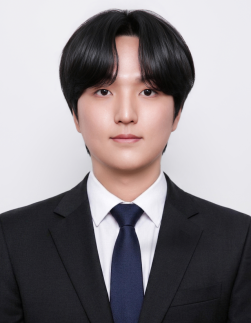 Kookmin University undergraduate's AI paper accepted at ICML 2026 SEOUL, May 18 (AJP) - An undergraduate student in South Korea has authored a research paper on artificial intelligence that has been accepted for presentation at the 43rd International Conference on Machine Learning, Kookmin University said Monday. Kim Min-woo, a senior in the university's software program, is the first author of the paper titled "Memory as Dynamics: Learning Reliability-Guided Predictive Models for Online Video Perception." The research introduces a framework for online video perception that interprets memory as a dynamic system rather than a static storage unit. By applying a reliability-guided predictive model, the system processes temporal information within video sequences to improve accuracy and efficiency. The model dynamically estimates the reliability of each video frame and incorporates this assessment into its memory updates and predictions. This process allows the system to maintain stable recognition performance even when the video feed contains noise or visual obstructions. The method demonstrated improved performance across various online video benchmarks when compared to existing techniques. The framework has potential applications in fields that rely on real-time visual recognition, including autonomous driving, robotics and intelligent video understanding. Kim's research was supported by the National Research Foundation of South Korea (NRF) and the Institute of Information and Communications Technology Planning and Evaluation (IITP). "I wanted to untangle the relationship between memory and prediction from a new perspective," Kim said. "It is very meaningful that the research I conducted during my undergraduate studies has been recognized for its achievements at a world-class academic conference. I want to continue practical AI research that can contribute to solving real-world problems." 2026-05-18 14:08:56
 -
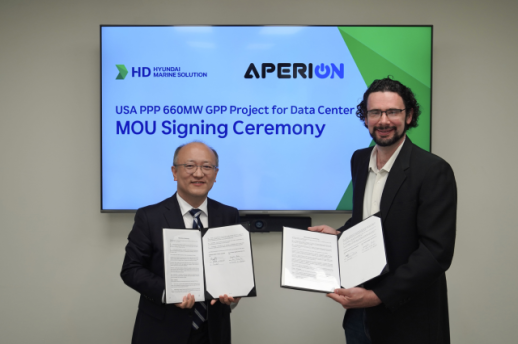 HD Hyundai Marine Solutions to Maintain Power Engines at U.S. Data Centers HD Hyundai Marine Solutions, a comprehensive solutions provider in the marine industry, is entering the North American data center power solutions market. The company announced on May 18 that it has signed a memorandum of understanding (MOU) with Aperion Energy Group (AEG) for the maintenance of power engines at data centers. Under this agreement, the two companies will establish a cooperative system for the long-term maintenance and operation of 33 power engines at a data center being built by AEG in Texas. Earlier, in April, HD Hyundai Heavy Industries signed a supply contract with AEG for a 684-megawatt (MW) power generation facility based on the 20 MW HiMSEN engine. With the rapid advancement of artificial intelligence (AI) technology, the power consumption of data centers has surged, making the reliability of backup and commercial power supply systems a key factor in the efficient operation of these facilities. HD Hyundai Marine Solutions aims to leverage its collaboration with AEG to showcase the proven performance of the HiMSEN engine and its superior engine maintenance technology, thereby expanding its market share in North America. Notably, the cooperation between the two companies is expected to go beyond simple engine supply to include long-term service agreements (LTSA) and operation and maintenance contracts (O&M), allowing HD Hyundai Marine Solutions to establish a robust high-value service revenue model that generates continuous income. Industry observers note that HD Hyundai is expanding its business scope into the land-based data center power infrastructure market, building on its existing shipbuilding and marine engine technology. The company is accelerating its efforts to strengthen a stable recurring revenue base by securing long-term contracts that include maintenance and operational services. A representative from HD Hyundai Marine Solutions stated, "With the explosive growth of the AI industry, the demand for power is surging, highlighting the importance of meticulous maintenance services for data center power engines more than ever. Through this collaboration, we will demonstrate our AM Solutions capabilities and seize new demand related to data centers in the North American market."* This article has been translated by AI. 2026-05-18 14:02:18
 -
 China's Economy Faces Triple Slowdown Amid Middle East Crisis China's economy has shown signs of significant deterioration in consumption, production, and investment due to a surge in energy prices and raw materials stemming from the crisis in the Middle East. April retail sales growth hits lowest level since zero-COVID policy ended Retail sales, a key indicator of domestic economic activity, recorded a mere 0.2% increase in April, reaching 3.7247 trillion yuan. This figure is the lowest since the end of China's strict zero-COVID policy in December 2022, when retail sales fell by 1.8%. The growth rate fell short of March's 1.7% increase and the market expectation of 2%. After a decline that began in May of last year, retail sales growth had shown signs of recovery earlier this year but has now slowed again due to the Middle East crisis. Production and investment indicators also showed a uniform decline. Industrial production increased by 4.1% year-on-year, significantly lower than March's 5.7% growth and below the 5.5% forecast by Trading Economics. Fixed asset investment, another key driver of China's growth alongside exports and consumption, fell by 1.6% year-on-year for the January to April period, marking a return to negative growth for the first time in four months since December. Notably, investment in real estate development dropped by 13.7% compared to the same period last year, worsening from an 11.2% decline in the first quarter. However, the urban unemployment rate improved slightly to 5.2% in April, down from 5.4% in March. The National Bureau of Statistics of China stated, "The external environment remains complex and volatile, while domestic supply is relatively strong but demand is weak, causing operational difficulties for some businesses. We must further solidify a stable and positive foundation for economic recovery." Middle East energy shock tests domestic stimulus strategy Following the release of the April economic indicators, Bloomberg reported that none of the economists surveyed had anticipated such pessimistic data on consumption, production, and investment. Zhang Zhiwei, chief economist at Pinpoint Asset Management, noted, "Economic activity in April was weaker than market expectations. While strong performance from exporters somewhat mitigated domestic weakness, it was not enough to fully offset it." The shadow of the Middle East crisis was also evident in April's inflation data. The producer price index (PPI) rose to its highest level in 45 months due to energy price shocks, raising concerns about increased cost burdens for businesses that could lead to declining profitability in manufacturing and further contraction in domestic demand. Conversely, China's exports in April significantly exceeded market expectations despite the Middle East crisis. A surge in global demand for artificial intelligence-related products and stockpiling orders in response to rising costs due to the war contributed to this rebound. Furthermore, with U.S. President Donald Trump's upcoming visit to China this month, stable trade relations between the two countries are anticipated, suggesting that China's exports may continue to perform well this year. While China's strong export performance has partially offset the direct impact of the war in Iran, the pressure on manufacturing costs due to rising oil prices is becoming increasingly significant. As a result, the Chinese leadership's strategy to shift from an export-driven growth model to one focused on domestic consumption is now being tested in light of these Middle Eastern developments.* This article has been translated by AI. 2026-05-18 14:00:06
 -
 Half of Regional Production Concentrated in Capital Area as Semiconductor Ties Strengthen The capital area accounts for 48.6% of the total supply and use of goods and services in South Korea, highlighting its central role in the national economy. A recent study found that Seoul, which is service-oriented, and Gyeonggi Province, which focuses on manufacturing, form a closely complementary industrial structure. Additionally, Chungcheongnam-do and Gyeonggi-do are increasingly interconnected through the semiconductor industry. On May 18, the National Data Office unveiled the "2023 Regional Supply and Use Table," which details the goods and services supplied and consumed in the regional economy over a specific period. This table illustrates the flow of supply chains, showing where products produced in specific regions are primarily consumed. As of 2023, the total output of regional production was 5,646.6 trillion won, with the capital area contributing the highest share at 48.6%. Gyeonggi Province led in exports at 25.8% and imports at 23.7%, while Seoul, Gyeonggi, and Chungcheongnam-do were the top regions for inter-regional exports. During the survey period, the southeastern region accounted for 16.7% of total supply and use, emerging as an export-oriented area centered around Ulsan and Gyeongsangnam-do, exporting machinery, transportation equipment, and petrochemical products. The central region, excluding the capital area, ranked third in total supply and use, identified as a key manufacturing hub. It recorded the highest volume of goods entering and leaving the region, with electrical, electronic, and precision instruments, as well as petrochemical products from Chungcheongnam-do and Chungcheongbuk-do, moving throughout the domestic supply chain. Lim Kyung-eun, head of the Economic Statistics Planning Division at the Data Office, stated, "The flow of goods is actively occurring between regions with a high manufacturing share centered around Gyeonggi Province. In terms of services, the flow is concentrated in Seoul and Gyeonggi, while in non-capital areas, exports are made from regional hubs to surrounding areas." The share of regional production compared to total supply was highest in Seoul at 68.4%, followed by Jeju at 65.3% and Gyeonggi at 64.4%. Ulsan, Jeollanam-do, and Chungcheongnam-do ranked highest in imports, particularly for raw materials like crude oil. Analysis of regional specialization revealed that Gangwon Province excels in mining, Jeju in agriculture and fisheries, and Sejong in public administration. By region, the capital area leads in information and communication technology, while the southeastern region excels in machinery, transportation equipment, and other sectors. Trade patterns indicate that Seoul has a high volume of exports to other regions, while Ulsan's exports drive a net outflow, resulting in a trade surplus of 106.3 trillion won for the capital area and 12.1 trillion won for the southeastern region.* This article has been translated by AI. 2026-05-18 13:57:24
 -
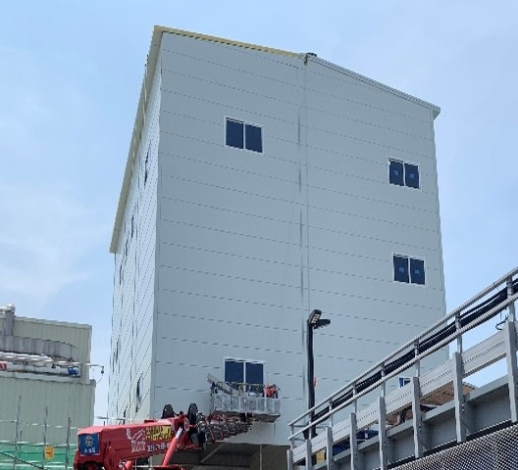 Domestic Ultra-Pure Water Supply Begins for Semiconductor Manufacturing The South Korean government is accelerating the domestic production of ultra-pure water, a critical component in semiconductor manufacturing processes. The domestically developed ultra-pure water production technology is now being applied in actual semiconductor manufacturing sites, raising expectations for stabilizing the advanced industry supply chain and enhancing the competitiveness of the domestic water industry.The Ministry of Climate Energy and Environment announced on May 19 that it will hold a performance utilization agreement ceremony for the "High-Purity Industrial Water (Ultra-Pure Water) Production Localization Technology Development Project" at SK Siltron's Gumi facility in North Gyeongsang Province.Ultra-pure water is industrial water with impurities removed to extremely low levels, essential for cleaning contaminants from semiconductor surfaces. This requires advanced technology to manage ion concentrations in water below 1 ppt (parts per trillion) and gas concentrations, such as dissolved oxygen, below 1 ppb (parts per billion).Until now, foreign companies from Japan and the United States have dominated the production technology, leaving South Korea's semiconductor, display, secondary battery, and bio industries heavily reliant on overseas technology.In response, the Ministry has been promoting the localization of ultra-pure water production technology since 2021 to reduce this dependency and strengthen the competitiveness of the domestic water industry.The demonstration facility features domestic technology applied throughout the entire process, from design to construction and operation. It has been installed at SK Siltron's Gumi facility, where it has successfully undergone performance verification in an actual manufacturing environment.Notably, key devices and materials developed by domestic companies for ultra-pure water production, including organic matter removal (UV oxidation equipment), dissolved oxygen removal (degasification membrane), ion removal, and water quality enhancement (ion exchange resin), have been utilized. The Ministry reports that long-term operational results have also been secured.The ultra-pure water produced through this technology transfer will supply SK Siltron's semiconductor wafer production process in Gumi. This marks the first time ultra-pure water produced using domestic design technology will be supplied to an actual semiconductor manufacturing process.Industry experts view this development as significant for establishing a foundation for domestic companies to enter the ultra-pure water market, as semiconductor wafers are highly sensitive to even trace amounts of impurities, making a stable supply of ultra-pure water essential.The government expects that this achievement will enhance the stability of the supply chain in the ultra-pure water sector, which has long relied on foreign technology, and contribute to the technological competitiveness and industrial ecosystem expansion of domestic water companies.Additionally, to proactively address the shortage of industrial water due to climate change and establish a stable ultra-pure water supply system, the government plans to promote the localization of the entire ultra-pure water production process and develop technology for diversifying raw water sources through wastewater reuse.Kim Ji-young, Director of Water Utilization Policy at the Ministry, stated, "This technology transfer is an important achievement that goes beyond the localization of ultra-pure water technology to actual industrial application. Large-scale investments in advanced industries, such as semiconductors, will lead to the development of the domestic water industry, including ultra-pure water."* This article has been translated by AI. 2026-05-18 13:55:30