
Journalist

Jung Seokman
-
 Former National Intelligence Service Deputy Chief Hong Jang-won Appears for Special Investigation Hong Jang-won, the former Deputy Chief of the National Intelligence Service (NIS), who gained attention as a whistleblower during the December 3 martial law, appeared before the special investigation team to face charges of insurrection involvement. On May 22, the special investigation team summoned Hong to its office in Gwacheon, Gyeonggi Province, to investigate his alleged significant role in insurrection-related tasks. According to the special investigation team, Hong is accused of being deeply involved in efforts to promote the legitimacy of the martial law by contacting foreign intelligence agencies, including the CIA, immediately after the declaration of martial law on December 3, 2024. The team previously obtained a "foreign explanation document" during an April raid on the NIS. This document was prepared to explain the background of the martial law to foreign entities, and it is understood that the National Security Office sent a Korean-language version of the document to the NIS the day after the martial law was declared, requesting overseas promotion. Subsequently, the overseas department under Hong translated the document into English under the direction of former NIS Chief Cho Tae-yong and reportedly explained its contents directly to CIA officials. Contrary to the investigation's findings, Hong has completely denied the allegations. Speaking to reporters, he stated, "I have never received any orders from former Chief Cho to deliver a message. Consider whether it was even possible for him to give me such orders at that time." Regarding the document secured by the special investigation team, he added, "I cannot specify what it refers to, so I do not know. I was suddenly summoned and do not understand the context, so I will go in and find out." A graduate of the Army Academy, Hong served as a company commander in the 707th Special Mission Battalion under the Army Special Warfare Command. He was specially recruited by the predecessor of the NIS, the National Safety Planning Agency, in 1992 and worked as an NIS agent for approximately 32 years until he was dismissed by former President Yoon Suk Yeol for opposing the martial law in December 2024. Hong is known to have worked as a black agent (operational agent) at the NIS, primarily focusing on North Korea-related operations. He was the first black agent to rise to the position of Deputy Chief of the NIS due to his contributions in rebuilding human intelligence in areas where many casualties occurred, which black agents were reluctant to support. After the martial law was declared, Hong gained widespread recognition as a whistleblower during the investigation and impeachment proceedings. He testified before the Constitutional Court and the National Assembly, alleging that he received orders from former President Yoon to arrest politicians, which he reported to Cho, but claimed that Cho intentionally ignored it. Following this, the insurrection special investigation team successfully indicted Cho on charges of dereliction of duty based on Hong's statements. However, there are concerns within the legal community that the comprehensive special investigation team's decision to charge Hong with insurrection involvement may negatively impact future investigations and trials. Meanwhile, the comprehensive special investigation team is also investigating Lee Seung-oh, the former head of the Joint Chiefs of Staff Operations, as a suspect in connection with insurrection-related tasks.* This article has been translated by AI. 2026-05-23 17:34:18
 -
 Ruling Party Leads in Election Polls Ahead of Local Elections Ahead of the June 3 local elections, a survey indicates that more voters believe candidates from the ruling party should win than those from the opposition. According to a Korea Gallup poll conducted from May 19 to 21 with 1,002 eligible voters aged 18 and older, 46% of respondents said that more candidates from the ruling party should be elected, a 2 percentage point increase from the previous survey. In contrast, 33% expressed support for more opposition candidates, unchanged from the last poll. Additionally, 21% of respondents were undecided. The gap between the two parties has widened from about 3 percentage points last October to an average of 17 percentage points from April this year. However, it has narrowed to an average of 12 percentage points this month. By political orientation, 76% of progressive respondents anticipated a victory for the ruling party, while 63% of conservatives expected the opposition to win. Among moderates, 45% favored the ruling party, compared to 32% for the opposition. Age-wise, support for the ruling party was particularly strong among voters in their 40s, 50s, and 60s. In the 50s age group, 66% expected a ruling party victory, followed by 56% in their 40s and 48% in their 60s. Conversely, younger voters showed more support for the opposition, with 37% of those in their 20s and 45% of those in their 30s favoring the opposition. Among those aged 70 and older, 44% supported the opposition compared to 39% for the ruling party. Regionally, only Daegu and North Gyeongsang Province showed a preference for the opposition, with 40% supporting the opposition and 27% supporting the ruling party. In contrast, Gwangju and Jeolla Province exhibited the largest margin in favor of the ruling party, with 62% supporting it and only 13% for the opposition. In other regions, the ruling party led in Seoul (44% to 39%), Incheon and Gyeonggi Province (49% to 32%), Busan, Ulsan, and South Gyeongsang Province (43% to 35%), and Daejeon, Sejong, and Chungcheong Province (41% to 34%). In the party support survey, the Democratic Party maintained a support rate of 45%, consistent with the previous survey. The People Power Party saw a slight decline of 1 percentage point to 22%. The gap in support between the two parties has decreased from 30 percentage points in early April to 23 percentage points in mid-May. Regionally, the Democratic Party was favored in most areas, but in Daegu and North Gyeongsang Province, the People Power Party led with 34% compared to the Democratic Party's 30%. This survey was conducted through random sampling of mobile phone numbers via telephone interviews. The margin of error is ±3.1 percentage points at a 95% confidence level, with a response rate of 12%. For more details, please refer to the website of the National Election Survey Deliberation Commission.* This article has been translated by AI. 2026-05-23 17:31:21
 -
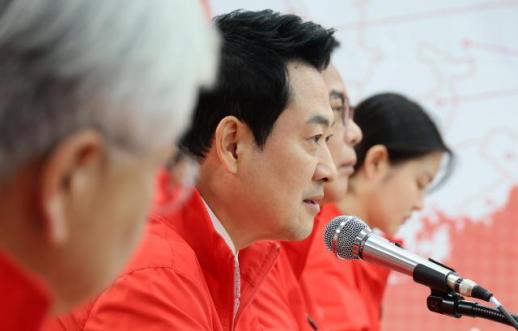 People Power Party Calls Editing of Kim Tae-heum's Remarks a Clear Violation of Election Law People Power Party officials criticized Daejeon MBC on May 22 for omitting candidate Kim Tae-heum's opening remarks during a televised debate for the Chungnam governor position, calling it "a clear violation of election law and deliberate electoral fraud," and announced plans for legal action.Jang Dong-hyuk, the party's representative, stated at a central election committee meeting in Yeouido, "I hope the Election Commission and police will immediately investigate MBC and thoroughly uncover the truth."He added, "The 'M' in MBC seems to stand for the Democratic Party," questioning how a technical error could occur when election laws prohibit editing broadcast debates. "Editing should not be possible in the first place, so how could there be a technical accident?"Jang also called for a thorough investigation into any directives or involvement from higher-ups, as well as connections with the Democratic Party, asserting, "If such manipulation continues in election broadcasts, it will lead to even more frightening election manipulation than the Druking scandal."Jung Hee-yong, the party's secretary-general, described the complete omission of Kim's opening remarks as a serious issue that clouds voters' judgment and undermines the integrity of the electoral process. He pointed out that this editing directly violates Article 82, Section 1 of the Public Official Election Act, which states that broadcasts must not be edited.He further noted that the debate was conducted in a one-take format, making separate editing unnecessary, and argued that the selective editing of Kim's remarks cannot be dismissed as a mere technical error. He criticized Daejeon MBC's apology as evasive and inconsistent with the facts.The People Power Party plans to collaborate with Kim's team to file a complaint with the Election Broadcasting Deliberation Committee and the National Election Commission, as well as pursue criminal charges.Earlier, on May 21, Daejeon MBC aired the debate without Kim's one-minute opening remarks. The network later explained that the omission was a mistake made during the editing of outtakes from the recording process.* This article has been translated by AI. 2026-05-23 17:28:52
 -
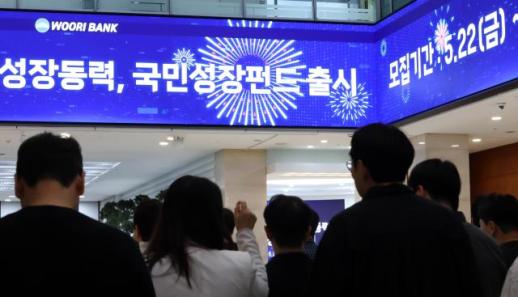 Public Participation Growth Fund Sells Out on First Day The 'Public Participation National Growth Fund' has generated explosive interest, selling out its online allocation on the first day of its launch. The fund's appeal lies in its investment in advanced strategic industries, along with tax benefits and loss mitigation features for investors.According to the financial sector on May 22, all allocated shares of the National Growth Fund were sold out at the five major banks: KB Kookmin, Shinhan, Hana, Woori, and NH Nonghyup. The total allocation for these banks was 220 billion won, with KB Kookmin receiving 65 billion won, Shinhan, Hana, and Woori each getting 45 billion won, and NH Nonghyup receiving 20 billion won.Customers flocked to bank branches to sign up, with reports of 'open runs' occurring at some locations where customers waited before opening hours due to concerns about stock depletion.Major securities firms, including Mirae Asset Securities, KB Securities, and Daishin Securities, also sold out their online allocations of the National Growth Fund.A representative from a commercial bank stated, "Many investors seem attracted to the income deduction benefits and the government's priority loss absorption structure," adding, "Sales have occurred at a faster pace than expected."The National Growth Fund will be available for a total of 600 billion won in a first-come, first-served basis until June 11. It combines 600 billion won from public funds and 120 billion won from the government to create a master fund, which will then invest in ten sub-funds. The investment limit is set at 100 million won per person annually, with a maximum of 200 million won over five years. The minimum investment amount varies by sales agent, ranging from 100,000 won to 1 million won.Investors who maintain their investment in a dedicated account for three years can receive income deductions of up to 18 million won, depending on the investment amount. If held for more than five years, a 9% separate taxation applies to dividend income. In the event of losses in any sub-fund, the government will absorb up to 20% of the public investment using its subordinate financial contributions.On the first day of the fund's launch, Financial Services Commission Chairman Lee Ok-won visited the NH Nonghyup Bank branch at the Government Seoul Complex to personally sign up for the National Growth Fund. He went through the same registration process as regular investors to assess convenience and address any on-site issues.He stated, "This is an investment opportunity to share the fruits of growth in future strategic industries and a stepping stone to supply funds to advanced strategic industry companies." He also urged sales agents to prevent incomplete sales and assured that the government would monitor any inconveniences in the registration process in real-time.However, investors should be cautious. The National Growth Fund is a high-risk investment product with no principal guarantee, and only those with a suitable investment profile based on risk assessment can subscribe. Additionally, it has a closed structure with a five-year maturity, making early redemption impossible.* This article has been translated by AI. 2026-05-23 17:27:00
 -
 U.S.-Iran Negotiations Stalled Over Uranium and Hormuz Strait Issues U.S. and Iranian ceasefire and peace negotiations have reached a critical juncture. Both sides have reportedly made significant progress toward a draft peace agreement through messages exchanged via a mediator. However, issues surrounding Iran's export of enriched uranium and navigation through the Hormuz Strait have emerged as key obstacles, preventing a final agreement. On May 21, Ayatollah Ali Khamenei, Iran's Supreme Leader, issued a directive against the export of enriched uranium. Senior Iranian officials indicated that this policy reflects Khamenei's wishes and a consensus within Iran's power structure. This stance directly contradicts a core demand from the United States, which insists that Iran must export its stockpile of 60% enriched uranium. This level of enrichment is significantly higher than that used for civilian nuclear power and could drastically reduce the time needed to further enrich it to weapons-grade levels of 90%. On the same day, President Donald Trump stated at the White House regarding Iran's uranium, "We will take it. We do not need it or want it. After we take it, we will probably destroy it." Iran's calculations differ. The Iranian leadership believes that exporting uranium would make them more vulnerable to further attacks from the U.S. and Israel. They insist that they need to secure guarantees against additional attacks before entering detailed negotiations on their nuclear program. While Iran is open to discussing the dilution of uranium under the supervision of the International Atomic Energy Agency (IAEA), they have drawn a line at exporting it. The issue of navigation through the Hormuz Strait has also surfaced as a significant barrier to agreement. U.S. Secretary of State Marco Rubio stated that if Iran pushes for a toll system in the Strait, a diplomatic agreement would become impossible. He emphasized, "No one in the world supports a toll system; it is unacceptable, completely illegal, and a threat to the world." Rubio's comments address more than just the toll issue. If Iran were to operate the Hormuz Strait under a selective permit system and demand tolls, accepting such a system would imply U.S. recognition of Iran's maritime control, which is why the U.S. has classified this as a non-negotiable issue. Rubio acknowledged some "progress" and "good signals" in talks with Tehran but noted that Iran's internal decision-making appears "somewhat divided," suggesting that further observation is necessary. Even if practical agreements are reached, the alignment of interests among Iran's internal power factions remains a variable for a final agreement. Ultimately, the crux of this negotiation hinges not just on the peace agreement itself but on how far the U.S. is willing to recognize Iran's nuclear capabilities and maritime control post-war. For the U.S., extracting enriched uranium from Iran and restoring freedom of navigation in the Hormuz Strait are essential justifications for accepting any agreement. Conversely, Iran needs to retain its uranium and control over the Strait to maintain its narrative of regime security. Both sides face significant pressure to compromise. Reuters reported that "Tehran views its stockpile of enriched uranium and control over the Hormuz Strait as 'vital strategic assets for survival.'" A senior Iranian official also stated, "Surrender is not an option."* This article has been translated by AI. 2026-05-23 17:18:30
 -
 Growing Interest in Buddhism Ahead of Buddha's Birthday As Buddha's Birthday approaches on May 24, more people are heading to bookstores and art galleries to explore Buddhism. With the younger generation embracing Buddhism as a trendy culture, there is a growing movement to experience the teachings of Buddha outside of temples. According to Kyobo Bookstore, Hermann Hesse's novel "Siddhartha" ranked seventh on the comprehensive bestseller list for the third week of May, climbing two spots from the previous week. Online bookstore Yes24 also reported that "Siddhartha" has remained in the top 20 for two consecutive weeks, gaining traction as interest in Buddhism rises alongside mindfulness and lifestyle content. A Yes24 representative stated, "Sales of 'Siddhartha' have increased every May for the past three years coinciding with Buddha's Birthday. From May 1 to 20 this year, sales surged by 47.4% compared to the same period last year." There is also a trend of enjoying Buddhism as a cultural experience, regardless of religious affiliation. The Seoul International Buddhist Expo held in April attracted a record 250,000 visitors over four days, with individuals in their 20s and 30s making up 81.7% of attendees. Approximately 40% of the visitors identified as non-religious, indicating that the event has evolved into a cultural festival enjoyed by all. This trend is extending to dining as well. Interest in temple cuisine has surged, particularly following the appearance of Monk Seonjae on the Netflix show "Black and White Chef." Yes24 reported that sales of temple cuisine cookbooks skyrocketed by 801% compared to the same period last year (January 1 to May 14). The best-selling book this year is "220 Flavors of Nature: Temple Cuisine by Monk Seonjae," reflecting a growing demand for enjoying temple food at home. Buddhist art is also gaining popularity. The National Museum of Korea's exhibition "Room of Contemplation," featuring two national treasures, the Bangasayusang statues, has drawn significant attention, with visitors captivated by the unique narratives and striking presence of the Buddha figures. The special exhibition "The Enlightened Buddha: The Bongjeongsa Temple Banner" at the National Museum of Korea features a massive banner measuring over 8 meters tall and 6 meters wide, depicting the scene of Buddha delivering teachings on Yeongchuksan Mountain. Additionally, a Kakao Friends character, Lion, and Chunsik have been transformed into a representation of the Bangasayusang statue, attracting visitors in the museum's open courtyard. The special exhibition "Seonunsa Temple: Entering Zen and Lying on Clouds" at the Buddhist Central Museum of the Jogye Order, located in Jongno-gu, features the gilt-bronze statue of Ksitigarbha, which has gained attention on social media due to its remarkable backstory. This statue was taken to Japan but returned after two years, reportedly bringing misfortune to those who stole it. The thieves confessed two years later in 1938, and the monks from Seonunsa traveled to Hiroshima that same year to retrieve the statue. Both exhibitions will run until June 21 and July 31, respectively.* This article has been translated by AI. 2026-05-23 17:13:15
 -
 Samsung Semiconductor Union Denies Voting Rights to DX Union Ahead of Agreement Vote The Samsung Electronics labor union is embroiled in significant internal conflict just hours before a vote on a tentative agreement. The Super Corporate Union Samsung Electronics Branch, which represents the largest group of semiconductor workers, unexpectedly informed the Donghaeng Union, which includes mobile and home appliance members, that they would not be allowed to vote, escalating tensions between the unions. According to industry sources, the Super Corporate Union notified the Donghaeng Union around 10:30 a.m. on May 22 that "Donghaeng Union members will not be recognized as having voting rights in this tentative agreement vote." Initially, it was anticipated that the three unions—Super Corporate Union, the National Samsung Electronics Union, and Donghaeng Union—would conduct a joint vote on the tentative agreement. However, the Super Corporate Union's sudden decision to exclude Donghaeng Union on the day of the vote has thrown the unions into disarray. Donghaeng Union representatives expressed their outrage at the Super Corporate Union's decision. A member of the Donghaeng Union stated that the Super Corporate Union had previously requested on May 20 and 21 that each union prepare for the vote scheduled for 2 p.m. on May 22, asking for member lists to be aligned as of 2 p.m. on May 21. However, on the day of the vote, the Super Corporate Union issued a notice stating, "Donghaeng Union cannot participate in this joint negotiation vote due to the notification of the end of joint negotiations on May 4." As of 8 a.m. on May 22, the Donghaeng Union had 12,298 members, a significant increase from 4,708 members reported the previous day. One Donghaeng Union member criticized the situation, saying, "It makes no sense to prepare for a vote until the day before and then be told on the morning of the vote that we have no voting rights. This is an attempt to thoroughly exclude the Donghaeng Union and deceives the members who were waiting to vote." Some observers believe the Super Corporate Union is attempting to exert control over the voting process, aiming to preemptively block the growing movement within the Donghaeng Union advocating for the rejection of the tentative agreement. A labor sector official noted, "It is extremely unusual to restrict voting rights for specific job categories or unions just hours before the vote. Regardless of the outcome, there could be serious legal repercussions regarding procedural legitimacy." Currently, the Donghaeng Union is reportedly preparing an official complaint and working on a response to the Super Corporate Union's notification.* This article has been translated by AI. 2026-05-23 17:10:42
 -
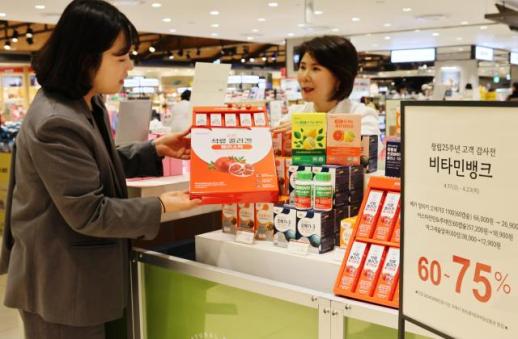 Vitamin Market Evolves with Functional and Convenient Products The health supplement market is evolving with a focus on functionality. Recently, pharmaceutical companies have been introducing vitamin products aimed at immune management that prioritize formulation, ease of consumption, and low calories, moving beyond simple ingredient competition. According to industry reports on May 22, as demand for immune management increases ahead of seasonal changes and early summer, the pharmaceutical sector is accelerating competition in new vitamin products. Notably, products designed for convenience and wellness, such as powdered forms that can be taken without water, gummies, and low-calorie options, are expanding consumer choices. Data from Samjeong KPMG indicates that the wellness food market is becoming more segmented with various formulations, altering the competitive landscape. Centrum recently launched its 'Centrum Immune Boost Daily Protection C,' designed as a powdered formulation that can be consumed without water. It contains essential nutrients like Vitamin C, Vitamin D, zinc, and selenium, which are necessary for normal immune function and antioxidant activity. The company stated, "We used Vitamin C sourced from Poland's Bart company, applying liposome technology to enhance delivery efficiency within the body." The differentiation in formulation is also notable. It features a patented Cool Melting technology that dissolves quickly in the mouth, enhanced with a mixed berry flavor for easy consumption without water. Additionally, it is offered in a zero-calorie form without synthetic flavors, colorings, or genetically modified ingredients. Prior to this, Centrum introduced a gummy product, 'Centrum Multi Gummies,' designed to be easily consumed by those who found traditional tablets daunting. Dongkook Pharmaceutical has launched an all-in-one multi-formula, 'MyFitV Liposome Multivitamin Mineral,' which combines vitamins and minerals. According to the company, this product utilizes a patented liposome technology called Lipoprime, maximizing the absorption rate of vitamins and minerals, and contains 17 essential vitamins and minerals in a single tablet. Liposomes are tiny spherical structures with a phospholipid bilayer similar to cell membranes. Vitamins and minerals encapsulated in liposome formulations easily adhere to cell membranes and are absorbed through endocytosis. Dong-A Pharmaceutical has introduced an orally dissolving powder product, 'Orsomol Immune ODP,' which transforms the existing dual-form vitamin 'Orsomol Immune' into a powder form. This innovation enhances convenience by allowing consumption without water, moving away from the previous method that required both liquid and tablets. Industry experts note that these changes reflect a growing consumer preference for not only beneficial ingredients but also for "ways to consume them consistently." They predict that the market for immune management products, including vitamins, will become even more segmented, with an expansion in considerations such as ingredient combinations, taste, formulation, portability, calorie content, and the quality and origin of raw materials. * This article has been translated by AI. 2026-05-23 17:07:54
 -
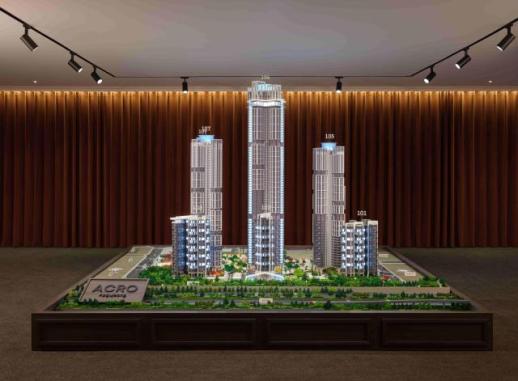 DL E&C Unveils 'Acro Apgujeong' Design with Unique Features for All Residents DL E&C has introduced its design proposal for the 'Acro Apgujeong' project, emphasizing unique features such as views of the Han River, specialized ceiling heights, and terrace and penthouse designs as part of its strategy to differentiate high-end residential offerings. Recently unveiled at the promotional center for the Apgujeong District 5 redevelopment, the design ensures that all 1,232 members of the cooperative will have access to at least one unit with specialized features. The company explained that the design focuses on enhancing the overall quality of space and living experience throughout the complex, rather than concentrating solely on a few high-end units. It includes a variety of configurations such as single-unit manor houses, terrace residences, large penthouses, and units with specialized ceiling heights to reflect the unique characteristics of each unit. DL E&C is particularly highlighting the 'specialized design' as a key competitive advantage in this bidding process. Out of a total of 1,397 units, 1,293 are designed with specialized features, ensuring that all cooperative members can occupy at least one unit with these elements. Specifically, the proposal includes: 243 units with high ceiling specifications, 11 penthouses, 66 terrace houses, 184 units with tilt designs, 955 units with three-sided openings, and 277 units with five-bay designs. The tilt design adjusts the angle of windows to enhance views and openness, while the five-bay design places living rooms and bedrooms prominently at the front to improve natural light and ventilation. A key aspect of the design is the view of the Han River. DL E&C has proposed a layout that allows for river views from the cooperative members' units, with some units featuring multi-faceted openings and multi-room view configurations. The design aims to create a sense of openness throughout the living spaces. The design also includes specialized ceiling heights to enhance spatial perception, with some units featuring ceilings as high as 6.6 meters to maximize views and openness. The terrace designs are intended to improve connectivity between indoor and outdoor spaces. DL E&C has planned not only large penthouses but also medium and small-sized penthouses to cater to diverse residential demands. The design also incorporates strategies to increase the usable interior space of the units. A DL E&C representative stated, "Considering the location and symbolism of Apgujeong District 5, we have comprehensively reflected aspects such as views, spatial configuration, community, and design details in our proposal, aiming to enhance residential quality." Industry experts believe that the symbolic significance of Apgujeong District 5 as a redevelopment site along the Han River will make views, design quality, and product differentiation key factors in the bidding competition.* This article has been translated by AI. 2026-05-23 17:06:00
 -
 Stellantis to Launch Over 60 New Models, Including 29 Electric Vehicles by 2030 Stellantis plans to launch over 60 new models, including 29 electric vehicles, by 2030 as part of its electrification strategy. This move is seen as a response to recent challenges in the electric vehicle market and declining sales in North America. On May 21, Stellantis held an Investor Day at its North American headquarters, unveiling its €60 billion five-year strategic plan, dubbed "Fast Lane 2030." The strategy includes the introduction of 29 battery electric vehicles (BEVs), 15 plug-in hybrids and range-extended electric vehicles (PHEVs and REEVs), 24 hybrid electric vehicles (HEVs), and 39 internal combustion and mild hybrid vehicles (ICE and MHEVs), totaling over 60 new models. Additionally, more than 50 major model updates are planned. Stellantis has faced difficulties due to slowing growth in the electric vehicle market and poor sales in North America, leading to a reported loss of €22.2 billion ($26.5 billion) earlier this year after scaling back its electric vehicle operations. As part of its new plan, Stellantis is emphasizing a "multi-energy strategy" that incorporates electric vehicles, hybrids, and high-efficiency internal combustion engines. The company will allocate over €24 billion, approximately 40% of its total research and development and capital investment, to develop next-generation platforms, powertrains, and new technologies. By 2030, half of its global production will come from three global platforms, including the new "STLA One" architecture. The brand strategy has also been restructured. Jeep, Ram, Peugeot, and Fiat have been designated as core global brands, with 70% of new global assets prioritized for their development. Chrysler, Dodge, Citroën, Opel, and Alfa Romeo will share platforms and assets to enhance brand differentiation. Maserati plans to introduce two new models in the E-segment. Regional strategies have been clarified as well. In North America, 11 new models will be launched, increasing sales volume by 35%. The company aims to strengthen its presence in the mass market by introducing seven vehicles priced under $40,000 and two under $30,000. North America will receive 60% of the total €36 billion investment across all brands and products. In Europe, the focus will be on introducing next-generation urban electric vehicles (E-Cars) and improving production efficiency. The new urban electric vehicles will be produced at the Pomigliano d'Arco plant in Italy. In South America, Stellantis will expand its presence in the pickup truck market, while in the Middle East and Africa, it will pursue localization strategies and expand partnerships in Asia. The Asia-Pacific region, including South Korea, aims to enhance profitability through a lightweight business structure based on strategic alliances and increased exports. Antonio Filosa, CEO of Stellantis, stated, "Fast Lane 2030 is a long-term profitability growth strategy designed after meticulous analysis over the past several months."* This article has been translated by AI. 2026-05-23 17:03:28