


Latest by
-
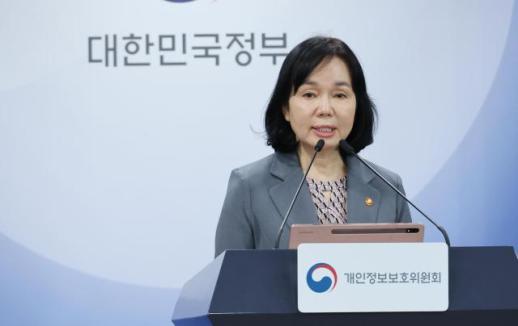 Coupang Fined $4.7 Billion for Data Breach Affecting 37.5 Million Users The Personal Information Protection Commission has imposed a fine of 6.247 trillion won (approximately $4.7 billion) on Coupang, marking the largest penalty ever related to a single data breach incident. The breach affected a staggering 37.5 million individuals, compromising personal information including names, email addresses, home addresses, phone numbers, shared entrance codes, and order histories. Additionally, the company was found to have collected online activity records of 11.17 million users without legal justification. While the size of the fine underscores the seriousness of the situation, the core issue lies deeper than mere numbers: it reflects a failure to adequately protect customer data.In the digital economy, personal information is one of the most critical assets for companies. More accurately, personal data is not a corporate asset but a customer right. Companies do not own this information; they are entrusted with its management. Therefore, data protection transcends a simple legal obligation; it represents the fundamental trust contract between a business and its customers.The severity of this incident is heightened by the Commission's identification of the cause as a lack of basic safety management systems and negligence, rather than advanced hacking techniques. This incident was not the result of a sophisticated national-level cyberattack but rather a failure of fundamental management protocols. If issues arose in the most basic areas of data protection, such as managing authentication keys, access control, and internal monitoring systems, it indicates a managerial problem rather than a technical one.Particularly concerning is the exclusion of the Chief Privacy Officer (CPO) from the investigation and decision-making processes. The CPO is the ultimate authority responsible for overseeing data protection within a company. If this role was merely ceremonial, it suggests that the data protection system was not functioning properly. The Commission's classification of this as not just a lack of internal communication but a hollowing out of the system underscores the gravity of the situation.Another alarming aspect is the unauthorized data collection. Investigations revealed that Coupang stored user activity records from third-party websites and apps in a manner that could identify individuals. While it is a global trend for platform companies to enhance services through data utilization, such practices must be grounded in user consent and legal justification. When personal rights are violated in the name of convenience and innovation, a platform's competitive edge shifts from genuine innovation to monopolistic data collection capabilities.This incident is not solely a Coupang issue; it serves as a warning for numerous platform and online service companies to reflect on their practices. The more customer information a company possesses, the greater its responsibility. As companies grow, data protection should become a core value of management rather than a cost. For companies holding personal information of millions, prioritizing security investments, internal controls, and the independence of data protection organizations is essential.The fine of 6.247 trillion won is significant, but the issue extends beyond monetary penalties. The damage caused by a data breach cannot be remedied simply by paying a fine. Once information is leaked, it cannot be reversed, and the repercussions can last for an extended period. It is crucial to remember that the information entrusted to a company by customers is not merely a product but a testament to trust.Coupang should not view this incident as a mere legal sanction. It must follow through with thorough investigations, responsible apologies, and effective measures to prevent recurrence. The government, too, should continuously enhance the effectiveness of data protection systems and strengthen corporate accountability.In the digital economy, competitiveness is determined not by the volume of data but by the level of trust. Companies that fail to protect customer data ultimately cannot maintain customer trust. This is the most profound lesson left by the Coupang incident for our society. 2026-06-11 13:21:00
 -
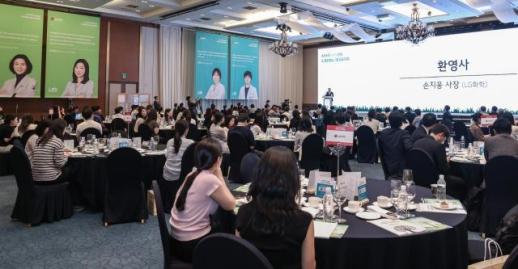 LG Chem Reveals Long-Term Efficacy Data for Eutropin, Confirming Safety and Effectiveness LG Chem has strengthened the credibility of its short stature treatment, Eutropin, by releasing long-term safety and efficacy data. On June 11, LG Chem announced the interim analysis results of its long-term observational study on Eutropin during the 21st LG Growth Study (LGS) Symposium, aimed at pediatric endocrinologists. The company also introduced its new product, Eutropin EcoPen 48 (referred to as EcoPen). The LGS study, which began in 2012 and will continue until 2035, is a long-term research project involving 10,000 children in South Korea to gather data on the long-term administration of the growth hormone Eutropin. As of the end of last year, approximately 8,000 patients had been enrolled. During the symposium, Professors Lee Young-a and Kim Ja-hye from Seoul National University Hospital and Asan Medical Center, respectively, presented findings on the long-term safety and efficacy analysis over 13 years, as well as treatment approaches for growth hormone deficiency and idiopathic short stature. Professor Lee reported that the interim analysis of safety data from 2012 to 2025 showed a low incidence of serious adverse drug reactions (SADRs) at 0.2%, with overall safety indicators remaining favorable. In terms of efficacy, the standard deviation of height improved over four years of treatment, with the growth hormone deficiency group showing a change from -2.3 to -0.8, and the idiopathic short stature group from -2.3 to -1.0. Notably, a higher improvement trend was observed in patients who began treatment before puberty. Professor Kim highlighted stable maintenance of endocrine and metabolic indicators, such as thyroid function and blood glucose, based on a seven-year long-term exposure analysis of growth hormone treatment. Son Ji-woong, head of LG Chem's Life Sciences Division, expressed hope that the LGS study would serve as a guiding compass for short stature treatment in South Korea, contributing to the dreams of children. Additionally, LG Chem unveiled a new Eutropin product equipped with a pen injector in April. The EcoPen is designed to be used multiple times by combining a dedicated cartridge, Eutropin Cartridge 48 IU, with the pen device, differing from the previous all-in-one cartridge product, Eutropin SPEN. The injection button is fixed at a length of 3mm, ensuring consistent low injection pressure.* This article has been translated by AI. 2026-06-11 13:12:00
 -
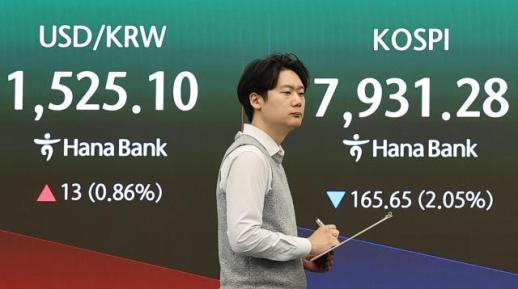 Rising Exchange Rates Challenge South Korea's Export Boom The longstanding principle that a surge in exports stabilizes exchange rates is no longer valid. Historically, an increase in South Korea's exports signaled an influx of foreign currency, typically leading to a stronger won and stable exchange rates. However, the current foreign exchange market operates differently. Despite improved export performance, particularly in semiconductors, the won-dollar exchange rate remains elevated and shows little sign of decline. Relying solely on export growth to ensure exchange rate stability is inadequate in today's market. The most significant change is the altered flow of capital. In the past, trade balance was the primary factor influencing exchange rates. Now, capital movement has become equally, if not more, influential. Domestic investors are pouring substantial amounts into U.S. stocks and overseas exchange-traded funds. Pension funds and institutional investors are also increasing their allocations to foreign assets. Many companies are opting to reinvest their dollar earnings abroad rather than bringing them back to South Korea. This means that even when dollars are earned through exports, there is no guarantee they will be immediately supplied to the domestic foreign exchange market. The interest rate differential between the U.S. and South Korea is another factor contributing to exchange rate instability. The prolonged high interest rates in the U.S. continue to enhance the appeal of dollar-denominated assets. Even as South Korea earns foreign currency through exports, global capital tends to flow toward dollar assets in search of higher returns and safety. Coupled with geopolitical risks and uncertainties surrounding U.S. fiscal and trade policies, non-reserve currencies like the won are under significant depreciation pressure. Exchange rates are now determined not just by trade balances but also by global capital flows, investor sentiment, and interest rate differentials. The government's response must also evolve. Relying on verbal interventions or using foreign reserves to suppress the market has its limits. While stabilization measures are necessary during periods of extreme volatility, if high exchange rates stem from structural changes, short-term fixes will not be effective. The market may perceive that the government is stuck in outdated approaches. A new framework for foreign exchange policy is essential. First, incentives should be strengthened to ensure that dollars earned by exporting companies are smoothly supplied to the domestic market. If increased overseas investment is unavoidable, it is crucial to establish institutional mechanisms that can stabilize the foreign exchange market while accommodating this trend. Large institutional investors, such as the National Pension Service, should refine their overseas investment and currency hedging strategies to mitigate market shocks. Additionally, the rise in individual overseas investments should be recognized as a new variable, necessitating enhanced statistics and monitoring systems. Above all, exchange rate stability should be viewed as a matter of restoring trust in the overall macroeconomy. Without sound fiscal health, industrial competitiveness, financial market stability, and consistent monetary policy, confidence in the won is easily undermined. Expecting exchange rates to stabilize simply because exports are performing well is a dangerous misconception. The phenomenon of a weakening won despite strong export performance signals that South Korea's foreign exchange policy has entered a new phase. The paradox of rising exchange rates amid a booming export market is not a temporary anomaly; it is a result of changes in the flow of money and investment structures within the South Korean economy. The government must not rely on past success formulas but instead develop foreign exchange policies suited to an era of free capital movement. High exchange rates should not be dismissed as a mere temporary market disturbance but should be interpreted as a signal to reassess the economic fundamentals of South Korea. 2026-06-11 13:12:00
 -
 The Journey of Jeong Soon-won: From Economist to Ink Wash Artist Life can sometimes resemble a persimmon tree. In spring, it blooms; in summer, it bears green fruit; and in autumn, it ripens to a deep red. However, not all persimmons turn sweet immediately. Some retain their astringency for a long time, only revealing their rich sweetness after enduring frost and winter winds. This transformation from bitterness to sweetness is possible only through patience and time. As I viewed Jeong Soon-won's first ink wash painting exhibition, titled Persimmon, at the Muusoo Gallery in Insadong, Seoul, I was reminded of the time it takes for a persimmon to ripen. This exhibition is not merely an art display; it is a condensed autobiography of a 74-year life, reflecting the deep introspection of an economist, business leader, and policymaker who has lived at the forefront of South Korea's economic growth.The name Jeong Soon-won has long been recognized in the economic and industrial sectors. After graduating from Seoul National University with a degree in political science, he earned his master's and doctoral degrees in economics from Indiana University in the United States. He has held various prominent positions, including vice president of the Hyundai Economic Research Institute, president of Hyundai Motor's Planning Division, vice chairman of Hyundai Rotem, president of Samchully, and member of the Bank of Korea's Monetary Policy Committee. He has walked the center stage of national economic and corporate management amid South Korea's industrialization and globalization. At first glance, his background seems distant from the world of ink and brush, blank spaces, and ink wash. Economics deals with numbers, and corporate management requires cold judgment and strategy. Financial policy operates on data and logic rather than emotion. However, human life cannot be explained solely by numbers. There are memories that cannot be quantified, feelings that are not recorded in profit and loss statements, and reflections that cannot be measured by any statistical chart. Jeong Soon-won's ink wash paintings originate from this realm.He has spent his life studying economics and industry. During his time at the Hyundai Economic Research Institute, he analyzed national economic trends, and at Hyundai Motor, he devised strategies for the global market. He experienced the tumultuous period when South Korea's automotive industry was gaining competitiveness on the world stage. The production of a single car requires thousands of parts, the efforts of numerous workers, and the collaboration of many suppliers and technicians. Ultimately, a corporation is an organization of people, and he learned on the ground that understanding people is essential to understanding a business. While technology creates results, it is people who create sustainability. He deeply experienced that the force driving an organization is not numbers but trust and philosophy.As president of Hyundai Motor's Planning Division, he personally experienced the fierce competition in the global automotive market. Competing with global companies, he emphasized long-term accumulation over short-term results. Good companies are not built overnight, nor are good products completed in a day. Competitiveness is only achieved through countless trials, errors, repetitions, and improvements. This philosophy naturally permeated his artistic world. A painting is not completed with a single stroke of ink, nor does a work emerge from just one brush movement. It takes numerous layers of application, erasure, trial and error, and patience for a single piece to be born. The concepts of 'layering' and 'wear' that frequently appear in his ink wash abstract works resemble the principles of corporate management. While a business accumulates results, art accumulates meaning, and just as a business sheds the unnecessary to secure competitiveness, art gains depth by eliminating the superfluous.During his tenure as CEO of Hyundai Rotem and Samchully, he met a diverse array of people, including factory workers, engineers from research labs, salespeople in the field, overseas business partners, and numerous customers and stakeholders. Through these interactions, he realized that the essence of industry ultimately lies in enriching human lives. This understanding aligns closely with the spirit pursued by ink wash artists. Ink wash painting is not merely a technique for depicting beautiful landscapes; it is an art that seeks to understand humanity, revere nature, and explore the essence of life. Thus, Jeong Soon-won's paintings evoke a sense of humanity rather than flamboyance. His canvases are filled with scenes of boats anchored in tidal flats, diligent workers, trees weathering the wind, and expansive landscapes with ample blank space. These subjects are not particularly glamorous, yet they compel prolonged contemplation because they embody life.His time on the Bank of Korea's Monetary Policy Committee marked another turning point in his life. The position of a committee member, responsible for determining interest rates, involves analyzing numerous economic indicators and data, significantly influencing the direction of the national economy. However, those who study economics for a long time understand the limitations of numbers. Statistics can explain reality but cannot encompass the entirety of human life. The anxieties and hopes of citizens, the expectations and fears of businesses, and the dreams and despair for the future cannot be expressed solely through numbers. This is why Jeong Soon-won has consistently emphasized that “economics is ultimately for people.” His ink wash paintings resonate with this same sentiment. Art exists not for itself but for humanity. Therefore, the blank spaces in his paintings are not mere voids; they are spaces where the viewer's memories and experiences can enter and linger, serving as a window for self-reflection at the moment the artwork pauses.The centerpiece of this exhibition, the Four Seasons series, encapsulates this philosophy most profoundly. Inspired by the mid-Joseon scholar Kwon Ho-mun's 18 Songs of the Han River, this series is not just a collection of landscapes. It represents an ontological reflection connecting the natural cycles of spring, summer, autumn, and winter to human life. Spring signifies beginnings, summer represents growth, autumn denotes maturity, and winter is a time for emptiness and organization. However, winter is not an end; it is a time of waiting in preparation for the next spring. Jeong Soon-won's life has mirrored this cycle. He experienced a spring as an economist, a summer as a business leader, and an autumn as a policymaker. Now, he is welcoming a new spring as an ink wash artist.The title of this exhibition, Persimmon, is thus even more symbolic. While most people prefer sweet, ripe persimmons, Jeong Soon-won deliberately chose the astringent variety. This choice reflects his belief that he is still learning, still capable of growth. He does not claim that his paintings are complete; rather, he asserts that they are just beginning. This humility connects to the attitude he has maintained throughout his life. In business management, he has always emphasized learning; in economics, he has continually posed questions; and in art, he defines himself as a beginner. He demonstrates that those who do not cease to question can go further than those who merely seek answers.In the Joseon Dynasty, ink wash painting was not just art; it was a mirror reflecting a person's character and spirit. It was believed that the tip of the brush contained the essence of one's life. In this sense, Jeong Soon-won's paintings reveal life rather than technique, time rather than skill, and maturity rather than mere achievement. Today, we often desire rapid success, quick results, and immediate recognition. However, nature does not rush. Persimmons must endure frost to become sweet, and trees must withstand winter to bloom in spring. Likewise, people must traverse long periods to deepen their essence.Jeong Soon-won's Persimmon conveys this truth. He has succeeded as an economist, thrived as a business leader, and played a significant role as a policymaker, yet he has not stopped there. Instead, he chose to let go of everything and return to the path of a beginner. He has embarked on new studies and held his first solo exhibition at the age of 74. Perhaps this is the most courageous challenge of all. While many choose to rest on their laurels after success, he has opted for a path of learning and challenge.Thus, Persimmon is not merely an art exhibition; it is a record of how a person ripens. It tells the story of someone who has lived through an era and continues to grow until the very end. It quietly poses a question to us all: What are we becoming, rather than what have we achieved? Standing before Jeong Soon-won's paintings, one might ponder whether true success in life lies not in reaching a high position but in ongoing growth. His first solo exhibition at 74 is by no means an end; it is another beginning. His journey from economist to business leader, from business leader to policymaker, and from policymaker to ink wash artist is still unfolding. His persimmon is still ripening, and perhaps the sweetest moments are just beginning.The ink wash painting exhibition of Jeong Soon-won, which opened on the 10th, will run until the 18th at the Muusoo Gallery in Insadong. 2026-06-11 13:06:00
 -
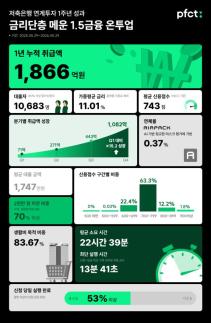 Low-Credit Borrowers Benefit from New Investment Model as PFCT Supplies $1.86 Billion A linked investment model between savings banks and online investment firms has supplied over 1.8 trillion won ($1.86 billion) in mid-interest loans within a year. PFCT (PFCT Technologies) announced on June 11 that it has provided personal credit loans totaling 1.866 trillion won to 10,683 low-credit borrowers using funds from 17 savings banks over the past year.This amount represents a 5.5-fold increase compared to 342 billion won in November of last year, when eight savings banks participated. The service was launched just one year ago.The competitive loan interest rates contributed to this growth. The weighted average interest rate for loans issued during the year was 11.01%, approximately 1.5 percentage points lower than the average rate of 12.52% for Sunshine Loans and the minimum rate of 12.5% for savings bank loans.The beneficiaries of these mid-interest loans had an average credit score of 743 (based on NICE standards). PFCT reported that over 85% of the loans were granted to borrowers with credit scores between 600 and 799. Additionally, 31.15% of the total loans were issued at interest rates below 10% per year.The financial health indicators also remained at a healthy level. PFCT's delinquency rate stood at 0.37%, significantly lower than the average delinquency rate of over 9% for the savings bank sector as of the first quarter of this year.Lee Soo-hwan, CEO of PFCT, stated, "The combination of online investment technology and savings bank capital has confirmed that a private mid-interest model can effectively bridge the interest rate gap in the market. We will continue to enhance financial accessibility for low-credit borrowers and expand the ecosystem of inclusive private finance."* This article has been translated by AI. 2026-06-11 12:57:00
 -
 K Bank Offers 0.3% Bonus Interest on Parking Account K Bank announced on June 11 that it will offer a bonus interest coupon for customers using its parking account product, Plus Box. This initiative comes as demand for parking accounts has increased due to a rise in idle investment funds, indicating a strategy to attract short-term depositors. The Plus Box, launched by K Bank, is a deposit and withdrawal account that accrues interest even if funds are held for just one day. Currently, an interest rate of 1.7% per annum applies to balances up to 50 million won, while amounts exceeding 50 million won earn 2.2%. Customers can open up to 10 accounts and benefit from a daily interest payout service called 'Immediate Interest Payment.' Through this event, customers can receive an additional 0.3 percentage points in bonus interest on top of the existing rates. The bonus interest is tiered based on the balance in each customer's Plus Box as of June 10. For instance, customers with balances between 10 million and 30 million won will receive the bonus interest for amounts exceeding 30 million up to 60 million won. As a result, some customers may benefit from a maximum annual interest rate of 2.5%. Customers who do not currently hold a Plus Box or have a zero balance can also receive the bonus interest for amounts up to 10 million won upon opening a new account. The bonus interest coupon can be obtained from the event page and must be used within seven days of issuance. The bonus interest will be available for 30 days from the application date. A K Bank representative stated, "We organized this event to provide tangible interest benefits to customers using parking accounts. We plan to continue expanding services tailored to the financial management needs of our deposit customers."* This article has been translated by AI. 2026-06-11 12:57:00
 -
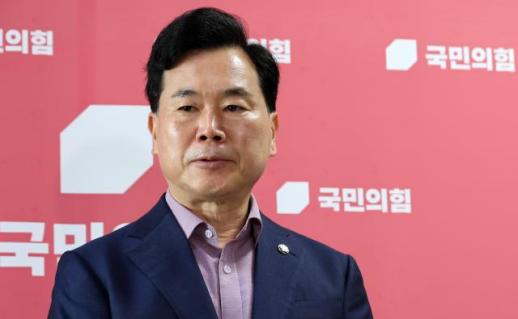 Kim Seung-soo Appointed as New Floor Leader of the People Power Party The People Power Party has appointed Kim Seung-soo, a two-term lawmaker representing Daegu Buk, as its new Floor Leader. Following a general meeting of lawmakers, Kim will be officially appointed and will collaborate with Floor Leader Jeong Jeom-sik to develop legislative strategies and engage in negotiations with the opposition. Jeong introduced Kim to reporters at the National Assembly, stating, "Kim has extensive experience bridging central and local government, having worked with the Blue House and Daegu City Hall. He has also served as the secretary of the Culture, Sports and Tourism Committee and has been involved in legislation to promote the tourism industry." Kim expressed his concerns about the challenges facing the party, saying, "I worry whether I can fulfill my duties given my limited capabilities, especially in such difficult times. However, I accepted this role as a responsibility entrusted to me by our supporters during these challenging circumstances." He added, "I will work to restore trust in our party and strengthen unity and cohesion within it. Through these efforts, I will do my utmost to prevent the destruction of constitutional order and the drift toward dictatorship under the Lee Jae-myung administration, thereby safeguarding the constitutional order of a free Republic of Korea." Following Kim's appointment as Floor Leader, Jeong is expected to announce the appointments of other leadership positions within the party. Meanwhile, Kim began his schedule by accompanying Jeong during a visit to meet with Han Byeong-do, the Floor Leader of the Democratic Party.* This article has been translated by AI. 2026-06-11 12:54:00
 -
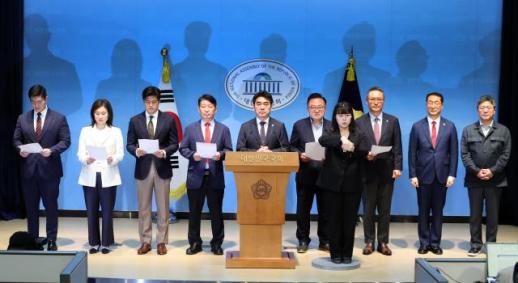 Ruling Party's Young Members Call for Resignation of Leader Jang Dong-hyuk The young faction of the People Power Party, known as 'Alternative and Future,' called for the resignation of leader Jang Dong-hyuk on June 11. They also expressed opposition to his proposal for nationwide re-elections. At a press conference held at the National Assembly, the faction's secretary, Lee Seong-kwon, stated, "The People Power Party suffered a major defeat in the June 3 local elections. The public has called for a change in the party leadership through this election," urging Jang to step down. Alternative and Future warned Jang not to taint the issue of voters' rights with unfounded allegations of electoral fraud. Lee emphasized, "We are clearly against nationwide re-elections. It is unacceptable for the leader of a conservative party to undermine the demands of citizens who gathered to protect the integrity of the elections with conspiracy theories of electoral fraud." Earlier that day, the faction held a breakfast meeting to discuss evaluations and analyses of the local election results. Members expressed a consensus that the People Power Party faced a significant defeat and that Jang should take responsibility. Following the press conference, lawmaker Kwon Young-jin told reporters, "After internal discussions during the breakfast meeting, we concluded that for conservatism to be reborn and for the People Power Party to re-emerge as a governing party, a change in leadership is necessary." Lawmaker Woo Jae-jun also stated as he entered the meeting, "The practical term of the current leadership has ended. It is appropriate for Jang to resign to allow the next leadership time to prepare for the 2028 general elections." Lawmaker Song Seok-jun added, "We must not ignore the public sentiment reflected in the local elections and the thoughts of lawmakers during the recent selection process for the floor leader. Jang must make a wise decision based on a comprehensive view of the situation." Within the People Power Party, interpretations of the local election results vary. Some believe the party performed well by winning the Seoul mayoral election, while others argue that losing 12 out of 16 regional governorships constitutes a major defeat. Those calling for Jang's resignation contend that he played no role in the victory of the Seoul mayoral election. Supporters of Jang's leadership argue that the party should focus its efforts on investigations and special probes related to the shortage of ballots. They also assert that Jang's two-year term, elected by party members, should be respected. In this context, lawmaker Ko Dong-jin, a businessman, remarked, "While it is important for a company to follow the values pursued by its shareholders, what is even more important than shareholders is the customer. The same applies to politics. Of course, party members are very important, but the voices of the public and the sovereign are even more crucial." Meanwhile, Alternative and Future expressed the need to convene a general meeting of lawmakers to gather consensus on issues such as Jang's future and the call for nationwide re-elections. They plan to formally request the meeting with floor leader Jeong Jeom-sik later that day.* This article has been translated by AI. 2026-06-11 12:39:00
 -
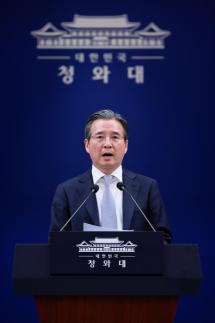 Kim Yong-beom Unveils 'Project Trinity' to Establish AI Data Centers Outside Seoul Kim Yong-beom, head of the Presidential Policy Office, revealed on June 11 his vision for 'Project Trinity,' which aims to integrate semiconductors, data centers, and physical AI into a circular structure to position South Korea as a key hub in the AI supply chain.Kim emphasized the need to establish data centers in non-capital regions, such as Honam, as part of a strategy to alleviate concentration in the Seoul metropolitan area.While accompanying President Lee Jae-myung on his first European trip since taking office, Kim stated on Facebook, "Historically, the global AI supply chain has operated with the U.S. designing software and models, Taiwan producing advanced semiconductors, and China handling large-scale manufacturing. However, all three pillars are now facing disruptions."He added, "Big tech companies are seeking solutions to these challenges and are looking for new bases of operation."Kim noted that South Korea is uniquely positioned with its combination of semiconductor production, power infrastructure, and advanced manufacturing capabilities. He argued that if these elements align, South Korea could become a central player in the entire AI supply chain, rather than just a supplier of components.He explained, "The strategic value in the AI era comes from providing the foundational infrastructure that enables models to operate. Semiconductors make data centers possible, data centers power physical AI, and physical AI generates new data."Kim suggested that once this cycle begins, industries will not grow independently but will accelerate together like a flywheel, proposing 'Project Trinity' as a framework for creating a national flywheel.He highlighted the connection between memory semiconductor supply and AI data centers, stating, "AI data centers should be located in non-capital regions where there is excess power or proximity to power generation facilities."Kim explained that establishing large consumers near power generation sites would reduce the burden on transmission networks by utilizing local power, allowing the power used by households and industries in the capital region to operate separately. He emphasized that the demand from large AI data centers would serve as a catalyst for attracting investment in local power generation and transmission.He also pointed out that the establishment of AI data centers in non-capital regions could serve as a strategy for balanced regional development.Kim stated, "Construction and engineering firms responsible for design and construction, cooling and power management equipment, operations and maintenance, and network equipment suppliers will cluster around the data centers. Once these companies settle in the region, data centers will not just be facilities that consume power but will become hubs for local industry and tax revenue."He reiterated that the more data centers are established outside the capital, the more it will alleviate concentration in the Seoul area and foster advanced industrial foundations in those regions.Kim's remarks are interpreted as being linked to President Lee's announcement during a press conference on June 8, marking his first anniversary in office, where he stated that he would soon unveil a large-scale investment project aimed at a significant transformation in growth strategy.The 'non-capital region AI data centers' mentioned by Kim are believed to potentially include the semiconductor plant proposal by Samsung Electronics in Gwangju, which the government is currently promoting. SK Hynix is also expected to announce investment plans in Honam soon.Kim described physical AI as the 'second semiconductor' that will drive South Korea's economic growth, asserting that the country's strength lies not only in its ability to manufacture robots but also in having industrial sites where these robots can be deployed and trained on a large scale.He added, "Automobile factories, semiconductor lines, shipyards, logistics centers, and advanced manufacturing facilities all serve as strong proving grounds and test beds for physical AI. Reliable motors, actuators, sensors, and control systems are likely to become key components in the era of physical AI."* This article has been translated by AI. 2026-06-11 12:36:00
 -
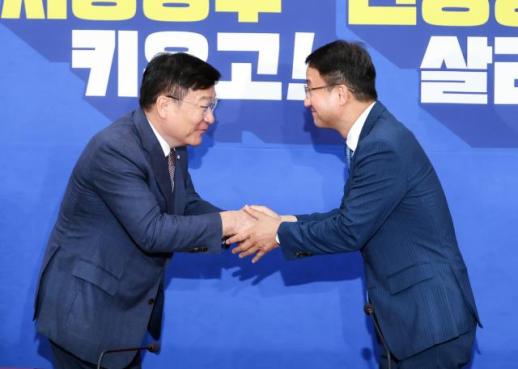 Han Byeong-do and Jeong Jeom-sik Call for Investigation into Election Commission Issues Jeong Jeom-sik, the newly elected floor leader of the People Power Party, met with Han Byeong-do, the floor leader of the Democratic Party, for the first time on June 10. Jeong expressed agreement with Han, stating, "If there are responsibilities to be assigned to the Election Commission, we should address them, and any necessary reforms should be implemented swiftly." However, he noted differences regarding the formation of the assembly for the second half of the term. During their meeting on June 11 at the National Assembly, Jeong emphasized the need for continued agreement on the introduction of a national investigation and urged for the assembly to be formed quickly for the Prime Minister's confirmation hearing and other matters. He stated, "If the major ruling party, the Democratic Party, makes concessions, it could be possible within one or two days." Jeong further remarked, "The National Assembly should be a place for dialogue and compromise," pointing out that the public is aware of the breakdown in communication and the unilateral actions taken by the majority party. This comment is interpreted as Jeong's request for the position of chair of the Legislative and Judiciary Committee. Earlier that day, during a Supreme Council meeting, he argued that offering the chair position to the second-largest party in the assembly formation for the second half of the term would be a positive step in response to public sentiment following the June 3 local elections. In response, Han stated, "The national investigation into the Election Commission's inadequate management is a pressing issue," and called for both parties to work together to ensure accountability and prevent recurrence, aiming for a National Assembly that is perceived as effective by the public. He added, "There have been many instances in the past where the formation of the assembly took a long time," urging both parties to expedite the process to address the Election Commission issues and restore public livelihoods, so that the National Assembly can be evaluated positively by the public. However, given Han's previous statements indicating he would not concede the chair position to the People Power Party, challenges in negotiations are anticipated. Meanwhile, during the National Assembly's plenary session that day, requests for a national investigation into the shortage of ballots submitted by each party were reported. Both parties agree on the necessity of a national investigation, and detailed negotiations regarding its scope and methods are expected to commence. The two floor leaders are scheduled to meet with National Assembly Speaker Chung Sye-kyun later in the afternoon to discuss current issues.* This article has been translated by AI. 2026-06-11 12:36:00