

Journalist

Jung Sung-chun
-
 Samyang Foods' 'Tangle' and 'Samyang1963' Win Superior Taste Awards at International Food Competition Samyang Foods has been recognized for its product quality by winning multiple Superior Taste Awards at a global food competition. On June 8, Samyang Foods announced that its 'Tangle Garlic Shrimp Protein Pasta,' 'Tangle Basil Tomato Protein Pasta,' 'Tangle Garlic Oil Pasta,' and its ramen brand 'Samyang1963' received the Superior Taste Award at the 2026 International Taste Institute competition. The International Taste Institute, based in Brussels, Belgium, organizes the event where chefs and sommeliers from around the world evaluate products' taste, aroma, and texture through a blind tasting process to select award winners. With this recognition, all products under the Tangle brand have now received the Superior Taste Award. Following last year's awards for 'Tangle Mushroom Cream Pasta' and 'Tangle Bulgogi Alfredo Pasta,' three additional products were honored this year, bringing the total to five award-winning items on the international stage. Tangle is a pasta brand based on dried noodles. Since its launch in 2025, it has entered global retail channels, including Walmart, Kroger, Target, and Aldi in the U.S., as well as Lawson Natural in Japan, reaching over 50 countries. The brand features a patented method of cooking and drying the noodles to achieve a texture similar to fresh pasta, and it incorporates chickpeas to enhance protein and dietary fiber content. The award-winning 'Samyang1963' utilizes Samyang Foods' unique frying technology. It enhances the flavor of the ingredients using liquid and powdered soup bases to create a rich broth. A representative from Samyang Foods stated, "With the recognition of all Tangle products and Samyang1963, we have once again confirmed our product competitiveness. We will continue to introduce products that meet the diverse demands of global consumers based on our differentiated technology and research and development capabilities."* This article has been translated by AI. 2026-06-08 17:00:00
 -
 South Korea at odds with Japan as allies seek broader security ties SEOUL, June 8 (AJP) - South Korea is increasingly seen as a security partner as U.S. allies look to strengthen ties amid doubts growing about how reliable Washington's broader defense commitments really are. But President Lee Jae Myung appears reluctant to deepen military cooperation with Japan, casting uncertainty on how far Seoul is willing to go. During a press conference in Seoul on Monday marking his first anniversary in office, President Lee Jae Myung was asked about pursuing an Acquisition and Cross-Servicing Agreement (ACSA) with Japan, which simplifies logistical support and supplies. He said he had told Japanese Prime Minister Sanae Takaichi that it would be difficult for South Korea to accept such an arrangement at this stage due to public sentiment. "I believe there is a practical need," Lee said. "But if I say this, I will get in trouble. Please understand our position." His remarks came as Europe searches for new security umbrellas in the face of Russia's continued threat, the war in Ukraine and concerns that U.S. President Donald Trump could scale back its military presence in Europe. The debate has gained attention after Italian Defense Minister Guido Crosetto called for NATO to expand beyond Europe and North America to include countries such as Australia, Brazil, India, Japan, and South Korea. In an interview with the New York Times, Crosetto said NATO should seek new members beyond its traditional geographic boundaries because "the world has evolved." He also said the alliance should no longer remain a "club for the elites of the global north," arguing that a broader organization is needed to provide security and stability across the world. The same anxiety has also revived interest in joining the European Union. Nine countries currently have EU candidate status including Albania, Bosnia-Herzegovina, Georgia, Moldova, Montenegro, North Macedonia, Serbia, Turkey and Ukraine. Moldova and Ukraine applied for EU membership soon after Russia's invasion of Ukraine, while several Western Balkan countries are seeking to speed up accession talks. In northern Europe, Iceland is set to hold a referendum in August on whether to resume EU accession negotiations, and calls for another debate on EU membership have also resurfaced in Norway. The trend reflects a broader shift in Europe, where the EU is increasingly seen not only as an economic bloc but also as a security umbrella at a time when U.S. commitments appear less predictable. For South Korea, such discussions carry both opportunity and burden. South Korea's growing defense exports and its role in the Indo-Pacific have made it a more visible player in discussions about global security. But Seoul's approach to Japan shows that broader security cooperation is constrained not only by strategy, but also by domestic sentiment, historical disputes and distrust over Japan's expanding military role. Japan has repeatedly raised the issue of an ACSA in recent defense consultations with South Korea, but Seoul has effectively dismissed the idea, saying it is not considering such an agreement. An ACSA is not a mutual defense treaty or a combat pact. It is a logistics-sharing arrangement that allows militaries to exchange supplies and services such as fuel, food, transportation, maintenance and medical support during joint drills, peacekeeping operations, disaster relief missions or other contingencies. Such agreements are common among allies and friendly countries and are meant to make joint operations more efficient by allowing forces to share supplies and services. Ban Gil-joo, a professor of international security at the Korea National Diplomatic Academy, said an ACSA itself is not unusual, as such logistics-sharing agreements can be signed not only between allies but also between friendly countries. But he said an ACSA between the two neighboring countries carries a different meaning because they are geographically close and their military cooperation cannot be separated from their shared history. He said such an agreement could allow the two countries to use each other's ports and exchange supplies when necessary, which may appear natural in peacetime. But in a wartime context, it could create room for Japan to become involved on the Korean Peninsula. "If a second Korean War breaks out on the Korean Peninsula, Japan could provide logistics support under the agreement, which would mean Japan becoming involved," Ban said. "That would create an uncomfortable point when viewed in light of the history between South Korea and Japan." He also warned that the agreement could create risks in the opposite direction, as South Korea could face pressure to support Japan in a conflict, potentially drawing Seoul indirectly into a Taiwan contingency. The concern has become more politically charged as Japan moves beyond the security limits it adopted after World War II and seeks to become a more "normal" military power. Tokyo has revised its defense export rules to allow the transfer of lethal weapons, expanded defense spending and acquired counterstrike capabilities, steps that signal a shift toward active combat readiness. Ban said South Korea does not need to completely shut the door on discussing an ACSA with Japan. But he said moving directly to such an agreement at the early stage of renewed shuttle diplomacy between Seoul and Tokyo would be premature. Military cooperation, he said, should proceed gradually, starting with less sensitive areas such as search and rescue exercises. One example is the SAREX drill conducted by the South Korean Navy and Japan Maritime Self-Defense Force in international waters southeast of Jeju on Sunday for the first time in nine years. Such steps could help Seoul and Tokyo build trust before moving toward more institutionalized military cooperation. Ban said South Korea should also review whether the risks surrounding an ACSA can be reduced before deciding whether to move forward. Lee also said South Korea and Japan should continue managing areas where cooperation is possible, despite disputes over history and territory. But he added that military cooperation between South Korea and Japan, as well as trilateral military cooperation among South Korea, the U.S. and Japan, remains a unique and sensitive issue. "In the long term, I believe Northeast Asia's security should move toward a complex multilateral security system," Lee said. "But there are aspects we need to be careful about for now." Still, Ban said trilateral cooperation among South Korea, the U.S. and Japan could gain more leverage if NATO weakens under growing uncertainty over U.S. commitments. He said such cooperation is important not only for regional stability and deterrence against North Korean threats, but also for managing alliance with Washington. The challenge for Seoul is how to strengthen such cooperation without moving too quickly on politically sensitive military arrangements with Japan. 2026-06-08 16:57:58
 -
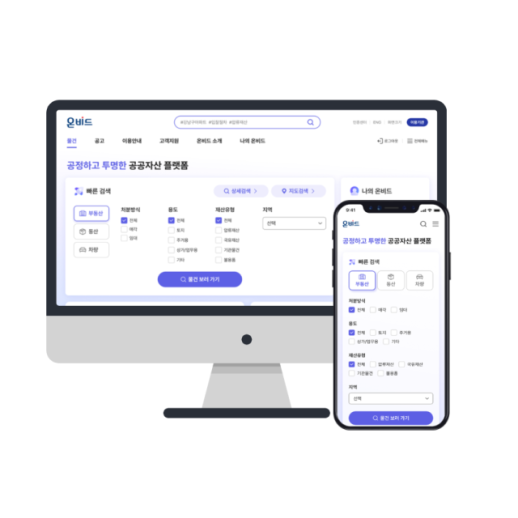 Public Sale of 339.5 Billion Won in State-Owned Unlisted Securities The Korea Asset Management Corporation (KAMCO) will publicly sell stakes in 78 companies, including Geumseong Baekjo Housing and Midas Asset Management. KAMCO announced on June 8 that it will auction off state-owned unlisted securities worth 339.5 billion won starting on the 22nd through the public asset disposal system Onbid. The sale includes 14 construction firms, 25 manufacturing companies, 11 real estate firms, 10 retail businesses, and 18 others. Notable companies in the auction include Geumseong Baekjo Housing, Midas Asset Management, and Airport Limousine. KAMCO stated that these companies have good profitability and financial conditions, making them attractive to potential buyers. The initial sale prices for key items are as follows: Geumseong Baekjo Housing at 121.55 billion won, Midas Asset Management at 5.69 billion won, and Airport Limousine at 3.53 billion won. The ownership stakes being sold are 19.20% for Geumseong Baekjo Housing, 2.37% for Midas Asset Management, and 2.56% for Airport Limousine. Bidding will start at 100% of the initial sale price and will occur over four rounds. If items are not sold in the first two rounds, the price will be reduced by 10% for each subsequent round. Items that fail to sell more than twice may be eligible for private contracts before the next bidding round. Some items may have bidding extended up to five rounds. Bidders must deposit 5% of their bid amount into a designated virtual account during the bidding period via Onbid. The winning bidder must sign a stock purchase agreement within five days of the award and complete payment within 60 days. If the sale amount for a specific item exceeds 500 million won, the winning bidder may opt for installment payments. The installment period is six months for amounts between 500 million and 1 billion won, nine months for amounts between 1 billion and 3 billion won, and one year for amounts exceeding 3 billion won.* This article has been translated by AI. 2026-06-08 16:57:00
 -
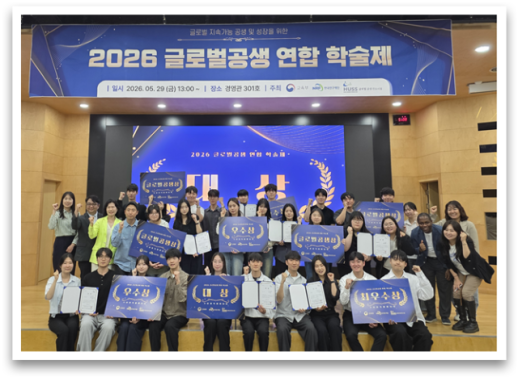 S. Korean university students pitch multidisciplinary solutions at global sustainability festival SEOUL, June 08 (AJP) - Students from five universities in South Korea presented multidisciplinary solutions to global challenges during the finals of the 2026 Global Symbiosis Joint Academic Festival on May 29, 2026, Kookmin University said Monday. The festival was organized by the HUSS Global Symbiosis Project Group and brought together participants from Kwangwoon University, Kookmin University, Sunmoon University, Yeungnam University and Honam University. The competition challenged students to analyze complex social issues, such as climate change and demographic shifts, and propose practical solutions through cross-major collaboration. Nine teams advanced to the finals, pitching ideas across fields such as technology, welfare, and urban planning. A team from Yeungnam University won the grand prize for proposing a symptom translation and hospital matching solution designed to improve medical access for international students. First prize went to a Kookmin University team for a food donation campaign aimed at supporting vulnerable youth. Excellence awards were given to three teams for artificial intelligence-based proposals. These included a carbon reduction platform using local energy data, an accessible cultural tourism application, and a monitoring system to prevent solitary deaths among single-person households. Judges evaluated the projects based on creativity, feasibility, and their multidisciplinary approach. The festival is part of the HUSS Global Symbiosis Consortium, a three-year initiative launched in 2024 with support from the Ministry of Education and the National Research Foundation. The consortium aims to train 2,500 students in sustainable resource management and international cooperation through various educational exchange programs. "This academic festival was an opportunity for students to interpret the complex problems of global society based on their majors and fields of interest, and to propose solutions through multidisciplinary collaboration," Professor Ahn Hyun-chul said. "We will continue to expand various programs so that students can grow while experiencing the value of a sustainable future and global symbiosis." 2026-06-08 16:56:34
 -
 J-Horror Meets K-Shamanism in 'Gentleman: Whispers of Evil' Starring Kim Jaejoong and Gong Seongha J-Horror and K-Shamanism converge in a new occult horror film. As titles like 'Salmon' and 'Back Room' gain traction in theaters, anticipation builds for 'Gentleman: Whispers of Evil,' starring Kim Jaejoong and Gong Seongha, which aims to continue the summer horror trend.On June 8, a press screening and conference for 'Gentleman: Whispers of Evil' took place at CGV Yongsan I-Park Mall in Seoul, featuring actors Kim Jaejoong and Gong Seongha.The film follows three college students who disappear while exploring an abandoned shrine in Kobe, Japan. Kim Jaejoong plays Myung-jin, a shaman who investigates the case and confronts strange evil spirits in this shamanistic occult horror. The film is directed by Kazuyoshi Kumakiri, known for '658km, Yoko's Journey' and '#Manhole.'Filmed on location in Kobe, Japan, the movie captures the vivid terror of the actual setting and the chilling essence of Japanese horror. It has been invited to the 'Mad Max' section of the 28th Bucheon International Fantastic Film Festival, drawing interest from genre fans.Kim Jaejoong remarked, "The script is based on a book written by the director's wife. When it was adapted into Korean, there were changes in character interpretation. Initially, I received a character that felt very Korean, but through communication with the director, I was able to embody a character from his imagination."He added, "This isn't just a typical Korean horror film; it blends the unique characteristics of J-Horror with K-Horror, creating something new. I look forward to that challenge."Gong Seongha also noted that working with director Kumakiri helped him understand his character better. He shared, "When I first went to Japan, the director recommended films for reference. I later watched them in Korean, but as a horror fan, they helped me analyze my character."He continued, "The director has an exceptional sense of mise-en-scène. He draws the storyboards himself and even sketches the costumes beforehand. Collaborating with him was a fascinating experience."For Kim Jaejoong, 'Gentleman: Whispers of Evil' marks his return to the big screen after a long hiatus since 'The Jackal Is Coming.' He expressed, "It felt like my first time filming again. Although it's a Korean production, 90% of the staff were Japanese, which contributed to that feeling."Portraying Myung-jin, the shaman, required a different approach than typical shamanistic portrayals. Kim Jaejoong explained, "I initially studied the stories associated with shamans, but the director insisted that Myung-jin should not conform to those expectations. He wanted a shaman with universal abilities that transcends cultural boundaries."He added, "I aimed to portray abilities that go beyond common perceptions. There are scenes where Myung-jin recites Buddhist terms, and I pointed out that Korean shamans typically do not do that. The director was fine with it, which allowed me to explore a unique character."Gong Seongha reflected on the fresh experience of collaborating with Japanese staff on 'Gentleman,' saying, "It was exciting and nerve-wracking to work with a Japanese director for the first time. When we first met, the director and cinematographer conducted a reading, and I felt that this was the beginning when they called out 'Ready, Action' in Japanese. I understood the nuances overall."He added, "The terms for starting, ending, and 'good job' are quite similar, so I picked up on them quickly. There was a feeling that transcended language. The director was a wonderful person, and we joked that he was like a bear." Kim Jaejoong chimed in, "The director was so lovely that it was hard to concentrate."The filming environment was challenging, and the chemistry between the two actors was intense. Kim Jaejoong described their dynamic as "very rough." He noted, "I met Seongha for the first time on this project, and we worked together in cold, dark, and eerie spaces. We were not in a refreshing atmosphere but rather in dusty environments, which made it a continuous struggle for both of us."However, this challenging environment also fostered a closer bond. Kim Jaejoong said, "We managed to share smiles and support each other. When an actor performs a personal scene, it can be embarrassing if others are watching, but in this space, everyone had to observe each other’s scenes, which likely strengthened our relationship."Gong Seongha recalled their first meeting in Kobe, saying, "I thought he was someone who makes people feel at ease. As we ventured deeper into the dark tunnel in Kobe, we bonded through shared experiences. Even going to the restroom required us to go up to the surface, which brought us closer together. Thanks to him, I felt comfortable and had fun filming."He also mentioned the catharsis he experienced while acting in horror. Gong Seongha stated, "Reading the script sparked my interest in horror, and reacting to the scares provided a sense of catharsis. I wondered if I could feel fear from things that are not familiar to us, and I realized that, the more I thought about it, people can be scarier than the evil spirits in the film."Kim Jaejoong also contributed to the film's ending song. He shared that he was invited by the director to participate in the OST, saying, "The director suggested I join the film's OST, and I gladly accepted. I received a demo of a unique style of song that I had never done before, but I felt it suited the film well, so I recorded it right away."He added, "I believe it fits the film's complex ending and conclusion. The movie features many brutal scenes from the start, with unexpected moments of violence throughout. Overall, I think the flow of the film and the OST complement each other well."Finally, both actors emphasized the genre appeal of 'Gentleman: Whispers of Evil' for summer audiences. Kim Jaejoong stated, "Summer is synonymous with horror. While some may not be fans of horror, watching it two or three times can help you adapt. I believe you can enjoy a refreshing summer once you fully acclimate to the fear and brutality."He added, "I think this film fills some gaps that K-Horror has had. It has many layers, and there may be interpretations or conclusions that remain unresolved after one viewing. I hope audiences will engage with 'Gentleman' and find their own conclusions and interpretations throughout the year."Gong Seongha remarked, "I believe the film successfully blends diverse themes. It features the location in Kobe, Japanese shamanism, and even a Protestant pastor encountering Hindu evil spirits. The combination of various beliefs makes this an intriguing occult film."Meanwhile, 'Gentleman: Whispers of Evil' is set to be released on June 17.* This article has been translated by AI. 2026-06-08 16:54:00
 -
 Korean Party's National Assembly Leader Election Could Shape Future Leadership The election for the National Assembly Leader of the People Power Party is evolving into a preliminary round for the next party leadership competition. This shift follows former leader Han Dong-hoon's election as an independent in a by-election, prompting pro-Han lawmakers to work on expanding their influence within the party. Analysts suggest that this election could trigger a butterfly effect that reshapes the broader conservative political landscape in South Korea. According to the People Power Party, a mobile voting system will be implemented for the National Assembly Leader election scheduled for June 10, allowing lawmakers who cannot attend the general assembly to participate. This marks the first time mobile voting will be used in this election. Party members who are unable to attend due to overseas trips or other commitments will still be able to cast their votes for their preferred candidates. A debate featuring the candidates will take place the day before the vote. Organized by junior lawmakers, the event will include opening statements from each candidate, four common questions, and a session for free questions from lawmakers, concluding with final remarks. Although not an official debate hosted by the party's election committee, all candidates—Kim Do-eup, Jeong Jeom-sik, and Seong Il-jong—are expected to participate. The party had previously decided to postpone the election by one day to ensure sufficient campaigning time, responding to concerns raised about the election timeline. With the introduction of mobile voting and the organization of a candidate-led debate, the party appears to be gearing up for a successful election. The timing of the election, occurring shortly after the June 3 local elections, is significant as it is closely tied to the upcoming leadership competition. The outcome of the National Assembly Leader election could greatly influence the future dynamics of the party and the conservative political landscape. The next leader is expected to play a crucial role in determining the fate of the 'Han Dong-hoon regime.' A key issue in this election is whether Han Dong-hoon will be allowed to rejoin the party. Lawmakers aligned with Han are advocating for his reinstatement, and the candidates' positions on this matter could significantly impact the election. Han is currently expelled from the People Power Party, and his reinstatement would require the cancellation of his expulsion. While the National Assembly Leader does not have the authority to revoke expulsions, they can exert pressure on the party leadership to address the issue. In a related statement, Kim Do-eup appeared on CBS Radio's 'Park Seong-tae's News Show' and emphasized the need for a united conservative front to achieve a successful government formation, stating, "To create a government, the conservative forces must unite in a chemical bond to release energy. If we are to assume a grand perspective of government formation, Han's reinstatement is necessary." This election is also linked to discussions about accountability for the local election results. Within the party, there is ongoing debate about who bears responsibility for the anticipated losses. If Jeong Jeom-sik, the former policy committee chair, is elected, it could alleviate some of the accountability concerns for the current leadership under Han Dong-hoon. Conversely, if another candidate wins, it may be interpreted as an acknowledgment of the leadership's significant responsibility for the local election losses. The newly elected National Assembly Leader will need to engage in negotiations with the Democratic Party regarding the formation of the National Assembly. Given the contentious nature of the legislative committee discussions, particularly concerning the Legal Affairs and Judiciary Committee, these negotiations are expected to be challenging. Although the People Power Party has increased its seat count through the recent by-elections, it still holds only 110 seats, limiting its negotiating power.* This article has been translated by AI. 2026-06-08 16:54:00
 -
 HMM's Move to Busan Requires Additional Government and Local Support, Says CEO To ensure the successful relocation of HMM, South Korea's only national shipping company, to Busan, additional support from the government and the city is urgently needed. The establishment of a shipping industry cluster that encourages other shipping and port companies to relocate is also essential. Ahn Byeong-gil, CEO of the Korea Maritime Promotion Corporation, stated at a press conference on June 8, "Support from local governments, including Busan, is crucial for the relocation of shipping companies like HMM. Providing incentives is necessary for effective results." Ahn emphasized the need to create a shipping or maritime industry cluster through additional support, focusing on relocating HMM and other shipping and port companies to Busan to enhance regional specialization. He noted, "Busan is also aiming to establish a shipping cluster, but related incentives are essential. According to the 'Special Act on Support for Relocation of Marine and Fisheries Institutions to Busan,' not only the Ministry of Oceans and Fisheries but also private companies can receive support if they relocate to Busan." Industry insiders argue that simply moving HMM's headquarters to Busan should not be limited to a change of address. Previously, SK Shipping and H-Line Shipping also announced their relocations to Busan, but only about 15 employees from SK Shipping currently work there, and H-Line Shipping has only changed its address. Given this context, it would be nearly impossible for all HMM employees to move to Busan. One industry source remarked, "It is premature to discuss a full relocation when the site for HMM's new headquarters has not even been confirmed. In the past, financial public enterprises were attracted to Busan, but now only empty shells remain. We must avoid repeating this mistake." The Ministry of Oceans and Fisheries announced in April that it would secure a site for HMM's headquarters within the 'Phase 1 Redevelopment Area of Busan North Port' in Jung-gu and Dong-gu, but HMM has already changed its address to the 'Heungkuk Life Building' in Choryang-dong. Ahn clarified that the timeline for HMM's relocation is not set for completion by the end of the year, stating, "It does not have to be completed by the end of the year. It means we will finalize the planning within this year, and the current lease for HMM's office runs until May next year." He added, "The outline of the relocation will become clear once labor agreements are reached, and more time is needed." Regarding HMM's privatization, Ahn said, "The Korea Development Bank is in a hurry to sell, but our focus is on how to grow HMM into a global shipping company. There have been no discussions with the bank regarding the sale." Additionally, during the press conference, the Korea Maritime Promotion Corporation revealed the status of financial support for national shipping companies from the previous year. Although the amount of new financing in the shipping market decreased last year, the proportion of private capital inflow increased.* This article has been translated by AI. 2026-06-08 16:51:00
 -
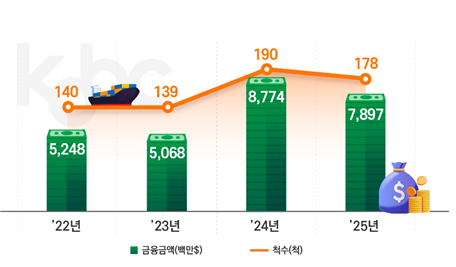 Korean Shipping Market Sees Decrease in Financing Amid Increased Private Investment Last year, the financing executed by 100 national shipping companies in South Korea decreased by more than 10%. However, the influx of private capital increased, leading to a rise in the overall financing balance. The Korea Maritime Promotion Corporation (KMP) released its "2025 Ship Financing Status" report, detailing the funding status and investment trends of major national shipping companies. In the past year, the amount of new funding raised by these companies for ship acquisitions declined. The total executed ship financing for 1,041 vessels fell by 11.2% year-on-year to $7.89 billion. Meanwhile, the cumulative balance of outstanding ship financing, which has not been repaid, rose to approximately $27.3 billion, a 12.1% increase from the previous year. The significant increase in the financing balance at the end of last year is attributed to the sequential delivery of large project vessels, such as the K-3 Qatar liquefied natural gas (LNG) carriers. Foreign financial institutions dominate the domestic ship financing market, accounting for 66% of the total. Their financing execution increased by 3 percentage points compared to the previous year. The proportion of policy financing reached its lowest level since 2022 at 27%, while private financing showed signs of recovery, recording a rate in the 7% range. A KMP official stated, "We have established a stable financing environment through continuous guarantees between shipping companies and private finance, resulting in increased private capital inflow into the shipping industry." Last year, the ship financing market was primarily focused on second-hand vessels, with 74% of the total investment directed toward used ships. Among vessel types, bulk carriers accounted for the largest share at 36%, followed by tankers at 31%. Over the past three years, investments in container ships and LNG carriers have primarily focused on new builds, while bulk carriers and tankers have seen a higher proportion of investment in used vessels. An Byeong-gil, president of KMP, expressed hope that the ship financing statistics, created with the active cooperation of national shipping companies, will provide practical assistance to government policies, national shipping companies, industrial strategies, and private investments.* This article has been translated by AI. 2026-06-08 16:51:00
 -
 Harim Donates Scholarship Books to 75 Elementary Students, Supporting Local Talent for 14 Years Harim announced on June 8 that it held the 14th Elementary Scholarship Book Award Ceremony on June 5 at the Iksan Education Support Center in Jeonbuk. The award ceremony is a key social contribution program aimed at fulfilling corporate social responsibility and promoting reading among local children. It began in 2012 with the goal of nurturing future talent in the community and has now reached its 14th year. In collaboration with the Iksan Education Support Center, Harim selected scholarship recipients based on recommendations from 55 elementary schools in the area. A total of 55 students, who demonstrated academic diligence and good conduct despite financial difficulties in purchasing books, were chosen as scholarship recipients. Additionally, Harim provided support for employees' welfare by selecting 20 children of employees with elementary school-aged children to receive scholarship books. This year, a total of 75 books were distributed to 55 local students and 20 children of employees. Harim CEO Jeong Ho-seok expressed, "I find it meaningful to meet local children through the award ceremony each year and support their dreams. I hope these students gain wisdom through books and grow into leaders who will shape the future society." In addition to the scholarship book program, Harim operates various social contribution initiatives, including support for farming households and activities for marginalized communities, as part of its commitment to ESG management. In May, Harim collaborated with the Jeonbuk Office of Education and the Science Education Center to conduct a 'Global Student Science Camp,' supporting 24 middle and elementary school students from the region on a field trip to explore scientific and technological sites in Japan.* This article has been translated by AI. 2026-06-08 16:51:00
 -
 South Korea Selects Naver, Samsung SDS, and Alice Group for $2 Billion GPU Project The Ministry of Science and ICT announced on June 8 that it has selected Naver Cloud, Samsung SDS, and Alice Group to participate in a project to secure, build, and support advanced graphics processing units (GPUs) worth approximately 2 trillion won (about $1.5 billion). The ministry plans to collaborate with the selected cloud service providers (CSPs) to acquire and establish a total of 9,704 advanced GPUs to support AI innovation in both the private and public sectors. The GPUs to be secured include 2,016 Vera Rubin units and 7,688 B300 units. Naver Cloud will acquire 1,008 Vera Rubin units and 3,112 B300 units, Samsung SDS will secure 1,008 Vera Rubin units and 2,016 B300 units, while Alice Group plans to acquire 2,560 B300 units. Notably, the next-generation Vera Rubin GPUs feature improved bandwidth and processing speeds compared to previous models. This enhancement is expected to reduce data bottlenecks and enable the processing of more user requests simultaneously, thereby decreasing the time and costs associated with AI model training. The Ministry of Science and ICT intends to utilize 2,016 Vera Rubin units and 4,360 B300 units to support the development of independent AI foundation models, national AI projects, and the advancement of AI models and services in collaboration with industry and academia. The ministry plans to initiate GPU purchase orders with the selected CSPs this month, aiming to sequentially launch B300 services by the end of the year as the CSPs complete their installations. The rollout of the Vera Rubin GPUs is scheduled for the first half of 2027, considering the release timeline. Deputy Prime Minister and Minister of Science and ICT Lee Kwang-hoon stated, "The advanced GPUs we are securing, including Vera Rubin, will be a key driver in enhancing the speed of AI research and development and our technological capabilities. We will secure AI infrastructure to support innovation and growth among domestic companies and research institutions." Additionally, the ministry has announced plans to secure a total of 260,000 GPUs by 2030 to achieve AI G3 status. Since February, the government has begun distributing approximately 4,000 of the 10,000 GPUs it initially secured to domestic companies and research institutions.* This article has been translated by AI. 2026-06-08 16:48:00