

Journalist

Jung Sung-chun
-
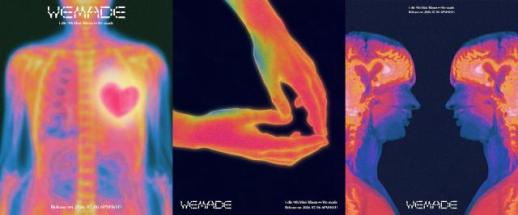 I-DLE to release ninth EP 'We made' in July SEOUL, June 08 (AJP) - K-pop girl group I-DLE will return with its ninth EP, "We made," on July 6, its agency Cube Entertainment said Monday. The agency unveiled a teaser for the album through the five-member group's official social media channels at midnight. "We made" marks I-DLE's first release in six months since the digital single "Mono (Feat. skaiwater)" in January, and its first EP in a little over a year since "We are" in May last year. The teaser uses thermal camera and X-ray imagery to visualize how love registers in the body, tracing heat from the chest to the fingertips and into the minds of two figures facing each other. The album logo uses a distortion effect that echoes the emotional intensity of the visuals. Formed in 2018, I-DLE garnered immediate recognition, winning their first music show award just 20 days after debut and going on to receive multiple rookie awards at major year-end ceremonies that year. The group is widely regarded as one of the most successful K-pop girl groups outside of the industry's major labels. Before the EP's release, I-DLE will perform in Singapore, Yokohama and Hong Kong as part of its fourth world tour, "2026 I-DLE WORLD TOUR ." 2026-06-08 16:33:18
 -
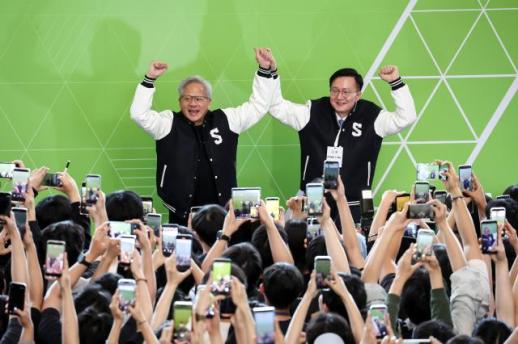 Nvidia CEO meets SNU students before wrapping up whirlwind Seoul trip SEOUL, June 8 (AJP) - Nvidia CEO Jensen Huang, who has become the talk of the town due to his high-profile visit to Seoul, met with students at Seoul National University on Monday. Huang attended an on-campus event at the country's top university in southwestern Seoul, where participants were introduced to an artificial intelligence (AI)-assisted platform called "OpenClaw." He also delivered a 15-minute lecture on AI technology and its impact on future industries. Huang woke early in the morning to visit key business partners including SK Group and LG Group. Later in the day, he is also scheduled to visit automaker Hyundai Motor Group’s headquarters in Yangjae, southern Seoul, and online portal Naver's headquarters in Seongnam, Gyeonggi Province. Since his arrival in Seoul last Friday, Huang has kept a busy schedule, mingling with business leaders at informal gatherings that began with grilled pork belly and a mix of soju and beer at a barbecue restaurant, before moving to a nearby fried chicken restaurant for a late-night second round. He also threw the ceremonial first pitch at a baseball game and joined another gathering over fried chicken and beer. He is set to wrap up his stay here later in the day or early Tuesday. 2026-06-08 16:30:45
 -
 Protesters block Seoul vote-counting venue for fourth day as rally mood shifts SEOUL, June 08 (AJP) - A protest blocking the entrance to a vote-counting venue for the local elections that took place last week in Seoul entered its fourth day on Monday, as demonstrators gathered outside the handball stadium at Olympic Park in the southern Seoul district of Songpa. Police estimated around 1,600 people remained at the scene, maintaining a blockade of the facility. The crowd had peaked the previous day, swelling from 3,000 at noon to 20,000 by 6 p.m. before thinning overnight. Some participants stayed through the night, vowing to prevent ballot boxes from being removed, and blocked all ten entrances to the counting venue. Authorities had been expected to forcibly disperse the crowd Monday morning, but as of Monday afternoon no such action had been taken. The protest, which began June 5 following a ballot shortage during the June 3 local elections, shifted noticeably in tone on Monday. Over the previous three days, organizers had discouraged the display of American flags and chants alleging electoral fraud, in an effort to broaden the rally's appeal. On Monday, however, demonstrators waved American flags and homemade Korean flags, held handmade signs, and chanted "fraudulent election, hold a new election" without pause. Participants spanning their twenties through their sixties were present. 2026-06-08 16:30:11
 -
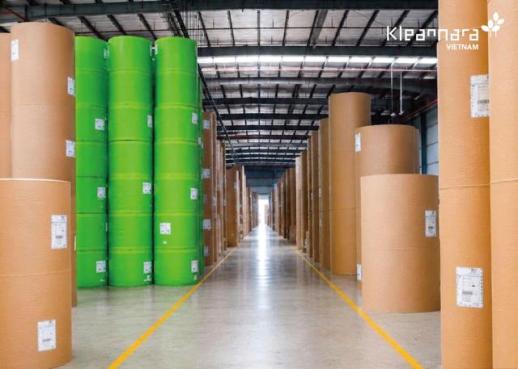 Clean Country Expands Export of White Paperboard to Vietnam, Targets CCKB Market Clean Country announced on June 8 that it is accelerating its export of white paperboard, focusing on Vietnam. Since establishing its Ho Chi Minh City branch in 2022, Clean Country has strengthened its localized sales and operational systems, enhancing its responsiveness to the Southeast Asian market. As a result, the volume of white paperboard exports to Vietnam is expected to increase by approximately 21% from 2021 to 2025. Vietnam's status as a global manufacturing hub is expanding, leading to a continuous rise in demand for packaging materials. Clean Country explained that global manufacturers such as Heineken, Coca-Cola, Samsung, and LG are increasing their production bases in Vietnam, which is driving steady demand for industrial packaging in the food and beverage, electronics, and consumer goods sectors. In response to these market changes, Clean Country is intensifying its efforts to penetrate the high-value packaging segment with its CCKB product. CCKB is known for its superior strength, moisture resistance, and printability compared to standard white paperboard, making it highly suitable for premium packaging applications such as beverage carriers, HMR, and consumer goods packaging. The company is also expanding its local customer engagement. It is managing existing clients while seeking new buyers, continuously adapting its sales activities to reflect market changes and customer demands in real-time. This strategy aims to broaden its supply to both global corporations and local businesses, thereby increasing its market share in Vietnam. Previously, on May 15, Clean Country signed an export contract with a U.S. distributor in the world's largest toilet paper market, valued at approximately $59 billion, announcing its plans to supply its brand 'Pure Soft' to the U.S. market. A Clean Country representative stated, "Vietnam is a strategic market characterized by a young population, its role as a global manufacturing hub, and a simultaneous shift towards eco-friendly packaging. We plan to strengthen our competitiveness in high-value packaging materials based on our local presence and continue to expand in the Southeast Asian and global markets."* This article has been translated by AI. 2026-06-08 16:30:00
 -
 NVIDIA CEO Jensen Huang Visits Naver Headquarters, Emphasizes GPU Benefits Jensen Huang, CEO of NVIDIA, visited Naver's 1784 headquarters in Seongnam, South Korea, on June 8, stating, "The more GPUs you have, the more you can work and the happier you can be." According to the IT industry, Huang arrived at the Naver headquarters at 3:45 PM, where he met with Naver Chairman Lee Hae-jin and CEO Choi Soo-yeon. Upon arriving in the lobby, he warmly embraced Lee, marking their second meeting during Huang's visit, following their first encounter on June 5. Naver prepared a webtoon featuring Huang and Lee as characters, asking them to fill in the dialogue for the final scene. A Naver representative explained, "The short comic you are seeing is created by the authors of one of Naver Webtoon’s flagship works, 'Legendary Territory Designer.' The protagonist of today’s story is a young person with the honest dream of wanting to achieve both work and happiness. By chance, he meets two mentors, Lee Hae-jin and Jensen Huang, to seek their advice." Huang remarked, "It’s very difficult to create (the dialogue)," but he contributed the line, "The more GPUs you have, the more you can work and the happier you can be." Lee added his line, saying, "Happiness is like pork belly, and work is like perilla leaves. Wrap them together and enjoy them at once." He noted, "I recently had a gathering over pork belly, so that memory is still fresh. I believe there is a good way to have both work and happiness without separating them." Huang agreed, stating, "I concur. Both of us are working hard and are very happy."* This article has been translated by AI. 2026-06-08 16:27:00
 -
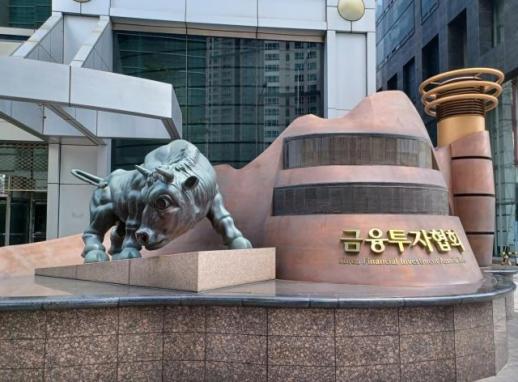 Investment Association's Direct Listing of Public Funds Loses Momentum After 8 Months The Financial Investment Association's ambitious initiative to allow direct listings of public funds has lost significant traction just eight months after its launch. A lack of market interest, regulatory limitations, and the anticipated introduction of fully active exchange-traded funds (ETFs) have raised doubts about the program's future. As of June 8, sources in the financial investment sector report that the association is not currently engaged in discussions with asset management firms regarding the direct listing of public funds. While several firms explored listing possibilities until the end of last year, inquiries and negotiations have virtually ceased recently. The core of this initiative was to enable investors to buy and sell public funds on exchanges like regular stocks. It aimed to provide a new investment vehicle for those preferring more active management strategies and to revitalize the sluggish public fund market. The regulatory authorities approved the program as an innovative financial service (sandbox), allowing direct listings to commence on October 27, 2025. However, the market response has fallen far short of expectations since its implementation. Many asset managers opted out due to high listing standards, and investor interest has been limited. Following the listing of the 'Eugene Champion Short-Term Credit X Class,' the average daily trading volume has remained around 39.5 million won. Although some trading occurred initially, there have been no transactions on five of the last ten trading days. The situation is similar for the 'Daishin KOSPI 200 Index X Class,' which has seen an average daily trading volume of about 22 million won since its listing. Analysts attribute the program's failure to meet expectations to insufficient liquidity stemming from a lack of investor interest. Additionally, the government's push to introduce fully active ETFs in the first half of this year poses another challenge. Fully active ETFs allow asset managers to construct portfolios entirely at their discretion, independent of benchmark indices. This could absorb much of the active investment demand that the public fund direct listing sought to capture, leading industry experts to view fully active ETFs as a potential substitute. A representative from the Financial Investment Association stated, "There are currently no discussions regarding the direct listing of public funds, likely due to issues such as the fully active ETFs." If the current situation persists, there are concerns that the public fund direct listing may not extend beyond its sandbox trial period. As an innovative financial service, if it fails to demonstrate sufficient results after a two-year validation period, extending or formalizing the program may prove difficult. The public fund direct listing was a key initiative pushed by former Financial Investment Association Chairman Seo Yoo-seok during his tenure. Some analysts suggest that the lack of market success, coupled with the new leadership's priorities, may have diminished the focus on initiatives launched under the previous administration. 2026-06-08 16:27:00
 -
 7.8 Magnitude Earthquake Strikes Southern Philippines, Leaving 12 Dead and Over 200 Injured A 7.8 magnitude earthquake struck southern Philippines on June 8, resulting in at least 12 fatalities and over 200 injuries. According to the U.S. Geological Survey (USGS) and the European-Mediterranean Seismological Centre (EMSC), the quake occurred at 7:37 a.m. local time in the waters south of Mindanao Island. The USGS reported that the epicenter was located approximately 60 kilometers south of General Santos City in South Cotabato province, at a depth of 55.2 kilometers. The EMSC initially recorded the earthquake at a magnitude of 8.1 before revising it to 7.8. The Philippine Institute of Volcanology and Seismology identified the epicenter as being about 32 kilometers southwest of the village of Maasim in Sarangani province, with a depth of 33 kilometers. Following the initial quake, several strong aftershocks, including one measuring 6.5, were reported, with tremors felt as far away as Malaysia. According to the Associated Press, at least 12 people have died and more than 200 have been injured, primarily due to collapsing buildings. The damage was concentrated in General Santos, a port city with a population of over 700,000. Rod Sosemeña, a regional director of the Philippine National Disaster Risk Reduction and Management Council, reported that at least seven people died and around 130 were injured in General Santos. Some small buildings collapsed, and several structures, including key access bridges, sustained dangerous cracks. As a result of the earthquake, General Santos International Airport was temporarily closed, and 17 domestic flights were canceled. An additional five fatalities were reported in South Cotabato, Davao Occidental, and Balut Island. A tsunami was also observed along the nearby coast following the earthquake. The Pacific Tsunami Warning Center stated that the tsunami threat had mostly passed about five hours after the quake. Teresito Bacolcol, head of the Philippine Institute of Volcanology and Seismology, reported no damage or casualties from the tsunami so far. Waves of up to one meter were recorded in Sultan Kudarat and Sarangani provinces. An 83-centimeter tsunami was measured off the coast of Sulawesi, Indonesia, prompting the Malaysian Meteorological Department to issue a tsunami warning for Sabah on Borneo. The Philippines is located in the Pacific Ring of Fire, an area prone to frequent earthquakes and volcanic eruptions. It is also considered one of the most disaster-prone countries, affected annually by about 20 typhoons and tropical storms.* This article has been translated by AI. 2026-06-08 16:24:00
 -
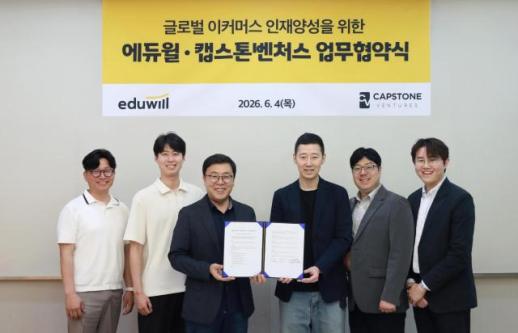 Eduwill Partners with Capstone Ventures for Global E-Commerce and AI Education Eduwill has joined forces with Capstone Ventures, a global e-commerce solutions company, to cultivate practical talent for the global e-commerce and artificial intelligence (AI) education markets. On June 8, Eduwill announced that it has signed a memorandum of understanding (MOU) with Capstone Ventures to jointly plan and operate global e-commerce and AI-based education initiatives. The agreement aims to combine the core competencies of both companies to develop practical professionals optimized for the global e-commerce market and the AI education sector, while jointly expanding educational content and project initiatives to create mutual growth and new business opportunities. Under this partnership, the two companies will collaboratively plan and develop global e-commerce and AI education programs, as well as operate hands-on and project-based training courses both online and offline. They will also work together on the production of educational content, marketing collaboration, and the establishment of operational committees to train practical professionals and jointly expand new business opportunities. Capstone Ventures, which has partnered with Eduwill, is a leading global e-commerce consulting firm that has helped grow over 300 brands over the past decade. It is an official select and plus partner of Shopify in South Korea and has established partnerships with major players like Amazon and TikTok. Previously, in April, Eduwill signed an MOU with Vize, a global foreigner lifestyle support solutions company, to innovate the global education ecosystem and create value. An Eduwill representative stated, "In a business environment where AI and global e-commerce converge, practical, specialized education is essential. We aim to provide differentiated real-world programs, including company-linked projects, based on Capstone Ventures' global expertise to nurture the next generation of key talent."* This article has been translated by AI. 2026-06-08 16:24:00
 -
 Token Securities Market Faces Challenges Amid Competition for Platform Dominance As the implementation of the token securities (STO) system approaches, competition among brokerages to dominate the market is intensifying. Major firms are accelerating efforts to build issuance and distribution platforms and secure blockchain infrastructure. However, concerns are growing that there are 'no products to trade' in the market. While competition for distribution platforms heats up, the issuance ecosystem is struggling to gain traction, raising fears that the token securities market may become a 'half-baked system.' According to the financial investment industry on June 8, firms such as Shinhan Investment Corp., KB Securities, Mirae Asset Securities, Korea Investment & Securities, and IBK Investment & Securities are all working to establish issuance platforms, connect distribution infrastructure, and collaborate on blockchain networks to gain a foothold in the token securities market. The KDX Consortium, led by the Korea Exchange and NextTrade, and the NXT Consortium are preparing for official approval regarding a consortium for fractional investment in over-the-counter trading. This competition is heating up as firms prepare to secure market share ahead of the full implementation of the system in February next year. However, industry insiders emphasize that securing issuers is a more critical task than building platforms. Even if a distribution platform is established, the market cannot function without sufficient products to list. In reality, the token securities market is showing signs of a shrinking issuance base, contrary to expectations for institutionalization. A notable example is Funble, which pioneered the real estate-based trust profit securities fractional investment market after being designated as an innovative financial service by the Financial Services Commission in May 2021. Funble announced the termination of its services in April, highlighting the challenges faced by issuers in the token securities market. Industry experts express concerns that even with secured platforms, the lack of tradable products could lead to a stagnant market. The primary reason cited is the high barriers to entry. The approval criteria set by financial authorities are deemed too burdensome for startup-focused fractional investment firms. To obtain issuance approval, businesses must submit three years of projected financial statements, effectively needing to demonstrate the potential for profitability within that timeframe. However, currently, there are virtually no companies in the fractional investment sector that can achieve stable profits. One industry insider noted, "In a structure where the public offering fee is around 1%, to cover annual costs in the tens of millions of dollars, issuances in the hundreds of millions of dollars are necessary, which is realistically challenging." Additionally, the structure for issuing non-monetary trust profit securities is designed based on the Asset Securitization Act, placing a significant financial burden on issuers who must directly hold assets. Instead of revising the Capital Markets Act and trust systems, the reliance on the Asset Securitization Act, which does not align with the realities of startups, has increased issuance costs and capital burdens. This context explains why existing innovative financial service providers are reevaluating their business strategies. Another industry source remarked, "It is difficult to create an independent revenue model solely from token securities. Unlike traditional brokerages that can selectively issue while engaging in other businesses, startups face different circumstances." Brokerages, on the other hand, have relatively lower burdens. With established business foundations in traditional finance, they can decide whether to pursue token securities projects based on company strategy, even if the profitability is low. In contrast, startups, which initially held a leading position in financial services, now face competition from brokerages that can engage in the same business following institutionalization, diminishing their monopolistic status. One industry expert concluded, "Ultimately, the growth potential of the token securities market lies in its ability to liquidate non-traditional assets that conventional financial products do not address. If we do not improve regulations to foster a robust issuance ecosystem that allows for a variety of products to be issued, it will be difficult to secure business viability for the token securities market, even after institutionalization." 2026-06-08 16:24:00
 -
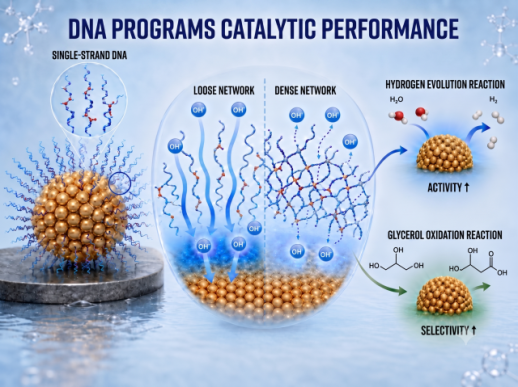 Researchers design DNA coatings to control catalyst environments for chemical production SEOUL, June 08 (AJP) - Researchers in South Korea have developed a method to coat chemical catalysts with single-stranded DNA, enabling precise control over the surrounding chemical environment to improve hydrogen and chemical production, the Korea Advanced Institute of Science and Technology said Sunday. The research team, led by Professor Park Ji-min from the Korea Advanced Institute of Science and Technology (KAIST)'s department of chemical and biomolecular engineering, applied single-stranded DNA to the surface of gold nanoparticle catalysts. By altering the sequence of the DNA, the researchers could control the local acidity and ion distribution at a nanometer scale without changing the structure of the catalyst itself. In chemical reactions driven by electricity, the immediate environment surrounding a catalyst determines how efficiently it operates. Traditionally, scientists used polymer coatings to manage this space, but these materials lacked the precision needed to design internal structures at a microscopic level. Because DNA naturally carries a negative charge and its structure can be altered by changing its sequence, it serves as an effective tool for guiding the movement of ions. Using real-time analysis techniques, the team observed that the DNA layer functions as a customized interface that manages the flow of hydroxide ions. When applied to hydrogen generation and the conversion of glycerol, the specific DNA sequences directly impacted the efficiency of the reactions. Adjusting the sequence increased the production rate of glycerate, a material used in cosmetics and pharmaceuticals, demonstrating that reaction outcomes can be controlled solely through DNA modification. The study, co-authored by doctoral students Oh Sang-yeon and Lee Tae-kyung, was published in the Journal of the American Chemical Society on May 5, 2026. "This research is an example showing that DNA can be utilized not just as a genetic information storage medium, but as a precision nanomaterial to control electrochemical reactions," Professor Park said. "By adjusting the acidity and ion movement on the catalyst surface through DNA sequence design, we expect it to be widely utilized in overall carbon neutrality technologies, including hydrogen production and biomass conversion in the future." (Reference Information) Journal/Source: Journal of the American Chemical Society Title: Programmable Single-Stranded DNA Layers as Modulators of Nanoscale pH at Electrocatalytic Interfaces Link/DOI: 10.1021/jacs.6c02995 2026-06-08 16:21:17