

Journalist

KI SU JEONG
-
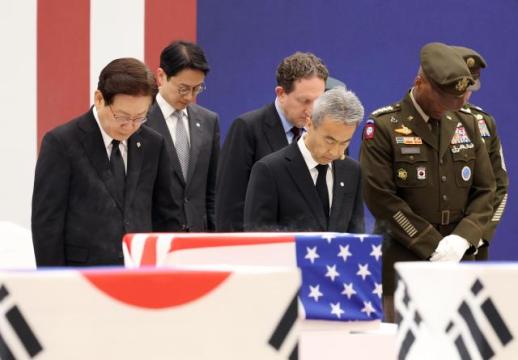 President Yoon Highlights Sacrifice of Korean War Veterans at U.S.-Korea Remains Ceremony President Yoon Suk Yeol stated on June 5 that the repatriation of remains at the U.S.-Korea joint ceremony for Korean War veterans marks a significant milestone in strengthening the alliance built on the sacrifices of those who served. This ceremony, held for the first time in South Korea, took place at the Seoul Airport's state guest hall. In his commemorative speech, President Yoon emphasized the importance of the event, saying, "This is a meaningful occasion for the first mutual repatriation of remains of Korean War veterans, which both South Korea and the U.S. have steadfastly protected together." He added, "The remains of ten of our soldiers, who have waited alone in distant Hawaii, have finally returned to the embrace of their homeland," and expressed his commitment to honor the remains of three U.S. soldiers with the utmost respect as they return home. During his speech, President Yoon underscored the significance of the U.S.-Korea alliance. He remarked, "The effort to return not only our own soldiers but also those of our allied nations to their families is the strongest testament to the bond forged in blood between our nations. The trust that has upheld the U.S.-Korea alliance, even after decades, is the solid root that sustains it." He further stated, "With the strong U.S.-Korea alliance as our foundation, South Korea is writing a new history of prosperity that astonishes the world. I am confident that if our two nations join hands and move forward unwaveringly toward the future, we can establish complete peace on this land and bloom the flowers of mutual prosperity." On this day, a transport aircraft carrying the remains of ten South Korean soldiers entered the Korean Air Defense Identification Zone (KADIZ) and arrived at the ceremony site under the protection of domestically produced KF-21 fighter jets and U.S.-made F-35A stealth fighters. At the event, President Yoon presented an unidentified soldier's dog tag to symbolize the remains of unidentified South Korean soldiers, expressing his determination to identify their names and families. The remains of U.S. soldiers included a reproduction of an "Arirang scarf" made by a U.S. soldier during the war, wishing for his mother's health. Attendees included Minister of National Defense An Kyung-bak, Chairman of the Joint Chiefs of Staff Jin Young-seung, and the chiefs of the Army, Navy, and Air Force, along with U.S. representatives such as Acting U.S. Ambassador to South Korea James Heller and United Nations Command and U.S.-Korea Combined Forces Commander Javier Brunson. The Blue House noted that the participation of Major Park Byung-jun, whose great-grandfather and grandfather were recognized for their contributions to the independence movement and as Korean War veterans, respectively, added to the significance of the event, as he served as the pilot of the first F-35A during the escort mission, symbolizing a legacy of patriotism and dedication across generations.* This article has been translated by AI. 2026-06-05 18:15:00
 -
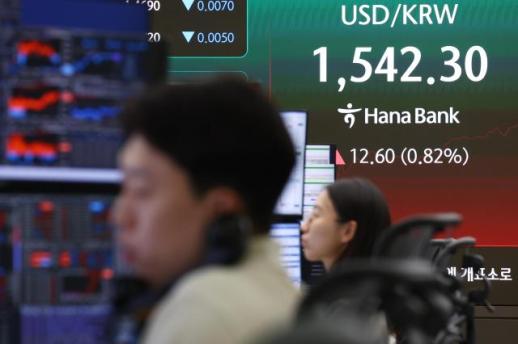 Won plummets past 1,540 as bonds extend losses SEOUL, June 5 (AJP) - South Korea's financial markets remained unsettled on Friday as the won-dollar exchange rate closed at about 1,540 won, for the first time in nearly 17 years and bond yields extended their rise. Heavy foreign selling in local equities continued to weigh on the won and debt markets, while traders saw no clear signs of actual intervention by foreign exchange authorities. In the Seoul foreign exchange market, the exchange rate closed at 1,539.1, down 9.4 from the previous session's overnight close. It was the first time the exchange rate ended regular trading above the 1,540 threshold in 17 years - since the aftermath of the global financial crisis in March 2009. During intraday trading, the rate rose as high as 1,547, marking a sharp increase from Thursday's daytime close of 1,529.7. The won's weakness came alongside a sharp sell-off in the domestic stock market, with the benchmark KOSPI falling more than 6 percent intraday, briefly dipping below 8,100 and triggering a selling "sidecar" that temporarily halted program trading sell orders. Overnight on Wall Street, Broadcom's post-earnings plunge weighed on sentiment toward artificial intelligence and semiconductor stocks, adding pressure to tech and AI heavyweights that had led the recent rally in Seoul. Foreign investors net sold more than 3.5 trillion won ($2.27 billion) worth of KOSPI shares on Friday, after unloading a net 16.5 trillion won over three trading sessions from Monday to Thursday despite a one-day market closure for local elections. The foreign selling streak, which began last month, extended to a 20th consecutive session, the longest stretch of net selling since March-April 2020. Despite limited moves in the U.S. Dollar Index and the dollar-yen exchange rate, the won fell more sharply than major emerging market currencies, underscoring Korea-specific pressure tied to foreign selling in local stocks. The won's underperformance was also clear against regional peers on June 5, with the Singapore dollar, Hong Kong dollar and Vietnamese dong largely flat against the dollar and the Indonesian rupiah down about 0.2 percent, while the won fell nearly 1 percent from the previous session's regular market close. Equity outflows also offset strong exports and a solid current account surplus, adding upward pressure on the exchange rate. The Bank of Korea said Friday that the April current account surplus reached $28.29 billion, the second-largest on record after the previous month's all-time high, but the large goods surplus was overshadowed by currency conversion and hedging demand linked to foreign stock selling. The debt market also extended its losses, with the benchmark three-year government bond yield closing up 2.4 basis points at 3.882 percent - highest level in 31 months - and the 10-year yield rising 2.5 basis points to 4.254 percent. This followed a sharp sell-off on Thursday, when the three-year yield jumped 8.5 basis points to 3.858 percent and the 10-year yield climbed 9.4 basis points to 4.229 percent. The continued bond weakness reflects concerns that the weaker won, rising international crude prices, Middle East tensions and additional U.S. tariff pressure could add to import-price inflation and prompt further tightening by the BOK. Policymakers have stepped up verbal intervention for two consecutive days. Koo Yun-cheol, Deputy Prime Minister and Minister of Economy and Finance, said on Friday that authorities are "responding with extraordinary vigilance to the widening volatility in financial and foreign exchange markets, as well as the challenges facing consumer prices." The remark followed his warning Thursday that "immediate necessary measures" would be taken against excessive one-way herd behavior, but traders said there were no clear signs that authorities had supplied dollars to stabilize the market. "No clear indications of smoothing operations to cap the upper limit of the exchange rate have been observed so far," an FX trader said on the condition of anonymity. With the exchange rate nearing the 1,550 won threshold, market participants are watching the tone of further official messages and whether authorities will take concrete market-stabilization steps. 2026-06-05 18:03:38
 -
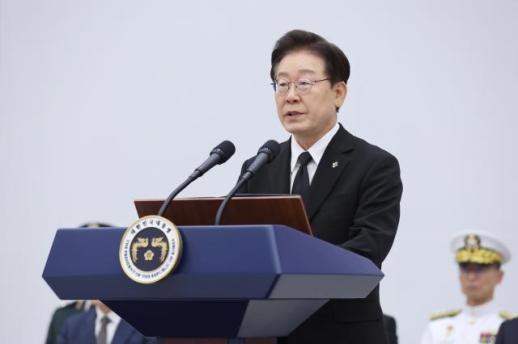 President Lee: Stock Market Stabilization is Key to Pension Reform President Lee Jae-myung stated on June 5 that "the normalization of the stock market has significantly reduced the need for pension restructuring and the associated pain of that process."He made these comments while sharing an article on X (formerly Twitter) that discussed how the recent strength in the domestic stock market could delay the depletion of the National Pension Fund.President Lee emphasized that "the normalization of stock valuations, which are representative assets of South Korea, is a good means for painless pension reform," adding that "the normalization of South Korea will continue."The article indicated that the improvement in the National Pension Fund's returns due to the strong domestic stock market could push back the projected depletion date of the fund. According to Kim Yong-ha, a professor at Soonchunhyang University, if the increased fund size from last year to this year is taken into account, the depletion date could be delayed from 2071 to 2095, a difference of 24 years.This projection assumes that the fund's average annual return will be 5.5% starting next year, while other variables, such as demographic changes and long-term economic growth rates, remain consistent with the figures used during last year's pension reform discussions.The article reported that the National Pension Fund has grown from 1,458 trillion won at the end of last year to approximately 1,800 trillion won by the end of May this year.* This article has been translated by AI. 2026-06-05 18:03:00
 -
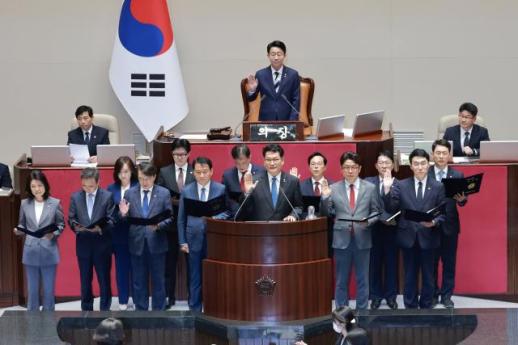 14 Newly Elected Lawmakers Begin Their Duties After Taking Oath On June 5, 14 lawmakers elected in the recent by-elections took their oaths during a session of the National Assembly, marking the beginning of their official duties. Among them, Kim Nam-kuk, Kim Nam-jun, and Jeon Eun-soo, who have previously worked at the Blue House, emphasized the need for swift policy implementation and the success of the Lee Jae-myung administration. In contrast, Lee Jin-sook and Kim Tae-kyu, who have backgrounds in the Korea Communications Commission, highlighted recent issues, including a shortage of ballots at polling stations in Songpa, Seoul, positioning themselves in opposition to the ruling party. The newly elected lawmakers from the Democratic Party include Song Young-gil, Kim Nam-jun, Lim Mun-young, Kim Nam-jun, Lee Kwang-jae, Jeon Eun-soo, Kim Ui-gyeom, and Park Ji-won. From the People Power Party, the newly elected members are Lee Jin-sook, Kim Tae-kyu, Yoo Ui-dong, and Yoon Yong-geun, along with independent lawmaker Han Dong-hoon. Kim Seong-beom, also elected as a Democratic Party member, did not attend due to personal reasons. After taking their oaths, the lawmakers expressed their commitments. Song Young-gil was the first to speak, referencing the recent declaration of martial law, stating, "The attempt by armed troops to invade the National Assembly is unprecedented in our constitutional history. I am honored to join the 22nd National Assembly, which has a significant historical mission, and I will strive to uphold the order of our democratic republic." Jeon Eun-soo, who has worked at the Blue House, remarked, "I will work tirelessly for the success of this government, even if it means sacrificing sleep." Kim Nam-kuk and Kim Nam-jun pledged to focus on stabilizing people's livelihoods and economic recovery, with Kim Nam-jun stating, "I will be a strong partner in ensuring the success of the government's initiatives for restoring livelihoods and national development." Lee Jin-sook and Kim Tae-kyu, both former officials at the Korea Communications Commission, addressed the ballot shortage issue. Lee Jin-sook expressed, "It is extremely regrettable and unacceptable that a shortage of ballots occurred in 21st-century South Korea. Lawmakers, as representatives of the people, must take responsibility and work together to resolve this issue." Kim Tae-kyu echoed her sentiments, urging, "Let us not export a democracy where ballots are unavailable due to a lack of paper." Additionally, Han Dong-hoon stated, "I was here in this assembly on the night of December 3, 2024. After the decisions and actions I took as the leader of the People Power Party, I entered a path of political hardship. However, if I were to go back, I would walk the same path again."* This article has been translated by AI. 2026-06-05 18:00:00
 -
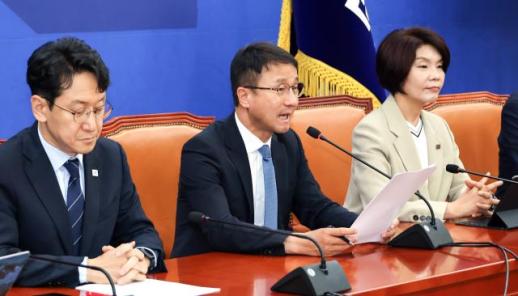 Democratic Party Pushes for National Investigation into Voting Paper Shortage The Democratic Party announced plans to pursue a national investigation into the shortage of voting papers that occurred at polling stations in Songpa District, Seoul, during the June 3 local elections. Han Byeong-do, the party's floor leader, stated that the People Power Party is also taking the situation seriously, and they will work together to conduct a swift and thorough investigation. In a press conference following the National Assembly session on June 5, Han described the voting paper shortage as "an incomprehensible and outrageous situation." He emphasized, "We will push for a national investigation. This is an opportunity to implement bold reforms within the National Election Commission to regain public trust." Han noted that with the election of the new National Assembly leadership, including Chairman Jo Geum-sik, and the People Power Party's serious approach to the matter, they aim to initiate the investigation as quickly as possible. He stated, "With the chairman elected, there should be no disagreements between the ruling and opposition parties on this issue. If there is consensus, we can proceed with the investigation in any format or method. We will explore ways to expedite this process in consultation with Chairman Jo and the People Power Party rather than through the regular committee channels." However, Han acknowledged that discussions regarding the specific timing and methods of the investigation have not yet taken place. He asserted, "The Democratic Party is committed to ensuring that nothing undermines public trust. There are even movements attempting to spread false claims of electoral fraud, and we will clarify the truth to restore public confidence."* This article has been translated by AI. 2026-06-05 18:00:00
 -
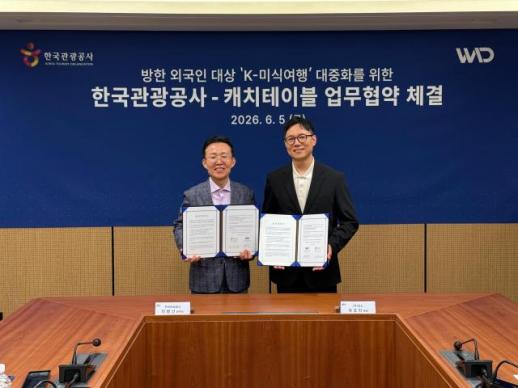 Korean Tourism Agency Expands K-Local Tourism to Attract Foreign Visitors Efforts are underway to broaden the travel routes of foreign tourists, traditionally concentrated in areas like Myeongdong and Gangnam, to regional destinations. The Korea Tourism Organization (KTO), led by President Park Seong-hyeok, is working on establishing a reservation platform for local dining while accelerating the development of tourism content driven by local residents, thereby expanding the 'K-Local tourism' ecosystem. ◆ Partnership with Catch Table to Ease Dining Reservations for Foreign Tourists On June 5, KTO signed a business agreement with Wad, the operator of the dining platform Catch Table, to promote culinary tourism for foreign visitors and expand the local tourism ecosystem. The agreement focuses on addressing the challenges foreign tourists face due to a lack of information and difficulties in making reservations at local restaurants. The two parties plan to collaborate on various projects centered around the KTO's selected local culinary content, 'K-Local Culinary Journey 33.' KTO aims to enhance services through the Catch Table global app, allowing foreign tourists to search for local restaurant information, make reservations, and process payments all in one place. This initiative seeks to improve accessibility for foreign visitors, enabling them to enjoy local dining experiences without language barriers and encouraging tourism spending beyond the metropolitan area. ◆ 48 New Local Tourism Businesses Selected Across 21 Regions Simultaneously, efforts to expand content supply for attracting tourists are being pursued. The Ministry of Culture, Sports and Tourism and KTO announced the final selection of 48 new resident-run tourism businesses for the '2026 Tourism Dure' program. Tourism Dure supports local residents in starting and operating tourism businesses that utilize local resources for accommodations, dining, experiences, souvenirs, and travel. Launched in 2013, the Tourism Dure initiative has identified and nurtured over 1,400 resident-led tourism businesses across 152 regions nationwide. This year's call for applications saw participation from 116 resident businesses across 21 basic local governments, with the final 48 selected after document reviews, on-site inspections, and presentations. The selected businesses will receive support for up to five years, with a maximum funding limit of 110 million won for education, consulting, pilot project operations, and legal and tax advice. The largest number of selected businesses comes from South Chungcheong Province with 11, followed by South Jeolla with 8 and North Gyeongsang with 6. Gyeonggi, South Gyeongsang, and Ulsan each had 5, while Gangwon had 3, and North Jeolla and Gwangju each had 2, with Busan having 1, indicating a balanced selection. The majority of the selected business types are in the experience sector at 52%, followed by dining at 23%, travel at 17%, and souvenirs at 8%. Notably, several business models led by young entrepreneurs include 'Kkulkkak House,' a culinary experience space utilizing Busan's traditional fermentation culture, and 'Bintum Farm,' a wellness program linked to smart farms and the West Sea Trail in Seocheon, South Chungcheong Province. The Ministry and KTO will also recruit participants for the '2026 Youth Tourism Dure Plus Project' starting June 10, focusing on supporting young entrepreneurs. About 100 businesses currently operating or preparing to launch will be selected to receive tailored consulting and market development assistance, with up to 26 million won in commercialization funds available per business.* This article has been translated by AI. 2026-06-05 17:54:00
 -
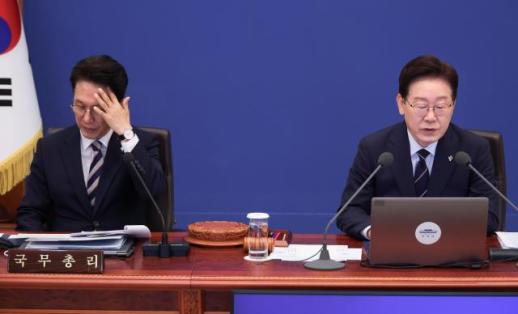 Lee 'mulls cabinet reshuffle' after DP falls short in key local election races SEOUL, June 5 (AJP) - President Lee Jae Myung is reportedly mulling a new prime minister as part of a partial cabinet reshuffle, after the ruling Democratic Party (DP) failed to win several key posts such as Seoul mayor despite its overall victory in this year's local elections, which wrapped up earlier this week. His longtime aide Justice Minister Jung Sung-ho and presidential chief of staff Kang Hoon-sik are emerging as the two possible candidates to carry out Lee's sweeping reforms and shape the future direction of his administration. According to DP lawmakers and multiple presidential officials, Lee is expected to announce his nominee as early as Sunday, as Prime Minister Kim Min-seok is widely expected to resign to run in the DP's national convention later this summer. In recent days, Lee has reportedly held separate private meetings with them, fueling such speculation A DP lawmaker said Lee discussed Kim's political future including a possible party leadership bid, during their regular weekly meeting last Monday. The following day, Lee asked Jung to remain after a Cabinet meeting at Cheong Wa Dae and held a private lunch with him without other aides present. Jung told AJP, "It was simply a gathering over a meal where we talked about old times." "There were no discussions whatsoever regarding the prime minister or a Cabinet reshuffle," he added. Then on Thursday evening, Lee separately met Kang after the chief of staff returned from Canada, where he had traveled as a special presidential envoy for strategic economic cooperation talks focused on resources and supply chains. Lee remained at his office into the evening to receive Kang personally. The two finalists represent sharply different political calculations for Lee. Jung, a five-term lawmaker and longtime ally of the president, is widely viewed as a safe and stabilizing choice. Lee and Jung have known each other for roughly four decades and trained together at South Korea's Judicial Research and Training Institute. As justice minister, Jung has overseen the Lee administration's prosecutorial reform drive and has maintained working relationships with opposition lawmakers, despite rising partisan tensions. Supporters say his moderate image and legislative experience could help Lee navigate politically sensitive reforms that would require cooperation from rival parties. Ruling party officials say Jung is seen internally as one of the few figures capable of coordinating negotiations over Lee's so-called "six major reform tasks" including changes to pensions, labor policy, finance, education, regulation and the public sector. Some officials also believe Jung could complete follow-up legislation tied to the administration's prosecutorial reforms before moving to the prime minister's office. Jung has expressed reluctance about taking the job, citing health concerns and personal reasons. A senior DP lawmaker close to Jung told AJP, "Jung says in private that he even wants to step down from his ministerial post." "Jung says he wants to return to the National Assembly as soon as possible," he added. Kang, meanwhile, represents a younger and more future-oriented option for Lee. The 52-year-old chief of staff has become one of Lee's closest aides over the past year and recently expanded his profile beyond domestic politics by handling economic diplomacy involving defense industries, energy security and supply chains. Supporters inside the ruling party argue that promoting Kang would reinforce the image of a younger Cabinet while also helping cultivate a next-generation presidential contender for the liberal camp. That debate intensified after Wednesday's local elections, which weakened several liberal figures long viewed as potential presidential hopefuls. Disgraced former Justice Minister Cho Kuk lost a parliamentary by-election race, while former Prime Minister Kim Boo-kyum failed in his bid for Daegu mayor and former South Gyeongsang governor Kim Kyoung-soo lost the gubernatorial race in South Gyeongsang Province. Conservatives, by contrast, saw several high-profile victories. Seoul Mayor Oh Se-hoon secured a fifth term, and former Justice Minister Han Dong-hoon returned to politics by winning a parliamentary seat, strengthening speculation about future conservative presidential contenders. Some ruling party officials now argue that Lee needs to elevate younger figures such as Kang to prevent the liberal bloc from falling behind in the race to cultivate future national leaders. Still, Kang's possible nomination carries risks. South Korea has not seen a presidential chief of staff move directly into the prime minister's office in 35 years, since former Prime Minister Noh Jae-bong was appointed after serving as chief of staff to former President Roh Tae-woo. The Prime Minister's Office has already begun preparations for a parliamentary confirmation hearing, forming a team of about 30 officials. Under South Korean law, a prime ministerial nominee must undergo a parliamentary confirmation hearing and receive approval in a National Assembly vote before formally taking office. The current incumbent prime minister took 29 days to complete the process after his nomination. 2026-06-05 17:49:13
 -
 SpaceX IPO Sparks Interest in ETF Allocations As SpaceX's initial public offering (IPO) approaches, asset management firms in South Korea are accelerating their preparations. Korea Investment Trust Management has announced plans to include shares from the IPO in exchange-traded funds (ETFs) and public funds, while industry experts emphasize that the focus should be on the allocation amount rather than mere participation in the IPO. According to the financial investment industry on June 5, with SpaceX set to list on the Nasdaq on June 12, Mirae Asset Securities is participating in the IPO underwriting and is soliciting investment demand from domestic institutional and professional investors. Other asset management firms are also working to secure shares. Multiple industry insiders reported receiving guidance from Mirae Asset Securities regarding SpaceX investments and are currently considering their participation. Korea Investment Trust Management has become the first domestic firm to publicly announce its plans to participate in the SpaceX IPO. The shares allocated through the IPO will be included in the ACE U.S. Space Tech Active ETF and the Korea Investment Global Space Technology & Defense Fund. Additionally, the firm plans to purchase more shares on the listing day to increase the ETF's allocation to as much as 25%. However, industry experts point out that investors should pay attention to a different aspect. The actual amount of shares secured is more critical than simply receiving shares from the IPO. A financial industry insider stated, "Participation in the IPO and actual allocation are entirely different matters," adding that, given the massive interest from global institutional investors, the actual allocation could be significantly lower than the requested amount. For an ETF to include SpaceX at a meaningful level, a substantial amount of shares must be secured. For instance, an ETF with net assets of 100 billion won would need to hold about 25 billion won worth of SpaceX shares to achieve a 25% allocation. If the IPO allocation is only in the tens of billions, a significant portion would need to be purchased in the market after the listing. Ultimately, the ETF's returns could vary based on the amount of shares secured during the IPO. Typically, large IPO stocks often trade above their initial offering price shortly after listing, making it advantageous to have a larger allocation at the IPO price. There are also differences based on management style. The ACE U.S. Space Tech Active ETF, managed by Korea Investment Trust Management, can include SpaceX immediately after its listing due to its active management approach. In contrast, passive ETFs face a more complex situation. Passive ETFs are generally required to track a benchmark index. Since SpaceX is not yet included in a foundational index, actively including IPO shares could conflict with management principles. Another issue is the ETF disclosure system. Unlike typical market purchases, there may be a time lag between the inclusion of IPO shares and the disclosure of that information. Some industry insiders have raised concerns that investors may find it difficult to immediately verify their actual holdings during this process. While ETFs have maintained high transparency through daily portfolio disclosures and real-time estimated net asset values (iNAV), discrepancies in information could arise depending on the timing of IPO disclosures. One industry insider remarked, "Many asset managers will want to include SpaceX, but ultimately, what matters is how cheaply and how much they can secure. The actual allocation percentage disclosed after the listing will be the benchmark for each product's competitiveness."* This article has been translated by AI. 2026-06-05 17:48:00
 -
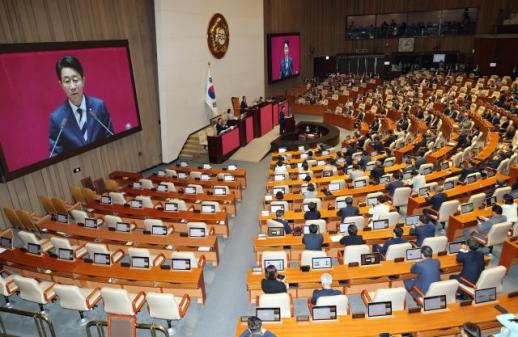 National Assembly Elects New Leadership with Cho Jung-sik as Speaker On June 5, the National Assembly convened a plenary session and elected Cho Jung-sik of the Democratic Party as the Speaker for the second half of the 22nd National Assembly. Alongside this, 14 newly elected lawmakers from the recent by-elections also began their terms. During the session, Cho was elected as Speaker with 267 votes in favor out of 276 eligible members. He emphasized the need to address challenges such as the AI revolution, climate crisis, unstable international situations, and economic polarization, stating, "The National Assembly has the duty and responsibility to ensure the safety and happiness of the people with the authority entrusted by them." Cho outlined several initiatives aimed at transforming the National Assembly into a more responsive institution, including: accelerating legislation for public welfare, expanding citizen participation, establishing an advisory body under the Speaker for future advancements, and promoting national interest diplomacy to respond to rapidly changing global circumstances. He also reiterated the necessity of constitutional reform, asserting, "Next year presents a prime opportunity for meaningful discussions on constitutional amendments, as there will be no nationwide elections. Let us fulfill our historical responsibility by realizing a constitution that reflects the aspirations of the people and the future of the nation." Nam In-soon and Park Deok-heum, who were elected as Vice Speakers with 251 votes from 265 Democratic Party members and 214 votes from 246 People Power Party members, respectively, pledged to responsibly tackle issues critical to South Korea's future, such as climate change, energy, and regional extinction crises. They committed to upholding the spirit of cooperation and dialogue maintained by previous leaderships, aiming to create a dignified National Assembly that prioritizes public welfare. The Democratic Party had previously decided on Cho and Nam as Speaker and Vice Speaker during a general meeting on May 13. The People Power Party also elected Park as Vice Speaker on the same day, indicating a smooth formation of the new leadership. The Democratic Party attempted to hold a plenary session on May 20 to expedite the election of the leadership, but it was disrupted by opposition from the People Power Party regarding what they viewed as unilateral actions by the Democratic Party. Following discussions between the floor leaders of both parties on May 19, the election process for the new leadership was successfully completed on this day. Additionally, the plenary session included the appointment of 14 lawmakers elected in the by-elections held on June 3. This included nine seats from the Democratic Party and four from the People Power Party, along with one independent seat.* This article has been translated by AI. 2026-06-05 17:36:00
 -
 Japan's National Cancer Center Recommends Abstaining from Alcohol to Prevent Cancer Japan's National Cancer Center has strengthened its alcohol consumption guidelines in its cancer prevention recommendations, shifting from advising moderation to recommending complete abstinence. This change reflects accumulating research indicating that even small amounts of alcohol can increase the risk of developing cancer. According to the Yomiuri Shimbun, the National Cancer Center announced on June 3 that it has released an updated version of its booklet titled "5+1 Cancer Prevention Methods Based on Scientific Evidence." This booklet presents lifestyle habits that can reduce cancer risk, based on research conducted on the Japanese population. The most notable change in this revision is the alcohol consumption guideline. Previously, the center recommended moderation for drinkers, but the latest edition now advises against drinking altogether. The center's analysis of studies on Japanese individuals confirms that alcohol consumption significantly increases the risk of esophageal, liver, colorectal, and head and neck cancers, and it also establishes a strong link between alcohol and stomach cancer in men and breast cancer in premenopausal women. The research team explained that for certain cancers, the risk increases progressively with higher alcohol intake, and there is no safe level of drinking. Therefore, from a cancer prevention perspective, abstaining from alcohol is deemed the most advisable approach. The guidelines regarding body weight have also been adjusted. The National Cancer Center has lowered the recommended upper limit for body mass index (BMI) for men from 27 to 25, reflecting the increased cancer risk associated with higher BMI. Both men and women are now advised to maintain a BMI in the range of 21 to 25. However, the center also noted that being excessively underweight can increase cancer risk, emphasizing the importance of maintaining a healthy weight. The updated booklet is structured around five lifestyle habits, plus an additional focus on infection prevention, termed the "5+1" approach. Recommendations include not smoking or being exposed to secondhand smoke, reducing salt intake while increasing consumption of vegetables and fruits, allowing hot foods and beverages to cool before consumption, and increasing physical activity in daily life. It also includes guidelines for screenings and vaccinations to combat cancer-causing pathogens. Given Japan's deep-rooted culture of workplace drinking and social drinking, these recommendations are seen as a call for a broader change in lifestyle habits. The National Cancer Center has made it clear that, contrary to the common belief that "a little drinking is fine," the best approach to cancer prevention is to avoid alcohol altogether.* This article has been translated by AI. 2026-06-05 17:33:00