

Journalist

KI SU JEONG
-
 Bithumb Recognized by Police for Preventing $8 Million in Phishing Scams Bithumb announced on June 5 that it received a certificate of appreciation from the National Police Agency for its contributions to preventing phishing scams involving virtual assets.Since March, Bithumb has been operating a proactive collaboration system that connects information on malicious app installers provided by the police's Integrated Response Team with member data to register users as 'at risk.' This system has enabled Bithumb to notify the police in real-time about 66 suspicious transactions, preventing approximately 800 million won (about $600,000) in phishing losses.One notable case involved a customer who attempted to buy and withdraw virtual assets worth 150 million won (about $112,000) after being deceived by criminals impersonating institutions. Bithumb collaborated with the police to block the transaction. Additionally, the platform detected another suspicious transaction where a user was misled into opening a new account and attempting to transfer 88.9 million won (about $66,000), thus preventing further losses.Bithumb plans to strengthen its data-sharing system with the police regarding phishing crimes while enhancing its security measures and investor protection activities.Currently, Bithumb has implemented a security system that automatically restricts transactions if a remote control app is detected during app operation. The company is also developing a system that automatically issues warnings and limits service use upon detecting malicious apps, while maintaining customer assets at a higher ratio than legal standards to combat fraud effectively.Byun Seung-moo, Bithumb's compliance officer, stated, "Bithumb has continuously enhanced its security system to detect phishing site lure activities and suspicious transactions early, ensuring a safe virtual asset trading environment. In the future, we plan to build a faster and more sophisticated response system through collaboration with the National Police Agency, continuously strengthening our user protection capabilities."* This article has been translated by AI. 2026-06-05 08:45:00
 -
 Market Preview: U.S. Tech Stocks Pause as Jensen Huang Visits South Korea South Korea's stock market is expected to focus on individual stocks amid two key factors: a correction in U.S. semiconductor stocks and the visit of Jensen Huang, CEO of Nvidia. Following a night of profit-taking in U.S. tech stocks, the market is paying close attention to Huang's meetings with local business leaders and discussions on artificial intelligence (AI) collaboration. On June 4, U.S. stock indices closed mixed. The Dow Jones Industrial Average and the S&P 500 rose by 1.73% and 0.41%, respectively, while the tech-heavy Nasdaq Composite fell by 0.09%. The Dow reached a record high, buoyed by strong performances in healthcare and financial sectors. In contrast, the Nasdaq declined, affected by weakness in semiconductor stocks, including Broadcom. Broadcom plummeted by 12.59%, while other memory-related stocks such as Micron Technology (-7.74%), SanDisk (-3.92%), and Western Digital (-3.13%) also experienced significant declines. Han Ji-young, a researcher at Kiwoom Securities, commented on the downturn, stating, "The correction in leading stocks was not due to fundamental or macroeconomic issues like an impending memory down cycle or rising interest rates. Instead, it appears to be a temporary reaction from investors looking to take profits after a series of record highs, leading to a heightened market expectation in the short term." International oil prices fell, with Brent crude futures dropping by 2.8% to $95.03 per barrel, and West Texas Intermediate (WTI) futures declining by 3.1% to $93.04 per barrel. The South Korean market is likely to reflect some impact from the correction in U.S. tech stocks. However, attention is expected to center on Huang's visit and the potential beneficiaries of his discussions. As of 8:23 a.m. on June 5, shares of Samsung Electronics were trading at 340,000 won, down 3.27% from the previous trading day. SK Hynix also saw a decline of 3.92%, trading at 2,208,000 won. LG Electronics fell by 4.57% to 313,000 won, while Naver dropped 3.74% to 257,500 won. Conversely, Doosan Enerbility rose by 2.42% to 101,600 won. Seo Sang-young, a researcher at Mirae Asset Securities, noted, "There are still concerns regarding the dollar-won exchange rate and ongoing foreign selling pressure. However, Huang's visit and the expectations for collaboration with major companies could lead to a concentration of interest in specific stocks, suggesting that the market will focus more on individual stocks rather than overall index changes."* This article has been translated by AI. 2026-06-05 08:39:00
 -
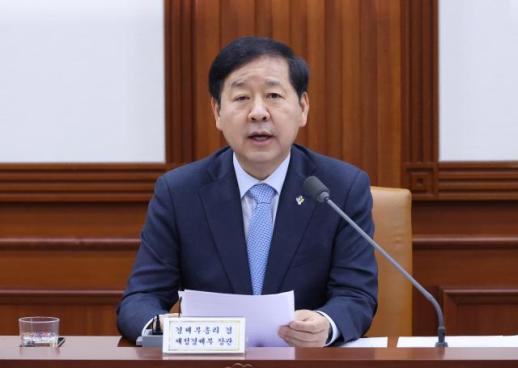 Korea's Economy Shows Signs of Recovery, Says Deputy Prime Minister Deputy Prime Minister and Minister of Finance and Economy Koo Yun-cheol stated that the government has achieved visible results in economic recovery as it marks its first year in office, while emphasizing the need for vigilance regarding the cost of living and volatility in financial and foreign exchange markets. During an emergency economic meeting held at the Government Seoul Complex on June 5, Koo noted, "Despite challenging conditions such as the Middle Eastern conflict, the combined efforts of the public, businesses, and the government have led to tangible results in economic recovery." He highlighted the recent upward revision of South Korea's growth forecast by the Organization for Economic Cooperation and Development (OECD), which increased the projection from 1.7% to 2.6%, while lowering the global growth forecast from 2.9% to 2.8%. Koo attributed this positive outlook to strong exports, particularly in semiconductors, and the effects of the supplementary budget, stating, "The recovery in consumption is expected to continue." Koo also emphasized improvements in fiscal soundness, mentioning that the OECD has revised its forecast for the general government debt-to-GDP ratio down from 52.0% to 48.2% for this year, and from 55.0% to 50.2% for next year. He remarked, "The expansion of productive fiscal policies is creating a virtuous cycle that enhances fiscal sustainability." He reported that South Korea's current account surplus reached $28.29 billion in April, exceeding $20 billion for three consecutive months, and the cumulative current account surplus for January to April hit a record $102.67 billion. However, Koo acknowledged that despite improvements in economic indicators, challenges remain for the public economy. He stated, "We are particularly vigilant in responding to the increased volatility in financial and foreign exchange markets and the difficulties faced by the public regarding living costs," adding that the government will strengthen its support for the economy, which is struggling due to the impact of the Middle Eastern conflict. Koo also announced plans to actively pursue structural innovations for a significant economic leap, stating, "We will accelerate efforts to promote an ultra-innovative economy, expand regional investments, and address structural challenges such as reform and polarization facing our economy." During the meeting, the government discussed comprehensive safety management measures for the agricultural and forestry sectors and expedited plans for the seventh regional revitalization investment fund project. They agreed to swiftly proceed with related procedures, including exempting local financial investment reviews for the construction of an advanced data center in Jangseong, Jeollanam-do, estimated at around 400 billion won.* This article has been translated by AI. 2026-06-05 08:39:00
 -
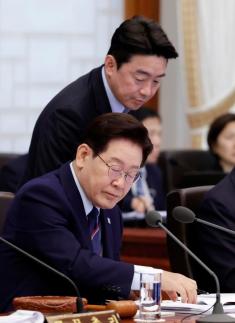 South Korea Proposes Hydrogen Truck Technology Transfer to Canada Linked to Submarine Bid The South Korean government has proposed a hydrogen truck package project to the Canadian government, investing 3.4 trillion won (approximately 3.1 billion Canadian dollars) in connection with the bid for next-generation submarines. According to the Blue House on June 5, Chief of Staff Kang Hoon-sik disclosed the plan, named 'Project Beaver,' during an interview with Canadian CTV on June 3 (local time). Currently, Hanwha Ocean is in final competition with Germany's ThyssenKrupp Marine Systems (TKMS) for the Canadian next-generation submarine project, which is valued at up to 60 trillion won. CTV reported that while some details of this project were included in Hanwha Ocean's bidding documents, specifics had not been previously disclosed. Project Beaver aims to transfer Hyundai Motor's hydrogen vehicle technology to Canada. Hyundai Motor Group, which has a defense sector, is collaborating with Hanwha Ocean on this bid. According to the project plan, the first phase will begin in 2030, focusing on constructing a liquefied hydrogen plant in British Columbia. Thirty-two hydrogen vehicle charging stations will be established in British Columbia and Alberta, with a manufacturing plant for hydrogen vehicles planned in Ontario. An additional 160 charging stations are expected to be installed after 2035. In the interview, Kang explained that through this project, they aim to create a South Korean brand that utilizes Canadian raw materials and components in the manufacturing process. He emphasized that securing the submarine contract would enable Hyundai Motor to assist in building Canada's hydrogen ecosystem. Kang also projected that Project Beaver would foster the hydrogen truck industry, creating 9,000 jobs. He attributed the decision to propose a hydrogen truck project, rather than consumer electric vehicles, to pressure from the United States and China's entry into the Canadian electric vehicle market. Kang cited the example of European automaker Stellantis, stating, "The U.S. suggested it would be more advantageous for Stellantis to come to the U.S.," adding that South Korean companies are facing similar pressures. Stellantis announced last October that it would move production of its Jeep models from Ontario, Canada, to Illinois, U.S. Kang noted that when Canadian Prime Minister Mark Carney visited China, he promised a certain volume of electric vehicle imports from China, stating, "It is difficult for South Korea to compete with China, which leads in the electric vehicle sector." Meanwhile, Kang visited Canada as a special envoy for strategic economic cooperation for President Lee Jae-myung and returned on June 4.* This article has been translated by AI. 2026-06-05 08:39:00
 -
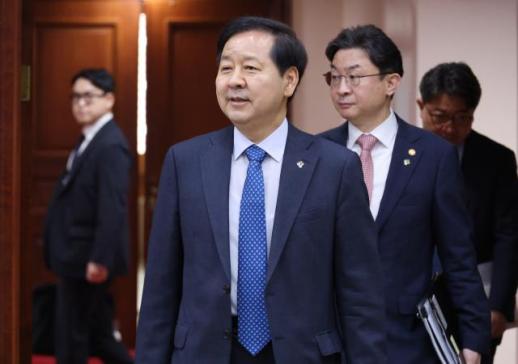 Government Accelerates $395.9 Million Data Center Project in Jangseong The South Korean government is accelerating the development of a high-tech data center project in Jangseong, Jeollanam-do, as part of its seventh Regional Revitalization Investment Fund initiative. The plan includes streamlining local financial investment review processes to expedite contributions from local governments and establish essential AI infrastructure promptly. On June 5, Deputy Prime Minister and Minister of Finance and Economy Koo Yun-cheol chaired a meeting at the Government Seoul Building, where he announced measures to expedite the seventh Regional Revitalization Investment Fund project. This initiative involves the construction and operation of a data center in the Nam-myeon area of Jangseong, located within the Gwangju Research and Development Special Zone. The data center will have a power capacity of 26 megawatts (MW), with an IT load of 16.7 MW, providing server space for cloud service providers and offering ancillary services such as power supply and climate control. This key project, which has been pursued by Jangseong County and private entities since 2023, aims to expand its power capacity to 60 MW in the future, establishing it as a hub for AI development. The total project cost is estimated at 395.9 billion won, funded through 100 billion won in equity and 295.9 billion won in project financing loans. Jeollanam-do and Jangseong County plan to contribute a total of 8 billion won, with Jeollanam-do investing 4.8 billion won and Jangseong County 3.2 billion won. The project was selected for investment by Korea Growth Investment Corporation in November 2022, and construction began in February 2023 following project financing agreements. As of late April, the project was 9.21% complete. It is expected to be completed by December 2027, followed by a three-month stabilization period before commencing full operations in March 2028. To ensure timely completion of the data center, the government has decided to expedite the special purpose corporation (SPC) investment procedures for Jeollanam-do and Jangseong County. This will involve applying a special track that exempts local financial investment reviews, streamlining the related processes following approval from the Economic Relations Ministers' Meeting. The government anticipates that this project will help alleviate the concentration of AI infrastructure in the Seoul metropolitan area and promote the digital transformation of regional industries. Upon completion, it is expected to generate approximately 800 billion won in production effects and create around 3,000 jobs, contributing to the revitalization of the local economy. The Regional Revitalization Investment Fund is a program designed to attract private investment for regional projects, based on a master fund established by the government and policy finance institutions. To date, eight projects have been selected across various regions and sectors, with an estimated total project cost of around 3.6 trillion won.* This article has been translated by AI. 2026-06-05 08:12:00
 -
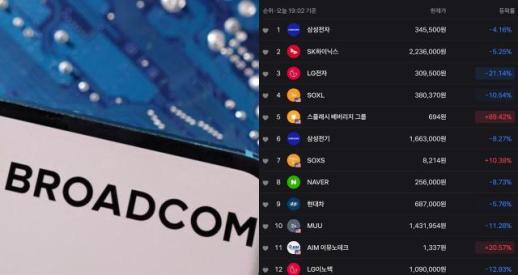 Broadcom Shares Plunge Despite Strong Earnings Report Broadcom, a leading beneficiary in the AI semiconductor sector, is facing investor confusion as its stock plummeted despite exceeding market expectations with its earnings report. Some analysts interpreted comments from Broadcom's CEO as a warning about an AI bubble, but a closer look at the conference call reveals a more optimistic tone. Hock Tan, Broadcom's CEO, stated during the recent earnings call, "We continue to see strong demand for AI infrastructure from hyperscale customers," maintaining a positive outlook on the AI market. He added, "Demand for AI remains very strong," highlighting explosive demand in AI networking equipment and AI accelerators. Broadcom's AI-related business is thriving, with AI revenue surpassing $10 billion this quarter, a 143% increase year-over-year, exceeding market forecasts. The ongoing competition for AI infrastructure has led to increased orders from major tech clients. However, investors were disappointed not by the results but by the expectations. While Broadcom presented a positive outlook for its AI business, it did not provide the aggressive upward guidance Wall Street had anticipated. Investors had hoped for an increase in AI revenue guidance and long-term growth projections, but the company maintained its existing forecasts. Ultimately, the market seemed to demand not just a "good performance" but a "perfect performance." Recently, stocks of AI semiconductor companies like NVIDIA, Broadcom, and AMD surged on expectations of an AI supercycle, leading investors to seek not just growth but a series of surprises that significantly exceed market expectations. Following Broadcom's earnings announcement, some market analysts noted, "The issue lies not with the company but with Wall Street's overly high expectations." In online investment communities, reactions included comments like, "Broadcom stated there are no issues, but the market inflated expectations on its own and was disappointed." This Broadcom shock is interpreted as a reflection of how high market expectations have risen for AI-related stocks, rather than concerns about a slowdown in the AI industry. While demand for AI remains robust, the key variable determining stock prices will be how well companies can meet investors' growth expectations moving forward. 2026-06-05 08:09:00
 -
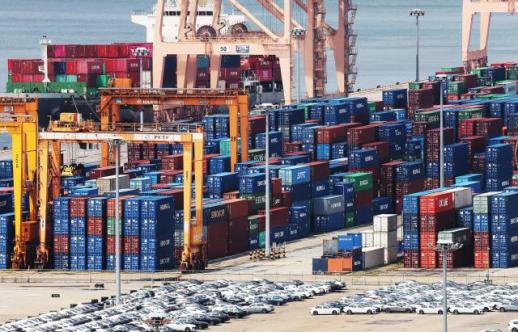 April Current Account Surplus Reaches $28.3 Billion, Second Highest on Record In April, South Korea recorded a current account surplus of 43 trillion won, driven by a booming semiconductor industry, marking the second highest surplus on record. According to preliminary statistics released by the Bank of Korea on June 5, the current account surplus for April was $28.29 billion, marking the 36th consecutive month of surplus, the second longest streak since the 2000s. In terms of categories, the goods account surplus reached $33.88 billion, the second largest ever recorded. The previous record was set in March at $35.68 billion. Exports totaled $90.59 billion, a 54.5% increase compared to the same month last year, ranking as the second highest ever. The information technology (IT) sector, particularly semiconductors and computer peripherals, continued to perform strongly, while non-IT items also saw growth due to rising oil prices. By category, exports of computer peripherals surged by 411.3%, while semiconductors increased by 171.4%, and information and communication devices rose by 123.2%. Other increases were seen in ships (49.9%), petroleum products (39.4%), and chemical products (10.7%). However, exports of passenger cars (-7.2%) and machinery and precision instruments (-2.1%) declined. Regionally, exports to Southeast Asia (74.2%), China (62.6%), the United States (54.0%), and Japan (28.4%) showed strong growth. In contrast, exports to the Middle East fell by 24.9%. Imports also rose by 16.1% to $56.7 billion. The increase was influenced by rising oil prices due to the ongoing conflict between the U.S. and Iran, as well as a significant rise in imports of capital goods, including semiconductors and equipment. Imports of capital goods increased by 27.7%, driven by semiconductor manufacturing equipment (55.5%), semiconductors (52.8%), and information and communication devices (23.8%). Raw material imports also rose by 12.3%, led by coal (26.7%), chemical products (21.3%), and crude oil (13.1%). The services account recorded a deficit of $2.42 billion. This deficit was a 0.3% decrease compared to April of last year (-$2.7 billion) but significantly larger than the previous month (-$1.31 billion). Within the services account, the travel balance showed a deficit of $30 million. This marked a slight shift from a surplus of $140 million in March, although the number of arrivals in April exceeded 2 million, indicating a significant improvement compared to the same month last year. The primary income account shifted from a surplus of $3.59 billion in March to a deficit of $2.53 billion in April. This seasonal deficit was attributed to concentrated dividend payments and an increase in major companies' dividend payouts. The financial account recorded a net increase of $25.46 billion in assets over liabilities. Direct investment saw an increase of $6.24 billion in domestic investments abroad, while foreign investments in South Korea decreased by $1.36 billion. In securities investment, domestic investments abroad surged by $8.22 billion, primarily in stocks, as the U.S. stock market rebounded, leading to increased net purchases by other financial institutions. Foreign investments in South Korea also rose by $3.51 billion, shifting from a decrease the previous month to an increase, primarily in stocks. Notably, foreign stock investments recorded a record sell-off of $29.33 billion in March, but this decreased to $1.24 billion in April. This improvement in foreign investor sentiment was attributed to easing tensions in the Middle East and strong earnings reports from domestic semiconductor companies.* This article has been translated by AI. 2026-06-05 08:03:00
 -
 Special Health Checkups for Female Farmers Expanded to Age 80; Safety Checklist Required for Foreign Workers The South Korean government is expanding special health checkups for female farmers to include those up to 80 years old, starting this year, in an effort to reduce safety accidents in the agricultural sector. Additionally, farms employing foreign workers will be required to submit a safety checklist to improve workplace safety conditions. The Ministry of Agriculture, Food and Rural Affairs announced these measures during an emergency economic meeting held at the Government Seoul Complex on June 5. The government's decision comes in response to the persistently high rate of safety accidents in agriculture, which resulted in 297 fatalities in 2024 alone. That year, the total number of deaths and injuries in the agricultural sector reached 297 and 50,852, respectively. To address this issue, the government aims to reduce the number of deaths and injuries in agriculture by 25% by 2030 compared to 2024 levels, targeting a decrease of 77 deaths and 12,700 injuries. In light of inadequate safety standards for high-risk machinery, the government plans to enhance the safety of agricultural equipment. This includes allowing the conversion of existing walk-behind tractors to handle-type models and considering subsidies for scrapping outdated machinery. Furthermore, the installation of protective structures and safety belt alarms will be mandated for forklifts and excavators. To improve safety in livestock facilities, the government will support the acquisition of safety equipment, including ventilation fans, respiratory masks, pulleys for pump replacements, and skylights through joint purchasing initiatives. Regular and mandatory inspections of safety facilities and equipment at high-risk sites, such as manure treatment facilities, will also be implemented. Recognizing the vulnerability of female farmers and foreign workers to heat-related illnesses and agricultural accidents, the government will extend special health checkups for female farmers from age 70 to 80. Starting in the first half of this year, foreign workers and their assigned farms will be required to submit a safety checklist during visa applications to better manage vulnerable farms. The government plans to finalize and announce detailed implementation tasks for these measures within this month. Additionally, it will review the progress of 18 improvement tasks across five key areas of the comprehensive safety management plan twice a year. 2026-06-05 08:03:00
 -
 Michelle Steel's Nomination as U.S. Ambassador to South Korea Advances Michelle Steel's nomination as the U.S. Ambassador to South Korea has passed the Senate Foreign Relations Committee. This comes about two months after President Donald Trump nominated her in April. The nomination still requires approval from the full Senate before she can officially take office. According to the U.S. government-funded international broadcaster Voice of America (VOA), the Senate Foreign Relations Committee voted 14 to 8 in favor of Steel's nomination on June 4. The U.S. Ambassador to South Korea is officially appointed after passing both the committee review and the full Senate vote. If Steel's nomination is confirmed by the Senate, she will become the second Korean American to hold the position, following former Ambassador Sung Kim. Steel, a Korean American born in Seoul, previously served as a U.S. Representative from California. During her confirmation hearing before the Senate Foreign Relations Committee on May 20, she emphasized strengthening the U.S.-South Korea alliance and addressing issues related to American companies' access to the South Korean market. Trade issues between the U.S. and South Korea were also discussed during the confirmation process. According to Reuters, Steel stated that she would verify the sources and plans for the $350 billion investment commitment from South Korea to the U.S. She also expressed her intention to address non-tariff barriers in the agricultural and digital services sectors. The position of U.S. Ambassador to South Korea has been vacant for nearly 1 year and 5 months since former Ambassador Philip Goldberg left in January of last year. If confirmed by the full Senate, Steel will become the first U.S. Ambassador to South Korea under the Trump administration's second term.* This article has been translated by AI. 2026-06-05 07:39:00
 -
 Trump Announces Final Negotiations to End Iran War, Dismisses House Resolution Donald Trump, President of the United States, stated that "final negotiations to end the Iran War are underway." He criticized the House of Representatives for passing a resolution that limits his authority regarding the Iran conflict, calling it a "meaningless vote." While emphasizing the potential for negotiations, he also indicated that military action could resume if U.S. forces suffer casualties. According to ABC News, President Trump remarked on June 4 that negotiations with Iran are at a critical stage. He noted that the House's resolution to restrict his war powers emerged during these final negotiations aimed at concluding the conflict with Iran. He suggested that congressional oversight does not aid the negotiation process. Earlier, the House passed a resolution by a vote of 215 to 208, which prevents the President from continuing military action against Iran without congressional approval. The resolution received support from Democratic lawmakers and four Republican members. President Trump criticized the Republican lawmakers who voted in favor of the resolution, labeling them as "showmen." He also directed his comments at Democrats, implying that they wish for the U.S. to fail. The White House maintains that the resolution infringes upon the President's diplomatic and military authority. Trump also expressed that he would not be overly reliant on negotiations. He stated that whether through a formal agreement or military means, the U.S. would emerge victorious. This conveys a message that while negotiations are ongoing, the U.S. will assert its dominance. However, he specified that the conditions for resuming military conflict would be limited to instances of U.S. casualties. Trump indicated that if Iran were to kill American troops, that would provide justification for renewed hostilities. He also left open the possibility of a meeting with Iran's supreme leader. When asked if he would consider meeting with Iranian officials, Trump replied, "If an agreement is reached, I would consider a meeting." He did not provide specifics regarding the format or the parties involved in such negotiations. Additionally, Trump addressed the issue of Iran's nuclear materials, stating that the U.S. does not necessarily need a formal agreement to secure Iran's enriched uranium. However, he noted that the nuclear materials are "effectively sealed" and that there is no immediate need for action.* This article has been translated by AI. 2026-06-05 07:33:00