

Journalist

KI SU JEONG
-
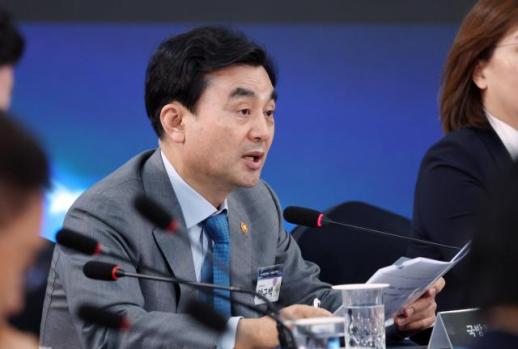 Defense Ministry Focuses on Restoring Wartime Operational Control and Building a 'People's Army' The Defense Ministry announced that it has consistently pursued the restoration of wartime operational control to establish a defense system led by the South Korean military, coinciding with the one-year anniversary of the Yoon Suk-yeol administration. The ministry emphasized its commitment to implementing a democratic and institutional control system to realize a 'people's army.' On June 4, the Defense Ministry provided a report detailing the government's achievements over the past year, stating, "We are working to visualize the prompt restoration of wartime operational control by verifying the Full Operational Capability (FOC) of the Future Combined Forces Command this year." Additionally, the ministry introduced a roadmap for accelerating the transition of wartime operational control, which is being developed this year. The government is working to finalize a roadmap that will serve as the 'standard' for the transition preparations before the upcoming South Korea-U.S. Security Consultative Meeting (SCM) this fall. Furthermore, the Defense Ministry has completed revisions to the Martial Law Act to strengthen the legislative oversight function to prevent a recurrence of the illegal martial law imposed on December 3. It has also institutionalized education on upholding constitutional values for all service members to enhance democratic awareness within the military. In a significant move, the ministry appointed a civilian as the Minister of Defense for the first time in 64 years since 1961 and expanded the appointment of civil servants to key positions, thereby achieving substantial civilian control. The Defense Ministry explained, "The Military Counterintelligence Command is also undergoing a major organizational restructuring to separate counterintelligence, security, and investigative functions, thereby dispersing concentrated authority and establishing a system of checks and balances." * This article has been translated by AI. 2026-06-04 14:21:00
 -
 Korea Technology Guarantee Fund Partners with IBK to Support SMEs with 750 Billion Won The Korea Technology Guarantee Fund (TGIF) has initiated financial support for small and medium-sized enterprises (SMEs) in future strategic industries and those facing policy financing gaps. On June 4, TGIF announced that it has signed two memorandums of understanding (MOUs) with the Industrial Bank of Korea (IBK): one for productive financial support for future strategic industries and another for financial support for companies in policy gaps. These agreements aim to facilitate funding for SMEs in future strategic industries, enhancing their financial accessibility and supporting their growth and advancement. Under the productive financial support agreement, TGIF will provide a total of 492.5 billion won in guarantee agreements, based on a special contribution of 9 billion won from IBK and a guarantee fee support of 5 billion won. Eligible companies include new technology businesses that meet TGIF's technology guarantee criteria and operate in six advanced strategic industries: artificial intelligence (AI), biotechnology, cultural content, defense, energy, and advanced manufacturing. Additionally, under the policy gap financial support agreement, TGIF will supply a total of 250 billion won in guarantee agreements, based on a special contribution of 5 billion won from IBK and a guarantee fee support of 2.55 billion won. Eligible companies for this support include new technology businesses in the materials, parts, and equipment sectors, root industries, small enterprises, startup graduates (those in business for more than 7 years but less than 12), companies undergoing restructuring or transitioning to new industries, and other firms recommended by IBK. Both agreements will provide benefits such as an increase in the guarantee ratio (from 85% to 100% for three years) and a reduction in guarantee fees (by 0.2% to 0.3% for three years). IBK will also offer guarantee fee support (from 0.5% to 1.5% for two years). Previously, TGIF signed an MOU with the National Federation of Fisheries Cooperatives to provide a total of 84 billion won in guarantee agreements to support SMEs in future strategic industries. Kim Jong-ho, the chairman of TGIF, stated, "This agreement strengthens the growth foundation for SMEs that will lead future industries and represents meaningful cooperation to address the gaps in policy financing. TGIF will continue to expand collaboration with financial institutions to enhance productive and inclusive finance, actively supporting the leap of innovative companies."* This article has been translated by AI. 2026-06-04 14:18:00
 -
 Hong Myung-bo's Team Secures 1-0 Victory Over El Salvador in Final World Cup Tune-Up Hong Myung-bo's team achieved a victory in their final warm-up match ahead of the 2026 FIFA North Central America World Cup. Under the guidance of head coach Hong Myung-bo, the South Korean national football team defeated El Salvador 1-0 in a friendly match held on June 4 (Korean time) at Brigham Young University's South Field in Provo, Utah. The decisive goal came from Lee Dong-kyung (Ulsan) via a free kick in the 57th minute. Following a 5-0 win against Trinidad and Tobago at the same venue on May 31, Hong's team concluded their final two warm-up matches before the World Cup with clean-sheet victories. Ranked 25th by FIFA, South Korea selected the 100th-ranked El Salvador as a sparring partner to adapt to the high-altitude conditions of their upcoming matches. This encounter took place at an elevation of 1,460 meters above sea level. Coach Hong made changes to the starting lineup, leaving Son Heung-min (LAFC) and Oh Hyun-kyu (Beşiktaş) on the bench. The attack was led by Hwang Hee-chan (Wolverhampton Wanderers), Cho Gue-sung (Midtjylland), and Lee Dong-kyung. The midfield featured Hwang In-beom (Feyenoord) and Lee Jae-sung (Mainz), while the wing-backs were Lee Tae-seok (Austria Wien) and Seol Young-woo (Crvena Zvezda). The three-man defense consisted of Lee Gi-hyeok (Gangwon FC), Kim Min-jae (Bayern Munich), and Lee Han-beom (Midtjylland), with Kim Seung-kyu (FC Tokyo) in goal. South Korea struggled against El Salvador's pressure in the first half, creating several attacking opportunities but failing to convert. At the start of the second half, Coach Hong utilized his first substitutions, bringing on Jo Wi-je (Jeonbuk Hyundai) for Lee Han-beom and Song Bum-keun (Jeonbuk) for goalkeeper Kim Seung-kyu. The breakthrough came in the 57th minute when Lee Dong-kyung drew a foul in the penalty area and took the free kick himself, striking the ball with his left foot into the near side of the net. After the opening goal, Coach Hong made eight substitutions in the 63rd minute, introducing Baek Seung-ho (Birmingham City), Kim Jin-kyu (Jeonbuk), Park Jin-seob (Zhejiang), Jens Castrop (Borussia Mönchengladbach), Lee Kang-in (Paris Saint-Germain), Oh Hyun-kyu, Son Heung-min, and Yang Hyun-jun (Celtic), while bringing Lee Jae-sung, Hwang In-beom, Kim Min-jae, Lee Gi-hyeok, Lee Dong-kyung, Cho Gue-sung, Hwang Hee-chan, and Seol Young-woo to the bench. Despite continued pressure from South Korea, the match ended with a score of 1-0. Having completed their pre-camp training schedule, Hong Myung-bo's team will travel to Guadalajara, Mexico, on June 6 for their group stage matches and base camp.* This article has been translated by AI. 2026-06-04 14:18:00
 -
 Meta Delays Launch of 'Muse Spark' API, Impacting AI Monetization Meta has reportedly postponed the launch of its latest artificial intelligence (AI) model's API multiple times. As the company continues to invest heavily in AI infrastructure, the delays are increasing pressure on its monetization efforts. According to the Wall Street Journal on June 3, Meta has repeatedly delayed the release of the API for its latest AI model, 'Muse Spark.' Alexandre Wang, Meta's Chief AI Officer, had indicated to developers in April that the launch was imminent, but no confirmed release date has been established. The API serves as a gateway for developers to integrate Meta's AI model into their applications or services. Companies like OpenAI and Anthropic have generated revenue by selling access to their APIs. For Meta, launching the developer API is crucial to recouping its investments in its AI model. Meta initially planned to release the API in April alongside the unveiling of Muse Spark. However, the schedule was pushed to May due to identified bugs during testing and the need for additional infrastructure. The release date has since been further delayed to June. In response to inquiries from the Wall Street Journal, Meta stated, "We are testing the API with partners and plan to launch it within this month." A company spokesperson added, "We know that people want the API, and we look forward to providing it." This delay is intertwined with Meta's financial burden from its AI investments. The company plans to invest up to $145 billion in AI infrastructure this year. CEO Mark Zuckerberg has outlined a goal to create AI agents for both individuals and businesses. Meta is also seeking ways to generate revenue from its investments. The company has announced plans to test a Meta AI subscription service and is considering a cloud computing business utilizing its surplus AI infrastructure capacity. However, the delayed API release means that a key monetization pathway remains unopened. Muse Spark is the model that powers Meta's AI chatbot and related features. Previous AI models released by Meta were available for developers to download and use as open-source. In contrast, Muse Spark is the first model for which the design and software files have not been made publicly available. Internal evaluations at Meta indicate that Muse Spark performs comparably to models from OpenAI and Anthropic. However, with the API release delayed, general developers still have limited access to utilize the model in their services.* This article has been translated by AI. 2026-06-04 14:18:00
 -
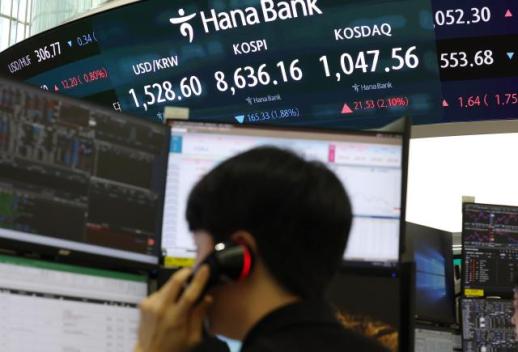 Won weakens to lowest level since global financial crisis SEOUL, June 4 (AJP) - South Korea's financial markets suffered a sharp sell-off on Thursday as the won fell to a 17-year low past 1,530 per dollar and sovereign bond yields spiked, driven by heavy foreign capital outflows and a trio of external shocks: escalating Middle East tensions, a hawkish Federal Reserve and a surprise monetary tightening signal from Japan. In Seoul's currency market, the won opened at 1,530 per dollar, down 13.6 won from the previous session's close. This marks the first time in 17 years and three months that the exchange rate has kicked off below the 1,530 won threshold since March 10, 2009, during the height of the global financial crisis. Immediately after the opening bell, the rate tumbled to 1,530.8 won before paring some gains to trade in the mid-1,520 won range. However, the high-flying trend persists, with the currency hovering in the 1,500 won range for 12 consecutive sessions on a closing basis. Market analysts attribute the unyielding weakness of the won, despite growing possibilities of a rate hike by the Bank of Korea (BOK), to a compounding stack of external headwinds, chiefly triggered by a hawkish surprise from neighboring Japan that amplified fears of a broader liquidity squeeze across Asia. Bank of Japan (BOJ) governor Kazuo Ueda hinted on Wednesday at a potential interest rate hike at the upcoming June 15–16 policy meeting, citing secondary inflation risks driven by soaring energy costs. "Even amid uncertainty in the Middle East, there is a clear need to discuss the appropriateness of raising interest rates," Ueda said during a lecture in Tokyo, warning that delaying necessary monetary normalization could "inflict a heavy burden on the economy, markets, and the financial system." This regional monetary tightening pressure closely aligns with stubborn inflationary pressures in the U.S., where growing concerns that the Fed might lurch back into a hawkish stance are providing solid, ongoing support for both the U.S. dollar and Treasury yields. Adding to the compounding pressure, renewed military tensions between the United States and Iran have stoked global inflation worries and driven up international crude prices, further exacerbating depreciation pressures on the local currency. South Korea relies on the Strait of Hormuz for nearly 70 percent of its total crude oil imports. Consequently, soaring oil prices trigger an increased demand for the greenback to settle import bills while stoking anxieties over a deteriorating trade balance. Continued profit-taking and portfolio rebalancing by foreign investors in the domestic stock market have further strained won supply and demand. According to the Korea Exchange (KRX), foreign investors net sold 4.8 trillion won worth of shares on the main KOSPI bourse as of noon. The bond market also exhibited a turbulent trend. In the morning session of the Seoul debt market, the benchmark three-year government bond yield closed up 6.6 basis points at 3.839 percent - reaching its highest level since November 2023, when fears of prolonged high interest rates in the U.S. hammered global debt markets. The 10-year government bond yield also rose 7.1 basis points to 4.209 percent - bouncing back to the 4.2 percent range for the first time since mid-May, highlighting renewed weakness in long-term debt. This slump effectively erased the bullish sentiment from Tuesday, when net purchases of 10-year bonds by foreign investors hit the second-highest volume in history. The prospect of a BOJ rate hike raised immediate concerns over a regional liquidity squeeze, triggering heavy offloading of local fixed-income assets. Adding to this was the anxiety of market participants already bracing for the possibility that the Gulf crisis could drive oil prices higher, rekindle domestic consumer inflation, and strengthen the BOK's justification for rate hikes. 2026-06-04 14:13:55
 -
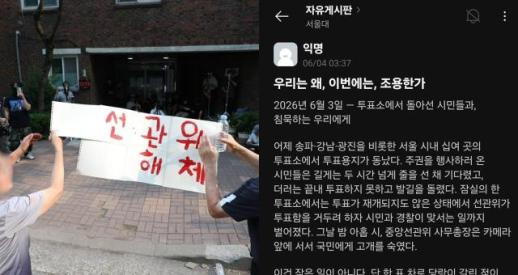 Major Universities in South Korea Criticize Election Mismanagement Criticism is growing among university students regarding the "shortage of ballots" that occurred during the 9th nationwide local elections held on June 3. On June 4, anonymous posts from students at major universities, including Seoul National University, Korea University, Yonsei University, Sungkyunkwan University, Hanyang University, Chung-Ang University, Hongik University, Inha University, and the Korea Advanced Institute of Science and Technology (KAIST), were shared on the student community platform Everytime. Students characterized the incident not as a mere administrative error but as a serious violation of democratic principles and voting rights, calling for responsible explanations and reforms from the Election Commission. Korea University students stated in their posters, "Due to a failure in demand forecasting and a shortage of ballots, voters had to wait for extended periods in the heat. This is a significant flaw that effectively infringes upon the voting rights guaranteed by the Constitution." At Chung-Ang University, students referenced George Orwell's novel "Animal Farm," questioning, "Are some voters' votes more equal than others?" They argued that limiting voting opportunities for certain voters due to administrative reasons contradicts the principle of equal elections. Hongik University also criticized the Election Commission, stating, "An unprecedented situation occurred in the heart of the capital, where voting was halted due to a shortage of ballots." Voices emphasizing the historical significance of democracy followed. Students at Yonsei University mentioned the late Lee Han-yeol, who sacrificed his life during the 1987 democratization movement, asserting, "Every citizen has the right to fully exercise their vote, and the state must guarantee this right." Inha University students referred to the history of the April 19 Revolution and the democratization movement, stating, "Today's citizens must reconsider what they need to protect for democracy." Hanyang University students echoed similar sentiments, saying, "Korean democracy was built on countless sacrifices. Given the controversy over voting rights infringement, thorough investigations and responsible actions are necessary." Calls for restoring procedural legitimacy transcended political affiliations. Students at Seoul National University emphasized, "If voting is only valued when it benefits me, then that is not a principle but a preference," urging the need to restore trust in the electoral process itself, regardless of political outcomes. Sungkyunkwan University stated, "This is a matter of upholding the basic principles of democracy, regardless of left or right," demanding a review and improvement of the entire electoral process. KAIST students noted, "In some areas, voting continued even after exit poll results were announced, creating an unprecedented situation," calling for clear identification of causes and measures to prevent similar occurrences in the future. Across university campuses, voices emphasizing the fairness of electoral procedures and the guarantee of voting rights are growing. Students collectively stated that the ballot shortage should not be dismissed as a simple mistake but should serve as an opportunity for accurate cause identification and institutional reform. Currently, the Election Commission is investigating the circumstances surrounding the ballot shortage at some polling stations, and no evidence of organized electoral fraud has been confirmed. 2026-06-04 14:12:00
 -
 Lotte Duty Free Opens Gentle Monster Store at Kansai International Airport Lotte Duty Free has opened a Gentle Monster store, marking the first of its kind in Japan's duty-free sector. The store was launched on June 2 in the International Departure Area of Kansai International Airport's Terminal 1, as announced on June 4. This location is designed as a sensory space that goes beyond mere product sales, themed around the exploration of the human inner self. Large artistic objects are strategically placed throughout the store to capture the attention of travelers. A star-shaped installation at the entrance creates an ambiance reminiscent of morning sunlight, symbolizing the shining hearts and individuality of humanity. Notably, three giant head kinetic sculptures inside the store feature expressions of deep contemplation and moving eyes, artistically representing human thoughts and emotions, providing visitors with visual inspiration and a unique shopping experience. The opening of Gentle Monster is expected to create strategic synergy with the recent major expansion of Kansai International Airport, which served approximately 25.72 million passengers last year, making it the largest international airport in the Kansai region. Following a recent four-phase renovation, the airport's annual international capacity has been expanded to 40 million passengers. Lotte Duty Free first entered the Japanese duty-free market in 2014 and currently operates high-end jewelry brands such as Bulgari and Chaumet. As travel demand continues to recover, interest in eyewear is also on the rise. From January to May of this year, Lotte Duty Free's eyewear category sales increased by approximately 26% compared to the same period last year. The opening of Gentle Monster comes amid a clear trend of increasing demand for sunglasses and glasses during travel. A representative from Lotte Duty Free stated, "We will continue to attract differentiated brands and engage in space marketing to provide the best shopping experience for travelers worldwide, further solidifying our position in the global duty-free market." * This article has been translated by AI. 2026-06-04 14:09:00
 -
 CJ ENM Shares Drop Over 3% Following TVING Data Breach Shares of CJ ENM fell more than 3% during trading on June 4 due to the fallout from a data breach involving its subsidiary, TVING. According to the Korea Exchange, as of 2 p.m. on June 4, CJ ENM's stock was trading at 39,500 won, down 1,250 won (3.07%) from the previous trading day. The stock opened at 39,850 won and has continued to decline, hovering around the 39,000 won mark. The drop in share price is attributed to weakened investor sentiment following the data breach incident at the online video service (OTT) platform TVING. On June 2, TVING confirmed that an unidentified hacker had gained unauthorized access to its database and leaked files. The breach reportedly exposed some personal information, including member IDs, names, birth dates, phone numbers, and email addresses. TVING stated, "Upon detection, we immediately blocked the attack IP and modified cloud access controls. We have also enhanced database access monitoring and implemented additional security measures to prevent further damage." Additionally, the company announced plans to establish a dedicated customer service center to assist affected users and urged them to be cautious of any suspicious calls, emails, or messages. TVING also recommended changing passwords for accounts that share the same credentials.* This article has been translated by AI. 2026-06-04 14:09:00
 -
![[WNMC 2026] The Era of Readers Seeking News is Over... AJPs AI Experiment Draws Global Attention](https://image.ajunews.com//content/image/2026/06/04/20260604134815698517_518_323.jpg) [[WNMC 2026]] 'The Era of Readers Seeking News is Over'... AJP's AI Experiment Draws Global Attention "We cannot wait for readers to come to us; we must go to them." On June 3, the 77th World News Media Congress (WNMC) in Marseille, France, attracted over 1,000 journalists and media executives from more than 60 countries. Among the attendees were A.G. Sulzberger, chairman and publisher of The New York Times, and Katharine Viner, editor-in-chief of The Guardian, who gathered to discuss survival strategies for journalism in the age of AI. Seo Hye-seung, editor-in-chief of Aju Media Group's English news agency AJP, was the only speaker from South Korea. With AI emerging as a central theme at this year's congress, AJP's presentation highlighted new possibilities for journalism in the AI era. During the session titled "How AI Is Transforming the News Experience," Seo introduced AJP's multilingual news production and global audience expansion strategies. He defined AJP's identity as "Asian Substance in English," proposing a new role for English-language news agencies in the AI era. "We have discovered our role as a news agency that conveys Asian stories in the language that AI understands best," he said. Aju Media Group publishes content in five languages: Korean, English, Chinese, Japanese, and Vietnamese. AJP serves as the English-language news agency at the center of this multilingual strategy. Seo explained that AJP has utilized AI as a starting point for designing its news production and distribution systems. In an environment where generative AI is transforming news production and distribution, AJP is differentiating itself by using AI not just as a translation tool but as a content expansion platform. "Our goal is not to be journalists who use AI well, but to be journalists that AI can learn from and follow," he said, adding that as technology advances, the role of journalists in reporting from the field and interpreting context becomes even more crucial. This aligns with the message delivered by Sulzberger during his keynote address on the first day of the congress. Sulzberger emphasized that "the important facts that people know ultimately come from journalism's unique reporting," asserting that even as generative AI advances, the role of journalism in uncovering new facts cannot be replaced. He criticized AI companies for using journalistic content as training data without providing fair compensation, stating, "AI operates on information produced by journalism." One of the most frequently mentioned concepts at this congress was 'Liquid Content.' This model involves reconfiguring a single reporting outcome into various forms such as articles, videos, audio, and summaries, tailored to meet readers' situations and needs. News is evolving to be provided in diverse formats that cater to readers' needs rather than waiting for them to seek it out. In fact, major global news organizations are leveraging AI not just as a tool for automating tasks but as a means to redesign reader experiences. Experiments are ongoing to offer personalized news recommendations, transform article archives into interactive services, and reprocess a single article into multiple formats for consumption in ways that readers prefer. While technology is rapidly changing, what readers seek remains reliable information and facts uncovered directly by journalists. Although AI can change how news is produced, it cannot replace the fundamental reasons for the existence of journalism. The way news is delivered to readers is changing, but the value of journalism in discovering and verifying new facts remains unchanged. This was the overarching message of the congress. 2026-06-04 14:09:00
[[WNMC 2026]] 'The Era of Readers Seeking News is Over'... AJP's AI Experiment Draws Global Attention "We cannot wait for readers to come to us; we must go to them." On June 3, the 77th World News Media Congress (WNMC) in Marseille, France, attracted over 1,000 journalists and media executives from more than 60 countries. Among the attendees were A.G. Sulzberger, chairman and publisher of The New York Times, and Katharine Viner, editor-in-chief of The Guardian, who gathered to discuss survival strategies for journalism in the age of AI. Seo Hye-seung, editor-in-chief of Aju Media Group's English news agency AJP, was the only speaker from South Korea. With AI emerging as a central theme at this year's congress, AJP's presentation highlighted new possibilities for journalism in the AI era. During the session titled "How AI Is Transforming the News Experience," Seo introduced AJP's multilingual news production and global audience expansion strategies. He defined AJP's identity as "Asian Substance in English," proposing a new role for English-language news agencies in the AI era. "We have discovered our role as a news agency that conveys Asian stories in the language that AI understands best," he said. Aju Media Group publishes content in five languages: Korean, English, Chinese, Japanese, and Vietnamese. AJP serves as the English-language news agency at the center of this multilingual strategy. Seo explained that AJP has utilized AI as a starting point for designing its news production and distribution systems. In an environment where generative AI is transforming news production and distribution, AJP is differentiating itself by using AI not just as a translation tool but as a content expansion platform. "Our goal is not to be journalists who use AI well, but to be journalists that AI can learn from and follow," he said, adding that as technology advances, the role of journalists in reporting from the field and interpreting context becomes even more crucial. This aligns with the message delivered by Sulzberger during his keynote address on the first day of the congress. Sulzberger emphasized that "the important facts that people know ultimately come from journalism's unique reporting," asserting that even as generative AI advances, the role of journalism in uncovering new facts cannot be replaced. He criticized AI companies for using journalistic content as training data without providing fair compensation, stating, "AI operates on information produced by journalism." One of the most frequently mentioned concepts at this congress was 'Liquid Content.' This model involves reconfiguring a single reporting outcome into various forms such as articles, videos, audio, and summaries, tailored to meet readers' situations and needs. News is evolving to be provided in diverse formats that cater to readers' needs rather than waiting for them to seek it out. In fact, major global news organizations are leveraging AI not just as a tool for automating tasks but as a means to redesign reader experiences. Experiments are ongoing to offer personalized news recommendations, transform article archives into interactive services, and reprocess a single article into multiple formats for consumption in ways that readers prefer. While technology is rapidly changing, what readers seek remains reliable information and facts uncovered directly by journalists. Although AI can change how news is produced, it cannot replace the fundamental reasons for the existence of journalism. The way news is delivered to readers is changing, but the value of journalism in discovering and verifying new facts remains unchanged. This was the overarching message of the congress. 2026-06-04 14:09:00 -
 Korean Ministry of Science Appoints Jang Seok-bok as New Director of IBS The Ministry of Science and ICT has announced the appointment of Jang Seok-bok as the new director of the Institute for Basic Science (IBS), marking the fourth director in the institute's history. Jang, who also serves as the head of the Molecular Activation Catalysis Research Group at IBS and a distinguished professor at the Korea Advanced Institute of Science and Technology (KAIST), will begin his five-year term immediately. Born in 1962, Jang graduated from Korea University with a degree in chemistry in 1985. He earned his master's degree in chemistry from KAIST in 1987 and completed his Ph.D. at Harvard University in 1996. Jang has made significant contributions to the field of organic chemistry and catalytic reactions, being recognized as one of the top 1% researchers globally for eight consecutive years. He currently serves on the editorial board of the Journal of the American Chemical Society (JACS), a leading journal in the field of chemistry. Since the establishment of the IBS research group in 2012, Jang has led the Molecular Activation Catalysis Research Group. His appointment marks the first time an IBS research group leader has been elevated to the position of director. The Ministry of Science and ICT expressed optimism about Jang's appointment, stating, "With a scholar who possesses both academic authority and practical experience in research, we expect IBS to advance as a leading global research institution and contribute to the development of the domestic basic science research ecosystem." IBS was established in November 2011 to conduct world-class basic science research, with its headquarters located in Daejeon. The institute collaborates with major science and technology universities in South Korea, including KAIST, Pohang University of Science and Technology (POSTECH), Ulsan National Institute of Science and Technology (UNIST), and Gwangju Institute of Science and Technology (GIST), to foster cooperative research initiatives. 2026-06-04 14:09:00