

Journalist

KI SU JEONG
-
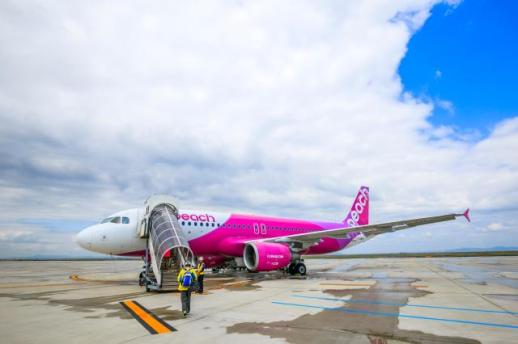 Japan's Low-Cost Airlines Struggle Amid Inflation Japan's low-cost carriers (LCCs) are facing challenges as their growth model falters amid rising inflation. The low-cost model, which thrived on deflation, low labor costs, and cheap operational expenses, is struggling as fuel, labor, and maintenance costs increase. Major airlines like All Nippon Airways (ANA) and Japan Airlines (JAL) are also lowering fares to fill empty seats, diminishing the price competitiveness that LCCs once enjoyed. According to a report by Nikkei Business, a publication under the Nihon Keizai Shimbun, the fare gap between major airlines and LCCs has decreased from 2.68 times in 2012 to less than 2 times by 2024. In 2012, when LCCs began to establish themselves in Japan, they were perceived as significantly cheaper than ANA and JAL. Analyzing passenger revenue data from the Ministry of Land, Infrastructure, Transport and Tourism, Nikkei Business found that the revenue per passenger kilometer for ANA and JAL dropped from 17.8 yen in 2012 to 17.0 yen in 2024. In contrast, Peach Aviation and Jetstar Japan saw their revenue rise from 6.6 yen to 8.7 yen during the same period. This indicates that LCC fares, which were about 40% of ANA and JAL's in 2012, have now surpassed half of their fares by 2024. The narrowing fare gap suggests that LCCs are losing their primary competitive advantage of offering value for money. A representative from Japan's Ministry of Land, Infrastructure, Transport and Tourism noted that even major airlines in the U.S. are adopting LCC-style services, such as Delta Air Lines introducing non-seat-assigned low-cost tickets, indicating that LCCs are at a turning point. Changes at Peach Aviation, Japan's First LCC Peach Aviation, a leading LCC in Japan, is also adapting to this trend. Launched in March 2012 as Japan's first full-scale LCC, Peach was seen as a pioneer in the industry. It attracted younger travelers with low fares and a distinctive branding strategy, achieving its first operating profit in March 2014. As of March 1 this year, Peach operates 25 domestic and 15 international routes, serving over 9 million passengers annually. However, as reliance on its low-cost image becomes less viable, Peach is shifting its strategy to broaden its customer base. In late March, the airline announced a rebranding, changing its bright pink logo to a more subdued beige to appeal to middle-aged customers. This move aims to expand its reach beyond the young female demographic that initially fueled its growth. Additionally, Peach became a wholly-owned subsidiary of ANA Holdings in December 2024. This change in status is reflected in its operational strategies and role within the group. Initially, Peach operated with a degree of separation from ANA to establish the LCC model in Japan. However, there is now a clear trend of collaboration between the major airline and LCC in sharing routes and customer segments. For instance, ANA recently suspended operations on four routes from Kansai Airport to Naha, Miyako, Ishigaki, and New Chitose, while Peach increased flights on the Naha and New Chitose routes. This indicates a shift where less profitable routes are being assigned to LCCs within the group. The changing dynamics are partly due to declining profitability for major airlines on domestic routes. ANA and JAL explained in a May meeting with Ministry of Land, Infrastructure, Transport and Tourism experts that without government support, their domestic operations would be unprofitable. Rising fuel, labor, and maintenance costs, coupled with a shrinking population making it difficult to expand domestic demand, have exacerbated the situation. ANA acknowledged that the internal compensation structure, which relied on profits from major routes to sustain regional services, has reached its limits. The evolution of the LCC model reflects Japan's economic shift from deflation to inflation. Companies that have thrived on low labor and operational costs are increasingly struggling to absorb rising expenses. The domestic airline market faces additional pressures from rising fuel prices due to geopolitical instability in the Middle East, further increasing the cost burden on airlines. Ultimately, LCCs are entering a phase where relying solely on low fares for growth is becoming unsustainable. The future competitiveness of these airlines will depend on whether they can raise fares in line with major airlines while enhancing service value or maintain low fares while developing a profitable structure. As inflation persists, a strategic reassessment of the low-cost business model in Japan will become inevitable.* This article has been translated by AI. 2026-06-05 16:15:00
 -
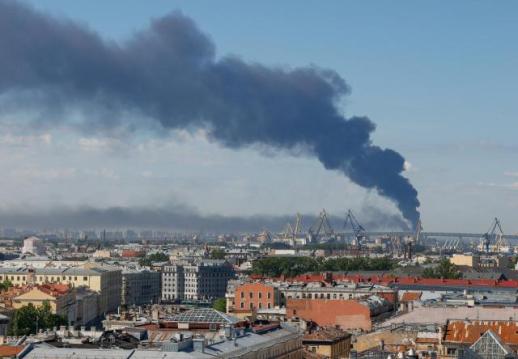 Survival Strategies of 'David' Korea: Lessons from Ukraine and Iran International politics has long been driven by the logic of power. It has been seen as a natural order for stronger nations to dominate weaker ones. However, recent conflicts around the world are challenging this notion. Unexpected resistance from 'Davids' against overwhelmingly powerful adversaries is shaking the status quo. A prime example is Ukraine. Until last year, Ukraine's future appeared bleak. In the United States, then-President Donald Trump pushed for an early end to the conflict, while Russia demanded territorial concessions from Ukraine. Many believed that given Russia's population, resources, and military strength, Ukraine would ultimately be unable to withstand the pressure. Contrary to expectations, Ukraine took a different path. It began actively utilizing its drone capabilities, akin to a 'surgical strike,' targeting Russian military facilities and supply lines. The sight of advanced weapon systems worth millions of dollars being threatened by relatively inexpensive drone attacks illustrates a new reality in modern warfare. Consequently, Russia has started to feel the burden of a prolonged conflict, and President Vladimir Putin has not completely ruled out the possibility of peace negotiations. Iran presents a similar case. Despite facing severe economic sanctions and military pressure from the United States, Iran has not easily succumbed. The disparity in power between the U.S. and Iran is significant, yet Iran has leveraged its geopolitical position, regional influence, and various asymmetric capabilities to resist the pressure from stronger nations. By making it difficult for the powerful to achieve their desired outcomes, Iran has achieved considerable strategic effectiveness. The cases of Ukraine and Iran impart a common lesson: in modern international politics, superiority in size does not guarantee victory. Even smaller nations can create difficulties for powerful adversaries if they possess asymmetric capabilities and strong resilience to exploit weaknesses. This shift carries important implications for South Korea. Coldly speaking, South Korea is situated between major powers: the United States, China, Russia, and Japan. While its economy ranks among the world's top, in terms of geopolitical environment, it remains closer to the status of David. Therefore, our survival strategy should not solely rely on competing in size. South Korea has already adopted a 'surgical strike' strategy in security, aiming to deliver decisive blows even against major powers in times of crisis. To achieve this, technological superiority is essential. Just as Ukraine changed the course of war with drones, South Korea must further enhance its future asymmetric capabilities, including AI-based unmanned systems, advanced missile technology, cybersecurity capabilities, and nuclear-powered submarines. Competitiveness in key industries such as semiconductors, artificial intelligence, batteries, and defense can also serve as a national 'surgical strike.' Instilling the perception that any disruption to South Korea could shake the entire global supply chain is a powerful deterrent. Ukraine and Iran offer us significant lessons. David does not survive because he is stronger than Goliath; he survives by accurately identifying the weaknesses of his opponent and honing his unique weapons. The future and prosperity of South Korea will depend on whether it can develop a sharp 'surgical strike' that cannot be easily challenged.* This article has been translated by AI. 2026-06-05 16:12:00
 -
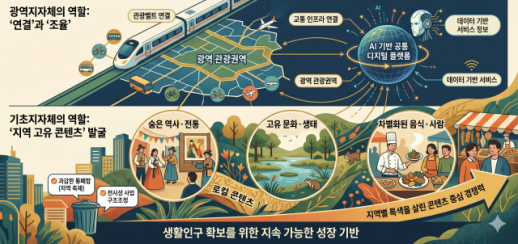 Local Governments Must Shift Focus from Generic Tourism Promises to Unique Regional Strategies The 9th nationwide local elections have concluded. Local governments across the country now face the task of turning the numerous promises made during the election campaign into actionable policies. Among the commitments that will shape the future of regions over the next four years, those related to culture and tourism require particularly careful reevaluation. The new local governments must first eliminate the repetitive, development-focused tourism pledges and establish clear roles and cooperative frameworks between regional and local governments. Tourism is no longer a secondary policy area. It has become a key industry for revitalizing local economies and creating jobs amid declining populations and the threat of regional extinction. Yet, during election seasons, similar tourism promises are repeated across the nation. Regional governments compete by promoting their own landmarks and tourist facilities, leading to a cycle where local characteristics are lost and only the scale of projects increases. The role of regional governments is clear: it should focus on connection and coordination rather than development. For international tourists, administrative boundaries hold little significance. Tourists experience a region as a whole, not as individual cities or counties. However, some areas remain fixated on building unique brands, often sidelining strategies for collaboration with neighboring regions. Regional governments should shift their focus from competing to develop individual tourist sites to creating inter-regional tourism belts and connecting transportation infrastructure. Expanding tourist mobility and increasing the length of stays are essential starting points for enhancing local tourism competitiveness. The establishment of AI-based tourism services and digital platforms is also a responsibility at the regional level. With local governments facing varying financial conditions, each creating their own apps and platforms can lead to redundant investments and budget waste. A structure where regional governments build common infrastructure and data, while local governments add regional content, aligns with common sense. Conversely, local governments should focus on uncovering unique local attractions rather than pursuing massive development projects. However, the reality is different. Promises to install cable cars in mountainous areas or suspension bridges near rivers and seas are prevalent nationwide. While these large facilities may attract initial interest, they often leave behind maintenance burdens over time. Consider this logically: in a situation where similar suspension bridges and observation decks are abundant across the country, why would tourists travel far to spend money? What tourists seek are experiences, not just facilities. They want stories, culture, food, and people unique to that area. Amid the crisis of regional extinction, what areas need to secure is not just transient visitors but a resident population that stays and consumes. The power to achieve this does not come from massive concrete structures but from local content that embodies the region's history, traditions, culture, and the lives of its residents. Local governments should concentrate their administrative efforts on discovering hidden local assets and creating differentiated tourism content, moving away from competitive development promises. With the government's push for regulatory reforms, including amendments to tourism promotion laws, local governments face significant challenges. Bold decisions are required, such as the consolidation of extravagant local festivals and restructuring showcase projects that consume tens or hundreds of millions in budgets. The elections are over. Now is the time for harsh administrative realities. Blindly pushing through promises made to gain votes is not responsible governance. Regional governments must clarify their roles in connection and coordination, while local governments focus on content and on-the-ground realities. They need to stop competing in showy facilities and redundant investments and concentrate on enhancing local competitiveness. The future of local tourism does not lie in building bigger structures but in connecting the strengths of different regions and preserving their unique stories. It is hoped that the new local governments will lay the groundwork for sustainable regional growth through tourism policies based on fundamentals, principles, and common sense.* This article has been translated by AI. 2026-06-05 16:09:00
 -
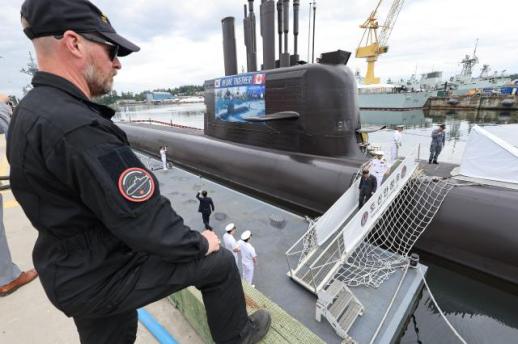 South Korea pushes hydrogen trucks in final pitch for Canada's submarine race SEOUL, June 5 (AJP) - South Korea has proposed a multibillion-dollar hydrogen truck project in Canada as part of its final push to win Ottawa's next-generation submarine contract, turning an earlier request for automotive investment into a broader industrial package centered on hydrogen mobility, local manufacturing and jobs. The proposal, code-named "Project Beaver," was disclosed by Presidential chief of staff Kang Hoon-sik in an interview with Canada's CTV News, as a South Korean government-led consortium intensifies last-minute efforts ahead of Canada's final decision by the end of June. According to CTV News, South Korea has offered to invest 3.1 billion Canadian dollars to build a hydrogen truck ecosystem in Canada if Hanwha Ocean wins the Canadian Patrol Submarine Project, or CPSP. The project would use Hyundai Motor's hydrogen vehicle technology and include a liquefied hydrogen plant in British Columbia, 32 hydrogen refueling stations in British Columbia and Alberta, and a hydrogen vehicle manufacturing plant in Ontario. More than 160 additional refueling stations would be built after 2035. Kang said the project would create about 9,000 jobs in Canada and help build a local hydrogen truck industry. "It will be a Korean brand that uses Canadian raw materials and Canadian-made parts in the manufacturing process," Kang said. "Once we win the submarine contract, Hyundai Motor will help Canada build its hydrogen ecosystem." The proposal adds a new layer to South Korea's submarine bid, which has increasingly become a competition over industrial benefits as much as naval capability. Hanwha Ocean, together with HD Hyundai Heavy Industries, is competing against Germany's Thyssenkrupp Marine Systems, or TKMS, for Canada's plan to acquire up to 12 conventionally powered submarines to replace its aging Victoria-class fleet. From the early stages of the race, Canadian officials made clear that the winning bidder would be judged not only on submarine performance, but also on what kind of economic return it could bring to Canada. In February, Stephen Fuhr, Canada's special envoy for defense procurement, visited Hanwha Ocean's Geoje shipyard and toured a KSS-III submarine undergoing sea trials. "Both South Korea and Germany are automotive manufacturing nations," Fuhr said during the visit. "If there are areas where we can cooperate in sectors like automobiles, we are looking to pursue broader partnerships that go beyond defense." The message reflected Canada's effort to protect and revive its auto industry at a time of U.S. tariff pressure, production cuts and uncertainty over the future of North American supply chains. Reuters reported in January that Kang traveled to Canada with officials and executives from Hyundai Motor, Hanwha and HD Hyundai to lobby for the submarine project. At the time, Hyundai Motor said it had no current plan to build a car factory in Canada, but was exploring other partnerships, particularly in hydrogen. Project Beaver appears to be Seoul's answer to that industrial demand. Kang told CTV that South Korea chose hydrogen trucks, rather than consumer electric vehicles, partly because of U.S. pressure on automakers and growing Chinese competition in Canada's EV market. He cited the case of Stellantis, which announced last year that it would move production of a Jeep model from Ontario to Illinois, saying Korean companies face similar pressure from the U.S. "The U.S. told them it would be more advantageous to come to the U.S.," Kang said, referring to Stellantis. "South Korean companies are under similar pressure." He also said it would be difficult for Korea to compete directly with China in the EV sector, given Beijing's strength in electric vehicles and Canada's ties with China on EV imports. Project Beaver could mark a renewed attempt by Hyundai to expand its hydrogen business in North America, this time through heavy-duty trucks and infrastructure rather than passenger cars. Hydrogen has been one of Hyundai Motor Group chairman Chung Eui-sun's key future strategies, with the group declaring 2040 as the target year for the mass adoption of hydrogen energy. But progress has been limited, partly due to the rapid rise of Chinese EV makers and the slow expansion of hydrogen refueling infrastructure. Still, Hyundai has continued to build a track record in commercial hydrogen mobility. Its XCIENT Fuel Cell Truck has already surpassed 20 million kilometers of accumulated driving in Europe, while its North American operations have logged about 1.6 million kilometers since 2023. The proposal suggests Hyundai may be seeking a more practical route into Canada's mobility market by focusing on long-haul freight, where hydrogen is seen as more competitive due to shorter refueling times and longer driving ranges compared with battery-only trucks. 2026-06-05 16:07:21
 -
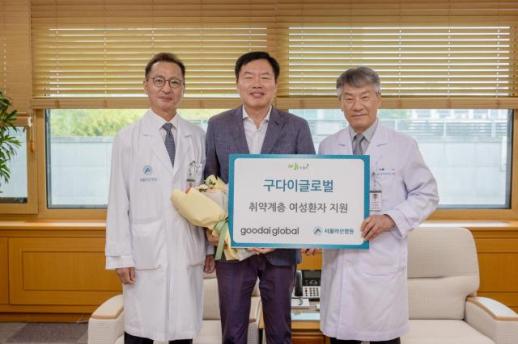 Gudai Global Donates 100 Million Won to Support Female Patients at Seoul Asan Medical Center Seoul Asan Medical Center announced that Gudai Global, a global beauty platform company, has donated 100 million won to support treatment costs for economically disadvantaged female patients. The donation ceremony, held on June 1 at Seoul Asan Medical Center, was attended by Park Seung-il, President of the hospital, along with Gudai Global CEO Cheon Joo-hyuk and Choi Ki-rok, Head of the Legal Center. Gudai Global supports the overseas operations of several K-beauty brands, including Chosun Beauty, Tirtir, Skin1004, and Round Lab, and is expanding its business through brand acquisitions and development. The company expressed hope that the donation would assist female patients who are delaying treatment due to financial difficulties, stating, "We will continue our social contribution activities to support women's health." Seoul Asan Medical Center plans to use the donation to cover treatment costs for vulnerable female patients, prioritizing those with severe illnesses or requiring urgent surgeries.* This article has been translated by AI. 2026-06-05 16:06:00
 -
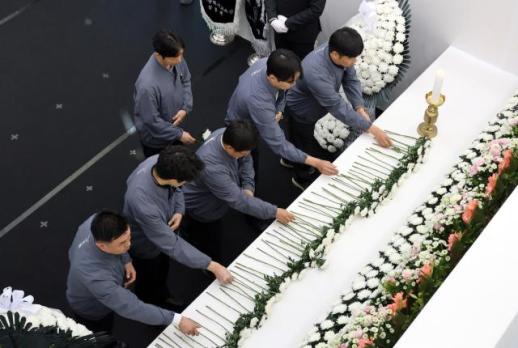 Mourners pay respects to Hanwha Aerospace workers killed in Daejeon blast SEOUL, June 05 (AJP) - Funeral altars were set up at Yuseong District Office in Daejeon on Friday for the five workers killed in an explosion at Hanwha Aerospace’s Daejeon plant four days earlier. The victims had been working in a cleaning room in Building 56 of the company’s Daejeon plant when an explosion of unknown cause occurred on Monday. Funeral arrangements were delayed as the bodies were severely damaged in the blast, complicating the identification process. Authorities completed the process on Wednesday, two days after the accident, while additional time was needed for consultations with bereaved families. Mourners continued to visit throughout the day as Hanwha Aerospace employees, many wearing work uniforms, gathered to pay their respects and offer condolences to the victims’ families. Among those paying their respects were Hanwha Vice Chairman Yeo Seung-joo and Defense Acquisition Program Administration Minister Lee Yong-cheol. Yeo and Lee repeatedly bowed before the grieving father of one victim in his 20s. Speaking to reporters afterward, Lee said the accident had occurred in an area that had not been designated as subject to safety inspections. “We will closely examine gaps in safety management and shortcomings at the facility level, and come up with measures to prevent even unforeseen accidents,” Lee said. One of the five victims will be moved to another region on Saturday for funeral services in his hometown. The remaining four funerals will be held in Daejeon, with funeral processions scheduled for Sunday. 2026-06-05 16:03:28
 -
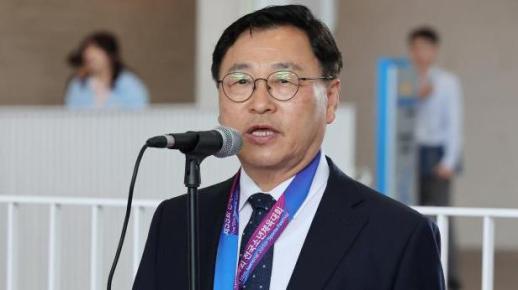 Will Changing Superintendents Transform Our Schools? What Parents Should Watch After Local Elections The superintendent elections held alongside the June 3 local elections may not attract as much attention, but they significantly impact the daily lives of students and parents. Superintendents lead the local education offices and play a crucial role in shaping regional education policies. A change in superintendent does not immediately alter the school environment. The terms for local government heads, local council members, and superintendents are all four years, with the official terms for the newly elected officials starting on July 1 and running until June 30, 2030. Superintendents are responsible for executing educational and cultural affairs within their jurisdictions. Their duties include drafting ordinances, preparing budgets, establishing educational regulations, managing the establishment, relocation, and closure of schools and educational institutions, overseeing curriculum operations, determining student attendance zones, managing educational facilities and equipment, and handling personnel matters for affiliated staff. As a result, the outcomes of the superintendent elections can shift the focus of local education policies. Areas such as the expansion of academic assessments, support for basic academic skills, extended school programs, student rights ordinances, protection of teachers' rights, guidelines for digital device usage in schools, meal and transportation support, special education, and multicultural education may see changes in priority based on the new superintendent's policy direction. Another notable aspect of the superintendent elections is that they are conducted without political party nominations. Superintendents are elected directly by residents, and candidates must have experience in education or educational administration. Additionally, candidates must not have been members of a political party for at least one year prior to the registration of their candidacy. This structure aims to ensure the political neutrality and professionalism of education. However, even with a new superintendent, not all policies will change immediately. The school environment is intertwined with academic schedules, budgets, ordinances, and the operation of the education office. To halt ongoing projects or introduce new initiatives, internal reviews and budget adjustments are necessary. Depending on the issue, discussions in local councils or amendments to ordinances may also be required. Therefore, parents should focus less on whether their child's school will change immediately and more on what policies the new superintendent will prioritize. The messages regarding basic academic skills, extended school programs, teachers' rights, student rights, digital education, and high school curricula communicated before and after the inauguration will indicate the direction for the next four years. While mayoral and gubernatorial elections determine the direction of local development and welfare, superintendent elections can alter the atmosphere in classrooms and the priorities of schools. As the new term begins on July 1, parents should pay close attention to signals of changes in education policy.* This article has been translated by AI. 2026-06-05 16:03:00
 -
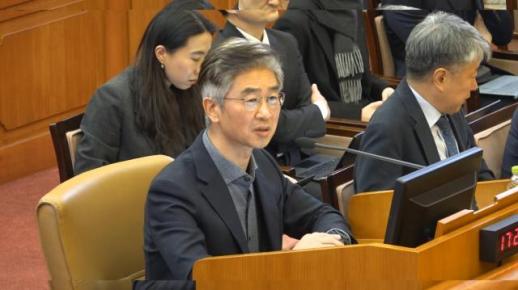 Former Seoul Police Chief Kim Bong-sik Requests Suspension of Imprisonment Kim Bong-sik, the former chief of the Seoul Metropolitan Police Agency, has requested a suspension of his imprisonment related to charges of participating in a coup and performing significant duties during a state of emergency. According to legal sources on June 5, Kim submitted his request for suspension on June 2 to the Seoul High Court's dedicated coup trial division (Judges Lee Seung-cheol, Jo Jin-goo, and Kim Min-a). The reason for his request is reported to be attendance at a family event. The suspension of imprisonment is a legal provision that allows for temporary release if the court recognizes urgent reasons, such as serious illness, childbirth, or attending a family funeral. The court plans to carefully review Kim's reasons before making a decision. Kim was arrested and indicted in January of last year. He was granted bail during the first trial in June of the same year. However, he was sentenced to 10 years in prison in February and has remained in custody while awaiting further proceedings. Born in 1967, Kim graduated from the National Police University and was appointed as an inspector in 1989. He has held various positions, including chief of the Daegu Dalseo and Dongbu Police Stations, head of the investigation division at the Seoul Metropolitan Police Agency, director of the National Police Agency's Investigation Bureau, and chief of the Gyeonggi Southern Police Agency. He was appointed as the chief of the Seoul Metropolitan Police Agency in August 2024. He faces charges for actively participating in the enforcement of martial law, including issuing orders to block the National Assembly's perimeter during the state of emergency declared on December 3 of the same year. However, Kim, along with former President Yoon Suk Yeol, former Defense Minister Kim Yong-hyun, and former Director of the Military Intelligence Command Noh Sang-won, filed a motion to disqualify the coup trial division last month. As a result, the trials for Kim and the remaining defendants, including former Police Chief Jo Ji-ho and former National Assembly Security Chief Mok Hyun-tae, are currently being conducted separately.* This article has been translated by AI. 2026-06-05 15:57:00
 -
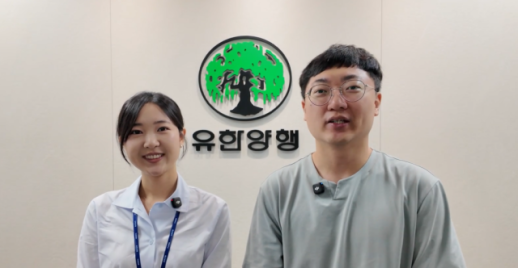 Yuhan Corporation Celebrates 100th Anniversary with Donations and Collaboration with YouTuber Kim Seon-tae Yuhan Corporation announced on June 5 that it has launched collaborative content with YouTuber Kim Seon-tae and engaged in community donation activities to mark its 100th anniversary. On May 29, the company donated a total of 50 million won to the senior welfare center and food market in Chungju. The funds will be used to support vulnerable groups in the community. A special promotional video featuring Kim Seon-tae was also produced. The video, released on June 5, showcases the significance and history of the 100th anniversary, as well as the company's research and development facilities. In celebration of its centennial, Yuhan Corporation is continuing customer engagement events and social contribution activities. Until June 21, the company’s official online store, Budal Market, will host various promotions, including: an additional four weeks of the blood sugar probiotic 'DangQulac' with purchase, a 100 won special price event every weekday at 6 PM, a '100th Anniversary Golden Ticket Event' where customers receive a raffle ticket for every 50,000 won spent, and a 'Networking King Event' offering prizes based on the actual payment amount of referred friends. Yuhan Corporation will officially celebrate its 100th anniversary on June 20. The company has grown from the independent spirit and belief in public health of its founder, Dr. Yoo Il-han. A Yuhan Corporation representative stated, "We wanted to express our gratitude to our customers and the community on the occasion of our 100th anniversary. Yuhan Corporation plans to continue various activities aimed at enhancing public health and realizing social value, based on the spirit of our founder, Dr. Yoo Il-han."* This article has been translated by AI. 2026-06-05 15:57:00
 -
 President Yoon to Address Vatican on June 14, Requesting North Korea Visit President Yoon Suk Yeol will visit the Vatican on June 14 to meet with Pope Leo XIV and deliver a speech on the theme of 'Peace on the Korean Peninsula and the World.'National Security Office Director Wi Seong-rak announced this during a briefing on the president's travel schedule at the Cheong Wa Dae on June 5.This visit marks the first time a South Korean leader has visited the Vatican since Pope Leo XIV ascended to the papacy about a year ago in May 2025.Wi stated, "Through President Yoon's speech at the special mass at St. Paul Outside the Walls, we aim to express South Korea's commitment to global peace and solidarity, seeking the Vatican's support for this initiative."He also highlighted that the upcoming World Youth Day (WYD), scheduled to take place in Seoul in August 2027, will be a key agenda item. This event will be the second WYD held in an Asian country and the first in a nation where Catholicism is not the majority religion.There are speculations that President Yoon may request a visit to North Korea during his meeting with Pope Leo XIV in connection with the 2027 event.A senior official at the Cheong Wa Dae remarked on the possibility of discussing North Korea, saying, "We are aware of the significant expectations for discussions regarding inter-Korean relations and the situation on the Korean Peninsula, but it is premature to specify the details of any discussions at this time."* This article has been translated by AI. 2026-06-05 15:57:00