
Journalist

Kang Jung-woo
-
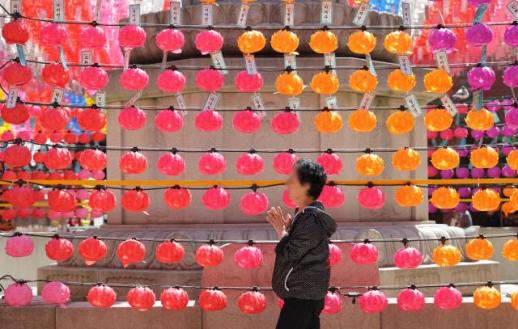 President Lee Emphasizes Unity on Buddha's Birthday President Lee Jae-myung stated on May 24 that on Buddha's Birthday, he aims to closely observe the lives of each citizen, guided by the Buddha's teachings. In a post on his Facebook page, President Lee remarked, "The teachings of the Buddha, who was born on the road, have accompanied us through the joys and sorrows of life for many years." He noted that during times of national crisis and sorrow, the Buddha's teachings have provided healing and comfort to the suffering and marginalized. President Lee emphasized the importance of understanding and harmony in the Buddha's teachings, stating, "The Buddha's message encourages all beings to understand one another rather than reject each other, and to unite rather than oppose, serving as a strong foundation for our society to become a more resilient community." He added, "The government of the people will use the Buddha's precious words as a guiding light to carefully attend to the lives of each citizen and listen to the voices from the lowest levels of society." President Lee also referenced the Buddhist principle of 'won-yung-hwa-tong' (원융회통), which signifies harmony and unity. He expressed his commitment to deeply engrave this spirit in his heart, stating, "Together, we will overcome the crises facing our nation with united strength." Furthermore, he expressed hope that the lotus lanterns illuminating the nation today would serve as a light of hope connecting hearts, and he extended his congratulations on Buddha's Birthday in the year 2570.* This article has been translated by AI. 2026-05-24 09:39:32
 -
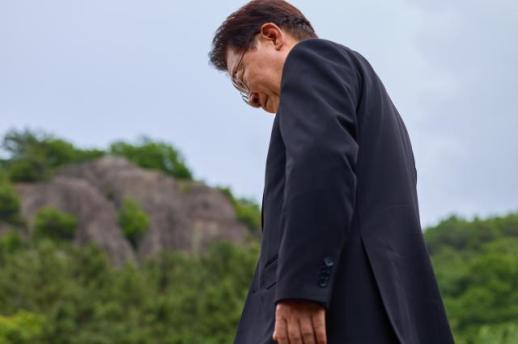 President Lee Considers Closing Hate Speech Sites Like Ilbe President Lee Jae-myung announced on May 24 that he is considering measures such as closing the website Ilbe (Ilgan Best) and implementing punitive damages. The president made this statement while sharing an article on social media that reported comments from Jo Soo-jin, a director at the Roh Moo-hyun Foundation. Jo claimed that a visitor, appearing to be an Ilbe user, wore an Ilbe T-shirt and made a hand gesture associated with the site during the memorial service for the late President Roh Moo-hyun, which took place the previous day. President Lee stated, "There are arguments that freedom of expression should protect actions that incite social division and conflict, like those seen on Ilbe, as well as calls for punishment and sanctions." He acknowledged the ongoing debate regarding the closure of Ilbe. He continued, "It seems necessary to publicly discuss allowing punitive damages and the closure of sites that promote mockery and hate speech, under strict conditions, as well as other necessary measures such as fines." The president added, "I will also instruct the Cabinet to address this issue." * This article has been translated by AI. 2026-05-24 09:30:33
 -
 Trump says peace deal with Iran 'largely negotiated,' hinting at possible end to conflict SEOUL, May 24 (AJP) - U.S. President Donald Trump said Saturday that a peace agreement with Iran has been "largely negotiated," raising hopes of easing tensions in the Middle East. "Final aspects and details of the Deal are currently being discussed and will be announced shortly," he said in a post on his social media platform Truth Social. He added that the deal would include reopening the Strait of Hormuz, a critical maritime chokepoint through which roughly one-fifth of the world's oil supply passes. Trump also confirmed that he had a "very good call" with the leaders of several Middle Eastern countries, including Bahrain, Egypt, Jordan, Pakistan, Saudi Arabia and the United Arab Emirates (UAE), as well as talks with Israeli Prime Minister Benjamin Netanyahu, which he said "went very well." But the comments came after Iranian Foreign Ministry spokesman Esmail Baghaei earlier said peace negotiations were not yet close to reaching a final deal, although Tehran and Washington were working to "finalize" a deal, referring to a previously proposed one-page, 14-point memorandum of understanding (MOU) that would "declare an end to the war in the region." "We cannot necessarily say that we have reached a point where an agreement is close," he said. The conflicting statements suggest lingering uncertainty despite signs of diplomatic progress, coming just a day after Trump threatened a fresh round of military strikes against Iran. Contrary to Trump's remarks that the strait "will be opened," Iran's semi-official Fars News Agency also reported that Tehran had not agreed to fully reopen the strait. "In the event of a possible agreement, the Strait of Hormuz will still be under Iranian management," it added. The narrow waterway has become a focal point of the prolonged regional conflict, severely disrupting shipping traffic and sending global oil and gas prices sharply higher. The developments are also being closely watched in South Korea, one of the world's largest energy importers and a country heavily dependent on crude oil shipments from the Middle East, as rising energy costs have already hit South Korean refiners, shipping firms and manufacturers. But it remains to be seen whether any breakthrough in negotiations between Washington and Tehran will bring an end to a conflict that began with U.S. and Israeli joint airstrikes against Iran in late February. 2026-05-24 09:27:25
 -
 Crisis Management: President Criticizes Shinsegae's Jeong Yong-jin Over Marketing Misstep The severity of a crisis often escalates when mistakes are repeated. This was evident in the controversy surrounding Starbucks Korea's 'Tank Day.' Initially perceived as a minor social media marketing blunder, the situation intensified as police investigations began and political figures launched widespread criticism, transforming the issue into a societal debate. President Lee Jae-myung referenced Starbucks Korea's release of the 'Siren Classic Mug' during the 10th anniversary of the Sewol ferry disaster on May 23, amplifying the situation. The President described the incident as the 'immoral behavior of a ruthless businessman,' indicating that it was not merely a practical error but a reflection of a lack of historical awareness. He specifically connected the 'Tank Day' controversy with the marketing during the Sewol memorial period, asserting that it was difficult to view it as an accidental occurrence. This situation raises uncomfortable questions for corporations. To what extent should a corporate leader be held accountable for all marketing incidents that occur within the organization? This question transcends Jeong Yong-jin's individual responsibility and reflects a structural issue faced by all large corporations in the social media era. In the past, corporate crises often stemmed from factory-related issues such as product defects, safety accidents, and accounting fraud. However, today’s crises emerge on digital platforms, where a single phrase, image, or event name can shake an entire corporation. The fast-paced nature of social media marketing is driven by operational teams, making organizations sensitive to clicks, virality, and engagement time. The problem is that social context and historical sensitivity can easily be overlooked in this process. It is essential to approach this matter with a level-headed perspective. Based on the facts available so far, there is no evidence that Chairman Jeong directly instructed the controversial wording. In a large organization with thousands of employees, it is unrealistic to expect the leader to approve every digital marketing phrase. However, it cannot simply end with 'I didn’t know.' Ultimately, the corporate leader must take responsibility for what occurs within the organization. It is crucial to distinguish between accountability and punishment. In South Korea, these two concepts are often conflated. Accountability refers to being the final manager of organizational operations, while punishment pertains to discussions of direct illegal actions or proven intent. For instance, during a major recall crisis, Akio Toyoda, the chairman from the founding family of Toyota, appeared before the U.S. Congress. Although he did not design every defect, he demonstrated accountability as the CEO. Legal and criminal responsibilities were assessed separately. The Tylenol crisis at Johnson & Johnson, often cited as a textbook case in crisis management, illustrates a similar principle. Despite the high likelihood of external criminal involvement in the tampering, the company initiated a full recall and engaged in open communication, refusing to evade responsibility. A corporate leader cannot prevent every mistake within the organization. However, they must bear ultimate responsibility for how the organization operates. The core of this controversy lies in understanding why such wording was allowed to pass without checks. Why did internal voices warning that 'this is risky' fail to resonate? Why was there a lack of systems to review historical and social contexts? Those who must answer these questions are ultimately the top executives. It is also important to avoid interpreting this incident solely through a political lens. Jeong Yong-jin has previously been associated with strong political imagery due to past controversies, such as the 'anti-communism' debate, which has drawn this incident into a larger political narrative. However, a clear-eyed view reveals that the core issue is organizational culture rather than politics. German philosopher Hannah Arendt stated, 'Evil arises not from monstrous intentions but from a failure to think.' This suggests that organizational insensitivity and complacency can be more dangerous than grand conspiracies. The modern platform economy is an 'attention economy.' Companies sell not just products but also interest. Clicks, trends, fandoms, and endorsements drive sales. Starbucks Korea has evolved beyond a simple coffee brand to a platform centered on merchandise and events. The challenge arises when speed begins to overshadow philosophy. Originally, Starbucks founder Howard Schultz described Starbucks as a 'third place,' a space for people to relax and connect between home and work. However, today, Starbucks has become a brand where fandom, scarcity, and merchandise consumption are central to its revenue structure. While this is not inherently wrong, modern consumer capitalism operates this way, with Nike and Apple also leveraging fandom and emotional marketing. Yet, when the speed of events and trends takes precedence over brand philosophy, organizations become increasingly sensitive to 'what is trending' rather than 'what is right.' This controversy serves as a warning. What Jeong Yong-jin needs to focus on now is not expressing grievances or crafting political defenses. The critical issue is how to transform the organization. Why have these incidents recurred? How did the review systems function? Was there a framework for assessing historical and social sensitivity? What are the ethical standards for digital marketing? What changes will be implemented moving forward? These are the questions that must be addressed. This incident underscores that 'businesses exist within society.' Corporations do not only engage with the market; they are also connected to history, culture, and social memory, especially large corporations. However, society must also maintain a level of rationality. It is dangerous to immediately equate every organizational failure with the personal crimes or malice of the leader. This conflates accountability with punishment. While corporate criticism is necessary, it should not devolve into a witch hunt. Friedrich Nietzsche said, 'He who fights with monsters should be careful lest he thereby become a monster.' This is a sentiment needed in South Korean society today. Corporate insensitivity must be criticized, but a society that seeks to resolve every issue through political retribution is also unhealthy. Ultimately, the key is the ability to manage crises. Great companies return to their essence in times of crisis, and great leaders do not shy away from those moments. What Jeong Yong-jin must do now is not merely repeat apologies but acknowledge the organizational failures, rectify the systems, and rebuild social trust. That is the responsibility of a corporate leader.* This article has been translated by AI. 2026-05-24 09:22:29
 -
 Gunfire Erupts Near White House, Journalists Evacuated On May 23, gunfire was reported near the White House, prompting an emergency evacuation of journalists. According to Yonhap News and CNN, shots were heard around 6 p.m. local time in the vicinity of 17th Street and Pennsylvania Avenue Northwest, and authorities are currently investigating the incident. CNN reported that journalists, who were on the north lawn of the White House at the time, quickly took shelter inside the briefing room. One reporter noted that the gunfire seemed to originate near the Eisenhower Executive Office Building within the White House complex. The Secret Service subsequently secured the White House briefing room and instructed reporters to evacuate. The White House was temporarily closed as a precaution. At the time of the incident, President Donald Trump was present at the White House, but he was reported to be unharmed. One civilian was transported to a nearby hospital after being shot, but their condition remains unconfirmed. * This article has been translated by AI. 2026-05-24 09:00:31
 -
 Starbucks Faces Backlash Over 'Tank Day'; Government Considers Revoking Award The South Korean government is reviewing whether to revoke an award previously given to Starbucks Korea. According to Yonhap News on May 24, the Ministry of SMEs and Startups recently discussed this matter. The review follows the company's use of the phrases 'Tank Day' and 'Tap on the Desk' during a tumbler promotion on the anniversary of the May 18 Democratic Movement.Last November, Starbucks received a Prime Minister's Award in the category of cooperative growth for its contributions, which included supporting the development of beverages using local specialties, aiding small businesses affected by floods, and supporting local farmers.The award law stipulates that honors can be revoked if the recipient's achievements are found to be false, if they have committed crimes against national security, or if they have been sentenced to death, life imprisonment, or a prison term of one year or more that has been finalized.However, the Ministry of SMEs and Startups reportedly analyzed the records submitted by Starbucks at the time and determined that they did not meet the criteria for revocation in connection with the current controversy.Despite this, there are ongoing calls for a boycott of Starbucks products, indicating that the social backlash remains significant, and some observers believe the possibility of revoking the government award still exists.According to the 'Government Award Guidelines' published by the Ministry of the Interior and Safety earlier this year, the government regularly checks and manages the occurrence of revocation criteria and states that if social controversies arise, it may consider revocation as necessary.If a department overseeing an award requests the revocation of a recipient, the Ministry of the Interior and Safety will review it and present it as an agenda item to the Cabinet meeting.* This article has been translated by AI. 2026-05-24 08:39:44
 -
 Gunfire Erupts Near White House, Journalists Evacuated On May 23, gunfire was reported near the White House, prompting an emergency evacuation of journalists on site. According to Yonhap and CNN, a Secret Service official stated that reports of gunfire were received from the area of 17th Street and Pennsylvania Avenue Northwest, and an investigation is underway. CNN reported that journalists heard gunfire while they were on the North Lawn of the White House and were quickly directed to take shelter inside the briefing room. One reporter noted that the sound of gunfire seemed to come from the direction of the Eisenhower Executive Office Building within the White House complex. Following the incident, the Secret Service secured the White House briefing room and instructed reporters to evacuate.* This article has been translated by AI. 2026-05-24 08:24:26
 -
 Weather Today: Mostly Clear Nationwide with Highs Reaching 28 Degrees On Sunday, the 24th, the weather across the country is expected to start cloudy but gradually clear up by the morning. The Korea Meteorological Administration reported that the rain that fell nationwide the previous day will taper off by the morning of the 24th. However, it noted that Jeju Island will continue to experience cloudy conditions. Overall, the weather is predicted to be favorable for outdoor activities. Morning low temperatures are expected to range from 11 to 16 degrees Celsius, while daytime highs will reach between 21 and 28 degrees Celsius. In major cities, the highest temperatures are forecasted to be 28 degrees in Seoul, 27 degrees in Incheon, Suwon, and Chuncheon, 24 degrees in Gangneung, 27 degrees in Cheongju, 28 degrees in Daejeon, 27 degrees in Jeonju and Gwangju, 26 degrees in Daegu, 23 degrees in Busan, and 23 degrees in Jeju. The lowest temperatures in these areas are expected to be 16 degrees in Seoul, 16 degrees in Incheon, 15 degrees in Suwon, 13 degrees in Chuncheon and Gangneung, 16 degrees in Cheongju, 15 degrees in Daejeon, 16 degrees in Jeonju and Gwangju, 13 degrees in Daegu, 15 degrees in Busan, and 18 degrees in Jeju. Waves in the inner seas (about 200 km from the coastline) are expected to be 0.5 meters in the West Sea and between 0.5 to 1.5 meters in the East and South Seas.* This article has been translated by AI. 2026-05-24 08:12:28
 -
 Voter Registration Reaches 44.6 Million Amid Concerns Over Aging Population and Regional Decline The Ministry of the Interior and Safety has announced that the total number of registered voters for the June 3 local elections is 44,649,908. This figure represents an increase of over 340,000 from the 2022 local elections and is also higher than the number of voters in last year's presidential election. While these numbers may seem like mere statistics, they encapsulate the direction in which South Korea is heading. The concentration in the metropolitan area, deepening aging, the crisis of regional extinction, and the transition to a multicultural society are all reflected in the voter registration data. This local election is not just about electing regional heads and local officials; it serves as a critical test for determining the future structure of South Korea. The most striking aspect is the concentration in the metropolitan area. Voters in Gyeonggi Province number over 11.87 million, accounting for 26.6% of the total. When combined with Seoul and Incheon, the proportion of voters in the metropolitan area approaches nearly half. This explains why election issues are primarily focused on topics such as the GTX transit system, redevelopment, real estate, and transportation networks. Politicians are inevitably drawn to the sentiments of metropolitan voters, making the elections for the Seoul mayor and Gyeonggi governor akin to major political events. The issue is that this concentration is not merely a matter of population movement. Young people, jobs, capital, industries, education, and culture are all being drawn into the metropolitan area. Regions are suffering from a triple burden of population decline, weakened industrial bases, and youth outflow. Local universities face existential threats, and regional economies are collapsing. The term "regional extinction" has become a stark reality rather than an exaggeration. This prompts a reflection on why the Roh Moo-hyun administration prioritized balanced regional development as a national strategy. Although the policies for innovation cities and the relocation of public institutions sparked considerable debate, the recognition of the problem was not misplaced. The overcrowding in the metropolitan area and the hollowing out of regions represent a structural crisis that threatens the sustainability of the entire nation. A country that allows only specific regions to thrive will ultimately lose its balance. If regions collapse, national competitiveness will also weaken. Another reality highlighted by the voter registration statistics is aging. Among the age groups, those in their 50s make up 19.3%, while the combined total of those in their 60s and 70s exceeds 34%. In contrast, voters in their 20s account for just over 12%, and those in their teens are around 2%. This suggests that South Korean politics may increasingly shift focus from future industries and innovations to stability, welfare, and asset protection. Issues such as pensions, healthcare, real estate, and safety are likely to become central political topics. Japan has already traversed this path. The focus of Japanese politics, even amid long-term stagnation, has shifted toward stability policies for the elderly rather than bold structural reforms, driven by a super-aged voter demographic. South Korea is moving in a similar direction. The challenge lies with the younger generation, which is suffering the most from job and housing crises and risks being marginalized politically. As politics becomes more sensitive to current stability rather than future prospects, the nation’s innovative momentum is bound to weaken. The increase in foreign voters is also a significant change. The number of foreign voters in the local elections has surpassed 150,000, more than tripling since 2014. This signals that South Korea is already transitioning into a multicultural industrial nation. The ongoing debates over foreign voting rights in local elections are intertwined with changes in industrial and demographic structures. Europe has already experienced similar challenges. In Germany and France, local politics have been shaken by the intertwining of immigration and regional economic issues. South Korea is now entering an era where the question of "who is a local resident?" cannot be avoided. However, the political sphere still tends to view this issue solely through the lens of short-term electoral calculations. There is a lack of discussions on long-term population strategies and industrial policies. This local election sends a clear message to the political sphere. If local elections devolve into mere judgments of power or ideological confrontations, regions will inevitably suffer further decline. The essence of local elections lies in regional competitiveness. Cities must compete over which can create better jobs, which local governments can retain youth, and which regions can connect industries, education, and transportation to establish sustainable growth foundations. However, the reality remains trapped in the shadow of central politics. Inter-party conflicts take precedence over regional development strategies, and discussions of central power judgments overshadow local policies. As long as local elections are consumed as proxy battles for central politics, local autonomy will become merely a shell. Ultimately, the burden will fall on local residents and regional economies. South Korea currently stands at a significant structural transition. It is simultaneously moving toward a super-concentrated metropolitan area, an ultra-aged society, and a multicultural industrial nation. The voter registration statistics for this local election illustrate this reality in numbers. The important thing is not the numbers themselves but the warnings they convey. The 44,649,908 voters represent more than just a tally of ballots; they signal a collective indication of where South Korea is headed. If the political sphere ignores this warning, the future of regions will remain bleak, even as local elections continue. It is time to reaffirm the fundamental understanding that revitalizing regions is essential for saving the nation.* This article has been translated by AI. 2026-05-24 07:52:11
 -
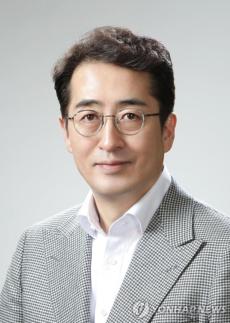 Kim Yong-beom's Leadership at Meritz Financial: From Profit Design to Capital Reallocation Kim Yong-beom, vice chairman of Meritz Financial Group, bases his leadership on the question of how to generate profit. He views finance not merely as a sector but as a system for capital allocation. By reducing unnecessary expansion, focusing on high-profit areas, and making quick decisions, he has driven significant performance improvements.This strategy has substantially boosted Meritz Financial's performance and market capitalization, establishing a strong presence in the market. Notably, the 'One Meritz' system, which integrates insurance, securities, and holding companies, is seen as a structural experiment that maximizes capital efficiency. However, the reliance on real estate project financing and corporate finance for revenue, along with aggressive investment strategies, has raised concerns about risk. Ultimately, his entrepreneurial spirit in finance boils down to one question: Can profitability and stability be achieved simultaneously?Profit-Centric Management: Redefining Financial StandardsKim Yong-beom's leadership begins with a clear premise: he believes the issue is not how much finance is conducted, but how efficiently it is done. This is not merely about cost-cutting or restructuring; it is about changing the very criteria for financial judgment. In the past, financial companies were obsessed with growth in size, equating asset expansion and market share with competitiveness. However, he rejects this formula.He determined that unnecessary expansion only undermines profitability, leading him to adopt a 'profit-centric management' strategy. This approach is simple yet powerful: focus on profitable businesses and decisively reduce those that are not. As a result, Meritz Financial has established itself as one of the most profitable companies among financial holding firms, consistently maintaining a net profit exceeding 2 trillion won.The core of this strategy is 'select and concentrate.' High-loss businesses, such as auto insurance, are significantly reduced, while focus is placed on more profitable areas like long-term insurance and corporate finance. While this may appear risky in the short term, it builds structural competitiveness in the long run. He has transformed finance from a scale game into an efficiency game. In this regard, Kim Yong-beom's leadership is more about judgment than management; he prioritizes decisions on what not to pursue, and those decisions lead directly to profits.One Meritz: Structural Innovation in Capital IntegrationThe essence of Kim Yong-beom's strategy goes beyond merely enhancing profitability; it involves restructuring. The decision to fully integrate Meritz Fire and Meritz Securities as subsidiaries is a symbolic example. This is not just a governance restructuring; it is a design for integrated capital management. Traditional financial holding companies often have separated interests among subsidiaries, limiting capital movement. However, Meritz has unified these interests, connecting capital earned from insurance to securities and investments, and returning it as profit.This structure maximizes capital efficiency, allowing for rapid capital allocation where needed. Kim describes this as 'efficient capital allocation,' which aligns with the core of entrepreneurial finance. He provides clear answers to the questions of where to allocate capital and who bears the responsibility for those decisions: judgments are made centrally and executed quickly.'One Meritz' ultimately represents an experiment in changing the structure of finance, not just emphasizing synergy among subsidiaries verbally but implementing it through capital flows. This model is rare in Korean finance, but it also carries risks; the more centralized the decision-making, the greater the impact of failures. Nevertheless, he is willing to take this risk because a dispersed structure does not allow for speed.Shareholder Returns: Reinvesting Capital Back to InvestorsAnother notable aspect of Kim Yong-beom's approach is the method of returning capital to shareholders. Meritz Financial has committed to returning over 50% of its net profit to shareholders, one of the most aggressive levels among domestic financial holding companies. Share buybacks, cancellations, and increased dividends are not merely shareholder-friendly policies; they are part of a capital allocation strategy. He views shareholder returns not as a cost but as an investment.This approach prompts a reevaluation of the essence of finance: is a financial company an organization that accumulates capital, or one that circulates it? Kim has chosen the latter. This choice has elicited immediate market reactions, resulting in rising stock prices and increased market capitalization. Investors assign higher value to companies that allocate capital efficiently rather than just those that generate profits.However, this strategy also has its dualities. High shareholder returns can limit internal investment capacity and intensify pressure for short-term results. He must maintain this balance, ensuring that while capital is returned, the foundation for growth is preserved. At this juncture, his leadership faces another test.Speed and Risk: Challenges and Limitations of the Meritz ModelKim Yong-beom's leadership is grounded in speed: quick judgments, rapid execution, and results-oriented evaluations. The organizational culture reflects this, reducing reporting and simplifying meetings while respecting the judgment of practitioners. This approach is rare in the financial sector; while traditional finance is centered on procedures and approvals, Meritz is execution-focused.However, speed always carries risks. The structure centered on real estate project financing and corporate finance is sensitive to market changes. Indeed, risks related to project financing and loan recovery issues have been continuously highlighted. Additionally, increased regulatory scrutiny and growing demands for social responsibility pose additional burdens.Ultimately, the core challenge of the Kim Yong-beom model is clear: balancing growth and stability. While aggressive strategies have yielded results thus far, changing environments could turn the same strategies into risks. He must now transition to the next stage: from rapidly growing finance to stable, sustainable finance; from maximizing profits to controlling risks. When this transition is successful, the Meritz model could become a standard.SWOT AnalysisKim Yong-beom's leadership is defined as 'capital allocation optimization in entrepreneurial finance.'Strengths are clear: profit-centric management, quick decision-making, and capital allocation capabilities. Meritz Financial has consistently generated net profits exceeding 2 trillion won, securing the highest level of profitability in the industry, and has maximized capital efficiency through the 'One Meritz' system. Additionally, the bold policy of returning over 50% of net profits to shareholders is a key factor in gaining market trust.Weaknesses include structural concentration. The high dependence on real estate project financing and corporate finance makes it sensitive to economic fluctuations. The concentration of decision-making among specific executives also poses risks. While this increases organizational flexibility, it can amplify the impact of failures.Opportunities are evident. In an era where the essence of finance is shifting toward capital allocation, the Meritz model holds competitive advantages. Expanding global investments and strengthening investment banking capabilities provide additional growth momentum.Threats come from external environments. Interest rate fluctuations, real estate market downturns, and increased financial regulations have direct impacts. Additionally, social criticism of high-profit-centered strategies poses a burden.* This article has been translated by AI. 2026-05-24 07:47:27