
Journalist

Kang Jung-woo
-
 Seoul Mayoral Candidates Clash Over Safety and Development Issues As the June 3 local elections approach, the negative campaigning between Jung Won-oh, the Democratic Party's candidate for Seoul Mayor, and Oh Se-hoon, the People Power Party's candidate, is intensifying. Jung has raised concerns about the missing rebar issue at the GTX-A line's Samsung Station, while Oh has pointed to allegations of corruption in the redevelopment of the Seongdong District's Hyeongdang-dong. During his campaign on May 23, Jung repeatedly highlighted the rebar issue at Samsung Station, calling it a demonstration of Oh's negligence regarding safety. Speaking at a rally in front of Yeonsinnae Station in Eunpyeong-gu, Jung stated, "Oh has neglected safety, leading to continuous accidents in Seoul." He referenced the missing rebar at Samsung Station, saying, "The major cause of the collapse of the Sampoong Department Store was also related to missing rebar. Yet, Oh has not visited the Samsung Station site to this day." Jung criticized Oh, saying, "He should reflect on whether major disasters occur during his terms as mayor. Let's turn Seoul, which is indifferent to safety, into a city that prioritizes safety through our votes." Oh countered by addressing the allegations surrounding the "Agi Ssi Gooddang" preferential treatment and the redevelopment issues in Hyeongdang 7 District. Former People Power Party lawmaker Yoon Hee-sook claimed that while Jung was the mayor of Seongdong, he pressured the redevelopment association to donate 4.8 billion won for the construction of the Gooddang, but later refused to accept the building after its completion. Oh added that the delay in the completion of the project due to insufficient childcare facilities has prevented residents from exercising their property rights. At a rally in Sinjeongnegeori Station in Yangcheon-gu, Oh said, "The 1,000 households in Hyeongdang 7 District, which moved in last June, cannot complete their property registrations due to the childcare facility issue. The Seongdong District Office initially demanded cash contributions but later required the construction of a childcare facility for donation, which raises doubts about Jung's administrative capabilities." Oh also criticized Jung's defense of the allegations, stating that Jung's claim that it was an issue from the previous mayor's term was unacceptable. After visiting the Seoul International Garden Expo in Seongdong-gu, Oh told reporters, "If you served as the head of the Seongdong District for 12 years, you should not evade responsibility. Explain why you did not resolve this issue before leaving office in March, as that reflects incompetence and irresponsibility." The two candidates also continued their back-and-forth regarding a potential joint debate. Jung rejected Oh's proposal for a safety discussion centered on the rebar issue at Samsung Station, stating, "It has been over a week since it was announced to the media, yet he suggests a debate without even visiting the site." He reiterated his refusal, questioning how safety issues could be debated. In response, Oh criticized Jung's stance, saying, "It is inappropriate to question whether a debate on safety can bring about safety. We should discuss methods to ensure safety. If Jung promises to participate in a safety debate, I will visit Samsung Station."* This article has been translated by AI. 2026-05-24 02:40:52
 -
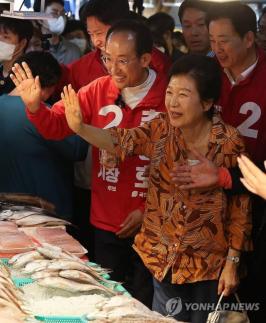 Former President Park Geun-hye's Political Activities Draw Attention Ahead of Local Elections As the June 3 local elections approach, former President Park Geun-hye's activities are garnering attention in the political arena. On May 23, Park visited the Chilseong Market in Daegu, accompanying the People Power Party's mayoral candidate, Chugyeong-ho. She is also scheduled to visit the birthplace of former First Lady Yuk Young-soo in Okcheon, Chungbuk, on May 25. Although she did not deliver a direct campaign speech, her presence just over ten days before the election is interpreted as a message to rally conservative support. This is particularly significant given the competitive nature of the Daegu mayoral race. It is not necessary to view the support of a former president in a strictly negative light. In a democratic society, the freedom of political expression is guaranteed for everyone, including former presidents, who can express their political views and support specific parties or candidates. It is common for former leaders to engage in election support abroad. In the United States, former President Barack Obama actively campaigned for Democratic candidates, while Donald Trump remained a key player in Republican politics after leaving office. Similarly, in Japan, former Prime Minister Shinzo Abe exerted significant influence in supporting the Liberal Democratic Party during his lifetime. Local elections are not solely about regional policy competition. In reality, elections are always influenced by central politics. The evaluation of the government, party approval ratings, and public sentiment regarding presidential governance significantly impact local election outcomes, a phenomenon observed globally. South Korean politics is no exception. The challenge lies in maintaining balance. Local elections are fundamentally about selecting individuals who can foster regional development. This process involves choosing those responsible for policies related to transportation, housing, welfare, safety, and industry—issues that are closest to citizens' lives. As the concentration of resources in the capital region and the decline of rural areas intensify, the role of local governments becomes increasingly crucial. In an era of competition in advanced industries such as AI, semiconductors, biotechnology, and batteries, local governments are evolving from mere administrative bodies to central pillars of regional industrial strategy. However, if elections become overly politicized, the vision for the region's future may be overshadowed by partisan conflict. In the case of the Daegu mayoral election, the 'Park Geun-hye effect' is becoming a larger news story than the economic and industrial strategies for Daegu or the issue of youth outmigration. This indicates that South Korean politics has yet to fully escape its focus on individuals and factions. That said, it is also unrealistic to completely prohibit the political participation of former presidents. The key lies not in the act of supporting candidates but in the manner and message conveyed. If the support merely incites factional unity and fosters hostility toward opponents, social conflict may escalate. Conversely, if a former president conveys messages of unity, responsibility, and moderation, they can elevate the quality of political culture. International examples illustrate this point. While supporting Democratic candidates, former President Obama consistently emphasized messages of unity and trust in American democracy. In contrast, while Trump succeeded in mobilizing a strong support base after leaving office, he is also credited with exacerbating political polarization in the United States. The political influence of a former president can either be an asset or a burden for democracy, depending on how it is wielded. What South Korean politics must be most vigilant against is the 'excess of emotional politics.' In an era where AI-generated fake news, YouTube politics, fandom politics, and hate politics disrupt the electoral landscape, the more political symbols are excessively mobilized, the more elections tend to devolve into contests of emotional mobilization rather than policy competition. Ultimately, it is the citizens who suffer, as issues related to the local economy, jobs, transportation, safety, youth, and welfare are pushed aside. Park Geun-hye's recent actions should also be viewed through this lens. While there may be a rallying effect among conservative supporters, it should not provoke past conflicts and factional divisions. The political influence of a former president must be considered not just as personal politics but also for its symbolic effect on society as a whole. Democracy is a system that allows for diverse political participation, and former presidents are no exception. However, given their significant influence, a higher level of responsibility and restraint is required. Especially in local elections, the focus should transcend party victories and losses to address the essential question: “Who can better develop the region?” Ultimately, voters must assess this point. They should not be swayed solely by political symbols and emotions but should critically evaluate candidates based on their policies, capabilities, and visions for regional development. Local elections are both an extension of central politics and a stage for responsible governance that impacts citizens' lives. What is needed now is not just factional unity but a mature democracy that selects individuals responsible for the future of the region.* This article has been translated by AI. 2026-05-24 02:39:00
 -
 President Lee Visits Traditional Market After Memorial for Roh Moo-hyun President Lee Jae-myung attended the memorial service for the late former President Roh Moo-hyun on May 23 in Bongha Village, Gimhae, and afterward visited the Eodong Traditional Market to meet with citizens and merchants.According to a written briefing by Deputy Spokesperson Ahn Gyu-ryeong, Eodong Traditional Market is a representative market in Gimhae, filled with the warmth of local life and bustling with various food vendors and lively merchants.As President Lee and First Lady Kim Hye-kyung entered the market, they were warmly welcomed by citizens and merchants, who applauded and shouted, "Welcome!" and "Nice to meet you!"The presidential couple walked slowly through the market alleys, greeting citizens and responding to requests for photos.The market was filled with enticing aromas of freshly fried snacks, tteokbokki, and sundae, drawing in visitors. The couple sampled twisted doughnuts and fish cakes, purchasing rice cakes and corn to support the vendors.While visiting a fruit shop, President Lee and First Lady Kim bought raspberries and peaches.President Lee asked, "How much are the peaches?" to which the vendor replied, "30,000 won." First Lady Kim remarked, "That's still expensive," as she carefully observed the prices in their shopping basket. Vendors candidly shared their experiences regarding the current economic situation and market atmosphere, while the presidential couple listened attentively.One vendor requested, "Please cheer for us to do well in business," and President Lee responded with a bright wave of his hand.Throughout the visit, citizens expressed their support, and the presidential couple waved goodbye to the crowd until the end.Deputy Spokesperson Ahn noted, "This visit was arranged to hear the voices of citizens in the traditional market, which is closest to their lives, after attending the memorial service for former President Roh Moo-hyun, and to encourage merchants who are struggling due to the economic downturn."* This article has been translated by AI. 2026-05-24 02:36:25
 -
 Fire in Multi-Family Home in Hwaseong Claims Life of Grandson, Injures Grandmother A fire in a multi-family home in Hwaseong, Gyeonggi Province, resulted in the death of a man in his 20s and serious injuries to an elderly woman in her 80s. According to Yonhap News, the blaze broke out at 12:47 p.m. on the fourth floor of a five-story multi-family building located in the Manse district. The cause of the fire is currently unknown. At the time of the fire, two individuals were present in the unit: a man in his 20s, identified as A, and an elderly woman, identified as B. A was found dead at the scene, while B sustained second-degree burns to her face and was rescued and transported to a hospital. The two were confirmed to be grandmother and grandson. Following the outbreak of the fire, thick black smoke and toxic gases quickly spread throughout the building, prompting residents to evacuate. Four residents on the fifth floor were rescued by firefighters, while eight others managed to escape on their own, preventing further casualties. Fire authorities received reports of black smoke rising from the fourth floor and dispatched 27 pieces of equipment and 75 personnel to the scene for firefighting efforts. The fire was brought under control and fully extinguished within approximately one hour. The fire caused damage to the interior of the unit, and soot damage was reported throughout the building. Police and fire officials plan to conduct a joint investigation to determine the exact cause of the fire, the circumstances surrounding the death, and the extent of property damage.* This article has been translated by AI. 2026-05-24 02:33:47
 -
 Training Aircraft Crashes in Haenam, Injuring Instructor and Student A training aircraft crashed in Haenam, South Jeolla Province, injuring two people, including an instructor and a student. According to Yonhap News, the incident occurred around 3:10 p.m. on May 23, when a DA40NG training aircraft went down in a wooded area near Seokgye-ri in Haenam County. At the time of the crash, the aircraft was carrying a student in their 20s, identified as A, and an instructor, also in their 20s, identified as B. Both were rescued shortly after the accident and transported to a hospital. A was reported to be conscious, while B was reportedly unconscious at the time of rescue. Fire authorities stated that one wing of the aircraft was severely damaged during the crash, but no fire broke out. The aircraft took off from Muan International Airport at approximately 2:40 p.m. and was headed to Sanibi Airfield in Haenam, about 40 kilometers away in a straight line, when the accident occurred. The DA40NG is a four-seat training aircraft manufactured by an Austrian company, and only the instructor and student were on board at the time of the incident. The Aviation and Railway Accident Investigation Committee plans to investigate the cause of the crash, examining potential aircraft defects, weather conditions, and flight paths. This is not the first such incident in South Jeolla Province; in 2016, a training aircraft crash resulted in fatalities. A Cirrus SR20 training aircraft, carrying a civilian pilot and two students, crashed into a field near a hill in Muan County, killing all three on board. Although the aircraft was equipped with an emergency parachute system, it reportedly did not deploy due to the rapid descent.* This article has been translated by AI. 2026-05-24 02:31:41
 -
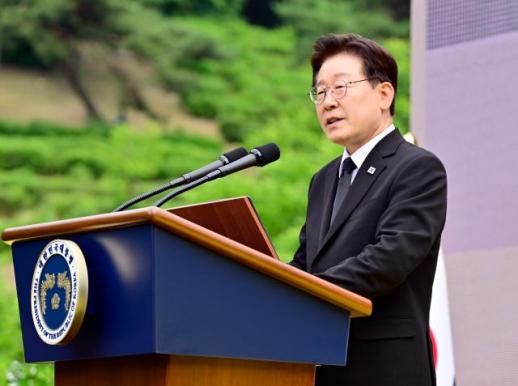
 Crisis in the Capital Region: The Legacy of Roh Moo-hyun and Regional Development As the 2026 local elections approach, members of the ruling party gathered in Bongha Village, Gimhae, where former President Roh Moo-hyun is commemorated. On May 23, President Lee Jae-myung attended the 17th anniversary memorial service for Roh, stating, "I will carry on the legacy of President Roh Moo-hyun." He emphasized values such as fairness, balance, inclusivity, respect for humanity, popular sovereignty, and reform. The leadership of the Democratic Party and other figures from the ruling coalition also attended the service, which is interpreted as a politically significant gathering aimed at rallying support ahead of the official campaign period. The name Roh Moo-hyun continues to hold special significance in South Korean politics. He stood against regionalism, sought to change an authoritarian political culture, and left behind the ideal of a "world where people live together." His philosophy of reducing presidential power and emphasizing citizen participation is still regarded as a vital asset for South Korean democracy. Bongha Village has become a symbolic site for progressive politics, transcending its role as a mere memorial space. However, what matters in politics is not merely the declaration of succession but the actual substance behind it. For the slogan of "carrying on the Roh Moo-hyun spirit" to resonate with the public, current political practices and governance must align with that spirit. The core legacy left by Roh was not the victory of a particular faction but the commitment to political reform aimed at returning power to the people. He confronted regionalism, authoritarianism, and entrenched political interests, believing that the legitimacy of power comes from communication with the public. Thus, the essence of the Roh Moo-hyun spirit can ultimately be described as popular sovereignty and common-sense politics. The pressing question is whether South Korean politics is moving in that direction today. In this local election, there are significant criticisms that emotional politics and factional battles are overshadowing policy competition. The proliferation of AI-generated fake news, conspiracy theories, and politically charged content on platforms like YouTube is muddying the electoral waters. Even though it is a local election, the dynamics of central politics are being highlighted over issues like local economies, industrial strategies, youth employment, and housing. The Democratic Party speaks of punishing the ruling party, while the People Power Party advocates for checks on the government. However, issues that citizens feel, such as transportation, housing, welfare, and safety, are being sidelined. Roh Moo-hyun emphasized citizen participation and responsible politics during his lifetime. Yet, the public now feels fatigued by politics. Conflicts are escalating, factions are becoming more extreme, and political discourse is increasingly harsh. If politics continues to foster division and hatred while invoking the Roh Moo-hyun spirit, it cannot be considered a true succession. There are also many economic aspects that need reflection. Roh proposed balanced development as a national strategy, believing that the concentration of power in the capital region could weaken national competitiveness and lead to regional extinction. Policies like Sejong City and innovation cities originated from this awareness. Currently, South Korea is experiencing a renewed intensification of concentration in the capital region. Young people from rural areas are moving to Seoul and the surrounding regions in search of jobs, leaving local universities and small cities struggling for survival. This local election should ultimately focus on who can revitalize the local economy. In an era where competition in advanced industries such as semiconductors, AI, biotechnology, and batteries will determine the nation's future, the role of local governments is becoming increasingly important. The key challenge should be how to create a regional industrial ecosystem, rather than merely engaging in infrastructure projects or populist promises. For the Roh Moo-hyun spirit to be genuinely succeeded, answers must be found at this juncture. Balanced regional development must be placed back at the center of national strategy, and local governments should evolve from mere administrative bodies into platforms for industry and innovation. This is the path that will economically support the vision of a "world where people live together." The issue of reforming power institutions is similarly critical. In his memorial speech, President Lee expressed his intention to push for reforms without being swayed by the backlash from vested interests. However, reforms should not serve as political tools for the benefit of a specific faction but should aim to enhance public trust. Whether it is prosecutorial reform or media reform, the core should be the balance and transparency of power, avoiding any further concentration of power. Another lesson from Roh is the restraint of power. He understood the dangers of presidential authority and emphasized decentralization and citizen participation. If the political sphere truly wishes to invoke the Roh Moo-hyun spirit, it must first reduce the demonization of opponents. Reforms should not be forced through power but should be completed through public empathy and trust. This memorial service in Bongha is not merely a commemorative event. It also serves as a politically symbolic space ahead of the local elections. However, the name Roh Moo-hyun should not be consumed solely as an emotional code for election mobilization. The Roh Moo-hyun spirit should not be the monopoly of a particular faction but rather an asset for all of South Korean democracy. The public is asking: Is the "Roh Moo-hyun spirit" that the political sphere speaks of truly improving the lives of the people? When politics returns to common sense, unity, practicality, and balance, the memorial in Bongha can hold true meaning. The genuine succession of the Roh Moo-hyun spirit must be proven through changes that the public can feel.* This article has been translated by AI. 2026-05-24 02:29:03
 -
 North Korean Coach Ri Yu-il Walks Out of Press Conference Over 'North Side' Reference Ri Yu-il, the coach of North Korea's My Hometown Women's Football Team, walked out of a press conference after expressing dissatisfaction with the term "North Side" during discussions about his team's victory. According to Yonhap News on May 23, My Hometown secured the championship title by defeating Japan's Tokyo Verdy Beleza 1-0 in the final of the 2025-2026 AFC Women's Champions League held at Suwon Sports Complex. During the press conference following the match, Coach Ri expressed his gratitude, stating, "My Hometown has only been established for 14 years, and now we are the best in Asia," while thanking Kim Jong-un, the Chairman of North Korea's State Affairs Commission, and the ruling party. He added, "I am incredibly proud of the players who have followed my guidance through difficult times to achieve this moment. I also want to thank the families and supporters who have wholeheartedly supported us to win." My Hometown arrived in South Korea on May 17 for the tournament, marking the first time a North Korean women's football club has visited since the 2014 Incheon Asian Games. When asked about his experience in South Korea, Ri said, "We were able to play here due to the Asian Football Confederation's arrangements. We focused solely on football, winning, and our development, without any distractions." With this victory, My Hometown also earned the right to represent Asia in the FIFA Women's Club World Cup. Ri emphasized, "My Hometown is a team with a very short history, and today we are experiencing a historic moment as we advance to the world stage as the best team in Asia. The emotions and excitement are beyond words." He continued, "As a coach, the awards ceremony is over, and now we have new challenges ahead. I will do my best to achieve good results on the big stage that lies ahead." However, the atmosphere shifted unexpectedly during the press conference when a South Korean reporter remarked, "The women's football on the 'North Side' has been of a high standard historically." Ri expressed discomfort with the term "North Side" to his interpreter, who then requested, "Please use the correct name for the country." Ri subsequently stated, "I will not take questions from that person," and left the press conference. Previously, during a press conference after a victory against South Korea in the quarterfinals of the 2022 Hangzhou Asian Games, Ri had also objected when a South Korean reporter referred to North Korea as the "North Side," insisting, "It is not the North Side; it is the Democratic People's Republic of Korea."* This article has been translated by AI. 2026-05-24 02:27:00
 -
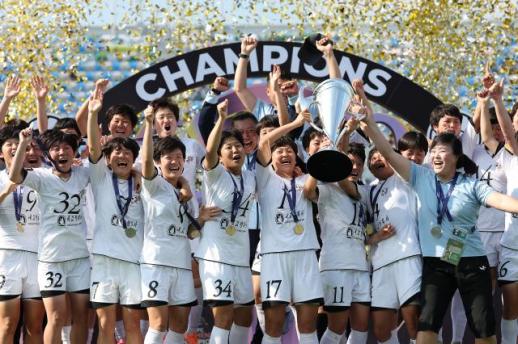 North Korean Women's Soccer Team Wins AFC Champions League Title The Nae Go Hyang Women's Football Team from North Korea has claimed the title of the AFC Women's Champions League by defeating Japan's Tokyo Verdy Beleza 1-0. According to Yonhap News, the decisive match took place on May 23 at the Suwon Sports Complex, where team captain Kim Kyung-young scored the winning goal in the 44th minute. With this victory, Nae Go Hyang becomes the first North Korean team to win this tournament, including its predecessor, the AFC Women's Club Championship. The team also secured a prize of $1 million (approximately 15 billion won). The AFC Women's Champions League is the premier tournament for women's club football in Asia and was officially launched last season. Nae Go Hyang advanced to the final after a comeback victory against Suwon FC Women in the semifinals on May 20, where Kim Kyung-young also scored the decisive goal in a 2-1 win. This marks the first time in 12 years that a North Korean football player has visited South Korea since the 2014 Incheon Asian Games. It is also the first time a North Korean women's club team has competed in South Korea. In their group stage opener last November in Myanmar, Nae Go Hyang suffered a heavy 4-0 defeat to Tokyo Verdy. However, they redeemed themselves in the final, lifting the championship trophy. Kim Kyung-young, who scored the winning goals in both the semifinals and the final, was named the tournament's Most Valuable Player (MVP). During the match, Nae Go Hyang initially struggled against Tokyo Verdy's aggressive pressing but quickly regained composure, maintaining a competitive flow. In the 16th minute, Tokyo Verdy's forward Shio Koshiyu's right-footed shot was saved by goalkeeper Park Joo-kyung, and the defense cleared the danger. Although Nae Go Hyang had only 43% possession in the first half, they capitalized on their opportunities. In the 44th minute, Jeong Geum-yi won a challenge against the opposing defense and set up Kim Kyung-young, who scored with a right-footed shot from near the penalty spot into the bottom right corner. This was Nae Go Hyang's first shot on target of the match. In the second half, Nae Go Hyang focused on solid defense while executing counterattacks. In the 49th minute, Kim Kyung-young headed a cross from Jeong Geum-yi, but it was saved by the goalkeeper. In the 70th minute, Ri Myong-kum's header also failed to result in a goal. Tokyo Verdy attempted to respond with substitutions but could not break through Nae Go Hyang's defense. Frequent mistakes hindered their attacking rhythm, ultimately leading to their defeat at the Asian summit. Meanwhile, it has been 12 years since a North Korean football player visited South Korea, and this is the first time a North Korean women's club team has come to the country.* This article has been translated by AI. 2026-05-24 02:24:25
 -
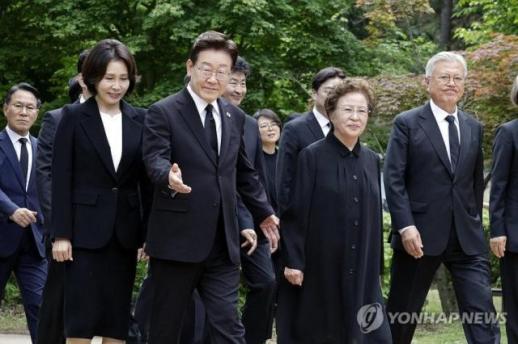
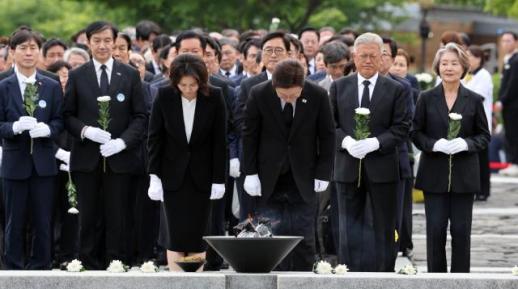 Lee Calls for National Unity to Boost Economic Recovery; Moon Misses Growth Fund Enrollment President Lee Jae-myung and First Lady Kim Hye-kyung met with Roh Moo-hyun's widow, Kwon Yang-sook, before attending the memorial service for the late president on May 23 in Bongha Village, Gimhae, according to Deputy Spokesperson Ahn Gyu-ryeong in a written briefing.The meeting took place at Roh's former residence and included former President Moon Jae-in, his wife, Chairman Cha Seong-soo of the Roh Moo-hyun Foundation, and Chief of Staff Kang Hoon-sik. Roh's eldest son, Roh Geon-ho, was also present.Kwon welcomed the presidential couple, saying, "It's good to see you." She remarked on their lunch in Jin-yeong, saying, "That’s very much like President Lee, and I believe it helped the local economy, which I'm sure the residents appreciated."Former President Moon praised recent efforts for economic recovery, including rising stock prices, to which President Lee responded, "The entire nation is working together to make this happen."Moon also mentioned the recently launched National Growth Fund, saying, "I heard that the online sales sold out on the first day. I wanted to enroll but missed the chance before my turn came."Kwon complimented First Lady Kim, saying, "You are doing very well," to which Kim replied, "I am learning a lot from the roles that you and other first ladies have played."The meeting lasted about 30 minutes, exceeding the scheduled time, according to Ahn.Kwon concluded the conversation by expressing her gratitude, stating, "I always appreciate it, and I feel thankful every time I see more citizens visiting Bongha Village each year."Earlier that day, President Lee visited Bongha Village for the first time since taking office to pay tribute to the late Roh Moo-hyun.Dressed in a black suit to signify mourning, President Lee and First Lady Kim arrived at the Bongha Village Ecological Cultural Park around 2 p.m.Kwon and the Moon couple walked at the front with President Lee and First Lady Kim.President Lee smiled and gestured to guide Kwon to the memorial service area, while former President Moon held Kwon's hand for a brief conversation.Upon entering the venue, President Lee bowed to the attendees and proceeded to his seat with Kwon.Former President Moon greeted Democratic Party leader Jeong Cheong-rae, Justice Party leader Jo Guk, and Prime Minister Kim Min-seok with smiles and handshakes.President Lee, alongside First Lady Kim, listened attentively to remarks from Chairman Cha Seong-soo and a eulogy from former Prime Minister Han Myung-sook. Seated next to them were Kwon, Roh Geon-ho, and former President Moon.In his eulogy, President Lee expressed, "We all remember 'the person Roh Moo-hyun,' who was warm and human like no other."After the eulogy, President Lee comforted Kwon by holding her hand tightly.Following the service, President Lee, former President Moon, and other attendees moved to Roh's grave to pay their respects with flowers and incense.* This article has been translated by AI. 2026-05-24 02:22:11
 -
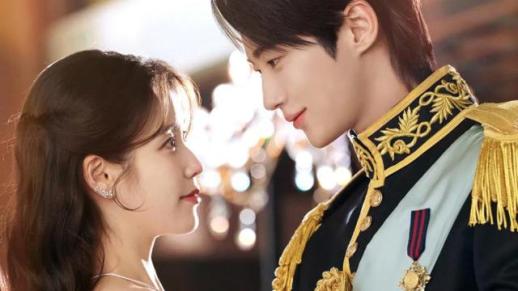 Exploring the Impact of '21st Century Great Lady' on Historical Drama and Korean History MBC's drama '21st Century Great Lady' has sparked significant discussion. The first point to evaluate is the writer's imagination and the strength of the plot development. Few recent Korean dramas have boldly reinterpreted royal politics, human desires, love, and the tragedy of power with a modern sensibility as this one has. The ability to present the age-old theme of court power not merely as a historical reenactment but as a narrative about contemporary humanity is quite impressive. The rapid pacing, stylish dialogue, and character interpretations tailored to younger audiences stand out. The camera beautifully and chillingly captures the closed space of the palace, while the actors express the loneliness of power and human desires with subtlety. Notably, this work is significant for breaking away from the heavy tone typical of traditional historical dramas, attempting a more popular and sensory visual language. The effort to transform the historical setting of the Joseon dynasty into a living human drama is commendable. However, the issues arise thereafter. Historical dramas are not mere fantasies; they occupy a genre that straddles the line between history and imagination. Imagination is necessary, as a historical drama without it can easily lose vitality. Yet, when dealing with public memory, creators bear a certain responsibility. The controversy surrounding '21st Century Great Lady' stems from this very point. The drama significantly restructured character relationships and political dynamics for dramatic tension. This in itself is not problematic, as historical dramas are an art form that fills the gaps in records with imagination. However, some scenes have faced criticism for insufficient historical verification regarding the temporal context and historical order. Critics argue that the reinterpretation of Joseon royal rituals, political systems, Confucian governance, and the relationship between king and subjects through overly modern emotional frameworks has weakened the historical realism. In South Korea, debates over historical accuracy do not end with mere drama criticism. Koreans are particularly sensitive to historical issues, a reaction rooted in a long history of foreign invasions and colonial rule that distorted and robbed them of their history. The Joseon dynasty established a strong Confucian state system after its founder, Yi Seong-gye. During the reign of King Sejong, advancements in science, literature, music, astronomy, administration, and agricultural technology ushered in a golden age of Joseon civilization. However, at the same time, Joseon adopted a diplomatic principle of subservience to the Ming dynasty, with Confucianism as a core governance principle. In this process, the autonomous understanding of the ancient history of the Korean people and northern ancient history gradually diminished. Narratives that diverged from the Sinocentric worldview were often treated as uncomfortable. Records and controversies exist regarding the confiscation or control of ancient texts and esoteric literature during the Joseon era. Following the reign of King Sejo, the so-called 'Suseo-ryeong' issue arose, with claims that some ancient records disappeared. Various interpretations exist within academia regarding this matter. However, it is largely true that under the strong Confucian order that persisted until the late Joseon period, the study of ancient history and northern history faced significant restrictions. This trend continued in a more organized manner during the Japanese colonial period. The Government-General of Korea and the Korean History Compilation Committee attempted to reconstruct Korean history as subordinate to Japanese rule. The histories of Gojoseon, Buyeo, Goguryeo, and Balhae were minimized or distorted, and the activities of the Korean people were confined to the Korean Peninsula. The northern ancient history connecting Manchuria, the Liao River, and the Japanese archipelago was intentionally downplayed. However, recent research on ancient Northeast Asian history is entering a new phase, notably with the study of Hongshan culture. Hongshan culture is a late Neolithic cultural sphere discovered in Liaoning Province and southeastern Inner Mongolia, along the Liao River. It is estimated to date back to around 4000-3000 B.C., with significant archaeological finds at the site of Wuhaliang, including large altars, temples, megalithic structures, jade artifacts, and goddess statues. The Wuhaliang site is evaluated as evidence of an ancient civilization with a significant religious system and social hierarchy, surpassing mere tribal society. The jade dragon and intricate jade artifacts, along with sacrificial facilities and massive megalithic structures, indicate that Northeast Asia's prehistoric culture possessed a much higher level of civilization than previously thought. Importantly, some elements found at Hongshan culture sites suggest connections to the Bronze Age cultures of northern Korea and Manchuria. Some researchers highlight the potential links between the biphasic bronze culture, megalithic tomb structures, and northern equestrian culture with the later cultures of Gojoseon, Buyeo, and Goguryeo. Academically, caution is still necessary. Equating Hongshan culture directly with Gojoseon history may be an overinterpretation. However, it is increasingly recognized that the origins of Northeast Asian civilization cannot be solely explained by the Yellow River civilization, and the possibility of a northern civilization axis connecting the Liao River, Manchuria, and the Korean Peninsula is gaining attention. Interestingly, China's historical strategy is shifting. Ancient China viewed itself as the center of civilization, referring to northern tribes as Beidi, eastern tribes as Dongyi, southern tribes as Nanman, and western tribes as Xiyong. Surrounding peoples were long regarded as 'barbarians.' In contrast, modern China employs an opposite strategy. Since the establishment of the People's Republic of China, the Communist Party has promoted the theory of a 'unified multi-ethnic state,' seeking to incorporate the histories of surrounding ethnic groups into Chinese history. The Northeast Project, which interprets Goguryeo and Balhae as Chinese regional powers, is a continuation of this approach. This is not merely a historical debate; history is ultimately tied to territory, identity, and future strategies. Thus, South Korean society must move beyond emotional nationalism and uncritical mythologizing to engage in deeper and more rational historical research. The legends of Dangun, Hwanung, and the idea of the 'heavenly lineage' are important symbols of Korean spiritual culture. However, uncritically absolutizing them as history must also be avoided. Simultaneously, attitudes that excessively downplay Korean ancient history due to remnants of colonial historiography must be transcended. Ultimately, balance is crucial. Research on Hongshan culture and Liao civilization suggests that Korean ancient history was not confined to the Korean Peninsula. It prompts a reevaluation of the position of Korean ancient history within the vast Northeast Asian civilization. This is why the responsibility of historical dramas is even greater. Historical dramas are not mere entertainment; they are cultural devices that shape the public's historical consciousness and create powerful narratives for future generations. Therefore, drama writers and broadcasters, including MBC, must exercise greater caution in producing historical dramas. While dramatic appeal and imagination are necessary, respect for historical verification and contextual accuracy must also be prioritized. This is especially true when dealing with themes related to dynastic history, ancient history, and national identity, which require deeper research, consultation, and academic validation. Creativity must be free, but humility before history is essential. As important as fresh imagination is a reverence for history. Ratings and buzz may be fleeting, but historical consciousness endures across generations. Ultimately, a new perspective on Korean ancient history will not be one of extreme nationalism or self-deprecation rooted in colonial historiography. The key is a calm study and a confident awareness of civilization. Just as Greece has shaped the archetypes of Western civilization through Zeus, Achilles, the Trojan War, and Olympus mythology, China has utilized the myths of the Yellow Emperor, Yao, Shun, and the Three Sovereigns and Five Emperors as roots of its civilizational history. India has similarly connected its ancient narratives through the Vedas, Mahabharata, and Ramayana to its national identity today. Korea must do the same. The legends of Dangun, Hwanung, and the heavenly lineage hold significance beyond mere folklore. They represent the roots of Korean spiritual culture, emphasizing harmony between heaven, humanity, and nature. However, modern historiography also requires a clear distinction between myth and empirical history. Thus, future research on Korean ancient history needs to develop in a more systematic and balanced manner. While expanding studies on Dangun Joseon, Gojoseon, Buyeo, Goguryeo, Balhae, and northern civilizations, it is essential to actively research and organize areas that can be verified through current historical and archaeological data within the framework of established historical narratives. At the same time, the earlier domains, such as the myths of Hwanung and Dangun, should be studied in terms of their significance to Korean spiritual culture and civilization symbolism. The attitude of unconditionally transforming myths into history is dangerous, but conversely, dismissing all myths as mere superstition or fiction is also not the attitude of a civilized nation. The important thing is to embrace both history and myth while respecting each domain's boundaries. In particular, research on Hongshan culture and Liao civilization opens the possibility that Korean ancient history is not confined to the Korean Peninsula. A new era is dawning for the study of Korean ancient history, connecting Manchuria, the Liao River, the Korean Peninsula, and the Japanese archipelago, as well as Central Asia and the Silk Road. In this process, the interactions with the Mughal Empire of India and Central Asian and Turkic civilizations, as well as the Silk Road, should also be illuminated. Goguryeo, Balhae, and Goryeo were not merely states that interacted with China; they were continuously connected to the northern nomadic world and the steppe civilization. The movements of horses, iron, bows, equestrian culture, Buddhism, and trade networks also flowed within this context. Ultimately, Korean ancient history must be read anew within the perspective of Eurasian civilizational exchange, transcending the confines of a closed peninsula narrative. This is why historical dramas must also be approached with greater caution. Historical dramas are not just consumable content; they are monumental cultural devices that shape the public's historical consciousness and create the civilizational awareness of future generations. The writer's imagination deserves respect, but humility before history is paramount. Dramatic appeal may be fleeting, but distorted historical perceptions linger. '21st Century Great Lady' undoubtedly showcased remarkable imagination and artistic direction. At the same time, it posed profound questions about historical verification, perceptions of ancient history, and the direction of Northeast Asian civilization in Korean society. Ultimately, what we may need today is a reflection that moves beyond emotional debates surrounding the past, aiming for a deeper, broader, and more dignified historical and civilizational state.* This article has been translated by AI. 2026-05-23 21:42:00