
Journalist

Kim Heung-chong
-
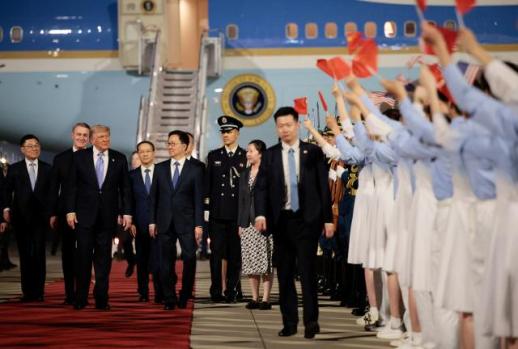 ASIA INSIGHT: President Trump lands at Beijing Capital Airport for U.S.-China Summit The illusion and reality of great-power diplomacy seen through China’s rally and Taiwan’s live-fire drills on May 13 SEOUL, May 13 (AJP) - On the night of May 13, Donald Trump stepped off Air Force One onto the tarmac of Beijing Capital International Airport. American and Chinese flags stood side by side in the reception hall, but beneath the choreography of state ceremony lingered the unmistakable tension of a relationship that has become the central geopolitical fault line of the 21st century. Officially, this was a state visit. In reality, it was something far larger: a negotiation over the architecture of global power itself — semiconductors and artificial intelligence, supply chains and currencies, Taiwan and the Middle East, military deterrence and economic survival. What made the moment especially striking was the sharply contrasting mood displayed on the same day by China and Taiwan. In China, investors celebrated. Shanghai’s stock market surged to its highest level in eleven years. In Taiwan, by contrast, the military conducted live-fire exercises on Kinmen Island, only a few kilometers from the Chinese mainland, using American-made Javelin anti-tank missiles for the first time in combat simulation. One spoke the language of capital. The other spoke the language of gunpowder. One reflected the optimism of markets. The other reflected the enduring reality of war preparation. China, on May 13, projected confidence. The Shanghai Composite Index climbed to its highest closing level since 2015, while Shenzhen’s ChiNext Index reached a historic high. Technology and artificial intelligence shares led the rally. The reported inclusion of Jensen Huang, chief executive of Nvidia, in the American delegation carried symbolic significance well beyond business. Markets interpreted the signal as evidence that Washington and Beijing may still seek some form of managed coexistence in the strategic industries of the future. Even amid fierce rivalry, the world’s two largest economies remain deeply interdependent. America retains technological superiority in advanced semiconductors and AI systems; China remains indispensable in manufacturing scale, industrial logistics, and critical supply chains. Taiwan, however, delivered a very different message. Taiwanese forces staged extensive coastal defense drills on Kinmen Island, rehearsing the repulsion of a simulated amphibious invasion by the People’s Liberation Army. American-made Javelin missiles were fired live for the first time from the island. Taipei was not merely conducting a military exercise. It was signaling simultaneously to Beijing and Washington that Taiwan does not intend to become a passive bargaining chip in any great-power negotiation. Kinmen is no ordinary island. During the Cold War, it stood on the front line of artillery duels between Communist China and the Republic of China. On clear nights, the lights of Xiamen shimmer just across the water. That American-made weapons discharged live rounds there, precisely as President Trump arrived in Beijing, carried unmistakable symbolism. China seeks to pull the United States closer through economics. Taiwan seeks to anchor the United States through security. That contrast reveals the essential truth behind this summit. The United States and China are locked in simultaneous competition and interdependence. They are rivals that cannot fully decouple, adversaries that cannot entirely disengage. The global economy of the AI age is too interconnected for a clean separation between American innovation and Chinese industrial capacity. The summit itself revolves around five principal issues. The first is artificial intelligence and semiconductors. Washington continues to tighten restrictions on advanced chip exports and AI-related technologies to China, seeking to slow Beijing’s progress in high-end computing and military applications. Yet American corporations cannot easily abandon the Chinese market. Companies such as Nvidia, Qualcomm, and Apple remain deeply tied to Chinese demand and manufacturing networks. China, for its part, has accelerated efforts toward semiconductor self-sufficiency. Yet it still depends heavily on foreign lithography systems, software ecosystems, and advanced manufacturing tools. Behind the scenes, both governments may therefore seek limited arrangements aimed at stabilizing supply chains while preserving strategic leverage. The second issue is trade and currency policy. The United States accuses China of industrial overcapacity and unfair export practices. China, meanwhile, argues that prolonged American monetary tightening and the dominance of the dollar have destabilized the global economy. The recent surge in Chinese equities reflects growing investor belief that a controlled easing of trade tensions may be possible, if only because both economies now face slowing growth and rising domestic pressures. The third — and most dangerous — issue is Taiwan. Beijing considers Taiwan an inseparable part of China and refuses to renounce the use of force. The United States continues to maintain its policy of strategic ambiguity while strengthening Taiwan’s defensive capabilities. Yet President Trump’s transactional style of diplomacy introduces additional uncertainty. Security, trade, tariffs, and technology may all become elements within a broader negotiation framework. For that reason, concerns persist in Taipei that Taiwan itself could become part of a larger geopolitical bargain. The fourth issue is the Middle East. Despite the intense focus on Taiwan, the immediate destabilizing force in the global economy today may be the risk of war involving Iran. China depends heavily on Middle Eastern energy imports, while the United States urgently needs stable oil prices to contain inflationary pressures at home. For both Washington and Beijing, maintaining stability in the Strait of Hormuz is therefore a strategic necessity, regardless of broader rivalry. The fifth issue concerns Russia and Ukraine. China continues to balance its strategic partnership with Russia against the economic risks associated with Western sanctions. The United States remains wary of Chinese support for Moscow, yet Washington also understands that a fully consolidated China-Russia axis would fundamentally alter the global balance of power. Quiet strategic understandings, therefore, may emerge even where public confrontation dominates headlines. What follows this summit could reshape the political landscape of Northeast Asia in several different ways. The optimistic scenario is one of limited détente. Should both sides agree to extend their informal trade truce and stabilize technology relations, Asian markets may rally further. Semiconductor industries in South Korea, Taiwan, and Japan would benefit from reduced uncertainty, while energy markets could regain a measure of stability. The middle scenario — perhaps the most likely — is one of carefully managed rivalry. Public gestures of cooperation may coexist with continued strategic competition in semiconductors, batteries, AI infrastructure, and rare-earth supply chains. Tensions in the Taiwan Strait would persist, but remain below the threshold of direct confrontation. The pessimistic scenario is one of renewed escalation. If the summit fails, or if Taiwan becomes a point of irreconcilable conflict, Beijing could intensify military pressure while Washington expands arms support for Taipei. Global markets would almost certainly react violently, with heightened volatility across semiconductors, shipping, energy, and currency markets. For South Korea, this summit cannot be viewed merely as another chapter in U.S.-China tensions. The Korean economy is structurally tied to both the American security system and the Chinese market. Semiconductors, batteries, automobiles, shipbuilding, and artificial intelligence all sit directly within the gravitational pull of this rivalry. At the same time, instability in the Middle East continues to deepen uncertainty. Should tensions involving Iran intensify further and threaten the Strait of Hormuz, the global economy could face a dual shock: geopolitical fragmentation in East Asia combined with energy disruption in the Persian Gulf. In the end, both Washington and Beijing understand a difficult truth. Neither side can fully destroy the other without damaging itself. An ancient line from The Art of War captures the logic of the present moment: “The supreme art of war is to subdue the enemy without fighting.” That is the phase into which the United States and China have now entered. The guns have not fired directly between them, yet they are already engaged in a struggle of immense consequence. They smile for cameras and shake hands beneath chandeliers, while quietly calculating each other’s vulnerabilities. And so, as President Trump descended the staircase onto the Beijing runway on the evening of May 13, the scene carried far more than the rituals of diplomacy. It carried the heavy shadow of a world entering a new age of strategic uncertainty. 2026-05-13 21:55:16
 -
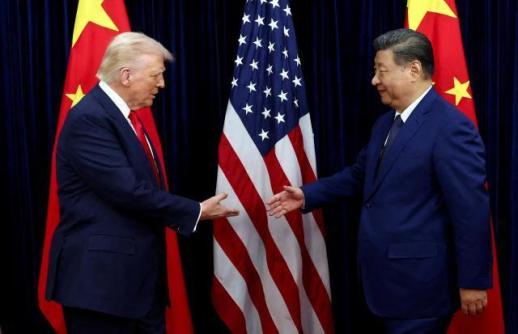 Trump Arrives in Beijing for U.S.-China Summit Amid Tensions On the night of May 13, 2026, U.S. President Donald Trump's plane landed at Beijing's Capital International Airport. The airport's VIP lounge displayed both the American flag and China's five-star red flag, symbolizing the complex tensions and calculations in U.S.-China relations since the Cold War. While the visit appeared to be a state visit on the surface, it was actually a stage for a massive negotiation encompassing AI semiconductors, supply chains, the Taiwan Strait, conflicts in the Middle East, dollar hegemony, and the overall structure of global power in the 21st century. Interestingly, on the same day, China and Taiwan displayed starkly contrasting sentiments. The Shanghai Stock Exchange reached an 11-year high, while Taiwan conducted live-fire drills with U.S.-made Javelin missiles just a few kilometers from mainland China on Kinmen Island. One reflected the language of money, while the other spoke the language of gunpowder—one represented market optimism, and the other the grim reality of potential conflict. On May 13, China celebrated as the Shanghai Composite Index hit its highest level since 2015, and the Shenzhen Stock Exchange's ChiNext Index reached an all-time high. Stocks related to AI and semiconductors surged, particularly following the news of Jensen Huang's visit to China, which signified a potential new compromise between American technological capital and Chinese manufacturing capabilities. The Chinese market began to bet on the possibility of easing U.S.-China tensions. In contrast, Taiwan sent a different message. The Taiwanese military conducted landing defense drills on the Kinmen coast, directly across from mainland China, and for the first time, fired U.S.-made Javelin missiles. By showcasing its military cooperation with the U.S., Taiwan aimed to convey to both China and the U.S. that it is not merely a pawn on the negotiation table. Kinmen is not just an ordinary island; it was the frontline where China and Taiwan exchanged artillery fire during the Cold War. The lights of Xiamen, China, are visible just a few kilometers away. The firing of American weapons from there is a powerful symbol, illustrating how, while China draws the U.S. in economically, Taiwan holds onto the U.S. for security. This scene ultimately reflects the essence of the summit. The U.S. and China are in a relationship where they must cooperate even as they clash. They must fight without collapsing and compete without severing ties, as the global economy in the AI era is intricately intertwined, making complete separation impossible. The key agenda items for the summit are fivefold: AI and Semiconductor Issues: The U.S. is working to curb China's rise in advanced semiconductors, particularly by controlling exports of high-performance GPUs and advanced equipment to slow China's military AI development. However, American companies like NVIDIA, Qualcomm, and Apple find it difficult to completely abandon the Chinese market. While China is pushing for self-sufficiency in advanced chips, it still relies heavily on U.S. technology and equipment. Therefore, discussions may focus on limited technology easing and supply chain stabilization.Trade and Currency Issues: The U.S. is pressuring China over its overproduction and low-cost exports. Conversely, China views the U.S.'s high-interest policies and dollar hegemony as destabilizing the global economy. The recent surge in Chinese stocks indicates that the market is beginning to sense a possibility of a "managed trade truce." Both countries are facing increasing economic slowdown pressures, making some level of compromise inevitable.The Taiwan Issue: This is the most dangerous topic of the summit. China insists it cannot compromise on the "One China" principle, while the U.S. maintains strategic ambiguity while strengthening Taiwan's defense capabilities. The concern lies in President Trump's deal-centric diplomatic style, which tends to treat security and economic issues as a single package. Some fear that the Taiwan issue could become a bargaining chip linked to trade, tariffs, and technology negotiations.The Middle East Issue: Currently, the biggest variable in the world is the Middle East, particularly the risk of war with Iran, which directly impacts global oil prices and supply chains. China is heavily dependent on Middle Eastern oil, and the U.S. urgently needs stable oil prices to curb inflation. Thus, while the U.S. and China compete, they also share interests in stabilizing the Strait of Hormuz.The Ukraine and Russia Issue: China maintains a strategic partnership with Russia while simultaneously bearing the burdens of Western sanctions. The U.S. is wary of China's support for Russia. However, in the long term, the U.S. does not want to see a complete alliance between Russia and China. Therefore, there may be some level of strategic communication that remains undisclosed during the summit. Following the summit, three scenarios could unfold in Northeast Asia: Optimistic Scenario: If both countries agree to extend the trade war truce and pursue limited technological cooperation, Chinese stocks could rise further, and the semiconductor industries in South Korea, Taiwan, and Japan could stabilize. International oil prices may also stabilize, allowing global financial markets to recover their risk appetite.Intermediate Scenario: If the two sides appear to smile but reach only limited agreements, they may avoid conflict while continuing their core hegemonic competition. Currently, this scenario seems most likely. Competition will persist in AI, semiconductors, batteries, and rare earths, and tensions in the Taiwan Strait are likely to remain structurally high.Pessimistic Scenario: If the summit fails or tensions escalate over Taiwan, China may increase the intensity of its military drills, and the U.S. could expand its military support for Taiwan. Global financial markets could be immediately shaken, particularly increasing volatility in the semiconductor, shipping, and energy markets. From South Korea's perspective, the summit should not be viewed merely as a U.S.-China conflict news story. The South Korean economy is deeply intertwined with both the U.S. security system and the Chinese market. Industries such as semiconductors, batteries, automobiles, shipbuilding, AI, and data centers are all influenced by U.S.-China relations. Moreover, the risk in the Middle East adds another layer of complexity. If the conflict in Iran escalates and tensions in the Strait of Hormuz rise, the global economy could face a dual shock if U.S.-China relations do not stabilize to some extent. Ultimately, both the U.S. and China are living in an era where they cannot completely undermine each other. As the ancient Chinese text "The Art of War" states, "The best victory is the one that is achieved without fighting." The U.S. and China are entering that phase, engaging in a war without firing shots, smiling while calculating each other's vulnerabilities. Behind President Trump's expression as he arrived at Beijing airport on the night of May 13 lies a heavy shadow of an era that is more than just a diplomatic visit. 2026-05-13 21:54:00
 -
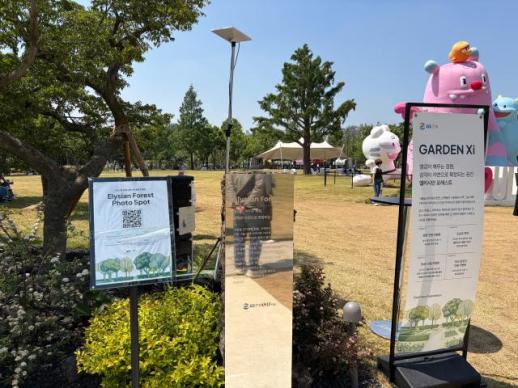 Seoul Forest Hosts 'K-Construction Zone' at International Garden Expo The Seoul International Garden Expo is currently underway at Seoul Forest in Seongdong-gu, where construction companies are showcasing their brand gardens in the newly established 'K-Construction Zone.' This marks a shift in construction marketing from traditional model homes to gardens, pop-ups, and lifestyle spaces. Upon entering the grassy area of Seoul Forest, visitors are greeted by a red gate, a circular garden, and lush green pathways. Families with strollers strolled through the space, while many young visitors in their 20s and 30s took photos. The 'K-Construction Zone' features contributions from GS Construction, IPARK Hyundai Industrial Development, Gyeryong Construction, Daewoo Construction, and Hoban Construction. Gyeryong Construction attracted attention with its red gate and stone wall garden, while Daewoo Construction presented a 'Silo' garden centered around a circular structure. HDC Hyundai Industrial Development showcased landscaping with hydrangeas and a sign reading, "Imagine Before You Build" hanging from existing trees. Seating and lounge areas were set up throughout the zone, allowing visitors to relax naturally. This strategy aims to expand construction brands beyond simple sales promotions into 'experiential content' to connect with younger consumers. Among the displays, GS Construction's corporate garden 'Garden Xi' stood out. Inspired by Jeju's Gotjawal forest, GS Construction created the 'Elysian Forest' by preserving existing trees in Seoul Forest and densely planting oak and fern species to enhance the forest's depth. A 'UFB Cooling Mist System' was installed in shaded areas, providing a refreshing experience akin to being in a real forest. Staff members were present to curate the space and offer merchandise. Visitors commented, "I stumbled upon this while walking in Seoul Forest, and it doesn't feel like a construction company space," and, "There are many photo spots, and the atmosphere is trendy." Families with strollers and couples in their 20s and 30s filled the area. Ryu Hye-bin, head of the new product strategy team at GS Construction, stated, "We designed this space so that visitors to Seoul Forest can naturally encounter the Xi brand. We focused on creating a space where people can linger without disrupting the existing grassy area." According to GS Construction, approximately 86,000 visitors have visited 'Elysian Forest' from May 1 to 12. After the garden's operation concludes, the space will be donated to the city of Seoul, ensuring that citizens can continue to use it even after the pop-up ends. About a 15-minute walk from Seoul Forest, another 'Xi experience space' is operating in Seongsu-dong. GS Construction has rebranded a space previously used as a promotional center for members of the Seongsu Strategic Redevelopment Zone into a 'House Xi' pop-up store. The interior of the pop-up differs from typical apartment promotional centers. Open from 10 a.m., the space accommodates about 20 to 30 visitors per session, with most pre-reservations already filled. Many visitors arrived after hearing word-of-mouth about the event. Upon entering, visitors first encounter a large model of 'Rivenique Xi,' which is set to be launched in 2031, in the 'Diorama Zone.' The following 'Amenity Zone' is designed like a small movie theater, while the 'Unit Zone' allows visitors to indirectly experience views of the Han River from a height of up to 64 stories. The technology used to create a panoramic view through an open window structure is currently under patent application. Throughout the space, elements that stimulate the senses are incorporated. The interior features curated Xi sound music, and the lighting and diffuser arrangements catch the eye. Collaborative content with Kyobo Bookstore and CGV, as well as high-end community services such as a sky lounge wine bar party, kids' zone, and non-face-to-face medical services from Cha Hospital, are also introduced. Jung Yu-jin, a former member of the GS Construction brand strategy team, expressed, "We hope this space allows people to experience life at Xi in advance. We aim to expand the concept of home from a product to an experiential domain." She added, "Past construction company events felt like they belonged to the previous generation, but now, content that young people want to share on social media has become important. We are seeing many visitors in their 20s and 30s who want to experience Xi, in addition to those in their 40s to 60s with actual purchasing power." A visitor in their 30s remarked, "This is my first time at a construction company pop-up, and it's much more sensory than I expected, with plenty of photo spots for Instagram. It felt like a preview of future living rather than just a sales promotion."* This article has been translated by AI. 2026-05-13 21:25:43
 -
 Fashion Designer Choi Bok-ho Reflects on His Journey Ahead of 80th Birthday Choi Bok-ho, a pioneer in South Korea's fashion industry, shares his tumultuous life story and success journey. In an episode airing on May 13, EBS's 'The Millionaire Next Door' features Choi Bok-ho, a fashion designer with cumulative sales of approximately 500 billion won. Debuting in 1973, he is recognized as a living legend in the Korean fashion scene, marking his 53rd year in the industry. The broadcast will showcase Choi's tailor shop nestled deep in the mountains of Cheongdo, Gyeongsangbuk-do, which he has operated for 18 years. He revealed, "We receive an average of 1,000 to 1,500 visitors each month, with monthly sales reaching up to 60 million won," surprising viewers. The program will also highlight his ongoing work in the industry, including an outdoor fashion show and his active lifestyle as he approaches his 80th birthday. Choi was born to a single mother who lost her husband while pregnant with him. Growing up under her care, he was inspired by her always neat appearance and developed an interest in fashion. He nurtured his dream of becoming a designer after seeing Andre Kim, Korea's first male fashion designer, and eventually dropped out of college to pursue his passion. After completing his military service, Choi enrolled in a fashion school that had produced Andre Kim, where he honed his skills. His debut work, known for its bold designs, caught attention, leading to him being scouted by Choi Kyung-ja, a prominent figure in the fashion industry at the time. However, his promising start was met with unexpected challenges. Choi recalled, "I was fired after just one week on the job for earning 800 won. I thought the sky was falling down on me." The story behind his swift departure from the fashion industry, where he was once seen as a rising star, will be revealed in the broadcast. Later, Choi had to return to his hometown of Daegu due to unavoidable circumstances, leaving behind the fame and career he built in Seoul. Starting from scratch, he made a comeback with bold items like 'back pants' and 'fake gadamai,' shaking up the Daegu fashion scene. At a time when tailor shops primarily showcased elegant styles, Choi targeted the younger demographic with his designs, leading to a surge in popularity. He noted, "There were even followers who imitated my style," with reports of many people emulating his looks on the streets. His business expanded rapidly, and by the early 1980s, his monthly sales reached 100 million won, equivalent to the price of an apartment in Seoul, solidifying his status as a star designer. This success paved the way for him to make a name for himself on the global stage. The journey of a boy born to a single mother who grew up to become a leading designer in the Korean fashion industry, along with the secrets behind the 'back pants myth,' will be explored in 'The Millionaire Next Door' airing today at 9:55 PM.* This article has been translated by AI. 2026-05-13 21:21:55
 -
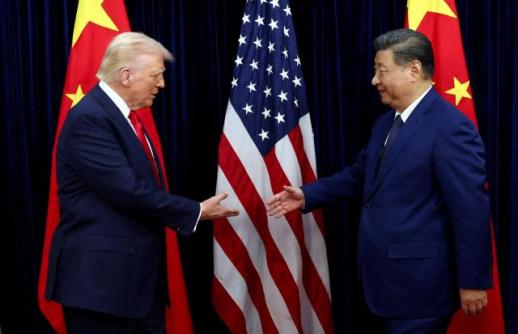 President Trump Arrives in Beijing for Three-Day State Visit Donald Trump, the President of the United States, arrived in Beijing on May 13, beginning a three-day state visit. According to Yonhap News, China’s state-run Xinhua News Agency reported that Trump’s Air Force One landed at Beijing Capital International Airport at 7:49 PM local time. This marks the first visit by a U.S. president to China in nine years, since Trump’s first term in November 2017. The visit comes amid ongoing tensions between the U.S. and China over trade tariffs, the Taiwan issue, and the situation in the Middle East, drawing significant international attention. On May 14, the second day of his visit, Trump is scheduled to hold a summit with Chinese President Xi Jinping at the Great Hall of the People in Beijing. The two leaders last met in October during the Asia-Pacific Economic Cooperation (APEC) summit in Busan. During the upcoming talks, they are expected to discuss trade and tariff issues, as well as matters concerning Taiwan and Iran. Before departing the White House on May 12, Trump told reporters, "There is a lot to discuss with President Xi, and trade will be a primary focus." When asked about his message to Xi regarding the conflict in Iran, he replied, "We will have a long conversation about that. He is my friend, and good things will happen." Following the summit, Trump plans to tour the Temple of Heaven in Beijing with Xi and will attend a state banquet at the Great Hall of the People that evening. On the final day, May 15, the two leaders will continue discussions over a small tea meeting and lunch.* This article has been translated by AI. 2026-05-13 21:18:56
 -
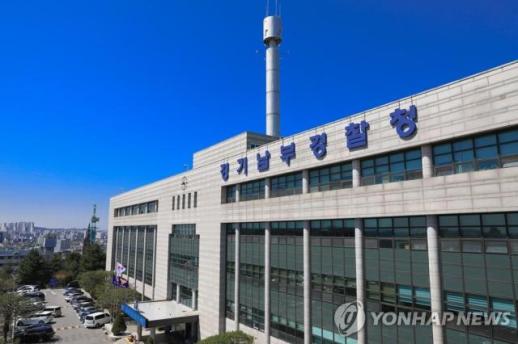 Operator of Illegal Filming Site AVMOV Arrested Amid Flight Risk Concerns Authorities have arrested a key operator of the online site AVMOV, which distributed illegal filming materials targeting families and couples.According to Yonhap News on May 13, the Suwon District Court issued an arrest warrant for a man in his 40s, identified as A, who faces charges under the Special Act on the Punishment of Sexual Violence Crimes and the Act on the Protection of Children and Youth from Sexual Abuse. The court cited concerns over potential flight and evidence destruction as reasons for the warrant.A is accused of posting a large volume of illegal filming materials on the AVMOV site and profiting from these crimes.On May 11, the Cyber Investigation Division of the Southern Gyeonggi Police Agency arrested A and another suspect, B, at Incheon International Airport as they were returning to South Korea. The two had fled to Thailand after the police investigation began but reportedly expressed their intention to return after diplomatic measures, including the invalidation of their passports, were taken against them. While the police applied for arrest warrants for both A and B, only A's warrant was approved.The Southern Gyeonggi Police Agency had detected the AVMOV site during its monitoring efforts in December of the previous year and subsequently launched an investigation. They identified A, B, and seven other suspects associated with the site, all facing charges under the Special Act on the Punishment of Sexual Violence Crimes. Evidence, including computers, has been seized from five of the suspects' residences for analysis, and further investigations are planned for another suspect. One individual remains at large abroad, and police are tracking them through diplomatic channels.Following the news of the arrests, President Lee Jae-myung warned on May 12 via his X (formerly Twitter) account, stating, "Even if they hide overseas, we will forcibly repatriate them and ensure they face severe punishment."* This article has been translated by AI. 2026-05-13 21:07:04
 -
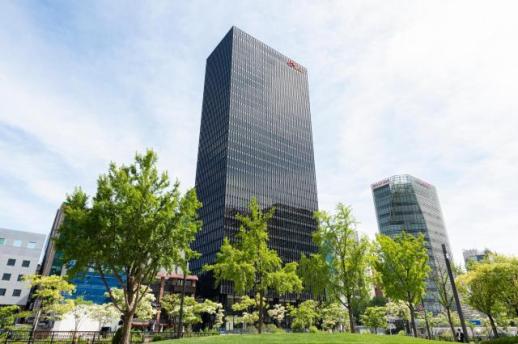 SK Networks Reports 102% Increase in Q1 Operating Profit SK Networks announced on May 13 that its consolidated operating profit for the first quarter of this year reached 33.35 billion won, marking a 102.4% increase compared to the same period last year. The company reported first-quarter revenue of 1.74 trillion won, a 6.5% increase, while its net profit turned positive at 427 billion won. Compared to the previous quarter, revenue rose by 7.7%, and operating profit surged by 651.7%. Additionally, SK Networks completed a transaction with Anchor Equity Partners regarding a change in share structure for SK Eleclink, continuing its efforts to optimize its business structure by divesting non-core assets. Earlier in March, SK Networks signed a contract to transfer 90% of its subsidiary Mintit for 45 billion won to T&K Private Equity, and in 2024, it plans to sell its entire stake in SK Rent-a-Car for 820 billion won.* This article has been translated by AI. 2026-05-13 20:54:41
 -
 Police Raid National Agricultural Cooperative Federation Over Alleged Legal Fee Payments Police have launched a raid on the National Agricultural Cooperative Federation (NACF) amid allegations that it covered legal fees for its employees. According to Yonhap News on May 13, the Financial Crimes Investigation Unit of the Seoul Metropolitan Police conducted searches at the NACF's compliance support department in Jung-gu, Seoul. Earlier, the Ministry of Agriculture, Food and Rural Affairs discovered during a comprehensive audit that 320 million won (approximately $240,000) of public funds were allegedly used to pay for legal fees related to a personal criminal case involving an employee identified as A. The ministry referred the case to the police for investigation in January. The raid is reportedly unrelated to ongoing investigations into NACF Chairman Kang Ho-dong, who has been under scrutiny for alleged bribery since September of last year. Police have yet to reach a conclusion in that case after nearly eight months of investigation.* This article has been translated by AI. 2026-05-13 20:36:42
 -
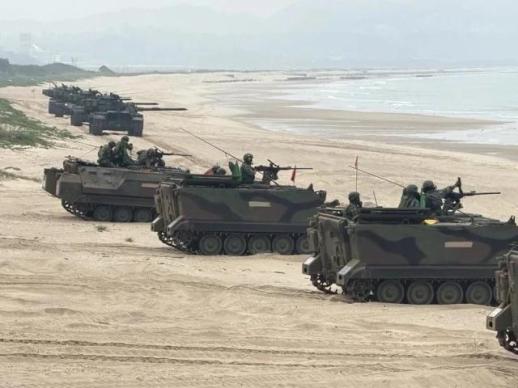 Taiwan Conducts Live-Fire Drills Near China Ahead of Trump’s Beijing Visit Taiwan conducted large-scale live-fire drills on a frontline island as U.S. President Donald Trump traveled to Beijing for a summit with Chinese President Xi Jinping. According to Yonhap News on May 13, Taiwan's United Daily News reported that the Taiwan Army's Kinmen Defense Command carried out extensive live-fire exercises early that morning along the coast of Kinmen, the island closest to China. The drills simulated a potential landing invasion by the People's Liberation Army, utilizing artillery, tanks, armored vehicles, and anti-tank weapons to establish overlapping fire networks along the coastline to thwart enemy landing operations. Notably, this exercise marked the first live-fire use of two U.S.-made Javelin anti-tank missiles stationed in Kinmen. The United Daily News quoted Taiwan's military authorities stating, "The exercise aimed to attack enemy landing infantry and armored vehicle targets at sea using Javelin missiles while providing cover for armored units advancing to the beachhead." Participants included the Kinmen Defense Brigade, artillery battalions, support units, and amphibious reconnaissance teams, with training also focused on target detection, battlefield management, and real-time information sharing using drones and tactical command systems. In the latter part of the drills, M60A3 tanks and CM21 armored vehicles were deployed to simulate combat scenarios to repel enemy forces attempting to land. The timing of these exercises coincided with President Trump's state visit to Beijing, where he arrived that evening. He is scheduled to meet with President Xi at least six times over the course of May 14 and 15 to discuss key issues including economic, trade, and security matters. This will be the first face-to-face meeting between the two leaders since their encounter in Busan, South Korea, last October, and the first meeting in Beijing since Trump’s first term in November 2017. Prior to his departure, Trump indicated at the White House that he would discuss the Taiwan issue with Xi, suggesting that U.S. arms sales to Taiwan could be on the negotiation table.* This article has been translated by AI. 2026-05-13 20:28:03
 -
 SoftBank Group Reports Record Annual Profit of 5 Trillion Yen SoftBank Group (SBG), led by Chairman Masayoshi Son, reported a record net profit of 5.02 trillion yen (approximately $47.2 billion) for the previous year, marking the largest profit ever recorded by a Japanese company. According to a financial statement released by SBG on May 13, the net profit represents a 4.3-fold increase compared to the previous year. The surge in profit was driven by the rising valuation of OpenAI, in which SBG has invested through its Vision Fund. SBG's investment gains from OpenAI amounted to 6.73 trillion yen (about $63.6 billion). As of the end of March, SBG had invested a total of $34.6 billion (approximately 51.5 trillion won) in OpenAI. The investment gains from the Vision Fund reached 6.99 trillion yen (around $66 billion), a 16-fold increase from the same period last year. Additionally, SBG generated $2.3 billion (approximately 3.4 trillion won) in investment returns from its subsidiary PayPay, which went public on the Nasdaq in March. SBG's total revenue for the past year was 7.80 trillion yen (about $73.6 billion), reflecting a 7.7% increase. However, due to significant investments in OpenAI, SBG reported an investment cash flow deficit exceeding 4 trillion yen (around $38 billion) in the fourth quarter of last year. Looking ahead, SBG is reportedly planning to secure substantial loans for additional investments in OpenAI and to acquire the robotics business of Swiss multinational ABB in the 2026 fiscal year.* This article has been translated by AI. 2026-05-13 19:57:50