
Journalist

Kim Heung-chong
-
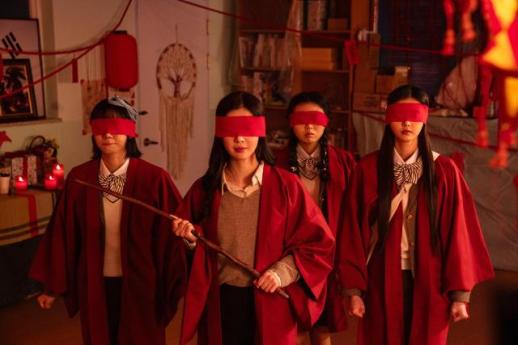 Kim Min-ha's 'Student Teaching' Challenges Conventional Cinema "It's romantic. The lighting, temperature, humidity..." This is a remark made by a participant on a variety show. It suggests that elements like location, weather, and physical condition all contribute to creating an 'atmosphere.' The same applies to film. The mood of the day and personal experiences can serve as 'evaluation criteria' for a movie. In this way, 'Choi's Review' is a segment that introduces films to audiences through the author's experiences and perspectives, aiming for a more relaxed and everyday approach. (Editor’s Note) There is no middle ground. Viewers either passionately love or completely fail to understand Kim Min-ha's films. From the short film 'Burger Song Challenge' to the feature debut 'Amoeba Girls and School Ghost Stories: Founding Day' and now 'Student Teaching,' Kim's work consistently sparks intense 'taste battles.' The director shows no willingness to compromise on her unique and charming rhythm. The story follows Eun-kyung (played by Han Sun-hwa), a 'MZ student teacher' who returns to her alma mater with lofty ambitions and a sense of duty. Despite her pure passion for teaching, she faces the harsh realities of a crumbling educational system. One day, she encounters three girls from a mysterious black magic club, 'Kuroi Sora'—Aoi (Hong Ye-ji), Riko (Lee Yeo-reum), and Haruka (Lee Hwa-won)—and senses they are involved in a troubling incident. It is revealed that these top students, who never miss a national mock exam, have their souls bound to a yokai in exchange for answers. To protect her precarious students, Eun-kyung willingly plunges into a deadly mock exam orchestrated by the 'College Entrance Exam Ghost.' 'Student Teaching' twists the conventions of horror to fuel its comedy. While continuing the trajectory of her previous works, it collides the tropes of horror with the rhythm of comedy, subverting even its roughness into a meticulously crafted aesthetic. Kim Min-ha's unique signature lies in her ability to push excess not as a flaw but as a distinctive language. She cleverly navigates production budget limitations with inventive directorial choices, utilizing pixel art and animation to create the film's hip and kitschy texture. The characters, who exist outside of reality, and the deliberately rough dialogue draw the audience into this bizarre world from the very beginning. Accepting Kim's 'universe' offers viewers a liberating experience amidst the chaotic and crude elements. Under the term 'horribly lovely,' the film plays with horror and charm, yet its message is heavier than in previous works. As Kim stated, "I wanted to create a film that is funny but not foolish," the comedy's exterior conceals a critique of contemporary issues. It sharply reflects the shadows of a crumbling educational system and the expanding private tutoring market, alongside the historical context of the 'Seodang Hunt' during the Japanese colonial period, aimed at undermining Korean education. The previous film, 'Amoeba Girls and School Ghost Stories: Founding Day,' attracted only 30,000 viewers, making a sequel unlikely. However, the audience breathed new life into this niche world. The film gained traction on OTT platforms as a 'Girls Night Movie,' forming a fanbase that spurred further production. 'Student Teaching' is essentially a response summoned by the audience. This sentiment resonates throughout the film. The portrayal of marginalized girls supporting each other mirrors how audiences have sustained this film series. The journey of these incomplete beings embracing one another as they navigate societal absurdities offers a comforting presence that surpasses hasty admonitions. The chemistry among the cast is also noteworthy. Han Sun-hwa, as Eun-kyung, effectively anchors the narrative. Having established a unique presence through dramas like 'Drinking City Women' and films such as 'First Ride' and 'Pilot,' she faithfully embodies Kim Min-ha's vision, creating a solid bridge between the audience and the work. The trio from 'Kuroi Sora'—Hong Ye-ji, Lee Yeo-reum, and Lee Hwa-won—along with Yoo Seon-ho as 'Idainashi,' also enhance audience immersion with their excellent character portrayals. 'Student Teaching' may not satisfy everyone. However, it relentlessly pursues its unique taste and ultimately garners a response. This stubborn sincerity becomes a gentle black magic that willingly offers companionship to all incomplete beings traversing their own tunnels. The film is set for a solo release at CGV on May 13, with a runtime of 94 minutes and a rating of 12 and older.* This article has been translated by AI. 2026-05-13 18:38:59
 -
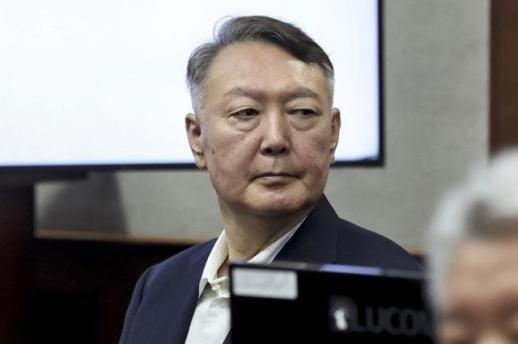 Yoon Suk Yeol Requests Recusal of Judges in Rebellion Case Yoon Suk Yeol, who was sentenced to life in prison for his role in a rebellion during the December 3 emergency martial law, has filed a request for the recusal of judges ahead of his appeal hearing. On May 13, Yoon's legal team announced in a statement to reporters that they had submitted a recusal request to the Seoul High Court concerning the three judges of the 12-1 Criminal Division. The panel includes judges Lee Seung-cheol, Jo Jin-goo, and Kim Min-ah, who are set to preside over Yoon's appeal regarding charges of being a rebellion leader. A recusal request is a legal procedure under criminal law that allows either the prosecution or the defense to seek the exclusion of a judge if there is a concern about unfairness in the trial. Yoon's team argued that they cannot expect a fair trial from judges who have publicly expressed a presumption of guilt. Previously, on May 7, the 12-1 Criminal Division sentenced former Prime Minister Han Duck-soo to 15 years in prison for his involvement in rebellion-related duties. Yoon's lawyers claimed that during Han's appeal, the judges revealed a presumption of guilt regarding Yoon's charges, which they argue constitutes grounds for recusal due to the potential for an unfair trial. They specifically noted that the judges used concrete expressions acknowledging Yoon's alleged involvement in Han's case, which they believe prejudiced the outcome of the trial. Furthermore, they pointed out that some media outlets reported after Han's sentencing that a guilty verdict for Yoon's rebellion charges was likely, stating that concerns about an unfair trial are reasonable from an average person's perspective. Yoon is scheduled for the first hearing in his appeal on May 14. He was convicted of inciting a rebellion aimed at undermining the constitution by conspiring with former Defense Minister Kim Yong-hyun to declare a state of emergency on December 3. The trial will also include seven military and police leaders charged with involvement in the rebellion alongside Yoon and Kim.* This article has been translated by AI. 2026-05-13 18:36:51
 -
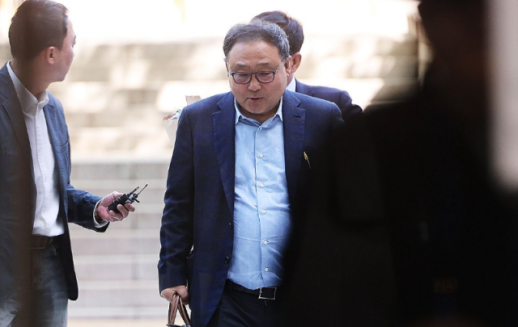 Prosecutors Seek 1.5-Year Sentence for Businessman in Kim Geon-hee Case The special investigation team led by Prosecutor Min Joong-ki has requested a 1.5-year prison sentence for businessman Seo Seong-bin, who is accused of providing a luxury watch to Kim Geon-hee in exchange for favors related to a robot dog business. The prosecution argues that Seo exploited his friendship with the presidential couple for business gains, while Seo's defense contends that it was merely a purchase on behalf of Kim, with no solicitation involved. During a sentencing hearing at the Seoul Central District Court on May 13, the prosecution sought a 1.5-year sentence for Seo, who is facing charges of violating the anti-bribery law as the CEO of Drone Dome. The prosecution stated, "Seo Seong-bin actively flaunted his connections with Kim Geon-hee and Yoon Suk Yeol, using them for business purposes. The entire operation was predicated on his relationship with the presidential couple." They further argued, "The defendant claims that providing the watch was merely a purchase on behalf of Kim, but this explanation is difficult to accept based on common sense. It is extremely rare for a private businessman to give a luxury watch worth tens of millions of won to the spouse of a public official without any vested interest." The prosecution also noted, "There is no evidence that Kim Geon-hee paid for the watch or intended to do so, making it hard to view this as a simple purchase on behalf of someone else." They believe Seo was aware that his actions could be problematic, citing that the watch's warranty was kept at the residence of Kim's brother-in-law. They argued, "This does not suggest a normal business transaction." Seo was indicted for allegedly handing over a Vacheron Constantin wristwatch valued at 39.9 million won to Kim Geon-hee at a restaurant in Seocho-gu, Seoul, in September 2022. The prosecution claims that Seo pursued a government contract for the robot dog project based on his friendship with Kim and secured a pilot operation contract worth 17 million won with the Presidential Security Service. In his closing argument, Seo's defense stated, "I clearly received a request to buy the watch, and I received 5 million won that day. The remaining payment was to be received later." They added, "It was difficult to demand payment due to the chaotic situation after the coup, and we request a not guilty verdict." Seo also expressed regret in his final statement, saying, "I wonder if there was another way to handle the purchase itself, but I have never solicited or flattered anyone in my life." Kim Geon-hee is also facing allegations of receiving money and valuables in exchange for public office solicitation, alongside Seo and others. A decision regarding Kim is expected on May 15, with sentencing for Seo and others scheduled for June 26.* This article has been translated by AI. 2026-05-13 18:33:28
 -
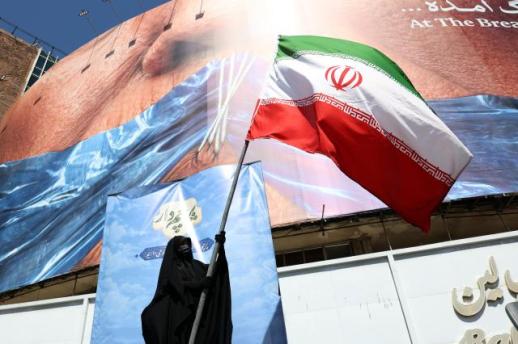 Saudi Arabia and UAE Conduct Secret Military Strikes Against Iran Amid ongoing conflict between the United States, Israel, and Iran, reports have emerged that Saudi Arabia and the United Arab Emirates (UAE) have secretly attacked Iran. While both countries have publicly maintained that they are not directly involved in the war, these covert military operations are seen as retaliatory measures against Iranian attacks, potentially escalating the conflict in the region. According to reports from Reuters and other foreign media on May 12, the UAE and Saudi Arabia have conducted undisclosed military strikes against Iran during the ongoing Middle East war. The UAE targeted Iran's oil facilities on Lavan Island in the Gulf in early April, while Saudi Arabia reportedly mobilized its air force to strike Iran at the end of March. This marks the first time Saudi Arabia has been reported to have carried out military actions directly on Iranian territory. Although specific strike locations have not been confirmed, Western officials suggest that Saudi Arabia's actions were in response to Iranian attacks aimed at the kingdom. There are also reports that the UAE coordinated some of its attacks with Israel. The Times of Israel, citing Bloomberg, reported that the UAE struck Iran around April 8, just before and after a ceasefire, with one operation being a coordinated response to an attack on Iran's Borouge petrochemical facility. These revelations indicate that the conflict, which began with U.S. and Israeli airstrikes on Iran on February 28, has expanded beyond what was publicly acknowledged. Since the outbreak of hostilities, Iran has launched missile and drone attacks against all six member states of the Gulf Cooperation Council (GCC), including Saudi Arabia and the UAE. Targets have included U.S. military bases, civilian infrastructure, airports, and oil facilities, disrupting global trade through the Strait of Hormuz. Escalating Tensions in the Middle East The Guardian reported that the UAE's previously undisclosed military actions against Iran suggest that some Gulf nations may become more deeply involved in conflicts with Iran. Newsweek noted that if the attacks by the UAE and Saudi Arabia are confirmed, it could provoke retaliation from Iran, leading to increased instability across the Gulf region. Indeed, tensions in the Gulf are spilling over into other countries. According to Al Jazeera, Kuwaiti authorities announced earlier this month that they had detained four members of Iran's Islamic Revolutionary Guard Corps (IRGC) who had infiltrated the island of Bubiyan. The Kuwaiti Foreign Ministry stated that these individuals had entered the country with hostile intentions, prompting them to summon the Iranian ambassador to lodge a protest. However, Iran has denied Kuwait's claims. The Iranian Foreign Ministry stated that allegations of planning hostile actions against Kuwait are baseless, asserting that the individuals entered Kuwaiti waters due to a malfunction in their navigation system while on a maritime patrol. On the same day, Bahrain's prosecution announced that over 20 individuals linked to espionage activities for the Iranian Revolutionary Guard had been sentenced to prison. As military and security tensions between Gulf nations and Iran continue to surface, regional instability is on the rise. Conversely, following Saudi Arabia's airstrikes on Iran, diplomatic channels have been activated, leading to a reduction in hostilities between the two nations. Some analysts argue that active retaliation by Middle Eastern countries could contribute to regional stability. Ali Vaez, head of the Iran Project at the International Crisis Group, noted that Saudi Arabia's attacks on Iran and subsequent negotiations demonstrate a shared interest in restraining the conflict before it escalates further in the region.* This article has been translated by AI. 2026-05-13 18:30:59
 -
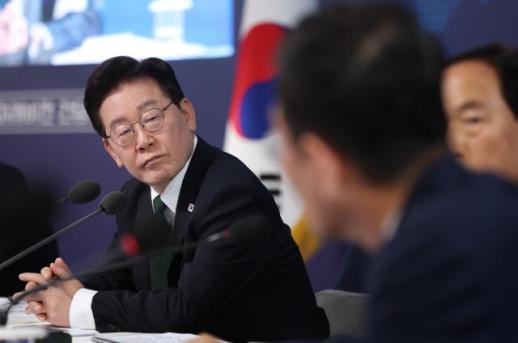 President Lee Calls for Stronger Ecosystem in South Korea's Shipbuilding Industry President Lee Jae-myung emphasized the importance of developing a robust ecosystem for South Korea's shipbuilding industry on May 13. He stated that it is crucial for the industry to thrive and for the benefits of growth to be shared equitably among stakeholders, including both employers and workers within companies. During his opening remarks at the K-Ship Future Vision meeting held at the Lahan Hotel in Ulsan, President Lee noted, "The shipbuilding industry has many possibilities and potential ahead." He encouraged attendees by saying that many countries are looking forward to collaborating with South Korea in shipbuilding. "In recent meetings with leaders from other nations, I found that most countries with coastlines are eager for cooperation with our shipbuilding sector," he said, acknowledging the industry's status as a key sector representing South Korea. He also highlighted the growing international interest in the shipbuilding industry, mentioning that it has been selected as a core item in the U.S.-led MASGA (Massive American Investment in South Korea) initiative. "The shipbuilding industry has become a significant part of investment cooperation between South Korea and the United States," he added. President Lee pointed out that the shipbuilding industry is highly susceptible to economic fluctuations, leading to persistent employment issues. "The industry experiences cycles of boom and bust, which often results in workforce instability," he explained. He noted that during downturns, companies struggle to maintain operations, while during upturns, they face labor shortages, causing a layered workforce structure and job insecurity. "This is not anyone's fault; it seems to be a characteristic of the industry," he remarked, stressing the need for government involvement to mitigate these risks. "Simply leaving it to the market will not resolve these issues. The government must take a keen interest in maintaining employment and developing the shipbuilding ecosystem," he asserted. Furthermore, he stated, "Today’s international competition is not just about individual products but about competing ecosystems. A strong internal ecosystem will enhance our international competitiveness, while lacking one will make it difficult to endure challenging situations." President Lee invited participants to share their concerns candidly, promising to consider what the government can do to address issues related to cooperation among small and large shipbuilders, as well as the roles expected from subcontractors and suppliers.* This article has been translated by AI. 2026-05-13 18:27:10
 -
 KB Livemobile Donates 100 Million Won to Promote Inclusive Finance KB Livemobile, the budget mobile brand of KB Kookmin Bank, announced on May 13 that it has donated 100 million won to the Co-Prosperity Commission. The initiative aims to address the challenges faced by young small business owners in the rapidly changing telecommunications and digital landscape, enhancing their management capabilities. The donation will be used for the 'Kiosk Support Project for Young Small Business Owners in Busan,' which is jointly conducted by the Co-Prosperity Commission and the Busan city government. Applications for the program can be submitted through the Busan Small Business Comprehensive Support Center's website until May 27. KB Livemobile plans to strengthen management competitiveness and customer accessibility for young small business owners in areas experiencing population decline by providing services such as smart store construction consulting and barrier-free kiosks for vulnerable groups, including the elderly and people with disabilities. The company aims to create a model for revitalizing the economy in depopulated areas by offering a one-stop service that includes kiosk supply, installation, initial setup, user training, and maintenance. A representative from KB Kookmin Bank stated, "Telecommunications and digital technology are essential infrastructures for small business management stability and competitiveness. We will continue to actively support the digital transformation and management capacity enhancement of small businesses based on public-private partnerships, leading the way in practicing inclusive finance." Additionally, KB Kookmin Bank is engaged in various inclusive finance activities, including reducing interest burdens for individual business owners and supporting youth education.* This article has been translated by AI. 2026-05-13 18:25:21
 -
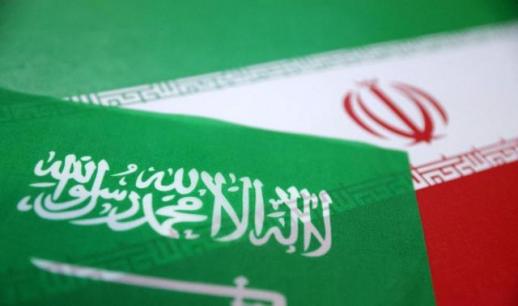 Saudi Arabia Launches First Airstrike on Iran, Signaling Shift in Middle East Dynamics The winds of conflict are intensifying in the Middle East. Reports of Saudi Arabia conducting airstrikes on Iranian territory signal a significant shift in the regional order.Historically, Saudi Arabia and Iran have engaged in a tense standoff, avoiding direct confrontation while competing through proxy wars, information warfare, oil price battles, and sectarian strife. However, the situation is changing. Recent retaliatory strikes by the UAE, controversies surrounding the infiltration of Kuwait's Revolutionary Guard, and movements of pro-Iran militias across Iraq and Syria indicate that the entire region is becoming a volatile powder keg.This development is particularly significant as it suggests a gradual fracture in the U.S.-led security framework in the Middle East. Saudi Arabia is no longer merely a nation under the American umbrella; it is evolving into a strategic state pursuing advancements in AI, high-tech industries, NEOM City, global logistics, tourism, and finance. For Saudi Arabia, the threats posed by the Revolutionary Guard's drones and missiles are perceived as existential challenges to its regime and future industries.More importantly, immediately following the airstrikes, Saudi Arabia reopened diplomatic channels in an attempt to de-escalate tensions. This indicates that both sides recognize the grim reality: “If we push this to the end, everyone will perish.”Iran holds a critical position in the Strait of Hormuz, a vital artery for global energy. It possesses a vast network of proxy forces, including the Revolutionary Guard, drones, missiles, Hezbollah, and Houthi rebels. Conversely, Saudi Arabia and Gulf nations wield significant financial power, influencing oil, LNG, finance, AI investments, maritime logistics, and the global energy market.If the conflict spirals out of control, the repercussions will extend beyond the Middle East. A surge in international oil prices, LNG shocks, skyrocketing maritime insurance rates, supply chain disruptions, energy crises for AI data centers, and plummeting global stock markets are all likely outcomes. This would impact semiconductor factories in Seoul, precision equipment firms in Tokyo, manufacturing in India, and the chemical industry in Europe.At this juncture, I have long advocated for a fundamental shift in the Middle East, moving beyond mere ceasefires or diplomatic agreements to a more profound civilizational coexistence. I refer to this as the 'Noah Accord.'Why Noah? According to the biblical Genesis, after the Great Flood, humanity spread through Noah's three sons: Shem, Ham, and Japheth. Traditionally, the descendants of Shem are seen as forming the core lineage of Middle Eastern civilization. Today, the term 'Semitic' derives from Shem.Both the Jewish and Arab peoples are understood to be part of this Semitic lineage. Abraham, too, is a descendant of Shem. In essence, Israel, Saudi Arabia, the UAE, and the broader Arab world share deep civilizational roots, emerging from the same ancestral lineage.Here, the issue of Iran is crucial. Many view Iran merely as a distinct 'Persian' civilization, but it is historically intertwined with Semitic civilizations. The predominant religion in Iran, Islam, stands on the monotheistic traditions of Abraham, and the Quran honors Noah as a great prophet.When considering the broader religious and civilizational structure of the Middle East, Judaism, Christianity, and Islam have all developed within the vast Semitic civilization, influencing one another through their shared narratives of Noah and Abraham. Thus, Iran is not an entirely external civilization but rather another significant pillar within the same monotheistic civilization of the Middle East.Of course, Iran has historically absorbed influences from the Persian Empire and the civilizations of India and Central Asia, forming its unique identity. However, within its deep spiritual heritage, there remains a shared memory of Middle Eastern civilization that connects back to Noah and Abraham.This point is crucial. The Middle East is currently trapped in a complex web of conflicts: Shia versus Sunni, Arab versus Persian, Jew versus Muslim, and the U.S. versus Iran. Yet, tracing the roots of these conflicts reveals that they are not entirely different ethnicities but rather brother civilizations that have diverged from the same ancestry and shared civilizational memories.The significance of Noah's story lies not merely in bloodlines. Noah was the figure who built the ark amidst the flood. That ark was not intended for a specific nation; it symbolized the minimal order of coexistence necessary for survival.Humanity now stands before another flood. The AI revolution, nuclear crises, supply chain conflicts, energy wars, population decline, climate change, and civilizational clashes are converging. The Middle East, in particular, is the world's powder keg where all these conflicts are concentrated. In this era, what is needed is not merely military victory but a new order of coexistence.The core of the Noah Accord lies here: First, the joint security guarantee of international maritime routes, including the Strait of Hormuz and the Red Sea. Second, a prohibition on attacks against energy facilities and civilian infrastructure. Third, the establishment of a dialogue framework that transcends Shia and Sunni, Jew and Arab. Fourth, the principle of using AI and advanced technology for human survival and development, rather than warfare. Fifth, a minimal agreement recognizing Israel, Iran, Saudi Arabia, the UAE, and other Middle Eastern nations as partners in coexistence rather than targets for annihilation.Israel, along with Sunni Arab nations like Saudi Arabia and the UAE, has begun to explore paths of reconciliation and cooperation through the Abraham Accords. While complete peace is still distant, there is a growing recognition of the reality that “we must live together.”The remaining challenge is Iran. As the leader of Shia Islam, Iran must also recognize that it is not an isolated entity but part of the same lineage of Noah and a brother civilization within the Middle Eastern civilizational sphere. Similarly, Israel, Saudi Arabia, and the UAE must view Iran not merely as a target for elimination but as a long-term partner in coexistence. This is because, in the current structure, no one can emerge as a complete victor.Even with overwhelming military power, the U.S. cannot fully stabilize the Strait of Hormuz. Iran can mobilize the Revolutionary Guard and proxy forces, but sustaining a long-term conflict against the world is challenging. Saudi Arabia and Gulf nations possess vast financial resources, but their future vision is threatened if energy export routes are disrupted.Ultimately, the future of the Middle East lies not in 'total victory' but in 'controlled coexistence.' The world is not merely seeking breaking news; it is asking, “How should we live moving forward?” The flames of conflict in the Middle East are not just battles in the desert; they represent questions about the direction of human civilization in the AI era. Therefore, the Middle East must move beyond simple ceasefire agreements to embrace a greater civilizational imagination.The Noah Accord represents a new contract for coexistence, starting from the recognition that Israel, Saudi Arabia, the UAE, and the Sunni world, along with Shia leader Iran, are not different enemies but rather brothers descended from Noah, sharing the same civilizational heritage. It may well be the new ark of civilization that humanity must create to survive in the AI era. 2026-05-13 18:22:01
 -
 Hanjin to Support Small Business Exports via Incheon Airport GDC and European Fulfillment Center Hanjin has been selected as the implementing agency for the government’s logistics support program for online export small and medium-sized enterprises (SMEs). The company plans to utilize the Incheon Airport Global Logistics Center (GDC) and its European Fulfillment Center to reduce logistics costs for SMEs engaged in overseas e-commerce exports. On May 13, Hanjin announced its selection as the implementing agency for the 2026 online export logistics support program, which is overseen by the Ministry of SMEs and Startups and the Korea SMEs and Startups Agency. This initiative aims to alleviate logistics costs for SMEs currently exporting or preparing to export through global direct-to-consumer platforms, thereby enhancing their competitiveness in overseas markets. The program will run until December of this year. Hanjin will deploy its Incheon Airport GDC and the European Fulfillment Center, which opened in December last year, for this initiative. Participating companies can receive support covering 70% of related costs from the Korea SMEs and Startups Agency when utilizing Hanjin’s overseas fulfillment hubs. Hanjin believes this will help SMEs reduce fixed costs associated with storage, packaging, and shipping abroad. For small sellers who find fulfillment services financially burdensome due to low shipment volumes, Hanjin will connect them with its digital logistics platform, One Click Global. This service simplifies the entire export logistics process, from domestic collection to customs clearance and international shipping. A Hanjin representative stated, "By combining our fulfillment infrastructure with the One Click Global service, we will continue to provide practical support to help small businesses secure real price competitiveness in the global market." In addition, Hanjin supported small and medium-sized enterprises through a joint logistics program for online exports last year. Regionally, shipments to Japan increased by 82.8% compared to the previous year. Although logistics costs for routes to the United States were high due to customs issues, Hanjin maintained its existing freight rates to lessen the financial burden on participating companies.* This article has been translated by AI. 2026-05-13 18:16:10
 -
 Trump's Visit to China: Tian Tan Park Instead of Forbidden City As President Donald Trump prepares for his visit to China, one of the highlights of his itinerary is a visit to Tian Tan Park in Beijing, a site specially arranged by Chinese President Xi Jinping. Unlike Trump's first visit to China nine years ago, when the Forbidden City was entirely cleared for a grand reception, this time the invitation to Tian Tan carries multiple significances. Located about 7 kilometers south of the Forbidden City, Tian Tan is a sacred site where emperors of the Ming and Qing dynasties offered sacrifices to the heavens. Each year, these emperors would travel from the Forbidden City to Tian Tan to pray for a bountiful harvest and the well-being of the nation, thereby asserting their legitimacy as rulers connecting the heavens and the human world. For China, the visit to Tian Tan is not merely a display of ancient imperial grandeur; it serves as a symbolic stage to convey the depth of China's long history and culture to President Trump. The significance of the Tian Tan visit is further underscored by the agenda of agricultural cooperation, which is a key topic during this trip. Given its historical role as a site for prayers for abundant harvests, it is expected that Trump will naturally discuss the expansion of purchases of U.S. agricultural products, including soybeans, grains, and meats, during his visit. Analysts interpret the visit as carrying a symbolic message that China wishes to convey to Trump. The architectural style of Tian Tan reflects ancient China's worldview, emphasizing the importance of heavenly order, the concept of 'heaven is round and earth is square,' and the harmony between humanity and nature. In contrast to the Forbidden City, which symbolizes imperial authority and power, Tian Tan is seen as a space that highlights harmony, order, and coexistence. Jeon Byeong-seo, director of the China Economic and Financial Research Institute, noted, "China may be indirectly conveying the message that Trump's America First policy and unilateralism are at odds with heavenly order." Tian Tan also holds special significance in U.S.-China relations. According to Singapore's Lianhe Zaobao, former President Richard Nixon visited Tian Tan Park during his historic trip to China in 1972, becoming the first sitting U.S. president to do so. Former Secretary of State Henry Kissinger, often referred to as a 'longtime friend of the Chinese people,' has visited the site more than ten times, demonstrating his affection for it. Some observers suggest that the shift from the Forbidden City to Tian Tan as the main venue for Trump's visit indicates a change in the level of respect afforded to him. Jeon remarked, "Tian Tan is a symbolic space where the emperor's power is 'embodied' in the heavens, and this could metaphorically illustrate the relative change in America's status within the new world order that China is constructing."* This article has been translated by AI. 2026-05-13 18:13:58
 -
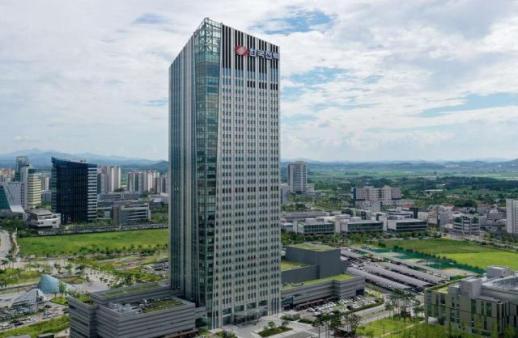 Korea Electric Power Corporation Reports Record 1st Quarter Operating Profit Korea Electric Power Corporation (KEPCO) reported a record operating profit of 3.7842 trillion won for the first quarter of this year. However, concerns are growing about the impact of rising international oil and liquefied natural gas (LNG) prices on the company's second-quarter performance. On May 13, KEPCO announced that its operating profit increased by 0.7% compared to the same period last year, reaching 3.7842 trillion won, while its net profit rose by 6.7% to 2.519 trillion won. This marks the highest operating profit in the company's history and continues an 11-quarter streak of profitability since the third quarter of 2023. The increase in profits is largely attributed to a decline in the standard market price (SMP) of electricity. The average SMP for the first quarter was 107.1 won per kilowatt-hour, down 7.4% from a year earlier, while electricity sales revenue increased by 121 billion won (0.1%). Additionally, KEPCO reduced costs by 400 billion won through a strict management system and financial stabilization plans. The company saved approximately 300 billion won in power purchase costs by easing transmission constraints and expanding low-cost generation. An enhanced asset management system utilizing artificial intelligence also contributed to around 100 billion won in savings on maintenance costs. As a result, some of the financial burdens accumulated due to soaring fuel costs during the Russia-Ukraine war have been alleviated. The cumulative operating loss, which reached 47.8 trillion won in 2023, has been reduced to 34 trillion won as of the first quarter of this year. However, KEPCO still faces significant challenges, with debts totaling 206 trillion won and borrowings amounting to 128 trillion won. This situation results in daily interest expenses of 11.4 billion won. Looking ahead, the second quarter poses greater challenges. There is a high likelihood of increased international fuel prices and exchange rates due to the ongoing conflict in the Middle East. International oil prices, which were around $64.9 per barrel before the conflict, surged to $105.7 last month. The won-dollar exchange rate rose from 1,453.3 won to 1,487.4 won during the same period. A KEPCO official stated, "The impact of the Middle East conflict does not appear to have been reflected in the first-quarter results, but it is expected to affect the second quarter. While restoring financial stability is urgent, the conflict may delay the normalization of our finances due to its lagging effects." The official added, "We will continue to implement internal and external measures to improve the power market system and enhance maintenance standards to reduce costs effectively."* This article has been translated by AI. 2026-05-13 18:12:00