
Journalist

Kim SeongSeo
-
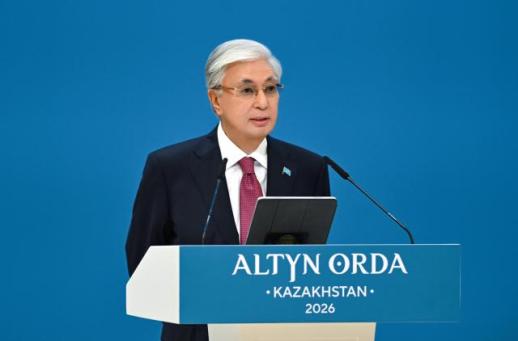 Kazakhstan ties Golden Horde legacy to tech ambitions SEOUL, May 20 (AJP) - The Kazakhstan Embassy in Seoul released a statement on Wednesday detailing an international symposium in Astana that frames the heritage of the Golden Horde as a pillar for the country's modern technological transformation. President Kassym-Jomart Tokayev stated that the medieval empire's advanced administrative and trade systems serve as historical precursors to the nation's current digital infrastructure goals. The UNESCO-backed event highlights how Kazakhstan is leveraging its historical identity to build international academic and economic partnerships. By branding its modernization initiatives under the concept of digital nomads, the Central Asian nation seeks to position its heritage as an inspiration for future development rather than a relic of the past. According to the embassy statement, the Golden Horde historically controlled key Eurasian trade routes and transformed the steppe into a secure transit corridor between the East and the West. Tokayev noted that this historic interaction between nomadic and urban societies laid the foundation for the empire's long-term prosperity and adaptability. Kazakhstan is currently connecting this legacy to state investments in artificial intelligence, data storage, and international transport networks. As part of this digital push, the country plans to host an international artificial intelligence olympiad under the auspices of UNESCO, drawing participants from 100 countries. To institutionalize research into this period, the government established the Institute for the Study of the Ulus of Jochi, marking the first specialized academic institution dedicated to the subject. Tokayev also proposed the creation of an international center for the promotion of steppe civilization to help bridge societies during periods of global geopolitical fragmentation. The symposium also highlighted the international recognition of the manuscript titled Genealogy of the Khans, which contains historical records from the Golden Horde era. The state continues to utilize the traditional steppe concept of Mangilik El, or the Eternal Nation, as a guiding framework for its modern national renewal and state-building initiatives. 2026-05-20 13:36:43
 -
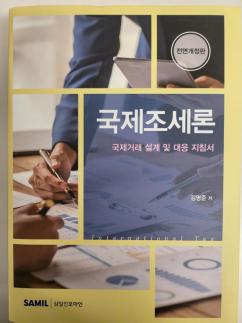 AJP Review: A guide to international taxation in AI age SEOUL, May 20 (AJP) -The world of international taxation has never been simple. But in the age of artificial intelligence and digital commerce, it has become extraordinarily complex. As multinational corporations move capital, data, and services across borders at unprecedented speed, governments around the world are entering an increasingly sophisticated struggle to defend their tax sovereignty. International cooperation aimed at preventing tax avoidance has tightened dramatically, while businesses face mounting pressure to navigate the narrow space between legitimate tax planning and aggressive regulatory scrutiny. Into this rapidly shifting landscape comes a book that seeks to map the entire terrain. Kim Myung-jun, the former Commissioner of the Seoul Regional Tax Office, has published a fully revised edition of International Taxation, a comprehensive work widely regarded as one of Korea’s leading practical guides to the field. The new edition arrives roughly five years after the first publication in 2021 and reflects the profound transformation now reshaping the global tax order. The author is not merely an academic theorist. He is a career tax official who spent decades at the center of Korea’s international tax administration system. After entering public service through Korea’s highly competitive civil service examination, he served in a series of influential positions, including Tax Attaché to Korea’s Mission to the OECD, Director of the International Tax Investigation Bureau at the Seoul Regional Tax Office, Director of the National Tax Service Investigation Bureau, and ultimately Commissioner of the Seoul Regional Tax Office. Coming from someone with deep hands in tax investigations, the book offers a deep insight to tax system. Since retiring from public office, Kim has continued his scholarly and professional work in the field of international taxation. He earned a doctorate from University of Seoul Graduate School of Taxation with research focused on the interpretation and application of the Principal Purpose Test (PPT) and the substance-over-form doctrine under the OECD’s Multilateral Instrument framework designed to prevent Base Erosion and Profit Shifting (BEPS). He has published numerous academic papers through the Korea International Fiscal Association and was awarded the association’s 2025 International Tax Academic Prize for his study on value-added tax obligations in international B2B service transactions. Today, he serves as Senior Adviser and Director of the International Tax and Investment Center at Bae, Kim & Lee LLC, one of Korea’s leading law firms. Yet the significance of International Taxation lies not simply in the résumé of its author, but in the breadth of its intellectual ambition. This revised edition moves well beyond a conventional explanation of tax statutes. It addresses the sweeping transformation of the global tax system in the era of AI and digital commerce, including BEPS 2.0 reforms, the Global Minimum Tax regime, cross-border tax avoidance, and the increasingly contentious struggle over taxation rights in the digital economy. Particularly notable is the book’s treatment of some of the most difficult and controversial concepts in international tax law, including treaty shopping, beneficial ownership, and the Principal Purpose Test. Drawing extensively on OECD standards, international case law, and practical enforcement experience, Kim explains these subjects with unusual clarity and precision. For practitioners, the book functions not merely as a reference volume, but as something closer to a strategic field manual. International taxation has long been regarded as one of the most difficult disciplines in modern law and finance. Kim attempts to reduce that complexity through an unusually reader-friendly structure that includes approximately 190 transaction flow charts, practical case studies, and carefully sourced references to OECD and United Nations Model Tax Convention commentaries. The result is a work that enables readers not only to understand abstract legal doctrines, but also to follow the underlying logic of cross-border transactions and international tax disputes. More importantly, the book approaches taxation not as an isolated legal problem, but as a central component of the emerging global economic order. The rise of AI-driven platforms and digital services has effectively blurred the traditional meaning of national borders. A multinational company may maintain servers in one country, manage data in another, and generate consumer revenue in dozens more simultaneously. Tax systems designed for the industrial age struggle to adapt to such realities. As a consequence, governments are racing to construct new taxation frameworks. The OECD-led Global Minimum Tax initiative represents one of the most ambitious attempts in modern history to coordinate international tax policy and limit aggressive tax avoidance by multinational corporations. For businesses, however, the environment has become increasingly difficult. Regulatory systems overlap, legal interpretations diverge, and compliance risks continue to grow. This is precisely where Kim’s book finds its importance. Because the author understands both the perspective of the taxpayer and the logic of the tax authority, the book maintains a rare balance between enforcement and compliance, between public interest and private strategy. The revised edition also separates transfer pricing taxation into an independent future volume. Kim has indicated that a more advanced and specialized work on transfer pricing will be published separately, a development already attracting considerable interest among tax professionals. The structure of the book reflects the broad scope of modern international taxation. Part One, “General Theory of International Taxation,” examines the foundations of international tax systems, global tax avoidance, tax administration, international tax audits, and the allocation of taxation rights between states. Part Two, “Tax Treaty Theory,” addresses treaty interpretation, residency determination, treaty abuse, beneficial ownership, permanent establishments, double taxation relief, mutual agreement procedures, and tax information exchange. Part Three, “Domestic Source Income Theory,” analyzes taxation issues involving non-residents and foreign corporations, including business income, dividends, royalties, interest income, and personal service income. Part Four, “Prevention of International Tax Avoidance,” explores anti-avoidance frameworks such as GAAR, SAARs, thin capitalization rules, Controlled Foreign Corporation regulations, hybrid mismatch arrangements, BEPS 2.0 reforms, global minimum taxation, offshore tax evasion, and the emerging challenges posed by AI-era commerce. Ultimately, International Taxation is far more than a technical handbook for accountants and tax attorneys. It is, in many respects, a guide to understanding how power, capital, sovereignty, and technology intersect in the twenty-first century. Today, capital flows across borders instantly. Data moves globally. AI systems operate beyond traditional jurisdictional boundaries. Yet taxation authority remains fundamentally national. The tension between those realities is becoming one of the defining economic and political struggles of our age. In that sense, this book speaks not only to tax professionals, government investigators, lawyers, and policymakers, but to anyone seeking to understand the deeper architecture of the emerging global economy. Its greatest strength may lie in the fact that it never reduces taxation to mere technical maneuvering. International taxation is ultimately about fairness, sovereignty, economic strategy, and the moral structure of global capitalism itself. As artificial intelligence reshapes commerce and human life alike, international taxation can no longer remain a niche concern reserved for specialists alone. In an era of increasingly fierce global tax competition, International Taxation stands out as a sophisticated compass — a work capable of helping readers navigate one of the most complicated frontiers of modern economic life. ■ About the author: Kim Myung-jun is widely regarded as one of South Korea’s leading experts in international taxation and cross-border tax investigations. After entering public service through Korea’s national civil service examination system, he spent more than three decades within the National Tax Service, building a career at the highest levels of tax administration and international fiscal policy. Over the course of his career, Kim held several key positions, including Tax Attaché to Korea’s delegation at the OECD, Director of the International Tax Investigation Bureau at the Seoul Regional Tax Office, Director of the National Tax Service Investigation Bureau, and ultimately Commissioner of the Seoul Regional Tax Office. He became particularly well known for his expertise in multinational corporate taxation, international tax enforcement, and cross-border transaction investigations. Few officials in Korea have possessed such extensive firsthand experience in both the design and execution of international tax investigations. Following his retirement from government service, Kim transitioned into academic research and professional advisory work. At University of Seoul Graduate School of Taxation, he completed doctoral research focused on BEPS-related international tax reforms, treaty interpretation, and substance-over-form principles in international tax law. He has since published numerous scholarly articles addressing BEPS, tax treaty interpretation, value-added taxation in international digital commerce, and anti-avoidance frameworks. His recent study on VAT obligations in international B2B service transactions earned him the 2025 International Tax Academic Prize awarded by the Korea International Fiscal Association. Today, Kim serves as Senior Adviser and Director of the International Tax and Investment Center at Bae, Kim & Lee LLC, where he continues to advise corporations, investors, and institutions on international tax strategy and global regulatory developments. More than anything else, Kim belongs to a rare generation of officials who experienced firsthand the transformation of taxation from a largely domestic administrative function into one of the defining geopolitical and economic battlegrounds of the modern world. For that reason, International Taxation reads not merely as a professional textbook, but as the intellectual culmination of a lifetime spent at the front lines of global tax policy and enforcement. 2026-05-20 12:40:52
 -
 Samsung Live: Union to launch 18-day strike as planned after marathon talks collapse SEJONG, May 20 (AJP) -Samsung Electronics faces an unprecedented 18-day strike from Thursday after the union walked out of government-mediated marathon talks over revisions to the employee reward system at the tech giant whose market valuation has swelled to nearly $1 trillion amid the AI boom. Management and the Korean tech giant’s largest union held three days of talks at a government complex in Sejong under the mediation of the National Labor Relations Commission (NLRC), seeking to avert a general strike involving some 50,000 workers, mostly from semiconductor production lines. The planned 18-day walkout is feared to inflict billions of dollars in losses not only on the chipmaker but also on the broader South Korean economy, which heavily depends on chip exports. Shares of the No. 1 stock fell 2.5 percent to 269,500 won ($178.7) following the news. The final round of talks collapsed late Wednesday morning after management held off on signing a compromise proposal put forward by government arbitrators, despite the union's official endorsement. In a statement to reporters, the union blamed management's indecisiveness for the breakdown. "The union agreed to the mediation proposal presented by the NLRC on Tuesday night," said Choi Seung-ho, chief of the Samsung labor union. "However, management repeatedly stated on Wednesday morning that a decision had not been made, delaying the process until the mediation was officially terminated." Choi confirmed the strike would proceed as planned on Thursday but noted the union remains open to dialogue during the walkout. Samsung Electronics immediately issued a fierce counter-statement, shifting the blame to the union’s "excessive demands" and defending its core business principles. "The failure to reach an agreement at the final moment was because accepting the union's excessive demands would shake the basic principles of corporate management," Samsung said in its official statement. "In particular, even though the company accepted most of the bonus scale and details, the union refused to back down on its demand for socially unacceptable levels of compensation for deficit-making business divisions." The world's largest memory chipmaker emphasized that giving in to such demands would directly violate its core principle of "rewarding where there is performance," warning of negative ripple effects across other industries. NLRC Chairman Park Soo-keun confirmed that the labor side had made significant concessions, but the two parties ultimately failed to narrow differences on a few critical clauses, leading management to "reserve" its signature. "The employer requested to hold off on signing, leaving the proposal unfulfilled," Park told reporters in Sejong. "However, because a resolution must eventually be reached, the commission stands ready to respond to any joint request for arbitration at any time, whether it be at night or over the weekend." 2026-05-20 11:48:18
 -
 Seoul, Washington to launch working group to advance nuclear submarine deal SEOUL, May 20 (AJP) - South Korea and the United States have agreed to launch a bilateral working group to implement security agreements reached at their summit last October, including Washington’s approval for Seoul to build nuclear-powered submarines. U.S. Under Secretary for Political Affairs Allison Hooker is set to visit Seoul within weeks to lead an interagency delegation for the talks. South Korea’s Foreign Ministry said First Vice Foreign Minister Park Yoon-joo, who is visiting the United States, met with Hooker in Washington on Tuesday and exchanged views on overall bilateral relations, including the implementation of the Joint Fact Sheet adopted at last year’s summit, as well as regional and global affairs. Park and Hooker agreed to hold a kickoff meeting on nuclear-related security commitments under the Joint Fact Sheet released by the two countries in November, “sharing the view that the two allies should swiftly produce tangible results,” the ministry said. U.S. President Donald Trump visited South Korea last October on the occasion of the Asia-Pacific Economic Cooperation summit and reached a set of trade and security agreements with President Lee Jae Myung. The security commitments included U.S. approval for South Korea’s nuclear-powered submarine program, as well as Seoul’s authority to pursue uranium enrichment and spent nuclear fuel reprocessing — measures South Korea secured in return for its $350 billion investment commitment to the U.S. The latest announcement is expected to give momentum to the implementation of the agreements, which have drawn criticism for making little progress since they were announced. The U.S. State Department also said after the meeting that Hooker will travel to Seoul in the coming weeks with an interagency delegation “to launch a bilateral working group” to continue implementing the agreements reached during Trump’s visit to South Korea in October 2025. At the same time, the department said Hooker emphasized that the United States “expects continued progress in bilateral trade and industrial partnerships,” as well as “the need for fair treatment of U.S. companies” and the swift removal of market access barriers. The remarks were seen as underscoring Washington’s call for South Korea to quickly follow through on its promised investment in the United States, while also alluding to issues that have emerged between the two countries, including the Coupang data leak and South Korea’s proposed Online Platform Act, which the U.S. has viewed as a non-tariff barrier. 2026-05-20 11:20:58
 -
 Korean banks' Q1 net profit edges down on bond valuation losses SEOUL, May 20 (AJP) - Although South Korean commercial banks saw their interest income expand in the first quarter of this year, driven by loan growth and improved net interest margins (NIM), their overall net profit declined due to widening valuation losses on bond holdings triggered by a sharp spike in market interest rates. Analysts say that while household debt continues to grow, the banking sector's profitability structure is becoming increasingly sensitive to interest rate volatility. The combined net profit of domestic banks stood at 6.7 trillion won ($4.56 billion), down 300 billion won, or 3.9 percent, from the same period last year, Financial Supervisory Service (FSS) said Wednesday. Net profit for nationwide commercial banks stood at 4.3 trillion won, ticking up 100 billion won, or 1.6 percent, year-on-year, but a detailed breakdown showed that the growth of internet-only banks — such as KakaoBank, K-Bank, and Toss Bank — buffered the overall performance. Net profit for internet-only banks jumped 45.3 percent - from around 200 billion won in the first quarter of last year to 300 billion won in the first quarter of this year. Net profit at core nationwide commercial banks, in contrast, slid 0.6 percent from 3.8 trillion won to 3.7 trillion won, while regional banks' net profit growth flattened with a mere 10 billion won increase. Interest income continued its upward march. Domestic banks' interest income for the first quarter reached 15.8 trillion won, up 1 trillion won, or 6.4 percent, from a year earlier. This expansion was fueled by a 4.8 percent year-on-year increase in interest-bearing assets, such as loan receivables, alongside a rise in the net interest margin (NIM) from 1.53 percent to 1.56 percent. The expansion of banks' interest income is analyzed to be aligned with the recent upward trend in household debt. Household lending by commercial banks in the first quarter swung to a 200 billion won decline in the first quarter from the previous quarter, whereas lending by non-bank depository institutions surged by 8.2 trillion won, according to the Bank of Korea's Tuesday release. The quarterly increase in housing-related loans within the non-bank sector widened from 6.5 trillion won in the fourth quarter of last year to 10.6 trillion won in the first quarter of this year. However, skyrocketing market interest rates weighed heavily on bank profitability. Domestic banks' non-interest income plummeted 35.6 percent year-on-year to 1.3 trillion won. The FSS attributed the decline to widening valuation losses on marketable securities following the spike in market interest rates. Gains related to marketable securities swung from a 2.4 trillion won surplus to a 1.2 trillion won deficit, while valuation profits on securities plummeted from a 1.4 trillion won surplus to a 1.8 trillion won loss. The financial watchdog evaluated that skyrocketing bond yields were the primary catalyst for the widening deficits. The three-year benchmark government bond yield, which had dipped 1.9 basis points at the first quarter of 2025, surged 60.6 basis points from the end of last year to hit 3.557 percent as of late March, maintaining its weakening trend. With the 30-year U.S. Treasury yield hovering at 5.2 percent — its highest level in approximately 19 years since 2007, just ahead of the global financial crisis — South Korea's three-year government bond yield rose by more than 4 basis points during Wednesday's morning session to hit 3.8 percent. The 10-year yield climbed roughly 6 basis points to the 4.27 percent mark, extending the market's downward momentum. The return on assets (ROA) dipped 0.07 percentage points year-on-year to 0.64 percent, while the return on equity (ROE) also slid 0.89 percentage points to 8.68 percent. The deteriorating indicators underscore a widespread contraction in the banks' earnings capacity. Credit losses and provisions, meanwhile, fell 16.2 percent year-on-year to 1.4 trillion won. Banks appear to have averted a worst-case scenario for now, as bond valuation losses stemming from rate volatility have exerted a more pronounced impact on bank earnings than widening defaults or non-performing loans. Given rising internal and external uncertainties, the FSS stated that it will guide banks to bolster their loss-absorption capacities to ensure financial soundness even in the face of unexpected shocks. 2026-05-20 11:16:54
 -
 Kia to provide vehicles for FIFA World Cup athletes and officials SEOUL, May 20 (AJP) - Kia will provide more than 600 vehicles for this summer's FIFA World Cup, the automaker said on Wednesday. At an event in Los Angeles the previous day, Kia pledged to supply over 660 vehicles ahead of the quadrennial sporting event, which kicks off in June, as one of the tournament's official sponsors, aiming to broaden its brand exposure in the global market. The vehicles, which included Kia's key models such as the Carnival, K4, Niro, Sorento, Sonet, Sportage and Telluride, will transport sports officials, athletes and others throughout the tournament. This year's World Cup, which runs from June 11 to July 19, will be the first to feature 48 teams and three host countries - Canada, Mexico, and the U.S. "The sponsorship reflects Kia's commitment to providing innovative and sustainable mobility solutions on the global stage," said Kia CEO Song Ho-sung. 2026-05-20 10:54:28
 -
 KOSPI, Nikkei extend slide as global bond yields hit multi-decade highs SEOUL, May 20 (AJP) - South Korean and Japanese equities extended losses Wednesday as a global bond rout intensified, with surging long-term yields rattling stock markets that had largely shrugged off Middle East tensions amid the AI-driven rally. As of 10:13 a.m., the benchmark KOSPI fell 0.87 percent to 7,208.53, while the tech-heavy KOSDAQ dropped 1.97 percent to 1,062.49 amid persistent foreign selling. The Japanese Nikkei 225 also weakened as government bond yields climbed to fresh multi-decade highs, deepening concerns that elevated oil prices and stubborn inflation could keep global borrowing costs higher for longer. The Korean won also came under pressure, with the U.S. dollar rising to 1,511.50 won from 1,507.80 won in the previous session. The local market initially opened higher despite overnight losses on Wall Street, supported by rebounds in U.S. memory-chip stocks such as Micron and Sandisk following recent sharp declines. Samsung Electronics, which was set to hold a third round of wage talks with its labor union at 10 a.m. ahead of a planned general strike Thursday, edged up 0.91 percent to 278,000 won. SK hynix, however, reversed early gains to fall 1.38 percent to 1,721,000 won. Among other large-cap shares, HD Hyundai Heavy Industries surged 4.52 percent to 625,000 won, while SK Square gained 0.49 percent to 1,025,000 won and Samsung SDI added 0.55 percent to 181,800 won. Automakers and battery shares traded broadly lower. Hyundai Motor fell 1.99 percent to 592,000 won, Kia lost 2.39 percent to 151,200 won and LG Energy Solution slipped 1.37 percent to 394,500 won. Defense and industrial shares also weakened, with Hanwha Aerospace dropping 3.34 percent to 1,243,000 won, Doosan Enerbility falling 3.11 percent to 102,700 won and Samsung Electro-Mechanics declining 2.63 percent to 961,000 won. Financial and biotech shares mostly retreated as well. Samsung Life Insurance fell 2.24 percent to 305,000 won, Samsung Biologics dropped 2.30 percent to 1,315,000 won, Samsung C&T slid 3.02 percent to 369,000 won and KB Financial edged down 0.59 percent to 151,900 won. On the KOSDAQ, AI robotics and other high-valuation growth shares came under pressure as rising global yields dampened investor appetite for risk assets. Rainbow Robotics tumbled 4.05 percent to 639,000 won, extending the broader selloff in AI and robotics-related names. Secondary-battery and biotech shares also weakened. Alteogen fell 2.86 percent to 356,000 won, Ecopro dropped 2.63 percent to 118,400 won, Ecopro BM slipped 0.82 percent to 180,900 won and HLB declined 3.84 percent to 47,600 won. Samchundang Pharm plunged 7.80 percent to 337,000 won, while ABLBio lost 5.00 percent to 106,400 won and Kolon TissueGene fell 5.25 percent to 101,000 won. Overnight, the yield on the benchmark 30-year U.S. Treasury bond climbed as high as 5.197 percent, the highest level since 2007, fueling concerns that prolonged geopolitical tensions and elevated oil prices could reignite inflationary pressures. Japan's 10-year government bond yield also hit another fresh high, ending Tuesday at 2.793 percent, its highest level in nearly three decades. Japan's Nikkei 225 fell 1.11 percent to 59,881.16, while Hong Kong's Hang Seng Index dropped 0.70 percent to 25,616.02 and China’s Shanghai Composite slipped 0.46 percent to 4,150.46. 2026-05-20 10:37:47
 -
 LG CNS pushes AI-powered smart factory platform into North America SEOUL, May 20 (AJP) - LG CNS announced it has stepped up efforts to expand its artificial intelligence-driven smart factory business in North America, positioning its proprietary Factova platform as a gateway for small and mid-sized manufacturers seeking to automate production lines. The IT services arm of South Korea's LG Group said Wednesday that it was the only Korean firm to exhibit at IoT Tech Expo 2026 in San Jose, California, held from Monday to Tuesday, an event that draws about 8,000 industry professionals and roughly 200 global technology and manufacturing companies. This year's lineup included IBM, SAP and Deloitte as exhibitors, with Nvidia and Schneider Electric featured as conference speakers. At the booth, LG CNS showcased Factova MES, a modular manufacturing execution system that uses AI to collect and analyze shop-floor data in real time, alongside Factova Control, an equipment integration solution already deployed across more than 100,000 machines at manufacturing sites in Korea and abroad. The company said the tools cut inefficiencies in production and enable predictive maintenance by flagging anomalies in motor current, temperature and vibration before failures occur. LG CNS also unveiled AI offerings tailored for high-precision industries such as semiconductors, displays, aerospace and medical devices, along with a Gen AI safety and environment service that lets field workers report incidents through smartphone photos and voice memos for automatic logging and response guidance. "Backed by smart factory expertise and AX capabilities accumulated at large-scale manufacturing sites, we are accelerating our push into the North American market," said Shin Jae-hoon, head of LG CNS' smart factory division, adding that the company aims to bring AI-driven factory intelligence within reach of small and mid-sized manufacturers. 2026-05-20 10:36:29
 -
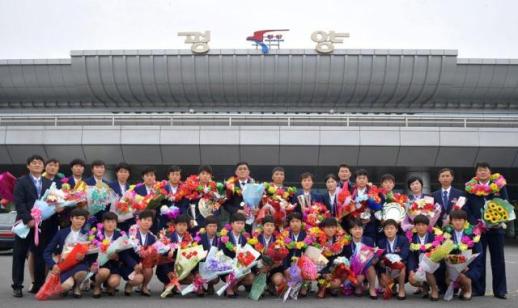 North Korean footballers get hero's welcome home after record fifth Asian Cup title SEOUL, May 20 (AJP) - Young North Korean footballers received a hero's welcome as they returned home after winning the Asian Football Confederation (AFC) U-17 Women's Asian Cup, state media reported on Wednesday. North Korea beat Japan 5-1 in the final in Jiangsu, China last Sunday to win the biennial tournament for a record fifth time, successfully defending the title it won in Indonesia in 2024. According to the state-run Korean Central News Agency, the players were "greeted with flower garlands and bouquets" at Pyongyang International Airport by senior party officials, sports officials, their family members and others upon their arrival the previous day. They then rode in a flower-decorated bus through the main streets of Pyongyang, greeted by large crowds waving and cheering as it passed. The country's official newspaper Rodong Sinmun also reported that streets in Pyongyang were filled with "joy and excitement." Meanwhile, players from North Korea's Naegohyang Women's Football Club, currently in South Korea, are set to face Suwon FC Women in the semifinal of the AFC Women's Champions League in Suwon, Gyeonggi Province later in the day. Their visit marked the first time a North Korean team had traveled to South Korea for a sporting event in seven years and five months, since the International Table Tennis Federation World Tour Grand Finals in Incheon in December 2018. But North Korean media have remained mum on their visit. 2026-05-20 10:05:15
 -
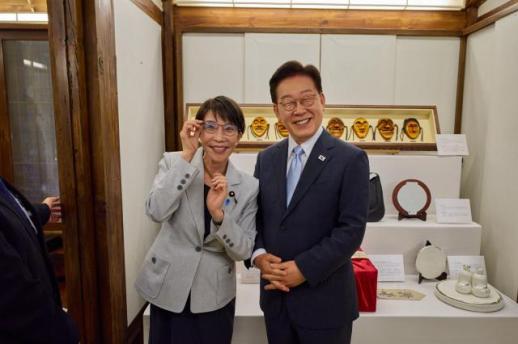 ASIA DEEP INSIGHT: Korea-Japan shuttle diplomacy evolving to civilian-led partnership Andong in May 2026 was not merely a provincial Korean city. It became a symbolic stage in the diplomatic history of Northeast Asia. Under the evening winds of Hahoe Village and the cascading sparks of the traditional Seonyu Julbulnori fire ritual, President Lee Jae-myung and Prime Minister Sanae Takaichi sent a message to the world that extended far beyond the formalities of another summit meeting. It was, in essence, a declaration that relations between South Korea and Japan are beginning to move beyond an era defined primarily by historical grievance and emotional confrontation toward one shaped by strategic coexistence and shared prosperity. The summit revolved around five central themes: institutionalizing cooperation in supply chains and energy security; firmly establishing shuttle diplomacy; expanding collaboration in artificial intelligence and advanced technologies; deepening civilian-led exchanges in culture and tourism; and managing historical disputes while building a future-oriented partnership. What made this meeting particularly consequential was the international context in which it unfolded. The Middle East remains unstable. Risks surrounding the Strait of Hormuz continue to threaten global energy markets. Strategic rivalry between the United States and China is intensifying. Russia, China, and North Korea are drawing closer together. In such a world, Seoul and Tokyo can no longer afford to conduct diplomacy through the lens of historical emotion alone. The era now emerging is one of overlapping crises, where energy, supply chains, finance, technology, and security are inseparably intertwined. When President Lee spoke of “a peaceful Korean Peninsula with no need to fight,” and Prime Minister Takaichi emphasized “the free and secure navigation of the Strait of Hormuz,” these were not rhetorical flourishes. They reflected a sober recognition that Northeast Asia and the broader Indo-Pacific are entering a period of profound instability. The world today is moving into three simultaneous conflicts. The first is military conflict. The wars in Ukraine and the Middle East have already entered prolonged phases. The second is technological conflict. Competition over artificial intelligence, semiconductors, quantum computing, and space technology has evolved into a new form of industrial Cold War between Washington and Beijing. The third is the conflict over supply chains. LNG, crude oil, rare earth minerals, food security, and battery materials are no longer simply economic concerns; they have become pillars of national survival. In such an environment, South Korea and Japan are too deeply interconnected economically to remain trapped in perpetual confrontation. South Korea possesses strengths in memory semiconductors, batteries, shipbuilding, and advanced manufacturing. Japan remains dominant in materials, components, precision engineering, and foundational industrial technologies. The two nations compete fiercely, yet they are also profoundly interdependent. Serious disruption in one economy would inevitably reverberate through the other. One of the most significant aspects of this summit was the discussion of LNG and crude oil swap arrangements. This was not merely a conversation about energy transactions. It represented the early architecture of a Korea–Japan energy security framework. Japan possesses one of the world’s most sophisticated LNG storage and strategic reserve systems. South Korea maintains globally competitive refining, petrochemical, and shipbuilding infrastructure. If the two countries institutionalize emergency energy-sharing and joint reserve mechanisms, they could substantially mitigate shocks arising from instability in the Middle East. More importantly, the summit hinted at the emergence of a broader Asian supply-chain order. Prime Minister Takaichi’s proposal to deepen resource cooperation with other Asian nations was strategically significant. Implicit within it was the vision of a wider economic-security network linking South Korea, Japan, ASEAN, India, and Australia. At the same time, the geopolitical environment is changing rapidly. American leadership is no longer as stable or predictable as it once was. The second administration of President Donald Trump has embraced an unapologetically transactional form of nationalism. China continues to expand both its economic and military reach. Russia is deepening strategic coordination with Beijing, while North Korea accelerates its nuclear and missile capabilities. Under these circumstances, sustained hostility between Seoul and Tokyo would become a strategic burden for both sides. In this sense, the summit in Andong was diplomacy driven less by idealism than by survival. Previous Korea–Japan summits were often consumed by emotional confrontation over historical memory. This summit, by contrast, was conducted in the language of energy security, supply chains, artificial intelligence, and regional stability. That distinction matters. Equally significant was the summit’s emphasis on regional diplomacy. For decades, Korea–Japan diplomacy revolved almost exclusively around Seoul and Tokyo. This time, however, the diplomatic stage expanded to Andong and Nara, the hometowns of the two leaders. That was more than symbolism. It suggested a transition from capital-centered diplomacy toward diplomacy rooted in local culture, regional identity, and everyday human exchange. Annual people-to-people exchanges between the two countries have already reached approximately 13 million visits. Younger generations increasingly view the neighboring country not primarily as a historical adversary, but as a space of travel, culture, employment, entrepreneurship, and creativity. K-pop and Japanese animation, Korean dramas and Japanese hot-spring culture, Korean digital platforms and Japanese craftsmanship are more likely to converge than collide. That is why Korea–Japan relations must now evolve beyond state-centered diplomacy into a civilian-led community of economy, culture, and tourism. The possibilities are extensive: a Northeast Asian tourism belt connecting Busan, Fukuoka, Osaka, and Jeju; joint AI startup funds; youth entrepreneurship exchanges; Korea–Japan semiconductor graduate institutes; and even cooperative space-development projects. Europe overcame centuries of war to build the European Union. Northeast Asia may not replicate that model directly, but it can begin with practical economic and cultural cooperation. President Lee’s emphasis on artificial intelligence cooperation was particularly important. AI is not simply another industry. It is a foundational technology that will shape the future balance of civilization itself. The United States dominates platforms and capital. China commands scale and manufacturing capacity. South Korea and Japan, by combining technology, manufacturing precision, culture, and content, could help construct an alternative Northeast Asian model for the AI age. Korean semiconductor expertise paired with Japanese materials and equipment technologies could become globally competitive at the highest level. Moreover, the AI era will require new forms of cooperation in digital ethics, privacy protection, and transnational cybercrime prevention. The summit’s discussion of coordinated responses to cross-border scam crimes reflected the beginning of that transition. Yet formidable obstacles remain. Historical disputes continue to represent the most volatile fault line in Korea–Japan relations. The issues of wartime labor, the comfort women tragedy, and the Dokdo/Takeshima territorial dispute could easily resurface. Historical revisionism within segments of the Japanese right also remains a serious concern. At the same time, anti-Japanese sentiment is still periodically exploited within South Korean domestic politics. But the time has come for both countries to move from the politics of resentment to the politics of survival. This does not mean forgetting history. On the contrary, genuine remembrance requires the wisdom to build a future beyond endless hostility. The Confucian principle of yeokjisaji — placing oneself in the position of the other — and the broader East Asian diplomatic tradition of qiú tóng cún yì (“seeking common ground while preserving differences”) offer a more sustainable path forward. South Korea, too, must engage in honest self-reflection. Conservatives have sometimes minimized historical grievances in the name of security cooperation, while progressives have at times instrumentalized anti-Japanese sentiment for domestic political purposes. A more mature balance is now required. Historical issues must be addressed with principle, but not transformed into endless cycles of emotional mobilization. Economic and technological cooperation must be approached as questions of long-term national survival. Youth exchanges should be elevated to the level of national strategy. Local governments and private enterprises must deepen practical collaboration. Shared frameworks for AI governance, digital ethics, and data protection should be institutionalized. Most importantly, genuine reconciliation cannot be achieved solely through summit diplomacy. It must emerge gradually through the daily experiences of ordinary citizens — through tourism, food, sports, art, scholarship, and friendship. Over time, such exchanges become the strongest foundations for peace. There is also a deeper dimension that deserves attention. The future of Korea–Japan relations cannot be sustained by economics and security alone. It must also engage the spiritual and civilizational traditions of both nations. Japan possesses the tradition of Shinto. Unlike Christianity or Buddhism, Shinto is not centered upon a single canonical scripture. Rather, its worldview has been shaped through texts such as the Kojiki, the Nihon Shoki, and ancient ritual prayers known as norito. Through these traditions, Japanese civilization cultivated a profound respect for nature, ancestry, and communal harmony. Korea, meanwhile, preserves the philosophical legacy of the Cheonbu-gyeong. Its vision of harmony between heaven, earth, and humanity has deeply influenced Korean ideas of communal ethics and the spirit of Hongik Ingan — the ideal of benefiting humanity broadly. The spiritual traditions of the two nations are not identical. Yet both ask fundamentally similar questions: How should human beings live in harmony with nature? How should communities coexist without destroying one another? Historically, Korea and Japan were never connected solely through conflict. The exchanges between Baekje and ancient Japan, the transmission of Buddhism and Chinese characters, architectural influences, ceramics, music, industrial knowledge, and modern cultural interactions all testify to centuries of mutual influence. The challenge today is not to erase history, but to confront it honestly while refusing to remain imprisoned by it. Japan must rediscover the Shinto tradition’s respect for nature and communal balance in modern form. Korea must reinterpret the harmonizing philosophy of the Cheonbu-gyeong and the spirit of Hongik Ingan for the AI era. On that foundation, the two countries can cooperate in semiconductors, artificial intelligence, energy security, tourism, youth exchange, and regional diplomacy. That is why the summit in Andong carried significance far beyond protocol. It posed a larger civilizational question: can Korea and Japan move from the emotional burdens of the past toward the shared construction of a future? The sparks of Andong’s traditional Julbulnori fire ritual scatter briefly across the river before reconnecting in streams of light. In many ways, that image captures the history of Korea and Japan themselves. The two nations have often drifted apart through conflict and pain, yet geography, history, economics, and culture continue to draw them back together. The transformations reshaping the world are now too immense for either country to remain trapped in inherited antagonisms. In the age of AI revolution, supply-chain warfare, energy insecurity, and intensifying great-power rivalry, Seoul and Tokyo face a historic choice: remain prisoners of the past, or become co-architects of a shared future. The summit in Andong did not fully answer that question. But it began, cautiously yet unmistakably, to move in that direction. Shuttle diplomacy must now become more than a diplomatic mechanism. It must evolve into a platform for Northeast Asian coexistence and shared prosperity. And at the center of that transformation must stand not governments alone, but citizens; not ideology, but future generations; not resentment, but the long work of civilization itself. *The author is a senior columnist of AJP 2026-05-20 09:18:12