
Journalist

Kim SeongSeo
-
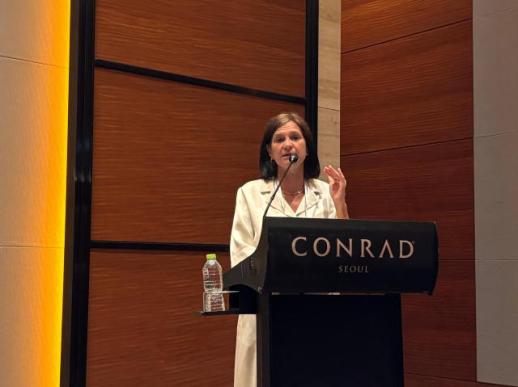 IBM Launches Second Quantum Revolution with Hybrid Quantum Computing "We are currently in the era of the 'Second Quantum Revolution.' Quantum computing is already being utilized in various industries, including life sciences and drug development," said Petra Florijune, IBM's Global Quantum Sales Director, during the 'IBM Asia-Pacific Quantum Connect' media briefing held at the Conrad Hotel in Yeouido, Seoul. IBM emphasized that quantum computing has progressed beyond research and experimental stages and is now being applied in real-world industrial settings. The company aims to enhance the applicability for businesses through a hybrid approach that combines traditional central processing units (CPUs), graphics processing units (GPUs), and quantum processing units (QPUs). At the event, IBM presented the latest advancements in global quantum technology and its applications across various industries. Florijune and Dr. Baek Han-hee, IBM's Quantum Director, discussed the current state of quantum computing, industry use cases, and future commercialization roadmaps. Florijune characterized the present as the 'Second Quantum Revolution.' He stated, "Following the first quantum revolution that enabled technologies such as semiconductors, lasers, and MRI, quantum computing has now entered a new phase that innovates areas difficult to solve with classical computing." He added, "Quantum computing is no longer a distant future technology; it is now being utilized to solve real problems. We are moving from an experimental phase to a stage where businesses and research institutions apply 'quantum utility' in their actual workflows." Florijune also highlighted the rapidly increasing economic value of the quantum computing market. According to IBM, the Boston Consulting Group estimates the potential economic value of quantum computing to exceed $850 billion. IBM emphasized the importance of a 'hybrid approach' to enable practical applications of quantum computing. Dr. Baek stated, "It is crucial that quantum computers do not completely replace CPUs or GPUs but rather combine the strengths of each technology." To this end, IBM is conducting research to integrate its quantum systems with Japan's RIKEN supercomputer Fugaku and the University of Tokyo's GPU-based supercomputer Miyabi. The briefing also highlighted industry application cases. In the life sciences sector, a collaboration between the Cleveland Clinic and RIKEN expanded molecular simulations from eight atoms to over 12,000 atoms by 2024. Florijune remarked, "This case is just the beginning and is developing rapidly." In finance, HSBC has implemented quantum computing for bond issuance predictions and trading optimization, achieving a 34% improvement in prediction accuracy. In materials and logistics, Boeing is conducting molecular simulations for new materials to address aircraft corrosion issues. Additionally, they are developing algorithms to optimize delivery routes for thousands of ships and vehicles. IBM reported a cumulative contract amount of approximately $1 billion in its quantum computing business last year. The company outlined its roadmap for the commercialization of quantum computing technology. IBM aims to demonstrate 'quantum advantage' in terms of cost and accuracy compared to classical computers within this year. By 2029, it plans to introduce fault-tolerant quantum computing (FTQC). IBM also emphasized its strategy for expanding the ecosystem. Florijune noted, "Currently, over 300 partners, including large corporations, startups, universities, and research institutions, are participating in the IBM Quantum Network. IBM's open-source development kit, Qiskit, has become a platform widely used by global quantum developers." Dr. Baek stated, "If the quantum ecosystem in the Korean market expands, we will continue to provide ongoing support and collaboration, including additional system implementations." Florijune concluded, "Quantum computing is a technology that requires a long preparation time. We must start practicing now to complete the marathon of the future."* This article has been translated by AI. 2026-05-19 17:27:00
 -
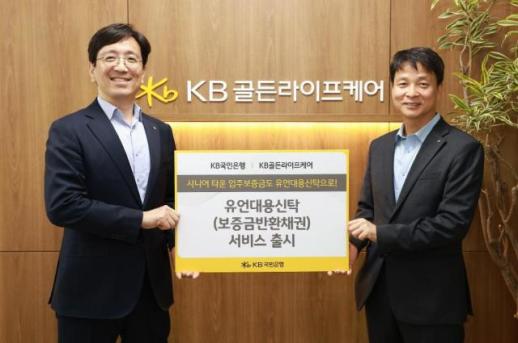 KB Kookmin Bank Launches Trust Service for Senior Residence Deposits KB Kookmin Bank announced on May 19 that it has launched a trust service for managing deposits of customers residing in senior residences. This service was developed in collaboration with KB Life's subsidiary, KB Golden Life Care, to address the concerns of an increasing number of senior residence customers. It is designed to securely protect large entrance deposits while allowing for the stable transfer of assets to designated beneficiaries without the complexities of inheritance procedures.The service is available to customers with entrance deposits at domestic senior residences, and consultations for enrollment can be conducted at KB Kookmin Bank branches.KB Kookmin Bank has lowered the minimum enrollment amount to 10 million won, proactively working to democratize trust services that have traditionally been seen as exclusive to high-net-worth individuals. The bank aims to expand its offerings for senior customers across various sectors and establish a leading position in the market.A representative from KB Kookmin Bank stated, “This service was launched based on the concerns expressed by senior customers we heard directly in the field. In the future, KB Kookmin Bank will continue to introduce proactive and differentiated financial solutions that enhance the quality of life for senior customers in preparation for an aging society.”* This article has been translated by AI. 2026-05-19 17:24:17
 -
 Yujin Park's Former Manager Sentenced to 3.5 Years for Fraud A former manager of violinist Yujin Park has been sentenced to prison for defrauding her of millions of won. The Seoul Southern District Court's Criminal Appeal Division announced on May 19 that Kim, 65, was sentenced to three years and six months in prison on March 26 for charges including fraud, forgery, and embezzlement. The prosecution did not appeal the ruling, and while Kim submitted a petition to the Supreme Court, he withdrew it on May 7, finalizing his sentence. Investigations revealed that Kim exploited Yujin Park's mental health struggles, including bipolar disorder, to manipulate her. He coerced her into signing loan agreements and land sale contracts under the pretense of facilitating her violin performances. From August 2016 to May 2018, Kim had Yujin Park sign loan agreements that resulted in debts amounting to millions of won, while he pocketed approximately 357.5 million won from creditors. Additionally, he sold her land in Jeju from March 2016 to April 2018, profiting from those transactions as well. In June 2018, he altered the rental agreement for an apartment Yujin Park was leasing, taking 50 million won from the security deposit. He also misappropriated about 180 million won in compensation for land that Yujin Park was entitled to, using it to settle his own debts. The first trial court sentenced Kim to four years in prison in November of last year, noting that he had taken advantage of a victim with mental disabilities who trusted him, using her assets for personal gain. Kim appealed, arguing that the sentence was too harsh. The appellate court acknowledged that he had not made restitution and had not received forgiveness from the victim, but it reduced his sentence to three years and six months, considering his long-term relationship with Yujin Park and the repayment of some fraudulent loans. This case came to light in 2019 when the Seoul Disability Rights Center reported Kim to the Seoul Southern District Prosecutor's Office for fraud, breach of trust, and embezzlement. Yujin Park expressed her desire for punishment during the police investigation. Yujin Park, a Korean-American violinist, gained recognition in South Korea after appearing on KBS's "Open Concert" in 1996. She was a full scholarship student at the Juilliard Pre-College and earned the title of "child prodigy violinist" for her performances that blend classical and pop music. However, she has faced controversies regarding alleged abuse by her former agency and exploitation by those around her. The court's ruling in this case, where she suffered financial losses at the hands of a trusted manager, concluded Kim's trial after approximately four years and four months.* This article has been translated by AI. 2026-05-19 17:21:44
 -
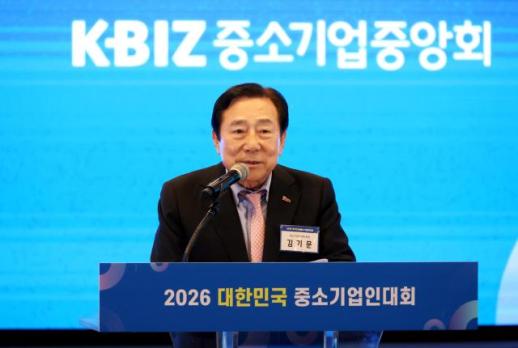 Small Business Leaders Gather for 2026 National Small Business Awards The Korea Federation of SMEs and the Ministry of Small and Medium Enterprises and Startups hosted the 2026 National Small Business Conference. During the event, 92 government awards, including the Gold Tower Industrial Medal, were presented to individuals who contributed to economic growth and job creation. According to the Korea Federation of SMEs, this year marks the 37th iteration of the conference, themed "Turning Change into Opportunity: Challenging Small Businesses." Over 300 attendees included Prime Minister Kim Min-seok, Minister Han Seung-sook, and leaders from various small business organizations. This year's Gold Tower Industrial Medals were awarded to Lee Yeon-bae, CEO of Autozen, and Lee Neung-gu, CEO of Chilgapsan. The Gold Tower Industrial Medal is a prestigious government award given to individuals with significant contributions to national industrial development. Lee Yeon-bae was recognized for his nearly 40 years in the automotive parts industry, particularly for enhancing national industrial competitiveness through the localization of key technologies. Lee Neung-gu was honored for modernizing rice processing products and promoting the globalization of K-food. Kim Ki-moon, chairman of the Korea Federation of SMEs, stated in his opening remarks, "Government investment and support are essential to innovate not only advanced strategic industries but also traditional manufacturing through the National Growth Fund," adding, "We will invest 200 billion won through the Yellow Umbrella Fund." He further emphasized that the AI transformation of traditional manufacturing is now a matter of survival, urging the need to expand support for data infrastructure and cooperative AX projects centered around industry-specific cooperatives.* This article has been translated by AI. 2026-05-19 17:19:22
 -
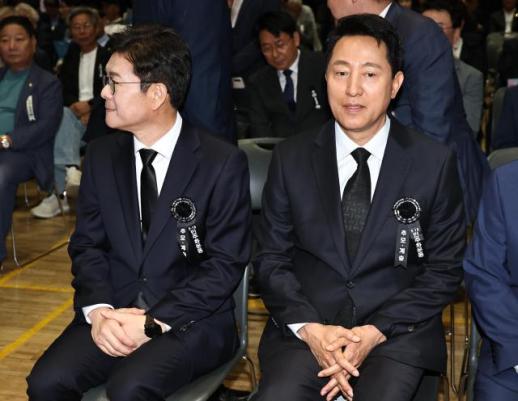 Seoul Mayoral Election Spirals Amid Allegations of Missing Rebar As the Seoul mayoral election, often referred to as the "flower" of local elections, approaches, tensions between candidates are escalating, leading to a potential crisis. The Democratic Party, alongside candidate Jung Won-o, has intensified its attacks over allegations of missing rebar in the GTX-A line, prompting Oh Se-hoon of the People Power Party to demand an official apology from Jung and the Democratic Party, further escalating the conflict. At a press conference on the morning of May 19, lawmaker Ko Min-jeong, co-head of the "Oh Se-hoon 10-Year Judgment Headquarters" within Jung's campaign, increased pressure regarding the rebar allegations. "This construction failure is not merely a construction defect but a reflection of the Seoul city's administrative safety management capabilities and the overall public oversight system," Ko stated. "Oh must take clear responsibility for the allegations of poor construction and cover-up. If he attempted to conceal this, it would be a dereliction of duty that disregards citizen safety." Ko emphasized that during Oh's four years as mayor, incidents such as sinkholes, the Itaewon tragedy, and safety concerns regarding Han River buses have surged, asserting, "Oh, as the final safety manager of Seoul, is the source of safety negligence." The Democratic Party also ramped up its attacks during a parliamentary strategy meeting, with floor leader Han Byeong-do stating, "He knew about the missing rebar but failed to properly inform the Ministry of Land, Infrastructure and Transport. Is showcasing his achievements more important than the lives and safety of Seoul citizens?" He added, "Oh, who hides failures and neglects safety, is unfit to be responsible for Seoul." In response, Oh claimed during a policy meeting that he learned about the missing rebar through news reports, asserting that the deputy mayor also had not received any reports regarding the issue. He accused Jung and the Democratic Party of exploiting the allegations for electoral gain and called for a public apology. "I learned about this issue from the news, and the deputy mayor has stated he received no reports on it," Oh said. "Jung and the Democratic Party should sincerely reflect and apologize for inflating the allegations and spreading them to the level of rumors for electoral purposes." Oh emphasized the importance of resuming construction quickly to ensure that operations scheduled for August 8 proceed without disruption, stating, "The operation of the GTX-A line is my top priority, and I will ensure it is managed properly." Additionally, Oh's campaign issued a statement describing the situation as a blatant "political maneuver" involving the mobilization of investigative and administrative powers for electoral purposes. They asserted that the city had recognized the issue in advance and had taken necessary actions through proper procedures. They warned the Democratic Party, saying, "Lacking confidence to compete for citizens' votes, they are attempting to eliminate opponents by borrowing the sword of power agencies. Investigative and administrative powers are not electoral tools for the ruling party. The citizens of Seoul will deliver a stern judgment against this undemocratic and arrogant behavior."* This article has been translated by AI. 2026-05-19 17:16:26
 -
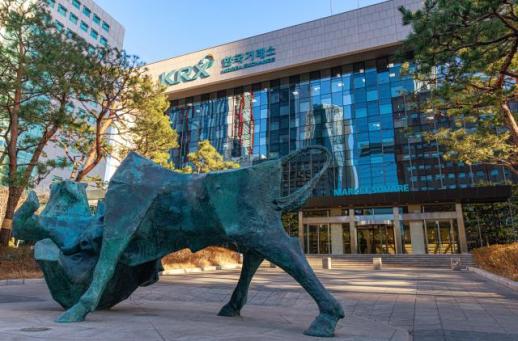 KOSPI Companies Report 175% Increase in Operating Profit, Excluding Samsung and SK Hynix This year, the KOSPI index has risen by 74%, driven by ample liquidity and the so-called "Samsung and SK Hynix effect." This trend is reflected in the earnings of KOSPI-listed companies. In the first quarter, the operating profit of KOSPI-listed companies increased by 175% compared to the same period last year. However, excluding Samsung Electronics and SK Hynix, the increase was only about 2%. According to the Korea Exchange's report on the first-quarter earnings of December fiscal year-end companies, the consolidated operating profit of 639 listed companies reached 156.3194 trillion won, marking a 175.83% increase year-on-year. Revenue was 927.5409 trillion won, and net profit rose by 141.4436 trillion won, reflecting increases of 19.49% and 177.82%, respectively. The consolidated operating profit margin improved to 16.85%, up 9.55 percentage points from the previous year, while the net profit margin rose to 15.25%, an increase of 8.69 percentage points. Samsung Electronics and SK Hynix continued to dominate, with their first-quarter revenue at 157 trillion won and operating profit at 84 trillion won, accounting for 31.73% of total revenue and 77% of operating profit. Excluding these two companies, the remaining listed firms saw revenue and operating profit increase by 2.36% and 2.05%, respectively. Among various sectors, 12 industries, including electronics and non-metallic minerals, reported increased operating profits, while eight sectors, including entertainment and culture, and paper and wood, experienced declines. The debt ratio of KOSPI-listed companies was 108.74%, a decrease of 1.64 percentage points compared to the end of last year. Among the 639 companies analyzed based on consolidated financial statements, 504 reported net profits, a 3.60% increase from the previous year. In the KOSDAQ market, six out of ten listed companies reported profits, with significant increases in operating and net profits. According to the Korea Exchange, the combined operating profit of 1,273 KOSDAQ companies reached 4.1284 trillion won, up 78.17% year-on-year. Revenue increased by 21.72% to 84.9461 trillion won, while net profit surged by 171.22% to 4.4342 trillion won. The operating profit margin and net profit margin improved to 4.86% and 5.22%, respectively, up 1.54 percentage points and 2.88 percentage points from the previous year. The debt ratio for the first quarter was 122.03%, an increase of 9.23 percentage points compared to the end of last year.* This article has been translated by AI. 2026-05-19 17:15:00
 -
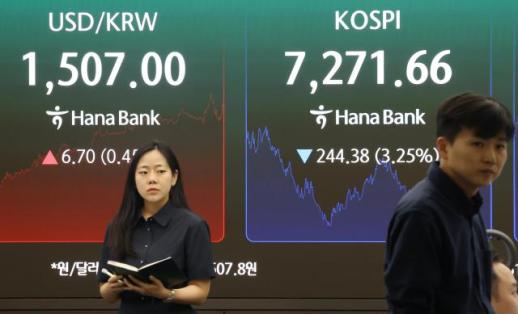 Korea's bond and currency retreat deepens rate hike bias SEOUL, May 19 (AJP) - South Korean bonds and currency took a renewed beating amid broad strengthening in the greenback and a global debt retreat amid jitters over government borrowing to finance war costs and inflation risks with little sign of the Gulf crisis abating. Long-dated sovereign bonds across major economies — including the United States, Japan, and the United Kingdom — have hit levels unseen in two to three decades. And Korean bonds rank among the worst performers, despite the country's inclusion in the FTSE World Government Bond Index (WGBI). Korea's 10-year benchmark yield closed Tuesday at 4.210 percent, easing 2.9 basis points from Monday's annual high of 4.239 percent, narrowing the spread with the equivalent U.S. Treasury to just 36 basis points. The 10-year U.S. Treasury was trading at 4.608 percent as of 0545 GMT. Unlike equities, Korean bonds have been battered by prolonged Middle East conflicts. The 10-year yield has surged more than 31 basis points since end-April and 85 basis points since December — outpacing a 22-basis-point rise late April and a 42.64-basis-point climb from December in equivalent U.S. Treasuries, and a 21-basis-point and 67-basis-point jump in Japanese government bonds over the same periods. Concerns are mounting domestically that bond supply-and-demand conditions are deteriorating rapidly. Kang Seung-won, a fixed-income analyst at NH Investment & Securities, attributed the recent yield spike not to a simple sell-off but to a "buyer strike." Investors, he said, are reluctant to aggressively buy bonds at a time when the government is expanding issuance, the economy is holding up better than expected, and the central bank has kept the door open to further tightening. The government set its Treasury bond issuance volume for May at approximately 19 trillion won, up from the prior month. Market observers noted that despite improving prospects for tax revenue on the back of a semiconductor sector recovery, signals that the government intends to channel those resources into economic stimulus rather than fiscal consolidation have added further pressure to the bond market. "Since the government has shown a stance averse to tightening, a sentiment appears to be spreading that additional Treasury issuances could be on the horizon," a bond market source said on condition of anonymity. The global bond rout is compounding the pressure. The U.S. 30-year Treasury yield hovered at 5.18 percent on Monday, its highest in roughly 19 years, while Japan's 10-year yield touched 2.789 percent Tuesday, a near 29-year high. Markets have pointed to soaring energy prices stemming from the Middle East conflict and anxiety over expanded fiscal spending by major economies as key drivers of upward pressure on long-term rates. Global financial markets are also reassessing the return of so-called bond vigilantes — investors who protest runaway inflation and heavy government borrowing by selling bonds and driving yields higher. Analysts noted that anxiety intensified after U.S. Treasury Secretary Scott Bessent refrained from offering market-stabilizing assurances during the recent Treasury sell-off. The won has mirrored the bond market's woes. The currency closed at 1,505.7 per dollar in Seoul on Tuesday, strengthening 7.4 won from the previous session, though it remains under sustained pressure. The won had briefly recovered to 1,470.5 on May 6 — buoyed by broad dollar weakness and a concentrated wave of exporter dollar-selling — but the rebound proved short-lived. As Middle East risks re-escalated and pushed international crude prices back above $100 per barrel, safe-haven demand for the dollar reasserted itself. South Korea's heavy dependence on crude oil imports is seen as a key amplifier of won weakness: rising oil prices tend to push up import costs and widen the trade deficit, fueling further dollar demand among market participants. Combined with the bond market's deterioration, fears of foreign capital outflows are growing. If the dual weakness in bonds and the currency — marked by simultaneous rises in long-term yields and the exchange rate — persists, broader domestic financial market volatility could escalate. 2026-05-19 17:13:01
 -
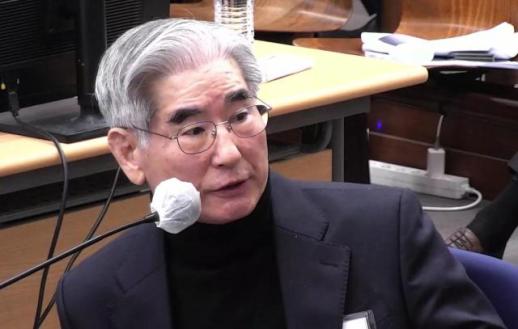 Former Defense Minister Kim Yong-hyun Sentenced to Three Years for Evidence Tampering On May 19, a South Korean court sentenced former Defense Minister Kim Yong-hyun to three years in prison for obstructing official duties and instructing evidence tampering. The Seoul Central District Court's 34th Criminal Division, led by Judge Han Seong-jin, found Kim guilty of using his position to undermine the legitimate judicial process, deeming his actions a serious crime against the state. The court affirmed all charges brought against Kim by the special prosecutor's office. It specifically noted that Kim's directive to destroy evidence made it difficult to uncover the truth surrounding the declaration of martial law. "The defendant (Kim Yong-hyun) committed the crime by exploiting his significant position as Defense Minister, and his actions through evidence tampering hindered the discovery of the substantive truth regarding the martial law declaration," the court stated. The court also ruled against Kim's actions in delivering a secure phone to former Army Intelligence Commander Noh Sang-won, emphasizing that handling security equipment is a legitimate duty of the presidential security service. "Noh, at the time, was a civilian and had issues with his qualifications, yet the defendant deceived the security service into believing the phone was necessary for investigations," the court pointed out, indicating a clear intent to obstruct the security service's official duties. Additionally, the court rejected Kim's defense team's claims of prosecutorial abuse of power, stating, "Considering the investigation period and the suspension of the investigation under the insurrection special prosecutor law, it cannot be concluded that the prosecution abused its power. While the charges may seem somewhat broad, this is unavoidable given the nature of the actions and does not impede the defendant's right to defense." The court also largely dismissed the defense's arguments against the admissibility of evidence collected during the search and seizure, recognizing it as lawful. However, the court took into account that Kim had no prior criminal record at the time of the offenses, which was a mitigating factor in his sentencing. Kim is accused of deceiving the presidential security service to deliver a secure phone to Noh on December 2, 2024, the day before the martial law was declared. According to the special prosecutor's investigation, Noh used the secure phone as the head of the 'Second Investigation Team,' which was formed immediately after the martial law was declared to investigate allegations of election fraud. Furthermore, Kim is also charged with instructing his civilian secretary, Yang, to destroy key documents related to the martial law, including a public address and printed proclamations, two days after the martial law was declared on December 5. This case marks the first indictment following the establishment of the special prosecutor's team led by Jo Eun-seok, which was formed shortly after Jo's appointment on June 12 of last year. The special prosecutor's office charged Kim with obstructing official duties and instructing evidence tampering just seven days after Jo's appointment.* This article has been translated by AI. 2026-05-19 17:12:00
 -
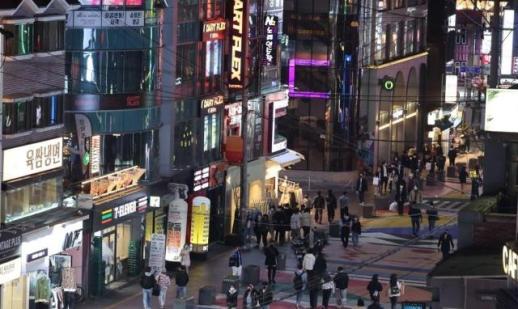 Foreign Tourists Drive Shift from Offices to Hotels Near Hongdae In the bustling commercial areas near Hongdae and Sinchon, foreign tourists have emerged as a key consumer demographic, prompting some office buildings to convert parts of their spaces into accommodations. This shift is attributed to the growing demand for lodging and tourism services driven by international visitors. While sales in college areas have increased, the vacancy rates for small businesses have also risen. This trend is linked to a decline in the proportion of consumers in their 20s and the growing prevalence of delivery, online, and contactless shopping. According to a report from Aju Economy on May 19, rental agreements for accommodations have recently been signed for several floors of the Master Building in Changcheon-dong, Seodaemun-gu. This building, which stands 10 stories tall and is located a four-minute walk from Hongdae Station, was previously the headquarters of Master Motors. After plans for a complete sale were abandoned, it was listed for rent starting in the fourth quarter of last year. Rental prices have been steadily rising. Data collected by the commercial real estate service firm R Square shows that a rental listing in the Fidelia Tower, within walking distance of Sinchon Station, had a net operating cost (NOC) of 174,200 won per square meter in the third quarter of last year. This marks an increase from 142,500 won in the first quarter of 2022 and 170,800 won in the fourth quarter of 2024. NOC represents the total rental cost including management fees. According to the Korea Real Estate Agency, the office vacancy rate in the Hongdae and Hapjeong areas was 6.1% in the first quarter of this year, higher than the Seoul average of 5.2%. However, it was below the city average in the third and fourth quarters of last year. Jeong Seon, CEO of Jeongseon Estate, noted, "Office rentals in this area are limited in supply, and large buildings that have been completed in the past three years have often been leased before they were even finished. With consistent demand, rental prices have been increasing by 3% to 5% annually." As spending by foreign tourists increases, sales in the Hongdae area have also shown an upward trend. According to the Seoul Business Analysis Service, sales in the Hongdae area reached 618.7 billion won last year, a 30.1% increase from 475.5 billion won in 2021. Sales figures for the following years were 590.3 billion won in 2022, 626 billion won in 2023, and 635.9 billion won in 2024. According to Orange Square, which operates the Wowpass payment platform for foreign tourists, Hongdae ranks as the third most popular area for foreign tourist spending. In contrast, the Sinchon area has seen a slowdown in growth. Sales in the Sinchon area were 331.2 billion won in 2021, 383.8 billion won in 2022, and 417 billion won in 2023, but dropped to 407.2 billion won in 2024 and 382.6 billion won last year, marking two consecutive years of decline. This disparity highlights differing trends in foreign tourist demand and foot traffic within the same college town. However, the increase in sales has not benefited all local businesses equally. Since last year, the vacancy rate for small businesses in college areas has surged. Small businesses are defined as those with two stories or fewer and a total floor area of less than 330 square meters. The vacancy rate for small businesses in the Hongdae and Hapjeong areas reached 14.2% in the third quarter of last year, more than tripling from 4.6% in the previous quarter. The vacancy rate remained in double digits at 13% in the first quarter of this year. The Sinchon and Ewha areas also recorded a vacancy rate of 15.1% in the third quarter of last year, maintaining that figure into the first quarter of this year, significantly higher than the 4.6% recorded in the second quarter of 2025. The share of domestic consumers in their 20s, who were once the primary demographic in college areas, has also declined. In the Sinchon area, the revenue share from consumers in their 20s fell from 33.3% in 2021 to 27.2% last year. Similarly, in the Hongdae area, the share dropped from 47.9% in 2021 to 43.4% last year. The end of the COVID-19 loan extension measures for small business owners and self-employed individuals in September of last year has also contributed to the financial burdens of struggling small stores, increasing their costs for loans and rent. Lee Soo-jin, a researcher at the Consumer Trend Analysis Center at Seoul National University, stated, "The changes in consumer patterns are significant. The rise of delivery, online, and contactless shopping has reduced the frequency of in-person visits to stores." She added, "The sharp increase in vacancy rates indicates that policy impacts are substantial. With the end of loan extensions for small business owners and self-employed individuals, the burden has increased for the most vulnerable stores."* This article has been translated by AI. 2026-05-19 17:07:04
 -
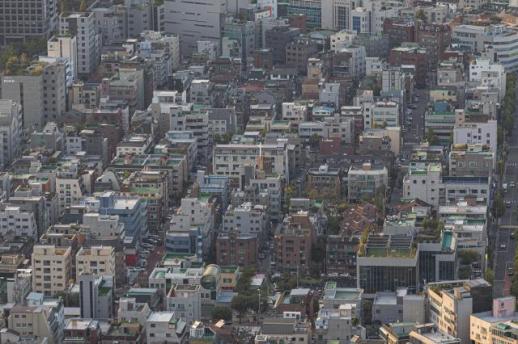 Seoul Villa Transactions Surge 31% Amid Rental Crisis The volume of villa transactions (including multi-family homes) in Seoul has increased by more than 30% this year compared to last year. As the rental crisis for apartments intensifies, demand is shifting to the relatively lower-priced non-apartment market, while investment interest is also returning, particularly in areas undergoing early redevelopment. According to the Ministry of Land, Infrastructure and Transport's real transaction disclosure system, from January to May 19, 2026, there were 15,157 villa transactions in Seoul. This marks a 31.0% increase (3,587 transactions) from the same period last year, which recorded 11,570 transactions. This represents the most significant recovery since the sharp decline in transactions following rental scams in 2023. The recovery trend, which began in the second half of last year in certain redevelopment areas, has now spread across Seoul. By district, Jongno-gu saw the highest increase in transaction volume, rising 150.0% compared to last year. However, analysts note that Jongno's overall transaction volume is relatively small, making it susceptible to base effect influences. More substantial increases were observed in districts such as Gwangjin-gu, Dobong-gu, Seodaemun-gu, and Gangbuk-gu. In Gwangjin-gu, villa transactions surged from 617 last year to 1,071 this year, a 73.6% increase. Dobong-gu followed with a 63.6% rise, Seodaemun-gu with 47.8%, and Gangbuk-gu with 36.4%. Other districts, including Songpa-gu, Eunpyeong-gu, and Yangcheon-gu, also experienced notable increases. Gwangjin-gu's growth is attributed to investment demand driven by redevelopment expectations in the Jayang and Junggok-dong areas. Villas in the early stages of redevelopment require relatively lower initial investments, and the possibility of purchasing with a rental guarantee—known as 'gap investment'—has led to continued inquiries from investors. A real estate agent in Gwangjin-gu stated, "With lower entry prices than apartments and the anticipation of redevelopment, there is a simultaneous movement of demand for both living and investment purposes. We are also seeing steady inquiries from those looking to purchase villas as a form of asset investment." In contrast, the increase in transactions in outer districts like Dobong, Gangbuk, and Seodaemun is seen as being driven more by actual housing needs than investment. According to Asil, the number of rental listings in Dobong-gu has decreased by over 14% in the past ten days, totaling 164 listings. As apartment rental prices rise rapidly and listings dwindle, tenants are moving towards older villas or non-apartment markets, which have lower deposit burdens. Statistics from the Korea Real Estate Agency indicate that last month, rental prices in Seongbuk-gu rose by 0.92%, the highest increase in Seoul, followed by Gwangjin-gu (0.96%), Nowon-gu (0.79%), Seodaemun-gu (0.78%), and Dongdaemun-gu (0.77%). A decrease in supply is also cited as a factor influencing market dynamics. According to the Ministry of Land, Infrastructure and Transport, the number of completed villas in Seoul dropped from 23,389 units in 2021 to just 4,329 units last year, an 81.5% decline. With both actual and investment demand flowing into the market, signs of price rebounds are emerging in some areas. The Korea Real Estate Agency's "April National Housing Price Trend Survey" reported a 0.55% increase in Seoul's housing price index. Both apartments and villas have continued to rise in price this year, with the average sale price of villas increasing by 0.62% last month, surpassing the apartment price increase of 0.55% during the same period. However, some experts caution against declaring a full market recovery. There remains significant regional polarization, and transactions for less desirable locations or older villas continue to lag. Kim Hyo-seon, a senior real estate analyst at KB Kookmin Bank, noted, "In key areas like Gwangjin, Yongsan, and Dongjak, investment demand is driven by redevelopment expectations that circumvent land transaction permit regulations, while in outer districts, the majority of purchases are motivated by actual housing needs due to rising living costs. However, unlike earlier this year, villa prices have risen significantly, and market risks persist, so it is advisable to refrain from hasty purchases and to adopt a wait-and-see approach."* This article has been translated by AI. 2026-05-19 17:03:32