

Journalist

Kim Yong-ha
-
 Korea's Trade Chief Meets EU Counterpart to Address Steel Regulation Concerns Yeo Han-goo, head of the Trade Negotiation Headquarters at the Ministry of Trade, Industry and Energy, met with the European Union's trade chief to express concerns from South Korea's steel industry ahead of the EU's new steel regulations set to take effect next month. He also participated in discussions on World Trade Organization (WTO) reforms, emphasizing the need to address trade issues amid rising protectionism. The Ministry reported that Yeo attended the OECD Ministerial Council Meeting (MCM) in Paris on June 3-4, where he held bilateral talks with ministers from major countries to discuss trade matters. During his meeting with Maroš Šefčovič, the EU's Executive Vice President for Trade and Economic Security, Yeo conveyed the South Korean government's and industry’s concerns regarding the upcoming EU steel measures. He highlighted the critical role of South Korean steel as a key raw material in the European manufacturing supply chain, which includes sectors such as automotive, electronics, and machinery. He requested that sufficient market access be ensured during the implementation of the new regulations. Yeo also emphasized that South Korea is a key economic partner with the EU, having signed a free trade agreement (FTA), and has actively participated in international cooperation to address global steel overcapacity. He called for favorable consideration for South Korea in the allocation of tariff-free quotas. This meeting follows Yeo's discussions in Brussels on June 1 regarding the EU's steel measures, occurring just three days later. The government plans to continue high-level consultations to minimize the impact on the South Korean steel industry and secure market access before the new EU regulations take effect. While at the OECD, Yeo also attended an informal WTO trade ministers' meeting, where he stressed the need for WTO reforms. He stated, "The WTO is facing a crisis where it cannot make meaningful decisions," and called for reforms to the decision-making structure and the restoration of its normative functions to adapt to the changing trade environment. He proposed expanding the use of plurilateral agreements to address new trade issues such as digital trade and artificial intelligence (AI), as well as making the practice of duty-free electronic transmissions permanent and expediting the implementation of the Investment Facilitation for Development Agreement (IFDA). He also suggested the necessity of holding a ministerial-level interim review meeting ahead of next year's WTO Ministerial Conference. At the OECD Ministerial Council Meeting, South Korea participated as a vice-chair in celebration of its 30th anniversary of OECD membership. Yeo led discussions in various sessions, including delivering keynote speeches on industrial policy, trade, and investment. In the industrial policy session, he introduced initiatives on manufacturing AI transformation, energy transition policies, and the regional balanced development strategy known as '5 poles and 3 special zones.' He emphasized that while the importance of industrial policy is growing due to supply chain instability and economic security concerns, it should focus on promoting productivity innovation and technology diffusion rather than replacing markets. Additionally, Yeo held discussions with key officials from the United States, including USTR's Jamieson Greer, as well as representatives from the UK, France, Finland, Brazil, and Argentina, addressing topics such as steel regulations, critical mineral supply chains, FTA negotiations, and expanding investment cooperation.* This article has been translated by AI. 2026-06-05 06:03:00
 -
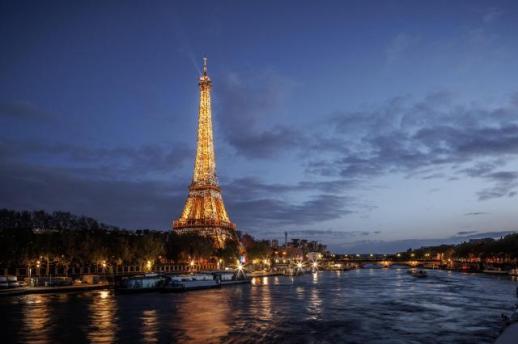 Paris Invites Korean Tourists with New Attractions Amid Monet's 100th Anniversary Paris is actively promoting new tourism content to attract Korean travelers this year, coinciding with the 140th anniversary of Korea-France relations and the 100th anniversary of the death of Impressionist painter Claude Monet. The Korean market holds significant importance in Paris's tourism industry. According to the French tourism office, approximately 267,000 Korean tourists visited the Île-de-France region last year, accounting for 9% of Asian visitors. Notably, Korean tourists' spending surged by 35% to around €286 million, with an average stay of 5.7 nights, significantly higher than the overall average of 4.1 nights for international visitors. Additionally, 51% of these tourists opted for luxury accommodations rated four stars or higher, indicating a preference for quality and convenience. To engage Korean travelers, identified as a key target for Paris tourism, the French tourism office and the Paris Regional Tourism Board held a "Paris Regional Tourism Workshop" on June 4 at The Plaza Hotel in Seoul. During the event, Ingrid Archikian emphasized, "Korea is a core market with a strong and genuine bond with Paris. The city has evolved from a place to see to a destination to experience life." Jeong Hye-won, acting head of the French tourism office in Korea, noted, "Korean travelers tend to stay longer and spend more. They exhibit a mature travel attitude that respects local culture and rules. For this reason, our local tourism partners deeply trust and welcome Korean visitors." ◆ A Year of Cultural and Artistic Festivals: From Monet's 100th Anniversary to Special Programs for Koreans This year, Paris is transforming into a vibrant hub for cultural and artistic festivals. In particular, to commemorate the 100th anniversary of Monet's death, over 100 major events will take place across the Île-de-France and Normandy regions until January 2027. The scale of exhibitions is also impressive. Starting this fall, the Orangerie Museum will host a special exhibition featuring around 40 of Monet's works gathered from around the world. The Marmottan Monet Museum will present a special exhibition titled "From Monet to Hockney." Experiential spaces following in the footsteps of Impressionist masters are also expanding. The beautiful "Vetheuil" mansion, where Monet lived, will open its first permanent exhibition program to the public. A new tourism route linked to Giverny will highlight Impressionism, focusing on key sites such as Auvers-sur-Oise, Barbizon, and the former residences of Monet and Camille Pissarro. In addition to Monet, significant exhibitions featuring other Impressionist painters await visitors. The Grand Palais will host a large-scale "Cézanne Special Exhibition," while the Musée d'Orsay currently features an exhibition themed around "Renoir and Love." This year marks the 140th anniversary of Korea-France relations, and Paris will host a variety of cultural events focusing on Korea throughout the year. Notably, the National Museum of Asian Arts, Guimet, will hold a series of major exhibitions related to Korea. The Cernuschi Museum, the municipal Asian art museum in Paris, will also prepare special exhibitions related to Korean culture for local audiences. Additionally, the Korean Cultural Center in France plans to present various events throughout the year to celebrate the 140th anniversary. Major heritage sites under the French National Monuments Center have also undergone renovations. The Hôtel de la Marine, which overlooks Place de la Concorde, has been revamped to offer an immersive audio guide available in nine languages, along with a newly renovated caretaker's apartment and reception room tour. The Panthéon, a mausoleum for notable figures, will host an exhibition titled "The Little Life" in collaboration with the Pompidou Center from September 2027 to February 2028. Furthermore, the "Palais du Tau," a museum dedicated to the history of royal coronations held at Reims Cathedral, is set to reopen by the end of this year. The immersive digital art center "Atelier des Lumières," converted from an old foundry in Paris, will feature a stunning exhibition utilizing 140 video projectors. Visitors can experience masterpieces by Da Vinci, Michelangelo, and Raphael, as well as a dinosaur-themed exhibition in a 360-degree format. Additionally, new attractions will be introduced, including the opening of a "Frozen" themed zone at Disneyland Paris and the reopening of the Notre-Dame Cathedral tower, creating fresh tourism experiences. Major events are also set to attract fans of popular culture and sports. This summer, the Stade de France will host a large concert by the K-pop group BTS, along with performances by global artists such as Bruno Mars and Celine Dion across various venues in Paris. The excitement of sports festivals is also heating up. This summer, Paris will host its first "eSports World Cup," alongside the ongoing French Open tennis tournament, the prestigious Tour de France cycling race, and the European Swimming Championships. In September, the French Open golf tournament, which began in 1906, will take place at Le Golf National, the venue for the Paris Olympic golf event. ◆ Private Tours and Eco-Friendly Customized Tourism Landmarks Key landmark tour programs favored by Korean travelers have also evolved. The Eiffel Tower, which attracts approximately 6.5 million visitors annually, now offers a private tour called "Le Grand Tour" with interpretation services for small groups. The Seine River cruise boat, Bateaux-Mouches, has introduced a new "Sparkling Cruise" that includes half a bottle of champagne. Additionally, an individual QR code system has been implemented for easy navigation of the route. Plans are also in place to hybridize the vessels for sustainable tourism and obtain low-carbon certification. The hop-on, hop-off bus tour provider, Tootbus, is operating the world's first 100% open-top electric buses. During the tours, travelers can receive personalized recommendations for attractions through an AI Paris city guide that supports Korean language during both the tour and walking explorations. Unique experiences in the suburbs of Paris are also noteworthy. The "Château de Vaux-le-Vicomte," once the residence of 17th-century finance minister Nicolas Fouquet, will host a candlelit night opening with 2,000 candles and workshops to learn about French hospitality culture. Additionally, a new landmark, the "Triangle Tower," a mixed-use building standing 180 meters tall with 42 floors, is set to be constructed at the Porte de Versailles exhibition site. ◆ Expanding Accommodation Infrastructure to Enhance Accessibility for Sustainable Tourism The quality of travel is also being enhanced through modernized accommodation infrastructure. Marriott has completed renovations of key hotels in Paris. The Marriott Rive Gauche Hotel has undergone a complete renovation of its lobby, restaurant, and conference facilities, while the Marriott Champs-Élysées Hotel and Le Méridien Arc de Triomphe have also been revamped. The traditionally styled "Plaza Athénée" hotel has introduced Parisian-style wooden floors, Japanese-style electronic bidets, and state-of-the-art air conditioning in all rooms following its remodeling this year. Located on Montmartre Hill, the "Boeuf Montmartre Restaurant" offers authentic French cuisine and live performances, along with 15 luxury apartment-style rooms called "Maison La Bohème" on the upper floors, providing a unique lodging experience. Paris's infrastructure and transportation accessibility are continually improving with a focus on sustainable tourism. The legacy of the 2024 Paris Olympics and Paralympics aims to provide tourists with a more responsible and comfortable travel environment. Notably, the "CDG Express," scheduled to open in 2027, will connect Charles de Gaulle Airport to downtown Paris in just 20 minutes. Additionally, the "Grand Paris Express" project will gradually open four new subway lines, including Line 18, which connects to Versailles, significantly enhancing regional accessibility by 2031.* This article has been translated by AI. 2026-06-05 06:03:00
 -
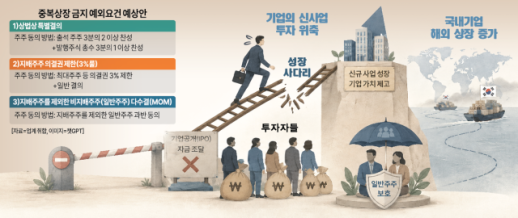 Business Leaders Express Concerns Over New Dual Listing Guidelines Concerns are rising that the administration of Lee Jae-myung will hinder domestic companies' ability to secure funding for future growth by implementing guidelines that generally prohibit dual listings for subsidiaries and affiliates, allowing exceptions only in specific cases. There are also worries that detailed regulations favoring minority shareholders could infringe on the rights of controlling shareholders. According to sources in the securities industry, the Korea Exchange is expected to announce a draft of the dual listing ban guidelines and detailed regulations soon. Following a period for public comment and approval from the Financial Services Commission's Securities and Futures Commission, the guidelines are anticipated to take effect in July. This move aims to clarify the government's March announcement regarding the prohibition of dual listings for parent companies with exceptions. Conglomerates such as SK Group, HD Hyundai Group, and LS Group, which were preparing for initial public offerings (IPOs) of their affiliates, are now in a state of emergency. They have halted all IPO plans and are cautiously awaiting the government's announcement. Financial investors are increasingly pressuring these companies to retrieve their investments amid fears of postponed or canceled IPOs. The dual listing ban is a key policy initiative of the Lee Jae-myung administration aimed at modernizing the domestic capital market and protecting minority shareholders. The goal is to prevent the dilution of shareholder rights for parent company investors due to additional listings following corporate spin-offs. In the past, complaints arose from minority shareholders of LG Energy Solution and Kakao affiliates after their listings, prompting the government to establish preventive measures. Jo Dong-geun, a professor of economics at Myongji University, stated, "It is appropriate to fundamentally prohibit dual listings that involve spinning off specific business segments for re-listing to protect minority investors. Allowing such practices in the past was a policy mistake, and there is a need for stricter regulations through amendments to capital market laws." However, there are significant concerns about the potential negative impact on the IPO market. Following the government's announcement, only one company, K-Bank, has gone public on the KOSPI this year, a sharp decline from four companies in the same period last year. LS E6 Solutions had planned an IPO this year but withdrew its plans amid the dual listing controversy. Experts worry that domestic companies may seek to avoid the dual listing ban by delisting from the KOSPI and pursuing overseas listings instead. Wang Soo-bong, a professor at Ajou University, warned, "If the dual listing ban is implemented, we may see cases where parent companies pursue overseas listings to minimize capital burdens. This would be a loss for the country, and it is questionable whether these companies would receive proper valuations abroad." Predictions indicate that securing new funding for business growth will also become more challenging. Previously, companies could attract investments from financial investors by using equity as collateral for new business development and then repay them during an IPO. However, with the dual listing ban, this growth strategy will no longer be viable. Consequently, companies will need to rely on profits from their core businesses or issue corporate bonds, which carry significant interest burdens. This raises the risk of both core and new businesses suffering, likely deterring companies from pursuing new ventures. One alternative suggested is for parent companies to attract direct investments from financial investors through third-party allocations of new shares. However, accurately valuing new businesses may prove difficult, and there could be backlash from minority investors due to share dilution. An academic source, who requested anonymity, noted, "With the dual listing ban blocking affiliate IPOs and increasing financial burdens making bond issuance difficult, the easiest option for companies will be capital increases. Considering domestic investors' negative perception of equity offerings, there is a risk that the parent company's value could decline compared to before the implementation of the regulations." In the investment banking sector, there are concerns that global financial investors may increasingly bypass South Korea due to uncertainties surrounding capital recovery. This could lead to significant capital inflows into overseas markets where listings are relatively unrestricted, potentially disadvantaging South Korean companies during their growth stages.* This article has been translated by AI. 2026-06-05 05:03:00
 -
 Concerns Rise Over IPO Slowdown Amid 3% Rule Discussions The Korea Exchange is set to announce guidelines prohibiting dual listings, with the criteria for exceptions being a key focus for the business community. Among the options being considered are special resolutions at shareholder meetings, the 3% rule, and majority voting by minority shareholders (MoM), with the 3% rule emerging as the most likely candidate. Companies are preparing strategies that account for the possibility of dual listings being excluded altogether. According to industry sources on June 4, the government and the Korea Exchange have established a fundamental principle that any subsidiary seeking to go public must obtain prior consent from the parent company's shareholders. The challenge lies in determining the level of consent required from parent company shareholders. Given the significance of separating a parent company's new business into a standalone entity for listing, there is consensus among officials and academics that a more stringent approval process than a standard shareholder meeting resolution is necessary. The Korea Exchange postponed the release of the guidelines from April to June, conducting several closed meetings and public seminars to gather feedback. It is now reportedly deliberating three main proposals. One possibility is to apply the requirements for special resolutions at shareholder meetings, which typically require approval from two-thirds of attending shareholders and at least one-third of the total issued shares. However, considering that major shareholders and related parties often hold 30% to 50% of shares in domestic companies, experts predict that the voting will likely favor the controlling shareholders over minority shareholders, making the adoption of this option unlikely. Academics argue that to effectively protect minority shareholders, the MoM system would be the most effective approach. MoM refers to obtaining majority approval at a shareholder meeting attended only by general shareholders, excluding the controlling shareholders. However, this method faces practical challenges, such as meeting quorum requirements without the controlling shareholders present, making its adoption seem improbable. The most viable option appears to be the 3% rule, which limits the voting rights of controlling shareholders to a maximum of 3% during shareholder meetings concerning subsidiary listings. This approach has already been implemented under the amended Commercial Act, providing legal legitimacy and ease of application. The business community believes that if any option other than special resolutions is adopted, dual listings for parent companies in the domestic market will become virtually impossible. This is due to the anticipated time and costs required to secure support from half of domestic and international institutions and minority investors. Many companies have begun preparing responses, assuming the prohibition of dual listings is a foregone conclusion. SK Group, for instance, had planned an IPO for SK Eco Plant, raising 600 billion won from financial investors (FIs) in 2022, but has since decided to withdraw amid dual listing controversies and will repay the related funds to FIs. The group has also been repurchasing FI shares in SK Enmove and SK On to adjust the timing of its IPO. HD Hyundai Group faces challenges with HD Hyundai Robotics, which was spun off from HD Hyundai and is pursuing a technology-based listing. This case exemplifies the type of dual listing that the new guidelines would prohibit. HD Hyundai Robotics raised 180 billion won from domestic FIs, including the Korea Development Bank, raising concerns about the financial burden on its parent company, HD Hyundai, to repay these funds. LS Group is also grappling with its decision to withdraw the listing of LS E6 Solutions in January. The group had secured approximately 300 billion won from FIs with the condition of going public by 2030. Given that LS E6 Solutions was originally a Nasdaq-listed company, it may pivot towards the U.S. market. LS MnM, a key affiliate, is also targeting an IPO by 2027, suggesting that LS Group may implement a robust exit strategy linked to the recovery of FI funds starting in the second half of this year.* This article has been translated by AI. 2026-06-05 05:03:00
 -
 Turkey's Foreign Minister Calls for Cooperation with South Korea to Stabilize Global Order Hakan Fidan, Turkey's Foreign Minister, urged South Korea and Turkey to actively collaborate to restore the collapsing international cooperation framework and stabilize the fragmented global order. In a keynote address at the 143rd International Policy Forum at Korea University in Seoul on June 4, Fidan diagnosed that the outdated international order centered around major powers has shown its limitations. He emphasized that capable middle powers like South Korea and Turkey, with diverse backgrounds, must step forward to lead new diplomatic agreements to untangle the complex knots of current global issues. Fidan pointed out the structural contradictions facing the international community today. Over the past 80 years, numerous international organizations and treaties have been established, yet in the face of significant crises, the world remains deeply divided and has lost a sense of common purpose. He cautioned against narrowly interpreting the current situation as merely a security crisis. Relying on outdated tactics of military deployment or deterrence cannot resolve fundamental issues; rather, the essence of the crisis lies in the collapse of the international cooperation system itself. A recent example is the armed conflicts spreading in the Gulf region, centered around Iran, which pose significant threats to global economic and strategic stability. Turkey is actively engaging in diplomatic channels with countries like Pakistan and Indonesia to mediate between the United States and Iran to prevent further escalation. The ongoing war in Ukraine, now in its fifth year, starkly illustrates the ineffectiveness of the international community. Fidan criticized recent medium-range missile strikes near the borders of the European Union and NATO as an unacceptable escalation, warning of the risk of the conflict spreading throughout Europe. Ukrainian forces continue to target Russian ground communications, disrupting enemy logistics. As the war shows no signs of ending, European leaders face intense pressure to expedite Ukraine's accession to the European Union as a foundation for future peace agreements. The situation in Gaza starkly reveals the failures of the collapsed international order. The Foreign Minister characterized the international community's inability to prevent the ongoing tragedy as a severe legitimacy crisis. He explained that a system that cannot uphold universal human principles is destined to fail, and even countries that have benefited from the existing order now confront crises at their own doorsteps. In a multipolar world, no single country can bear the burden of global crises alone. Fidan analyzed that the roles of middle powers like South Korea and Turkey have become increasingly important in this dynamic. When two countries with different social and geographical backgrounds transcend the narrow interests of a single power bloc, they can forge solid agreements. To achieve tangible diplomatic outcomes, Fidan argued that regions must take the initiative to reform outdated systems. He also criticized the veto power system of the United Nations Security Council as an outdated monopoly of power by major countries, reiterating that the world is larger than just five nations. Hakan Fidan, who served as the head of Turkey's National Intelligence Organization for 13 years, was appointed Foreign Minister in 2023. In closing, he noted that when the concept of collective security was tested in the Korean Peninsula in the past, South Korea and Turkey stood shoulder to shoulder militarily.* This article has been translated by AI. 2026-06-04 23:51:00
 -
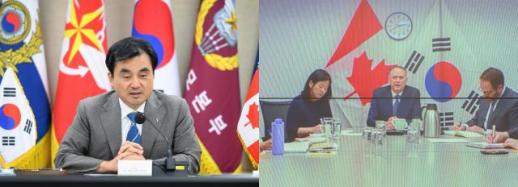 South Korea and Canada Discuss Defense Cooperation Amid Submarine Project Ahn Gyu-baek, South Korea's Minister of National Defense, held a call with David McGuinty, Canada's Minister of National Defense, on June 4 to discuss key defense issues and cooperation between the two nations. According to the Ministry of National Defense, the ministers praised the recent docking of South Korea's 3,000-ton submarine, the Dosan Ahn Chang-ho, at Canada's Victoria base, along with the ongoing joint training exercises between their navies. Both ministers agreed that these exercises enhance interoperability between their navies and reaffirm their shared commitment to maintaining peace and stability in the Indo-Pacific region. Ahn expressed deep gratitude to McGuinty and the Canadian Ministry of National Defense for their generous support in ensuring the success of the training. He also expressed hope for closer collaboration between South Korea and Canada in submarine projects, security, defense industry, and broader industrial cooperation. The ministers recalled the outcomes of the Korea-Canada Foreign Affairs and Defense (2+2) Ministerial Meeting held in February and agreed to continue multilateral cooperation on global security issues and defense and defense industry collaboration. Currently, Hanwha Ocean is competing for the Canadian Submarine Replacement Project (CPSP), valued at 60 trillion won, alongside ThyssenKrupp Marine Systems (TKMS) from Germany, having made it to the shortlist of qualified candidates. 2026-06-04 23:00:00
 -
 Voting Ballots Blocked for 19 Hours Amid Allegations of Election Fraud Protesters Gather at Jamsil Polling Station Over Ballot Shortage Supporters of individuals alleging election fraud have gathered at a polling station in Jamsil 7-dong, Songpa District, Seoul, where a ballot shortage has occurred. They have been protesting for two days, blocking the removal of ballot boxes. According to Yonhap News Agency, as of 7 p.m. on June 4, approximately 600 people, including conservative YouTubers and citizens, were gathered around the polling station set up at the Wuseong Apartment community center. They are demanding the preservation of two ballot boxes containing around 2,000 ballots. Elected Officials Prepare for Terms After Local Elections Following the nationwide local elections on June 3, newly elected regional leaders are beginning preparations for their terms. On June 4, they received their certificates of election, formalizing their status as elected officials, with some starting to form transition teams. The National Election Commission reported that local election offices across the country issued certificates to the newly elected officials on this day. Choo Mi-ae, the newly elected governor of Gyeonggi Province and the first woman to hold such a position in South Korea, paid her respects at the Hyeonchung Tower in Suwon in the morning and received her certificate from the Gyeonggi Election Commission in the afternoon. Park Chan-dae, the newly elected mayor of Incheon, also attended the certificate presentation at the Incheon Election Commission. Lee Cheol-woo, the newly elected governor of North Gyeongsang Province, and Park Wan-soo, the newly elected governor of South Gyeongsang Province, received their certificates and returned to their respective offices. Korea's Tariff Burden Drops from 3rd to 6th Place in U.S. Trade Since the announcement of the U.S. mutual tariff policy in April last year, South Korea's effective tariff rate ranking for exports to the U.S. has improved. In the second quarter of 2025, South Korea ranked third among the top ten exporting countries to the U.S., but by the first quarter of this year, it had dropped to sixth place, indicating a reduction in tariff burdens. According to an analysis of customs statistics by the Korea Chamber of Commerce and Industry, South Korea's exports to the U.S. in the first quarter of this year amounted to $36.74 billion, with a tariff amount of $3.2 billion and an effective tariff rate of 8.7%. This is significantly lower than China's rate of 26.4%. South Korea ranked sixth among the top ten exporting countries to the U.S., following India (14.1%), Japan (11.2%), Germany (10.3%), and Vietnam (9.9%). In the first quarter of this year, South Korea's tariff amount for exports to the U.S. was $3.2 billion, ranking seventh among the top ten exporting countries. The implementation of a 10% general tariff on U.S. imports in April last year and the introduction of item-specific tariffs on automobiles and parts (25%) and steel and aluminum (50%) peaked in the third quarter. However, it is believed that the reduction in tariffs resulted from the conclusion of tariff negotiations between South Korea and the U.S., which led to a decrease in automobile tariffs to 15% starting in November last year. Compared to China's tariff amount of $16.58 billion, South Korea's performance is considered satisfactory. Samsung Union Leader Warns of Government Mediation During Strike Choi Seung-ho, chairman of the Samsung Electronics labor union, has faced criticism for not taking responsibility even after a wage negotiation agreement was reached for the next year. He has attributed internal dissatisfaction with the agreement to 'government pressure' and is accused of avoiding conflict with the DX division. On June 4, industry sources reported that Choi stated in a recent internal message, "If there is a strike, the government will intervene within 30 minutes, and adjustments reflecting operating profit will not be possible." This suggests that the possibility of urgent government mediation influenced the Samsung Electronics union's decision to accept the tentative wage agreement for 2026. Choi also mentioned that regarding the deferral of performance bonuses for loss-making divisions, "A one-year deferral was tentatively agreed upon as the bottom line by the joint action headquarters." He added, "I would like to provide more explanation about the tentative agreement, but there was a request to do so within a day." Potential Presidential Candidates Emerge Following Local Elections With the results of the June 3 local elections and the by-elections for the National Assembly confirmed on June 4, potential presidential candidates are beginning to emerge. Among the ruling party, Jeong Cheong-rae, leader of the Democratic Party, and Choo Mi-ae, the newly elected governor of Gyeonggi Province, are being mentioned as contenders. From the opposition, Oh Se-hoon, the newly elected mayor of Seoul, and Han Dong-hoon, the newly elected representative of Busan's Buk-gu, are also being discussed as potential candidates. Jeong demonstrated his leadership by leading the Democratic Party to victory in this election. Although the party lost the highly contested Seoul area, it achieved significant success by winning 12 out of 16 regional governor elections. The party also retained nine seats in the by-elections. Notably, Jeong successfully defended Jeollabuk-do, a region previously classified as a weak area for the party. The election in Jeollabuk-do was marred by allegations of bribery against independent candidate Kim Kwan-young and controversies surrounding the meal expenses of elected official Lee Won-taek, leading to a hunger strike by lawmaker Ahn Ho-young, who was later hospitalized after demanding a re-investigation of Lee. * This article has been translated by AI. 2026-06-04 21:45:00
 -
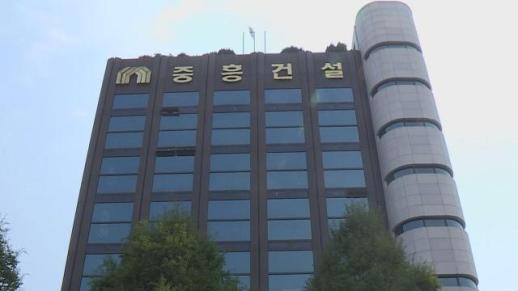 Ruling Reverses Initial Denial of User Status for Jungheung Construction The Central Labor Commission has overturned a previous ruling by a local labor committee that denied user status to Jungheung Construction and Jungheung Engineering, marking the first reversal since the implementation of the Yellow Envelope Law. The commission determined that the companies must negotiate with subcontractor unions on issues related to industrial safety. On June 4, the Central Labor Commission canceled the Jeonnam Regional Labor Committee's decision to dismiss a request by the Korean Tower Crane Operators Union, affiliated with the Korean Confederation of Trade Unions, for a correction regarding the obligation to announce negotiation demands. The commission recognized the primary user's obligation to make such announcements. This case is significant as it represents the first determination of user status following the enactment of the Yellow Envelope Law, which amended Articles 2 and 3 of the Labor Union Act on March 10. The Jeonnam committee had previously denied user status, but the Central Labor Commission reversed that decision. The commission acknowledged the primary user's responsibility regarding industrial safety and working conditions, stating, "It is difficult for subcontractors, such as tower crane rental companies, to independently eliminate all harmful and dangerous factors related to tower crane operations and to implement structural improvements like safety equipment installation and dismantling." It further asserted that the primary user has a substantial and concrete position to control and determine safety-related issues, thus requiring them to announce the subcontractor union's negotiation demands. However, the commission did not recognize user status concerning wage-related issues. It concluded that while labor and management can negotiate autonomously to improve wage systems, the primary user does not have a substantial and concrete position to control and determine these matters. The union has argued that tower crane operators receive direct instructions and oversight from the primary user, seeking recognition of user status. In contrast, Jungheung maintains that operators have significant autonomy during their work and that the primary user does not provide direct instructions or management. Previously, the union requested collective bargaining with Jungheung Engineering and Jungheung Construction, but after the companies did not respond, the union filed a request for a correction with the Jeonnam committee on March 24. The committee dismissed the request on April 10, stating it could not recognize the companies' user status, prompting the union to appeal to the Central Labor Commission. Should Jungheung Construction and Jungheung Engineering contest this decision, they may file an administrative lawsuit within 15 days of receiving the ruling. This determination is expected to set an important precedent for future labor committee and court decisions regarding the scope of user status under the Yellow Envelope Law. In contrast, the Gyeongbuk Regional Labor Committee has accepted a similar request from the National Construction Workers Union against POSCO E&C, recognizing the primary user's status in that case.* This article has been translated by AI. 2026-06-04 21:42:00
 -
 NVIDIA's Jensen Huang to Meet with NCSoft's Kim Taek-jin and Krafton's Chang Byung-kyu to Discuss AI Collaboration Jensen Huang, CEO of NVIDIA, is set to meet with leaders from South Korea's gaming industry to discuss potential collaborations in artificial intelligence (AI) during his visit to the country. The partnership between NVIDIA and local gaming companies, which has primarily focused on graphics processing units (GPUs) and game development, is now expanding into the realms of physical AI and robotics. According to the gaming and information technology sectors on June 4, Huang is scheduled to meet with NCSoft CEO Kim Taek-jin and Krafton Chairman Chang Byung-kyu starting June 5. It is expected that key AI leaders from both companies will also attend the meeting. For Krafton, this includes Chief AI Officer Lee Kang-wook and Chang Tae-seok, who oversees the 'PUBG' intellectual property franchise. NCSoft is also likely to have AI executives present. The discussions are anticipated to center on collaborations based on physical AI. NVIDIA and South Korean gaming companies have maintained a long-standing partnership centered around graphics cards, which is now evolving into cooperation on AI infrastructure and robotics technology. Huang is expected to meet with Kim on June 7 in Seoul to discuss collaborative opportunities in gaming and AI. During Huang's visit last October, NCSoft showcased games like 'Aion 2' at the NVIDIA GeForce Gamer Festival held in Seoul. NCSoft's AI subsidiary, NC AI, may serve as a key link in the physical AI collaboration. Earlier this year, NC AI formed a consortium with Samsung SDS and C-MAS to develop a robot foundation model (RFM). Krafton is also expected to hold a separate meeting with NVIDIA, although specific details regarding the date and location have not been disclosed. Krafton's newly established physical AI subsidiary, Ludo Robotics, is likely to be a focal point for discussions, particularly around humanoid robots and physical AI. Lee Kang-wook, who has been appointed as the representative of the Korean branch of Ludo Robotics, is leading the development of robot AI. Krafton previously visited NVIDIA's headquarters in California last April to discuss next-generation technology collaboration, including robotics. In the gaming sector, collaborations between Krafton and NVIDIA are ongoing with titles such as 'PUBG: Battlegrounds' and the simulation game 'inZOI.' In 'inZOI,' game characters utilize a 'smart joy' feature that allows them to think independently, while 'PUBG: Battlegrounds' features 'PUBG Ally,' which plays the game using NVIDIA's AI technology called 'Ace.' Additionally, Huang is reportedly discussing a meeting with Lee Sang-hyeok, known as 'Faker,' a player from the T1 League of Legends team. Last October, Huang introduced Faker via video message at the NVIDIA GeForce Gamer Festival, where the audience chanted his name. An industry insider noted, "While the relationship between NVIDIA and South Korean gaming companies was previously centered around GPUs, it is now expanding based on AI technology. If this meeting leads to collaboration in both in-game AI and physical AI, it could positively impact the technological competitiveness of the domestic gaming industry." * This article has been translated by AI. 2026-06-04 21:12:00
 -
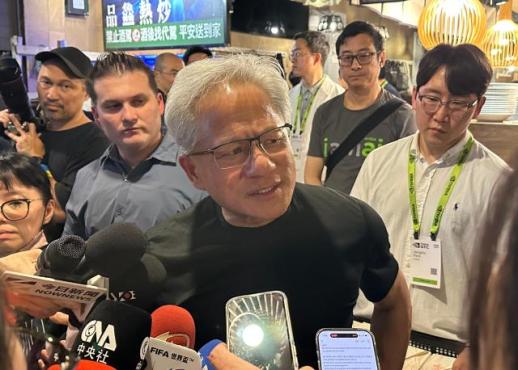 NVIDIA CEO Jensen Huang to Arrive in Seoul for Business Meeting Jensen Huang, CEO of NVIDIA, will arrive in South Korea on June 5 at 1 p.m. According to Yonhap News on June 4, an NVIDIA representative confirmed that Huang will enter the country through Gimpo Airport. Huang is expected to briefly share his thoughts upon arrival at the airport. This visit marks his first trip to South Korea in about seven months, following his last visit in late October of the previous year. After leaving the airport, Huang will head to a popular restaurant in Seoul for a dinner meeting with key executives from major domestic companies, where they will enjoy samgyeopsal (grilled pork belly) and soju. While the restaurant in Seongsu-dong was initially considered, there is a possibility that the location may change to a restaurant in Hongdae or Euljiro due to safety concerns and proximity to the airport. Attendees are expected to include Chey Tae-won, chairman of SK Group; Chung Eui-sun, chairman of Hyundai Motor Group; Koo Kwang-mo, chairman of LG Group; and Lee Hae-jin, chairman of Naver. Previously, in the last year, Jensen Huang held a notable "chicken and beer" meeting with Lee Jae-yong, chairman of Samsung, and Chung Eui-sun in Gangnam, which attracted significant attention. Following that meeting, Kkanbu Chicken franchises experienced a surge in visitors. Huang's visit comes amid expanding discussions on collaboration with domestic companies in the fields of AI semiconductors, physical AI, robotics, and cloud infrastructure. During his stay, he is expected to meet with major business leaders as well as startups to discuss potential partnerships in semiconductors, AI, and robotics.* This article has been translated by AI. 2026-06-04 21:09:00