

Journalist

Kim Yong-ha
-
 Samsung C&T Hits Record High of 565,000 Won Amid Rising Investor Sentiment Samsung C&T reached an intraday high of 565,000 won, setting a new record. This surge is attributed to rising equity values of major affiliates and expectations for increased shareholder returns. According to the Korea Exchange, as of 2:25 PM on June 4, Samsung C&T was trading at 537,000 won, up 10.61% (51,500 won) from the previous trading day. The stock peaked at 565,000 won during the session. The recent upward trend has been steep. Samsung C&T rose 8.26% on May 29, followed by increases of 5.20% on June 1, 6.70% on June 2, and 10.61% on June 4, totaling over a 34% increase in the last five trading days. Based on intraday highs, the stock has surged more than 40% during this period. Samsung C&T is recognized as a significantly undervalued holding company, owning stakes in key affiliates such as Samsung Electronics, Samsung Biologics, and Samsung Life Insurance. Analysts have been raising their target prices for the stock. SK Securities increased its target price from 480,000 won to 590,000 won while maintaining a 'buy' rating. Choi Kwan-soon, an analyst at SK Securities, noted, "The net asset value (NAV) of Samsung C&T has increased by 75.4 trillion won compared to the end of last year. The stock prices of Samsung Electronics and Samsung Life Insurance have risen by 196.9% and 204.6%, respectively, and the net debt on a standalone basis decreased by 972.7 billion won in the first quarter of this year." Currently, Samsung C&T's equity value is estimated at approximately 165 trillion won, with Samsung Electronics accounting for 64.5% of this value, followed by Samsung Biologics at 16.5% and Samsung Life Insurance at 11.3%. Choi added, "Considering the growth in the high-tech sector and the long-term potential of energy projects and small modular reactors (SMRs), there is a high possibility of improving cash flow. Attention should be paid not only to the increase in equity value but also to the improvement in the company's operational performance." Expectations for increased shareholder returns are also supporting the stock price. SK Securities forecasts that Samsung C&T's dividend per share (DPS) will rise by 25% year-on-year to around 3,500 won this year. Earlier, Samsung C&T announced a shareholder return policy in February, raising the minimum dividend per share to 2,500 won for the next two years and committing to redistribute 60-70% of the dividend income received from its affiliates. The dividend income primarily comes from Samsung Electronics, Samsung Life Insurance, Samsung SDS, and Samsung E&A, with an estimated 90% originating from Samsung Electronics and Samsung Life Insurance.* This article has been translated by AI. 2026-06-04 14:39:00
 -
 Dongyang Express and Chunil Express Surge Amid Expectations for Seoul Bus Terminal Redevelopment Dongyang Express and Chunil Express are experiencing significant gains as expectations rise for the redevelopment of the Seoul Bus Terminal. According to the Korea Exchange, as of 2:16 PM on June 4, Dongyang Express shares rose by 4,700 won (12.08%) to 43,600 won. Chunil Express saw an increase of 12,500 won (5.75%), trading at 230,000 won. Both stocks reached their daily ceiling prices early in the trading session, with Dongyang Express hitting the limit at 9:04 AM and Chunil Express at 9:06 AM, although they later retraced some of their gains. Market analysts attribute the surge to heightened expectations surrounding the redevelopment project, coinciding with the ongoing vote counting for the Seoul mayoral election. Chunil Express holds a 16.67% stake in the Seoul Bus Terminal, making it the second-largest shareholder, while Dongyang Express owns 0.17%. This has led to optimism that both companies could benefit significantly if the redevelopment project moves forward. Previously, on June 2, both stocks also reached their ceiling prices amid similar redevelopment expectations ahead of the local elections. Shinsegae, which owns a department store at the bus terminal, has also rebounded from a recent decline, showing three consecutive days of gains. Shinsegae shares increased by 90,000 won (15.82%) to 659,000 won compared to the previous session.* This article has been translated by AI. 2026-06-04 14:39:00
 -
 BTS to release limited-edition vinyl in celebration of 13th anniversary of their debut SEOUL, June 4 (AJP) - K-pop juggernaut BTS will release a limited-edition vinyl version of their fifth full-length album "ARIRANG" on June 12, one day before the group marks the 13th anniversary of their debut, BigHit Music said Tuesday. K-pop juggernaut BTS will release a vinyl version of their fifth full-length album "ARIRANG" next week, their agency BigHit Music said on Thursday. The limited-edition album, set for release on June 12, a day before the 13th anniversary of their debut, will include all tracks from "ARIRANG" as well as two bonus tracks, "Voice Message: Love Song" and "NORMAL (Korean version)." The vinyl will feature 16 tracks in total. "Voice Message: Love Song" features the members speaking in the form of voice messages around the question, "What Is Your Love Song?" The track is designed as an extension of the album's message, adding a more personal element to the release. The vinyl will also include the South Korean version of "NORMAL," a track from "ARIRANG" that BigHit described as dealing with emptiness, fear and the desire for ordinary life behind the spectacle of the stage. The release comes as BTS prepares for this year's annual fan celebration event marking their debut anniversary. The group released the timetable for the 2026 edition earlier in the week, with more details scheduled to roll out over about two weeks. BTS will also hold "BTS World Tour 'Arirang' In Busan" at Busan Asiad Main Stadium on June 12 and 13. 2026-06-04 14:38:07
 -
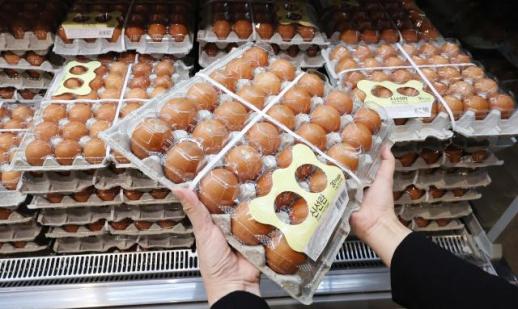 Eggs hit by buying limits as South Korean retailers ration supply SEOUL, June 04 (AJP) - South Korea's leading hypermarket chains have capped egg purchases at one carton per customer as prices climb on the back of an avian influenza outbreak, with retailers now weighing the sale of imported eggs for the first time. Emart and Lotte Mart are limiting shoppers to a single 30-egg carton of discounted product through June 10, the retail industry said on Thursday. Both chains are selling their trays as premium domestic grade for about 6,000 won per tray. The promotions are jointly subsidized by the Ministry of Agriculture, Food and Rural Affairs to ease pressure on household grocery bills. Warehouse chain Traders Wholesale Club normally imposes no cap but has begun restricting customers to two cartons depending on store stock. The price surge has been driven by tightening supply in the wake of a highly pathogenic avian influenza outbreak. The national average retail price for 30 premium domestic eggs reached 7,472 won the previous day, up 4.1 percent from a month earlier, according to the Korea Agro-Fisheries & Food Trade Corporation. Brisk demand for cheaper eggs has left Emart's online stock temporarily sold out. Emart and Lotte Mart are now considering selling fresh eggs imported from Thailand under a government scheme to stabilize prices — a first for both chains, which have sold only domestic eggs until now. Rival Homeplus began offering Thai and US eggs in April, while Lotte Super introduced US eggs last month. The government, meanwhile, plans to import a total of 31.23 million fresh eggs this year and will for the first time bring in Brazilian eggs to diversify its sourcing, with domestic production expected to recover from July as laying-hen flocks rebuild. 2026-06-04 14:37:35
 -
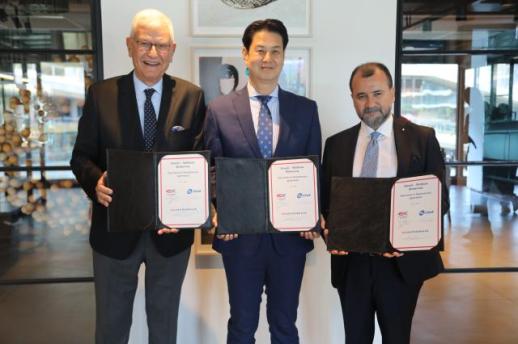 Korea Expressway Corporation Secures $186 Million Road Management Contract in Turkey Korea Expressway Corporation has secured a nearly 200 billion won ($186 million) contract for road operation and maintenance in Turkey. On June 3, local time, the corporation announced that it signed a main contract for the operation and maintenance of the Kınalı-Malkara Highway and major repairs for the Malkara-Çanakkale section in Istanbul. This contract represents the largest amount awarded to Korea Expressway Corporation for road operation and maintenance projects abroad. The Kınalı-Malkara Highway is part of a route connecting Istanbul and Çanakkale. The project, which is a public-private partnership, has a total budget of 2.6 trillion won and will be constructed as a 106-kilometer, six-lane highway. During the construction period, Korea Expressway Corporation will provide pre-operation consulting. After the highway opens in 2029, it will work with local company Limak to manage operations and maintenance for ten years. The contract value for this part is 135 billion won. Additionally, the company will undertake major repairs for the Malkara-Çanakkale section, valued at 51 billion won. This section connects the existing Malkara-Çanakkale Highway with the 1915 Çanakkale Bridge towards Istanbul. Once completed, it is expected to enhance connectivity in Turkey's western transportation network and meet the growing demand for industrial, logistics, and tourism travel. The Kınalı-Malkara Highway project is reported to have commenced construction in March 2025. The contract was also influenced by public financial support from the Korea Export-Import Bank and the Korea Trade Insurance Corporation. The Export-Import Bank led the financing from the project's inception, while the Trade Insurance Corporation's involvement helped expand the contract size. With this contract, Korea Expressway Corporation's cumulative contract amount in Turkey has reached approximately 350 billion won. This marks the second operation and maintenance project secured in Turkey, following the Nakasu-Basaksehir Highway project in 2024. This contract appears to be the largest ever awarded to Korea Expressway Corporation for overseas operation and maintenance projects. Lee Sang-jae, acting president of Korea Expressway Corporation, stated, "This contract is an example of how infrastructure public enterprises and public financial institutions can achieve results in overseas markets. We aim to participate in large projects in Asia and Europe, targeting 1,000 kilometers of overseas road operation and maintenance contracts by 2030."* This article has been translated by AI. 2026-06-04 14:36:00
 -
 Goldman Sachs: U.S. Big Tech AI Spending to Exceed Japan's GDP by 2030 Goldman Sachs has projected that capital expenditures related to artificial intelligence (AI) by the four major U.S. tech companies—Meta, Microsoft, Amazon, and Alphabet—will surpass Japan's gross domestic product (GDP) by 2030. According to Business Insider on June 3, Goldman Sachs recently updated its forecasts for capital expenditures by AI hyperscalers, estimating that the cumulative spending by these four companies will reach $5.3 trillion (approximately 8,100 trillion won) from 2025 to 2030. Citing data from the International Monetary Fund (IMF), Business Insider reported that this amount exceeds Japan's GDP of $4.38 trillion and surpasses the economic sizes of over 200 countries, including the United Kingdom, India, and France. If viewed as a single national economy, the scale of AI investment could rank as the world's fourth-largest economy. Goldman Sachs anticipates that funding for AI infrastructure will be sourced through various means, with the private market expected to play a larger role in the future. Overall, the industry is projected to spend a total of $7.6 trillion on data centers, power, and computing over the next five years. Goldman Sachs noted that "private construction of data centers has accelerated significantly in recent years," predicting that data center development will become a "multi-year investment cycle." Investors are increasingly concerned about the massive funds that tech companies are pouring into AI infrastructure, given the uncertainty about whether these investments will yield sufficient returns in the long term. However, the major tech companies show no signs of slowing down their AI spending in the near term. According to Goldman Sachs, the four companies plan to invest up to $725 billion in capital expenditures this year, more than double the $360 billion they spent in 2025.* This article has been translated by AI. 2026-06-04 14:36:00
 -
 Strengthening Local Resilience Requires More Than Just Corporate Relocation To effectively address regional extinction, experts recommend focusing on developing new industries tailored to local characteristics and strategies to attract population influx, rather than simply relocating companies from the capital region. On June 4, the Ministry of Planning and Budget and the Long-term Strategy Committee held the sixth meeting of the Future Society Strategy Group, where they discussed strategies to enhance local resilience and long-term policies on climate and energy. Participants, including public and private researchers, suggested restructuring industrial frameworks around strategic hubs and creating population influx strategies that align with regional characteristics. Kwon Oh-hyun, chair of the Long-term Strategy Committee, stated, "Relocating companies from the capital region is not realistically feasible. We need an industrial policy framework that includes legal and institutional incentives to attract new industries to the regions." Inso Young, a professor in the Department of Civil and Environmental Engineering at KAIST, emphasized that "the demographic groups needed in each region vary," advocating for tailored incentives and living conditions that cater to specific groups, such as retirees and foreign workers. Kye Bong-oh, a sociology professor at Kookmin University, noted, "Relying solely on corporate relocations is insufficient for fostering self-sustaining growth in the regions. We need to empower local governments at the metropolitan level to create their own growth drivers through attracting businesses and developing industrial ecosystems." The Ministry of Planning and Budget and the Long-term Strategy Committee plan to continue discussions based on the meeting's outcomes to establish a long-term national development strategy.* This article has been translated by AI. 2026-06-04 14:33:00
 -
 Hong Kong ELS Penalties Reduced to 600 Billion Won, Easing Bank Burden The Financial Supervisory Service (FSS) has reduced the penalties for banks related to the improper sale of Hong Kong H-index linked securities (ELS) to approximately 600 billion won. Initially, penalties were discussed at a maximum of 4 trillion won, but after several discussions, the amount has been significantly lowered, easing the burden on the banking sector. On June 4, the FSS held a temporary disciplinary committee meeting and decided to impose a total penalty of 600 billion won on five banks involved in the sale of Hong Kong ELS, including KB Kookmin, Shinhan, Hana, NH Nonghyup, and SC First Bank. The initial penalty estimated by the FSS for the improper sale of Hong Kong ELS was around 4 trillion won. This amount was subsequently reduced to the 2 trillion won range during discussions, and in February, a penalty proposal of 1.4 trillion won was submitted to the Financial Services Commission (FSC). However, the FSC requested additional clarification on certain facts and applicable laws, returning the proposal to the FSS, which led to a re-evaluation about three weeks later. The reduction in penalties was largely influenced by a reassessment of the violations. Under the Financial Consumer Protection Act, penalties are calculated based on the revenue obtained from violations, with different rates applied depending on factors such as the motivation and method of the violation, the scale of damage, and market impact. During this disciplinary meeting, the FSS reportedly lowered the assessment of the motivation and method of violations from 'medium' to 'low.' Consequently, the applicable penalty rate was also reduced, leading to a decrease in the total penalty amount. Additionally, the exclusion of sales made during the grace period at the beginning of the Financial Consumer Protection Act from the penalty calculation likely contributed to the reduction. The FSC had previously decided to issue a non-action letter, indicating that it would generally provide guidance on violations of new and strengthened regulations from March to September 2021, six months after the law's implementation. The fact that the compensation process for affected customers is nearly complete was also taken into account. There are 143,316 accounts with confirmed losses from Hong Kong ELS, and compensation procedures have been completed for over 99% of these cases. This was achieved as banks conducted voluntary compensation based on the dispute resolution guidelines announced by the FSS in March of last year. As this disciplinary decision is a procedural matter within the FSS, the final penalty amount will be confirmed following a decision by the FSC. The final judgment process by the FSC is expected to raise subsequent issues regarding the penalty amounts for each bank and the possibility of further reductions. 2026-06-04 14:33:00
 -
 HanDoc's Partner Resolute Announces Interim Results of Phase 3 Clinical Trial for Tumor-Induced Hyperinsulinemia Treatment HanDoc announced on June 4 that its partner, Resolute, presented interim results from the Phase 3 clinical trial of ErsoDetug (RZ358) for patients with tumor-induced hyperinsulinemia (HI) on June 2 (U.S. time). ErsoDetug is a fully human monoclonal antibody that binds to the insulin receptor in an allosteric manner, reducing receptor hyperactivity caused by insulin and related substances, thereby improving hypoglycemia in HI conditions. The upLIFT study is a single-arm, open-label Phase 3 trial targeting patients with hypoglycemia due to insulinomas and non-beta cell tumors. So far, 8 out of the planned 16 participants have been enrolled. Among the 8 enrolled patients, 6 met the primary endpoint of a 50% or greater reduction in the glucose infusion rate (GIR) compared to baseline. Some patients were able to discontinue intravenous glucose administration after treatment. One patient withdrew consent before completing the core treatment period and stopped ErsoDetug and other non-curative treatments. The remaining patient is still receiving treatment. Those who completed the 8-week treatment period are participating in a long-term extension study, with cumulative treatment ongoing for up to 6 months. ErsoDetug demonstrated overall good tolerability throughout both the core treatment and extension study phases. No drug-related adverse events or other safety concerns have been reported to date. Resolute is a late-stage rare disease biotech company focused on treating various forms of hyperinsulinemia that cause hypoglycemia. HanDoc holds the rights for the domestic commercialization of ErsoDetug and continues its development collaboration with Resolute. Resolute plans to complete patient enrollment for the Phase 3 upLIFT study for tumor-induced hyperinsulinemia and announce topline results in the second half of this year.* This article has been translated by AI. 2026-06-04 14:30:00
 -
 TSMC Chairman Hints at Potential Semiconductor Price Increases Amid AI Demand The chairman and CEO of TSMC, the world's largest semiconductor foundry, expressed confidence in future growth driven by increasing demand for artificial intelligence (AI) and hinted at the possibility of raising semiconductor prices. During TSMC's annual shareholder meeting held at its headquarters in Hsinchu, Taiwan, on June 4, Chairman Wei Zhejia noted that customers remain optimistic about AI prospects, stating, "I am confident in our growth over the next few years." He highlighted the rising adoption rates of AI models across consumer, enterprise, and sovereign applications, saying, "This trend is driving demand for stronger computing capabilities and supporting robust demand for advanced semiconductor chips." Wei projected that AI will expand beyond data centers into personal computers, smartphones, automobiles, and Internet of Things (IoT) devices. He emphasized that TSMC's leading technology and exceptional manufacturing capabilities will continue to grow in value as a result. Regarding the potential for price increases, Wei responded to a question about whether TSMC would ask customers for higher prices, saying, "I really want to do that; we also need to make a profit in the end." However, he drew a line at abrupt price hikes, stating, "We do not want to raise prices suddenly like memory companies; that is not sustainable. TSMC focuses on long-term and sustainable operations. We are not that kind of company." Wei indicated that significant capital investments to meet rising AI demand would continue for the foreseeable future. When asked during the Q&A session about when TSMC's capital expenditures might peak and when they could be reduced, he candidly replied, "Honestly, I don't know." He added that he does not currently see any signals indicating a need to cut capital expenditures. TSMC expects its capital expenditures for the year to range between $52 billion and $56 billion, which he explained reflects the company's strong confidence in future growth. The company is also accelerating its production expansion in the United States. Wei stated that while TSMC is doing everything possible to meet customer demand, it will take a "considerably long time" to fully satisfy U.S. customer needs solely through domestic production, without providing a specific timeline. Wei expressed gratitude for shareholder support, noting that TSMC's stock price has risen from NT$950 (approximately $31) at last year's shareholder meeting to NT$2,425 (approximately $80) as of the previous day, marking an impressive increase of over 150% in the past year. He shared that the company plans to increase this year's dividend to at least NT$24, a rise of over 30% compared to the previous year, asserting, "I am confident that TSMC's performance will continue to outperform the industry." Additionally, he projected that TSMC's revenue for 2025 would reach NT$3.8 trillion, a 31.8% increase from the previous year, and that the company expects to maintain over 30% revenue growth in dollar terms this year. Wei also expressed a commitment to enhancing employee compensation. In response to a shareholder's request for increased performance bonuses, he stated, "TSMC will definitely strive to improve employee welfare," noting that the average annual increase in employee bonuses over the past three years has exceeded 30% and expressing hope that this trend will continue. He concluded by stating, "We are continuously expanding our production capacity to support customer growth while ensuring that shareholders receive stable and sustainable investment returns," and emphasized the company's commitment to sustainable corporate responsibility and sound governance.* This article has been translated by AI. 2026-06-04 14:21:00