


Latest by
-
 Samsung Electronics Targets Global Precision Medicine Market with Next-Gen Semiconductors Samsung Electronics is making a strategic move into the global precision medicine market as competition in the artificial intelligence (AI) sector intensifies and growth in the global smartphone market slows. The company aims to secure key technologies necessary for entering the precision medicine field, strengthening its future growth foundation.On June 10, Samsung Electronics announced that it has invested $175 million (approximately 268.8 billion won) in Element Biosciences, a U.S.-based genetic analysis company, securing a majority shareholder position.Samsung previously participated in Element's Series D funding round in July 2024. With this investment, Element plans to accelerate the commercialization of next-generation gene sequencing and multiomics ecosystems. The company aims to expand its product roadmap in large-scale global clinical and diagnostic fields.Samsung is particularly focused on Element's next-generation gene sequencing technology and multiomics. Multiomics is a technology that analyzes various biological information, such as RNA and proteins, to show how DNA actually functions. This approach can help identify the root causes of diseases more accurately and aid in the development of new drugs, making it a key technology for next-generation precision medicine.Since launching its mid-sized DNA sequencing device, AVITI, in 2022, Element has rapidly expanded its presence in the global market. The Element sequencing devices are primarily used in biotechnology laboratories, research institutions, and hospital research. Multiomics products are expected to be utilized by pharmaceutical companies in the future.In the future, DNA sequencing data is expected to be combined with clinical data from hospitals, as well as everyday data such as sleep and exercise, ultimately enabling personalized medical services. Samsung plans to strengthen its strategic partnership with Element through this expanded investment to create synergies.Meanwhile, industry experts predict that the global precision medicine market will reach approximately $143.6 billion by 2030. Key drivers for this market include the increasing demand for personalized treatments and a growing preference for companion diagnostics and genetic testing.A medical industry insider stated, "The future of the global precision medicine market presents opportunities in the tumor, rare disease, infectious disease, and blood disorder sectors, and it is regarded as a promising market." 2026-06-10 20:03:00
 -
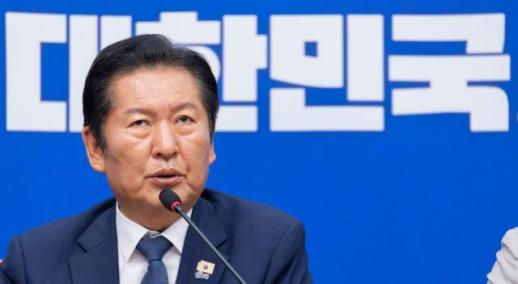 Jung Cheong-rae: 'The People Are Eternal, and the Regime Is Short-lived' Jung Cheong-rae, the leader of the Democratic Party, commented on the results of the June 3 local elections, stating, "I empathize with President Lee's evaluation and perception of the elections," while emphasizing, "The people are eternal, and the regime is short-lived."During a Supreme Council meeting at the National Assembly on June 10, Jung remarked, "Public sentiment is the will of heaven, and the people are like the sky. No regime can defeat the people." This statement follows President Lee's remarks during a press conference on June 8, where he expressed dissatisfaction with the Democratic Party leadership, saying, "If we lost in places we needed to win, that is at least not a success."Jung added, "The saying that those who follow the will of heaven will prosper, while those who go against it will perish, has always been true," and pledged that the Democratic Party and the Lee administration would adopt a humble approach to win the hearts of the people.He further noted, "What I have felt over the past 24 years is that the opposition party gains support when it acts like an opposition party, and the ruling party gains support when it acts like a ruling party. While there are swing voters, there is no fixed centrist group."Identifying himself as a member of the 'Noh Mu-hyun Supporters' from 2002, he recalled, "I supported candidate Noh Mu-hyun, dreaming of a country where common sense flows like a river, holding a hope piggy bank and a yellow handkerchief in Gwangju, where beans are beans in Daegu as well."He also credited the regional primary system introduced by former President Noh in 2004 for his election to the National Assembly, stating, "The political reforms of the Noh Mu-hyun era ended the era of faction bosses and parachute nominations, leading to a system of one person, one vote and party member sovereignty." 2026-06-10 19:45:00
 -
 Blue House Responds to KOSPI Plunge, Focuses on Market Stability On June 10, the Blue House stated that it would not react excessively to the KOSPI's nearly 5% drop in a single day. In a press release, the Blue House emphasized its commitment to establishing a fair market order and fundamentally improving the capital market. On that day, the KOSPI closed at 7,730.82, down 366.11 points (4.52%) from the previous trading day. This decline followed a rebound of over 8% just a day earlier. As the market's losses widened, a trading halt was triggered due to the sharp drop in the futures market. This was the second instance of a trading halt since it was first implemented on June 8.* This article has been translated by AI. 2026-06-10 18:39:00
 -
 Blue House Addresses Controversy Over Attendance at President Lee's Farewell Event The Blue House stated on June 10 that the absence of Jeong Cheong-rae, leader of the Democratic Party, from President Lee Jae-myung's farewell event during his European tour, while Prime Minister Kim Min-seok attended, should not be interpreted politically. A Blue House official made this remark during a local briefing at a hotel press center in Brussels, responding to questions about the situation. He noted, "As the war in the Middle East surpasses 100 days and concerns grow over the impact on citizens' voting rights due to issues related to the election commission, it is not appropriate to interpret this matter politically." The official explained that the decision to minimize the number of attendees from the Blue House and the Cabinet was made after considering both domestic and international circumstances. He added that the Prime Minister's attendance was intended to convey directives and concerns related to the Cabinet's responsibilities following the lengthy overseas trip. Speculation had arisen the previous day regarding the attendance of both individuals at the farewell event, suggesting it might be linked to the upcoming leadership contest within the Democratic Party scheduled for August. Additionally, the Blue House commented on Jeong's remarks during the first public Supreme Council meeting after the June 3 local elections, where he stated, "The people are eternal, and the regime is short-lived." The official remarked that discussing party affairs in this context is not appropriate. The official also refrained from commenting on statements made by Lee Ji-eun, a spokesperson for the Democratic Party, who suggested that President Lee was favoring a specific candidate ahead of the party's convention by comparing him to former President Yoon Suk-yeol, stating that it was inappropriate to address such matters.* This article has been translated by AI. 2026-06-10 18:24:00
 -
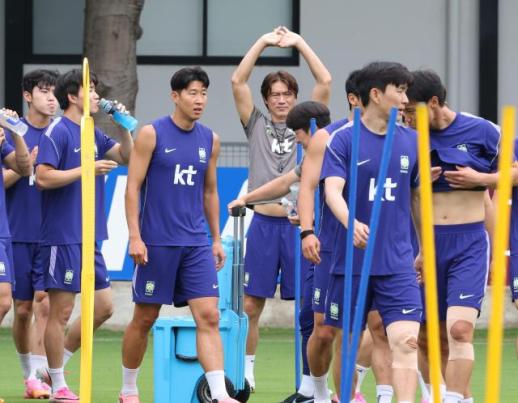 JTBC Bets 187 Billion Won on World Cup Broadcast Rights – Will Hong Myung-bo's Team Deliver Profits? This year's World Cup will only be broadcast by KBS and JTBC, reducing the traditional viewing options that included KBS, SBS, and MBC. The broadcasting industry is closely watching the performance of JTBC, which has secured exclusive rights to the World Cup. The outcome could influence negotiations for broadcast rights extending to the 2032 Olympics and future World Cups. According to industry sources on June 10, JTBC has acquired domestic broadcast rights for the 2026 North American World Cup, the 2028 Los Angeles Summer Olympics, the 2030 FIFA World Cup, the 2030 Alpine Winter Olympics, and the 2032 Brisbane Summer Olympics. Industry analysts suggest that JTBC's strategy involves recovering its investment through reselling broadcast rights. However, the initial results have not met expectations. The 2026 Milan-Cortina Winter Olympics, which JTBC broadcasted exclusively in February, recorded a disappointing opening ceremony viewership of just 1.8%, leading some to label it a major failure. This has sparked controversy over the monopoly on broadcast rights. There are speculations that JTBC's decision to significantly reduce the resale price from an initial 35 billion won to about 14 billion won during the North American World Cup negotiations was influenced by the poor performance of the Winter Olympics. JTBC announced that the broadcast rights fee for the North American World Cup is $125 million (approximately 187 billion won), which is about 20% higher than the $103 million fee for the 2022 Qatar World Cup. KBS accepted JTBC's resale price of around 14 billion won to join the joint broadcast, while SBS and MBC did not. Reports suggest that Naver invested over 30 billion won to secure exclusive online broadcast rights. Given that the revenue from reselling rights falls short of the broadcast rights fee, JTBC's profitability largely depends on the performance of Hong Myung-bo's team. The Korea Broadcast Advertising Corporation (KOBACO) plans to sell advertisements for all matches at the start of the tournament and will sell additional ads based on the Korean team's performance. A KOBACO official stated, "If our national team advances to the Round of 32, additional advertising sales will occur," adding, "The scale of advertising revenue can vary significantly based on the team's performance." Advertising rates are also a variable. The official noted, "There is no guarantee that advertising rates will increase simply because of exclusive World Cup coverage. If market reactions fall short of expectations, we may have to lower prices to sell ads." They further emphasized that numerous factors, including match results, viewership ratings, and economic conditions, make it difficult to predict revenue at this time. Traditionally, the World Cup has been a boon for broadcasters. SBS reportedly generated 70 billion won in advertising sales during its exclusive coverage of the 2010 South Africa World Cup. However, the effectiveness of such coverage has diminished over time. Comparing advertising revenues from the 2018 Russia World Cup and the 2022 Qatar World Cup, only SBS saw a significant increase, while the other two major broadcasters maintained or decreased their revenue levels. There are opinions that it is premature to assess JTBC's profitability based solely on this year's Winter Olympics and World Cup. An advertising industry insider remarked, "Since JTBC has secured broadcast rights for the World Cup and Olympics through 2032, it is unclear how far back we should assess losses. Profitability should be evaluated in terms of the overall portfolio rather than individual events." In the National Assembly, a bill is being discussed to mandate terrestrial broadcasting of national interest events like the World Cup and Olympics. The proposed amendment, introduced by lawmakers including Kim Hyun, stipulates that significant national interest events must be broadcast live by at least one nationwide terrestrial broadcaster. The key issue is whether the law will apply retroactively. A Ministry of Culture, Sports and Tourism official stated, "The scope and timing of the law's application are critical issues," adding, "We need to monitor the National Assembly's discussions." In this regard, an official from Kim Hyun's office noted, "The Science, Technology, Information, Broadcasting and Communications Committee has passed a provision allowing for retroactive application to the Legislation and Judiciary Committee," and added, "The core of the amendment is to ensure that at least one terrestrial broadcaster is required to cover these events, even if negotiations among broadcasters are contentious."* This article has been translated by AI. 2026-06-10 18:24:00
 -
 Weather Forecast: Showers Expected Nationwide with Highs of 29°C On Thursday, June 11, the weather will generally be clear across the country, but showers of up to 40 mm are expected in the central region and southern inland areas from the afternoon to the evening. According to the Korea Meteorological Administration on June 10, the country will be under the influence of a high-pressure system located near Shanghai, China. The central region and North Gyeongsang Province will experience mostly cloudy skies, while other areas will be generally clear. Morning low temperatures are forecasted to range from 12 to 18 degrees Celsius, with daytime highs expected between 23 and 29 degrees Celsius. Expected low and high temperatures for major cities include: Seoul 16-26°C, Incheon 16-24°C, Suwon 16-25°C, Chuncheon 14-25°C, Gangneung 17-25°C, Daejeon 16-26°C, Gwangju 16-26°C, Jeonju 16-26°C, Daegu 16-28°C, and Busan 18-27°C. Showers are anticipated to occur in the inland areas of Seoul and Gyeonggi Province, Gangwon Province, as well as in the inland areas of Chungcheong Province, northeastern North Jeolla Province, and northern inland and northeastern mountainous regions of North Gyeongsang Province from the afternoon to the evening. Expected precipitation amounts are as follows: 5-30 mm in the inland areas of Seoul and Gyeonggi Province, 5-40 mm in the inland and mountainous areas of Gangwon Province, around 5 mm on the eastern coast of Gangwon, 5-30 mm in the inland areas of Daejeon, Sejong, and Chungnam, 5-20 mm in northeastern North Jeolla Province, and 5-20 mm in the northern inland and northeastern mountainous areas of North Gyeongsang Province. Areas experiencing showers may also see gusty winds, thunder, and lightning. There is a possibility of hail in some regions, so caution is advised for facilities and crops. Due to the nature of showers, significant variations in precipitation amounts can occur even within the same area. Air quality is expected to range from 'Good' to 'Moderate' nationwide.* This article has been translated by AI. 2026-06-10 18:18:00
 -
 Chairman Lee Ok-yeon Urges Financial Groups to Address AI Hacking and Voice Phishing Threats Chairman Lee Ok-yeon of the Financial Services Commission urged the heads of major financial groups, including Shinhan, Hana, Woori, and NongHyup, to collaborate in addressing the escalating threats posed by AI-driven hacking. On June 10, Lee convened a meeting focused on responses to hacking and voice phishing in the AX (AI Transformation) era, stating, "The U.S. company Anthropic's 'Mythos' can detect security vulnerabilities much faster than before and has the capability to plan and execute hacks autonomously, which has shocked the world." He added, "The government is accelerating various policy responses under the belief that AI attacks should be defended with AI," and announced plans to swiftly allow exceptions to network separation regulations for vulnerability assessments using AI for security purposes. He also mentioned that the government aims to quickly disseminate confirmed response guidelines across the financial sector. The meeting included attendees such as Cho Yong-byeong, chairman of the Korea Banking Association; Jin Ok-dong, chairman of Shinhan Financial Group; Ham Young-joo, chairman of Hana Financial Group; Lee Chan-woo, chairman of NongHyup Financial Group; Lim Jong-ryong, chairman of Woori Financial Group; Lee Hwan-joo, president of KB Kookmin Bank; and Lee Se-hoon, vice chairman of the Financial Supervisory Service. With the threat of Mythos to the financial sector becoming apparent, it seems that public and private sectors are hastening their cooperation to respond. The Financial Services Commission identified two key challenges for the financial sector in the AI transformation era: the security breach threats from frontier AI and phishing crimes utilizing advanced AI technology. The commission is rapidly advancing emergency measures to relax network separation regulations for vulnerability assessments using AI for security purposes. Additionally, it is working to implement a plan to fully lift network separation regulations for financial companies with advanced AI and security capabilities within the year. The five major financial groups are responding to new digital threats posed by AI. Specifically, they are implementing various measures, including the introduction of AI-based security monitoring and simulated hacking solutions, as well as establishing dedicated security teams (red teams) within their organizations. To combat voice phishing, they are also participating in ASAP and sharing information on suspicious transactions among subsidiaries, building AI-based intelligent FDS systems, and launching compensation insurance for voice phishing victims. At the bank level, responses are being strengthened as well. KB Kookmin Bank has established a 'Financial Fraud Prevention Unit' under its Consumer Protection Group to focus on addressing financial scams, including voice phishing. Shinhan Bank has set up a system to share fraud account information with its securities and card affiliates, while Woori Bank is recruiting police and investigative experts.* This article has been translated by AI. 2026-06-10 18:06:00
 -
 DBK Korea Accelerates Global Sauce Business with QR Code Recipes DBK Korea is set to penetrate the global sauce market using a new approach that combines YouTube and QR codes. The strategy aims to assist overseas consumers and restaurant professionals in easily implementing Korean dishes by providing recipes and cooking tips. On June 10, DBK Korea announced the launch of its Korean cuisine-focused YouTube channel, 'TBK,' targeting international markets. The TBK channel is centered around the 'TBK QR Sauce,' developed for global B2B use. Scanning the QR code embedded in the product with a smartphone allows users to access recipe videos and cooking methods. This feature enables overseas restaurants and chefs to prepare consistent quality Korean dishes without additional training. On the same day, DBK Korea unveiled new content titled 'TBK Secret,' featuring CEO Baek Jong-won. The first video introduces a recipe for stir-fried pork and explains the channel's purpose and how to use TBK sauces. Additionally, a short video series titled 'TBK New Sensation' showcasing Baek's overseas sauce sales efforts was also released. The channel's slogan is 'Scan & Cook! One QR, Anyone can be a Korean Chef.' It targets chefs and restaurant operators interested in developing Korean menus, as well as local food and distribution industry professionals, and offers English subtitles. Since launching the TBK QR Sauce in September 2025, DBK Korea has been expanding its sales efforts to overseas companies. Currently, requests for product samples are coming from the United States, five European countries, and two Asian countries. In April, sales began on Amazon in the U.S., and the company plans to enter Canadian brick-and-mortar stores by mid-June. The TBK sauce line, branded with the slogan 'The Start of Flavor, DBK,' aims to introduce everyday Korean tastes to the global market. The lineup includes 11 products, featuring flavors such as seasoned chicken sauce, spicy stir-fry sauce, soy sauce stir-fry sauce, soybean paste stew sauce, kimchi seasoning powder, tteokbokki sauce, pickled soy sauce, ssamjang sauce, spicy stew sauce, LA galbi sauce, and jjajang sauce. During the TBK global B2B sauce launch event in September 2025, CEO Baek Jong-won set a goal of achieving 100 billion won in overseas sales by 2030. A DBK Korea representative stated, "While we have previously focused on local companies abroad, we plan to expand our business to chefs and consumers worldwide through the TBK channel. We will strengthen our global business using Baek Jong-won's IP and various digital content."* This article has been translated by AI. 2026-06-10 18:06:00
 -
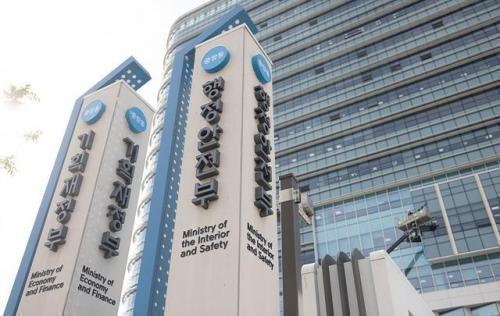 Kim Min-jae Reviews Progress of Jeonnam-Gwangju Integrated Special City Launch The Ministry of Interior and Safety announced that Deputy Minister Kim Min-jae visited Gwangju on June 10 to assess the progress of the Jeonnam-Gwangju Integrated Special City, which is set to launch in July. He also held a meeting with local bookstore representatives to discuss improvements to existing regulations. During his visit to Gwangju City Hall, Deputy Minister Kim chaired a meeting to review the status of the special city’s launch. He commended the efforts of the working group and other officials who have been tirelessly advancing integration efforts since the special law was passed on March 5. The special law comprises 408 articles across 13 chapters, including 394 special provisions and 44 delegations of authority. This initiative marks the first attempt at integrating metropolitan local governments in South Korea, granting the new local government a status equivalent to that of Seoul. Kim closely examined the preparations across various sectors, including local regulations, administrative systems, and information systems, as well as the tasks that remain before the launch. He particularly emphasized the need to minimize public inconvenience during the temporary suspension of services due to the integration of information systems, urging proactive communication with citizens. "This integration goes beyond merely merging administrative districts; it represents a pivotal moment for local-led growth, overcoming the dominance of the metropolitan area and establishing a core hub for the 'Five Extremes and Three Specials,'" Kim stated. He added that, given the high public interest and expectations, it is crucial for Jeonnam, Gwangju, and the Ministry to collaborate closely to ensure a smooth launch. Following this, Deputy Minister Kim visited a local bookstore, Dongmyeong Bookstore, in Gwangju's Dong-gu district, where he held a discussion with bookstore representatives regarding regulatory improvements. This visit aimed to directly hear the challenges faced by local bookstores amid a continuous decline in their numbers and sales. The Ministry of Interior and Safety announced a legislative proposal to amend the enforcement decree of the Local Government Contract Act, which would include purchases from local bookstores or cooperative bookstores as eligible for direct contracts. This reform aims to expand opportunities for local bookstores in the public book purchasing process. Kim toured the bookstore, made a purchase, and gathered on-site feedback regarding the operational conditions of local bookstores and the challenges they face in the public book procurement process. He stated, "Local bookstores enhance residents' access to reading and promote local reading culture as community cultural spaces. We will ensure that the opinions from the field are thoroughly reflected in the regulatory improvement process to broaden the participation of local bookstores in public book purchases."* This article has been translated by AI. 2026-06-10 18:06:00
 -
 Tesla Model Y tops Korea's car market — a first for any import SEOUL, June 10 (AJP) - When Elon Musk posted "Korea is Awesome" on X last month, the comment carried more significance than it appeared. It came after Tesla achieved something no foreign automaker had managed before in South Korea. Tesla's Model Y became the country's best-selling passenger vehicle in May, with 8,762 units sold, surpassing the Kia Sorento's 7,836 units and the Hyundai Grandeur's 5,183 units. It marked the first time an imported vehicle topped South Korea's monthly passenger car sales rankings, breaking through a market long dominated by Hyundai Motor and Kia. Tesla's broader performance was equally striking. The U.S. electric vehicle maker sold 10,866 vehicles in South Korea in May, making it the country's top imported brand for the month. From January through May, Tesla sold 45,020 vehicles, roughly 3.5 times the 12,835 units recorded during the same period a year earlier. The milestone highlights how rapidly South Korea's EV market is evolving from one defined by domestic brand loyalty into one driven increasingly by technology, charging convenience and total ownership costs. For decades, foreign automakers struggled against structural advantages enjoyed by Hyundai and Kia. Korean consumers favored domestic brands for their extensive service networks, strong resale values, familiar driving characteristics and lower maintenance costs. Imported vehicles were often viewed as premium products that were more expensive to purchase, repair and maintain. The transition to electric vehicles is beginning to change those assumptions. Tesla has aggressively positioned the Model Y within South Korea's subsidy framework, allowing some variants to compete directly with domestic electric SUVs and even some gasoline-powered family vehicles after government incentives are applied. Just as important has been charging infrastructure. Unlike North America, where many EV owners charge vehicles at home, a large share of South Koreans live in apartment complexes with limited access to private chargers. Public charging convenience therefore plays an outsized role in purchasing decisions. Tesla's Supercharger network and integrated charging ecosystem have helped address one of the biggest concerns among first-time EV buyers. "Charging convenience was probably the most important factor for me," said Kim Min-seon, a 37-year-old designer in Seoul who purchased a Model Y earlier this year. "In Korea, you cannot simply plug in at home the way you might in a private garage." Kim, who previously drove a Hyundai Grandeur, said lower operating costs also influenced her decision. "It is much cheaper than gasoline," she said. "Once I started comparing fuel costs with charging costs, the difference was hard to ignore." Tesla also continues to benefit from a powerful brand advantage. For many Korean consumers, Tesla remains synonymous with electric vehicles in much the same way Apple became synonymous with smartphones. Even as Hyundai, Kia and Chinese competitors expand their EV lineups, Tesla retains the image of the company that defined the modern EV industry. That perception remains difficult for competitors to replicate. Chinese automaker BYD has gained attention since entering South Korea in early 2025 with aggressively priced electric vehicles and strong global sales growth. Yet its scale remains far smaller than Tesla's. BYD registered 1,032 vehicles in May, roughly one-tenth of Tesla's monthly total. Consumer perception remains a challenge. Chinese EV makers are becoming more visible, but concerns over brand familiarity, after-sales service and long-term reliability continue to influence purchasing decisions. Kim Yun-seong, a 30-year-old marketer in Seoul's Songpa district, said she considered BYD before ultimately purchasing a Kia EV4. "I just did not know enough about BYD," she said. "There is also still some hesitation about Chinese-made cars here. It is difficult to explain clearly, but it exists." Japanese brands face a different obstacle. Toyota and Lexus maintain strong reputations in hybrid vehicles but have yet to produce a battery-electric model in South Korea capable of generating demand comparable to Tesla's Model Y. Domestic manufacturers still retain significant strengths. Hyundai and Kia continue to benefit from extensive service networks, pricing flexibility and deep consumer trust. For many buyers, repair costs, interior space, reliability and after-sales service remain as important as software features or charging speed. Kim Yun-seong said she also considered purchasing a Tesla Model Y before choosing Kia's EV4. "I heard Tesla repair bills can be very expensive," she said. "That genuinely made me hesitate." Tesla's May performance does not signal the end of Hyundai and Kia's dominance. But it does suggest that South Korea's EV market is becoming increasingly competitive. Consumers who once defaulted to domestic brands are now comparing vehicles across software capabilities, charging access, ownership costs, design and brand appeal. That shift may represent the most important development behind Tesla's record sales. Hyundai and Kia still possess scale, loyalty and service advantages that foreign competitors struggle to match. Yet Tesla's breakthrough demonstrates that those advantages alone may no longer guarantee leadership in the electric vehicle era. For now, Tesla has moved well beyond its image as a niche imported EV brand. By placing the Model Y at the top of South Korea's sales rankings, the company has shown that even one of the world's most protected home markets is becoming contestable in the transition to electric mobility. 2026-06-10 18:05:39