

Journalist

Ko Yu-hwan
-
 Michelle Steel's Nomination as U.S. Ambassador to South Korea Advances Michelle Steel's nomination as the U.S. Ambassador to South Korea has passed the Senate Foreign Relations Committee. This comes about two months after President Donald Trump nominated her in April. The nomination still requires approval from the full Senate before she can officially take office. According to the U.S. government-funded international broadcaster Voice of America (VOA), the Senate Foreign Relations Committee voted 14 to 8 in favor of Steel's nomination on June 4. The U.S. Ambassador to South Korea is officially appointed after passing both the committee review and the full Senate vote. If Steel's nomination is confirmed by the Senate, she will become the second Korean American to hold the position, following former Ambassador Sung Kim. Steel, a Korean American born in Seoul, previously served as a U.S. Representative from California. During her confirmation hearing before the Senate Foreign Relations Committee on May 20, she emphasized strengthening the U.S.-South Korea alliance and addressing issues related to American companies' access to the South Korean market. Trade issues between the U.S. and South Korea were also discussed during the confirmation process. According to Reuters, Steel stated that she would verify the sources and plans for the $350 billion investment commitment from South Korea to the U.S. She also expressed her intention to address non-tariff barriers in the agricultural and digital services sectors. The position of U.S. Ambassador to South Korea has been vacant for nearly 1 year and 5 months since former Ambassador Philip Goldberg left in January of last year. If confirmed by the full Senate, Steel will become the first U.S. Ambassador to South Korea under the Trump administration's second term.* This article has been translated by AI. 2026-06-05 07:39:00
 -
 Trump Announces Final Negotiations to End Iran War, Dismisses House Resolution Donald Trump, President of the United States, stated that "final negotiations to end the Iran War are underway." He criticized the House of Representatives for passing a resolution that limits his authority regarding the Iran conflict, calling it a "meaningless vote." While emphasizing the potential for negotiations, he also indicated that military action could resume if U.S. forces suffer casualties. According to ABC News, President Trump remarked on June 4 that negotiations with Iran are at a critical stage. He noted that the House's resolution to restrict his war powers emerged during these final negotiations aimed at concluding the conflict with Iran. He suggested that congressional oversight does not aid the negotiation process. Earlier, the House passed a resolution by a vote of 215 to 208, which prevents the President from continuing military action against Iran without congressional approval. The resolution received support from Democratic lawmakers and four Republican members. President Trump criticized the Republican lawmakers who voted in favor of the resolution, labeling them as "showmen." He also directed his comments at Democrats, implying that they wish for the U.S. to fail. The White House maintains that the resolution infringes upon the President's diplomatic and military authority. Trump also expressed that he would not be overly reliant on negotiations. He stated that whether through a formal agreement or military means, the U.S. would emerge victorious. This conveys a message that while negotiations are ongoing, the U.S. will assert its dominance. However, he specified that the conditions for resuming military conflict would be limited to instances of U.S. casualties. Trump indicated that if Iran were to kill American troops, that would provide justification for renewed hostilities. He also left open the possibility of a meeting with Iran's supreme leader. When asked if he would consider meeting with Iranian officials, Trump replied, "If an agreement is reached, I would consider a meeting." He did not provide specifics regarding the format or the parties involved in such negotiations. Additionally, Trump addressed the issue of Iran's nuclear materials, stating that the U.S. does not necessarily need a formal agreement to secure Iran's enriched uranium. However, he noted that the nuclear materials are "effectively sealed" and that there is no immediate need for action.* This article has been translated by AI. 2026-06-05 07:33:00
 -
 Kioxia Surpasses Toyota, Nvidia Dominates Apple as Semiconductor Sector Reshapes Market Caps in Korea, U.S., and Japan ◆ Ajou Economics Major News ▷ Kioxia Surpasses Toyota, Nvidia Dominates Apple… Semiconductor Sector Reshapes Market Caps in Korea, U.S., and Japan - The semiconductor sector is gaining prominence in the Korean stock market as the benefits of artificial intelligence (AI) concentrate in this industry. Samsung Electronics, once viewed primarily as a smartphone-centric IT company, has emerged as a key beneficiary of the expanding demand for memory semiconductors in the AI era. - SK Hynix's transformation is even more dramatic. As a key supplier of high-bandwidth memory (HBM) for Nvidia, it is now considered one of the biggest beneficiaries in the AI landscape. Analysts note that the company has shifted from being heavily influenced by the DRAM market to becoming a central player in AI infrastructure expansion. - While Samsung Electronics and SK Hynix lead the Korean market, Nvidia effectively dominates in the U.S. Recently, Nvidia's market capitalization surpassed $5.2 trillion, making it the world's most valuable company. - In Japan, AI is also shaking up the stock market landscape. Kioxia Holdings, a NAND flash memory manufacturer, is at the forefront. Toyota, a symbol of Japanese manufacturing and previously the top company by market cap, is facing challenges as Kioxia's stock price has surged recently. - Kioxia's shares rose over 7% during trading, pushing its market capitalization above 45 trillion yen at one point, allowing it to surpass Toyota and become the second-largest publicly traded company in Japan. ◆ Major Reports: Unwinding Supply and Demand in Consumer Goods, Finance, and Materials - The previous day, the KOSDAQ materials sector was hot. In the past month, the sectors with increased market capitalization on KOSDAQ include semiconductors, machinery, and IT hardware, as AI's influence spreads while biotechnology takes a breather. - Recently, supply chain stocks in the U.S. and Japan have shown strength, but domestic stocks were previously weighed down by a concentration of demand in large-cap semiconductors, leading to a rebound on this day. - Expectations for post-election KOSDAQ revitalization policies and the implementation of the National Growth Fund were also reflected, with recent three-month net purchases by foreign investors and pension funds concentrated in IT hardware and banking sectors. ◆ Major Announcements After Market Close (June 4) ▷ Shinhan Securities decided to retire about 1 trillion won in treasury shares, stating it aims to enhance shareholder value. ▷ OSP announced a stock split of 0.5 shares per share. ▷ TSI Scientific announced a 3 billion won capital increase through a third-party allocation. ▷ Kolon Mobility Group acquired shares of AutoHub Selca for 61.7 billion won. ◆ Fund Trends (as of June 2, excluding ETFs) ▷ Domestic Equity: -307.7 billion won ▷ Overseas Equity: -22.9 billion won ◆ Key Schedule for Today (June 5) ▷ South Korea: Current Account (April) ▷ Eurozone: GDP Growth Rate (Q1) ▷ U.S.: Employment Report (May), Consumer Credit (April)* This article has been translated by AI. 2026-06-05 07:30:00
 -
 Zelensky Proposes Direct Talks with Putin to Discuss Peace Volodymyr Zelensky, the President of Ukraine, has proposed direct talks with Russian President Vladimir Putin, calling for a comprehensive ceasefire during negotiations. This proposal highlights the need for direct discussions between the parties involved as U.S. attention shifts to issues in Iran. On June 4, Zelensky stated in an open letter that "peace can only be achieved through direct engagement between Ukraine and Russia." He criticized the notion of waiting for the European conflict to regain U.S. focus, suggesting that it is a mistake to simply wait. He mentioned Switzerland or Turkey as potential venues for the talks. Russia confirmed receipt of the letter. The Kremlin stated that "President Putin is expected to be briefed on the letter." During a meeting with foreign journalists in St. Petersburg, Putin expressed his willingness to reach an agreement with Ukraine but emphasized that "certain compromises are necessary." However, Russia reiterated its stance on key issues. Putin questioned whether Zelensky has the legal authority to represent Ukraine and maintained that Russia's intention to control the entire Donbas region remains unchanged. He also suggested that the European Union could persuade Zelensky to cede the territory. In his open letter, Zelensky specifically addressed the critical region of Donetsk within Donbas, criticizing Putin for repeatedly delaying deadlines to occupy parts of Ukraine. He asserted, "You will not be able to occupy it." U.S. President Donald Trump reacted positively to the prospect of a meeting between the two leaders, stating, "It would be good if the two met," and added, "It needs to end." While he refrained from detailing what compromises might be necessary, he noted that both sides should be willing to make certain concessions. Russia has also expressed dissatisfaction with the U.S. role as a mediator. Russian Foreign Minister Sergey Lavrov claimed that the U.S. position on Ukraine is no different from that of its European allies, stating, "Biden's war has become Trump's war." Zelensky's proposal aims to revive stalled peace negotiations. However, with Russia dismissing the ceasefire request and raising concerns about the Donbas territory and Zelensky's representation, the potential for agreement remains limited.* This article has been translated by AI. 2026-06-05 07:18:00
 -
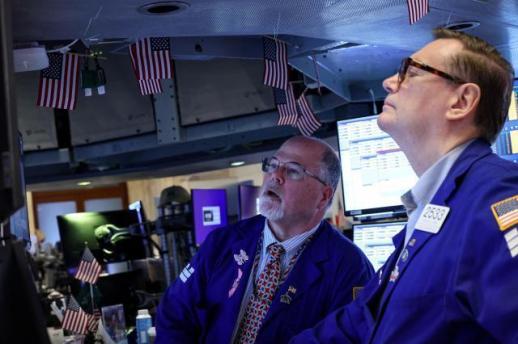 Dow Hits Record High as AI Semiconductor Stocks Retreat The New York Stock Exchange closed mixed on June 4, with the Dow Jones Industrial Average reaching a record high, while semiconductor stocks faced pressure from profit-taking. The Dow rose 874.86 points, or 1.7%, to finish at 51,561.93. The Standard & Poor's 500 index gained 30.63 points, or 0.4%, closing at 7,584.31. In contrast, the tech-heavy Nasdaq composite fell 23.02 points, or 0.1%, to end at 26,830.96. Market activity shifted focus from large tech stocks to financial and healthcare sectors. A nearly 3% drop in international oil prices and declining U.S. Treasury yields helped restore some investor confidence in risk assets. Financial and healthcare stocks boosted the indices, while the Russell 2000 index, which tracks smaller companies, rose 1.4%. However, AI semiconductor stocks faced profit-taking pressure. Broadcom's shares plummeted over 12% after the company reported second-quarter revenues that fell short of market expectations and did not raise its AI revenue forecast for 2027. This decline affected major semiconductor stocks like AMD, Micron, and Qualcomm, which had recently seen rapid price increases due to AI optimism. Stocks that failed to meet performance expectations faced significant selling pressure. Macro indicators showed signs of economic slowdown. The number of new unemployment claims in the U.S. rose to 225,000, the highest level in four months. Additionally, the first-quarter non-farm productivity growth rate was revised down from 0.8% to 0.3%. However, the slowdown in the labor market was interpreted more as a signal for the Federal Reserve's interest rate trajectory rather than an immediate warning of a severe economic downturn. Expectations of easing tensions in the Middle East supported the market. Reports of a ceasefire agreement between Israel and Lebanon led Brent crude to drop to $95.03 per barrel, while West Texas Intermediate (WTI) fell to $93.04. The decline in oil prices contributed to easing inflationary pressures. Overall, the trading session was far from a broad rally in risk assets. While the Dow and S&P 500 gained, the Nasdaq was weighed down by weakness in semiconductor stocks. The market now looks ahead to the employment report and the Federal Reserve's interest rate decisions, as well as the performance expectations for AI-related stocks.* This article has been translated by AI. 2026-06-05 06:42:00
 -
 40% of Top Apps in Apple App Store Feature AI, Payment Growth Quadruples Apple's App Store is seeing a rapid increase in apps featuring artificial intelligence (AI) capabilities. The demand for generative AI is translating into higher payments for smartphone apps, contributing to the growth of the App Store. On June 4, Apple reported that more than 40 of the top 100 apps by payment volume last year included consumer-facing AI features. The payment growth rate for these apps was four times higher than that of top apps without AI functionalities. AI capabilities are not limited to chatbot applications. Apple noted that "AI features are spreading across a wide range of consumer apps, including document creation, image generation, productivity, search, and education." This indicates that AI is not only creating a separate app market but also driving payment expansion within existing apps. The overall App Store ecosystem has also grown. Citing research from an analytics group, Apple revealed that the App Store generated $1.4 trillion in developer payments and revenue last year, an increase of about $100 billion from the previous year's $1.3 trillion. By category, physical goods and services accounted for the largest share at $1.1 trillion. Digital goods and services totaled $149 billion, while in-app advertising reached $151 billion. However, not all of this revenue is attributed to Apple. The company stated that developers did not pay a commission on more than 90% of the payments and revenue generated within the App Store ecosystem. This highlights that the App Store serves as a platform connecting not only app sales but also external transactions in shopping, travel, delivery, and advertising. This announcement comes amid ongoing assessments that Apple's own AI services are lagging behind competitors. Instead of promoting its own AI apps, Apple is emphasizing its role in facilitating the distribution and payment flow of consumer AI services through the App Store.* This article has been translated by AI. 2026-06-05 06:36:00
 -
 Iran's Revolutionary Guard Demands Israeli Withdrawal from Lebanon Iran's Islamic Revolutionary Guard Corps (IRGC) Quds Force Commander Esmail Qaani has called for the withdrawal of Israeli forces from Lebanon. This demand comes shortly after a U.S.-brokered agreement was proposed, with Iran publicly pressuring for the Israeli withdrawal as a key condition. On June 4, Qaani stated, "The minimum requirement of the Lebanese resistance front is for Israel to retreat to its pre-war positions." The term "Lebanese resistance front" refers to the Iran-aligned militant group Hezbollah. Qaani asserted that Lebanon and Hezbollah have the right to determine any agreements on their own, emphasizing that the withdrawal of Israeli forces should be the starting point for any negotiations. His remarks were made amid discussions between the Israeli and Lebanese governments regarding a ceasefire implementation, facilitated by the United States. The proposed agreement hinges on a complete cessation of hostilities by Hezbollah and the exclusive control of certain areas in southern Lebanon by the Lebanese military. However, the positions of the key parties remain divided. Hezbollah has expressed opposition to the agreement, stating it was not directly involved in the negotiations, while Israel has indicated it will not accept demands for a withdrawal from southern Lebanon or a halt to military operations. Qaani's comments highlight that the central issue in the discussions surrounding the Lebanese ceasefire is the withdrawal of Israeli forces. The U.S. aims to reduce tensions on the Lebanese front ahead of peace negotiations with Iran, but disagreements over the withdrawal issue leave the implementation of any agreement uncertain.* This article has been translated by AI. 2026-06-05 06:27:00
 -
 Hezbollah and Israel Reject Lebanon Ceasefire Proposal Amid Tensions A ceasefire proposal for Lebanon, brokered by the United States, is facing significant challenges right from its announcement. Hezbollah, the Iran-aligned militant group in Lebanon, has rejected the agreement, while Israel has stated it will not comply with demands to withdraw from southern Lebanon or halt military operations. The refusal from both sides to accept key conditions has diminished the likelihood of implementation. On June 4, Hezbollah leader Naim Qassem publicly rejected the ceasefire plan agreed upon by the Israeli and Lebanese governments with U.S. mediation. He stated, "As long as Israel's occupation and airstrikes continue, we will not cease our resistance." The proposal calls for a complete cessation of fire by Hezbollah and the withdrawal of Israeli forces from areas south of the Litani River. It also includes provisions for the Lebanese army to control certain areas independently and to exclude non-state armed groups. Hezbollah appears to view the agreement as a demand for disarmament and retreat. The fact that Hezbollah was not directly involved in the negotiations, while the Lebanese government reached an agreement with Israel, has fueled their opposition. Israel has also drawn a line regarding any conditions that would limit its military actions. Israeli Defense Minister Yoav Gallant stated, "The Israel Defense Forces will not withdraw from Lebanon, nor will they cease military operations." Israeli airstrikes in southern Lebanon have continued. The Lebanese government has indicated that the agreement could take effect within 24 hours if all relevant parties approve it. However, with Hezbollah's rejection and Israel's insistence on maintaining its operations, moving to the implementation phase seems unlikely. This ceasefire proposal was initiated as part of efforts by the U.S. to lower the level of conflict on the Lebanon front ahead of negotiations with Iran. However, with both Hezbollah and Israel refusing to accept key conditions, the Lebanon front remains a variable in U.S.-Iran negotiations.* This article has been translated by AI. 2026-06-05 06:21:00
 -
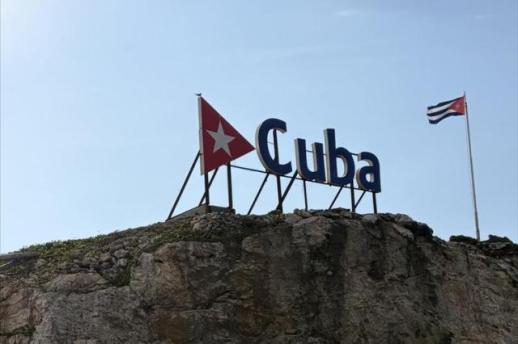 U.S. Sanctions Cuban President Miguel Díaz-Canel and Military Entities The United States has added Cuban President Miguel Díaz-Canel and military-related institutions to its sanctions list, intensifying pressure on the Cuban regime and its military-linked economic network. On June 4, the U.S. Department of the Treasury's Office of Foreign Assets Control (OFAC) announced that President Díaz-Canel has been included in the Specially Designated Nationals (SDN) list. His wife, Lis Cuesta Peraza, and Manuel Anido Cuesta, associated with him, are also subject to sanctions. The sanctions have been expanded to include figures from Cuba's past leadership. Alejandro Castro Espín, son of former Cuban National Assembly President Raúl Castro, and Raúl Alejandro Castro Calvo, associated with him, have also been added to the list. Institutional sanctions were also imposed. The Ministry of the Revolutionary Armed Forces (MINFAR), the Committees for the Defense of the Revolution (CDR), the Cuban Institute for Friendship with the Peoples (ICAP), the travel agency Amistur Cuba, and the mining company Minera La Victoria are now under sanctions. This action is part of Executive Order 14404, which targets those responsible for repression in Cuba and threats to U.S. national security and foreign policy. The U.S. aims to pressure the funding channels of the Cuban regime by targeting both current leadership and military institutions, as well as tourism and mining-related entities. On the same day, OFAC released a new FAQ regarding Cuba. It stated that the military-linked enterprise group GAESA, the Ministry of the Interior (MININT), and the Revolutionary Armed Forces are blocked, and that non-U.S. persons and foreign financial institutions that conduct business with entities in which they hold more than 50% interest could also face sanctions. As a result of these sanctions, assets within the U.S. will be frozen, and transactions with U.S. persons will be prohibited. Foreign companies and financial institutions that engage with Cuban military and government-related entities may also become subject to U.S. sanctions, increasing the burden of overseas transactions related to Cuba.* This article has been translated by AI. 2026-06-05 06:09:00
 -
 Korea's Trade Chief Meets EU Counterpart to Address Steel Regulation Concerns Yeo Han-goo, head of the Trade Negotiation Headquarters at the Ministry of Trade, Industry and Energy, met with the European Union's trade chief to express concerns from South Korea's steel industry ahead of the EU's new steel regulations set to take effect next month. He also participated in discussions on World Trade Organization (WTO) reforms, emphasizing the need to address trade issues amid rising protectionism. The Ministry reported that Yeo attended the OECD Ministerial Council Meeting (MCM) in Paris on June 3-4, where he held bilateral talks with ministers from major countries to discuss trade matters. During his meeting with Maroš Šefčovič, the EU's Executive Vice President for Trade and Economic Security, Yeo conveyed the South Korean government's and industry’s concerns regarding the upcoming EU steel measures. He highlighted the critical role of South Korean steel as a key raw material in the European manufacturing supply chain, which includes sectors such as automotive, electronics, and machinery. He requested that sufficient market access be ensured during the implementation of the new regulations. Yeo also emphasized that South Korea is a key economic partner with the EU, having signed a free trade agreement (FTA), and has actively participated in international cooperation to address global steel overcapacity. He called for favorable consideration for South Korea in the allocation of tariff-free quotas. This meeting follows Yeo's discussions in Brussels on June 1 regarding the EU's steel measures, occurring just three days later. The government plans to continue high-level consultations to minimize the impact on the South Korean steel industry and secure market access before the new EU regulations take effect. While at the OECD, Yeo also attended an informal WTO trade ministers' meeting, where he stressed the need for WTO reforms. He stated, "The WTO is facing a crisis where it cannot make meaningful decisions," and called for reforms to the decision-making structure and the restoration of its normative functions to adapt to the changing trade environment. He proposed expanding the use of plurilateral agreements to address new trade issues such as digital trade and artificial intelligence (AI), as well as making the practice of duty-free electronic transmissions permanent and expediting the implementation of the Investment Facilitation for Development Agreement (IFDA). He also suggested the necessity of holding a ministerial-level interim review meeting ahead of next year's WTO Ministerial Conference. At the OECD Ministerial Council Meeting, South Korea participated as a vice-chair in celebration of its 30th anniversary of OECD membership. Yeo led discussions in various sessions, including delivering keynote speeches on industrial policy, trade, and investment. In the industrial policy session, he introduced initiatives on manufacturing AI transformation, energy transition policies, and the regional balanced development strategy known as '5 poles and 3 special zones.' He emphasized that while the importance of industrial policy is growing due to supply chain instability and economic security concerns, it should focus on promoting productivity innovation and technology diffusion rather than replacing markets. Additionally, Yeo held discussions with key officials from the United States, including USTR's Jamieson Greer, as well as representatives from the UK, France, Finland, Brazil, and Argentina, addressing topics such as steel regulations, critical mineral supply chains, FTA negotiations, and expanding investment cooperation.* This article has been translated by AI. 2026-06-05 06:03:00