

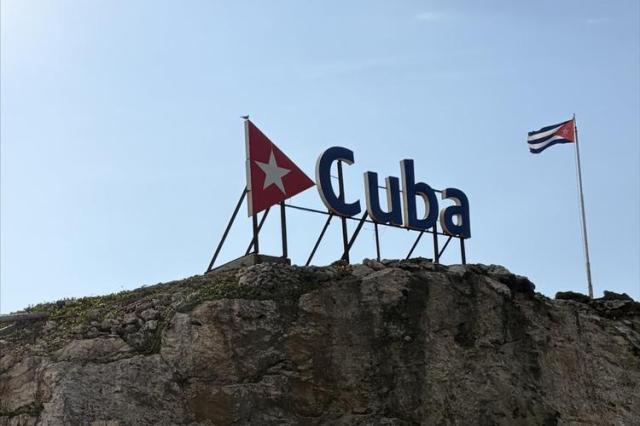
The United States has added Cuban President Miguel Díaz-Canel and military-related institutions to its sanctions list, intensifying pressure on the Cuban regime and its military-linked economic network.
On June 4, the U.S. Department of the Treasury's Office of Foreign Assets Control (OFAC) announced that President Díaz-Canel has been included in the Specially Designated Nationals (SDN) list. His wife, Lis Cuesta Peraza, and Manuel Anido Cuesta, associated with him, are also subject to sanctions.
The sanctions have been expanded to include figures from Cuba's past leadership. Alejandro Castro Espín, son of former Cuban National Assembly President Raúl Castro, and Raúl Alejandro Castro Calvo, associated with him, have also been added to the list.
Institutional sanctions were also imposed. The Ministry of the Revolutionary Armed Forces (MINFAR), the Committees for the Defense of the Revolution (CDR), the Cuban Institute for Friendship with the Peoples (ICAP), the travel agency Amistur Cuba, and the mining company Minera La Victoria are now under sanctions.
This action is part of Executive Order 14404, which targets those responsible for repression in Cuba and threats to U.S. national security and foreign policy. The U.S. aims to pressure the funding channels of the Cuban regime by targeting both current leadership and military institutions, as well as tourism and mining-related entities.
On the same day, OFAC released a new FAQ regarding Cuba. It stated that the military-linked enterprise group GAESA, the Ministry of the Interior (MININT), and the Revolutionary Armed Forces are blocked, and that non-U.S. persons and foreign financial institutions that conduct business with entities in which they hold more than 50% interest could also face sanctions.
As a result of these sanctions, assets within the U.S. will be frozen, and transactions with U.S. persons will be prohibited. Foreign companies and financial institutions that engage with Cuban military and government-related entities may also become subject to U.S. sanctions, increasing the burden of overseas transactions related to Cuba.
* This article has been translated by AI.

Copyright ⓒ Aju Press All rights reserved.