

Journalist

Ko Yu-hwan
-
 SpaceX IPO Approaches as JP Morgan Engages Wealthy Clients Jamie Dimon, CEO of JPMorgan Chase, is personally engaging high-net-worth clients ahead of SpaceX's initial public offering (IPO). As SpaceX plans to go public later this month, demand is expanding from institutional investors to individual wealthy clients on Wall Street. According to Bloomberg on June 4, Dimon will host a presentation this week for JPMorgan's affluent clients to discuss the SpaceX IPO. The event will take place at JPMorgan's headquarters and will feature live discussions with Mary Callahan Erdoes, CEO of Asset & Wealth Management at JPMorgan, Gwynne Shotwell, president of SpaceX, and Brett Johnson, CFO of SpaceX. The event will be broadcast simultaneously to approximately 90 JPMorgan branches across 26 states, with expected attendance exceeding 2,500 clients. While investor presentations before an IPO are standard practice, this event's scale, connecting branches nationwide for high-net-worth clients, is unusual. SpaceX, led by Elon Musk, is a company focused on rockets, satellites, and artificial intelligence (AI). Bloomberg previously reported that SpaceX aims to go public by the end of this month, with a projected valuation of around $1.8 trillion. If successful, it could mark the largest stock market debut in history. The underwriting team is composed mainly of major investment banks. Goldman Sachs was selected as the lead underwriter for the SpaceX IPO alongside Morgan Stanley last month. JPMorgan, Bank of America, and Citigroup are also part of the underwriting group, which includes 23 banks. JPMorgan's involvement reflects a shift in its relationship with Musk. The bank previously sued Tesla over stock warrant transactions related to Tesla's attempted delisting in 2021. Both parties withdrew their lawsuits in November 2024. Since then, Dimon has indicated that he has repaired his relationship with Musk and expressed a willingness to support Musk and his companies.* This article has been translated by AI. 2026-06-04 13:24:00
 -
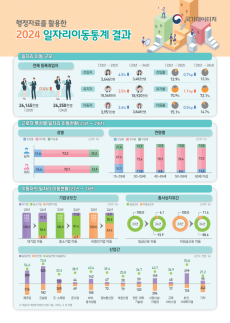 Job Market Sees Two Consecutive Weeks of Decline in New Entrants and Job Changers The number of registered job seekers entering the labor market or changing jobs has declined for two consecutive years. Additionally, the number of young people aged 15 to 29 entering the job market has also decreased. According to the "2024 Job Mobility Statistics" released by the National Data Agency on June 4, the total number of registered job seekers increased by 105,000 (0.4%) from the previous year to 26.25 million. Registered job seekers are defined as wage and non-wage workers reported to public institutions based on administrative data related to the four major social insurances. While the number of workers maintaining their jobs has increased, the population entering the job market or changing jobs has decreased. In 2024, the number of new entrants was 3.482 million, down 164,000 (-4.5%) from the previous year, with an entry rate of 13.3%, a drop of 0.7 percentage points. During the same period, the number of job changers decreased by 103,000 (-2.6%) to 3.838 million, resulting in a mobility rate of only 14.7%, down 0.5 percentage points. The number of non-registered workers was 3.377 million, a decrease of 181,000 (-5.1%) from the previous year. Conversely, the number of workers who maintained their jobs increased by 373,000 (2.0%) to 18.9 million, with a retention rate rising by 1.1 percentage points to 72.1%. By age group, the entry and mobility rates were highest among those under 29, but the number of young entrants has been declining each year. The number of new entrants aged 15 to 29 fell from 1.309 million in 2022 to 1.203 million in 2023, and further to 1.13 million in 2024. The proportion of this age group also decreased from 33.2% in 2022 to 31.6% in 2023, and 31.1% in 2024. When analyzing the retention rates by age group for 2023, those in their 40s had the highest rate at 78.9%, followed by those in their 50s at 78.4%, 30s at 73.4%, and those aged 60 and over at 73.0%. In contrast, the retention rate for young workers was only 47.6%. Examining mobility rates by company size, small businesses had a mobility rate of 16.8% and an entry rate of 14.9%, surpassing large enterprises. The proportion of workers moving from large to large enterprises was 37.0%, while 56.6% of workers transitioned from large to small businesses. Conversely, only 11.8% moved from small businesses to large enterprises. By organizational type, the entry rate was highest for individual enterprises, recorded at 16.0%. The retention rate for jobs that continued a year later was 80.7% for government and non-profit organizations, meaning eight out of ten workers remained in the same job. The mobility rate was highest for corporate entities at 18.8%. Additionally, 57.8% of workers who changed jobs did so for positions with increased wages, while 41.3% moved to jobs with decreased wages. Over the past five years since 2019, while the number of job holders and retention rates have gradually decreased, the number of job changers and new entrants has shown an upward trend.* This article has been translated by AI. 2026-06-04 13:18:00
 -
 Ruling Party Dismisses Opposition's Call for Re-vote After Election Issues Jung Seung-rae, the Secretary-General of the Democratic Party, dismissed calls from the People Power Party for a re-vote following a ballot shortage during the June 3 local elections, stating, "There is no value in responding to that." After a press conference with party leader Jeong Cheong-rae on June 4, Jung told reporters, "Someone must take responsibility for this, and I will hold them accountable," adding that the future of the Election Commission's Secretary-General should also be reconsidered. He emphasized that the matter would not be swept under the rug just because the election is over, insisting on accountability from the Election Commission. However, he drew a line regarding the People Power Party's claims of halting the vote count and demanding a re-vote. "There is no value in responding to the People Power Party's demands for a halt to the counting and a re-vote," he explained. "Many citizens in Seoul have already cast their votes, and the counting is proceeding normally." He further criticized the People Power Party, saying, "They initially called for a halt to the counting and a re-vote, but now that the election results are favorable for them, I believe they will stop making those claims. I hope they refrain from such low-level politics that obscure the issue as the counting progresses in their favor." Online, netizens reacted to Jung's comments with a variety of opinions. Some expressed that if there are citizens who could not exercise their voting rights, a re-examination is necessary regardless of the results. Others questioned the inconsistency of holding the Election Commission accountable while dismissing discussions of a re-vote, stating, "Isn't this a serious violation of voting rights?" and "Even if the election results do not change, principles must be upheld." On the day of the local elections, a significant incident occurred in areas like Songpa District in Seoul, where a shortage of ballots led to a temporary halt in voting. In response, the People Power Party strongly opposed the situation, demanding a nationwide halt to the counting and a re-vote. Jang Dong-hyuk, the leader of the People Power Party, stated during a protest visit to the Election Commission, "Voting continued after the deadline due to a shortage of ballots in Seoul. Since the election itself is invalid, a re-vote must be conducted." However, in the Seoul mayoral election, Oh Se-hoon of the People Power Party overcame Jung Won-oh of the Democratic Party in the final stages of the counting, securing victory and setting a record as the first mayor of Seoul to be elected for a fifth term. 2026-06-04 13:09:00
 -
 Can AI Films Find a Place in Established Film Festivals? Artificial intelligence (AI) is no longer a distant concept in the film industry. With feature films created using generative AI now screening in theaters and discussions about the ethics of AI in filmmaking gaining traction at international film festivals and film markets, the industry is facing new standards.The Bucheon International Fantastic Film Festival (BIFAN) is a key example of this shift, having established a new section called 'Bucheon Choice: AI Films' last year, officially recognizing AI films as part of its screenings and competitions. This marks a significant step in questioning how AI films can be introduced and evaluated within existing international film festivals.BIFAN's initiative continued at this year's Cannes Film Market. Shin Chul, the executive director of BIFAN, was invited to present on 'BIFAN's AI Leadership Strategy' during the 'Cannes Next' program, which took place during the 79th Cannes Film Festival.This program brought together media, technology, investment, and policy stakeholders to discuss Asia's AI-driven cultural ecosystem. BIFAN shared its experiences and insights on operating an AI film section with international film industry representatives. Shin also participated in the 'AI for Talent Summit,' a key event at the Cannes Film Market, contributing to discussions on the evolving role of AI in the film industry.Cannes is approaching the topic cautiously. There remains a careful atmosphere regarding how to handle works where AI takes the lead in creation within major competition categories. However, discussions around AI production, investment, copyright, and creative ethics are expanding at the film market. The industry is navigating a path between using AI as a production tool and recognizing AI as a creative entity.As AI films begin to enter traditional film festivals, the next question is about evaluation criteria. The mere technical novelty of being created by AI is insufficient for acceptance within the language of film festivals. It is essential to assess the possibilities and limitations demonstrated by AI feature films that have been screened in theaters, as well as how they can navigate issues of creative ethics and rights.In South Korea, AI feature films have already begun to screen in theaters. In May, two films, 'I Am Popo' and 'The Man in Hanbok,' both created entirely with generative AI, premiered simultaneously. 'I Am Popo' tells the story of an AI robot born to serve humans who kills a potentially criminal human, while 'The Man in Hanbok' depicts a fictional historical drama where the Joseon scientist Jang Yeong-sil meets Leonardo da Vinci in Renaissance Florence. These films illustrate that AI filmmaking is no longer limited to short experiments but has entered the realm of feature narratives and theatrical releases.However, alongside their potential, limitations have also emerged. Both films attracted only a few hundred viewers, indicating limited commercial impact. Beyond technical experimentation, the challenge remains of how convincingly these films can engage audiences. Generative AI struggles to maintain consistent facial expressions and backgrounds over extended periods, and producing feature films requires numerous repetitive tasks and scene-by-scene adjustments.'Intermediate Realm,' directed by Kang Yoon-sung and noted as South Korea's first feature film utilizing AI, also showcases both potential and limitations. Kang revisited a screenplay he had prepared 25 years ago, modifying it with AI technology in mind, and visualized characters like the Twelve Zodiac Gods and Yeomra, the King of the Underworld, which were challenging to realize with existing budgets and technology. In an interview, he stated, "A screenwriter always thinks about the budget first. Using AI breaks that constraint. The moment you think, 'Is this possible?' you can envision a new world."However, for AI films to be accepted into established film festivals, technical feasibility alone is insufficient. Creative ethics and rights issues must be addressed first. The controversy surrounding the short film 'Meter Reader,' which used AI to replicate the face and voice of actress Yeom Hye-ran, directly highlighted this issue in the South Korean film industry. While the production team claimed they had obtained permission for the use of her likeness, her agency stated there had been no prior consultation or approval, leading to the video's removal from public view.Similar controversies are occurring internationally. In Hollywood, the emergence of the AI actor 'Tilly Norwood' has sparked backlash from industry professionals, including actors and directors, who fear that human performances and images could be replaced by cheap data. The American actors' and broadcasters' union is advocating for the introduction of a so-called 'Tilly Fee,' which would require AI actors to be compensated at rates comparable to human actors.Despite these challenges, creators are not entirely rejecting the use of AI. If proper consent, compensation, and rights protection are ensured, AI can enhance production efficiency and broaden creative expression. The issue lies in the fact that sufficient standards to support these possibilities have yet to be established. For AI to become a collaborator with creators, the sources of training data, rights compensation, and the scope of consent from actors and performers must be clarified.Film critic Yoon Seong noted, "Relying solely on the technical marvel of AI films looking 'just like real people' may be a one-dimensional approach. Ultimately, storytelling is what matters in film. The advantage of AI lies in its ability to attempt scenes that are physically difficult to realize without significant budgets, so how that technology is utilized to create unique characteristics in a work is crucial."He added, "For now, I believe it is appropriate to evaluate AI films in a separate section. The technology is not perfect, and there are points where immersion is broken compared to live-action films. However, we must now view the issue as how to utilize and tool AI within the films we know, rather than whether to recognize AI films as films at all."AI films are no longer confined to the realm of 'possibility.' They are already being created, screened, and becoming topics of discussion at film festivals and markets. What is now needed is to move beyond mere admiration for technological novelty to examine the completeness of these films as works, the involvement of creators, and issues of copyright, likeness rights, and industrial responsibility. As AI films begin to find their place within established film festivals, these festivals are becoming arenas to test both the potential and standards of this new medium.* This article has been translated by AI. 2026-06-04 13:00:00
 -
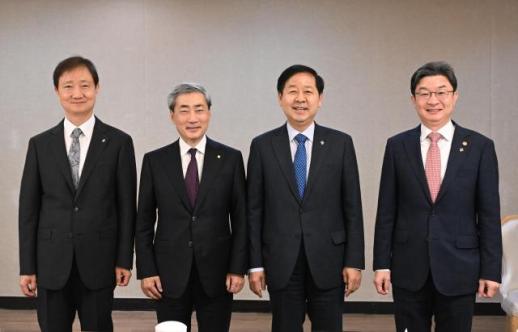 Financial chiefs vow to tighten scrutiny on stock leverage amid overheated rally SEOUL, June 4 (AJP) - South Korea's top economic and financial policymakers on Thursday pledged to strengthen preemptive risk checks on borrowing-backed stock trading, as a rapid market rally fuels concerns that excessive leverage could amplify losses for retail investors and destabilize broader financial markets. Deputy Prime Minister and Finance Minister Koo Yun-cheol chaired a joint market monitoring meeting at the government complex in Seoul, attended by Bank of Korea governor Shin Hyun-song, Financial Services Commission chairman Lee Eok-won and Financial Supervisory Service governor Lee Chan-jin. Participants expressed concern over the rapid increase in borrowing-backed stock purchases, particularly margin loans, and agreed to strengthen regular monitoring through market review meetings while enhancing preemptive risk management and investor protection measures. The warning comes as margin lending has climbed to record levels. Outstanding margin loans rose from 27.3 trillion won at the end of last year to 38.0 trillion won as of June 1, an increase of more than 10 trillion won in five months. Signs of mounting stress have also emerged in forced liquidations of leveraged positions. Data from the Korea Financial Investment Association showed that forced sales totaled 707.7 billion won during May, while the ratio of forced liquidations to unpaid trading balances averaged 2.63 percent during the month and surged to 7.6 percent on May 20. On June 1 alone, forced liquidations reached 33.2 billion won, more than double the previous trading day's 15.4 billion won, with the ratio jumping to 2.5 percent from 1.2 percent. The concerns echoed Shin's warning last week that excessive leverage could turn market corrections into self-reinforcing selloffs through forced liquidations, distorting the normal relationship between prices and demand. Participants said favorable economic conditions, including a 53.2 percent year-on-year jump in May exports, have helped sustain the stock market rally. They also noted that Korea's stock market capitalization has overtaken India to become the world's sixth largest. According to Bloomberg data, the U.S. ranked first with a market capitalization of US$79.5 trillion, followed by China with $15.1 trillion, Japan with $8.6 trillion, Hong Kong with $7.2 trillion, Taiwan with $5.2 trillion and Korea with $5.0 trillion. India ranked seventh with $4.8 trillion. Officials also discussed recent volatility in the foreign-exchange market. Despite a record current-account surplus, they said the won has remained vulnerable to the Middle East conflict and continued foreign selling of domestic equities. They noted that the sharp rise in local share prices has prompted foreign investors to rebalance portfolios and lock in profits, adding to exchange-rate volatility. Foreign investors' holdings of Korean stocks have risen to 2,991 trillion won, accounting for 38.3 percent of total market capitalization, up from 1,312 trillion won and 32.9 percent at the end of last year. Net foreign selling of local equities has reached 127 trillion won so far this year, including 66 trillion won over the past 18 consecutive trading sessions. Koo said authorities are closely watching markets with a high level of vigilance to prevent anxiety from spreading amid elevated external uncertainty. He also stressed that the government would take immediate action if excessive one-sided movements emerge. Officials also agreed to closely monitor the bond market, where government bond yields have become more volatile amid global rate movements, inflation concerns and stronger expectations for domestic rate hikes. They said authorities would coordinate responses in a timely manner if excessive volatility emerges. 2026-06-04 12:48:40
 -
 Two ex-justice ministers see contrasting fortunes in local elections' key battlegrounds SEOUL, June 4 (AJP) - Two former justice ministers, both once seen as potential presidential contenders in the liberal and conservative camps, saw sharply contrasting fortunes in Wednesday's local elections. Former leader of the main opposition People Power Party (PPP) and independent candidate Han Dong-hoon won a parliamentary by-election and is headed to the National Assembly, while Cho Kuk of the minor Rebuilding Korea Party (RKP) lost, casting doubt over his political future. Han won in the Buk district of the country's southern port city of Busan with 42.96 percent of the vote, narrowly beating Democratic Party (DP) candidate Ha Jung-woo, who received 41.26 percent, in a neck-and-neck race. PPP candidate Park Min-sik, who was expected to split the conservative vote and boost Ha's chances, trailed with a mere 15.76 percent. Han, once a close aide to disgraced former President Yoon Suk Yeol, served as justice minister under the Yoon administration before becoming PPP leader in July 2024. But he was later expelled from the conservative party late last year over dubious allegations that included hundreds of defamatory comments about Yoon and his wife posted on the party's online bulletin board. Han's overnight election victory has sparked speculation about a conservative realignment, with the PPP's internal rift over distancing itself from Yoon likely to intensify further. Han was among those who voted to lift Yoon's abrupt Dec. 3 declaration of martial law in 2024. Lawmakers aligned with Han within the PPP could push for his return to the party. The possibility of Han launching a new conservative party has also been raised. His victory is seen as laying the groundwork for him to emerge as a leading conservative contender in the next presidential election. PPP lawmakers told AJP that Han would return to the PPP and would not launch a new party. "His return to the party is a matter of timing, and there does not seem to be any discussion about launching a new party yet," PPP lawmaker Kim So-hee said. "Launching a new party would be difficult," she added. PPP four-term lawmaker Han Ki-ho said Han was unlikely to forcefully seek a return to the party and that the PPP would instead encourage him to rejoin. Dismissing speculation about a new party, he said, "Launching a new party is out of the question." "Once he enters the National Assembly, he will receive intense media attention, and if Han reflects the will of the people, the party will have no choice but to encourage him to join," Han added. "If Han maintains his soft, inclusive image, he will win public support." With 99.88 percent of the vote counted as of Thursday morning, Cho, the former fly-by-night justice minister who was released from prison after being convicted on charges of shoddy financial dealings and document forgery related to his children's school admissions, failed to secure a seat in Pyeongtaek, Gyeonggi Province, finishing third with 27.24 percent in a tight three-way race. PPP candidate Yoo Eui-dong led with 34.83 percent and was on course for victory, while Kim Yong-nam of the DP came in second with 28.77 percent. Analysts say Cho, who had been considered a potential presidential contender, suffered a major blow to his leadership after failing to enter the National Assembly, and that the result could deal a fatal hit to his political career. Cho's defeat is expected to affect not only his personal political standing but also the future of his party. With his defeat, a possible merger between the DP and the RKP is now expected to be put on hold for the time being. During the campaign, Cho launched fierce attacks against the DP candidate while also stepping up criticism of the DP leadership, further deepening the rift between the two parties. With the DP soon set to begin preparations for a national convention to elect a new party leader and Supreme Council members, discussions on a merger between the two parties are likely to be left to the next leadership. Kim Joon-hyung, a lawmaker from the RKP, said there are currently no discussions within the party about a merger with the DP. Kim said no one was talking about a merger even in the RKP lawmakers' group chat on Telegram. He expressed disappointment over the DP's attitude toward the RKP. "DP leader Jung Chung-rae also talked about 'solidarity,' but the 'solidarity' the DP referred to was violent and one-sided," he said. "Now that Cho has lost, we no longer have the leverage we once had, so the DP would become even more aggressive toward the RKP," he predicted. "Kim Boo-kyum, the party's candidate for Daegu mayor, and Kim Kyoung-soo, the party's candidate for South Gyeongsang governor, were defeated, while Seoul Mayor Oh Se-hoon and Han strengthened their standing as presidential contenders with their victories," he also said. 2026-06-04 12:40:15
 -
 Ruling Party Criticizes Opposition's Call for Re-vote in Local Elections Jo Seung-rae, the Secretary-General of the Democratic Party, criticized the Election Commission's management of voting during the June 3 local elections, stating that "the position of the Election Commission's Secretary-General should be reconsidered." He also addressed the People Power Party's calls for a re-vote, urging them to refrain from engaging in "low-level politics" as the vote counting progressed favorably for them. After a press conference held by Democratic Party leader Jeong Cheong-rae, Jo told reporters, "Someone must take responsibility for this issue, and I will hold them accountable. The matter will not fade away just because the election is over." He added, "The People Power Party has called for a halt to vote counting and a re-vote, but I believe they will not mention it now that the election results are favorable for them." Earlier, during the election process, a shortage of voting papers occurred in areas such as Songpa District, leading to an unprecedented temporary halt in voting. In response, People Power Party leader Jang Dong-hyuk visited the Election Commission, asserting, "We must suspend all vote counting nationwide until we ascertain how many similar incidents have occurred across the country." Jang further claimed, "Due to the shortage of voting papers in Seoul, voting continued even after the deadline, and the counting broadcast proceeded while voting was still ongoing, rendering the election itself invalid. A re-vote must be conducted." In response, Jo stated to reporters in the counting situation room the previous day, "There is no value in responding to the People Power Party's demands for a halt to counting and a re-vote." He continued, "Regardless of this issue, many citizens of Seoul cast their votes, and the voting has concluded, with the ballots sealed and transported to the counting center for processing." Meanwhile, in the Seoul mayoral election, after 13 hours of counting, People Power Party candidate Oh Se-hoon overturned the lead of Democratic Party candidate Jeong Won-o, marking a historic fifth term for Oh as mayor of Seoul.* This article has been translated by AI. 2026-06-04 12:09:00
 -
 HD Construction Machinery to Supply $23 Million in Bulldozers to Polish Military HD Construction Machinery has signed a major contract to supply bulldozers to the Polish military. According to industry sources, HD Construction Machinery was recently confirmed as the final supplier for the procurement of tracked bulldozers for the Polish 3rd Regional Logistics Base. This marks the company's first significant contract in a European military procurement project, valued at approximately 27 billion won (about $23 million). The order includes 50 units of 15-ton DEVELON bulldozers, with the potential for increased supply based on options. An official from HD Construction Machinery stated, "This contract is significant as it represents our entry into a challenging military procurement market and is a result of launching our bulldozer products in the European market within two years." To secure this order, HD Construction Machinery tailored its production capabilities to meet specific customer requirements, including adjustments to vehicle height, increased travel speed, and military-grade painting. Despite a tight deadline to deliver all units by November, the company established a stable production and supply system to gain the customer's trust. Lim Jeong-woo, the European Regional Director of HD Construction Machinery, remarked, "This contract demonstrates our ability to meet stringent military procurement conditions and showcases our product performance, quality, and supply capability in Europe. We aim to strengthen our competitive edge in various working environments and special-purpose demands, positioning ourselves as a trusted partner not only in construction equipment but also in public, military, and infrastructure recovery markets." In May, HD Construction Machinery signed a memorandum of understanding with the Mykolaiv regional government in Ukraine for cooperation on reconstruction efforts. The company is also expanding its global presence, having recently secured a contract worth 20 billion won for the supply of articulated dump trucks with Rental Group, the largest construction equipment rental company in Northern Europe.* This article has been translated by AI. 2026-06-04 12:09:00
 -
 KFTC Approves Conditional Acquisition of Sanofi's Cancer Drug by Boryung The Korea Fair Trade Commission (KFTC) has halted Boryung's acquisition of Sanofi's cancer drug Taxotere, citing significant concerns over reduced market competition. On June 4, the KFTC announced that it had reviewed Boryung's plan to acquire the marketing rights for Taxotere, an original cancer drug containing docetaxel, from Sanofi. The commission determined that the merger would substantially limit competition and ordered Boryung to divest the Taxotere business to a third party. Docetaxel is widely used for breast cancer treatment, with market shares in South Korea showing Sanofi at 64.7%, Boryung at 13.8%, and Dong-A ST at 6.9%. Boryung had signed a contract last October to acquire all necessary rights for Taxotere's domestic and international sales from Sanofi and subsequently reported the merger to the KFTC. The KFTC expressed concerns that the merger would lead to monopolistic practices. With Boryung holding a 13.8% market share as the second-largest player and Sanofi holding 64.7% as the market leader, the combined entity would control 78.5% of the market, creating an overwhelming dominant position. There were also worries that the merger could lead to a decline in product quality or reduce competitive incentives. Boryung has been the only company in South Korea to develop and supply an alcohol-free docetaxel product, competing on quality with the leading product. However, concerns arose that acquiring the leading product could diminish Boryung's motivation to maintain quality competition. As a result, the KFTC conditionally approved the merger, mandating Boryung to sell the Taxotere business. Specifically, Boryung must divest its Taxotere-related assets to a third-party pharmaceutical company within six months to ensure a sufficient number of effective competitors in the market. Additionally, to prevent any weakening of Taxotere's competitive capabilities, Boryung is prohibited from ceasing production and supply of Taxotere or encouraging a shift to Taxotere sales until the divestiture is complete. After the sale, Boryung will be required to supply finished Taxotere products and provide technical support to the acquiring company for a specified period upon request. A KFTC official stated, "This merger will help secure a stable supply of essential medicines for treating breast cancer and other conditions by enabling the domestic manufacturing and sale of the original docetaxel cancer drug. We will closely monitor anti-competitive mergers to actively prevent monopolistic practices and consumer harm."* This article has been translated by AI. 2026-06-04 12:03:00
 -
 Government to Revamp Integrated Pension Portal for Easier Retirement Asset Management The government is set to revamp the Integrated Pension Portal to enhance the convenience of managing citizens' retirement assets. Plans are in place to strengthen the comparison and search functions for pension products and to reorganize the content and menu structure based on user feedback, with a new service expected to launch by the end of the year. On June 4, the Ministry of Employment and Labor, along with the Financial Services Commission and the Financial Supervisory Service, announced the plan to improve the Integrated Pension Portal, aiming to make it easier for citizens to compare and analyze pension products and retirement asset information. The Integrated Pension Portal serves as a support platform that consolidates information on various pension schemes, including the National Pension, retirement pensions, and pension savings. User numbers have increased from 1.75 million in 2023 to 1.79 million in 2024, and further to 2.61 million, establishing it as a key tool for managing retirement assets. However, the government has determined that the current portal primarily provides information from the perspective of pension providers, indicating a need for improvements from the user’s viewpoint. To address this, the government plans to gather user complaints and suggestions to thoroughly review the content structure and menu system, as well as to enhance the comparison and search functions for pension products. The government will identify areas for improvement through a five-step process that includes ongoing collection of user feedback, in-depth interviews, new surveys, analysis of past survey results, and benchmarking against successful platforms. In particular, in-depth interviews will be conducted with financial consumer reporters, university student reporters, and representatives from pension-related associations and financial companies. An online satisfaction survey is also scheduled for June and July. The government aims to finalize improvement tasks by September, followed by system development, with the revamped Integrated Pension Portal service expected to be unveiled in December. A Ministry of Employment and Labor official stated, "We will actively reflect user opinions to improve the Integrated Pension Portal, enabling citizens to manage their retirement assets more easily and conveniently."* This article has been translated by AI. 2026-06-04 12:03:00