


Latest by
-
 Daishin Securities Raises DL E&C Target Price by 71% Amid Growth Prospects Daishin Securities announced on June 16 that it has raised its target price for DL E&C from 62,000 won to 106,000 won, an increase of 71%, citing stable housing profitability and growth momentum in the small modular reactor (SMR) business. The investment recommendation remains at 'buy.' Lee Hye-jin, a researcher at Daishin Securities, stated, "We have secured both high profitability in the housing business and growth potential through integration into the global SMR value chain." The firm analyzed that profitability is improving as revenues from high-quality projects that began construction in 2023 are being reflected. In the first quarter, the housing cost ratio was 79.9%, a competitive level compared to peers, and it is expected that the trend of cost ratio improvement will continue due to reduced high-cost sites and cost-saving effects. The SMR business is also identified as a new growth driver. DL E&C entered the global SMR value chain by signing a standard design contract with U.S.-based X-energy in March, with expectations for business expansion not only in the U.S. but also in the U.K. and Southeast Asian markets. For this year, Daishin Securities forecasts consolidated revenue of 7.0692 trillion won, a 4.5% decrease from the previous year, while operating profit is expected to rise by 33.8% to 517.6 billion won. Lee noted, "With the current price-to-book ratio (PBR) at around 0.5, the valuation burden is limited, and gradual multiple re-rating is anticipated."* This article has been translated by AI. 2026-06-16 08:57:00
 -
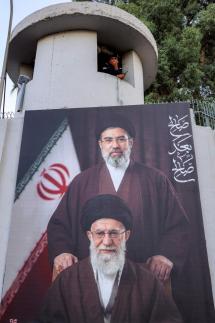 America picked a fight with history — and history won (Part 1) This is a three-part series on the 106-day Iran War and what the United States got catastrophically wrong Part One: You Can't Bomb a Civilization The war lasted 106 days. The official tally will show American hardware, American satellites, and American precision guided everything. It will show a nuclear program set back, missile stockpiles reduced, Revolutionary Guard installations turned to rubble. By the metrics that Washington tends to use — sorties flown, targets destroyed, casualties inflicted — the United States performed exactly as advertised. And yet. There is a version of victory that looks, upon close inspection, like something else entirely. Rome had versions of those too, against Persia. Trajan took Mesopotamia in 116 AD. He just couldn't hold it. Neither could anyone who came after him. The Persians had a habit of still being there when the conquerors got tired and went home. They are still there now. That is the thing Washington never quite absorbed: Iran is not a problem to be solved. It is a civilization to be reckoned with — and there is a difference, enormous and consequential, between the two. American strategic culture is congenitally allergic to this distinction. We see states. We see regimes. We see threat assessments and capability matrices and rogue actors. What we rarely see, because our entire intellectual framework for power was built in a country that is 250 years old, is the weight of deep time. Iran has been Iranian — recognizably, stubbornly, irreducibly Iranian — for five thousand years. It has absorbed Alexander the Great. It absorbed the Arab conquest. It absorbed the Mongols. It absorbed the British and the Russians playing their Great Game across its territory. It absorbed Saddam Hussein's eight-year war of attrition, backed, let us not forget, by Washington. It absorbed forty years of sanctions designed, in the frank words of more than one American official, to bring the regime to its knees. The knees remain unbent. The founding figure here is Cyrus the Great — not Khomeini, not the Supreme Leader, not the IRGC generals who appear in Pentagon briefings. Cyrus, who in the sixth century BC built an empire not through subjugation but through something radical for the ancient world: tolerance. He let conquered peoples keep their gods, their customs, their identities. He freed the Jewish exiles from Babylon and funded the rebuilding of the Temple in Jerusalem. He is, uniquely, the only non-Jewish figure in the Hebrew Bible to be called a messiah. To Iranians, he is what Washington is to Americans — the founding father, the measure of national greatness, the standard against which everything since is judged. America went to war with the heirs of Cyrus and apparently did not notice. The mistake is almost too large to enumerate. Washington looked at Iran and saw 1979: the hostage crisis, the chants, the Revolutionary Guard, the theocracy, the axis of evil. All real. All relevant. All, critically, insufficient. Iran is not reducible to its Islamic Republic any more than the United States is reducible to the Trump administration. The Islamic Republic is the current management of a civilization that has been operating under various managements for five millennia. Civilizations outlast their governments. This should not be a surprising observation. But American strategic planning — hooked on electoral cycles, quarterly defense budgets, and the institutional memory of a nation that has never lost a war on its own soil — runs on a fundamentally different clock. We think in years. Occasionally, in decades. Iran thinks in centuries. That gap in temporal imagination is not a minor operational variable. It is, as we have now seen, a decisive one. The Persians never beat Rome in the field, not consistently. But they survived Rome. They survived everyone. And in the collective memory of every Iranian who has ever been told, by some external power, that this time you will submit — that memory does not argue. It simply waits. *The author is a senior columnist for AJP with deep knowledge in religion, geopolitics, and civilizational history. 2026-06-16 08:51:59
 -
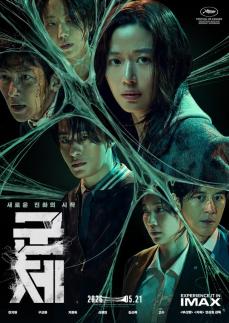 Film 'Gunchi' Draws 160,000 Global Viewers, Tops Korean Box Office in Three Asian Countries The film 'Gunchi,' which has surpassed 5 million viewers in South Korea, is also achieving success in international specialty theaters. CJ 4DPLEX, a subsidiary of CJ CGV, announced on June 16 that 'Gunchi' has attracted approximately 160,000 viewers globally through SCREENX and 4DX formats, generating about $1.7 million in box office revenue. In terms of format, SCREENX and 4DX each drew around 70,000 viewers, while integrated SCREENX and 4DX theaters accounted for about 20,000 viewers. Currently, 'Gunchi' is being screened in 118 specialty theaters across 12 countries, including South Korea, in 55 SCREENX locations, 53 4DX locations, and 10 integrated SCREENX and 4DX theaters. The film is also performing well in key Asian markets. In Taiwan, it has achieved the highest box office for a Korean film released in specialty theaters. In Malaysia, it has topped the box office for 2026 specialty theater releases, surpassing titles like 'Project Hail Mary' and 'Super Mario Galaxy.' In Thailand, it recorded the highest opening box office for a specialty theater release this year and set a new record for Korean films in this format. 'Gunchi' depicts isolated survivors battling unpredictable infected individuals in a building under lockdown due to a mysterious infection outbreak. The film's large-scale crowd scenes and chase sequences are effectively showcased through SCREENX and 4DX formats, appealing to international audiences. This success highlights the synergy between Korean films and the specialty theater formats developed domestically, marking a significant expansion of the theater experience beyond mere content export. 'Gunchi' is set to be released in North America in August, following its screenings in Australia, Vietnam, and Cambodia. Bong Jun-sik, CEO of CJ 4DPLEX, stated, "The success of 'Gunchi' demonstrates the potential for Korean content and the specialty theater formats developed in Korea to create synergy in the global market. We will continue to expand the K-movie and specialty theater ecosystem through SCREENX and 4DX." Meanwhile, according to the integrated ticketing system of the Korean Film Council, 'Gunchi' maintained its position at the top of the box office on June 15, attracting 33,836 viewers, bringing its total audience to 5,246,648.* This article has been translated by AI. 2026-06-16 08:48:00
 -
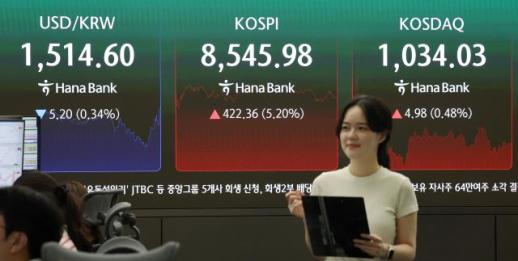 U.S. Semiconductor Surge Boosts Samsung and SK Hynix Stocks On June 16, shares of South Korea's leading semiconductor companies, SK Hynix and Samsung Electronics, rose by over 2% in early trading, buoyed by a surge in U.S. semiconductor stocks the previous day. According to NextTrade, as of 8:35 a.m., SK Hynix's stock increased by 67,000 won (2.93%) to 2,355,000 won. Samsung Electronics saw a similar rise, gaining 9,500 won (2.52%) to trade at 346,500 won. In the U.S. stock market, semiconductor stocks rebounded as investors engaged in bargain hunting following recent declines. On June 15, the Dow Jones Industrial Average closed up 468.77 points (0.92%) at 51,671.03. The S&P 500 rose by 122.83 points (1.65%) to finish at 7,554.29, while the Nasdaq Composite surged 795.10 points (3.07%) to close at 26,683.94. Notable individual stock performances included Micron, which rose 10.84%, Western Digital at 16.1%, SanDisk at 6.45%, Seagate at 9.43%, and Nvidia at 3.54%. Han Ji-young, a researcher at Kiwoom Securities, noted, "Today, we expect a strong start due to the easing of tensions between the U.S. and Iran, which has led to declines in oil prices and interest rates, along with the rally in U.S. semiconductor stocks." She added, "The positive news from the U.S. has already been partially reflected in the domestic market, and we may see a rotation into other sectors after the initial strength in semiconductor stocks."* This article has been translated by AI. 2026-06-16 08:48:00
 -
 LS Securities Raises Target Price for Korea Electric Power Amid Middle East Peace Prospects LS Securities announced on June 16 that it has raised its target price for Korea Electric Power from 50,000 won to 62,000 won, citing expectations for a recovery in investment momentum following the end of the Middle East conflict. The firm maintained its "buy" rating on the stock. Analyst Seong Jong-hwa of LS Securities stated, "Before the outbreak of the Middle East conflict, all conditions were favorable. Although the stock price has adjusted nearly 40% compared to just before the war, the end of hostilities could lead to a rapid recovery in investor sentiment and corporate value." He noted that Dubai crude prices have stabilized at around $60 to $70 per barrel, and electricity rates have increased by approximately 50% since the surge in energy prices in 2021. Additionally, the share of nuclear power generation has expanded by more than 10 percentage points, reducing the burden of fuel costs for power generation. As a result, LS Securities projects that Korea Electric Power's operating profit for the first, second, and fourth quarters of this year will range from 2 trillion to 4 trillion won, with the third quarter expected to reach around 5 trillion won. The firm also anticipates further improvements in profitability in 2026 and 2027. For the off-peak first, second, and fourth quarters, operating profit is expected to be between 3 trillion and 5 trillion won, while the peak third quarter is projected to exceed 6 trillion won. Seong added, "If oil prices stabilize, we expect a continued stable level of wholesale electricity prices in 2026 and 2027, leading to improved profitability due to the increased share of nuclear power generation." The nuclear power sector is also highlighted as a key investment point. Seong noted, "Internationally, there are opportunities for new nuclear power projects in countries like the Czech Republic, UAE, and Saudi Arabia, as well as potential benefits from the U.S. nuclear expansion policy in the long term." Domestically, he pointed out that the commercial operation of the Shin-Ulchin Units 3 and 4 is planned in the short term, while the commercial operation of Shin-Hanul Units 3 and 4 is expected in the medium term. In the long term, the decision to resume the construction of four large nuclear reactors and two new large reactors was also mentioned. Seong explained that the recent reduction in the share of nuclear power generation is a temporary phenomenon due to concentrated planned maintenance. He noted, "Since the third quarter of last year, the share of nuclear power generation has been reduced for three consecutive quarters compared to the same period last year. However, starting in the second quarter, we expect a recovery in share, with a significant increase in the second half of the year due to the return of nuclear operations and the commercial operation of Shin-Ulchin Units 3 and 4."* This article has been translated by AI. 2026-06-16 08:45:00
 -
 Daishin Securities: Samsung E&A Has Strong Momentum in Middle East and New Energy, Target Price Set at 73,000 Won Daishin Securities announced on June 16 that it has initiated coverage of Samsung E&A with a "buy" rating, citing the company's strong momentum in securing contracts in the Middle East reconstruction and new energy sectors. The firm set a target price of 73,000 won for the company. Lee Hye-jin, a researcher at Daishin Securities, stated, "We consider Samsung E&A to be our top pick in the construction sector," adding that the company is repositioning itself as a global energy EPC firm, moving beyond traditional chemical engineering and construction (EPC) services in line with global energy transition trends. He projected that Samsung E&A's consolidated revenue for 2026 will reach 10.2689 trillion won, with an operating profit of 910 billion won, representing increases of 13.7% and 14.9%, respectively, compared to the previous year. Lee emphasized that the company's strength lies in its robust pipeline of contracts, noting that while it has set an annual order guidance of 12 trillion won for 2026, there is potential for upward revision. He explained that the post-war Middle East market presents two significant opportunities: reconstruction demand and increased investment in energy infrastructure. Samsung E&A's experience in executing projects in the region positions it well for participation in reconstruction efforts, and the financial capacity of Gulf Cooperation Council (GCC) countries is expected to accelerate investments in plants and infrastructure due to rising oil prices. Additionally, Lee forecasted that momentum in securing contracts will strengthen across the new energy value chain, including LNG, green hydrogen, ammonia, sustainable aviation fuel (SAF), carbon capture, utilization, and storage (CCUS), and clean methanol. He noted that increased capital expenditures (CAPEX) from affiliated companies driven by the semiconductor supercycle will contribute to stable growth through high visibility in orders and rapid revenue recognition.* This article has been translated by AI. 2026-06-16 08:45:00
 -
 Yuanta Securities Raises Hyundai Motor's Target Price Amid Boston Dynamics Growth Yuanta Securities announced on June 16 that it has raised its target price for Hyundai Motor Company from 600,000 won to 690,000 won, reflecting expectations for growth in the global humanoid market driven by Boston Dynamics. However, the firm downgraded its investment recommendation from 'buy' to 'hold.' In a report released that day, analyst Kim Yong-min stated, "The rise in Hyundai's stock price this year is not a reevaluation of its existing automotive-related new businesses." He explained, "While there is no quantifiable method, comparing stock trends with competitors in the sector shows that Hyundai's stock has experienced a different kind of increase than that of the overall automotive industry. This has led to a miscalculation of the appropriate value of new businesses that do not impact profits based on the core business's earnings." Kim further noted, "Even when applying a re-rating perspective to the automotive business, there are blind spots. Most of the company's pre-tax earnings come from the automotive sector, but when combining financial, other, and equity method profit segments, they accounted for about 40% of pre-tax earnings as of 2025. While a valuation premium for the core automotive business may be justified, applying a single price-to-earnings (P/E) multiple ultimately has structural limitations." Looking ahead, Kim identified potential catalysts for stock price increases, including the exercise of SoftBank's put option on its Boston Dynamics stake between June and July, third-party equity investments during Boston Dynamics' capital increase in the second quarter of this year, and increased visibility in future production through non-captive orders. However, he maintained a neutral stance on the unconditional optimism regarding Boston Dynamics' initial public offering (IPO) valuation. He added, "Even when applying a single P/E valuation multiple, the situation has become elevated compared to global competitors, and the source of profits also adds dilution factors to the valuation. Therefore, a cautious approach is necessary regarding stock price increases accompanied by declines in the core business."* This article has been translated by AI. 2026-06-16 08:45:00
 -
 Korean Employers' Association Raises Concerns Over Hanwha Ocean's User Recognition The Korean Employers' Federation (KEF) expressed concerns that the Central Labor Relations Commission's decision to recognize Hanwha Ocean as a user could lead to confusion in the industrial sector. In a statement released on June 16, the KEF noted, "The Central Labor Relations Commission has decided that Hanwha Ocean must engage in collective bargaining with union members of Wellive, which operates the company cafeteria, regarding industrial safety and other matters. However, this decision does not align with the Ministry of Employment and Labor's revised interpretation guidelines for labor laws." On June 15, the Central Labor Relations Commission ruled that Hanwha Ocean must enter collective bargaining with union members of Wellive concerning industrial safety issues. The commission upheld its decision to dismiss Hanwha Ocean's appeal regarding the 'confirmation of the labor union demanding negotiations' against the Metal Workers' Union's Geoje Tongyeong Goseong Shipbuilding Subcontracting Branch. It also recognized the user status of the Wellive union, which Hanwha Ocean had initially reserved judgment on. The KEF explained, "According to the Ministry of Employment and Labor's revised interpretation guidelines, company cafeterias fall under areas where general directive authority is recognized under subcontracting and delegation contracts, and do not represent structural control by the primary contractor." Furthermore, the KEF pointed out, "Using the legal obligations of the contractor under the Industrial Safety and Health Act and the Serious Accidents Punishment Act as a basis for recognizing user status creates a contradiction where the more faithfully legal obligations are fulfilled, the greater the burden of bargaining obligations and strike risks become." It added, "If the scope of collective bargaining partners expands to include indirect support relationships rather than direct production and subcontracting relationships, it could lead to greater confusion across the industry. The Central Labor Relations Commission should avoid judgments that could increase market uncertainty and should base its decisions on interpretation guidelines and strict legal standards to ensure objective and neutral judgments."* This article has been translated by AI. 2026-06-16 08:42:00
 -
 Aekyung Industry Merges with ONE THING to Strengthen Skincare Business Aekyung Industry announced on June 16 that it is accelerating its cosmetics business by merging with its subsidiary skincare brand ONE THING. ONE THING was acquired by Aekyung Industry in 2022. According to Aekyung Industry, the merger was conducted as a small-scale merger, concluding the process with board approval and without a separate shareholders' meeting. The creditor objection period ran from May 11 to June 11, and the merger took effect on June 12, finalizing the absorption process. Aekyung Industry aims to enhance operational efficiency in its skincare business and strengthen brand competitiveness through this merger. This merger is part of Aekyung Industry's growth strategy to become a "global total beauty company" since its integration into the Taekwang Group. Recently, Aekyung Industry has reorganized its cosmetics business structure, establishing a new skincare division and creating a marketing sector to bolster brand competitiveness. Following the merger with ONE THING, Aekyung Industry plans to review the overall portfolio of its skincare brands and establish a mid- to long-term growth roadmap. The company intends to accelerate its efforts to penetrate global markets by strengthening differentiated strategies for each brand. An Aekyung Industry representative stated, "We will combine the brand assets of ONE THING with Aekyung Industry's business capabilities to develop a competitive skincare brand in the global market." Meanwhile, Aekyung Industry, which began its new chapter as a subsidiary of Taekwang Group in March, plans to increase its cosmetics sales proportion from 32% last year to over 50% by 2028. The company also aims to gradually expand its global sales share, reducing its dependence on China and diversifying into overseas markets.* This article has been translated by AI. 2026-06-16 08:42:00
 -
 Mexico Declares School Holiday for World Cup Match Against South Korea The government of Jalisco, Mexico, has announced a school holiday across the state on June 18, the day of the World Cup group stage match between South Korea and Mexico. According to Yonhap News on June 16, the local newspaper El Financiero reported that Jalisco, which includes the cities of Sapopan and Guadalajara where the match will take place, has decided to close schools for the day. Jalisco Governor Pablo Lemus stated, "This is the first time the Mexican national team will play a World Cup match here," and confirmed the school holiday for June 18. Lemus explained that the measure aims to allow children, teachers, and families to enjoy this great festival together and support the national team. Mexico previously hosted the World Cup in 1970 and 1986, but all matches involving the national team during those tournaments were held at Estadio Azteca in Mexico City. This will be the first time the national team plays a World Cup match in Jalisco. However, the school closure only applies to educational institutions. State government employees and workers in other sectors will continue their regular duties, and the match is scheduled to start at 7 p.m. local time. Local media have characterized this match as effectively a decider for the top spot in Group A. Both teams won their opening matches, and analysts suggest that the winning team is likely to advance to the knockout stage as group leaders. El Financiero noted that if Mexico secures the top position, it is highly probable that their next match will be held in Mexico City, giving the team an advantage in the high-altitude environment, approximately 7,350 feet above sea level.* This article has been translated by AI. 2026-06-16 08:39:00