
Journalist

LEE HYUNTAEK
-
 Delivery Hero Considers Selling Woowa Brothers, Sparking New Platform Wars Delivery Hero, based in Germany, is reportedly considering the sale of Woowa Brothers, the operator of the popular delivery app Baemin, marking a significant turning point in South Korea's platform market. According to investment banking sources, JP Morgan, the firm managing the sale, has distributed teaser letters to major domestic and international companies, including Naver, Uber, Alibaba, DoorDash, and several private equity firms. However, it appears that the acquisition process has not yet fully commenced, nor has any specific company confirmed its intent to acquire. Naver has acknowledged receiving the teaser letter but stated, "We are not considering anything at this time." Viewing this situation merely as a sale of a delivery app misses the essence of the matter. While Baemin is primarily a food ordering service, it also accumulates valuable data on local markets, consumer patterns, payment flows, and logistics routes. Delivery apps have evolved into lifestyle data platforms that extend beyond food orders. The identity of Baemin's new owner could significantly influence the competitive landscape of South Korea's platform market, the transaction conditions for small business owners and consumers, and the ecosystem of delivery workers. Woowa Brothers was founded in 2011 by Kim Bong-jin, and in 2019, Delivery Hero acquired an 88% stake in the company for €3.6 billion (approximately 4.8 trillion won). It is reported that the joint venture established by Delivery Hero and Woowa Brothers in Singapore currently holds the majority of the shares. Delivery Hero is reportedly expecting a valuation of around 8 trillion won, which is approximately 12 times the average operating profit over the past two years. The challenge lies in the price. While Woowa Brothers' revenue has grown, its operating profit has decreased. Reports indicate that Woowa Brothers' operating profit was 699.8 billion won in 2023, projected to drop to 640.8 billion won in 2024 and 592.8 billion won in 2025. Increased competition from Coupang Eats, rising marketing costs, and social pressure regarding delivery fees and commissions are straining profitability. The 8 trillion won price tag is viewed as attractive for a platform asset, yet there are also opinions that it is too high. The context behind Delivery Hero's consideration of a sale is also crucial. The company faces growing debt and financial burdens, necessitating liquidity. Reports indicate that Delivery Hero's debt stood at €6.166 billion (approximately 9.25 trillion won) at the end of last year, with a debt ratio of around 231%. Delivery Hero has already begun global asset restructuring, including the sale of its Taiwan-based Foodpanda to Grab. The review of Woowa Brothers' sale should be seen as part of this financial restructuring trend. The mention of Uber is clear. Uber has expanded beyond ride-hailing into food delivery, logistics, and payments, establishing itself as a global mobility platform. With its experience through Uber Eats, if Uber were to acquire Baemin or pursue a strategic partnership, it could rapidly expand its presence in the South Korean delivery market. However, the South Korean market is complex, with intricate regulations and sensitive issues involving small business owners, riders, and consumers. For global companies, entering this market is not simply a matter of gaining market share. Naver's interest follows a similar rationale. As South Korea's largest platform, Naver offers services in search, advertising, shopping, reservations, payments, and mapping. A merger with Baemin could strengthen a lifestyle platform structure that integrates search, ordering, payment, and local advertising. Particularly as Coupang Eats and Coupang's commerce ecosystem grow, Naver's need to secure offline consumer data has increased. However, if Naver were to pursue a direct acquisition, it could face issues related to fair trade, platform monopoly concerns, and potential backlash from small business owners. The mention of Alibaba and DoorDash highlights the international nature of this transaction. Alibaba has experience connecting commerce, logistics, and payment ecosystems, while DoorDash is a strong player in the U.S. food delivery market. However, the competition between Baemin and Coupang Eats is already fierce in South Korea, and consumer expectations are high. It is challenging for foreign operators to succeed based solely on capital; they must also understand local markets, navigate regulations, and ensure social acceptance. A critical aspect of this potential sale is fair trade. When Delivery Hero acquired Woowa Brothers, the Korea Fair Trade Commission approved the transaction on the condition that the sale of Yogiyo, a competing delivery app, would occur due to concerns about monopoly in the delivery app market. Reuters reported that the approval of Delivery Hero's acquisition of Woowa Brothers was contingent upon the sale of Yogiyo. The identity of Baemin's new owner could again become a key variable in assessing competitive restrictions. The delivery platform industry is one of the most complex sectors, with various stakeholders. Consumers seek low delivery fees and fast service, while small business owners demand lower commissions and reduced advertising costs. Riders desire stable income and safety. Platforms must balance profitability with growth. These four demands are often at odds. Even with a new owner, if this structural tension is not resolved, the same conflicts are likely to recur. Particularly if a private equity firm acquires the company, there are concerns that profitability pressures could lead to increased fees or cost-cutting measures. Conversely, if a strategic investor from the tech sector takes over, the focus may shift from short-term profits to data and ecosystem expansion, but this could intensify monopoly concerns. The operational principles established by the new owner will be more important than who acquires the company. From a domestic industry perspective, the issue of 'platform sovereignty' arises. Baemin is already under the control of German capital. While it is not unusual for it to pass to another global company, the deeper integration of food ordering and local market data into foreign platforms cannot be taken lightly. The nationality of data cannot be judged solely by the nationality of capital, but for platforms closely tied to citizens' lives, data management and fair market operation principles must be clear. However, excessive government intervention in market transactions is also undesirable. Mergers and acquisitions are fundamentally market matters. Yet, companies like delivery platforms that significantly impact citizens' lives, small businesses, and the labor market differ from typical manufacturing sales. Fair trade reviews, data privacy, transparency in fees, rider safety, and consumer protection standards must be thoroughly examined. It remains uncertain whether this transaction will materialize. The high price, complex interests, and significant regulatory risks contribute to this uncertainty. Some private equity firms reportedly feel burdened by acquiring consumer-facing companies. Following the Homeplus incident, there is heightened caution in the market regarding large-scale B2C acquisitions. Therefore, at this stage, it is essential to clearly distinguish between "initiating a sale" and "confirming an acquisition." Nonetheless, the significance of this matter lies in the fact that Baemin is not just an app. It is a point where the daily lives of South Korean consumers, the revenues of small business owners, and the livelihoods of platform workers intersect. A change in the ownership structure of this company could shake the market order. The new owner of the delivery app will not only be acquiring a business but also assuming social responsibilities. Whether it is Naver, Uber, Alibaba, DoorDash, or a private equity firm, the core question remains: Will Baemin be viewed as an asset to be resold at a higher price, or as an infrastructure responsible for sustainably operating a South Korean lifestyle platform? If it is the former, conflicts will escalate; if it is the latter, a new order in the platform market could emerge. The rumors surrounding Baemin's sale pose critical questions for South Korea's platform industry. Who will reap the benefits of growth, who will bear the costs, and who will control the data? The competition among delivery apps is no longer just a battle over discount coupons; it is a war for platform supremacy over lifestyle data, payments, logistics, and local markets. Regardless of whether this transaction ultimately succeeds or fails, South Korea cannot avoid these issues. The country must choose whether to leave the future of the platform industry solely to the market or to establish fair rules and social responsibilities. The search for Baemin's new owner signals not just a corporate sale but a preview of the next chapter in South Korea's digital economy. * This article has been translated by AI. 2026-05-14 09:25:10
 -
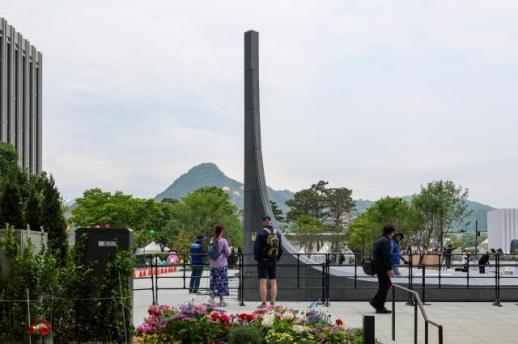 'Garden of Gratitude' memorial sparks political sparring ahead of Seoul elections SEOUL, May 14 (AJP) - Gwanghwamun Square, which gained international attention after hosting a Netflix-streamed BTS concert in March, has now added a new multinational landmark to its symbolic landscape. The Seoul Metropolitan Government on Tuesday officially opened the “Garden of Gratitude” at Gwanghwamun Square, a memorial space dedicated to the 22 United Nations member states that fought alongside South Korea during the 1950-53 Korean War, unveiling a politically charged landmark that has already sparked debate over symbolism, history and the use of public space. What city officials had hoped would become a signature international memorial tied to Seoul Mayor Oh Se-hoon’s reelection campaign ahead of next month’s local elections has instead evolved into another political flashpoint, with ruling party lawmakers accusing the conservative mayor of distorting the historical identity of Gwanghwamun Square amid lingering political tensions following former President Yoon Suk Yeol’s impeachment. Located west of the King Sejong statue in central Seoul, the memorial consists of 23 stone pillars — representing South Korea and the 22 nations that participated in the U.N. Command during the war — arranged from north to south in the order each country arrived on the Korean Peninsula. The United States, the first nation to deploy troops, stands at the southernmost end. Each pillar rises 6.25 meters high, symbolizing June 25, the date the Korean War began in 1950. National flags are attached to the structures, while lighting installations atop the pillars illuminate the night sky after dark. The memorial complex also includes an underground exhibition space called “Freedom Hall,” featuring multimedia displays on the Korean War, the sacrifices of foreign veterans and South Korea’s postwar transformation. Around 170 people attended Tuesday’s completion ceremony, including ambassadors from participating nations, Korean War veterans and veterans’ organization officials. Acting Seoul Mayor Kim Sung-bo presided over the event alongside representatives from the allied countries. The project has been one of Oh’s signature initiatives since 2024, when he first proposed installing a national symbolic structure at Gwanghwamun Square. Oh initially sought to erect a 100-meter national flagpole, but the proposal faced heavy public criticism and was later revised through citizen consultations and design competitions into the current memorial garden. Several pillars were produced using stones donated by participating nations including the Netherlands, Greece, Belgium and Germany. Seoul officials said additional donated stones from countries such as Australia and Türkiye will be incorporated later this year. QR codes attached to each pillar provide visitors with information about each country’s wartime contribution. Beginning at 8 p.m. each evening, beams of light projected from the top of the structures illuminate the sky for 10 minutes every half hour until 11 p.m. Inside Freedom Hall, visitors can explore AI-restored wartime photographs, interactive exhibits and a live video connection to Times Square. Yet despite the city’s emphasis on remembrance and international solidarity, the project has become entangled in political controversy, particularly over the design and symbolism of the above-ground pillars. Critics argue the structures resemble rifles used during military honor guard ceremonies, making them incompatible with Gwanghwamun Square’s long-standing identity as a site associated with democratic protests and civic movements. Oh strongly rejected the criticism. “It is not a sculpture symbolizing guns,” he told AJP. “It represents an honor guard ceremony commemorating the memory and sacrifice of 22 countries that voluntarily came to defend South Korea and liberal democracy at a time when the country’s per capita income was below $100,” he said. The mayor also denied accusations that the opening timing was politically motivated ahead of the June 3 local elections. “The completion schedule had already been set months ago,” Oh said, explaining that construction had briefly paused after additional government review requests before ultimately being completed on May 12. Oh expressed confidence the site would evolve into both a memorial space and a tourist destination for visitors from allied nations. “Many citizens will visit this place and remember the Korean War,” Oh said. “Tourists from the United States, Australia, Britain, Germany and other participating countries will also come to the Garden of Gratitude.” Rep. Koh Dong-jin of the People Power Party also dismissed accusations that the opening was politically motivated. “It does not make sense to conclude this was an election-driven move when an incumbent mayor would have little reason to deliberately invite unnecessary controversy just before an election,” Koh said. “This has become a largely unproductive political dispute,” he added. Opposition politicians, however, voiced far harsher criticism. Rep. Kim Won-i of the ruling Democratic Party of Korea (DPK), who previously served as Seoul’s vice mayor for political affairs, argued the installation fundamentally misunderstands the historical identity of Gwanghwamun Square. “This is something that should never have been done,” Kim said. “The current Seoul Metropolitan Council building served as the National Assembly during the April 19 Revolution, and this entire area is historically associated with democracy and civic resistance.” “Gwanghwamun Square symbolizes freedom, democracy and peace,” he continued. Rep. Park Joo-min of the DPK also attacked the project, calling it an example of what he described as Mayor Oh’s disregard for public opinion. “Despite public opposition, he pushed the project forward. There is already a similar monument with a comparable purpose at the War Memorial of Korea in Yongsan.” 2026-05-14 09:20:51
 -
 LS Eco Energy Supplies Power Network for Vietnam's AI Data Center LS Eco Energy is accelerating its entry into the Southeast Asian AI infrastructure market by participating in a major power supply project for an AI data center in Vietnam. On May 14, LS Eco Energy announced that its Haiphong-based subsidiary, LS-VINA, will supply power cables for the construction of a large-scale AI data center by Viettel Group, Vietnam's largest telecommunications company. This project is one of the largest AI infrastructure initiatives in northern Vietnam, being developed in a new city near Hanoi with a capacity of 60MW, sufficient to power 40,000 to 50,000 households simultaneously. It aims to meet the growing demand for generative AI and cloud services through a substantial data center infrastructure. The products supplied by LS Eco Energy will be used in the power network connecting the data center to substations. As competition in generative AI extends beyond servers and semiconductors to include power and communication networks, the role of power infrastructure companies is becoming increasingly significant. Recently, LS Eco Energy has also supplied bus ducts and transmission cables for hyper-scale AI data centers being built by global tech giants in Indonesia and Malaysia. The Southeast Asian data center market is seeing a shift in investment demand from Singapore, where power and land constraints exist, to Malaysia, Thailand, and Vietnam. With the rise of generative AI, power demand is surging, prompting Vietnam to actively compete to become an AI data center hub. As the leading wire company in ASEAN, LS Eco Energy plans to strengthen its market dominance by leveraging its local production capabilities and supply experience. The company anticipates additional business opportunities in line with Viettel's expanding investments in AI and communication infrastructure in Southeast Asia. In response to the increasing demand for AI data centers, the company aims to enhance its production capabilities not only for existing power solutions but also for fiber optic cables. Lee Sang-ho, CEO of LS Eco Energy, stated, "The AI data center market is expanding beyond server competition to include power and communication infrastructure competition. We will strengthen our efforts in the global AI infrastructure market, focusing on high-voltage cables and power and optical communication solutions for data centers."* This article has been translated by AI. 2026-05-14 09:20:40
 -
 Labor Ministry to Combat Unpaid Labor by Monitoring Wage Practices The South Korean government is launching on-site inspections in industrial complexes where comprehensive wage practices are prevalent to eradicate unpaid labor. The first inspections will focus on businesses in the Guro and Gasan Digital Complexes.According to the Ministry of Employment and Labor, the "Relay Inspections on the Abuse of Comprehensive Wage Practices" will take place from today until the end of the year. This initiative aims to implement the guidelines issued on April 9 to eliminate unpaid labor.Comprehensive wage systems involve setting salaries in advance, regardless of actual working hours. However, there are growing concerns about the misuse of fixed overtime pay, which includes additional payments for overtime and night shifts.The guidelines clarify that employers must distinguish between base salaries and various allowances in wage ledgers and pay stubs. It also stipulates that if the agreed fixed overtime amount is less than the actual hours worked, the employer must pay the difference, as failing to do so constitutes wage arrears.Furthermore, the guidelines prohibit the introduction of flat-rate pay systems that do not differentiate between base pay and allowances, as well as systems that lump together overtime, night, and holiday work payments. Employers are encouraged to utilize special provisions for calculating working hours, such as deemed working hours and discretionary working hours, when determining work time is challenging.Since the implementation of these guidelines, there have been 42 reports submitted to the anonymous reporting center for the abuse of comprehensive wage and fixed overtime practices by the end of last month, a significant increase from 13 reports during the same period last year. In response, the Ministry will activate a continuous monitoring system in areas suspected of comprehensive wage abuse.Inspections will be conducted monthly in one region at a time, targeting businesses reported to the anonymous reporting center and those suspected of legal violations within the same industrial complex. The first inspections will focus on businesses in the Guro and Gasan Digital Complexes, where reports of coercive overtime disguised as voluntary work, incidents of working mothers fainting after working over 70 hours a week, and false records of commuting times have been received.The Ministry will also promote the anonymous reporting center to facilitate easier reporting of comprehensive wage abuse cases. This includes operating mobile promotional buses in areas densely populated with companies using comprehensive wage systems and posting related banners on Blind, an anonymous community for workers.Minister of Employment and Labor Kim Young-hoon stated, "We will thoroughly investigate all businesses reported anonymously to eradicate unpaid labor that undermines the value of work for young people and vulnerable groups. I urge workers who have suffered from unpaid labor to report anonymously without fear."* This article has been translated by AI. 2026-05-14 09:13:34
 -
 VP Vance: Progress in Iran Ceasefire Talks Depends on Trump's Red Line As President Donald Trump strongly criticized Iran's revised ceasefire proposal, Vice President JD Vance announced that progress is being made in ceasefire negotiations with Iran. On May 13, during a press conference at the White House, Vance stated, "I believe we are making progress" regarding the ceasefire talks with Iran. He emphasized that the fundamental issue is whether sufficient progress can be made to satisfy President Trump's red line. Vance explained, "The red line is very simple: we must have confidence that Iran will never possess nuclear weapons and that adequate safeguards are in place." His comments contrast sharply with Trump's hardline stance. Before departing for a meeting with Chinese President Xi Jinping, Trump labeled Iran's revised ceasefire proposal as "unacceptable" and "garbage." Additionally, Vance acknowledged concerns about inflation resulting from the conflict with Iran. The U.S. Department of Labor reported that the Producer Price Index (PPI) rose 6.0% in April compared to the same month last year, marking the highest increase since December 2022. The Consumer Price Index (CPI) for April also showed a 3.8% year-over-year increase, the highest in nearly three years since May 2023. Vance remarked, "Last month's inflation numbers were not good," adding that there is much work to be done to achieve the prosperity that Americans deserve. However, he stressed that Trump is well aware of the inflation issue. Vance refuted reports suggesting that Trump does not care about Americans' financial situations, stating that those reports were incorrect. Earlier, when asked whether Americans' financial situations would influence the negotiations with Iran, Trump replied, "Not at all. The only thing that matters is that they (Iran) cannot have nuclear weapons. I do not think about the financial situation of Americans." When asked about the upcoming presidential race against Secretary Marco Rubio, Vance responded jokingly, saying, "I don’t think it’s presidential to have a televised competition for succession." This remark appeared to reference Trump's role as a host on NBC's reality show "The Apprentice." While calling Secretary Rubio a "valuable friend," Vance emphasized that his focus should remain on his duties as Vice President.* This article has been translated by AI. 2026-05-14 09:09:42
 -
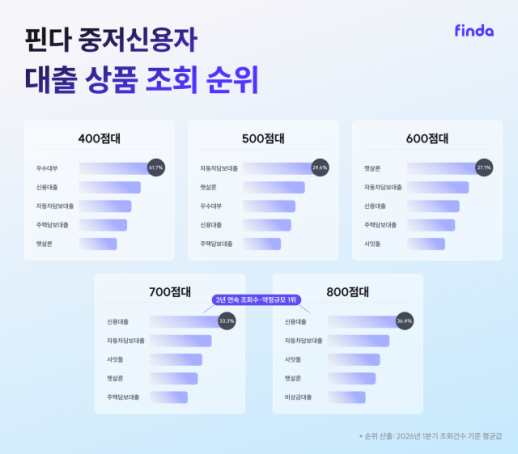 Finda: Borrowers with Scores in the 400s Prefer Excellent Loans, 500-600s Favor Sunshine Loans Users with credit scores ranging from 400 to 800 are primarily seeking loans such as credit and secured loans, as well as policy finance products like Sunshine Loans. Finda reported on May 14 that an analysis of first-quarter data over the past three years revealed that borrowers in the 400 score range most frequently inquired about excellent loan products. Those with scores between 500 and 600 showed a higher frequency of inquiries about Sunshine Loans and auto-secured loans. In terms of the size of agreements, credit and auto-secured loans, along with policy finance products (Sunshine Loans, Saitdol, and New Hope Loans), accounted for a significant portion across all score ranges from 400 to 800. For borrowers in the 400 range, the most sought-after products in the first quarter of 2024 were Sunshine Loans, auto-secured loans, and home equity loans. However, in 2025, interest shifted towards home equity loans, auto-secured loans, and credit loans. In the first quarter of this year, excellent loan products accounted for 61.7% of inquiries, marking the highest interest. Finda attributed this trend to the expansion of its excellent loan brokerage service, which was first introduced in October of last year and has gained traction among low-credit borrowers. In the 500 score range, the inquiry rate for auto-secured loans has been the highest in the past three years. For those in the 600 range, credit loan inquiries were the most common in 2024 and 2025, but this year, they have been surpassed by Sunshine Loans and auto-secured loans. In the 700 score range, credit loans accounted for 33.3% of inquiries in the first quarter of this year, followed by auto-secured loans (22.6%), Saitdol loans (16.1%), Sunshine Loans (13.9%), and home equity loans (5.9%). In the 800 score range, demand for credit loans, along with Sunshine Loans, Saitdol, and auto and home equity loans, has remained steady. Lee Hye-min, CEO of Finda, stated, "Among mid- to low-credit borrowers, preferences for loan products vary by score range, making precise product matching essential."* This article has been translated by AI. 2026-05-14 09:03:03
 -
 National Agricultural Cooperative Federation Under Investigation for Alleged Misuse of Funds Allegations surrounding the National Agricultural Cooperative Federation (NACF) regarding the payment of legal fees for employees have led to a police investigation. The initiation of a search and seizure operation underscores the seriousness of the matter. This issue extends beyond individual misconduct to potentially impact the trustworthiness of an organization that serves both public and private interests. The core of the allegations is that approximately 300 million won in public funds was used to cover legal fees related to employees' personal criminal cases. Investigators are focusing on whether there was any embezzlement involved. No formal charges have been established yet, and the determination of accountability will depend on the outcome of the investigation. Nevertheless, the implications of these allegations are significant. Unlike typical corporations, the NACF is a cooperative organization rooted in its farmer members and performs public financial functions. The mere existence of controversy over the appropriateness of public fund usage can severely affect public trust. The key issue is whether organizational funds can be used for personal legal defenses. Typically, if legal disputes arise during the course of official duties, some level of support may be considered. However, strict criteria and clear regulations are necessary to determine if personal cases fall within this scope. If the allegations are confirmed, it would raise serious concerns about the blurred lines between public funds and private responsibilities. Another perspective to consider is the effectiveness of the internal control systems. It is essential to examine the procedures and judgments involved in the execution of public funds and whether the internal approval structures functioned appropriately. An objective assessment is needed to determine if this is an isolated incident or indicative of a recurring structural issue. Investigators must closely analyze the flow of funds and decision-making processes based on the materials obtained. It is crucial to clarify the basis for public fund expenditures, approval procedures, and the applicability of relevant regulations. During this process, excessive assumptions or political interpretations should be avoided, and judgments must be based on law and evidence. The NACF's response is also critical. It should not only await the investigation's results but also engage in internal reviews and discussions on system improvements. There is a need to clarify the criteria for public fund usage and to transparently establish the scope and procedures for legal cost support. This is a minimal measure to prevent similar controversies in the future. Furthermore, a broader review of public-oriented financial and cooperative organizations is necessary. Decisions related to public funds should be made under strict standards and transparent procedures. Particularly in organizations where accountability is dispersed, internal control mechanisms must be designed with greater sophistication. Caution is warranted against hasty conclusions or excessive generalizations regarding this matter. At the same time, issues related to public fund usage cannot be taken lightly. The facts must be rigorously established, and accountability must be clearly defined. Ultimately, the core issue is trust. Financial and cooperative organizations operate on a foundation of trust. Allegations alone can undermine this trust, and restoring it will require significantly more time. This situation should serve as a catalyst for enhancing transparency and accountability. Investigations should be conducted rigorously, accountability must be clearly defined, and systems should be strengthened. This is the minimum lesson that should be learned from this incident. 2026-05-14 09:01:20
 -
 AI Security Battle Intensifies Among Major U.S. Tech Firms On May 13, major international news outlets focused on the AI security front, highlighting OpenAI's new platform, the fallout from Claude Mythos, and efforts to thwart weaponized AI attacks. OpenAI Launches Cybersecurity Platform 'Daybreak' OpenAI has officially entered the cybersecurity market with the launch of its enterprise platform, 'Daybreak.' This platform combines the GPT-5.5 model with OpenAI's proprietary security engine, 'Codex Security,' designed to support everything from software vulnerability detection to patch validation and automation. Unlike traditional security vendor solutions, OpenAI positions Daybreak as a 'control layer for application security infrastructure.' Industry experts view Daybreak as a direct competitor to Anthropic's 'Project Glasswing and Claude Mythos.' Market research firm Future Group assesses that OpenAI aims to establish a governance role above the app security agent layer. Ongoing Fallout from Claude Mythos; EU and U.S. Involvement The impact surrounding Anthropic's cybersecurity-focused model, Claude Mythos, continues to reverberate. While OpenAI has agreed to provide GPT-5.5 cyber access to the EU, Anthropic has yet to finalize its European rollout of Mythos. A month after its launch, the European Commission still has not secured access rights. In the U.S., the situation is urgent. White House Chief of Staff Suzy Wiles, Treasury Secretary Scott Bessen, and National Cyber Director Sean Kerckhove are directly involved in responding to Mythos, with the White House officially opposing Anthropic's plans to expand Mythos access. Consequently, major AI firms like Google and Microsoft are entering governance collaborations, including pre-launch model review agreements with the U.S. Department of Commerce's AI Standards Innovation Center (CAISI). Google Preemptively Blocks AI-Driven Zero-Day Attack Attempts Google's Threat Intelligence Group (GTIG) announced that it has preemptively blocked a 'large-scale exploit operation' where hackers attempted to find and exploit zero-day vulnerabilities using AI models. Google confirmed that its Gemini model was not used in these attacks. This incident marks the official recognition of cyber threats weaponized by AI, indicating that the competition in AI security has escalated beyond mere corporate rivalry to a serious threat response level.* This article has been translated by AI. 2026-05-14 08:58:58
 -
 SK Hynix Surpasses 2 Million Won in Pre-Market Trading as KOSPI Attempts to Break 8000 The KOSPI index is attempting to break the 8000 mark after rebounding in a single day, with Samsung Electronics and SK Hynix showing strong performance in early trading. According to NextTrade, as of 8:32 a.m. on May 14, Samsung Electronics was trading at 286,500 won, up 2,500 won (0.88%) from the previous trading day. At the same time, SK Hynix recorded a rise of 19,000 won (0.96%), reaching 1,995,000 won, even surpassing 2 million won in pre-market trading. This surge appears to be influenced by the strong performance of semiconductor stocks on the New York Stock Exchange, which closed higher on May 13, local time. The S&P 500 index finished up 43.29 points (0.58%) at 7,444.25, while the tech-heavy Nasdaq Composite rose by 314.14 points (1.20%) to close at 26,402.34. Samsung Electronics and SK Hynix have been experiencing record highs recently, driven by growing demand for high-bandwidth memory (HBM) in AI applications. Analysts believe that the ongoing expansion of AI investments will likely sustain a bullish trend in the semiconductor sector for the foreseeable future. Despite a breakdown in labor negotiations leading to an impending strike announced by the union, Samsung Electronics continues to see an upward trend. The previous day, the KOSPI managed to hold above the 7800 level despite foreign selling, and it is expected to attempt to break through 8000 today. * This article has been translated by AI. 2026-05-14 08:55:47
 -
 DB Securities Raises GS Target Price Amid Abu Dhabi Oil Field Expectations DB Securities announced on May 14 that it has raised the target price for GS to 95,000 won, reflecting improved performance expectations for the Abu Dhabi oil field due to increased drilling investments in the United Arab Emirates (UAE). The firm maintained its investment rating of 'buy.' Han Seung-jae, a researcher at DB Securities, stated in a report that GS's market capitalization is still only 43% of Caltex's projected net assets of 15.5 trillion won for this year. He noted, "While the inventory gains from the war are temporary, the lack of refining capacity is expected to persist in the long term, which indicates an increase in refining margins." Han also highlighted that GS's operating profit for the first quarter of this year reached 1.26 trillion won, a 57% increase compared to the same period last year, surpassing market expectations. He attributed this strong performance to Caltex's operating profit of 1.6 trillion won. He added that although refining margins have slowed down after a surge in March and April, they remain exceptionally strong. Considering the demand slowdown due to high oil prices and the operational disruptions in the Middle East (2-3 million barrels per day), the supply of refined products is expected to remain extremely tight. Looking ahead, he projected that Caltex's operating profit for the second quarter would be 1.1 trillion won, continuing the positive trend. He also noted that due to rising oil prices and the UAE's exit from OPEC, production and net profits from the Abu Dhabi oil field are expected to increase, necessitating a reflection of this value in the market.* This article has been translated by AI. 2026-05-14 08:54:48