


Latest by
-
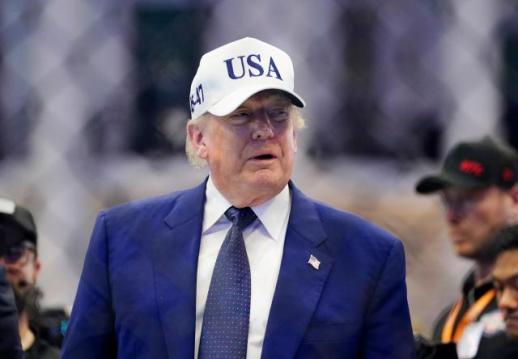 U.S. and Iran Reach Ceasefire Agreement, Ending 106-Day Conflict The United States and Iran announced a ceasefire agreement, marking the effective end of their conflict after 106 days. The memorandum of understanding (MOU) between the two nations is set to be officially signed in Switzerland on June 19, with discussions on Iran's nuclear program and sanctions relief planned for the following 60 days. However, concerns remain about significant differences in positions between the two sides, which could complicate the final agreement. President Donald Trump announced the ceasefire on his social media platform Truth Social at 5:30 p.m. Eastern Time on June 14, stating, "The agreement with the Islamic Republic of Iran is now complete." Iran's Supreme National Security Council (SNSC), which determines the country's security policy, confirmed the agreement to end the war. In a statement, the SNSC said, "The MOU regarding the ceasefire negotiations between Iran and the U.S. has been finalized with SNSC approval," and noted that the official signing is scheduled for June 19. The signing ceremony is expected to take place in Switzerland. Pakistani Prime Minister Shehbaz Sharif, who has mediated the negotiations, announced on X (formerly Twitter), "I am pleased to announce that after intensive discussions, a peace agreement has been reached between the U.S. and Iran," adding that the official signing will occur on Friday, June 19. There is speculation that President Trump may attend the signing ceremony while visiting France for the G7 summit from June 15 to 17. U.S. Vice President JD Vance mentioned in a Fox News interview that it is possible for the president to be present at the signing. Strait of Hormuz, Nuclear Issues, and Lebanon Present Challenges Once the ceasefire agreement is signed, the Strait of Hormuz, a key point of contention, is expected to reopen. The MOU disclosed by Iran's semi-official Mehr News Agency includes provisions for the "lifting of the U.S. naval blockade within 30 days" and the "reopening of the Strait of Hormuz within 30 days based on actions taken by Iran." President Trump stated that the Strait of Hormuz will be opened immediately upon the signing of the ceasefire agreement on June 19, and he has ordered the end of the U.S. naval blockade on Iranian ports. He also mentioned in a phone interview with The New York Times that the toll imposed by Iran on passage through the Strait of Hormuz will be "permanently waived." This development is expected to release approximately 600 ships and 60 million barrels of oil and petroleum products currently trapped in the Gulf. However, there are predictions that it may take time to normalize operations in the Strait of Hormuz due to logistical procedures such as mine clearance and safety inspections, as many vessels are waiting in the waterway. Additionally, Iran has indicated that it and Oman will manage the Strait of Hormuz, suggesting it may still seek to exert control over the area, adding to the uncertainty. The issue of Iran's nuclear development and sanctions relief has been pushed to subsequent negotiations. The two sides plan to engage in discussions over the next 60 days regarding the limitations on Iran's nuclear activities and the scope of sanctions relief. Kazem Gharibabadi, Iran's Deputy Foreign Minister, stated that a more comprehensive agreement, including sanctions relief, will be negotiated during the ceasefire period. In contrast, President Trump emphasized in his interview with The New York Times that if Iran fails to reach a nuclear agreement with the U.S., airstrikes against Iran would resume, asserting that the U.S. will remain the "guardian of the Middle East." The situation in Lebanon also remains a variable. The ceasefire MOU includes a clause for a "permanent and immediate cessation of hostilities on all fronts, including Lebanon." Gharibabadi stated on Iranian state television that the war with the U.S. has been declared to have ended "permanently and immediately on all fronts, including Lebanon." However, Israel, which has frequently attacked Lebanon, appears to be distancing itself from this clause. Israeli media outlet Ynet reported that Prime Minister Benjamin Netanyahu informed President Trump that Israel is not bound by the Lebanon-related provisions of the U.S.-Iran agreement and will not withdraw from Lebanon. Moreover, both the U.S. and Iran must address internal dissent before reaching a final agreement, according to The Wall Street Journal. While the ceasefire negotiations have made significant progress, the potential for renewed conflict in the Middle East remains, depending on the outcomes of future negotiations. Bloomberg noted that both sides have interpreted the announcement of the agreement through different lenses, highlighting the challenges of resolving key issues. 2026-06-15 15:51:00
 -
 Samil Pharmaceutical Accelerates Eye Drop Business in Vietnam Samil Pharmaceutical is ramping up its operations at its eye drop production facility in Vietnam by injecting additional funds. The company aims to transform its revenue structure, which has been heavily reliant on the domestic market, by leveraging its competitive edge in the local ophthalmology sector to develop its contract manufacturing organization (CMO) business as a future growth driver. According to a disclosure on June 11 through the Financial Supervisory Service's electronic disclosure system, Samil Pharmaceutical announced plans to issue 10 billion won in convertible bonds to invest in the operational funds for its Vietnamese ophthalmology CMO factory. Since establishing its Vietnamese subsidiary in 2018 to enter the eye drop CMO market, Samil Pharmaceutical has reportedly invested over 150 billion won in local production facilities and equipment. Although the company completed the construction of a specialized ophthalmic production plant in Vietnam in 2022, it has yet to generate significant revenue. Due to the costs associated with the factory investment and delays in regulatory approvals, Samil Pharmaceutical reported consolidated revenues of 52.5 billion won and an operating loss of 8.3 billion won in the first quarter of this year. The push into Vietnam is also driven by the limitations of growth in the domestic market. After establishing the first ophthalmology division in Korea, Samil Pharmaceutical has built a strong presence in the ophthalmic treatment sector and is currently responsible for the domestic distribution and sales of the blockbuster biosimilar drug Afilibu. In the first quarter of this year, Afilibu generated 5.1 billion won in sales, making it the company’s top-selling product. However, the competitive nature of the biosimilar market and limitations in the co-marketing structure with Samsung Bioepis have raised ongoing concerns about the need for revenue diversification. The company views the eye drop business as a key growth area and continues to invest in it. The Vietnamese factory has completed inspections for Good Manufacturing Practice (GMP) certification from the Vietnamese Drug Administration (DAV) and is now capable of producing 330 million eye drops annually. Once new orders and commercial production commence, the company expects to offset its current fixed cost burdens through cost competitiveness. Market analysts anticipate that the CMO business targeting global clients will gain momentum starting next year. However, obtaining KGMP certification is seen as a prerequisite for expanding commercial production, as it would enable the company to secure orders from domestic pharmaceutical firms and accelerate its global CMO business expansion. The company plans to obtain KGMP certification by the end of this year or in the first half of next year, followed by sequential efforts to secure U.S. cGMP and European EU-GMP certifications in the first half of next year. Ji-won Lee, a researcher at Heungkuk Securities, stated, "If the Korean GMP certification is approved within this year, the company is expected to transfer domestic production volumes to the Vietnamese factory and commence full-scale commercial production." A representative from Samil Pharmaceutical said, "The Vietnamese factory will not only serve as a production site for our eye drops but will also be developed into a specialized contract development and manufacturing organization (CDMO) facility through partnerships with global partners." The company is also expanding its business scope. Recently, through its Vietnamese subsidiary, Samil Pharmaceutical signed an exclusive distribution and sales agreement for the steroid eye drop APP13007 with Taiwanese pharmaceutical company Formosa. APP13007 is a new drug approved by the U.S. Food and Drug Administration (FDA) for treating inflammation following ophthalmic surgeries such as cataract and glaucoma procedures. The licensing agreement includes a signing bonus, milestone payments related to regulatory approvals, and royalty payments during the contract period. Specific details were not disclosed as per the agreement between the two companies. Industry insiders noted, "The KGMP approval could accelerate the monetization of the Vietnamese factory, and the company is in a phase of making long-term investments to develop the Vietnamese production site into a global hub for ophthalmic pharmaceuticals."* This article has been translated by AI. 2026-06-15 15:48:00
 -
 Amorepacific Completes 'Facial Aging Map' Using AI Technology Amorepacific has unveiled research that visualizes the progression of facial aging using artificial intelligence (AI) image analysis technology. On June 12, during the International Society of Biophysics and Imaging in Dermatology (ISBS World Congress 2026) held in Lyon, France, Amorepacific announced the results of its AI-based facial aging pattern analysis. The company’s R&I Center presented a 'Facial Aging Map' that visually illustrates the onset and spread of aging in facial areas based on images of Korean faces. The research team utilized AI to align facial images according to a standardized criterion, extracting information on wrinkles and pigmentation by area and integrating it into a single standardized facial image for visual analysis of overall aging progression. The findings revealed that wrinkles and pigmentation develop along different pathways. Wrinkles primarily begin around the eyes and spread to areas with significant changes in expression and structure, while pigmentation first appears on the cheeks and under the eyes before expanding across the face. Unlike previous studies that focused on measuring the depth of wrinkles or the degree of pigmentation in specific areas, this research distinguishes itself by visually representing the spatial characteristics of aging across the entire face. Amorepacific explained that this approach allows for a more intuitive understanding of the sequence of aging in different areas and opens up possibilities for developing skin assessment methods based on aging characteristics. Earlier this year, Amorepacific showcased its next-generation electronic skin platform, 'SkinSight,' at CES 2026 in Las Vegas, which analyzes the causes of skin aging in real-time and offers personalized solutions. Seo Byeong-hwi, Chief Technology Officer (CTO) of Amorepacific's R&I Center, stated, "This research visualizes the progression of skin aging based on the AI imaging technology and skin analysis capabilities that Amorepacific has accumulated over the years." * This article has been translated by AI. 2026-06-15 15:48:00
 -
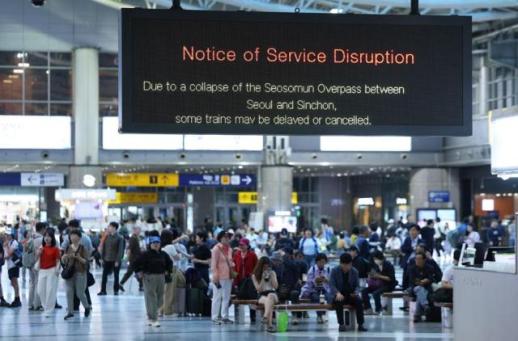 Devices with large lithium batteries to be banned on KTX and subway trains SEOUL, June 15 (AJP) - Starting next month, passengers will be barred from bringing devices equipped with large-capacity lithium batteries onto KTX bullet trains and subways, railway operator Korail said on Monday. To improve passenger safety amid fire risks, lithium-battery-powered items such as electric kickboards, electric bicycles and other personal devices will be restricted from being brought onto trains or entering railway stations. Also included are portable high-capacity lithium batteries with a capacity of more than 160Wh. But electric wheelchairs and medical scooters will be exempt from the ban to protect the rights of passengers with disabilities. Smaller everyday devices such as mobile phones, laptops and smartphone chargers will still be permitted as before. Separately, starting this weekend, passengers who briefly exit a gate for any reason will not be charged if they re-enter within 15 minutes. The measure is intended to reduce inconvenience for those who need to leave the station temporarily for urgent matters, such as using the restroom. 2026-06-15 15:46:17
 -
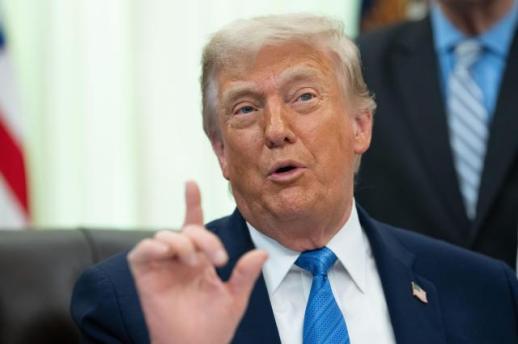 Middle East War Ceasefire Eases Geopolitical Risks, But Currency and Oil Price Uncertainties Remain The exchange rate between the South Korean won and the U.S. dollar, along with international oil prices, showed signs of stabilization following news of a ceasefire agreement in the Middle East. Foreign capital, which had previously driven the won's depreciation, is returning to the domestic stock market, alleviating concerns over oil supply disruptions and restoring stability in global financial and commodity markets. On June 15, the exchange rate of the won against the dollar closed at 1,511.1 won, down 8.7 won from the previous trading session. The announcement of the ceasefire agreement between the U.S. and Iran boosted investor sentiment towards riskier assets. The won, considered a risk asset, had been under pressure since the outbreak of the Middle East war, particularly as foreign investors recorded unprecedented net selling in the domestic stock market, further weakening the currency. In March, shortly after the outbreak of the war, the average daily fluctuation of the won's exchange rate reached 0.76%. This eased to 0.59% in April and 0.45% in May, but rose again this month, threatening to surpass the 1,600 won mark. Despite strong verbal interventions from foreign exchange authorities, the rate remained stubbornly high. However, with the geopolitical risks easing, the previously rising exchange rate has begun to stabilize. Foreign investors, who had been net sellers, shifted to net buying on June 12 and continued this trend today. The influx of foreign capital into the domestic stock market has increased demand for the won, contributing to downward pressure on the exchange rate. Market analysts believe that if foreign buying continues alongside the ceasefire in the Middle East, the downward pressure on the won may further ease. Nonetheless, uncertainties surrounding U.S. monetary policy remain a factor that could affect the exchange rate. Expectations for reduced tensions in the Middle East were also reflected in international oil prices. As of 3 p.m. today, Brent crude was trading around $83 per barrel, while West Texas Intermediate (WTI) fell to around $80 per barrel. Although these prices are still high compared to the $60 range before the war, they represent a significant decrease from the over $110 per barrel seen immediately after the conflict began. The potential reopening of the Strait of Hormuz, a key route for global oil transport, has alleviated concerns about supply disruptions. However, it is expected to take some time for domestic consumers to feel the impact of stabilized international oil prices. Typically, there is a lag of 2 to 3 weeks before changes in international oil prices are reflected in domestic retail prices. In fact, during the second week of June, the average price of gasoline at nationwide gas stations was 2,009.9 won per liter, down 0.5 won from the previous week, while diesel prices fell by 0.3 won to 2,004.8 won, indicating a stable trend. Lee Young-won, a researcher at Heungkuk Securities, stated, "Even after the ceasefire agreement, demand for restoring production facilities and replenishing depleted inventories may continue. The U.S. Energy Information Administration (EIA) also projects that WTI and Brent crude prices will be around $81 and $86, respectively, by the end of the year." He added, "Post-war recovery demand and movements to enhance energy security could also influence future oil price trends." 2026-06-15 15:45:00
 -
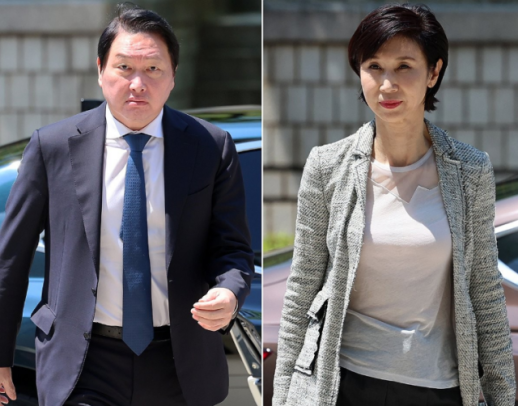 Choi Tae-won and Noh So-young Meet in Court for Asset Division After Two Years Choi Tae-won, Chairman of SK Group, and Noh So-young, Director of Art Center Nabi, faced each other in court for the first time in two years and two months. This meeting comes as they enter mediation for the division of assets valued at approximately 1.38 trillion won, the largest in South Korean divorce history. The Seoul High Court's Family Division, led by Judge Lee Sang-joo, held the second mediation session on June 15. Noh arrived at the court at 1:39 PM and did not respond to reporters' questions about the possibility of a settlement, her stance on the Supreme Court's rejection of former President Roh Tae-woo's slush fund contributions, or her feelings about facing Choi in court after such a long time. Choi appeared about eight minutes later at 1:47 PM. When asked how he felt about meeting Noh in court after two years, he said, "I hope the mediation goes well and concludes quickly." He did not comment on whether their positions had narrowed since the first mediation session. This is the first time the couple has met in court since the final arguments of their divorce appeal in April 2024. Noh attended the first mediation session last month alone. The current mediation session is expected to focus on the scale and method of asset division, as well as the reference point for determining the division. A key issue is whether Choi's shares in SK Holdings will be included in the division. Choi's side argues that these shares are considered separate property acquired through inheritance and gifts, thus not subject to division. In contrast, Noh's side contends that her long-term contributions to household management and child-rearing should qualify the assets as marital property. There is also expected to be debate over the reference point for asset division, whether it should be the conclusion of the appeal in April 2024 or the current mediation proceedings. This could significantly affect the asset valuation, especially with recent increases in SK's stock price, making both sides attentive to the reference point. The couple married in 1988 during the first year of Roh Tae-woo's presidency and have three children together. Their marriage drew significant public interest as it united the daughter of a president with a member of a prominent business family. However, their relationship deteriorated after Choi revealed in 2015 that he had an extramarital child with Kim Hee-young, chairwoman of the TNC Foundation. Following this revelation, Choi filed for divorce mediation in 2017, and after it failed, he initiated divorce proceedings the following year. Noh also filed a counterclaim for asset division, intensifying their legal battle. In the first trial, the court ordered Choi to pay Noh 100 million won in alimony and 665 billion won in asset division. However, the appellate court recognized Noh's contributions and ruled that Choi should pay 2 billion won in alimony and 1.38 trillion won in asset division. The Supreme Court, led by Justice Seo Kyung-hwan, found that the appellate court had misinterpreted the law regarding the 30 billion won slush fund's contribution to SK's growth and sent the asset division ruling back for reconsideration. However, the 2 billion won alimony payment was upheld. Legal experts identify the main issues in the reconsideration as whether Choi's SK shares should be included in the asset division and the extent of Noh's contributions. With significant differences remaining between the two sides, it remains to be seen if a consensus can be reached in this mediation.* This article has been translated by AI. 2026-06-15 15:45:00
 -
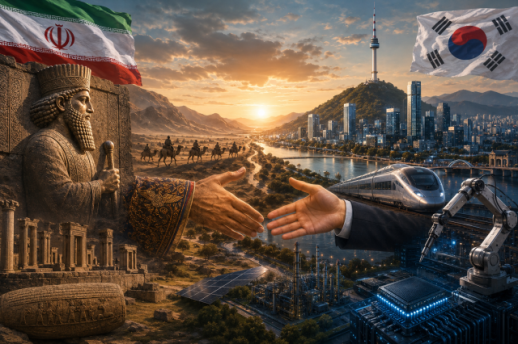 Understanding Iran: Lessons from History and Future Cooperation In the first part, we examined why the United States misjudged Iran. The U.S. focused on military power, while Iran emphasized its civilization. The U.S. calculated the present, whereas Iran considered its history. The second part explored the spiritual foundations supporting Iran through Zoroastrianism, Shia Islam, the Khomeini Revolution, and 30 years of nuclear development. Now, one question remains: What comes next after the war has ended?History has repeatedly shown that post-war order is more significant than the war itself. The Marshall Plan, not World War II, transformed the world after the conflict. Similarly, it was not the armistice that changed South Korea after the Korean War, but industrialization and economic development. The revival of Germany and Japan was achieved not through military might but through factories, schools, ports, and railroads. In this sense, the true narrative of the recent 106-day war in Iran begins now. The war has ended, but reconstruction has started, and while destruction has ceased, the monumental task of redesigning the future lies ahead.Current projections suggest that the scale of post-war reconstruction in Iran could exceed $300 billion. Including oil and gas facilities, refineries, power plants, roads, railways, ports, airports, communication networks, industrial complexes, data centers, and smart cities, the actual figure could be much higher. More importantly, Iran is likely to aim for more than just restoring its past. Just as Saudi Arabia is pursuing NEOM City and the United Arab Emirates is accelerating its AI national strategy, Iran is expected to focus on building a future-oriented state after the war. This is not an era for 20th-century reconstruction but for 21st-century rebuilding.In this context, South Korea holds significant importance. It is a rare success story globally, having risen from the ruins of colonialism and war to become one of the world's top ten economies. Transitioning from a recipient of aid to a donor nation, South Korea is now challenging the digital and AI revolutions. Middle Eastern countries are paying attention to South Korea not just for its technological prowess but to learn from its experiences in overcoming poverty, nurturing talent through education, achieving industrialization, and realizing democratization.In fact, the ties between South Korea and Iran run deeper than one might think. Artifacts from the Silla period found in Gyeongju and traces of Persian culture indicate that East and West have exchanged influences for centuries. Merchants, scholars, and artisans traveling along the Silk Road impacted regions from China and Central Asia to the Korean Peninsula. In modern times, the two countries have maintained a special relationship. Since establishing diplomatic relations in 1962, South Korea and Iran have built one of the most successful economic partnerships in the Middle East. Iran supplied the energy necessary for South Korea's industrialization, while South Korea provided automobiles, electronics, construction technology, and industrial infrastructure. Companies like Samsung Electronics, Hyundai Motor, and LG Electronics once enjoyed high trust in the Iranian market. Although relations have contracted due to U.S. sanctions, the goodwill and trust between the two peoples remain intact.The symbol of this connection is Tehran Road in Gangnam, Seoul. It is rare for a foreign capital's name to be associated with a major economic artery in any country. Named in 1977 to commemorate the friendship between Seoul and Tehran, Tehran Road has become the heart of South Korea's IT industry, venture ecosystem, AI sector, and financial industry. Often referred to as the heart of South Korea's digital revolution, this road is more than just a thoroughfare; it symbolizes the friendship between Seoul and Tehran and the potential for future cooperation.Looking back, this is a remarkable symbol. The name of the Persian capital, which once connected East and West during the Silk Road era, is now inscribed in the heart of South Korea's AI revolution. While the Silk Road transported silk, spices, paper, and ceramics in the past, the new Silk Road will carry data, artificial intelligence, semiconductors, and content. Where camels once traversed deserts, fiber optic cables and satellite networks now connect continents. While caravans once linked civilizations, AI and digital technology now connect nations. In this regard, South Korea and Iran have the potential to transform the historical Silk Road into a future AI road.South Korea's role in the Middle East extends beyond mere economic cooperation. It has never been a colonial power nor a party to Middle Eastern conflicts, and it has no history of siding with one side of religious disputes. As a result, South Korea is viewed as a relatively trustworthy nation. While the U.S. wields military influence and China expands its economic power, South Korea possesses development experience, technological expertise, and cultural soft power. This is a crucial asset, as the Middle East needs a reliable partner rather than another hegemonic power.This brings to mind the Korean principle of Hongik Ingan, which emphasizes benefiting humanity broadly. This principle is not merely a founding ideology; it is a fundamental value of Korean civilization. It seeks paths to prosperity through collaboration rather than domination and aims for mutual growth instead of conquest. Interestingly, Persian civilization shares a similar tradition. Cyrus the Great valued tolerance over conquest, and Zoroastrianism ultimately sought a world where good triumphs over evil and justice prevails. Though expressed differently, Zoroastrianism's focus on 'good thoughts, good words, and good deeds' aligns with the Hongik Ingan spirit of Dangun.Although geographically distant, South Korea and Iran share many historical similarities. The Korean people have survived for thousands of years between the powerful nations of China and Japan. Similarly, Persia has endured between Rome and Arabia, Mongolia and the Ottoman Empire, Britain and Russia. Korea has maintained its identity despite foreign invasions, and Iran has preserved the name Persia through numerous invasions and wars. While Korea speaks of Dangun and the Hongik Ingan spirit, Iran speaks of Cyrus the Great and Zoroastrianism. Both civilizations, though different, share common experiences of survival, coexistence, and cultural pride.Therefore, South Korea can become a partner for peace and prosperity in the Middle East, moving beyond being merely an investor or exporter. In the post-war reconstruction of Iran, there are opportunities for collaboration in construction, plants, railways, ports, nuclear power, energy networks, smart cities, data centers, AI, and physical AI. Notably, South Korea's AI revolution and manufacturing innovation experiences could serve as important reference models for Iran as it designs its future state. Furthermore, South Korea can play a bridging role in alleviating conflicts in the Middle East and promoting dialogue between civilizations.The 250-year history of the United States may not fully comprehend the 5,000-year history of Persia. However, the 5,000-year history of the Korean people can understand Persia. We have shared the experience of war's devastation, survived among great powers, and strived to preserve our civilizations.The 106-day war has ended. Yet, history is now opening a new chapter. The sounds of gunfire and bombing have ceased, but civilization continues. Wars may eventually end, but the paths connecting people, nations, and civilizations endure. Just as the Silk Road once linked East and West, AI, data, culture, and technology will forge a new Silk Road.At one end of that road lies Tehran, and at the other end, Seoul. And the light illuminating that path will be the ancient wisdom of Persia and the Korean spirit of Hongik Ingan.* This article has been translated by AI. 2026-06-15 15:42:00
 -
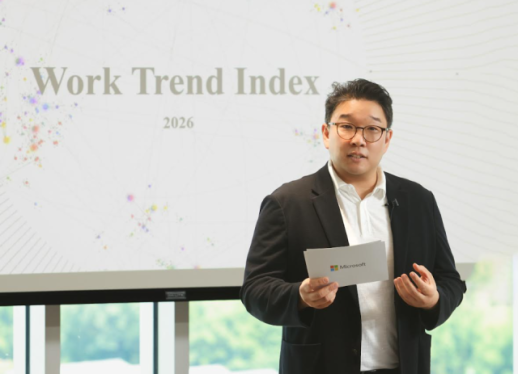 Microsoft Korea: AI Success Depends on Leadership and Workforce Skills “The success of AI in the workplace is determined not by technology, but by employee judgment, leadership direction, and organizational learning systems.” Jowon Woo, CEO of Microsoft Korea, made this statement during a press conference for the '2026 Work Trend Index Report' held at the Microsoft Korea office in Gwanghwamun, Seoul, on June 15. He explained that contrary to concerns that AI advancements would reduce human roles, the increasing execution of tasks by AI actually heightens the importance of uniquely human contributions. Microsoft believes that to connect individual employees' strong willingness to utilize AI with organizational performance, changes in leadership roles and job redesign are necessary. Notably, while the willingness of employees in South Korea to embrace AI is higher than the global average, alignment in leadership, compensation structures, and the proportion of frontier experts are relatively low. Consequently, organizational readiness has been identified as a key challenge for achieving successful AI implementation. Oh Seong-mi, Director of AI Workforce Go-To-Market at Microsoft Korea, stated, “This year’s Work Trend Index is the third report analyzing changes in AI work dynamics since the emergence of generative AI. Last year highlighted the need for hybrid organizations where humans and AI collaborate, while this year analyzes the changes that have occurred over the past year for individuals and organizations.” The report introduces a new equation for workplace leadership: 'AI Execution × Human Judgment.' Oh emphasized, “The role of humans is shifting from task executors to conductors and supervisors who provide direction and validation. If human judgment is zero, performance will also be zero. Human judgment is the key variable that transforms AI execution into results.” On an individual level, the utilization of AI has advanced. According to Microsoft, 58% of survey respondents reported that they are now able to perform tasks through AI that they could not do a year ago. Among frontier expert groups utilizing AI and agents in complex workflows, this figure rises to 80%. Additionally, 66% of respondents indicated that they are spending more time on high-value tasks since adopting AI. Notably, the willingness of South Korean employees to utilize AI exceeds global averages. A significant 78% of domestic employees feel pressure, stating, 'If I do not adapt to AI, I may fall behind,' compared to a global response rate of 65%. Oh noted, “This indicates a strong willingness to learn and apply AI quickly. The sense of urgency and desire for learning at the individual level could serve as a driving force for accelerating AI transformation in domestic companies.” Microsoft identified organizational environment as the most significant factor influencing the effectiveness of AI adoption. While individual trust and utilization capabilities are important, organizational culture, managerial support, and talent policies are deemed even more critical. Oh stated, “An organizational culture that embraces AI as a strategic agenda, direct utilization and recognition by managers, and systems that reflect AI utilization capabilities in evaluations and career growth are key elements that determine success.” In the South Korean market, the clarity of leadership commitment to AI direction (16%), recognition of compensation for AI-driven transformation (7%), and the proportion of frontier experts (12%) were all reported to be 6-10 percentage points lower than in global markets. To convert employees' willingness to utilize AI into actual work performance, alignment in leadership, compensation structures, strengthening the capabilities of middle managers, and nurturing frontier experts are essential, according to the report. Microsoft also highlighted the cultivation of frontier experts who can implement and establish AI and AI agents in corporate organizations as a major task. Oh emphasized, “It is crucial for individuals to gain extensive experience using AI. Additionally, internal forums and reward programs that share best practices across the organization are necessary.”* This article has been translated by AI. 2026-06-15 15:42:00
 -
 K-Beauty Products Gain Popularity in Tokyo Convenience Stores and Drugstores "I used to buy sheet masks every time I traveled to Korea, but now I can easily find them at Japanese drugstores, so I visit often," said Honami, a woman in her 30s, during a visit to a drugstore near Nippori Station in Tokyo on June 14. She added, "Korean products are popular because they offer great cost performance." Japanese drugstores sell a mix of pharmaceuticals, cosmetics, and daily necessities. The cosmetics section of the store Honami visited was dominated by K-Beauty products. On one side of the display, APR's beauty device brand Medikube AGE-R was prominently featured, alongside K-Beauty brands Anua and Numbers in, which had their sheet masks lined up. Nippori Station is a stop on the Skyliner express train connecting Narita Airport and downtown Tokyo, making it a common spot for both locals and foreign tourists to browse Korean products. The display included popular items such as the AGE-R Booster Pro Mini Plus, Medikube's PDRN line, and Zero Pore Pads, with testers available for local consumers to try. K-Beauty's presence is also evident in convenience stores. At a Seven-Eleven in Japan, Clio's color cosmetics brand 'Twinkle Pop' was featured, and some lip tint products were sold out. With 21,927 Seven-Eleven locations as of February this year, K-Beauty has penetrated various aspects of local consumer life. The popularity of Korean cosmetics is also evident in Shinjuku's Ikemen Street, a hub for Korean cultural content. A store employee noted, "Many Japanese schoolgirls come here, and most of our customers are women in their teens and twenties." Preparations were underway for the opening of a new K-Beauty shop, with staff organizing products imported from Korea. This growing interest in K-Beauty in Japan is reflected in export figures. According to the Ministry of Food and Drug Safety, the trade balance for cosmetics reached a surplus of $10.1 billion last year, a 13.5% increase from the previous year. This marks the first time the surplus exceeded $10 billion (approximately 15 trillion won). Japan accounted for $1.1 billion of this total, making it the third-largest market after the United States ($2.2 billion) and China ($2 billion). Korean cosmetics companies are accelerating their efforts in the Japanese market. APR, for example, is expanding its offline presence and boosting local sales through online promotions. Notably, APR's sales during Japan's largest online discount event, 'Mega Wari,' in the fourth quarter of last year surged by over 180% compared to the same period the previous year. Industry insiders believe that K-Beauty has moved beyond a temporary trend in Japan and will continue to grow. A beauty industry representative stated, "In the past, K-Beauty consumption was mainly driven by Hallyu fans and tourists visiting Korea, but now it is expanding into drugstores and convenience stores. As trust in K-Beauty rises among young Japanese consumers, the growth of Korean cosmetics brands in Japan is expected to continue for the foreseeable future."* This article has been translated by AI. 2026-06-15 15:42:00
 -
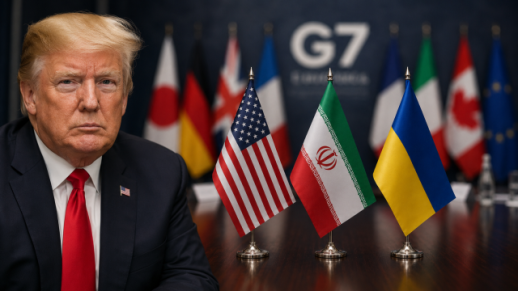 Trump Discusses Iran Deal and Ukraine War Ahead of G7 Summit President Donald Trump announced a breakthrough in U.S.-Iran negotiations while reigniting discussions on ending the Russia-Ukraine war ahead of the upcoming G7 summit. He appears to be leveraging the Iran deal to elevate diplomatic efforts to resolve the Ukraine conflict. On June 14, local time, Trump, who turned 80 that day, held consecutive phone calls with Russian President Vladimir Putin and Ukrainian President Volodymyr Zelensky. These discussions took place just before the G7 summit scheduled for June 15-17 in Évian-les-Bains, France. Yuri Ushakov, a senior foreign policy advisor to the Kremlin, stated that the call between Trump and Putin lasted approximately 55 minutes. Ushakov noted that Trump emphasized the need to halt the Ukraine war and expressed readiness to exert influence over Europe and Ukraine through the G7 summit. During his conversation with Putin, Trump reportedly informed him that the U.S.-Iran agreement had been finalized and that an announcement could be forthcoming. Following the call, Trump confirmed on Truth Social that the agreement with Iran was complete, with a memorandum of understanding set to be officially signed in Switzerland on June 19. There is also a possibility of continued practical engagement with Russia. Ushakov mentioned that Trump’s envoys, Steve Witkoff and Jared Kushner, are expected to visit Russia again soon. The two had previously met with Putin as part of U.S. negotiation efforts. Trump also spoke with Zelensky on the same day. Zelensky stated that they discussed the war's context, diplomatic solutions, the positions of international partners, and the situation on the battlefield, agreeing to continue discussions at the G7 summit. He expressed gratitude for U.S. military support, noting that Ukraine is in a more favorable position on the battlefield. Despite the renewed discussions on ending the war, tensions on the battlefield persist. According to Reuters, following the Trump-Putin call, Russia launched large-scale strikes on major Ukrainian cities, including Kyiv and Kharkiv. The UNESCO World Heritage site, the Pechersk Lavra Monastery in Kyiv, was damaged, and approximately 140,000 households experienced power outages. The gap between Russia and Ukraine's positions remains significant. Ukraine demands an immediate and complete ceasefire, negotiations based on current front lines, and legally binding security guarantees. In contrast, Russia maintains its stance on territorial issues and opposition to Ukraine's NATO membership. AP reported that Putin criticized Ukraine for attacking Russian civilian infrastructure and demanded a meeting with Zelensky in Moscow. Trump is highlighting the Iran agreement as a diplomatic success while bringing the Ukraine ceasefire discussions back to the forefront. However, with unresolved issues regarding ceasefire conditions, territorial disputes, and pressure on Russia, it remains uncertain whether the G7 summit will lead to tangible progress in negotiations.* This article has been translated by AI. 2026-06-15 15:39:00