

Journalist

Lee Baek-soon
-
 Legal Expert Im Seo-jung Advocates for Social Responsibility in Corporate Profit Sharing Recently, the labor negotiations regarding performance bonuses at Samsung Electronics concluded successfully with active government mediation. However, the labor union of Samsung's non-semiconductor DX division is protesting against receiving lower bonuses compared to the semiconductor (DS) division, and this discontent is spreading to other companies such as Kakao, LG, and Hyundai Motor. Aju Economy spoke with Im Seo-jung, a legal advisor at Hwawoo Law Firm and a former vice minister of the Ministry of Employment and Labor, who has over 30 years of experience in the field, to discuss the essence of the situation and his views on recent labor issues. Im stated, "As global competition intensifies, we must question whether it is appropriate to demand that a significant portion of operating profit be directly linked to labor performance. This could lead to feelings of relative deprivation among workers in small and medium-sized enterprises and the younger generation." He added, "The method of unilaterally determining performance distribution by companies can no longer be sustained. The performance bonus system must not undermine long-term competitiveness, and corporate performance should also be approached from a social responsibility perspective." Below are excerpts from the interview with Im. - SK Hynix has provided employees with performance bonuses exceeding 100 million won, intensifying labor disputes over bonus calculations in large companies like Samsung Electronics. Although a government-mediated agreement was reached, what impact do you foresee on the wage systems of small and medium-sized enterprises and the industry as a whole? The recent debate over performance bonuses is not merely about how much more one receives. It raises a fundamental question about how our society shares corporate performance and based on what criteria. However, the demands from the Samsung Electronics union regarding performance bonuses have sparked significant social criticism beyond simple labor disputes. After experiencing a prolonged period of poor corporate performance and structural crises before the recovery of the semiconductor market, we must question whether it is appropriate to demand that a significant portion of operating profit be directly tied to labor performance. Furthermore, the issue of social equity felt by the general public cannot be overlooked. The wage gap between regular employees in large corporations and those in small and medium-sized enterprises is already considerable, potentially leading to feelings of relative deprivation among workers in smaller firms and the youth. That said, we should not view workers' demands for performance distribution negatively. The previous method of unilateral determination by companies can no longer be sustained. The solution lies not in competitive amounts or power struggles. Transparency in the criteria for calculating performance bonuses is necessary, and the bonus system must not undermine long-term competitiveness. Additionally, corporate performance should not be seen solely as a labor-management issue but should also be approached from a social responsibility perspective. The issue of performance bonuses is not simply about giving more or less. Labor rights are important, and so are shareholder rights. However, what is more crucial is social acceptability and sustainability. Both labor and management must move beyond merely asserting their rights to consider the future competitiveness of the company and the balance of society as a whole to create a healthy performance-sharing model. - Discussions surrounding the Yellow Envelope Law (amendments to Articles 2 and 3 of the Labor Union Act) are heating up. In particular, if the 'expansion of the employer's scope' is realized, it is expected that primary companies will have to negotiate directly with subcontractor unions, leading to significant confusion in the field. The core of the Yellow Envelope Law consists of three main points: first, expanding the scope of employers; second, broadening the scope of labor disputes; and third, limiting liability for damages related to disputes. Among these, I believe the most immediate and direct impact on industrial sites will come from the expansion of the employer's scope. Until now, our labor law system has judged employer responsibility based on the employment contract relationship. In other words, rights and obligations have been structured around direct employment relationships where wages are paid and personnel authority is exercised. However, the amended law expands the concept of employer based on actual influence or control. This could lead to significant changes in the traditional labor law structure. Ultimately, what companies will need after the Yellow Envelope Law is not just a simple legal defense strategy but management capabilities to adapt to the new labor relations order. The government will also strive to ensure that the system quickly takes root in the industrial field and operates in the direction of bridging gaps and fostering coexistence, but this will not be easy in a situation where distrust between labor and management runs deep. In this regard, minimizing conflicts in the field while creating realistic solutions will become increasingly important. - The introduction of AI and automation is rapidly changing the nature of jobs. With an increasing number of workers in 'legal blind spots' such as platform workers, what measures can be taken to address the dual structure gap in the labor market? The spread of AI, robots, and the digital economy can widen the gap between high-skilled and low-skilled workers. Jobs that are difficult to categorize under traditional employment concepts, such as platform workers, special employment workers, and freelancers, are rapidly increasing. The growth rates of industries and companies are also diverging significantly. While some large corporations are generating high profits and providing performance bonuses, small and medium-sized enterprises are simultaneously facing labor shortages and low productivity issues. In this structure, wage disparities and gaps in employment stability are bound to widen. I believe it is necessary to establish a special committee under the President or the Speaker of the National Assembly to improve the dual structure of the labor market. This committee should include not only labor experts but also experts in economics, industry, fair trade, social security, and education and vocational training to provide neutral assessments and solutions. Subsequently, labor and management, along with stakeholders, should participate in discussions to create a social consensus. A key task will be to enhance the productivity and payment capacity of small and medium-sized enterprises while expanding minimum social security and labor rights protections regardless of employment type. Discussions on the labor union system and representation issues should also be included, along with strengthening job retraining and transition support systems in response to AI transitions. The state and companies must jointly support the movement between jobs that are disappearing due to technological changes and those that are being created. This issue cannot be resolved through short-term measures every time there is a change in government. Addressing the dual structure of the labor market is not just a matter of reconciling interests between current labor and management; it is also directly related to opportunities for future generations. Therefore, it should be approached as a national task to enhance the sustainability of our economy and labor market, transcending the short-term interests of the government and labor. - There is ongoing social discussion regarding the legal extension of the retirement age and the continued employment system. From the perspective of companies, concerns about labor cost burdens and the encroachment on youth jobs are significant. Do you believe that extending the retirement age without introducing a wage peak system or job-based pay system is feasible? As the age for receiving national pension benefits rises to 65 by 2033, the current legal retirement age remains at 60. This creates a so-called 'income gap period.' However, many companies in our country still have a wage system that is heavily based on seniority. As years of service and age increase, wages also rise. While it is generally true that older workers accumulate experience and skills, there are concerns that productivity and wages may diverge due to factors such as health, job characteristics, and adaptability to technological changes. This is why discussions about wage peak systems or job-based pay systems continue to arise. However, extending the retirement age without such systems is realistically challenging. Ultimately, sustainable solutions should not be approached as a binary issue of extending retirement age or not, but rather in the context of balancing the entire labor market. We must protect the lives of older workers while also safeguarding opportunities for the younger generation and considering the sustainability of companies. - With the Lee Jae-myung administration in power, labor inspections by the Ministry of Employment and Labor have become much more sophisticated and stringent compared to the past. The focus on the abuse of comprehensive wage systems and wage arrears has expanded. What 'labor inspection trends' should companies pay close attention to in order to manage legal risks? Recent changes in labor inspection policies indicate that the philosophy and methods of inspections themselves are undergoing significant changes, not just an increase in the number of inspections. Since the Lee Jae-myung administration took office, the title of labor inspectors has been changed to labor supervision officers, and the workforce is expected to expand from about 3,000 to 5,000 next year. However, what companies should focus on more than the numbers is the change in inspection methods. In the past, inspections were primarily regular, but in the future, there is a high likelihood that unannounced inspections, planned inspections, and integrated inspections combining industrial safety and labor will be expanded. Particularly, there is a greater possibility that legal actions will be taken immediately based on the severity of violations, rather than first providing opportunities for correction as in the past. This means that for companies, the approach of 'responding when problems arise' may have limitations. Therefore, companies must establish a system for ongoing checks on working hours, wage system operations, appropriateness of comprehensive wages, workplace harassment response systems, and safety management systems. Ultimately, the future trend of labor inspections will depend on how precisely companies are required to operate their human resources and labor management. - Social dialogue through the Economic and Social Council (ESC) often stalls. What do you think are the reasons for the increasing difficulty in finding common ground between labor's participation and the government's mediation proposals? Do you believe a 'new framework for dialogue' is necessary to overcome this? I believe there are several structural reasons why the ESC has not been achieving results as expected. First, there is the issue of representation, second, the issue of the implementation structure after agreements, and third, the deep-seated mutual distrust among labor, management, and the government. Social dialogue should ideally be a process of designing a shared future rather than merely adjusting short-term interests. If the limitations that have been raised regarding the ESC, such as improving representation, enhancing operational methods, and strengthening the implementation of agreements, are addressed, significant progress can be expected. However, simply changing the name of the dialogue body or creating a new organization will not automatically resolve the issues. Fundamentally, a change in the perception of social dialogue among labor, management, and the government is necessary. Additionally, the government and the National Assembly must also make efforts to respect the results of social agreements and reflect them in policies and legislation. - The number of 'NEET' youth has recently surpassed 400,000, reaching an all-time high, highlighting the ongoing issue of youth employment. Additionally, human rights violations and fatalities among foreign workers continue to occur annually, negatively impacting South Korea's international reputation. The issues of youth employment and foreign workers may appear to be separate issues at first glance, but they actually represent structural problems within our labor market. The recent increase in 'NEET' youth exceeding 400,000 cannot be viewed simply as an economic issue. There are various reasons, but fundamentally, the number of jobs that young people want to pursue is decreasing, and the dual structure of the labor market is also a contributing factor. There remains a significant gap in wages, benefits, and working conditions between large corporations and small and medium-sized enterprises, as well as between regular and non-regular workers, and young people's perceptions of work are changing. The younger generation now values the meaning of work, work-life balance, growth potential, and fairness more than simply having a job for survival. However, the current labor market still largely retains the structures of the past industrialization era. Ultimately, both the government and companies need to change their roles. The issue of foreign workers also extends beyond mere human rights concerns to encompass our industrial structure and workforce policies. Many industries, including agriculture, manufacturing, construction, and caregiving, have become difficult to sustain without foreign labor. Issues such as restrictions on changing workplaces, language barriers, lack of information, inadequate living conditions, and insufficient safety management contribute to repeated human rights violations. In particular, the recurrence of industrial accidents and fatalities among foreign workers must be taken very seriously. It is no longer feasible to view this as merely an issue of individual employers' misconduct; it may be a structurally connected result of outsourcing dangerous work, inadequate safety training, poor communication, and management blind spots. This can be evaluated as a labor rights issue in the international community and can affect South Korea's international reputation. A shift in perspective is needed to view foreign labor not just as a source of labor supply but as members of the labor market, and there is a need to consider improvements in the workplace mobility system and rights protection mechanisms. Basic infrastructure such as housing, safety training, and interpretation support should also be strengthened, and the industrial safety management system should be improved to reflect the characteristics of foreign workers. Future labor policies should expand to include not only those within the existing labor market but also those outside or on the margins. 2026-06-01 16:06:00
 -
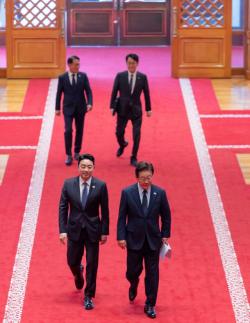 Exhibition 'Trajectories of Light' to Celebrate One Year of Yoon Suk Yeol's Administration To commemorate the one-year anniversary of President Yoon Suk Yeol's administration, a special exhibition will allow the public to experience the government's achievements and records of diplomatic engagements over the past year.The Cheong Wa Dae announced that from June 10 to December 31, it will host the exhibition titled 'Trajectories of Light' on the second floor of the Sarangchae in Jongno-gu, Seoul. The subtitle is 'Policies Illuminating the Lives of Citizens, Together Unveiling Brilliant Gifts.'This exhibition has been redesigned to create an interactive space where the public can engage with policies rather than just receive information. The Cheong Wa Dae explained that the exhibition combines video, digital content, interactive devices, and experiential elements to foster participation.The exhibition is divided into five sections, following a flow from the government's launch and operations to diplomatic engagements, policy experiences, and messages of public participation.The first section, 'Light Overcomes Darkness - The Birth of the Yoon Suk Yeol Administration,' immerses visitors in the social atmosphere and public aspirations at the time of the government's inception through a multimedia space.Media artist Yoon Je-ho has contributed to this section by combining video, light, and spatial design to evoke collective memories.The second section, 'Illuminating Light - A Working President, A Working Government,' visualizes the president's social media records accumulated over the past year. This area showcases data visualization content based on President Yoon's posts on X and Facebook, highlighting the government's focus and communication with the public.The third section, 'Connecting Light - Changing National Prestige, Unboxing Together with Citizens,' presents scenes and records of diplomatic engagements since the establishment of the people's sovereignty government. Gifts and souvenirs received by President Yoon during overseas visits and international events will also be displayed alongside diplomatic records.Policy achievements are restructured into experiential content in the fourth section, 'Enjoying Light - People's Sovereignty Policies, Changes in My Life.' This section is divided into five areas: competence, livelihood, coexistence, practicality, and communication, narrating 38 key achievements over the past year in relation to citizens' lives.The final section, 'Light of Tomorrow - Next Promises, Together with All,' features citizen participation content. A large 3D screen welcomes visitors with a video message from President Yoon, who will also have a photo opportunity with attendees.Additionally, a digital goods experience exhibition commemorating the first anniversary of the inauguration will be held next to the gift shop on the first floor of the Cheong Wa Dae throughout June.The Cheong Wa Dae's digital goods were created in response to a public suggestion via the president's social media channels, expressing a desire to own a digital version of the presidential watch. These goods have been produced for significant national events, including the 50-day anniversary of the inauguration, the 80th anniversary of liberation, and the successful hosting of APEC 2025, with a total of 50 items distributed through the Cheong Wa Dae website.During this special exhibition, visitors can apply and wear digital goods on their smart devices. A photo booth will also allow citizens to participate in the creation of digital goods. A separate area will display records captured by the president's official photographer, Wi Seong-hwan, over the past year.Lee Kyu-yeon, the Cheong Wa Dae's Chief of Public Communication, stated, "This exhibition is an attempt to move away from one-sided promotional methods and transform into a policy communication platform where citizens can actively participate and co-create. We designed it so that all visitors can experience the changes brought about by the people's sovereignty government's policies in their own lives." 2026-06-01 16:06:00
 -
 Industry Minister Urges Steady Oil and Naphtha Supply in Talks with Oman The South Korean government is engaging with Oman to diversify its oil supply and enhance the use of the Duqm Port, a bypass route for the Strait of Hormuz. The Ministry of Trade, Industry and Energy announced that Minister Kim Jeong-kwan held a video conference on June 1 with Mohammed Al Yousuf, chairman of the Oman Free Trade Zone Authority. The two sides discussed key economic cooperation issues, including stable resource supply, plant contracts, and logistics facilitation. Since the outbreak of conflict in the Middle East, the government has been working to secure stable resources and minimize the impact on supply chains and exports. Notably, a presidential envoy delegation visited Oman in April, achieving a commitment to secure 5 million barrels of crude oil and 1.6 million tons of naphtha by the end of the year. This amount exceeds the total crude oil imports of 4.5 million barrels from the previous year. Oman is also a strategic location that allows for bypassing the Strait of Hormuz, a key transit route for Middle Eastern crude oil and liquefied natural gas (LNG). If alternative routes combining ports and land transport networks within the region, such as Duqm Port, are secured, stable oil supply can be maintained even amid heightened risks in the Strait of Hormuz. To expand cooperation with Oman, which has potential as an alternative logistics hub and resource supplier outside the Strait of Hormuz, the Ministry of Trade arranged this meeting. During the discussion, Minister Kim requested support to ensure the smooth supply of crude oil and naphtha as agreed upon in the envoy delegation's talks in April. He also highlighted the successful execution of major projects in Oman, such as the Duqm refinery and the Mena solar power plant, and expressed interest in participating in new projects. Additionally, they discussed utilizing Oman's major ports as alternative logistics hubs to bypass the Strait of Hormuz. Minister Kim noted, "Our companies are facing challenges with customs payments and refunds in Oman, as well as duplicate inspections and quarantines at the Saudi Arabian border during the transportation of goods through Duqm Port. We need cooperation to simplify these procedures to ensure swift delivery of goods to their final destinations." The two sides agreed to promptly resume the Korea-Oman Economic Cooperation Committee, which has not met since 2016, to discuss economic issues. Minister Kim emphasized, "Oman, with its geographical advantage outside the Strait of Hormuz and abundant energy resources, is an important partner for strengthening future cooperation in the Middle East. Through this meeting and the upcoming Economic Cooperation Committee, we will actively seek ways to enhance cooperation in resource security, plants, and logistics."* This article has been translated by AI. 2026-06-01 16:03:00
 -
 Kakao Games Reveals Official Title for 'Project OQ' as 'World of Goblins' Kakao Games announced on June 1 that the official title for its upcoming multiplayer online role-playing game (MMORPG) 'Project OQ' will be 'World of Goblins.' 'World of Goblins' is a 2.5D MMORPG featuring retro-style pixel graphics. Utilizing the Unity engine and proprietary graphic technology from developer Supercat, the game aims to deliver a unique visual experience with intuitive gameplay that is accessible to all players. The game is characterized by its incorporation of traditional Korean folklore and various themes related to goblins throughout its world. Players will embark on adventures and experience growth in a distinctively atmospheric setting. A 'skill deck building system' will allow players to combine skills without job restrictions, enabling them to tailor their combat styles. The game will also offer cooperative content centered around clans (PvE) and large-scale player-versus-player (PvP) battles. Kakao Games plans to launch 'World of Goblins' in the third quarter of this year, with pre-registration starting in July. The company will gradually release more information regarding game content and service schedules in the coming months. * This article has been translated by AI. 2026-06-01 16:03:00
 -
 Vietnam Real Estate Faces Survival Competition as Prices Stabilize Investor expectations in Vietnam's real estate market are noticeably declining. The strategy of holding properties in hopes of price appreciation is no longer effective, leading to an urgent need for cash recovery and liquidity. Consequently, the market is transitioning from a rapid growth phase to one characterized by adjustment and selectivity. On June 1, local media outlets, including Vietnam Finance, reported that the Ministry of Construction's housing and real estate market report for the first quarter of 2026 indicates that new apartment prices remain high. In Hanoi, the average price is approximately 12.8 million VND (about $736) per square meter, surpassing Ho Chi Minh City's average of about 11.2 million VND (approximately $644). The LUMIÈRE Hanoi Seasons Garden, located on Nguyen Chai Street, is expected to have selling prices ranging from 12 to 18 million VND per square meter. LUMIÈRE is a luxury residential brand developed by Masterise Homes. However, since late last year, there have been increasing instances where properties in some suburban projects in Hanoi are not selling even after significant price reductions of several hundred million VND. A resident of the Ha Dong area, identified as Mr. A, listed his two-bedroom apartment in the Thuong Khu area for sale at the beginning of this year but has yet to find a buyer. "Previously, apartment prices were rising almost every month, leading many to believe that buying would soon yield profits," he said. "However, buyers have become much more cautious, and the speed of transactions has slowed significantly compared to before." He noted that he has already reduced his asking price by about 300 million VND (approximately $1,725) but the apartment remains unsold. In another project in western Hanoi, studio apartments that were once priced around 3.1 billion VND are now listed between 2.5 and 2.6 billion VND. Investor B commented, "Investor sentiment has completely changed. Previously, many thought prices would continue to rise, so they were willing to hold onto properties for a few more months. Now, the primary goal is to sell and secure cash." Experts suggest that the price surges of 2024-2025 and the supply shortage had previously stimulated investor sentiment, but now the financial burden has increased significantly. Investors who have relied on leverage for an extended period are facing heavy monthly interest costs, while price increases are insufficient to cover these expenses. Pham Duc Toan, CEO of EZ Property, commented on the current market trend, stating, "Investors who entered the market at these high prices are facing considerable cash flow pressures." Some investors in eastern Hanoi are even listing properties below their original costs or foregoing premiums altogether. The changes in the market are also evident in the flow of funds. Cao Thi Thanh Huong, Deputy Director of Savills Vietnam, explained, "Currently, bank credit is increasingly prioritizing projects that meet actual housing demand, particularly in the mid-range housing sector." This indicates a shift in bank funding toward projects that cater to genuine demand and affordable housing. She added, "Foreign investors still highly value the potential of the Vietnamese housing market, but they are now more selective, focusing on projects with clear legal status and substantial development capabilities." This trend reflects a growing emphasis on legal transparency and development capacity in foreign investments. Can Van Luc, chief economist at BIDV, characterized the current situation as a phase of 'competitive corporate capabilities.' He noted that only businesses with legal clarity, compliance, and appropriate product offerings will have an advantage in attracting investment in the future. Nguyen An Khe, chairman of G6 Group, also assessed that the market has officially entered an adjustment cycle. He stated, "Prices surged too quickly in 2024-2025, exceeding the market's absorption capacity, and now speculative demand is rapidly declining, leading to a more segmented market." * This article has been translated by AI. 2026-06-01 16:00:00
 -
 Samsung's shipment of HBM4E samples seen as strategic move ahead of Jensen Huang's Seoul visit SEOUL, June 1 (AJP) - Samsung Electronics' shipment last week of next-generation High Bandwidth Memory 4E (HBM4E) samples is widely seen as a strategic overture to Nvidia, just ahead of chief executive Jensen Huang's visit to South Korea, multiple experts said. In a timed move, Samsung announced last Friday that it has begun shipping the industry's first 12-layer HBM4E samples to global customers. The rollout comes just days before Huang's upcoming visit to Seoul, following his appearance at the weeklong Computex trade show in Taipei, which wraps up on Friday. The Nvidia CEO is expected to meet South Korean technology companies including Naver and LG, during his stay. "I think there is something to the idea that this is a signal timed to Huang's scheduled visit to Seoul," Kim Duk-ki, a professor at Sejong University's Department of Semiconductor Systems Engineering, told AJP on Monday. "It is not bad from Nvidia's perspective at all, as it would encourage competition." Kim said Nvidia stands to benefit from Samsung competing more aggressively with SK hynix, which has dominated HBM supply to the chip designer. As demand for AI infrastructure grows, global tech firms have been scrambling to secure sufficient memory supplies. "Nvidia has every reason to want a competitive dynamic between suppliers," Kim said. "Stable volume is the priority, and competition helps ensure that." The new 12-layer HBM4E component uses Samsung's sixth-generation 10-nanometer-class (1c) DRAM process paired with a 4-nanometer logic base die, boosting performance by more than 20 percent compared with previous-generation HBM4 chips. On the technical side, Kim noted that data movement — rather than computation — consumes the most energy in AI workloads, making memory bandwidth and efficiency a critical bottleneck. HBM addresses this by stacking multiple memory dies to dramatically increase data throughput, driving the exponential growth in demand. "The growth in memory demand has been exponential and continues to accelerate," Kim said. "Samsung is utilizing this window to aggressively position itself for the next-generation supply chain." Huang's Seoul itinerary, later this week or early next week, is also expected to include meetings with South Korean tech executives to discuss hardware supply chains and broader AI partnerships. 2026-06-01 15:59:12
 -
 Israel Expands Offensive in Southern Lebanon Amid Ceasefire Extension Israel is expanding its military offensive in southern Lebanon. Although a ceasefire has been extended, ground operations are moving northward, raising the possibility of strikes in Beirut. The United States has proposed a new de-escalation plan, but the risk of escalation on the ground is increasing. On June 1, Israeli Prime Minister Benjamin Netanyahu announced that he had instructed the military to expand ground operations in Lebanon. The Israel Defense Forces (IDF) reported that they have taken control of Bofort Fortress and the surrounding ridges, as well as the Wadi al-Saluki area. Bofort Fortress is a high ground overlooking southern Lebanon and northern Israel. This marks the first time Israeli forces have regained control of the area since their withdrawal from southern Lebanon in 2000. Capture of Bofort Fortress; Advancing Toward Nabatiyah… Expanding Southern Front Israel claims that this advance is a response to attacks from Hezbollah. Reuters reported that Hezbollah launched one of its most intense assaults on northern Israel since the ceasefire in April. As a result, schools have been closed and movement restrictions have been imposed. The IDF believes Hezbollah is using low-cost suicide drones to bypass air defenses and inflict casualties on Israeli forces. Israeli ground operations are moving further north. According to Reuters, the IDF has advanced about 10 kilometers toward the Zahrani River after entering the Litani River area. Netanyahu stated, "We will deepen and widen our control over areas previously held by Hezbollah." The IDF has also issued evacuation warnings to residents south of the Zahrani River. Another area under consideration for further entry is Nabatiyah. The Jerusalem Post reported that the IDF is conducting military operations around Nabatiyah, a key Hezbollah stronghold located about 20 kilometers from the Israel-Lebanon border. If ground troops reach this area, it would represent the deepest incursion into Lebanon during the current conflict. Potential Strikes on Beirut… U.S. Attempts to Prevent Escalation with New Proposal Airstrikes are also intensifying. Lebanese security sources and state media reported that the IDF conducted over 40 airstrikes across southern Lebanon on the same day. Reports indicate that eight people were killed in an attack on the village of Deir al-Zahrani the previous night. According to Lebanese government figures, the death toll in the current conflict has surpassed 3,370. Israel has reported 24 soldiers and four civilians killed during the same period. There are concerns that the scope of airstrikes may extend to Beirut. Beirut is the political and economic center of Lebanon, housing government institutions and financial and commercial functions. If strikes reach this area, tensions could escalate beyond the southern border conflict to encompass all of Lebanon. The Jerusalem Post reported that Israeli officials have requested U.S. permission to strike within Beirut. The outlet noted that with no progress in U.S.-Iran negotiations and Israel-Lebanon discussions, Israeli officials are hoping for a favorable response from the U.S. The U.S. is focusing more on establishing a resolution than on permitting strikes. According to Reuters, U.S. Secretary of State Marco Rubio presented a new de-escalation plan to Lebanese President Joseph Aoun and Netanyahu, proposing that if Hezbollah halts all attacks, Israel would refrain from escalating in Beirut. However, coordination is proving difficult. President Aoun has attempted to push the proposal forward, but Nabih Berri, the Speaker of the Lebanese Parliament, stated that while he could guarantee Hezbollah's compliance with the ceasefire, "Israel must stop firing first." The U.S. does not view this as a sufficient willingness to accept the proposal, believing that as long as Hezbollah continues its attacks, it will be challenging to prevent further Israeli responses. International concern is also growing. France has called for an emergency meeting of the United Nations Security Council due to Israel's expanded military operations in Lebanon. The British Foreign Secretary has demanded a halt to Israel's operations in Lebanon, while the German Foreign Minister expressed "serious concerns" regarding the southern advance. 2026-06-01 15:54:00
 -
 Korea, China ease food trade rules, opening wider door for K-food exports SEOUL, June 01 (AJP) - South Korea and China have agreed to streamline registration procedures for Korean food exporters and to permit shipments of meat-based instant noodles, widening the export channel for the country's increasingly popular K-food, Seoul's food safety regulator said. The Ministry of Food and Drug Safety said Monday it held its 16th Korea-China food safety cooperation meeting in Qingdao, China, and the 17th Korea-China Food Standards Expert Council in Jeju, both on May 28. Under the new arrangement, Korean firms seeking to ship food to China had previously been required to file registrations with Chinese authorities themselves, but the ministry will now handle bulk registration for all categories except livestock products. The change is expected to slash the registration period to about 10 days from roughly three months, the ministry said, with the revised rules likely to take effect in August. The National Food Safety Information Service plans to publish a report dissecting the detailed amendments to China's General Administration of Customs notice issued in March. The talks also cleared meat-based instant noodles for export, a category long barred from the Chinese market. Such products may now enter China provided they use meat from approved countries and undergo proper heat treatment. The agreement comes as K-food rides record momentum, with the country's food exports reaching $10.41 billion in 2025 and ramen alone topping $1.5 billion for the first time, up 21.9 percent on the year, the agriculture ministry said. Shipments to China, K-food's second-largest market, rose 5.1 percent to about $1.59 billion as spicy Korean varieties win shelf space. 2026-06-01 15:48:45
 -
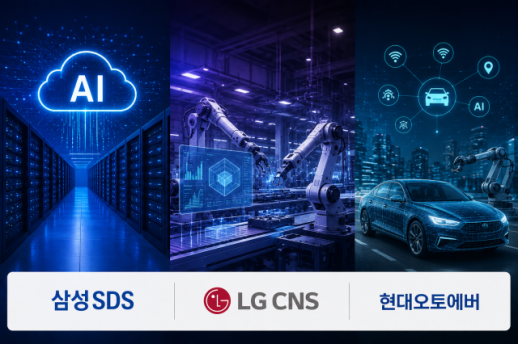 Three Major SI Companies Experience Surge Amid AI Infrastructure Boom Shares of South Korea's three major system integration (SI) companies have surged, breaking free from their previous undervaluation as they were often seen merely as internal trading firms. The shift in global artificial intelligence (AI) investment from hardware, particularly semiconductors and servers, to the software and infrastructure needed to implement AI in real-world applications has positioned Samsung SDS, LG CNS, and Hyundai AutoEver as key players in the AI transformation era. According to the Korea Exchange, as of 2 p.m. on June 1, Samsung SDS shares rose 25.8% to 376,000 won. Hyundai AutoEver saw a 4.6% increase, reaching 974,000 won, while LG CNS climbed 17.2% to 133,400 won, leading the overall strength in the SI sector. The emergence of AI has been driven by infrastructure companies focused on graphics processing units (GPUs), servers, and networking equipment, primarily led by Nvidia. However, as businesses move beyond merely considering the adoption of generative AI to actively implementing it across factories, logistics centers, and data centers, the role of SI companies in building and operating these systems is becoming increasingly significant. Analysts note that the benefits of AI investment are shifting from hardware to software and system integration. There is growing demand for AI data center construction, smart factory enhancements, and the development of robotic control platforms, all of which require the expertise of SI firms. The revenue structures of SI companies are also undergoing rapid changes. Previously, they relied heavily on maintenance-focused business models after system implementation, which limited their corporate valuation. In contrast, businesses related to AI data centers, AI transformation, and robotic operation platforms have high technological entry barriers and long-term contracts, allowing for stable revenue generation. Continuous operational and management revenue post-implementation is expected to enhance profitability and growth compared to the past. Samsung SDS is accelerating its push into the infrastructure market by expanding its AI data center business, leveraging its capabilities in enterprise cloud and high-performance computing (HPC). As the adoption of generative AI becomes more widespread among companies, the demand for data centers for AI training and inference is expected to grow significantly. LG CNS is emerging as a leader in the 'physical AI' sector, which involves AI controlling robots and equipment in real-world environments. The company is expanding its platform business that connects AI and robotics, drawing on its digital transformation experience in manufacturing and logistics. The rapid increase in the proportion of AI and cloud business indicates a shift from traditional SI services to AI service-oriented operations. Hyundai AutoEver is expected to benefit from the transition to software-defined vehicles (SDVs) and the expansion of its robotics business. As the Hyundai Motor Group increases its investments in autonomous driving and robotics, the demand for vehicle software and robotic operating systems is also rising. The market anticipates that as robotics become more prevalent, robotic control platforms will emerge as a new growth driver, generating recurring revenue. An industry insider commented, "The recent surge in stock prices signals a shift in how the market evaluates SI companies. Previously, reliance on affiliates was seen as a discount factor for corporate value, but in the AI era, the ability to implement AI in industrial settings and operational experience has become the key competitive advantage."* This article has been translated by AI. 2026-06-01 15:48:00
 -
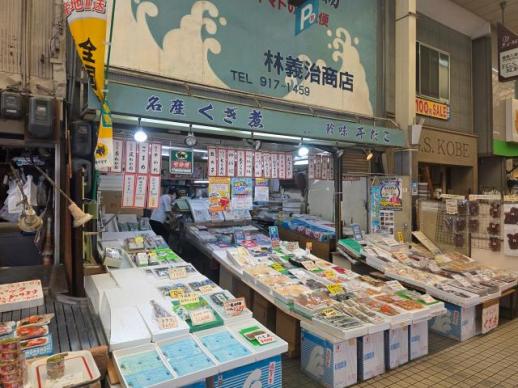 K-Food Gains Popularity in Japan's Hyogo Prefecture Last year, K-Food achieved record-high exports, and the response in the Japanese market has been enthusiastic. To confirm the popularity of high-quality Korean seafood, a visit was made to the Uonotana Fish Market in Hyogo Prefecture on May 29. Upon entering the market, neatly packaged seafood caught the eye. A brief thought about whether Japanese consumers might prefer domestic products was quickly dispelled during an interview with a vendor, which highlighted the popularity of K-Food. Toshimichi Ohigashi, the owner of the "Ori Shop" at the market, stated, "In recent years, Japan's abalone production has decreased, leading to an increase in imports of Korean abalone." The presence of Korean seafood, including abalone and flounder, was evident throughout the market. When asked about Japanese consumers' reactions to Korean abalone, Ohigashi noted, "It tastes good and is popular. Compared to Japanese abalone, it is also more affordable, attracting many buyers." Japanese fishermen are also aware of the growing popularity of Korean seafood. On the same day, Hiroyuki Nishimoto, head of business development at the Hyogo Prefecture Fisheries Cooperative, confirmed that the demand for Korean seafood is increasing. Factors contributing to the rise in imports of foreign seafood in Japan include environmental changes and a decline in domestic fishing. In Hyogo, the nearby sea has become excessively clean, resulting in a decrease in plankton, which is a food source for seafood. Consequently, the catch has diminished. Additionally, an aging population has led to a reduction in labor within the fishing industry and a decline in seafood consumption, further impacting the market. These environmental changes have created an opportunity for Korean seafood to gain a stronger foothold in Japan. While cheaper Chinese seafood is often used as restaurant ingredients, Korean exports are utilized in higher-end dishes. Nishimoto noted, "I understand that mackerel and anago (conger eel) are popular. The younger generation, particularly those in their 20s and 30s, seems to consume a lot of Korean seaweed due to their interest in Korean culture." Regarding competition with Chinese seafood, he remarked, "Upper-class consumers prefer quality products even if they are more expensive, so securing high quality is essential." 2026-06-01 15:48:00