

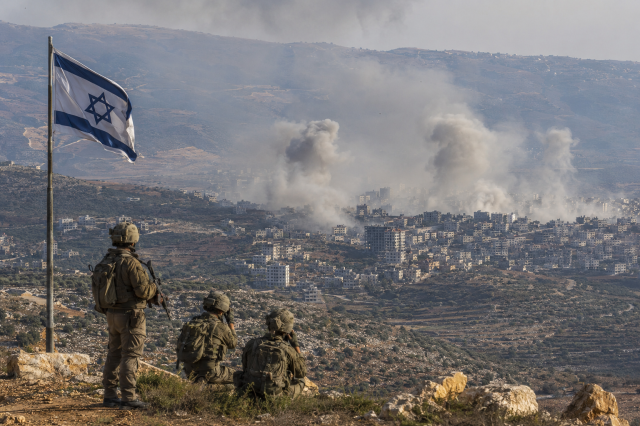
On June 1, Israeli Prime Minister Benjamin Netanyahu announced that he had instructed the military to expand ground operations in Lebanon. The Israel Defense Forces (IDF) reported that they have taken control of Bofort Fortress and the surrounding ridges, as well as the Wadi al-Saluki area.
Bofort Fortress is a high ground overlooking southern Lebanon and northern Israel. This marks the first time Israeli forces have regained control of the area since their withdrawal from southern Lebanon in 2000.
Capture of Bofort Fortress; Advancing Toward Nabatiyah… Expanding Southern Front
Israel claims that this advance is a response to attacks from Hezbollah. Reuters reported that Hezbollah launched one of its most intense assaults on northern Israel since the ceasefire in April. As a result, schools have been closed and movement restrictions have been imposed. The IDF believes Hezbollah is using low-cost suicide drones to bypass air defenses and inflict casualties on Israeli forces.
Israeli ground operations are moving further north. According to Reuters, the IDF has advanced about 10 kilometers toward the Zahrani River after entering the Litani River area. Netanyahu stated, "We will deepen and widen our control over areas previously held by Hezbollah." The IDF has also issued evacuation warnings to residents south of the Zahrani River.
Another area under consideration for further entry is Nabatiyah. The Jerusalem Post reported that the IDF is conducting military operations around Nabatiyah, a key Hezbollah stronghold located about 20 kilometers from the Israel-Lebanon border. If ground troops reach this area, it would represent the deepest incursion into Lebanon during the current conflict.
Potential Strikes on Beirut… U.S. Attempts to Prevent Escalation with New Proposal
Airstrikes are also intensifying. Lebanese security sources and state media reported that the IDF conducted over 40 airstrikes across southern Lebanon on the same day. Reports indicate that eight people were killed in an attack on the village of Deir al-Zahrani the previous night. According to Lebanese government figures, the death toll in the current conflict has surpassed 3,370. Israel has reported 24 soldiers and four civilians killed during the same period.
There are concerns that the scope of airstrikes may extend to Beirut. Beirut is the political and economic center of Lebanon, housing government institutions and financial and commercial functions. If strikes reach this area, tensions could escalate beyond the southern border conflict to encompass all of Lebanon.
The Jerusalem Post reported that Israeli officials have requested U.S. permission to strike within Beirut. The outlet noted that with no progress in U.S.-Iran negotiations and Israel-Lebanon discussions, Israeli officials are hoping for a favorable response from the U.S.
The U.S. is focusing more on establishing a resolution than on permitting strikes. According to Reuters, U.S. Secretary of State Marco Rubio presented a new de-escalation plan to Lebanese President Joseph Aoun and Netanyahu, proposing that if Hezbollah halts all attacks, Israel would refrain from escalating in Beirut.
However, coordination is proving difficult. President Aoun has attempted to push the proposal forward, but Nabih Berri, the Speaker of the Lebanese Parliament, stated that while he could guarantee Hezbollah's compliance with the ceasefire, "Israel must stop firing first." The U.S. does not view this as a sufficient willingness to accept the proposal, believing that as long as Hezbollah continues its attacks, it will be challenging to prevent further Israeli responses.
International concern is also growing. France has called for an emergency meeting of the United Nations Security Council due to Israel's expanded military operations in Lebanon. The British Foreign Secretary has demanded a halt to Israel's operations in Lebanon, while the German Foreign Minister expressed "serious concerns" regarding the southern advance.
* This article has been translated by AI.

Copyright ⓒ Aju Press All rights reserved.