

Journalist

Lee Baek-soon
-
 Global Talent Fair Expands Job Opportunities for Youth in Foreign Investment Firms The government is hosting a job fair to expand employment opportunities for young job seekers at foreign investment and overseas companies. The Ministry of Trade, Industry and Energy and the Ministry of Employment and Labor announced on June 1 that they will jointly hold the "2026 Global Talent Fair" at COEX until June 2. The fair aims to provide quality job opportunities for young job seekers while allowing foreign investment and overseas companies to recruit talented individuals. This year, approximately 360 companies are expected to participate. Recently, youth employment rates have been on a downward trend. According to data from the National Statistical Office, the employment rate for young people aged 15 to 29 was 43.7% in April, a decrease of 1.6 percentage points compared to the same month last year. This marks the largest decline since August 2024, continuing a 24-month streak of decreases. The number of employed individuals also fell by 194,000. In response, the government is organizing this fair to support youth employment. During the event, around 18,000 job seekers are expected to participate. Starting this year, support for companies returning from overseas and young job seekers will also be strengthened. Korea Kolmar, the first domestic company to return from outside the capital region this year, will seek young talent at the fair and has set up a separate consulting booth to assist global talent with overseas experience in finding reemployment in Korea. To help young people navigate the AI era, the fair will invite industry representatives to share insights on corporate trends and employment strategies. An "AI Employment Assistant" booth will also be established to analyze job seekers' skills and job fit using AI technology, matching and recommending them to visiting booths. The foreign investment company recruitment section will feature around 140 companies, including Amkor Technology Korea and Hitachi Energy Korea. The overseas employment section will host 121 companies, providing both in-person and virtual consultations for young people interested in overseas job opportunities. Minister of Trade, Industry and Energy Kim Jeong-kwan stated, "As investment in securing outstanding talent is essential in the AI era, I hope this fair provides young people with opportunities to expand into a broader world. The government will continue to create favorable conditions for investment and support youth growth." Minister of Employment and Labor Kim Young-hoon remarked, "This is a meaningful occasion for our youth to meet global companies, and the government will provide various support to help them build global careers and grow. I urge companies to open up broad opportunities for young talent to grow alongside them."* This article has been translated by AI. 2026-06-01 11:03:00
 -
 AI Jobs in Demand at Global Talent Fair in Seoul A large-scale job fair supporting both domestic youth seeking overseas employment and foreign students looking for jobs in South Korea has been launched. As demand for talent grows in advanced industries such as artificial intelligence (AI) and semiconductors, the event aims to connect domestic and international companies with job seekers.The 2026 Global Talent Fair (GTF), hosted by the Ministry of Trade, Industry and Energy and the Ministry of Employment and Labor, and organized by the Korea Trade-Investment Promotion Agency (KOTRA), opened on June 1 at COEX in Seoul. The event will run for two days, concluding on June 2.This year, the fair features a total of 360 companies, including 137 foreign-invested firms, 121 overseas companies, and 100 companies hiring foreign students. It is the largest event of its kind aimed at supporting both domestic youth in their overseas endeavors and foreign students seeking employment in South Korea.The main focus of this year's fair is employment in AI technology companies. With the rapid growth of the AI industry, competition for talent has intensified, prompting global AI firms to share insights on hiring trends and strategies. In the advanced technology section, 86 companies from sectors including semiconductors, secondary batteries, displays, future vehicles, biotechnology, and AI are conducting on-site recruitment and consultations.A dedicated area for Fortune 500 companies, called the 'Global 500 Companies Zone,' has also been established. Twenty-six global firms, including Lam Research Korea, Bosch Korea, Schneider Electric Korea, and Thermo Fisher Scientific Korea, are participating to attract young talent. Global companies located outside the capital region, such as Amkor Technology Korea and Aumobiokorea, are also actively recruiting on-site.An AI-based job support service has drawn attention as well. The 'AI Job Assistant' booth analyzes job seekers' skills and recommends suitable companies using AI technology. Additionally, an experience zone for foreign students was set up to assess their business Korean language skills using AI.Side events sharing employment strategies are also taking place. A job concert featuring employees and recruiters from global companies discusses job trends and employment tips. Sessions on overseas employment strategies share regional insights and experiences, while sessions for foreign students include company-specific recruitment briefings and visa information.KOTRA President Kang Kyung-seong stated, "The Global Talent Fair is a venue that connects youth and companies in a borderless business environment. We will strengthen support to ensure companies find key talent to lead the global market, and that youth have opportunities to find competitive jobs." 2026-06-01 11:03:00
 -
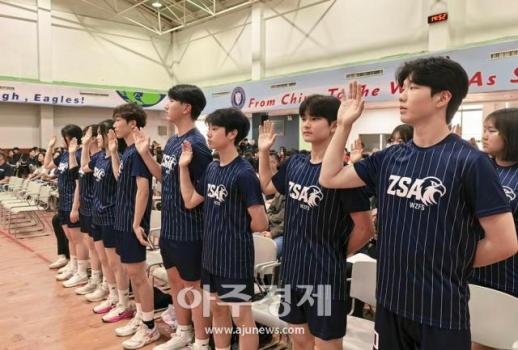 New Volleyball Program at Weihai International School Aims to Develop Global Talent Weihai International School, located in Shandong Province, China, has garnered attention for launching a volleyball program that integrates sports, education, and global career development. The school held an inauguration ceremony for its volleyball team on May 22, marking the beginning of its operations. Founded in 2006 and approved by the Chinese Ministry of Education, Weihai International School has been dedicated to providing international and language education to Korean students, fostering global talent. The creation of the volleyball team is notable for its potential to offer diverse career paths in sports, extending beyond just training athletes. The school plans to develop a curriculum that not only prepares students for professional sports but also opens pathways to careers as international referees, sports agents, and other roles within the sports industry. The school has established a system that allows students to pursue both English and Chinese language education alongside their regular studies and sports training, supporting their athletic skills and global competitiveness. The initiative is being developed as Korea's first volleyball study abroad system. Members of the new volleyball team have expressed high satisfaction, noting the positive environment that allows them to interact with international peers while improving their English and Chinese skills, all while balancing sports and academics. Some students are also cultivating aspirations for careers as international referees and sports agents. Moody Lee, the school's founder, stated, "I want to help students look beyond the singular path of being an athlete and explore diverse possibilities on the global stage. We will continue to strive to nurture talent equipped with global sensibilities and character." In light of the current shortage of international referees and sports agents in the domestic volleyball scene, Weihai International School's initiative is seen as a meaningful attempt to provide students with new career options. There is growing interest in how this new model, which combines sports, education, and internationalization, will yield future results.* This article has been translated by AI. 2026-06-01 10:57:00
 -
 Yantai Promotes Global Tourism with 'City of Immortals' Brand Yantai has long been known as the "City of Immortals," establishing itself as a premier tourist destination in China. Bongrae, mentioned by the Tang Dynasty poet Li Bai, is a symbolic landmark of Yantai. The mystical phenomena surrounding Bongraegak provide visitors with enchanting experiences. The region is also rich in mountain tourism resources, including Gunyu Mountain and Yunbong Mountain. Its coastal scenery, featuring a blend of shorelines and islands, is regarded as among the best in Northeast Asia. Recently, Yantai has gained attention as a "photogenic city" on social media platforms. The city is leveraging this trend to enhance its global tourism branding. Various international tourism campaigns are being launched alongside ongoing improvements to services for foreign tourists.* This article has been translated by AI. 2026-06-01 10:57:00
 -
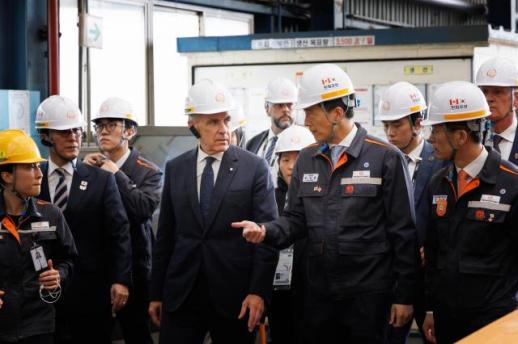 Hanwha Ocean and TKMS Compete for Canadian Submarine Contract As the competition for Canada’s next-generation submarine program intensifies, both South Korea's Hanwha Ocean and Germany's ThyssenKrupp Marine Systems (TKMS) are finalizing their bids, drawing attention from Canadian media. According to the Canadian Press on May 31, the federal government is currently evaluating final bids from Hanwha Ocean and TKMS for a major contract to supply up to 12 submarines to the Royal Canadian Navy. This project is estimated to be worth billions of dollars and could become the largest military procurement in Canadian history. Steven Pure, Canada’s Minister of Procurement, stated on May 27 that a winner will be selected by the end of June, noting that Canada is completing the procurement process for submarines in less than a year, which is unusually fast compared to the typical five-year timeline for major naval vessel procurements. Hanwha Emphasizes Quick Delivery and Economic Benefits Hanwha Ocean is promoting its strengths in rapid delivery schedules and economic impacts within Canada. The company plans to deliver four submarines by 2034, utilizing its shipyard in Geoje, which heavily employs robotics, and will provide an additional submarine each year thereafter. Furthermore, the Dosan Ahn Chang-ho, the lead ship of the Changbogo-III Batch I class, arrived at the Esquimalt naval base in British Columbia on May 24, enhancing Hanwha's promotional efforts in the bidding process. Hanwha claims that its recent bid reflects economic opportunities exceeding CAD 70 billion (approximately USD 52 billion) according to KPMG evaluation criteria, potentially creating around 500,000 jobs and generating about CAD 100 billion in GDP effects from 2026 to 2044. Earlier this year, Hanwha invested up to CAD 345 million (approximately USD 258 million) in Algoma Steel, Canada’s largest steel producer, and secured a contract to use Algoma's steel for submarine construction. The company has also signed agreements with Canadian firms to support industries affected by tariffs and to promote liquefied natural gas (LNG) exports. Glen Copeland, CEO of Hanwha Defense, expressed a desire for Hanwha to supply all equipment to the Canadian military, aiming to stand alongside well-known Korean brands like LG, Kia, and Hyundai in Canada. He noted, "While Hanwha is a well-known brand in Korea, it is not yet recognized as a tier-one defense contractor in North America. Building our brand here is essential for success." TKMS Highlights NATO Interoperability In contrast, TKMS is emphasizing interoperability with NATO allies. The company highlighted that the German and Norwegian fleets are jointly tracking Russian submarine movements, sharing knowledge, data, and equipment. TKMS has a strong tradition of supplying conventional submarines to NATO member countries. Regarding collaboration with Canadian companies, TKMS is focusing on quality over quantity, carefully evaluating whether integration within the supply chain is feasible before selecting partners. Oliver Burkhardt, CEO of TKMS, stated during a recent visit to Ottawa for CANSEC, Canada’s largest defense exhibition, "The important thing is not the number of MOUs but their quality. We are collaborating with key players like CAE, Cohere, and Seaspan." CAE is a Canadian simulator company, Cohere is a Canadian AI firm, and Seaspan is a Canadian shipyard. Both CAE and Cohere are also collaborating with Hanwha Ocean. Initially, TKMS proposed delivering Canada’s first submarine by 2034 but has recently strengthened its proposal to deliver four submarines by 2036, which includes delaying the delivery schedule for one submarine each from Germany and Norway. Additionally, TKMS has promised CAD 160 billion in economic activity, CAD 86 billion in GDP effects, and the creation of over 650,000 jobs throughout the project duration. Burkhardt remarked, "It’s the third quarter of the game, and it’s still a tie. Let’s see who wins. We are ready." However, the Canadian Press noted that both Hanwha and TKMS have largely focused on geopolitical partnerships and domestic economic impacts in their bids, with little mention of the actual performance capabilities of the submarines. Canada is accelerating its submarine procurement due to the aging of its existing fleet. The four Victoria-class submarines are scheduled to be decommissioned by 2035, with reports indicating that only one is currently operational. Some of the remaining submarines may need to be decommissioned for parts. While the next-generation submarine program requires significant funding, the companies involved have promised substantial economic cooperation, raising expectations for considerable economic benefits. Daniel Carey, head of the national automotive cluster at Deloitte, who has also participated in submarine projects in the UK, commented on the Canadian submarine program, saying it will be "eye-wateringly expensive" but will bring tremendous value to the Canadian economy.* This article has been translated by AI. 2026-06-01 10:54:00
 -
 Demand for Panda Bonds Surges Amid Low Interest Rates and De-Dollarization Trends As the global influence of the Chinese yuan grows, demand for yuan-denominated bonds, known as panda bonds, is rapidly increasing. Market analysts predict that this year's panda bond issuance could reach an all-time high. Panda bonds are yuan-denominated bonds issued by foreign entities in mainland China. According to the Chinese market research firm Wind, as of May 29, the total issuance of panda bonds reached approximately 133 billion yuan (about $19 billion), nearly double the amount from the same period last year. The Nikkei reported that if the current trend continues, the annual issuance could surpass the previous record of 195 billion yuan set in 2024. Recently, several governments have issued panda bonds. Last month, the government of Pakistan issued 1.75 billion yuan worth of panda bonds for the first time, with a three-year maturity and an interest rate of 2.5%, significantly lower than Pakistan's domestic benchmark rate of 11.5%. In April, Kazakhstan became the first Central Asian country to issue 3.4 billion yuan in panda bonds with a three-year maturity. That same month, Slovenia also entered the yuan bond market as the first Eastern European country to issue 4 billion yuan in panda bonds. Participation from foreign entities, including global banks and manufacturers, is also expanding. Deutsche Bank issued the largest panda bond by a foreign bank, totaling 5.5 billion yuan, in March. Last month, German automaker Volkswagen issued 3 billion yuan in panda bonds. A significant change in the panda bond market is the increasing presence of foreign issuers. In the past, Chinese companies led the issuance through overseas subsidiaries, but now foreign governments and corporations are driving market growth. Ray Wang, head of research at S&P Global Ratings (China), told the Nikkei that the share of panda bond issuance by foreign companies rose from 27% in 2023 to 41% in the first quarter of 2026. He added that the proportion of non-Chinese issuers is expected to continue growing, becoming a key driver of market expansion. The primary reason for the increase in panda bond issuance is the relatively low cost of financing. Despite rising inflation concerns globally due to geopolitical instability in the Middle East and increasing commodity prices, China maintains lower interest rates compared to other major economies. This allows foreign governments and companies to secure funding more cheaply in the yuan market. The international status and influence of the yuan have also supported the growing demand for panda bonds. As countries seek to reduce their reliance on the dollar and diversify their foreign exchange and investment assets, interest in yuan-denominated assets is rising. Notably, countries in Central Asia and the Middle East are increasing their demand for yuan bonds as they engage in China's Belt and Road Initiative and expand economic cooperation with China. China's robust export performance has further bolstered the internationalization of the yuan. The yuan's value has recently reached its highest level against the dollar in three years, enhancing global investors' preference for yuan-denominated assets.* This article has been translated by AI. 2026-06-01 10:54:00
 -
 Powell Criticizes Trump Administration's Attempts to Dismiss Fed Officials Jerome Powell, former Chair of the U.S. Federal Reserve, warned that if a precedent is set for dismissing Fed officials based on policy disagreements, future administrations may follow suit. On May 31, Powell made these remarks at the John F. Kennedy Courage Award ceremony in Boston, stating, "If any administration finds a way to dismiss Fed officials for policy differences, future administrations will do the same." He described the trust built over decades in the Fed as an "invaluable asset" and emphasized the obligation of himself and his colleagues to protect it. Powell also noted that the administration has "no role whatsoever" in the appointment or oversight of the 12 regional Federal Reserve Bank presidents. These regional presidents participate in interest rate decisions alongside Fed governors appointed by the president, reaffirming the need for monetary policy decisions to remain independent from the White House. The Wall Street Journal highlighted that Powell's comments suggest why he has remained on the Fed Board after stepping down as chair, as it is common for Fed chairs to leave public office after their term. Powell's statements come as the Supreme Court is expected to soon rule on President Donald Trump's attempt to dismiss Fed Governor Lael Brainard. Trump sought to remove Brainard over allegations of mortgage fraud. Fed governors can only be dismissed for "just cause," not merely policy disagreements. The Trump administration contends that such actions are not an attack on the Fed's independence but rather a move to restore accountability. Treasury Secretary Scott Vessenet recently referred to Kevin Warsh, the new Fed chair, as the "new sheriff," asserting that he will return the Fed to its foundational principles of accountability and trustworthiness. In his speech, Powell acknowledged the need for institutional reform while stressing the importance of preserving the institution.* This article has been translated by AI. 2026-06-01 10:54:00
 -
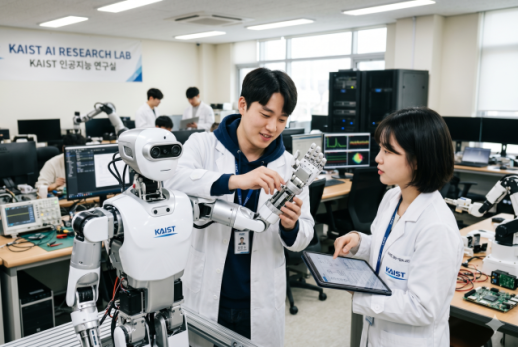 KAIST unveils mid-to-long-term strategy for artificial intelligence talent SEOUL, June 01 (AJP) - The Korea Advanced Institute of Science and Technology outlined its mid-to-long-term strategy for nurturing artificial intelligence professionals and launched an international advisory board during a vision proclamation ceremony held at its main campus on Monday, the prominent institute said. The event shared the institution's direction for educational innovation, industry cooperation, and the establishment of a responsible artificial intelligence ecosystem. A key part of the ceremony was the appointment of the KAIST College of AI Advisory Board, which includes international experts such as Professor Yoshua Bengio of the University of Montreal and Professor Cho Kyung-hyun of New York University. Domestic participants represent major South Korean technology companies and research organizations, including the Korea Institute of Science and Technology (KIST), Samsung Electronics, SK Telecom, Naver Cloud, and Hyundai Motor Company. The advisory board will provide strategic guidance on education, research, and global cooperation. As part of a special innovation session, undergraduate student representatives presented proposals on new possibilities for university education. This reflects the college's approach to treating students as active participants in designing future research cultures rather than passive recipients. During his keynote speech, Deputy Prime Minister and Minister of Science and ICT Bae Kyung-hoon emphasized the need for rapid adaptation. "In order to preemptively respond to the period of great transition where AI moves beyond the stage of generation to the stage of execution, investment in AI talent is the most urgent," Bae said. "We will build South Korea's differentiated AI education system through active communication with students, who are the consumers of education." KAIST College of AI Dean Yoon Kuk-jin presented the institution's primary strategies following the keynote. "The KAIST College of AI intends to become an educational and research platform that expands human intellectual capacity alongside AI and designs new knowledge and the future, rather than an organization that simply teaches AI technology," Yoon said. "We will use this vision proclamation ceremony as an opportunity to grow into a hub leading world-class AI talent training, challenging research, industrial and social problem solving, and the establishment of a responsible AI ecosystem." KAIST President Lee Kwang-hyung highlighted the broader impact of the technology on modern infrastructure. "AI is now becoming a core driving force leading changes in science, technology, industry, and society as a whole, beyond technology in specific fields," Lee said. "We will actively support the KAIST College of AI so that it can grow into an open platform that leads AI talent training and research innovation in South Korea and cooperates with the world." 2026-06-01 10:53:14
 -
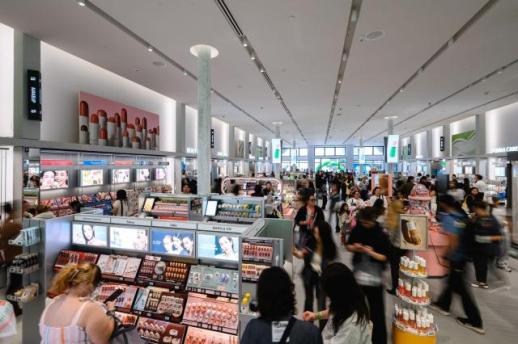 CJ Olive Young's first U.S. store in Pasadena draws large crowds SEOUL, June 01 (AJP) - CJ Olive Young, South Korea's largest beauty retailer, successfully launched its first U.S. brick-and-mortar store in Pasadena, California. According to the company on Monday, it plans to open a second store in Los Angeles this month, located at the Westfield Century City shopping mall. The Pasadena store opening drew significant consumer and media attention. Wait lines began forming the day before the opening on Friday, with a line of approximately 400 meters stretching across four blocks of Colorado Boulevard. Major local broadcasters, including KTLA and ABC, provided live and aerial coverage of the event. Major U.S. media outlets, including CNN and the Wall Street Journal, also visited and covered the opening. Despite limiting entry to around 200 people at a time for customer safety and convenience, the store recorded over 1,000 transactions on the first day, demonstrating high local consumer interest. Skincare products, including sun care, mask packs, and cleansers, accounted for over 60 percent of total sales, followed by makeup categories such as lip products and cushions, indicating local interest in K-beauty color cosmetics. Sales across K-wellness categories, which included hair care, body care, beauty accessories, and food items like bagel chips, sauces, and health foods, suggested that Olive Young’s K-beauty and lifestyle curation strategy resonated with local consumers. The personalized services offered, such as the 'Skin Scan' zone for skin diagnosis and 'THE BEAUTY LAB' for basic K-beauty skincare lessons, also attracted consumer attention, particularly since these consultations are provided free of charge. Social media activity was also high, with over 1,000 pieces of content uploaded to platforms like TikTok and Instagram from May 28 to 30, accumulating over 8 million views. Olive Young CEO Lee Sun-jung said that the Pasadena store "demonstrates the blueprint of the global platform Olive Young pursues" and will serve as a "new milestone for the co-growth ecosystem" of domestic small and medium-sized indie brands on the global stage. Pasadena Mayor Victor Gordo welcomed the company's arrival, noting that Olive Young’s investment is expected to "create new jobs and economic vitality" and "increase the city’s diversity and global competitiveness". The upcoming Century City location is situated in a key commercial area with high traffic from young professionals, high-income consumers, and international tourists. Olive Young stated that while the Pasadena store focused on customers interested in K-culture and experiential shopping, the Century City branch will aim to broaden its reach to a wider premium consumer base and global customers. Market research firm Circana reported that K-beauty held about a 6 percent share of the U.S. mass beauty market in the first quarter of 2026, which Olive Young views as an indicator of future growth potential. The company plans to gradually expand its U.S. presence, beginning with the West Coast, to implement an omnichannel strategy that links online and offline operations. Olive Young ultimately aims to evolve into a 'local beauty retailer' in the U.S., expanding its offerings to encompass lifestyle products, including wellness and food. 2026-06-01 10:53:07
 -
 Instagram Tests Subscription Service Amid Mixed Reactions Instagram is testing a monthly subscription service called 'Instagram Plus' as it expands its paid features, prompting reactions from users in South Korea. Recently, screenshots of Instagram's new subscription service 'Instagram Plus' circulated on online communities and social media, drawing significant attention. According to the shared screenshots, Instagram is testing a service that offers a one-month free trial, followed by a subscription fee of $3.99 per month (approximately 2,800 won). However, prices may vary by country. The screenshots also included features available with an Instagram Plus subscription. Key features include: ▲ Setting multiple audience targets for stories ▲ Providing statistics on story replays ▲ Searching the list of story viewers ▲ Previewing stories ▲ Extending story expiration periods ▲ Sending super hearts on stories ▲ Enhancing story visibility. Particularly noteworthy is the inclusion of the long-requested 'story viewer search feature,' which has garnered significant interest. The bottom of the screen features a prompt to "Start your free trial" along with a note that "subscriptions will auto-renew until canceled." In response to the service, South Korean users expressed a range of opinions, including comments like, "I can check how many times my ex has viewed my story?" and "This seems like a path to failure." Others noted, "If it boosts exposure for over 24 hours, influencers and creators might have to subscribe," while some suggested, "Please sell an ad-free program for a fee," and others remarked, "This company shows the negative impact it has on humanity." As of now, Instagram has not officially announced whether the service will be globally launched. However, with major social media platforms increasingly enhancing paid subscription models to diversify revenue sources, there are speculations that Instagram may also be expanding its premium features.* This article has been translated by AI. 2026-06-01 10:48:00