

Journalist

Lee Baek-soon
-
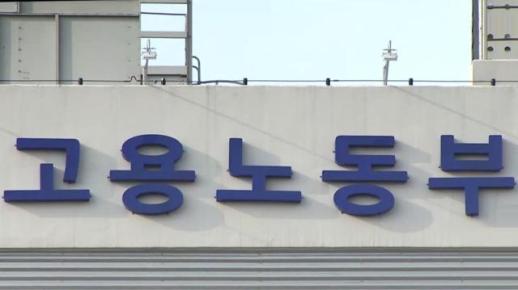 Government Launches Focused Reporting Period for Employment Insurance Fraud in June The government announced on May 31 that it will operate a focused reporting period for fraud related to unemployment benefits and employment incentives throughout June. During this time, employment authorities will also conduct special inspections for fraudulent claims.From June 1 to June 30, the Ministry of Employment and Labor will accept self-reports and tips regarding fraudulent receipt of various employment insurance benefits, including unemployment benefits, parental leave pay, employment incentives, and vocational training costs.Individuals can report fraud online or by visiting the fraud investigation department of their local employment and labor office. Those who self-report during this period may be exempt from up to five times the amount of additional penalties.Whistleblowers who report fraud will be protected from any disadvantages, and if the investigation confirms fraudulent activity, they may receive 20% of the fraudulent amount, up to an annual limit of 5 million won for unemployment benefits.A common example of fraud involves individuals who, despite resigning for personal reasons, collude with their employers to falsely report being laid off for business reasons and subsequently receive unemployment benefits unlawfully.In cases of illegal activities related to employment stability and vocational development projects, whistleblowers may receive a reward of 30% of the fraudulent amount, up to an annual limit of 30 million won. This includes schemes where employers disguise new hires as eligible unemployed individuals to illegally obtain employment incentives, with the falsely paid wages being returned to the employer.Lim Young-mi, head of the Employment Policy Office, stated, "Fraudulent claims for employment insurance are serious criminal offenses. If you or someone else has received unemployment benefits or employment incentives through fraudulent means, I urge you to report it promptly. We will do our utmost to ensure that employment insurance serves as a strong support for vulnerable groups."* This article has been translated by AI. 2026-05-31 12:09:00
 -
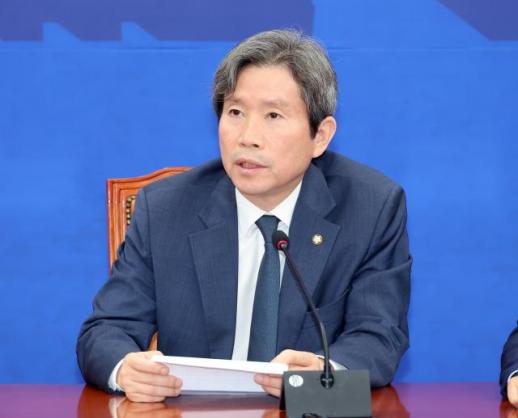 Jung Won-oh's Camp Sees Strong Support Ahead of Local Elections Jung Won-oh's campaign for the Democratic Party has interpreted the high early voting turnout in Seoul as a sign of solid support for his candidacy. With just three days remaining until the main election, the campaign plans to highlight the incompetence of Oh Se-hoon, the candidate from the People Power Party, and appeal to Seoul residents for a well-functioning city government alongside the Lee Jae-myung administration. Lee In-young, the campaign's chief strategist, held a press conference on May 31 at the National Assembly, stating, "The early voting rate in Seoul reached 23.84%, an increase of 2.64 percentage points compared to the 2022 local elections." He claimed, "The voting is proceeding within the predicted range of victory, and there are no unusual phenomena detected, indicating that Jung's lead is firmly maintained." Lee attributed the high early voting rate to the residents' desire for a safer Seoul. He noted, "The 23.84% reflects the urgent wish for safety in the subway I ride and the overpasses my family uses, and it serves as a judgment on Oh's indifference to safety." Looking ahead to the final three days before the local elections, Lee expressed his aspirations, saying, "This local election is significant in choosing a capable candidate like Jung to support the Lee Jae-myung administration and to end Oh's decade of negligence regarding safety." He emphasized, "This will be an election where citizens choose a mayor who prioritizes effective governance and the safety of their lives." Regarding Oh's campaign schedule, which includes 88 hours of campaigning, Lee remarked, "Jung will also have a tightly packed schedule, moving just as actively as Oh. We plan to remain vigilant and give our best effort until the end."* This article has been translated by AI. 2026-05-31 12:09:00
 -
 Korea's Fair Trade Commission Mandates Disclosure for AI-Generated Characters in Advertising Advertisements featuring virtual characters created using artificial intelligence (AI) must now clearly indicate that these characters are not real. The Fair Trade Commission (FTC) announced on May 31 that it will implement revised guidelines for advertising disclosures and endorsements starting June 1. The guidelines categorize unfair advertising practices into four types: false or exaggerated claims, deception, unfair comparisons, and defamation. These rules provide specific criteria for the FTC to assess whether advertisements utilizing endorsements or recommendations are misleading. Under the new guidelines, when an AI-generated virtual character makes a recommendation or endorsement, it must be clearly labeled as a virtual character. Additionally, if the character is identified as virtual but the endorsement implies it is based on actual experiences, it may be considered misleading if it does not reflect real experiences. For posts on blogs or online forums, the title or the beginning of the content must include a statement such as "This post includes a character generated based on AI." Similarly, in video media, any appearance of a virtual character during endorsements must be accompanied by a nearby label stating "virtual character." The FTC expects that these revised guidelines will help consumers more easily recognize that the endorser is a virtual character, promoting more informed purchasing decisions. Furthermore, the guidelines aim to provide clear standards for advertisers and influencers, enhancing predictability regarding legal compliance when using virtual characters in advertising. An FTC official stated, "We will ensure that advertisements that do not comply with the guidelines regarding the use of AI-generated characters are corrected, and we will facilitate the smooth implementation of the revised guidelines."* This article has been translated by AI. 2026-05-31 12:09:00
 -
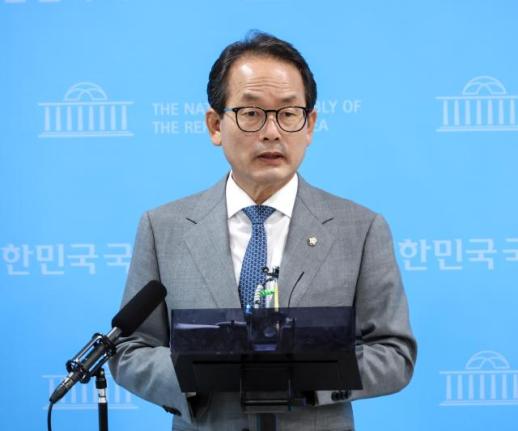 Democratic Party Criticizes Seoul Mayor Candidate Oh Se-hoon Over Safety Management The Democratic Party intensified its criticism of Oh Se-hoon, the People Power Party's candidate for Seoul mayor, on May 31. They linked his handling of the recent rebar omission incident at Samsung Station on the metropolitan express train (GTX) to President Yoon Suk Yeol's perceived arrogance. Kang Jun-hyeon, the party's chief spokesperson, held a press conference at the National Assembly, stating, "Oh's arrogant mindset is problematic." He pointed out that during a recent debate, when Democratic Party candidate Jeong Won-o asked, "Why don’t you go to the Samsung Station site?" Oh responded dismissively, saying, "What good would it do for me to go there?" Kang emphasized, "He has acknowledged failures in safety management for Seoul citizens and has now openly declared his intention to evade responsibility." Kang also noted that Oh was abroad during the 2022 flooding and last year's heavy snowfall, stating, "He brings to mind the exact image of Yoon Suk Yeol, who was in Ukraine during the Osong disaster and said, 'There’s nothing I can change by returning to Seoul immediately.'" The spokesperson referenced the recent controversy involving Park Wan-soo, the People Power Party's candidate for Gyeongnam governor, regarding an AI deepfake video. Park's campaign is accused of creating and distributing a deepfake video to defame Kim Kyung-soo, the Democratic Party's candidate for Gyeongnam governor. In response, Park's camp claimed that the video was not intended for public distribution but was a design draft reviewed before launching a website, arguing that the allegations are a distortion of the facts for political gain. They stated that after guidance from the election commission, the video was deleted and insisted there was no organized production or directive behind it. Kang explained, "The election commission has referred nine individuals, including Park Wan-soo's campaign staff and current Gyeongnam government officials, to the Changwon District Prosecutor's Office for investigation," indicating the seriousness of the matter. He urged the People Power Party to acknowledge the issue, apologize to the people of Gyeongnam, and take immediate action for a thorough investigation and candidate resignation.* This article has been translated by AI. 2026-05-31 12:09:00
 -
 Growing Concerns Over Profit-Sharing Bonuses Amid Labor Demands The Korea Employers Federation warned on May 31 that demands from large corporate labor unions for profit-sharing could infringe on management rights. This warning comes as the Samsung Electronics Union pushes for performance bonuses linked to operating profits, reflecting a growing trend among labor groups. In a special recommendation regarding labor unions' demands for profit distribution, the federation stated, "Labor unions are seeking to formalize a system that allocates a certain percentage of operating profits to their members. This differs from existing performance bonus systems, as it directly demands a share of corporate profits." Previously, the Samsung Electronics Union had announced plans for a general strike to demand performance bonuses tied to this year's operating profits. Although the two sides reached a temporary agreement just before the planned strike, calls for expanded performance bonuses linked to corporate results have continued, particularly among large companies. The federation emphasized that corporate profits are essential resources for investment, employment, research and development (R&D), and improving financial structures, all of which are vital for a company's sustainability and future competitiveness. It also noted that the unions' proactive demands for profit sharing could restrict shareholders' rights, pointing out that it is rare to find global companies that distribute a predetermined percentage of profits to workers in advance agreements. The federation explained that it has prepared recommendations to help companies operate performance bonus systems rationally. It stressed that bonuses based on operating profits and other management performance metrics should not be classified as wages. "The Supreme Court has consistently ruled that performance distributions, which vary based on management results, are not closely related to the provision of labor and are significantly influenced by factors beyond the control of workers," the federation stated. The federation argued that establishing criteria for profit distribution is a matter of management discretion and should not be subject to collective bargaining. It clarified that mandatory subjects for collective bargaining under labor law are limited to working conditions such as wages, working hours, welfare, and dismissals. The federation concluded that companies have no legal obligation to comply with labor unions' profit distribution demands and warned that strikes aimed primarily at profit distribution could be deemed unlawful. Furthermore, it emphasized that performance bonus systems should be operated based on the principles of corporate sustainability and performance-oriented practices.* This article has been translated by AI. 2026-05-31 12:06:00
 -
 National Tax Service Addresses Misleading Inheritance and Gift Tax Information Online The National Tax Service (NTS) has launched a fact-check initiative to correct misleading information about inheritance and gift taxes circulating on platforms like YouTube and social media. On May 31, the NTS announced it would distribute a guide titled "Misconceptions and Truths About Inheritance and Gift Taxes" to clarify common misunderstandings and provide accurate legal standards regarding these taxes. Interest in inheritance and gift taxes has surged due to rising asset prices in real estate and stocks, coupled with an aging population leading to increased asset transfers. However, incorrect information has proliferated online. For instance, claims have been made that simply writing specific phrases in transfer memos when sending money between family members can avoid tax audits, or that using a parent's credit card while saving an entire salary poses no issues. In response, the NTS conducted a survey with 144 participants from a public advisory group to identify ten practical topics. Key issues include: child living expenses and allowances, interest-free loans between family members, using parents' credit cards, inheritance tax reporting, funding plans, encumbered gifts, pre-gift assets, wedding gifts, estimated inherited assets, and parents' life insurance. The guide presents commonly encountered expressions as "misunderstandings" and explains the legal standards as "truths." It also includes practical advice, a safety zone guide, and an "Understanding Zero Misunderstandings Test" in a quiz format. The survey revealed that respondents primarily obtain information about inheritance and gift taxes from YouTube and social media, but many expressed skepticism about the accuracy of this information, indicating a strong need for fact-checking. Reflecting public demand, the NTS has also created short videos, each about one minute long, on five highly relevant topics. The first video was released on the same day and will be made available sequentially on the NTS's official YouTube channel. An NTS official stated, "We will expand our user-centered guidance to address the tax-related questions and misconceptions that citizens encounter in their daily lives, going beyond simple legal explanations."* This article has been translated by AI. 2026-05-31 12:06:00
 -
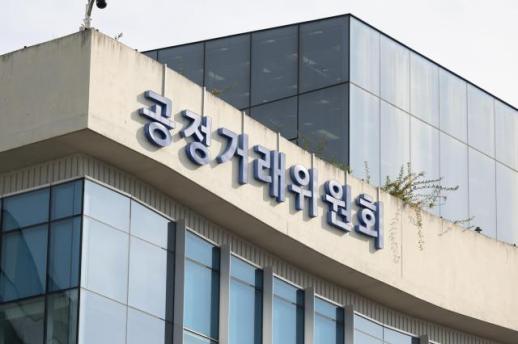 Fair Trade Commission Fines 'Gwi Han Sarang Deul' 210 Million Won for Misleading Franchise Practices A company that inflated the number of its stores while failing to disclose profits received from suppliers has been caught by fair trade authorities. The Fair Trade Commission announced on May 31 that it has imposed a corrective order and a fine of 210 million won on Gwi Han Sarang Deul for not reporting profits received from suppliers in its information disclosure statement while exaggerating the number of franchise stores. Gwi Han Sarang Deul operates the Gwi Han Jokbal franchise. According to the commission's investigation, Gwi Han Sarang Deul received 141,145,000 won from suppliers for facilitating transactions with franchisees in 2020 but did not include this amount in its disclosure statement. Additionally, in 2021, the company received 174,856,000 won from a sauce supplier but only reported 87,131,000 won in its disclosure statement. The commission views the economic benefits received by the franchise headquarters from suppliers as crucial information that could lead to price increases for franchisees. Therefore, the failure to disclose or downplay this information was deemed a deceptive practice, resulting in the corrective order and the fine of 210 million won. The investigation also uncovered false and exaggerated advertising practices by Gwi Han Sarang Deul. From April to July 2022, the company advertised on its franchise consultation website that it had opened 16 new stores in May and June. However, the commission found that only one store, the Yeoksam branch, was actually opened during that period. Of the remaining 15 stores, seven were opened at different times, and eight had not opened by December 2023. The commission considers the number of stores opened within a specific timeframe as a key indicator of the franchise's success. Consequently, it classified this behavior as false and exaggerated advertising and issued a corrective order. A commission official stated, "We will continue to monitor and take strict action against violations of information disclosure obligations and unfair advertising practices to ensure that prospective franchisees and franchise owners can engage in fair transactions with franchise headquarters on equal footing."* This article has been translated by AI. 2026-05-31 12:06:00
 -
 Korea's Privacy Commission Approves Naver's AI Tab After Review The Personal Information Protection Commission (PIPC) has reviewed and approved Naver's AI agent service, known as "AI Tab." On May 28, the PIPC held a plenary meeting where it concluded the review of Naver's AI Tab service, announcing the decision on May 31. The pre-approval review is a system designed to help companies establish appropriate legal measures when the application of personal information protection laws is unclear during the planning and development of new technologies and services like AI. If companies comply with the agreed-upon measures, they will not face penalties within that scope. Naver applied for the pre-approval review to ensure the safe use of user data ahead of the launch of its AI Tab, which provides personalized search results through interaction with an AI chatbot. The PIPC determined that Naver could legally operate the AI Tab service under personal information protection laws, provided it fulfills the agreed-upon protective measures for users. The key measures include three main points. First, Naver must clearly inform users who do not wish to receive personalized responses about the option to refuse data use and continuously improve measures to ensure users' control over their data based on their feedback. Additionally, Naver is required to transparently disclose the categories and key details of personalized information used in the AI Tab service through its privacy policy and implement additional safety measures to prevent misuse and leakage of personal information. Furthermore, during the analysis of users' service usage history, Naver must ensure that sensitive information is not inferred or utilized, and that unique identifiers such as resident registration numbers, account numbers, and credit card information are not included in AI responses. The PIPC plans to monitor whether Naver complies with these measures once the AI Tab is officially launched.* This article has been translated by AI. 2026-05-31 12:06:00
 -
 Deputy Prime Minister Baek Kyung-hoon Calls for South Korea to Compete in AI Frontier Models "It is time for us to challenge frontier models that can compete with the U.S. and China, moving beyond industry-specific artificial intelligence (AI)." Baek Kyung-hoon, Deputy Prime Minister and Minister of Science and ICT, made this statement during a press conference on May 29 at the Central Post Office in Seoul, marking his first anniversary in office. He reviewed the past year's achievements in AI infrastructure development, research and development normalization, and reducing communication costs, while emphasizing the need for a focus on frontier models and general artificial intelligence (AGI) in future AI policies. The Ministry of Science and ICT highlighted key accomplishments over the past year, including establishing a foundation for South Korea to become one of the top three AI nations, revitalizing a challenging research and development ecosystem, and ensuring basic communication rights while alleviating public burdens. In the AI sector, the ministry pointed to the promotion of the independent AI foundation model project and the expansion of national AI infrastructure as major achievements. Currently, South Korea has secured 260,000 graphics processing units (GPUs) and is expanding its collaboration with global companies such as OpenAI, NVIDIA, and Google DeepMind. Baek noted, "The most significant change over the past year has been the full-scale establishment of GPU-centered AI infrastructure, ensuring that researchers do not struggle to achieve results due to a lack of GPUs." He assessed that the focus of AI competition is shifting from infrastructure development to securing frontier models. "Until now, we have pursued AI transformation strategies centered on strong industries like semiconductors and manufacturing, concentrating on developing suitable independent AI models," he explained. However, he added that the rapid advancement of frontier models necessitates a reassessment of national strategies. Baek emphasized that to implement AI services accessible to all citizens, industry-specific models alone are insufficient. "South Korea must aim for AI capabilities on par with the U.S. and China," he stated. He also mentioned that securing infrastructure investments is essential for achieving competitiveness in frontier AI. "While we cannot directly compare our AI budget with those of the U.S. and China, it is crucial for South Korea to efficiently expand investments in technology, GPUs, data, and talent across the board," he said. During the conference, the ministry also unveiled plans for AGI and agentic AI. Baek remarked, "In the past, we questioned whether AGI was necessary, but that concern has disappeared. We must prepare for AGI-level frontier models." He added, "Soon, we will enter an era where AI will develop AI models on its own, and we must prepare for the accelerated pace of technological advancement starting now." Regarding the government's 'AI for All' policy, Baek explained that the focus is on expanding AI agents beyond simple chatbot services. "A time will come when citizens, businesses, and government agencies utilize AI agents to enhance productivity," he said, aiming to create an environment where AI provides practical assistance in daily life, including administrative services and financial tasks. On cybersecurity, he stressed the importance of both global cooperation and developing domestic capabilities. "It doesn't matter what rank we hold in cybersecurity; while short-term responses through global collaboration are important, it is even more crucial for South Korea to have the capacity to respond independently," he noted. Finally, Baek reflected on his past year in office, expressing initial concerns about what could be achieved in a rigid organization upon his appointment. "Fortunately, flexible communication, which is central to our culture, has become well established, and communication among staff has improved," he reported. He concluded by stating, "It is important to focus on the basics rather than inter-departmental power struggles, as many ministries rely on the Ministry of Science and ICT. We will concentrate on creating a system that can apply AI in the field."* This article has been translated by AI. 2026-05-31 12:03:00
 -
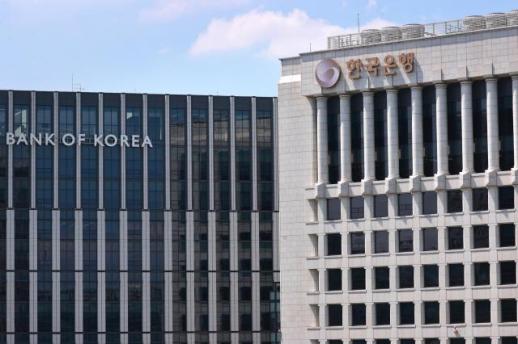 Despite Economic Growth, Companies Hesitate to Build Domestic Factories A recent analysis indicates that South Korean companies are shifting their investment decision-making from a focus on efficiency to include security considerations. This means that even in a favorable economic climate, companies may refrain from building factories, while they might proceed with investments during downturns. The Bank of Korea has warned that as the global paradigm of "economic security" rises, it is crucial to ensure that the domestic manufacturing and export base does not weaken. According to a report released by the Bank of Korea's Economic Research Institute on May 31, the criteria for corporate investment decisions have fundamentally changed since 2017, influenced by the U.S.-China power struggle, pandemic-related supply chain disruptions, and the Russia-Ukraine war. Traditionally, factors such as operating rates, interest rates, and exports dictated capital investment. However, uncertainties in trade policy and geopolitical risks have now become significant variables. The contribution of security and global factors to fluctuations in capital investment has increased from an average of 29.6% before 2020 to 43.9% afterward, a rise of 14.3 percentage points. In particular, for South Korea's key industries, such as semiconductor and automotive manufacturing, the contribution of security and global factors to investment fluctuations rose from an average of 33.1% between 2016 and 2019 to 48.7% after 2020, nearly matching market and economic factors. The automotive sector has seen even more dramatic changes, with the proportion of security and global factors jumping from 25.9% to 50.9% during the same period. This trend is reflected in the decisions of domestic automakers and battery companies to prioritize building factories in the U.S. over domestic investments following the implementation of the Inflation Reduction Act and the CHIPS Act. The concern is that this structural shift may impose burdens on the domestic macroeconomy. As foreign direct investment increases rapidly, the link between rising exports and domestic capital investment is weakening. The sensitivity of capital investment to exports has shown a gradual decline, and the domestic value-added effect per unit of private investment has also been decreasing since 2020. The traditional cycle of rising exports, expanding domestic investment, and increasing employment and income is now under threat. However, the Bank of Korea argues that the expansion of foreign direct investment should not be viewed merely as capital outflow. It should also be seen as a strategic move to enter the "inner circle" of global technological hegemony. Companies are securing benefits from domestic protectionist subsidies through large-scale investments in advanced economies while effectively circumventing rising non-tariff trade barriers. This is also seen as an unavoidable strategic choice to access critical parts of the global supply chain, including advanced technology ecosystems. Moreover, the increase in foreign direct investment could contribute to enhancing the country's credibility by accumulating net foreign assets. A high level of net foreign assets relative to GDP can stabilize the nation's credit rating. The Bank of Korea emphasized that to prevent the paradigm shift from weakening the domestic manufacturing and export base, policies must be implemented to enhance the incentives for core manufacturing processes and research and development to remain in the country. As the grammar of investment changes, so too must the grammar of policy. As major countries, including the U.S., European Union, China, and Japan, competitively expand direct support for strategic industries such as semiconductors and batteries, South Korea is also ramping up its support system for advanced industries through tax incentives, cluster development, financial support, and technology protection. The Bank of Korea has analyzed that the current indirect support methods have limitations in preventing investment hollowing. Compared to the direct subsidies of $39 billion from the U.S. CHIPS Act and 10.7 trillion won from Japan for attracting TSMC, South Korea's support is constrained in terms of immediacy and scale.* This article has been translated by AI. 2026-05-31 12:03:00