

Journalist

Lee Baek-soon
-
 Syangyong Construction Wins 123 Billion Won Contract for Mapo Redevelopment Project Syangyong Construction is expanding its contracts for housing redevelopment projects in Seoul and the surrounding metropolitan area. On June 2, the company announced that it was selected as the construction firm during a general assembly of the Changjeon-dong housing redevelopment association held on May 31. The project involves constructing six apartment buildings named 'The Platinum,' consisting of 292 units, along with community facilities, on the site located at 46-1 Changjeon-dong. The construction cost is estimated at 123 billion won, with a projected timeline of approximately 44 months from the start of construction. The site is part of Seoul's Moa Town initiative and is conveniently located near Sinchon Station on Line 2 and Gwangheungchang and Daehyeong Stations on Line 6, with Gwangheungchang Station just a four-minute walk away. Including this project, Syangyong Construction has been accumulating contracts in major redevelopment projects across Seoul, such as the Hong-eun-dong housing redevelopment, the Siheung 5-dong Moa Town project, the Cheonho-dong housing redevelopment, and the Noryangjin Eunha Mansion area redevelopment. A representative from Syangyong Construction stated in a phone interview, "We plan to continue securing contracts for housing redevelopment projects in the future." Meanwhile, due to a recent downturn in the construction market and a contraction in the project financing sector, mid-sized construction companies are increasingly focusing on smaller-scale redevelopment projects like housing redevelopment.* This article has been translated by AI. 2026-06-02 16:21:00
 -
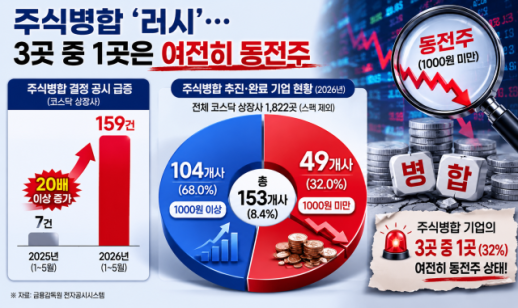 One-Third of Companies Merging Stocks Still Below 1,000 Won Amid Delisting Concerns KOSDAQ-listed company Kespion, a wireless communication device manufacturer, has struggled with stagnant stock prices for years. On February 23, it announced a 2-for-1 stock merger (changing the par value from 500 won to 1,000 won) to stabilize its stock price and enhance corporate value. However, the real motive was to avoid the so-called 'penny stock delisting' criteria set by financial authorities. After a trading suspension lasting over two months, trading resumed on May 4, but the stock closed at 751 won on June 1. Shareholder forums are filled with anxious voices worrying about potential delisting. This year, KOSDAQ has seen a surge in stock merger announcements. Following the government's announcement in February regarding the delisting of penny stocks and reforms to the delisting system, the number of related announcements skyrocketed. Compared to the same period last year, stock merger announcements increased more than twenty-fold. This move is seen as a survival tactic to artificially boost stock prices. However, the limitations are evident, as one in three companies that decided to merge stocks this year still have stock prices below 1,000 won, putting them at risk of being listed on the 'delisting death list.' According to the Financial Supervisory Service's electronic disclosure system, 159 KOSDAQ companies announced stock mergers from January to May. This is a significant increase from just seven announcements during the same period last year. Excluding six companies that had their proposals rejected at shareholder meetings, a total of 153 companies are currently pursuing or have completed stock mergers, representing about 8.4% of the total 1,822 KOSDAQ-listed companies (excluding SPACs). The urgency for companies to merge stocks stems from the impending delisting of penny stocks. According to revised KOSDAQ listing regulations, if a company's stock price falls below 1,000 won for 30 consecutive trading days, it will be designated as a management issue. If it fails to exceed this threshold for 45 out of the following 90 trading days, it will face delisting procedures. There are also measures to prevent circumvention. Companies that have conducted stock mergers or reductions in the past year are prohibited from further mergers or reductions for 90 trading days after being designated as management issues. Additionally, mergers or reductions exceeding a 10-to-1 ratio are not allowed during this period. Violating these regulations can lead to immediate delisting. The problem is that stock mergers do not provide a fundamental solution for escaping the penny stock status. Among the 153 companies that have pursued or completed stock mergers, 49 (32.0%) still had stock prices below 1,000 won as of the end of last month. For instance, Wonpung Mulsan, which decided to merge stocks in March, had a closing price of just 524 won on June 1. Other KOSDAQ companies at risk of delisting due to two consecutive years of delisting criteria include Samyoung ENC and Tubesoft, both of which have market capitalizations below 20 billion won. Currently, Samyoung ENC has been granted a three-month improvement period, while Tubesoft is awaiting a decision from the corporate review committee regarding its delisting. A securities industry insider noted, "It is not easy for companies to improve their performance or financial structure in a short period, so many companies are likely to become candidates for delisting. Companies that cannot escape the penny stock status through stock mergers are at a significant crossroads for survival." Market analysts caution against interpreting stock mergers as a signal of improved corporate value. Stock mergers merely reduce the number of shares in circulation while increasing the price per share, without changing the market capitalization or actual value of the company. For example, Aptun, which resumed trading on May 8, saw its stock price surge close to the upper limit immediately after trading resumed but ultimately closed down 17.54% from the previous trading day due to profit-taking. In addition to KOSDAQ, companies in the KOSPI market are also facing delisting risks. There are 99 companies with market capitalizations below 30 billion won and 39 penny stocks with prices below 1,000 won. In total, 129 companies meet at least one of these criteria, excluding duplicates. This year, there has been an increasing trend of forced delistings in the KOSPI market as well. In the past three years (2023-2025), only five companies were delisted due to reasons such as rejection of audit opinions, but this year, five companies, including Daedong Electronics, Kukbo, Well Biotech, IHQ, and Philux, have already been delisted. Recently, the delisting of Geumyang, which has 240,000 shareholders, has caused a stir. Geumyang is currently seeking a legal remedy against the Korea Exchange's delisting decision. 2026-06-02 16:21:00
 -
 Small Asset Managers Target ETF Market Beyond Samsung and Mirae Asset Domestic exchange-traded funds (ETFs) have entered a 500 trillion won era, prompting small and mid-sized asset management firms to actively pursue opportunities in the ETF market. While Samsung Asset Management and Mirae Asset Management dominate with over 70% market share, these smaller firms are seeking new growth avenues, particularly through active ETFs. According to the financial investment industry on June 2, firms such as DS Asset Management, Life Asset Management, Daol Asset Management, and iM Asset Management are exploring entry or expansion into the ETF business. DS Asset Management has completed its ETF organizational setup by hiring Jeong Seong-in, who previously led the ETF business at Kiwoom Investment Management, and aims to launch an active ETF on the KOSDAQ by July. The firm plans to introduce up to three ETF products in the second half of the year. Life Asset Management has applied for a public fund management license. Currently holding only a private fund license, the firm plans to enter the ETF market as soon as it receives approval for public funds. Daol Asset Management is also in the process of hiring staff with an eye on entering the ETF market. Meanwhile, iM Asset Management is reviewing the launch of new products after releasing a KOSPI 200 ETF in February of last year. Just a few years ago, skepticism prevailed regarding the entry of small and mid-sized asset managers into the ETF market. The prevailing belief was that the business required economies of scale, making it difficult for latecomers to survive. Currently, Samsung Asset Management and Mirae Asset Management together hold a combined market share of 70% in the domestic ETF market. Despite this, small and mid-sized firms cannot ignore the ETF market, as it has become a core business in asset management. With the ETF market capitalization exceeding 500 trillion won, it has emerged as a key vehicle for individual investors to channel significant funds into the stock market. The growth of active ETFs is particularly encouraging smaller firms to enter the market. Unlike passive ETFs, which simply track an index, active ETFs allow fund managers' investment decisions to directly influence returns. Firms with extensive experience in private equity management are seen as well-positioned to identify specific industries or stocks and implement concentrated investment strategies through active ETFs. Profitability is also an attractive factor. While scale competition is crucial in the ETF market, active ETFs can command relatively higher fees based on differentiated management performance. Investors, expecting higher returns, are generally less resistant to higher fees. The business model is shifting toward securing profitability based on management performance rather than competing solely on assets under management (AUM). A notable example is Timefolio Asset Management. By focusing on active ETFs, Timefolio's market share jumped from 10th place at the end of 2024 to 7th place in March of this year. Its profitability has also significantly increased, with a net profit of 85.1 billion won for the 2025 fiscal year, a 145% rise from 34.7 billion won the previous year. Industry experts believe that the performance of DS Asset Management will be a pivotal factor in determining the speed at which small and mid-sized firms enter the ETF market. Despite the increasing polarization in the ETF market, the emergence of additional success stories through active ETFs could lead to more private equity firms entering the ETF space. An industry insider remarked, "In the past, the ETF market was seen as the domain of large firms, but now there is a new option with active ETFs. As firms with private equity management experience begin to incorporate their unique investment strategies into ETFs, the competitive landscape may gradually change." 2026-06-02 16:21:00
 -
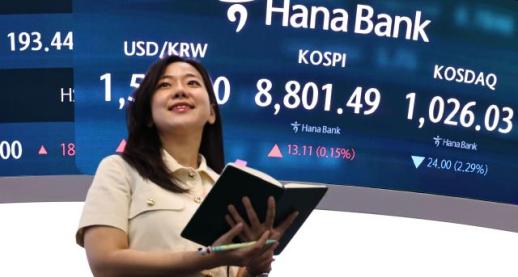 Samsung Electronics Surges Past Meta to Join Global Top 10 by Market Cap The KOSPI index experienced significant fluctuations, swinging over 400 points before closing higher. Amid this volatility, Samsung Electronics saw its stock rise by more than 3%, securing a spot among the top 10 global companies by market capitalization. On June 2, according to data from the global market capitalization tracking site CompaniesMarketCap, Samsung Electronics' market cap reached $1.526 trillion, surpassing Meta to rank 10th globally. At one point during the trading session, it even exceeded Tesla, which ranked 9th. Samsung Electronics closed at 360,500 won, up 11,500 won (3.30%) from the previous trading day. Its market capitalization increased to 2,107.58 trillion won, setting a new record for the highest closing price. In contrast, the domestic stock market exhibited extreme volatility. The KOSPI closed up 13.11 points (0.15%) at 8,801.49. The index opened at 8,883.19 and briefly rose to 8,933.62, attempting to break through the 8,900 mark. However, heavy selling by foreign investors pushed it down to the 8,503 level, resulting in a drop of 4.9% from its intraday high. The index managed to recover most of its losses, finishing in positive territory. In the securities market, individual and institutional investors made net purchases of 8.1191 trillion won and 237 billion won, respectively, while foreign investors sold off 8.0505 trillion won. Among the top market cap stocks, Samsung Electronics provided crucial support to the market. SK Hynix closed slightly lower at -0.13%, while SK Square (7.17%), Samsung Life (17.07%), and Samsung C&T (6.70%) showed strong gains. Conversely, Hyundai Motor (-2.80%), LG Energy Solution (-2.75%), HD Hyundai Heavy Industries (-1.61%), and Samsung Electro-Mechanics (-9.58%) saw declines. Market analysts suggest that funds have been concentrated in Samsung Electronics, viewed as a major beneficiary of the recent rally in AI semiconductors. Kang Jin-hyuk, a researcher at Shinhan Investment Corp, noted, "The volatility of the index has increased due to profit-taking ahead of local elections, but Samsung Electronics has maintained relative strength, drawing significant investor interest as it reached the 10th position in global market capitalization during the session." Indeed, Samsung Electronics' stock has surged over 60% in the past month. The stock price, which was in the 220,000 won range at the end of April, surpassed 360,000 won on this day. During the same period, its market capitalization increased by approximately 800 trillion won. In the global market cap rankings, Nvidia remains in first place with a valuation of $5.4 trillion, followed by Alphabet, Apple, Microsoft, and Amazon. Among Asian companies, Samsung Electronics and SK Hynix both have market capitalizations exceeding $1 trillion, following TSMC. The KOSDAQ index closed down 24.00 points (2.29%) at 1,026.03. Foreign and institutional investors made net purchases of 337.3 billion won and 126.2 billion won, respectively, while individuals sold off 449.6 billion won.* This article has been translated by AI. 2026-06-02 16:18:00
 -
 Global Protectionism Challenges K-Defense Exports Amid Local Production Demands As countries accelerate their defense self-sufficiency, the export formula for K-Defense is facing significant challenges. The environment has become increasingly difficult, where quick delivery and price competitiveness alone may not guarantee large contracts. Experts suggest that securing new competitive advantages, such as local production and technology transfer, is essential. Price and Localization Leave K-Defense Vulnerable to 'Buy European' Policies According to industry sources, Hanwha Aerospace recently failed to secure a contract for Romania's next-generation infantry fighting vehicle (IFV) project. The Romanian Ministry of Defense announced on May 29 that it had selected Germany's Rheinmetall as the final contractor through the European Security Action (SAFE) program. This project, aimed at replacing the aging infantry fighting vehicles currently in use by the Romanian military, has a total budget of €3.337 billion (approximately 5.9 trillion won). Hanwha Aerospace and Rheinmetall were in competition for the final contractor selection. In terms of competitiveness, Hanwha Aerospace was not at a disadvantage. It proposed supplying 298 AS21 Redback vehicles for €2.8 billion, while Rheinmetall offered 232 KF41 Lynx vehicles for €2.59 billion. On a per-unit basis, the Redback (approximately €9.35 million) was cheaper than the Lynx (€11.16 million). Hanwha Aerospace also met the Romanian government's requirement for 'complete localization,' proposing to increase local production from 80% to 90% in the long term. In contrast, Rheinmetall reportedly proposed a localization rate of around 40%. Despite this, the Romanian government chose Rheinmetall. Industry analysts note that the European Union's policy to foster domestic defense industries may have influenced this decision. The growing 'Buy European' sentiment is raising the barriers for foreign companies seeking contracts. In the Middle East, the trend of prioritizing domestic production is also intensifying. For instance, Saudi Arabia has committed to procuring over 50% of its defense spending through domestic defense companies as part of its Vision 2030 initiative. As a result, local production and industrial cooperation are becoming key factors in major projects pursued by domestic defense firms, including Hanwha Aerospace's K9 self-propelled howitzer and Redback, Hyundai Rotem's K2 tank, and LIG Nex1's L-SAM. K-Defense Must Revise Export Strategy The increasing demands for local production and technology transfer in Europe and the Middle East stem from a heightened awareness of defense self-sufficiency following the Russia-Ukraine war. Initially, European countries relied on South Korean weapons due to a lack of production capacity. Quick delivery and reasonable pricing enabled K-Defense to penetrate the European market. However, as the war has prolonged, European nations have recognized the importance of expanding production facilities and establishing joint procurement systems, diminishing the 'gap-filler' role that South Korean defense had previously enjoyed. Choi Gi-il, a professor at Sangji University, stated, "Just a few years ago, European defense companies lacked sufficient production capacity, allowing K-Defense to fill the gaps. However, with Germany and France rapidly recovering their production capabilities, the competitive landscape is changing." Germany, a leading defense power in Europe, is increasing its total defense spending to €108.2 billion (approximately 170 trillion won) this year to enhance its domestic defense production capabilities. France is also expanding its defense investments and production capacity. Experts argue that K-Defense needs to find new breakthroughs to succeed in Europe and the Middle East, emphasizing the need for enhanced local cooperation and cross-industry collaborations. Nam Myung-ryul, head of the K-Defense Center at Korea University, remarked, "We must go beyond merely selling weapons to establishing local production facilities and proposing industrial cooperation models. A package cooperation strategy that links defense with industries where Korea has strengths, such as energy, artificial intelligence, and information and communication technology, is essential." 2026-06-02 16:12:00
 -
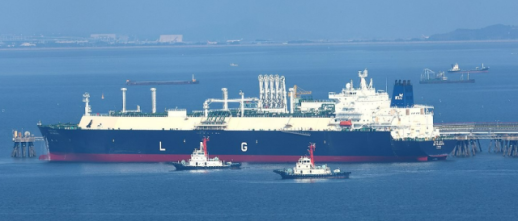 Korea sees 80% of summer crude secured as Mideast war strains supply SEOUL, June 02 (AJP) - South Korea expects to secure most of the crude oil it needs for August by next month, the energy minister said, seeking to quell fears of a supply crunch as the Middle East war drags into its fourth month. Industry Minister Kim Jung-kwan told a cabinet meeting chaired by President Lee Jae Myung that projected August crude volumes were climbing steadily and would reach the mid-80 percent range of normal levels during July, the 95th day of the conflict. From May to July, the country secured 86 percent of its usual crude and 83 percent of its naphtha, holding a stable course, the minister said. Naphtha plant utilization stood at about 75 percent as of late May, close to the prewar level of 80 percent. "We have already secured replacement volumes to last through the end of this year," Kim said of natural gas supplies, after Qatar's recent declaration of force majeure on liquefied natural gas shipments stirred concern. The government turned to the United States and Southeast Asia to plug the gap. Markets had feared an August squeeze should the blockade of the Strait of Hormuz, a chokehold on Korea's Middle East crude, persist into the peak summer demand season. The International Energy Agency had also warned that supply disruptions and seasonal demand could push the oil market into a danger zone in July and August. With no clear date for safe passage through the strait, the ministry extended its strategic stockpile swap scheme through this month from an earlier April-to-May window. Under the scheme, the government lends out reserve crude once a refiner proves it has sourced oil abroad, then recoups the barrels when replacement cargoes arrive. About 21 million barrels have been swapped and are now being repaid in stages. Supplies of medical materials such as intravenous-fluid packaging, syringes and surgical gloves remained at normal levels, the ministry said, while helium, hydrogen bromide and aluminum wheels feeding the semiconductor, auto and shipbuilding industries showed no signs of disruption. 2026-06-02 16:10:59
 -
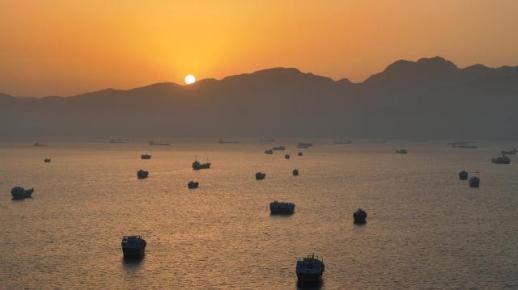 OPINION: The Strait of Hormuz Legal Aspects of the New Arrangements in Light of Aggression and Fundamental Change of Circumstances Prelude For a long period, maritime navigation through the Strait of Hormuz did not proceed on the basis of exercising an asserted right, but rather within the framework of an interaction founded upon comity and mutual good faith. Over years, the Islamic Republic of Iran, as the coastal State, facilitated the passage of vessels through a continuous and peaceful practice. However, this practice was never to be understood as an acceptance of a binding legal obligation or as a relinquishment of the coastal State’s sovereignty and sovereign rights over its own waterway. Nevertheless, today, due to a fundamental change of circumstances and the substantial transformation of security, the continuation of such unilateral comity is no longer possible, and the adoption of appropriate measures based on respect for the sovereign rights of the coastal State has become an inevitable necessity. Indeed, the Strait of Hormuz has long been regarded as a sensitive and strategic waterway—a status that has now been redefined in light of the repeated acts of aggression by the Zionist regime, the United States, and certain neighboring States in the region. Some neighboring States, by placing their territory at the disposal of aggressors for commission of acts of aggression against the Islamic Republic of Iran, have become complicit in such aggression. This conduct itself constitutes an act of aggression as defined by General Assembly Resolution 3314 (XXIX) and, consequently, those States have assumed the heavy burden of responsibility for this act, which is a manifest violation of the Charter of the United Nations and the peremptory norm of “prohibition of aggression”. As a result of this aggression and these hostile acts, the security and safety of the region, and in particular of the Strait of Hormuz, have suffered severe and widespread harm. It must not be forgotten that the aggressor and its regional military bases were supplied and equipped, inter alia, through that same strait. Therefore, preventing the recurrence of such internationally wrongful acts is an undeniable imperative. In the wake of the intensification of such acts, the circumstances have fundamentally changed, giving rise to a new and irreversible situation. In this situation, the Government of the Islamic Republic of Iran, as the coastal State, finds itself compelled to adopt practical and proportionate measures to manage the developments that have expanded into the maritime zones. These measures are taken with a view to preventing further risks from being imposed on vessels and seafarers in the Persian Gulf, the Strait of Hormuz, and the Gulf of Oman. Fundamental Change of Circumstances Since the commencement of acts of aggression against the Islamic Republic of Iran, the security environment of the Persian Gulf and the Strait of Hormuz has undergone significant transformations and has thereby become subject to a fundamental change of circumstances. In the current situation, the underlying circumstances governing the legal regime of the Strait, namely the existence of a minimum level of regional stability and security necessary to guarantee safe passage, have been severely undermined as a result of repeated threats and actions that violate Article 2 (4) of the Charter of the United Nations. One of the most significant factors that has disrupted the prior order is the persistent disregard for a peremptory norm of international law: the norm that prohibits any act of aggression. In addition to this, despite repeated violations of international law, the United Nations Security Council, as the primary body responsible for the maintenance of international peace and security, has remained practically incapable of condemning the aggressor and has consequently failed to discharge its primary responsibility to ensure international peace and security and to restore stability to the region. Accordingly, under the international law of the sea, the regime of passage through straits used for international navigation cannot be applied in a security vacuum. The coastal State’s obligation to facilitate passage is conditional upon the existence of circumstances in which the safety of navigation and maritime public order have not been seriously disrupted. In a situation where persistent military threats pose real dangers and transform the operational environment, the adoption of necessary measures based on the doctrine of fundamental change of circumstances is unavoidable. On this basis, the set of current measures and practices must be regarded as an adjustment of rights and obligations to adapt to the circumstances, in light of the fundamental change of circumstances, measures undertaken with the aim of establishing a balance between the security requirements of the coastal State and the continued safe passage of international navigation. Sovereignty over the territorial sea Under the international law of the sea, the sovereignty of coastal States over their territorial sea, including over that part which lies within an international strait, and the exercise of rights and jurisdiction derived from such sovereignty, constitutes a fundamental and well-established principle. Consequently, the arrangements for managing passage through the Strait of Hormuz are governed within the framework of the domestic laws of Iran and Oman, as well as customary and treaty-based rules and principles, including the 1958 Geneva Conventions, the relevant provisions of the 1982 United Nations Convention on the Law of the Sea, the principles of the Charter of the United Nations, and international judicial precedents (including the judgments of the International Court of Justice in the Corfu Channel and Oil Platforms cases). Within this framework, one essential principle is of particular importance: no right under international law, including the right of passage, may be exercised in such a way as to result in a threat, military aggression, or violation of the security of the coastal State. Accordingly, mere reliance on classical concepts is insufficient to address the exigencies of the current unprecedented situation and does not adequately meet the requirements of security and sovereignty. This situation is also premised upon the peremptory norm prohibiting the threat or use of force, as embodied in Article 2(4) of the Charter of the United Nations and recognized in international judicial precedents and the judgments of the International Court of Justice as an intransgressible rule. In the case concerning Military and Paramilitary Activities in and against Nicaragua (Nicaragua v. United States of America), the findings of the International Court of Justice clearly indicate that any foreign military presence or action that endangers the security or sovereignty of another State, even indirectly, is contrary to that principle. Furthermore, Article 2 of the 1982 United Nations Convention on the Law of the Sea affirms the sovereignty of the coastal State over its territorial sea, seabed, and subsoil, and grants no authorization for the stationing of foreign forces. Article 30 of the same Convention confirms the right to require any military ship that fails to comply with the laws and regulations of the coastal State to leave the territorial sea immediately. Moreover, the San Remo Manual on International Law Applicable to Armed Conflicts at Sea emphasizes the right of coastal States to restrict foreign military presence in order to preserve the neutrality of regional States and the security of the waterway. While preventing the reproduction of aggressive and interventionist patterns that have led to instability and insecurity, this approach establishes a balance between the freedom of navigation and the security rights of the coastal State as affirmed in established international judicial practice. Historic sovereignty over the Strait of Hormuz In formulating the arrangements for managing passage through the Strait of Hormuz, it is essential to emphasize the historic sovereignty of Iran and Oman over this waterway. This finding has been affirmed by various arbitral tribunals. Accordingly, the longstanding historic sovereignty of Iran over the Strait of Hormuz, which existed for centuries prior to the Convention and has been continuously exercised, remains valid. In the case of Qatar v. Bahrain, the International Court of Justice, upon examining historic rights in the Persian Gulf, took the view that the continuous exercise of sovereignty and historical activities by coastal States constitutes a valid basis for the recognition of a “historic title” over maritime areas. Given the similar geographic and historical situation of the Strait of Hormuz, this judicial precedent directly confirms the historic sovereignty of Iran and Oman over the strait. Both the 1958 Geneva Convention on the Territorial Sea and the Contiguous Zone and the 1982 United Nations Convention on the Law of the Sea recognize the full sovereignty of the coastal State over its territorial sea and preserve the historic rights of coastal States in gulfs and semi-enclosed waterways. Therefore, in light of the continuous and historic exercise of sovereignty by Iran and Oman over the Strait of Hormuz over many centuries, this strait possesses a historic title. Hierarchy of applicable rules In this regard, the rules governing this matter must be examined at three distinct but interrelated levels, given that each level possesses a higher rank and a more fundamental character, and rules at lower levels cannot be interpreted or applied in conflict with the principles of higher levels. The first level relates to the fundamental principles of international law, including peremptory norms (jus cogens), that is the prohibition of aggression, and those enshrined in the United Nations Charter including prohibition of threat or use of force (Article 2(4)) and the inherent right of self-defence (Article 51). These principles stand at the apex of the hierarchy of international legal norms and establish the framework and limitations for all other rules. The second level refers to international humanitarian law (the law of armed conflict), which governs conduct in armed hostilities and determines which conducts are permissible and which are prohibited in situations of armed conflict. This level of rules complements in hierarchical manner, the fundamental principles of the first level. At the third level, the law of the sea applies as a specialized body of law. The rules governing the regimes of passage through international straits, the rights of coastal States over their territorial sea, and other provisions of the 1982 United Nations Convention on the Law of the Sea cannot be applied in a vacuum or by disregarding the higher levels. In other words, the law of the sea must not be analyzed separately from the “root causes” that have shaped the current situation (including aggression, continuous military threats, and the inability of the Security Council to maintain peace), nor separately from the fundamental principles of international law; otherwise, this branch of law would become a tool for justifying aggression and disregarding the sovereign rights of coastal States. With respect to the third level, it must be noted that the Islamic Republic of Iran has not acceded to the 1958 Convention on the Territorial Sea and the Contiguous Zone, nor to the United Nations Convention on the Law of the Sea (UNCLOS). Therefore, Iran is not bound by their provisions, except insofar as they have become part of customary international law. The regime of “transit passage” set forth in the 1982 Convention does not meet the established criteria of customary international law. The conclusions of the International Law Commission’s 2018 work on the identification of customary international law contain key elements generally considered for determining whether a practice has become customary. Two of these conclusions are particularly relevant: first, under Conclusion 5, “State practice consists of conduct of the State, whether in the exercise of its executive, legislative, judicial or other functions”. Second, Conclusion 15 provides that “Where a State has objected to a rule of customary international law while that rule was in the process of formation, the rule is not opposable to the State concerned for so long as it maintains its objection”. Through its continuous and persistent objection to the regime of “transit passage” provided for in Articles 37 to 44 of the 1982 Convention, Iran has not recognized these rules as binding under customary international law. In this regard, Iran’s consistent legislative and diplomatic practice since 1982 has established its position as a persistent objector to the binding nature of these rules and has challenged the opinio juris necessary for the formation of a customary norm. The first notable document registered in the United Nations Treaty Series is Iran’s interpretative declaration made at the time of signing the Convention, in which it explicitly stated that certain provisions, including the regime of “transit passage” in Part III (Articles 37 to 44), do not represent established customary international law. Iran’s Maritime Law of 1963 (1342), its 2012 (1391) amendment, and Iran’s Law on Maritime Zones of the Persian Gulf and the Gulf of Oman of 1993 (1372) are further evidence of this practice. The latter law makes no reference to transit passage and thus does not recognize that regime; rather, it establishes specific regulatory provisions for the strait, including the requirement to obtain prior authorization for the passage of warships, submarines, and vessels carrying dangerous or environmentally harmful substances. Consequently, the applicable legal framework for passage through the Strait of Hormuz, in the absence of a binding treaty obligation and in the absence of a customary rule of “transit passage”, is the customary right of “innocent passage” through straits used for international navigation, as recognized by the International Court of Justice in the Corfu Channel case (1949). Within this framework, the coastal State has the right to regulate passage, collect fees for maritime services, require prior notification or authorization for the passage of warships, and adopt necessary measures for the protection of its security. The measures taken by the Islamic Republic of Iran are consistent with this customary framework. Accordingly, any legal analysis of the situation in the Strait of Hormuz that proceeds directly to the specific provisions of the law of the sea without first examining peremptory norms, the fundamental principles of the Charter, and international humanitarian law is not only incomplete but also misleading. The law of the sea does not operate in a vacuum and cannot be used as a shield to justify aggression, extra-regional military presence, or the disregard of the historic and contemporary sovereign rights of coastal States. 2026-06-02 16:10:44
 -
 Greenhouse Heat Pumps and Solar Panels Now Eligible for Carbon Credits Installing heat pumps in agricultural greenhouses or solar panels in buildings and public facilities will now qualify for carbon credits. The Ministry of Climate, Energy, and Environment announced on June 2 that it held the 69th Carbon Emission Certification Committee meeting, where it reviewed and approved projects related to heat pumps, solar energy systems, and fuel conversion. External projects refer to initiatives that reduce, absorb, or eliminate greenhouse gases from emission facilities or activities outside of companies participating in the carbon trading system. Certified reductions from these projects can be utilized in the carbon credit market. The feasibility assessment included six heat pump projects aimed at improving heating energy efficiency in agricultural greenhouses and four solar panel installation projects designed to reduce greenhouse gas emissions in buildings and public facilities. Additionally, a total of 20 reduction projects, including fuel conversion, vegetation restoration, sulfur hexafluoride recovery, high-efficiency compressor replacement, and biomass fuel usage, were approved, with an expected reduction of 73,433 tons of greenhouse gases. Notably, many of the approved projects focus on heat pumps in the agricultural sector, which is currently facing the dual challenges of carbon neutrality policies and rising energy costs. For farmers in facility horticulture, heating expenses constitute a significant portion of production costs, making the expansion of heat pump adoption beneficial not only for reducing greenhouse gases but also for easing financial burdens. This transition is expected to shift fossil fuel-based heating methods in agricultural greenhouses to heat pumps utilizing air and geothermal energy. Furthermore, the approval of four solar panel projects is anticipated to accelerate the transition to renewable energy in everyday life. For existing projects, a total of 32,930.6 tons of greenhouse gas reductions were certified across 13 initiatives, including heat pumps, landfill gas incineration, heating method conversions, fuel conversions, and the decomposition of hydrofluorocarbon (HFC) refrigerants. The certified reductions can later be converted into offset credits for use in the carbon trading system. Additionally, two new methodologies were approved: one for recovering and decomposing halogenated fire extinguishing agents generated during the disposal of extinguishing systems, and another for reducing energy consumption through the application of a recirculating aquaculture system. Lee Kyung-soo, Director of Climate Energy Policy at the Ministry of Climate, stated, "Heat pumps and solar energy systems are representative greenhouse gas reduction measures that can be directly applied in the lives of citizens and industries. We will actively discover methodologies and projects to create tangible reduction results across various sectors through external projects."* This article has been translated by AI. 2026-06-02 16:03:00
 -
 S&P 500 Hits Record High, But Only 20 Stocks Reach New Peaks Amid AI Rally The U.S. stock market reached an all-time high, but the gains were largely concentrated in a few artificial intelligence (AI) stocks. The number of stocks in the S&P 500 hitting new highs was only 20, a level reminiscent of the dot-com bubble peak in 2000, raising concerns about market overheating. On June 1, CNBC reported that the S&P 500 closed at a record high on the last trading day of May. However, only 20 of the S&P 500 constituents recorded individual new highs, with just seven of those not directly related to AI. Michael Hartnett, a strategist at Bank of America (BofA), noted in a client memo last week that there were also 20 stocks hitting new highs at the peak of the internet bubble in March 2000. He suggested that while speculative price movements are not over, this trend signals that the market may be approaching the later stages of a bubble. The rally in May was led by semiconductor stocks, with AMD rising 46% and Micron soaring 88%. Samsung Electronics increased by 44%, while SK Hynix jumped 81%. The tech-heavy Nasdaq Composite Index also surged 25% over the two months of April and May, marking its largest two-month gain in over 20 years. However, the limited number of stocks supporting the index's rise is concerning. The breadth of advancing versus declining stocks, known as the advance-decline line, peaked at the end of March but has been declining since mid-April. According to BCA Research, as of May 20, only about 55% of S&P 500 constituents were above their 200-day moving average. BCA strategists stated, "While U.S. and emerging market indices have reached new highs, the rally is very narrow," adding that a weak market breadth often indicates underlying vulnerabilities within the stock market. Despite the index hitting record levels, the concentration of gains in a few stocks raises questions about the sustainability of the bull market. Hartnett advised investors to consider shifting to defensive positions soon. He explained that historically, after bubble collapses since 1929, long-term bonds and defensive stocks, or sectors that were significantly overlooked in the late stages of a bubble, tended to perform relatively well.* This article has been translated by AI. 2026-06-02 15:57:00
 -
 NVIDIA CEO Jensen Huang's Visit Sparks Excitement in South Korea Jensen Huang, CEO of NVIDIA, is generating excitement in South Korea with his visit this week. News of his arrival or even a ceremonial first pitch at a baseball game has led to a surge in stock prices for companies associated with him over the past two days. Huang's previous visit to South Korea last year demonstrated his significant influence. Following what was dubbed the "gangbu meeting," shares of companies like Samsung Electronics and Hyundai Motor soared. Notably, Samsung Electronics saw a more than 3% increase on June 2, even amid a broader market decline, ultimately surpassing Meta to become the 10th largest company globally by market capitalization. This achievement underscores the competitive strength of South Korean firms within the global AI supply chain and highlights Huang's impact as a leading figure in the graphics processing unit (GPU) market. This situation emphasizes that talent remains the most critical factor in the ongoing AI industrial revolution. A fierce global competition for AI talent is underway, with major U.S. tech companies offering substantial financial incentives to attract top researchers. Meanwhile, China is preparing to implement restrictions on outbound personnel and foreign investments to prevent the loss of key talent and technology. As the era of AI reshapes national competitiveness, securing talent has become a matter of survival for countries, not just corporations. The ability to acquire semiconductor and AI technologies will determine the industrial landscape and survival prospects for decades to come. However, the reality in South Korea suggests that the rising stock market is not the only indicator of success. While the government is promoting policies to attract foreign talent, such as expanding the "top-tier visa" program, it still lags behind other advanced AI nations. According to a February report from the Software Policy Research Institute, South Korea ranks between 30th and 40th globally in terms of attractiveness for talent acquisition. Additionally, the Stanford AI Index report from last year indicated that South Korea ranks 35th among OECD countries for net outflow of AI talent, with 0.36 individuals leaving per 10,000 people. In this context, recent developments following the resolution of wage negotiations at Samsung Electronics are significant. After the agreement, applications to semiconductor-related programs surged, and reports suggest that Samsung employees are now as desirable in the marriage market as professionals like lawyers. While salary alone does not drive talent decisions, competitive compensation is essential for attracting skilled individuals. Huang also addressed questions about Samsung's bonuses, stating, "Employees should receive as much compensation as possible." His perspective is informed by his own experiences in Silicon Valley, where he built NVIDIA into a leading company after graduating from engineering school. Last week, the South Korean team achieved a record performance at the Asia Physics Olympiad, winning eight gold medals. This success highlights the presence of exceptional scientific talent in the country. However, it has been noted that many students who excel in math and science competitions often choose to pursue medical degrees for economic reasons. If South Korea fails to connect its top scientific talent to the domestic AI and semiconductor industries, it could result in a national loss. Of course, from a corporate perspective, increasing wages and bonuses can be burdensome and may negatively impact short-term profitability. However, in the long run, securing top talent is more of an investment than a cost, as the competitiveness of the AI era ultimately hinges on people. To attract AI talent, it is crucial to foster an environment conducive to talent development. Therefore, the resolution of Samsung's wage negotiations should serve as a catalyst for the emergence of South Korea's own "Jensen Huang" and potentially the world's leading company by market capitalization. The government must also work on improving the overall system to support this goal. 2026-06-02 15:57:00