
Journalist

Lee Dong Geon
-
 Nongshim's Shin Ramyun marks 40 years with 20 trillion won in cumulative sales SEOUL, May 13 (AJP) - Instant noodle maker Nongshim has achieved a milestone of more than 20 trillion won (about US$13.8 billion) in cumulative sales of its flagship Shin Ramyun since it first went on sale about 40 years ago, the company said on Wednesday. First hitting store shelves in October 1986, Shin Ramyun became the top-selling instant noodle brand in South Korea in 1991 and has held the top spot ever since, with cumulative sales volume reaching about 42.5 billion packs. "It is proof that we have been part of consumers' daily lives in South Korea as well as around the world for 40 years," said CEO Jo Yong-chul at an event in Seoul, touting it as a "rare milestone for a single food brand" in the country. "What Shin Ramyun has built is ultimately time, memories, and moments in people's lives," he added. He then recalled the late Shin Choon-ho, the company's founder, citing him as saying, "Korean flavors will become the most global flavors." Cho also unveiled ambitious plans to raise sales to 7.3 trillion won by 2030 while increasing the share of overseas revenue to more than 60 percent. He pointed to the upcoming completion of an export-dedicated factory in Busan, the company's expanding confectionery business in the U.S. market, and diversification into new business areas as reasons for optimism. The company has also been boosting its global marketing and promotional activities. "Shin Ramyun has become a product representing Korean culture beyond just food," a Nongshim executive said, citing its first advertisement featuring K-pop girl group aespa, which drew more than 500 million views worldwide shortly after its release. To mark the 40th anniversary, a new product called "Shin Ramyun Rose" is set to go on sale next week in South Korea and Japan, with plans to expand into global markets starting in June. Nongshim said it spent about four years planning and developing the new variant, which blends tomato and cream sauces for a milder taste compared with the signature spicy original, in a bid to broaden its appeal to overseas consumers. The company also plans to open space in Seoul's hip, trendy neighborhood of Seongsu next month, where young people and foreign visitors can sample its products. "Today's consumers are not just looking for one tasty product," Cho said, stressing a multi-faceted approach to meet their diverse needs, whether health-conscious, convenience-seeking, or culturally driven. "Nongshim will become a company that can satisfy any consumer taste through noodles, no matter what flavors they want," he vowed, reminding that its achievement of exporting to about 100 countries and becoming a top-five brand in the global instant noodle market did not come easily. 2026-05-13 15:42:31
 -
 South Korea launches expert council to chart AI-driven future SEOUL, May 13 (AJP) - South Korea convened the inaugural meeting of a new expert advisory body tasked with shaping the government's policy response to artificial intelligence and the sweeping societal shifts it is expected to bring. The Ministry of Science and ICT said Wednesday its special council for technology and artificial intelligence met for the first time at the Presidential Advisory Council on Science & Technology in Gwanghwamun, Seoul, drawing 17 specialists from fields spanning the economy, industry, education, healthcare, culture and law. The ministry said the cross-disciplinary lineup was designed to dissect how cutting-edge technologies intersect with each sector and to forecast the future through a wider analytical lens than a purely scientific panel would allow. The council will convene quarterly, with its membership set to expand to capture a wider range of voices, while agendas identified at the sessions will be developed into in-depth studies released as a "Future Agenda Series" in cooperation with affiliated research institutes, the ministry said. Cross-ministerial issues will be escalated to the Science and Technology Ministers' Meeting to secure follow-through on policy. "Advances in cutting-edge technologies such as AI are accelerating, and technological innovation is fundamentally reshaping not only industries but also national systems and daily life," said Bae Kyung-hoon, Deputy Prime Minister and Minister of Science and ICT, pledging to "tear down the wall between the public and private sectors" and pool expertise to design a hopeful blueprint for future generations. 2026-05-13 15:12:10
 -
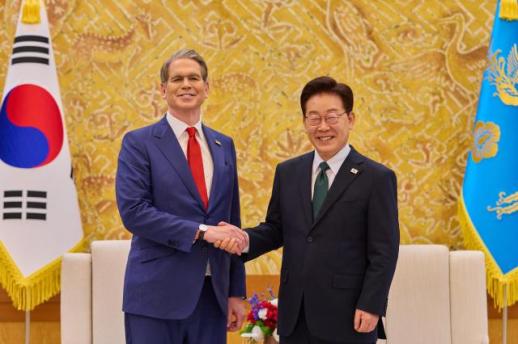 Lee hosts U.S., Chinese economic chiefs ahead of Trump-Xi summit SEOUL, May 13 (AJP) - President Lee Jae Myung on Wednesday had back-to-back meetings with U.S. Treasury Secretary Scott Bessent and Chinese Vice Premier He Lifeng, who visited South Korea just a day before the scheduled U.S.-China summit in Beijing. According to the presidential office, Lee met He and Bessent separately on Wednesday morning. Following their meetings with the president, the two officials united at Incheon International Airport for last-minute fine-tuning ahead of the summit between the United States and China, set to take place in Beijing from Thursday. During the meeting with Bessent, Lee reportedly explained the South Korean government's commitment to implementing investments in the United States, including the MASGA project. It is also speculated that Lee requested cooperation on security and economic issues, such as the introduction of nuclear-powered submarines, which was previously discussed between the leaders of South Korea and the U.S. In the meeting with He - accompanied by Li Chenggang, China's international trade representative and vice minister of commerce - discussions reportedly centered on South Korea-China relations and economic cooperation measures. Lee referred to China as a key strategic cooperative partner for South Korea and emphasized the necessity of horizontal and mutually beneficial cooperation between the two nations. Bessent and He began a private meeting in the VIP lounge of Incheon International Airport around 12:30 p.m. Bessent arrived at Incheon Airport earlier in the morning, traveled to the Blue House to meet Lee, and then returned to the airport for the consultation. The two sides are expected to coordinate economic and trade issues, including tariffs and global supply chain stability, ahead of the summit. Both parties entered the meeting without making any public remarks. Bessent is flying to Japan to meet Finance Minister Satsuki Katayama before joining Trump in Beijing. 2026-05-13 15:04:57
 -
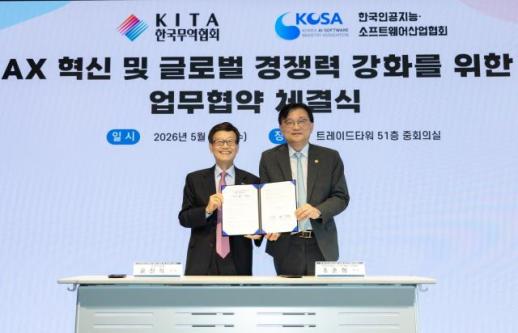 KITA and KOSA partner to accelerate artificial intelligence adoption in trade sector SEOUL, May 13 (AJP) - The Korea International Trade Association and the Korea Artificial Intelligence and Software Industry Association signed an agreement on May 13 to accelerate artificial intelligence transformation and enhance the global competitiveness of South Korean exporters. The two organizations established the partnership at the Trade Tower in Seoul to help businesses navigate changing international trade conditions, the Korea International Trade Association said Wednesday. A recent survey conducted by the Korea International Trade Association (KITA) highlighted a significant gap between the perceived importance of artificial intelligence and its actual implementation. Among 444 exporting firms surveyed between March 30 and April 10, 2026, only 17.9 percent of manufacturing companies reported using the technology in their operations. Under the new memorandum of understanding, the associations will launch a joint consultative body to facilitate business matching between member companies and foster specialized digital talent. The Korea Artificial Intelligence and Software Industry Association (KOSA) will work with KITA to organize networking events that connect export firms with software providers to identify practical technical solutions. The groups also plan to hold joint seminars and one-on-one technical consultations to share successful cases of digital transformation. These programs are designed to provide customized support for individual exporters looking to optimize supply chains and manage regulatory risks through digital integration. "From discovering overseas buyers to optimizing supply chains and predicting regulatory risks, the use of artificial intelligence in the export field is a task that can no longer be delayed," said KITA Chairman Yoon Jin-sik. KOSA Chairman Cho Jun-hee added that the joint consultative body will provide practical support to help software companies expand into the global market alongside the trade industry. 2026-05-13 14:52:35
 -
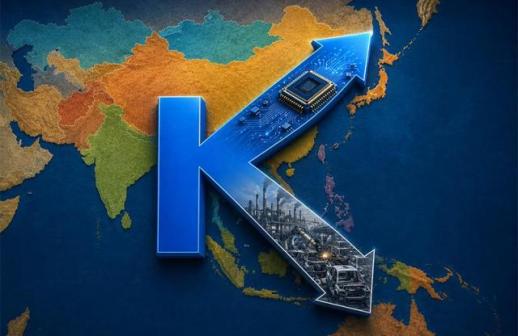 K-shaped economy deepens across Asia on AI momentum SEOUL, May 13 (AJP) - A widening economic divide is emerging across Asia, as semiconductor-driven economies such as South Korea and Taiwan ride record-breaking stock rallies while manufacturing-heavy nations including India, Thailand and the Philippines struggle under the weight of a historic oil shock. The bifurcation, sharpened by the near-total closure of the Strait of Hormuz, has produced what economists describe as a "K-shaped" recovery, in which the gains from the artificial intelligence boom and the pain of fuel scarcity move in opposite directions across the region. Taiwan’s first-quarter GDP expanded 13.69 percent, the fastest pace in 39 years, as its stock market surpassed Canada’s to become the world’s sixth largest. South Korea’s KOSPI has also overtaken the stock markets of London and Toronto, propelled by chipmakers Samsung Electronics and SK Hynix, whose first-quarter profits reached fresh records. Samsung’s market capitalization has climbed above $1 trillion, while Taiwan Semiconductor Manufacturing Company now accounts for more than 40 percent of the Taiwan Stock Exchange. A report by the United Nations Trade and Development projects the global AI market will expand to $4.8 trillion by 2033, roughly 25 times its 2023 size. A contrasting picture emerges in the south and west. In the Philippines, where more than 36 percent of the consumer price basket is linked to oil, fuel prices have surged past 100 pesos ($5.81) per liter. The central bank is weighing whether to raise interest rates to contain inflation or hold them steady to protect growth. Manila has also introduced a four-day workweek to curb fuel demand. Thailand has reported nationwide fuel shortages, while Pakistan has urged cricket fans to watch matches from home to conserve gasoline. The United Nations Development Programme estimates the war has placed about 8.8 million people in the Asia-Pacific at risk of falling into poverty and could shave 0.3 to 0.8 percentage point off regional GDP. At the heart of the divide is intensifying competition for medium and heavy crude oil, the grades that generate the highest refining margins and underpin Middle Eastern exports. Although the United States is the world’s largest oil producer, its output is heavily weighted toward light, sweet shale crude, leaving Asian refiners competing fiercely for sour crude from non-Hormuz suppliers. "Unless the war ends on reasonable and viable terms good enough to convince shipowners and insurance companies, it may be extremely difficult for oil prices to return to post-war levels even in the long run," said Chung Tae-hun, an associate research fellow at the Korea Energy Economics Institute. "We still face competition for heavy crude oil outside the Middle East if the war becomes prolonged, with China and Japan also bidding for supplies," he said. Brent crude hovered around $106 a barrel on Wednesday, while daily transits through the Strait of Hormuz fell to roughly 18 vessels from a prewar average of 135. The World Bank reported that by the end of March, Brent prices had risen about 65 percent, marking the largest monthly oil-price increase on record. The wealth generated by the AI boom has also failed to spread evenly within the region’s winning economies. In South Korea, more than 30,000 unionized workers at Samsung Electronics’ semiconductor division have scheduled a strike from May 21 to June 7 after wage negotiations collapsed Tuesday. The union is demanding a 15 percent operating-profit bonus and a 7 percent increase in base pay. JPMorgan Chase estimates the 18-day stoppage could reduce Samsung’s quarterly profits by as much as 12 percent. In Taiwan, the semiconductor industry employs only about 4 percent of the workforce, yet entry-level chip-sector salaries can be five times higher than wages in other industries, fueling concerns over growing inequality and economic concentration. Officials and analysts warn that the widening divergence could have consequences far beyond Asia. Deepening inequality threatens to weaken consumer spending, complicate monetary policy and disrupt global trade flows. Analysts also warn that the fuel shortage could soon become critical. "We are going to start to see some import-dependent countries potentially face critical shortages as we get into the June-July timeframe," said Andy O’Brien, chief financial officer of ConocoPhillips, during the company’s first-quarter earnings call. Valero Energy also warned of worsening supply pressures. Chief executive Lane Riggs said that for every day the strait remains closed, "it takes a minimum of three days to rebuild stocks," meaning it could take six to 12 months to fully replenish inventories. 2026-05-13 14:46:57
 -
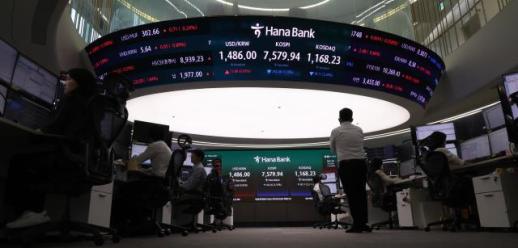 KDI bumps up 2026 growth estimate to 2.5%, chips drive half of upgrade SEOUL, May 13 (AJP) -State think tank Korea Development Institute on Wednesday projected South Korea’s economy to grow at its fastest pace in three years at 2.5 percent this year, while inflation is expected to accelerate to 2.7 percent — a combination suggesting the economy may sidestep stagflation fears for now even as growth momentum is likely to cool next year alongside moderating chip demand. At the same time, the institute warned inflation risks were intensifying from both demand and supply pressures and called for flexible monetary policy, including the possibility of interest rate hikes should inflation expectations become unstable. “Should the possibility of persistently high inflation increase, rates would need to rise,” KDI said in its revised economic outlook, while adding that uncertainty remains too high to determine the timing of any potential move. Its latest outlook marks a sharp 0.6 percentage-point upgrade from the institute’s February forecast issued before the outbreak of the Middle East conflict and reflects stronger-than-expected first-quarter growth, when the economy expanded 1.7 percent from the previous quarter. The state-run think tank raised its inflation forecast for this year by 0.6 percentage point, warning that rising global oil prices and recovering domestic demand were adding upward pressure on consumer prices. “The Korean economy has continued its recovery trend as growth expanded at a relatively strong pace, driven by the semiconductor boom and expanding domestic demand,” the KDI said. The KDI expects the economy to grow 1.7 percent in 2027, while describing both this year and next year as an expansionary phase because growth is projected to exceed the country’s estimated potential growth rate. Still, the recovery remains heavily skewed toward semiconductors. According to the KDI, semiconductor exports accounted for more than half of the upward revision in this year’s growth outlook. “Compared with the negative impact from the Middle East war, the positive effect from semiconductor exports was larger,” Jung Kyu-chul, head of KDI’s macroeconomic and financial policy division, said during a briefing in Sejong. “Out of the 0.6 percentage-point upward revision, semiconductors contributed more than 0.3 percentage point.” Jung estimated the Middle East war shaved roughly 0.5 percentage point off growth, while supplementary budget spending added about 0.2 percentage point. He added that surging semiconductor demand and supply shortages had sharply lifted chip prices, suggesting growth could improve further if production capacity expands more quickly. The KDI, however, warned that prolonged high oil prices could derail the outlook. The institute assumes Dubai crude will average $91 per barrel this year before easing to $82 next year, compared with $69 last year, while the won-dollar exchange rate is assumed to remain near the current 1,475 won level. The think tank projected exports would rise 4.6 percent this year on robust semiconductor demand before moderating to 2.2 percent next year, while the current account surplus is expected to reach a record $239 billion this year. Private consumption is forecast to increase 2.2 percent this year and 1.5 percent next year despite inflationary pressures from the Middle East conflict, supported by improving income conditions and government stimulus measures. Jung added that rising stock prices were also likely to support consumption through wealth effects. The KDI also projected employment would continue improving moderately, with the number of employed persons increasing by 170,000 in both this year and next year despite demographic changes. The institute additionally urged the government to focus fiscal spending on boosting potential growth and supporting vulnerable households while improving spending efficiency. It specifically called for reforms to basic pensions and local education subsidies, which are projected to exceed 100 trillion won next year. 2026-05-13 14:30:52
 -
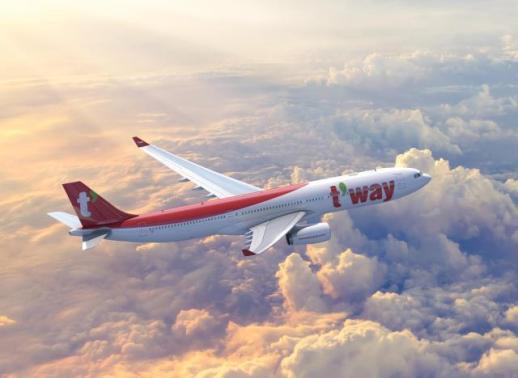 T'way Air returns to black in Q1, ending two years of losses SEOUL, May 13 (AJP) - Budget carrier T'way Air posted an operating profit of 19.9 billion Korean won (US$14 million) in the first quarter of this year, returning to the black for the first time in eight quarters. In a preliminary report released on Wednesday, the airline posted first-quarter revenue of 612.2 billion won, up about 37 percent from a year earlier, and an operating profit of 19.9 billion won, marking its first return to the black after eight consecutive quarters of losses. The airline attributed the turnaround to strong demand on domestic and short-haul routes linking cities in Japan and Taiwan, as well as increasing passenger numbers on longer-haul routes to Europe, Australia, and the Americas. T'way Air is also expanding its fleet. The airline, which currently operates 49 aircraft, added two Boeing 737-8 jets in the first quarter and plans to gradually acquire more fuel-efficient, lower-emission aircraft such as the Airbus A330-900neo later this year. Its cargo business is also growing, with total cargo volume reaching about 9,000 metric tons in the first three months of this year. The airline said the planned procurement of larger aircraft is expected to further expand cargo capacity. It also said it is making efforts to strengthen its safety and operations systems including the construction of its own aircraft maintenance facility and hangar at Incheon International Airport. "The acquisition by Sono Trinity Group helped us restructure our operations and sharpen our competitiveness," said a T'way Air spokesperson. "Safety would remain our top priority as we work to improve our services." Following the acquisition by the leisure and infrastructure company early last year, the airline recently agreed at a shareholders’ meeting to rename itself Trinity Airways. But its new name and logo will take effect only after approval from relevant aviation authorities. 2026-05-13 14:19:17
 -
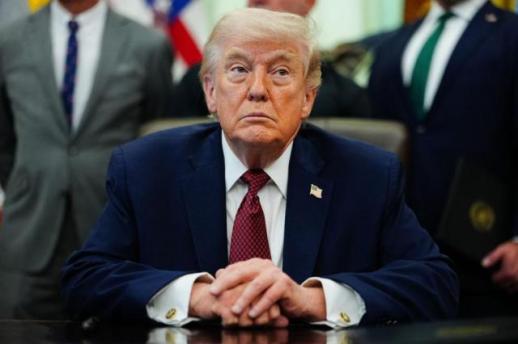 U.S. appeals court revives Trump tariff, renewing uncertainty for Korean Inc. SEOUL, May 13 (AJP) - A U.S. federal appeals court ruling temporarily reinstating the Trump administration’s 10 percent global tariff has created fresh uncertainty for South Korean exporters and the $350 billion investment commitment underpinning Seoul’s trade deal with Washington. The ruling came just days after a lower court declared the 10 percent global tariff unlawful. The U.S. Court of Appeals for the Federal Circuit issued the administrative stay Tuesday, according to Reuters and U.S. court filings. The order pauses a May 7 ruling by the U.S. Court of International Trade, which found the blanket 10 percent tariff unlawful under Section 122 of the Trade Act of 1974 — the statute the White House invoked after the Supreme Court struck down its earlier reciprocal tariffs in February. The stay keeps the tariff in place while the appeals court considers whether to grant a longer pause. The Trump administration must file briefs supporting the stay within days, while the small businesses and state plaintiffs that won the lower court ruling must respond within a week, according to court filings reviewed by Bloomberg. The decision comes as the Lee Jae Myung administration finalizes the first investment project under the bilateral deal that lowered South Korea’s tariff rate from 25 percent to 15 percent last year. South Korea negotiated the tariff reduction during the October 2025 summit in Gyeongju. In exchange, Seoul committed to a $350 billion investment package over 10 years, including $200 billion in cash installments and $150 billion under the “Make American Shipbuilding Great Again,” or MASGA, framework, with an annual ceiling of $20 billion. Seoul also pledged to purchase $100 billion worth of U.S. oil, LNG and LPG over four years. The National Interest noted in March that the commitment amounted to only about $6.8 billion in incremental purchases above existing trade flows. The lower court ruling, now paused by the appeals court, does not directly affect Korean imports. Relief was granted only to the named plaintiffs — two U.S. small businesses and the state of Washington — rather than through a nationwide injunction. Korean exporters, like other foreign entities, generally cannot file suit in U.S. trade court. Industry Minister Kim Jung-kwan returned to Seoul on Saturday after a four-day trip to Washington, during which he met U.S. Commerce Secretary Howard Lutnick to discuss specific projects under the bilateral investment framework, the Industry Ministry said. The first formal project under the deal has yet to be announced. The deeper concern in Seoul is what happens after July. Under the law, Section 122 tariffs are limited to 150 days and are set to expire in late July. The Trump administration has signaled that it intends to replace them with tariffs imposed under Section 301 of the Trade Act, which allows duties to be levied following investigations into trade practices and imposes no statutory ceiling on tariff rates. According to CNBC, the U.S. Trade Representative has launched Section 301 investigations into 16 trading partners, including South Korea, over concerns related to overcapacity and forced labor. Korean industries most exposed to the 10 percent global tariff include automotive, steel and batteries. Hyundai Motor Group and Kia, both heavily reliant on U.S. sales, have faced mounting cost pressure since the tariff took effect, according to Korean trade publications. Korean steelmakers, already operating under quota and product-specific tariff restrictions, face additional strain, while battery manufacturers have seen input costs rise sharply under U.S. supply-chain restructuring policies. If the 10 percent global tariff is ultimately struck down, Korean exporters could become eligible for refunds. The U.S. government is currently processing about $166 billion in refunds tied to the earlier reciprocal tariffs invalidated by the Supreme Court in February under the International Emergency Economic Powers Act, according to a customs official’s filing reviewed by Transport Topics. Roughly $35.5 billion in claims have been filed through an online portal launched in late April. For Korean firms, however, the key question is whether the legal momentum will translate into meaningful relief. The Trump administration has consistently moved to substitute one tariff authority for another when blocked, while Korea’s negotiated 15 percent reciprocal tariff rate exists outside the Section 122 framework now under review. The U.S.-Korea Strategic Investment Special Act, which provides the legal basis for the projects tied to $350 billion investment package, was passed by the National Assembly on March 12 and will take effect next month. 2026-05-13 14:11:24
 -
 Kookmin University alumni selected for Cannes immersive competition SEOUL, May 13 (AJP) - Two South Korean Kuukmin University alumni directors have been named to the official Immersive Competition at the 79th Cannes Film Festival for their experimental installation, the university said Wednesday. The project, titled VOOOOOO---PEEEEEE---, was created by Woopark Studio's directors Woo Hyun-ju and Park Ji-yoon. The Immersive Competition is a specialized category at Cannes that focuses on virtual reality (VR), extended reality (XR), and interactive storytelling. The selection of the South Korean directors places their work among a group of international projects recognized for exploring new ways to combine technology with narrative. The work originally debuted at a solo exhibition in November 2025. It utilizes a VR cinema setup paired with a pneumatic wearable interface, which allows the viewer to physically feel the sensation of volume and pressure as it expands within the virtual environment. According to the creators, the installation is designed to investigate the sensory gap between digital volume and the actual human body. "The conversations, advice, and support we received along the way were a great source of strength in bringing this work to this stage," Woo and Park said in a joint statement. "We would like to thank everyone who watched over us and cared for this project." Woo and Park are graduates of the Department of Entertainment Design at Kookmin University. During their time as students, their research focused on expanded cinema and interactive media. The department currently provides a curriculum that covers a range of visual arts, including documentary, animation, and immersive media. The two directors will travel to France to present their work and participate in international industry meetings during the festival. The Immersive Competition is scheduled to run from May 12 to May 22, 2026, at the Carlton Hotel in Cannes. 2026-05-13 14:05:04
 -
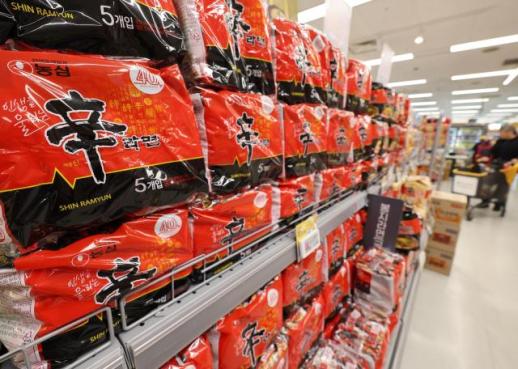 K-ramyeon makers race overseas as Nongshim eyes 60% global sales SEOUL, May 13 (AJP) - South Korea's instant noodle makers are accelerating a pivot abroad as a saturated home market and surging foreign appetite for K-food reshape the industry, with Nongshim unveiling its most aggressive overseas push yet. Nongshim CEO Jo Yong-chul said Tuesday that the company aims to lift overseas sales to more than 60 percent of total revenue and reach 7.3 trillion won ($4.88 billion) in sales by 2030, alongside a 10 percent operating margin. Overseas business currently accounts for about 40 percent of Nongshim's revenue. "We will sufficiently achieve this sales target if we secure logistics hubs to support our overseas business," Jo told reporters at a briefing in Seoul marking the 40th anniversary of flagship brand Shin Ramyun, adding that an export-only plant in Busan's Noksan district will start operations in the fourth quarter and that the company will widen distribution in the United States, Japan and China. Nongshim, which holds more than 60 percent of Korea's domestic ramyeon market, plans to launch a sales unit in Moscow next month to tap the European and Commonwealth of Independent States markets, on top of existing factories in Los Angeles and three Chinese cities. Shin Ramyun's overseas sales reached 1.02 trillion won last year, or 66% of the brand's 1.54 trillion won total. The drive reflects a broader industry scramble. Korea's ramyeon exports hit a record $1.52 billion in 2025, up 21.9 percent from a year earlier and extending an 11-year streak of growth, according to the Korea Customs Service, with China and the U.S. together absorbing more than 40 percent of shipments. Rival Samyang Foods, maker of the viral Buldak spicy noodles, has moved faster. Its 2025 sales surged 36 percent to 2.35 trillion won, with oversea sales accounting for over 70 percent of revenue, and the company broke ground in July on its first non-domestic plant in China. Ottogi, maker of Jin Ramen, has set a target of 1.1 trillion won in overseas sales by 2030, while smaller player Paldo continues to lean on Russia and Central Asia, where its Doshirak cup noodle is a household name. 2026-05-13 14:01:33