
Journalist

Lee Dong Geon
-
 Wild Turkey Brings ‘Kentucky in Seoul’ Bourbon Pop-Up to Seongsu-dong Moontz Barbecue in Seongsu-dong, Seoul, was transformed on April 30 into a setting meant to evoke a classic American pub, complete with a pinball machine and a “wisdom wall.” The smoky barbecue aroma and oak-forward notes were part of a brand showcase for American bourbon whiskey Wild Turkey. The venue is hosting “Kentucky in Seoul,” a pop-up store organized by Campari Korea, the Italian premium liquor importer and distributor, to introduce Wild Turkey’s new global campaign. The pop-up is set to open to the public May 1, after a media tasting event on April 30. The campaign’s slogan is “WHEN YOU KNOW IT’S RIGHT, DON’T CHANGE A DAMN THING,” a sharper extension of the brand’s earlier message about trusting one’s beliefs. The company said it reflects Wild Turkey’s emphasis on sticking to fundamentals rather than chasing trends. Wild Turkey has maintained traditional methods for more than 100 years, including barreling at a lower proof and using longer aging periods. The brand has also kept its alcohol content at 50.5 degrees, positioning it as a benchmark for classic bourbon. A tasting class led by brand ambassador Kim Tae-wan featured three expressions: Wild Turkey 101, “101 8 Years” made with spirits aged 8 to 9 years, and the single-barrel “Kentucky Spirit,” drawn from one selected oak barrel. Kim said the brand’s heritage is underscored by having “the world’s only master distiller with more than 70 years of service,” adding, “I’m proud and grateful to be able to introduce a brand like this.” The event paired the bourbon with Texas-style barbecue from Moontz Barbecue. Beef rib and brisket platters were served with a house barbecue sauce made by simmering a base of Wild Turkey 101. Guest bartenders from Zest (Kwon Yong-jin), Le Chamber (Lee Jae-ung) and Soko Bar (Park Ju-seong) — bars listed in “Asia’s 50 Best Bars 2025” — presented cocktails reinterpreting Wild Turkey 101 in their own styles. Photo booths and a merchandise area displayed limited-edition items including T-shirts, feather caps and motorcycle helmets. Campari Korea CEO Kim Hyosang said the company plans to create more opportunities for consumers to engage directly with the brand. “We will continue to set up more places where we can meet consumers and offer experiences so Wild Turkey can establish itself as a brand that can grow further,” he said. The “Kentucky in Seoul” pop-up will run from May 1 to 29. Entry is available through advance reservations on CatchTable or by walk-in visits. Some menu items will be sold in limited quantities. The tasting class is available by advance reservation only. 2026-04-30 17:33:25
 -
 Why Not Having 100 Million Won in Your 30s Doesn’t Mean You’re Behind, Data Show “I’m in my 30s — if I still haven’t saved 100 million won, am I already behind?” Anxiety about building savings is growing among office workers. Personal-finance videos and online communities repeatedly cite “average assets for people in their 30s,” “saving 100 million won,” and “minimum money before marriage,” treating a certain level of financial assets as a yardstick for stability. The short answer is no: Not having 100 million won in financial assets in your 30s does not automatically mean it is “too late.” Asset statistics are not the same as an individual bank balance. Official household asset figures are compiled by household, not by person, and they reflect the heavy weight of real estate and the influence of high-asset households. According to the National Data Center’s “2025 Household Finance and Welfare Survey,” as of the end of March 2025, average assets per household stood at 566.78 million won, up 4.9% from a year earlier. Average debt was 95.34 million won, up 4.4%, and net assets — assets minus debt — rose 5.0% to 471.44 million won. Average household income in 2024 was 74.27 million won, with disposable income at 60.32 million won. On the surface, household wealth increased. But it is not appropriate to compare the 566.78 million won average directly with an individual’s deposits, stocks or cash-like holdings. As of the end of March 2025, average household financial assets were 136.9 million won, while nonfinancial assets were 429.88 million won — meaning much of household wealth is tied up in real estate and other tangible assets rather than cash. The survey also highlights the “average trap,” in which high-asset households pull up the mean. The top 10% by net assets accounted for 46.1% of total household assets. The net-asset Gini coefficient, a measure of inequality, rose to 0.625 from 0.612 a year earlier. That helps explain why a higher average does not mean conditions improved for all households. Younger households, in particular, did not share in the gains. The National Data Center said assets increased across all age groups except households headed by someone 39 or younger, where assets fell 0.3% from a year earlier. Data for households in their 30s show the strain. According to the Korean Statistical Information Service (KOSIS), average assets for households headed by someone in their 30s were 359.58 million won, down 0.6% from a year earlier — even as overall average household assets rose 4.9% and assets increased for households headed by those 29 or younger, in their 40s, 50s and 60 or older. For households in their 30s, income rose but assets fell. KOSIS data showed ordinary income increased 2.6% from a year earlier, but financial assets fell 0.5% and nonfinancial assets fell 0.7%. Savings also declined 1.3% to 69.89 million won. Meanwhile, average debt for households in their 30s rose to 108.98 million won, and net assets fell 1.3% to 250.6 million won. That trend aligns with what many workers describe as “account anxiety.” Even with higher pay, fixed costs such as housing, loan repayments, wedding expenses and family support can limit the ability to save. Whether someone lives with parents, pays rent or provides living expenses to family can also make saving speeds differ sharply even at the same salary level. The anxiety is difficult to explain as a matter of spending habits alone. While overall household assets are rising, younger households are building wealth more slowly, and debt burdens for those in their 30s are increasing. The question “Did you save 100 million won in your 30s?” has become a symbol of broader worries tied to marriage, housing and retirement preparation. In the end, the answer to “Is it too late if you don’t have 100 million won in your 30s?” is “not necessarily.” Average asset figures can make personal finances look stronger than they are. Because the statistics are household-based, heavily shaped by real estate and lifted by high-asset households, they are hard to compare directly with an individual’s financial assets. The concerns are not baseless: Conditions for young people to build assets remain challenging, and the wealth gap is widening. Still, what matters more than comparing yourself with an average is reviewing your own financial structure — not just how much you earn each month, but how much you can consistently set aside and whether your assets are growing while you manage debt and fixed costs. For building a lump sum, managing cash flow should come before taking on risky investments. With income growth difficult, practical checks include adjusting housing and fixed expenses, managing debt, automating savings and seeking additional sources of income. * This article has been translated by AI. 2026-04-30 17:28:33
 -
 Korea-China Forum Seeks Ways to Draw Young Talent to Aging Rural Communities Korean and Chinese agriculture experts met in Beijing to discuss policy directions for attracting more young people and skilled workers to rural areas in both countries, amid deepening rural aging and weak youth inflows. The discussion took place at the 33rd Korea-China Agriculture Forum, hosted by the Korea Rural Economic Institute (KREI) China office. Zeng Junxia, an associate researcher at the Chinese Academy of Social Sciences, said in a presentation that many young people in China have recently returned to rural hometowns to start businesses. She said government programs such as a rural CEO system and a science and technology commissioner system are gradually showing results. Zeng called for stronger legal foundations, an integrated long-term training system, expanded market-based incentives and stronger support for existing young farmers. Park Mi-seon, an associate research fellow at KREI, said South Korea has continued to expand policies to foster successor farmers and young farmers. She said the government has built a comprehensive support system covering income and financial assistance — including settlement support payments and financing for young smart farms — as well as farmland, education and housing. Park said the government aims to foster 30,000 young farmers by 2027 and is strengthening step-by-step support. To raise settlement rates, she said, South Korea needs a system to verify management performance, expanded management-base support linked to agricultural policies, stronger pre-entry exploration for prospective farmers and locally tailored talent development. In a subsequent discussion, experts from both countries agreed that expanding the number of young farmers will require comprehensive policies that link income, living conditions, education and access to farmland, rather than stand-alone support. Lim Young-a, head of KREI’s China office, said the institute will continue to expand Korea-China exchanges on agricultural policy and pursue joint research and cooperation to develop young farmers and rural talent. * This article has been translated by AI. 2026-04-30 17:27:17
 -
 Democratic Party Says ARS Outage Claim in Runoff Was Resolved by Candidate Agreement The Democratic Party of Korea on Wednesday dismissed Jeonnam Gov. Kim Young-rok’s call for a reinvestigation into an alleged ARS phone-voting outage in the runoff for the Jeonnam-Gwangju Integrated Special Mayor primary, saying the issue had already been addressed through an agreement among the candidates. Kim lost the race to Min Hyung-bae, a former lawmaker. Party Secretary-General Cho Seung-rae told reporters at the National Assembly after a party affairs committee meeting that Kim appeared to have misunderstood the facts. Cho said the party confirmed that 2,308 votes from Jeonnam-area voters were excluded during the first round of outgoing calls, and that a second round of calls was made to those 2,308 voters after agreement by the candidates’ representatives. Cho added that the party apologized to the candidates’ sides for the problem and took immediate steps to remedy the impact. He said he was speaking based on a review of the raw data, and stressed that the party conducted a thorough investigation and confirmed there was no issue. Kim, speaking at a news conference Tuesday at the Gwangju Metropolitan Council, called for a full party reinvestigation of the primary process and broader reforms to prevent a recurrence. He said two weeks after the primary ended, the party headquarters had still not provided a responsible explanation for the concerns he raised. He alleged serious problems with fairness and transparency, citing 2,308 ARS outages in Jeonnam during the runoff, inadequate voting guidance for the electorate, duplicate voting by party members, and a lack of disclosure of information about the overall primary process.* This article has been translated by AI. 2026-04-30 17:22:38
 -
 South Korean Optical Communications Stocks Slide After AI-Fueled Rally Optical communications theme stocks that surged on expectations of expanding artificial intelligence infrastructure have quickly moved into a sharp correction, with volatility rising and investor sentiment cooling as recent gains are erased. According to the Korea Exchange on Wednesday, major optical communications-related shares have shown a clear downtrend since forming peaks in mid-April. Optical Electronics, which makes optical sensors and related products, jumped from 2,080 won on March 17 to 17,780 won on April 15, then slid to close at 10,110 won on Wednesday after a pullback. Daehan Optical Communication topped 20,000 won, hitting 20,150 won on April 14, but closed Wednesday at 15,150 won, down about 24.8%. Wooriro, which had risen more than 1,000% since the start of the year, fell about 41.2% from 14,200 won on April 16 to 8,350 won on Wednesday, giving back a large share of its gains. Other names also extended losses: Bitsam Electronics fell about 48.8% from 23,650 won to 12,110 won; Lycom dropped about 38.0% from 8,400 won to 5,210 won. Bitgwang Electronics slid about 22.1% from 6,520 won to 5,080 won, and Gigalane fell about 27.5% from 2,855 won to 2,070 won, reflecting broad declines across the sector. Optical communications transmits data using light rather than electrical signals, enabling ultrafast, high-capacity networks over fiber optics and is widely viewed as next-generation infrastructure. As AI services spread and require real-time processing of massive data, demand has been rising for uses such as links between data centers and internal server networks, supporting longer-term growth expectations for the industry. The rally appeared to be sparked by comments from Nvidia CEO Jensen Huang. Speaking at "GTC 2026" on March 17 local time, he cited optical communications as a core technology for next-generation AI infrastructure, drawing market attention. Related shares then posted gains of several hundred percent through mid-April in a rapid run-up. More recently, however, prices have reversed and quickly surrendered gains. Market participants have described the move as typical theme-stock trading, with profit-taking accelerating after expectations were priced in. Some analysts said volatility could persist depending on whether earnings visibility improves and industry conditions are confirmed.* This article has been translated by AI. 2026-04-30 17:21:20
 -
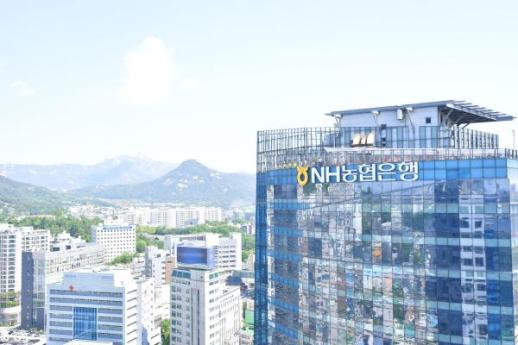 NH NongHyup Bank Waives ATM Withdrawal and Transfer Fees Nationwide Through June NH NongHyup Bank said April 30 it will waive fees on automated teller machine transactions nationwide through June 30 to ease customers’ burden amid elevated oil prices. The waiver applies to ATMs operated by NH NongHyup Bank and local agricultural and livestock cooperatives across the country. Customers will not be charged fees for cash withdrawals and interbank transfers made through NH NongHyup Bank and cooperative accounts. A bank official said customers are facing higher costs due to domestic and external factors, including instability in the Middle East, and the start of the peak farming season. The official added the bank will continue to strengthen practical support for financially vulnerable people, as well as working families and small business owners, to sustain “win-win” finance. Separately, the bank said it is carrying out other shared-growth finance efforts, including free enrollment support for “voice phishing compensation insurance” for customers age 60 and older, and a cashback service to help working families and small business owners reduce fuel expenses.* This article has been translated by AI. 2026-04-30 17:19:36
 -
 L&F posts 118.9 billion won Q1 operating profit on higher high-nickel shipments L&F said in a regulatory filing on April 30 that it posted first-quarter 2026 revenue of 735.2 billion won and operating profit of 118.9 billion won. Revenue rose 19% from the previous quarter and 102% from a year earlier. Operating profit increased 44% from the prior quarter and swung to a profit from a year earlier. The company attributed the improvement to higher shipments of high-nickel products that lifted utilization, along with higher selling prices and a favorable exchange rate. It also cited the impact of inventory valuation reversals as raw material prices rebounded. L&F said shipments of its high-nickel products set a quarterly record for the third straight quarter, helped by sole supply of its ultra high-nickel products and expanding shipments of a new 46-pi product that began shipping late last year. Overall product shipments in the first quarter rose about 12% from the previous quarter, about double the volume guidance the company presented at the start of the year. CFO Ryu Seung-heon said, "The first quarter clearly showed improved earnings as high-nickel volume growth and higher selling prices appeared at the same time." He added, "In the second quarter, we will continue stable performance improvement based on rising shipments, while diversifying our business portfolio through a two-track NCM+LFP strategy and steadily strengthening our mid- to long-term growth foundation."* This article has been translated by AI. 2026-04-30 17:18:16
 -
 Jeep Rubicon Tops 1 Million in Global Cumulative Sales Jeep said on the 30th that global cumulative sales of its Rubicon models have surpassed 1 million units. Rubicon is positioned as the top tier of Jeep’s off-road lineup and a benchmark for rough-terrain capability worldwide. In South Korea, Rubicon trims accounted for a growing share of Wrangler and Gladiator sales over the past three years, rising from 61% in 2023 to 72.4% in 2024 and more than 73.4% last year, reaching 78.7% as of March this year. The Rubicon name comes from the notorious Rubicon Trail in California’s Sierra Nevada. When the Jeep Wrangler Rubicon debuted in 2003, it drew attention for offering off-road readiness without requiring separate modifications. Key features included Tru-Lok electronic front and rear axle-locking differentials and a Rock-Trac part-time transfer case with a 4:1 ratio, Jeep said. Jeep said the Gladiator Rubicon extended Rubicon DNA into the pickup segment. It is the only pickup to earn Trail Rated certification, the company said, demonstrating stable performance across varied off-road conditions. With towing capacity of up to 2,721 kilograms, it has broadened options for outdoor use and helped define what Jeep describes as an off-road lifestyle beyond basic transportation.* This article has been translated by AI. 2026-04-30 17:16:29
 -
 LX Semicon Q1 Operating Profit Falls 65.5% to 20.6 Billion Won LX Semicon said in a regulatory filing on the 30th that its first-quarter consolidated revenue totaled 388.77 billion won and operating profit came to 20.594 billion won. Revenue fell 18.4% from a year earlier, while operating profit dropped 65.5%. From the previous quarter, revenue slipped 0.3% and operating profit declined 17.3%, which the company attributed to the impact of higher raw material prices. The company said the decline also reflected a base effect after customers increased inventory demand last year amid uncertainty over tariff policy. LX Semicon said it plans to focus on advanced R&D for its main products — driver ICs, timing controllers and power management semiconductors (PMICs) — and pursue market expansion based on its technology edge.* This article has been translated by AI. 2026-04-30 17:15:40
 -
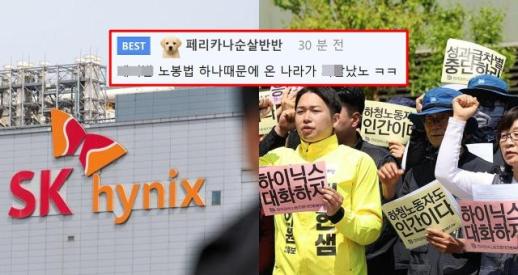 SK Hynix Faces Growing Pressure Over Bonus Distribution Amid Semiconductor Boom As the semiconductor industry thrives, tensions surrounding SK Hynix's bonus distribution are escalating, sparking widespread debate across the sector. Workers from subcontractors, including those in food service and support roles, are demanding a share of the bonuses, intensifying social conflict. Subcontractor workers have been protesting, stating, "We worked in the same environment but received no compensation," as SK Hynix reports record profits and substantial bonuses. Employees from partner companies are also joining in collective actions to demand bonuses. This trend is spreading beyond individual companies, affecting the entire industry. In shipbuilding and construction, indirect workers, including those from food service companies, are now demanding bonuses from primary contractors, asserting that even support staff should be included in compensation discussions. The recent implementation of the "Yellow Envelope Law" (amendment to labor laws) allows subcontractor workers to negotiate directly with primary contractors. Some unions are now pushing for profit-sharing, including bonuses. The issue is significant as these demands could reshape the industry's structure. Since the law's enactment, negotiations have expanded from subcontractors to include clients, with discussions now encompassing wages, benefits, bonuses, and direct employment issues. Conflicts are particularly pronounced in the semiconductor sector, where regular employees at large firms receive bonuses in the millions, leading subcontractor workers to feel deprived and demand equitable distribution. This has resulted in a "bonus domino effect," where increased profits for large companies correlate with rising demands from subcontractors. SK Hynix is reportedly facing demands for bonuses not only from its subcontractors but also from cargo unions and food service providers. Farmers have also joined the call for equitable distribution, further complicating the situation. Media outlets like MBC have echoed the sentiment that bonuses should be shared, amplifying the controversy. Many online commenters have expressed their views, stating, "Koreans claim to oppose communism but act like communists," and others suggesting that the nation's social structure aligns more closely with communism than democracy. This controversy extends beyond mere bonus disputes, raising questions about accountability between primary and subcontractors. Following the Yellow Envelope Law's implementation, the industry is grappling with the fundamental question of who the employer is and the extent of their responsibilities, with similar conflicts anticipated across major sectors like shipbuilding and construction. 2026-04-30 17:14:15