
Journalist

Lee Dong Geon
-
 KOSPI Closes at Record 6,690.90 for Third Straight Session Despite OpenAI Jitters ◆Aju Economy Top Stories ▷KOSPI closes at record 6,690.90 for third straight session despite OpenAI concerns -According to the financial investment industry on the 29th, the KOSPI ended at 6,690.90, rewriting its all-time closing high. In the main board market, retail investors bought a net 167.4 billion won, and institutions purchased a net 477.7 billion won. Foreign investors sold a net 613.6 billion won, taking profits. -Overnight, U.S. stocks finished lower, led by declines in technology shares as uncertainty tied to OpenAI weighed on sentiment. Reports said OpenAI, which is preparing for an initial public offering, failed to meet internal targets, dampening risk appetite. -AI-related shares were hit. Nvidia fell 1.6%, while Oracle and CoreWeave, described as key cloud partners of OpenAI, slid 4.1% and 5.8%, respectively. The Philadelphia Semiconductor Index dropped 3.58%. -South Korean stocks also opened under pressure. Samsung Electronics and SK hynix fell 1.13% and 1.23% at the open, and the KOSPI started down 0.33% at 6,619.00. Buying demand strengthened later in the session, pushing the index back into positive territory. ◆Key report ▷Late-session rebound: KOSPI extends record run to three sessions (Yuanta Securities) -On the 29th, the KOSPI rose 0.8% and the Kosdaq gained 0.4%. Both opened slightly lower as concerns about OpenAI’s performance were reflected early. -From mid-session, foreign buying in Samsung Electronics, which ended up 1.8%, helped lift the market. Shares tied to the AI and semiconductor value chain, including power infrastructure and energy storage systems, also posted solid gains, driving the turnaround and another record close for a third straight session. -Strength in defense and refining and chemical shares also supported the broader market. The report said increased oil-price volatility after the UAE announced it would leave OPEC did not appear to have a major impact on equities. -Investors were shifting attention to the Federal Open Market Committee’s policy rate decision due the next day and earnings releases from major U.S. tech companies. ◆Major filings after the close (29th) ▷OrganoidScience: 6 billion won capital increase via third-party allotment ▷DearU: Additional 14.7 billion won purchase of shares in U.S. unit; stake to 100% ▷DA Technology: 2.7 billion won capital increase via third-party allotment ▷SK IE Technology: 86.3 billion won investment in China separator subsidiary ▷HS Hyosung: Q1 operating profit 12.5 billion won, up 3.8% from a year earlier ▷HYBE: Q1 operating loss 196.6 billion won, turning to a loss ◆Fund flows (as of the 28th, excluding ETFs) ▷Domestic equity funds: +4.3 billion won ▷Overseas equity funds: -5.1 billion won ◆Key events today (30th) ▷South Korea: Retail sales (March), industrial production (March) ▷Japan: Industrial production (March) ▷China: Manufacturing PMI (April), services PMI (April), Caixin manufacturing PMI (April) ▷Germany: Retail sales (March) ▷Eurozone: Consumer price index (April), GDP growth (Q1) ▷United States: GDP growth (Q1), personal consumption expenditures and income (March), PCE price index (March)* This article has been translated by AI. 2026-04-30 07:45:22
 -
 Fed Holds Key Rate Steady for Third Straight Meeting, Citing Still-High Inflation The Federal Reserve on April 29 (local time) held its benchmark interest rate steady at 3.50% to 3.75%, marking its third consecutive decision to keep rates unchanged. According to Yonhap News Agency, the decision was made on the second day of the Federal Open Market Committee’s regular meeting. The Fed cut rates three times in a row last year — in September, October and December — but has kept them on hold three straight times this year, following decisions in January and March. With the latest move, the interest-rate gap between South Korea (2.50%) and the United States remained 1.25 percentage points at the upper end. Explaining the decision, the Fed said, “Inflation remains elevated, which partly reflects recent increases in global energy prices,” and added that shifts in the Middle East situation are creating “high uncertainty” for the economic outlook. It said recent indicators suggest economic activity is expanding at a solid pace. “Job gains have moderated on average,” it said, adding that the unemployment rate has been little changed in recent months. The Fed said the committee aims over the longer run to achieve maximum employment and 2% inflation, and that it will closely assess economic data, changes in the outlook and risk factors in future rate decisions. It also said it is prepared to adjust the stance of monetary policy as appropriate if risks emerge that could hinder its goals — a remark some interpreted as signaling the possibility of future rate cuts.* This article has been translated by AI. 2026-04-30 06:07:24
 -
 GM Korea Runs Changwon Plant at 95% Capacity, Expands Role as Export Hub GM Korea is running its Changwon plant near full capacity as it strengthens its role as a global export base. After facing recurring speculation about a possible exit from the Korean market, the company has sought to counter that narrative with large-scale investment and by repositioning Changwon as a key hub for small sport utility vehicles. Strong exports, it says, are helping demonstrate its competitiveness within GM and support the sustainability of its Korea operations. Asif Khatri, GM vice president of manufacturing for international operations, said at an April 28 media briefing at the Changwon plant that it is “our benchmark facility.” He said combined cumulative production of the Chevrolet Trax Crossover and Trailblazer has surpassed 2 million units. The Trax Crossover and Trailblazer are small SUVs developed and produced in Korea, from planning and design to performance development and manufacturing, the company said. The Trax Crossover has been produced at the Changwon plant since 2023, while the Trailblazer has been produced in earnest at the Bupyeong plant since 2020. Asked about persistent rumors that GM could withdraw from Korea, Khatri said the company aims to dispel the claims through actions rather than words. “The rumors related to withdrawal are not true,” he said, adding that Korean plants are operating at maximum levels and “we need to build more.” He said the focus is on keeping plants running and working with the union to maximize output. GM Korea operates three production plants. It also has domestic facilities that produce engines and a six-speed automatic transmission (GF6), and the company said its bases are running near maximum capacity. The Changwon plant’s utilization rate is 95%, and it can produce up to 280,000 vehicles a year. Lee Dong-woo, vice president of manufacturing at GM Korea, said the company believes the small SUV segment could be among the last internal-combustion categories to remain viable and that customers continue to demand it. “We are in a situation where we are concerned because we cannot meet demand,” he said. Bang Seon-il, vice president of purchasing at GM Korea, said the vehicles are popular enough that they are exported worldwide in less than two to three days after production. On the fact that Korean plants currently produce only internal-combustion vehicles, the company said it is prioritizing output of small SUVs already proven in global markets rather than rushing electrification. Khatri said demand for vehicles produced in Korea is strong enough that the company cannot meet it, and that a dedicated team for new-energy vehicles — including hybrids (HEV), plug-in hybrids (PHEV) and electric vehicles (EV) — is reviewing potential opportunities. * This article has been translated by AI. 2026-04-30 06:06:15
 -
 Who Owns Samsung Electronics? A Debate Rekindled by a Union Strike Threat A corporation is often described as one of capitalism’s most consequential inventions. The first modern joint-stock company emerged in 1602: the Dutch East India Co., a spearhead of the colonial era. Two pillars defined the model — limited liability, which caps responsibility at the amount invested, and dividends, a mechanism for sharing profits. With the rise of stock exchanges, corporations flourished. Today, companies such as Nvidia and Apple have market values that exceed the GDP of many countries. In South Korea’s less-than-century-long history of capitalism, corporations have also been central to modernization and industrialization. Many entrepreneurs raised seed money through corporate structures and built companies that way. Samsung Electronics stands as the best-known example, growing in about 50 years into the country’s largest company, with a market capitalization of about 1,300 trillion won. As corporations and shareholder capitalism developed, one question kept resurfacing: Who owns the company? In the United States, the answer was settled long ago — shareholders are the owners. Under that model, a company’s goal is to maximize shareholder value, and executives, including the CEO, act as agents for shareholders. Economist Milton Friedman’s line that “the social responsibility of business is to increase its profits” became a key intellectual foundation. In South Korea, however, ownership has often been treated as shared. For years, the “owner” of a company was widely equated with the founding family. Small shareholders were often treated as owners only during the annual shareholders meeting season in March. At times, labor unions have stepped forward as if they were owners. The government has also tried to play that role. A prominent example was the “excess profit-sharing” proposal raised in 2011 by Chung Un-chan, head of the Commission for Shared Growth and a former Seoul National University president. The idea was to have large conglomerates that earned big profits share some of them with partner firms. Then-Samsung Chairman Lee Kun-hee pushed back sharply, calling it “something you don’t even learn in economics,” fueling a broader debate. Recent friction surrounding Samsung Electronics has revived the same argument. The company’s union has warned it will launch a general strike in May. If it happens, it would be the first strike in Samsung Electronics’ history. The union says employees should receive a larger share of the company’s performance gains. Some minority shareholders have begun organizing in response. A group of Samsung Electronics shareholders held a rally opposing a strike, arguing that large performance bonuses could reduce shareholder returns such as dividends. The government has also weighed in. Industry and Trade Minister Kim Jung-kwan said, “It is worth thinking about whether Samsung Electronics’ performance is truly the result only of management and workers.” While framed as concern about a strike, the remark could also be read as suggesting the company’s success includes contributions from the state, society and partner firms. With multiple groups seeking to assert a claim over the company, Samsung’s management faces competing demands. The semiconductor business posted losses as recently as two years ago. Samsung has since climbed onto an AI-driven semiconductor “super cycle,” but conditions can change quickly. The company needs a strategy that pours large sums into facilities and research and development while also building reserves. Yet minority shareholders are pressing for bigger dividends, the union is demanding a larger share of gains, and there is also quiet pressure from the government to expand social responsibilities such as jobs and corporate giving. So who owns Samsung Electronics? Is it Samsung Life Insurance, the company’s largest shareholder, or Chairman Lee Jae-yong? Is it the workforce of 128,200 employees? Or the 4.2 million individual shareholders recognized under the law? What about a government that changes every five years? One point is clear: the “true owner” should be whoever bears responsibility for Samsung’s future and sustainable growth. A union focused only on immediate distribution, or short-term investors chasing capital gains, cannot reasonably be called the owner. * This article has been translated by AI. 2026-04-30 06:05:09
 -
 Report: GM Korea-Built Chevrolet Trax Crossovers Ship From Changwon to North America Masan Gapo New Port on April 29 was packed with finished vehicles lined up for export, with a large car carrier preparing to load. The cars had been built at a domestic plant and were awaiting shipment overseas. Most of the vehicles carried the Chevrolet badge. They were largely the Chevrolet Trax Crossover, a small SUV produced at GM Korea’s Changwon plant. Since its 2023 launch, the model has sold about 1 million units cumulatively and ranked No. 1 in South Korea’s passenger-car exports for three consecutive years from 2023 through last year, filling the port’s staging area. Standing near a Hyundai Glovis vessel, Kim Hyeon-uk, deputy head of the logistics team at GM Korea, said he takes pride in “vehicles made in Changwon meeting global customers.” He described the loading as “the final step” in a long value chain linking the Changwon plant, Masan Gapo New Port and overseas markets. At the port, the ship GLOVIS CAPTAIN was preparing to depart with 350 Trax Crossovers bound for the port of Benicia near San Francisco. The vessel can carry up to 4,700 passenger vehicles, and the day’s loading took about two hours. The cars are expected to reach the west coast of North America after a 15-day voyage. Son Yong-jun, North America team leader for Hyundai Glovis’ car-carrier business, said GLOVIS CAPTAIN was deployed on short notice after delays to a scheduled vessel. He added that a significant portion of passenger vehicles loaded are exclusively GM vehicles, contributing to South Korea’s auto exports. Cho Heung-je, head of operations at Masan Gapo New Port, said the port expects a record 300,000 vehicles shipped this year, with GM Korea accounting for about 55% of total cargo volume. Nearby, GM Korea’s Changwon plant was running at a brisk pace, with workers and robots producing finished vehicles. The facility includes stamping, body, assembly and paint shops. A banner at the assembly shop entrance read, “We will achieve our business plan,” underscoring the company’s focus on exports. Inside, a height-adjustment system moved vehicle bodies up and down to fit workers’ average height. In the body shop, welding is fully automated, with large arm-like robots moving continuously as sparks flew. The body shop has 627 industrial robots. Bok Im-seong, who oversees the assembly shop at GM Korea, said robots identify and follow four types of tires — including alloy and steel wheels — and install them on vehicles. He said GM is reviewing the approach for possible benchmarking globally after seeing GM Korea’s application. 2026-04-30 06:03:18
 -
 Battery Industry Veteran Lee Mi-yeon Pushes Hands-On Training for Technicians Lee Mi-yeon, chair of the Korea Battery Technicians Association, has spent more than 30 years in battery manufacturing and is known as a leader shaped by the factory floor. Since 2010, she has led Yujin Technology, building a reputation as a veteran with hands-on experience and a deep understanding of the industry’s structure. Born in 1976, Lee graduated from Chungcheong University with a degree in mechanical design. She later studied in the Department of Convergence Mechanical Engineering at Jungwon University and completed a bachelor’s degree in business administration at Kyung Hee University, followed by a master’s program at its graduate school of business. In 2010, she founded Yujin Technology in Cheongju, North Chungcheong Province. She has designed and operated precision presses, molds and battery process equipment, while also accumulating on-the-job experience as CEO. Yujin Technology specializes in batteries, producing parts and equipment for the notching process — the first step in battery assembly — as well as lead tabs used as materials in assembly. Its notching molds are supplied exclusively to some affiliates of South Korea’s three major battery makers, the company said, and it holds a 60% share of the domestic market. As association chair, Lee has focused on training technical workers and strengthening the industrial base for the battery and electric vehicle sectors. The association trains field-oriented specialists through education in battery performance evaluation, diagnostics, repair and fire safety. It has produced more than 1,200 battery professionals and built a cooperation network with about 50 organizations. It has also worked beyond training to develop a battery terminology dictionary and standards related to used batteries and fires, the article said. Lee, a female engineer and CEO with broad experience across the battery production floor, said securing “field-ready” talent is urgent for the industry’s continued growth. While battery technology and equipment are advancing quickly, she said, skilled workers who can understand and operate them remain in short supply. “Industrial competitiveness ultimately depends not on technology, but on people who understand the field,” Lee said. “More important than equipment are technicians who can handle it properly.” Reflecting that view, the association is focusing on developing practical technicians who can understand batteries accurately, handle them safely and make data-based judgments, the article said. “Going forward, securing talent with core capabilities such as battery safety and fire response will determine market competitiveness,” Lee said. “The association will work to build an ecosystem where technicians are properly evaluated and can play a central role in the industry.”* This article has been translated by AI. 2026-04-30 05:04:53
 -
 Battery Association Chief Warns Talent Shortage Threatens Korea’s Edge Despite a demand slowdown for electric vehicles, South Korea’s battery industry is looking for a rebound. On the factory floor, however, a shortage of job-ready workers is emerging as a new risk. Lee Mi-yeon, chair of the Korea Battery Technicians Association, said maintaining Korea’s “super-gap” advantage will depend on building a field-centered talent ecosystem. “What will determine competitiveness is how many practical technicians we can secure who can be deployed immediately, not theory-focused talent,” she said. In an interview Tuesday with Ajou Economy, Lee pointed to a workforce mismatch as the industry’s biggest problem. “The industry is growing fast, but the people needed on site are still in short supply,” she said, adding that companies repeatedly face inefficiency by hiring new workers and then retraining them because of a gap between education and workplace needs. She said the profile of in-demand workers is changing. Where the focus once was on employees who could follow fixed processes precisely, plants now need “judgment-based technicians” who can diagnose and solve problems using data. “The current education structure remains at ‘70% theory, 30% practice,’ but the field demands the opposite,” Lee said. “Without a shift to practice-centered training, the labor problem will continue.” South Korean battery companies are already facing severe shortages. The Ministry of Trade, Industry and Energy and the Korea Battery Industry Association project domestic workforce demand in the secondary battery sector will rise rapidly and exceed 110,000 by 2032, implying that about 54,000 additional specialized workers will need to enter the industry. But the number of battery-related graduates and job-ready workers produced each year remains only in the thousands, she said. Shortages extend beyond research and development to production staff who run processes and manage yield. Global conditions are similar. The International Energy Agency said global energy-sector employment totaled 76 million in 2024, up more than 5 million from 2019. Jobs tied to electric vehicles and batteries led growth, increasing by about 800,000 in a single year. Companies, however, are struggling to secure workers with practical skills. In an IEA survey of more than 400 global energy companies, more than half cited labor shortages as their biggest management risk. Firms said their biggest hiring challenges were a lack of candidates with needed technical skills and intensifying competition for talent from rivals and other industries. Lee said overseas production bases are expanding quickly, but core engineers who can set up sites and manage quality are “absolutely” in short supply. To run global production lines reliably, she said, Korean engineers who can train local workers and lead technical work are becoming more important. She said plants are no longer looking for people who simply do what they are told. “The field wants technicians who make their own judgments and take responsibility,” Lee said, calling the ability to analyze battery conditions, interpret abnormal data and connect it to process improvements a key capability. Lee said talent development is directly tied to global competitiveness. She said China is ahead in scale and growth speed, but Korea has strengths in precision processes, quality and safety standards. Korea should respond with a strategy centered on advanced engineers, not just production labor, she said. The association focuses on training “immediately deployable” practical workers in batteries and electric-vehicle charging, including programs for specialized roles such as battery performance evaluators. It has recently expanded and reorganized as the incorporated Korea Battery Technicians Association, moving to strengthen the credibility of its certification system and to build a technician career-history management system. Lee said a key goal during her term is “standardizing technicians” by integrating differing company criteria and building a national standard curriculum and qualification system focused on diagnostics, evaluation and safety. She said the association cannot solve the problem alone. “Battery diagnostic equipment and safety training facilities are too costly for the private sector to build on its own,” Lee said, calling for national-level infrastructure support. She added that qualifications such as battery performance evaluator should be institutionally linked and recognized so they can be used in actual hiring standards. Lee also cited staffing shortages at regional manufacturing sites, saying the gap between the Seoul metropolitan area and other regions is widening and making it harder to secure skilled technicians. She called for a workplace-linked education model involving regional universities, companies and the association to create a virtuous cycle from “education → employment → settlement,” alongside better treatment of technicians and a stronger career-management system. “Ultimately, trust in an industry comes from people,” Lee said. “When trained technicians are sufficiently present on site, competitiveness can be maintained.” She said this year should be a starting point for building national education standards and hands-on training infrastructure, adding that the association will take the lead in building a field-centered talent ecosystem to help sustain Korea’s battery advantage.* This article has been translated by AI. 2026-04-30 05:03:43
 -
 YouTube launches AI-powered search feature for Premium users in the U.S. YouTube is rolling out a generative artificial intelligence search feature, accelerating its shift toward becoming a broader search platform and reshaping how users find information on the service. According to industry sources on the 29th, YouTube introduced an AI search tool called “Ask YouTube” for Premium subscribers ages 18 and older in the United States. The feature combines text and video in its results. When users type detailed questions — such as about travel itineraries or recipes — the AI first summarizes key points in text, then presents related videos and specific segments as clips in a step-by-step format. Unlike the previous approach of listing videos that match keywords, the tool puts an answer first and uses video to support it. That allows users to find needed information without scanning long videos. The move comes as information-seeking habits shift. According to CJ MezzoMedia’s “2026 Target Report,” released the same day, social media accounted for the largest share of information channels among people in their 20s. Among women, social media usage reached 62%. The share of information exposure through video channels was 44% for men and 41% for women, similar to or higher than portal-site search at 33% for men and 42% for women. YouTube’s influence is also evident in search behavior. Among people in their 20s, the share using YouTube to look up information was 47% for men and 39% for women. For men, YouTube ranked as a major channel after Naver at 52% and Google at 51%. Online video has become a central way people consume information. In internet activities among those in their 20s, “watching online video” was the top category at 67% for women and 52% for men. Average daily viewing time was about 1 hour and 50 minutes. Short-form video use reached 98%, and YouTube Shorts use was in the 80% range, the report said. Experts said the strategy reflects Google’s push to strengthen its position in search while maximizing the value of video content. Choi Byeong-ho, a research professor at Korea University’s Artificial Intelligence Research Institute, said the impact could be significant as learning, hobbies and even political activity increasingly center on YouTube. He said the shift could go beyond text-based search to enable video-driven connections such as extracting specific scenes, searching by people or style, and analyzing time-and-place context. He added that combining search AI with generative AI features could further increase users’ dependence on the platform.* This article has been translated by AI. 2026-04-30 00:04:39
 -
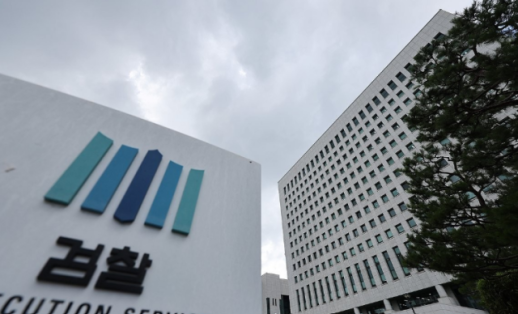 South Korea launches task force to prepare Major Crimes Investigation Agency opening The Ministry of the Interior and Safety said Thursday it has launched an opening preparation team to support the planned October start of the Major Crimes Investigation Agency. The team is a dedicated unit meant to ensure a stable launch of the new agency, which is to be created on Oct. 2 as part of a broader overhaul of the criminal justice system aimed at separating investigations from prosecutions. The preparation team will be housed within the Interior Ministry. Vice Minister Kim Min-jae will serve as head, and Lee Jin-yong, second deputy chief prosecutor at the Incheon District Prosecutors Office, will be deputy head. It will have three divisions — general affairs, investigative practice planning, and finance and facilities — with a staff of 64. Officials will be seconded mainly from the Justice Ministry and the Interior Ministry, as well as the prosecution and the National Police Agency. The ministry said the team will be built around personnel with hands-on investigative experience, including investigators, to help ensure continuity of casework after the agency opens. The team’s work will focus on four areas. First, it will lay the institutional groundwork for operations by revising and organizing laws, rules and other working-level regulations related to the agency, and by setting up investigative procedures and interagency cooperation systems. Second, it will design the agency’s detailed structure, staffing and placement standards, and personnel rules, and handle recruitment of public officials to work there. Third, it will prepare for the transfer of cases and investigative capacity from existing investigative bodies, including procedures for handing over cases and crime intelligence, processes for warrant applications and case referrals, and a phased transfer of personnel and expertise in key areas such as anti-corruption, economic crimes, narcotics and forensic science. Fourth, it will build the operational foundation, including offices and information systems. Plans include securing and remodeling headquarters and regional offices, creating interview and office space, and establishing electronic systems needed for work, including the Korea Criminal Justice Information System (KICS), an electronic approval system and a website. The ministry said the team will work closely with related agencies, including the Office for Government Policy Coordination, the Justice Ministry and the National Police Agency, to carry out tasks in stages and launch the agency on Oct. 2 as planned. Interior and Safety Minister Yoon Ho-jung said the launch of the preparation team puts key work — including securing office space, staffing and building systems — “on track.” He said the ministry will do its best to help the new agency take root as an investigative body that protects the public’s rights and earns public trust. 2026-04-30 00:03:19
 -
 Yoon Suk Yeol Gets 7 Years in Appeal Ruling; Lee Reviews Fuel Aid Use; Trump Pressures Iran; Coupang, Unification Minister Updates Yoon sentenced to 7 years in arrest-obstruction appeal Yoon Suk Yeol, a former president, was sentenced to seven years in prison on appeal for charges including obstructing an arrest. The Seoul High Court’s Criminal Division 1, which handles insurrection-related cases and is led by Presiding Judge Yoon Sung-sik, handed down the seven-year term on April 29 for charges including special obstruction of official duties and abuse of authority to interfere with the exercise of rights. The sentence fell short of the 10 years sought by the special prosecutor but was longer than the five-year term imposed at the first trial. President Lee orders review to allow fuel aid at gas stations with 3 billion won-plus sales President Lee Jae-myung on April 29 ordered a review of allowing the high fuel price relief payment to be used at gas stations with annual sales of 3 billion won or more. In an interview aired that afternoon on KBS Radio’s “All Politics in the World,” presidential spokesperson Lee Kyu-yeon said Lee directed officials to consider loosening the restrictions, saying that because it is relief for high fuel prices, people should be able to buy gasoline with it. The payment has been limited to small merchants such as traditional markets and neighborhood shops, and can be used only at businesses with annual sales of 3 billion won or less. Complaints have been raised after some gas stations were excluded. Trump says Iran “still hasn’t come to its senses,” steps up pressure on talks U.S. President Donald Trump stepped up pressure on Iran over end-of-war negotiations, saying it “still hasn’t come to its senses.” Trump wrote on social media at about 4 a.m. April 29, Eastern time, that Iran “had better understand the situation quickly,” adding, “They don’t even know how to sign a denuclearization agreement.” He also posted an image titled “No More Mr. Nice Guy,” showing Trump wearing sunglasses and holding a gun as bombing appears in the background, in what was seen as an effort to raise the pressure. FTC names Coupang chair Kim Beom-seok as controlling person for first time South Korea’s competition watchdog designated Coupang Inc. Chair Kim Beom-seok as the company’s controlling person, triggering Fair Trade Act obligations such as disclosure of related parties. Kim, a U.S. citizen, had avoided the designation since 2021, when Coupang was classified as a large business group, because relatives were not involved in management. However, after it became known last year that Kim’s younger brother, Kim Yu-seok, was serving as a Coupang vice president, calls grew to designate Kim as the controlling person. Unification minister Chung criticizes opposition’s dismissal motion as “excessive pro-U.S. deference” Unification Minister Chung Dong-young pushed back against the People Power Party after it filed a motion calling for his dismissal over remarks about nuclear facilities if a structure is built, saying the party’s deference to the United States was excessive. Speaking to reporters after attending the launch of the third 2030 Youth Advisory Group and a dialogue with young people at Odusan Observatory in Paju, Gyeonggi Province, on April 29, Chung said, “Is the People Power Party a member of the U.S. Congress?” He added that if it is South Korea’s National Assembly, it should represent the public and defend national interests. The People Power Party filed the dismissal motion the previous day, citing Chung’s remarks last month during a National Assembly Foreign Affairs and Unification Committee session. 2026-04-29 21:42:19