
Journalist

Lee Dong Geon
-
 Baedal Minjok Partners with Baemin Friends for 'Love Lunchbox' Charity Baedal Minjok, a leading food delivery service in South Korea, collaborated with its partners to deliver lunchboxes to vulnerable children. On May 12, Baemin Friends, a community of Baedal Minjok partners, prepared and delivered lunchboxes to 150 households in need located in the Songpa District of Seoul. This 'Love Lunchbox' initiative was conducted in partnership with the World Vision Songpa Comprehensive Social Welfare Center. Over 40 employees from Woowa Brothers, the parent company of Baedal Minjok, and Baemin Friends partners gathered at the Baemin Academy Seoul Center to prepare lunchboxes featuring five popular side dishes, including quail egg soy sauce and stir-fried vegetables with sausage. Additionally, the partners included message cards designed by themselves to accompany the lunchboxes for the children. Baemin Friends is a community where Baedal Minjok's partner businesses share their challenges and expertise. Launched on October 1, 2020, with the core values of 'Together, Growth, Sharing,' Baemin Friends has evolved beyond a simple social gathering into a structure that fosters 'sharing leaders' who create and share content based on successful experiences. To date, 11 cohorts have been established. Gwon Yong-kyu, head of the Baemin Academy at Woowa Brothers, stated, "It was a meaningful time to practice sharing with our partner businesses in the community. We will continue to engage in various activities that promote a sustainable restaurant ecosystem and community sharing."* This article has been translated by AI. 2026-05-13 18:02:27
 -
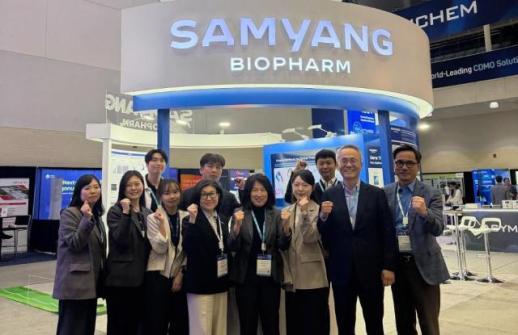 Samyang Biopharm Presents SENS Research Results in Boston, Expands Global Partnerships Samyang Biopharm announced that it participated in three major global academic events in the field of biopharmaceuticals and gene therapy held in Boston from May 11 to 15, where it showcased the capabilities and commercialization strategies of its next-generation drug delivery platform, SENS. During the event, the company operated a partnering booth and meeting rooms, planning to explore collaboration opportunities with global pharmaceutical and biotech companies through oral and poster presentations. The company first participated in 'TIDES USA 2026,' the world's largest international conference in the field of nucleic acid and peptide therapeutics, sharing its latest research findings and seeking collaboration opportunities. This year, over 500 global pharmaceutical and biotech companies from approximately 40 countries are participating. At the event, Sunny Song, head of the New Drug Business Unit, will deliver an oral presentation revealing research results optimized for the SENS platform technology. Specifically, to advance the development of next-generation drugs based on SENS, the company will present four key strategies: in vivo production of biopharmaceuticals, adaptive precision therapy, cell function modulation therapy, and targeted cell regulation, while discussing joint research and business development with global pharmaceutical and biotech firms. Samyang Biopharm will also participate in the international conferences 'ASGCT 2026' and 'PEGS Boston Summit.' At ASGCT, the company will present research results on the Hepa-SENS platform for targeted delivery to liver cells and the potential of next-generation nucleic acid delivery technologies. At the PEGS Boston Summit, the company aims to understand the latest research trends in protein and antibody engineering, immunotherapy, and next-generation biopharmaceuticals, while discussing collaboration with global experts focusing on active targeting technologies, targeted binding and intracellular delivery strategies, and analytical and characterization technologies. SENS, developed by Samyang Biopharm, is a drug delivery platform designed to selectively deliver nucleic acid-based therapeutics, such as short interfering RNA (siRNA) and messenger RNA (mRNA), as well as gene-editing drugs to specific tissues and cells. It is characterized by its ability for repeated administration and high safety. The platform was awarded the 'Most Promising Cell and Gene Therapy Pipeline' at the 'Korea BioPharma Excellence Awards (KBEA) 2024.' A representative from Samyang Biopharm stated, "We plan to expand global partnerships in the field of gene therapies and next-generation nucleic acid therapeutics. We expect that the completion of our gene therapy production facility, scheduled for the third quarter of next year, will accelerate the entry of our developing new drugs into clinical trials."* This article has been translated by AI. 2026-05-13 17:58:01
 -
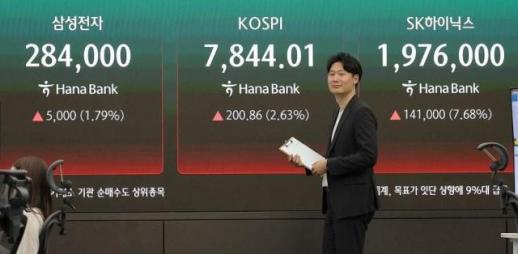 KOSPI Surge Threatens Inverse ETFs with Delisting as Prices Plummet The KOSPI has surged from around 4,200 points at the end of last year to over 8,000 points this year, causing significant losses for individual investors who heavily bet on inverse and leveraged exchange-traded funds (ETFs). Some of these funds are nearing delisting requirements. There are growing calls in the market for regulatory adjustments, including share consolidation. According to the Korea Exchange on May 13, the prices of several KOSPI 200 leveraged inverse ETFs, including KODEX 200 Futures Inverse 2X, TIGER 200 Futures Inverse 2X, RISE 200 Futures Inverse 2X, and KIWOOM 200 Futures Inverse 2X, have all fallen to around 100 won. Only PLUS 200 Futures Inverse 2X remains above 200 won. After the KOSPI first surpassed 7,000 points on May 6, it continued its strong performance, reaching nearly 8,000 points during intraday trading on May 12. As a result, the losses for leveraged inverse ETFs have rapidly increased. Over the past month, these ETFs have seen returns of approximately -48%, and around -64% over the last three months. Just a year ago, these funds had total net assets exceeding 5 billion won, but now, some ETFs, excluding KODEX and TIGER products, are approaching delisting thresholds. According to Korea Exchange regulations, an ETF can be delisted if its total net assets fall below 5 billion won after one year of establishment. With some analysts predicting further KOSPI gains, concerns surrounding leveraged inverse ETFs are intensifying. Hyundai Motor Securities raised its year-end KOSPI forecast on May 11 to 9,750, suggesting a potential rise to 12,000 points. Industry experts warn that if the KOSPI continues to rise for an extended period, the prices of leveraged inverse ETFs could effectively approach zero. This is due to the negative compounding effect inherent in inverse leveraged ETFs during periods of index growth. Even if the index returns to its original level, the ETF's returns do not recover. An asset management official stated, "Inverse leveraged products have a negative compounding effect, so even if the index returns to its original position, the product's returns do not recover," adding that the recent price drops have left investors exposed to high volatility. However, the asset management industry is not currently considering delisting. There remains significant demand from individual investors. According to Koscom ETF CHECK, KODEX 200 Futures Inverse 2X ranked third among the most purchased products by individual investors over the past month, with net purchases totaling 737.1 billion won. Market analysts attribute the heightened caution regarding KOSPI overheating to factors such as Middle East risks, valuation pressures, and the "Sell in May" sentiment. There is an influx of funds betting on a correction following the recent rapid rise. The industry is calling for regulatory improvements, such as allowing share consolidation for ETFs, to stabilize prices and protect investors. While share consolidation is permitted in the U.S. market, there is currently no clear legal basis for it in South Korea, effectively blocking the process. When fund sizes shrink, implementing operational strategies becomes challenging due to minimum trading unit issues, and excessively low share prices can increase the burden on liquidity providers. A financial authority official stated, "We recognize the market's call for regulatory improvements, including share consolidation for ETFs, and we are monitoring the situation closely." 2026-05-13 17:55:56
 -
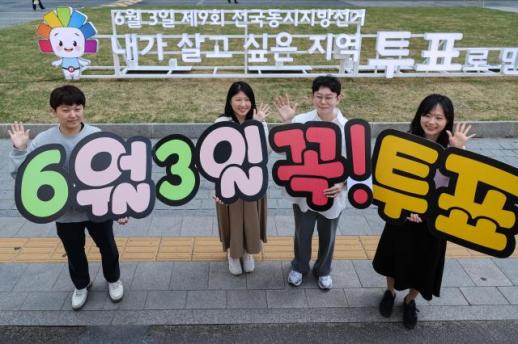 Campaign season kicks off ahead of June local elections SEOUL, May 13 (AJP) - Ahead of South Korea’s ninth nationwide local elections on June 3, the country’s election authority rolled out a public voting campaign installation in central Seoul on Wednesday, turning a busy downtown plaza into a civic awareness site. The sculpture, installed by the National Election Commission in front of the Korea Press Center in Seoul’s Jung District, features the commission’s mascot character “Cham Cham” alongside the slogan: “We create the region we want to live in through voting.” South Korea’s National Election Commission (NEC) installed a public voting campaign sculpture in central Seoul on Wednesday ahead of the country’s 9th nationwide local elections scheduled for June 3. The promotional installation, unveiled at the plaza in front of the Korea Press Center in Seoul’s Jung District, features the NEC’s mascot character “Cham Cham” alongside the slogan, “We create the region we want to live in through voting.” The campaign comes as South Korea prepares for local elections that will select mayors, governors, local council members and education superintendents across the country. Election authorities are also promoting early voting schedules and procedures through outdoor displays and public messaging campaigns concentrated in high-traffic urban areas. Under South Korean election law, voting on June 3 will run from 6 a.m. to 6 p.m. at designated polling stations nationwide. Citizens aged 18 or older as of election day — including those born on or before June 4, 2008 — are eligible to vote. Early voting is scheduled for May 29-30. 2026-05-13 17:54:07
 -
 CJ Cultural Foundation Celebrates 20th Anniversary, Focuses on Sustainable Creative Ecosystem The CJ Cultural Foundation held a discussion on the sustainability of the popular culture and arts ecosystem in celebration of its 20th anniversary.On May 12, the foundation hosted a 'Leaders Talk' event at CGV Cheongdam Cine City in Seoul, focusing on the sustainability of the popular culture and arts industry and the role of supporting creators.Kim Jin-gak, a professor of cultural arts management at Sungshin Women's University, addressed the challenges and directions necessary for ensuring sustainability in the popular culture and arts sector. The discussion was moderated by cultural critic Lim Hee-yoon and featured panelists including Jo Gang-joo, a senior researcher at the Korea Arts Council, filmmaker Min Kyu-dong, and Kim Kwang-hyun, chair of the Korean Popular Music Awards.Participants agreed that supporting emerging creators is fundamental to broadening the cultural and artistic ecosystem. They also highlighted the CJ Cultural Foundation's ongoing efforts to discover and nurture creators across various fields, including music, performance, and film.The event included an awards ceremony recognizing contributions over the past two decades. The foundation presented a special award to Kim Dong-ho, former executive director of the Busan International Film Festival, for establishing the festival as a hub for Asian cinema and laying the groundwork for the globalization of Korean film. Appreciation plaques were also awarded to musician Jung Won-young, S&Co. artistic director Seol Do-yoon, and filmmaker Min Kyu-dong for their contributions to discovering new creators.A representative from the CJ Cultural Foundation stated, "We will continue to work with the cultural and arts community to create a healthy creative ecosystem that allows creators' potential to flourish across various genres and stages."Additionally, the CJ Cultural Foundation continues to support emerging directors abroad. Recently, a short film by Vietnamese director Nguyen Tien An, funded through the 'Korea-Vietnam Youth Dream Short Film Production Support Project' in collaboration with CGV Vietnam, has been selected for competition at the Cannes Film Festival. Nguyen's film, 'The Dream is a Snail,' is among the ten invited short films for the 79th Cannes Film Festival. The award results will be announced at the closing ceremony on May 23.* This article has been translated by AI. 2026-05-13 17:54:00
 -
 Dongkuk Pharmaceutical's Centellian24 Expands Distribution in Thailand · Dongkuk Pharmaceutical announced on May 13 that its dermocosmetic brand, Centellian24, is strengthening its local distribution network by entering major online and offline channels in Thailand. Centellian24 is expanding its presence through key health and beauty chains such as Watsons, the beauty retailer Beautrium, Central Department Store, and the beauty platform Konvi, as well as various online malls to enhance consumer engagement. With this expansion, Centellian24 will showcase a range of skincare products, including the 'Madeca Line' based on Centella Asiatica extract (TECA), the 'Madeca Acniance Line', the 'Melacapture Line' for pigmentation care, and the 'PDRN Line'. The brand's flagship product, 'Madeca Cream', has become a steady seller and symbolizes the brand's identity. Analysts suggest that the strategy of integrating the skin-soothing and regenerative image established through Dongkuk Pharmaceutical's wound treatment product, 'Madecassol', has enhanced consumer recognition. A representative from Centellian24 stated, "Entering major distribution channels in Thailand has significantly broadened our engagement with local consumers. We aim to strengthen our brand presence based on the expansion of our global distribution network and product competitiveness."* This article has been translated by AI. 2026-05-13 17:50:33
 -
 Adult Consumers Drive 75% Surge in CU Toy Sales for Children's Day Convenience store CU has reported a significant boost in sales due to character collaboration products aimed at Children’s Day, appealing to adult consumers, or "grown-up kids." Character merchandise has evolved from simple toys to essential items for collectors and fandoms. CU announced that from May 1 to May 11, toy sales surged by 75.1% compared to the same period last year. The character collaboration products launched for the family month have sparked interest not only among children but also among the 2030 age group, becoming a key sales category. The adult consumer segment has been the driving force behind the success of character products. An analysis of customer demographics from May 1 to May 11 revealed that buyers in their 20s accounted for 33.1% of purchases, followed by those in their 30s at 28.3%, teenagers at 23.5%, those in their 40s at 12.4%, and individuals over 50 at 2.7%. This indicates that the 2030 age group represents over 60% of total buyers. As a result, CU's sales from character intellectual property (IP) collaboration products have shown a steep upward trend. The sales growth rate was 320.0% in 2023, 82.2% in 2024, and 105.7% this year, maintaining a strong growth trajectory. The number of related product items has also expanded significantly, from about 280 in 2023 to over 370 last year, establishing itself as a major differentiating product line for the convenience store. This year’s limited edition products for Children’s Day have been flying off the shelves. The "Pokemon Card Pack 4 Types," containing five random Pokemon cards, sold 250,000 units within just three days of its launch on May 2. With a limited stock of approximately 265,000 packs, 96% of the available inventory has already been sold. Additionally, a planned product from the animation "Pat and Mat" saw sales of 10,000 sets, with the "Keycap Keyring" becoming a popular item, selling over 5,000 units. The character craze is also evident in CU's own commerce application, "Pocket CU," where nearly half of the top 10 search terms are related to characters, including Pokemon bread, Pokemon cards, Pat and Mat, and Pinglu Greek blueberry. Notably, the "Yozum Pinglu Greek Blueberry Yogurt," released in mid-March, has recorded sales of 200,000 units, driven by its cute character design and random figures appealing to younger collectors. The character trend is spreading across the convenience store industry. Seven-Eleven reported a 180% increase in sales of Sanrio collaboration products during this Children’s Day season, while GS25 saw a 171.1% rise in sales of travel-themed character products compared to the previous month. Analysts suggest that convenience stores are emerging as a key channel for purchasing Children’s Day gifts, surpassing toy and stationery stores. Lim Hyung-geun, head of the product division at BGF Retail, stated, "Recently, character IP has become a core content that attracts customers to stores, moving beyond simple marketing elements. In the future, CU will continue to offer products that provide customers with differentiated experiences and collectible value at convenience stores."* This article has been translated by AI. 2026-05-13 17:48:36
 -
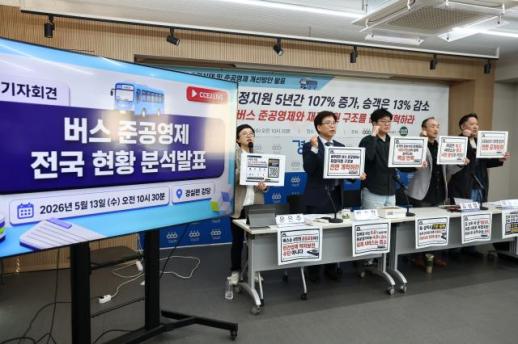 Civic Group Reports 12% Decline in Bus Passengers Despite Increased Funding This year marks the 20th anniversary of the quasi-public bus system in South Korea. Despite a more than twofold increase in national bus funding over the past five years, passenger numbers have dropped by over 12%, failing to recover to pre-COVID-19 levels. The Citizens' Coalition for Economic Justice and the Public Transport Network released an analysis on May 13, examining bus operations data from 2019 to 2024 across the country, including the status of quasi-public bus operations in seven major cities and 151 local governments. According to the analysis, national bus funding rose from 1.98 trillion won in 2019 to 4.1 trillion won in 2024, an increase of 107.1%. However, during the same period, the number of passengers fell from 4.22 billion to 3.69 billion, a decrease of 12.6%. All seven cities implementing the quasi-public system—Seoul, Incheon, Daegu, Gwangju, Daejeon, Busan, and Ulsan—failed to recover their passenger numbers compared to 2019, even as funding increased. Specifically, Seoul saw a 7.7% decline in passengers, while funding rose by 37.2%. In Busan, passenger numbers dropped by 27.1%, yet funding doubled. Ulsan experienced a 21.6% decrease in passengers, with funding increasing by 135.8%. The 151 local governments also saw an increase in funding, but both transport revenue and passenger numbers declined. Additionally, while the number of bus stops increased, the actual distance buses traveled decreased, indicating a deterioration in service supply. Among the 151 local governments, 99 had continuous data available, showing a total operating distance that fell from 735.71 million kilometers in 2019 to 707.12 million kilometers in 2024, a 4.8% reduction. In contrast, the number of bus stops increased from 75,323 to 82,532, a rise of 9.6%. These regions were found to have inadequate levels of information disclosure and data provision. Only 66 local governments had comprehensive data available for seven key indicators—funding, transport revenue, passenger numbers, total operating distance, number of stops, number of routes, and number of operating vehicles—between 2019 and 2024. Twenty-four local governments lacked continuous data for all seven indicators, making analysis virtually impossible. The Citizens' Coalition stated, "While national bus funding has significantly increased, passenger numbers have not recovered. Some local governments are experiencing declines in transport revenue and reduced operating distances. The current bus operating system is becoming entrenched in a structure that prioritizes compensating private companies for losses over restoring citizens' mobility rights." Based on the analysis results, the coalition and the Public Transport Network called for seven measures: full disclosure of funding, standard transport costs, settlement amounts by company, and itemized expenditure; reestablishment of evaluation criteria focusing on total operating distance, frequency of service, operational counts, connectivity, and accessibility for vulnerable populations; establishment of an audit and verification system for maintenance and safety costs; creation of a citizen participation governance model for bus policy; experimentation with public operation models including public routes, contracted operations, non-profit operations, demand-responsive transport, and community-centered route systems; expansion of information disclosure regarding operating distances, daily service counts, frequency, monthly costs, and complaint status; and institutionalization of inter-local government cooperation systems. A representative from the Citizens' Coalition urged, "Candidates in local elections should adopt the seven proposed pledges to enhance bus publicness and present them as key transportation commitments. The government and the National Assembly must also immediately initiate institutional reforms to address the opacity of the quasi-public system and the privatization of route rights."* This article has been translated by AI. 2026-05-13 17:45:30
 -
 Korea Publishing Association President Kim Tae-hun: 'We Will Create a Fair Distribution System for AI Readers' "I believe a new type of 'AI reader' is emerging. It's a market where AI reads books and answers our questions," said Kim Tae-hun, the newly appointed president of the Korea Publishing Culture Association (KPCA), during a press conference held in Jongno-gu, Seoul, on May 13. He emphasized the need for the publishing industry to respond quickly and rationally to the AI era, stating, "We will contribute to the development of Korea's AI industry." Kim highlighted the importance of fair compensation, saying, "We will establish a direction for what the publishing industry should do in the AI era and how to do it. Books are a crucial foundation for AI training data." He added, "We will create a system that ensures normal copyright protection and fair compensation during the distribution of books as training data, establishing a utilization framework based on the rights of authors and publishers." The KPCA plans to gather opinions from the publishing industry through meetings and establish a distribution method for AI training data, along with building infrastructure such as a database service. Last year, the KPCA supplied data worth approximately 3.6 billion won to the Korea Data Agency. They have requested government cooperation, including budget support from the Ministry of Culture, Sports and Tourism, to expand the related industry. Kim noted, "The government and public institutions are creating book data to build sovereign AI," adding that the value of books as high-quality training data is increasing. He predicted that the demand for related data will continue to grow across various fields, including educational AI, robotic AI, and medical AI. For university textbooks, the KPCA is considering establishing an AI-based distribution platform that would implement a subscription service model similar to Netflix or Melon. This platform is expected to include features such as content summarization, chatbots, and exam question generation. Kim stated, "We need a platform that allows students to discuss and learn, which will not only help prevent illegal copying but also contribute to achieving lower textbook prices." Regarding the Seoul International Book Fair, starting next year, the KPCA plans to expand participation by utilizing the entire A and B halls of COEX. They will also present plans for improving the governance and public interest of the fair by the end of the year. The goal is to establish the fair as a leading international book fair in Asia by promoting copyright transactions and expanding discussions on technological changes in the publishing industry. Kim also expressed his intention to improve the previously strained relationship with the government, noting that the KPCA had faced conflicts during the Yoon Suk-yeol administration, resulting in a complete cut of government funding. He explained, "The government is currently in the process of establishing next year's budget by the end of this month, and we are discussing budget issues with the Ministry of Culture, Sports and Tourism." He added, "The KPCA has received no budget from the government this year," and emphasized that, from an efficiency standpoint, projects related to the publishing industry should be conducted by publishing organizations to yield at least three times the effect compared to the budget. Kim stressed the need to approach publishing from an industrial perspective, stating, "I think we have neglected the industrial perspective in the past. We aim to view the publishing industry from a balanced perspective, allowing it to develop and grow, ultimately blossoming into a cultural flower." * This article has been translated by AI. 2026-05-13 17:42:50
 -
 Gyeongbokgung Palace opens historic royal library to public through fall SEOUL, May 13 (AJP) - Seoul's historic Gyeongbokgung Palace has opened its doors to a hidden gem, Jibokjae, a former royal library that was once off-limits to the public. Starting Wednesday, visitors can explore the storied space as part of a special program running through the end of October. Used by King Gojong as his study and office, Jibokjae also served as a reception space for foreign envoys during the Joseon Dynasty. Since 2016, Jibokjae has opened seasonally as a small library, where visitors can browse historical records and books in a peaceful setting. Its distinctive architecture also sets it apart from the other palace buildings. Visitors can also take a stroll around its adjoining pavilions. The library is open from 10 a.m. to 4 p.m. excluding Mondays and Tuesdays as well as certain public holidays. It will also be closed during the hot summer months from June to August. 2026-05-13 17:34:14