


Latest by
-
 Korea's World Cup Hopes Diminish After Group Stage Setback Egypt's draw with Iran has put the South Korean men's national soccer team's hopes of advancing to the knockout stage of the 2026 FIFA North America World Cup in jeopardy.On June 27 at 12 p.m. KST, Egypt played to a 1-1 draw against Iran in their Group G match at Seattle Stadium in Washington State. As a result, Egypt secured second place in Group G and advanced to the knockout stage.Iran finished with three draws (3 points) and is now waiting to see if its goal difference of 0 will be enough to qualify as one of the top eight third-place teams. This outcome is unfavorable for South Korea, which has one win and two losses (3 points) and a goal difference of -1.Had Egypt won, Iran would have finished with two draws and one loss (2 points), allowing Egypt to maintain a better standing. However, the final result left South Korea in a precarious position, currently ranked eighth among third-place competitors.The only teams clearly below South Korea are Scotland and Uruguay. In this tournament featuring 48 teams, the top two from each group, as well as the top eight third-place teams, will advance to the knockout stage.For South Korea to advance, it must rely on the results of the final matches in Groups J, K, and L on June 28, hoping that at least two third-place teams finish below them.At the same time, Belgium dominated New Zealand 5-1 in their Group G match at BC Place in Vancouver, securing first place in the group with a record of one win and two draws (5 points) to advance to the knockout stage.* This article has been translated by AI. 2026-06-27 14:48:00
 -
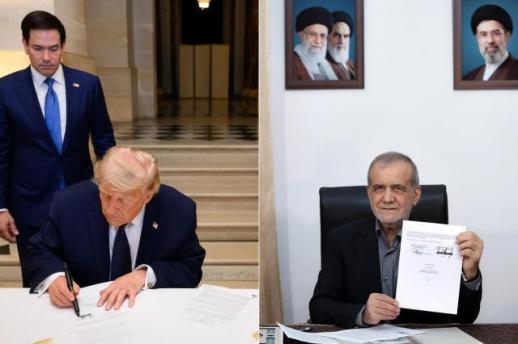 U.S., Iran clash nine days after MOU, testing fragile Hormuz truce SEOUL, June 27 (AJP) - The United States and Iran exchanged military strikes just nine days after signing a memorandum of understanding to end their war, putting the fragile agreement under its first major test. U.S. Central Command said Friday it carried out airstrikes against Iran in response to a drone attack a day earlier on the Ever Lovely, a Singapore-flagged container ship transiting the Strait of Hormuz. U.S. aircraft reportedly struck Iranian missile and drone storage facilities as well as coastal radar sites. Central Command called the attack on the commercial vessel a clear violation of the ceasefire. Vice President JD Vance said Iran should raise any dispute over the agreement through diplomatic channels, warning that Washington would “respond to violence with violence.” Iran rejected the U.S. account, accusing Washington of violating the ceasefire through its airstrikes. The Islamic Revolutionary Guard Corps said it had retaliated against several U.S. military bases in the region, though the extent of any damage was not immediately clear. Tehran also argued that the United States had ignored procedures governing passage through the Strait of Hormuz before attacking Iranian coastal territory. The confrontation exposed a key weakness in the MOU signed on June 17. Under the agreement, the two sides pledged to halt military operations, restore commercial shipping through the strait and pursue follow-up talks on Iran’s nuclear program and sanctions relief. But differences over transit rights and control of the waterway have already emerged. For Washington, keeping the Strait of Hormuz open is central to the deal. The waterway is a vital route for Middle Eastern oil and liquefied natural gas, and renewed disruption could unsettle global energy markets and supply chains. Iran, meanwhile, appears eager to show that it did not accept the agreement from a position of weakness and to preserve its leverage ahead of future nuclear and sanctions negotiations. Neither side has much to gain from a return to full-scale war. The United States faces political and economic risks from renewed conflict, while Iran would be reluctant to sacrifice the prospect of sanctions relief. The greater danger is miscalculation. Repeated attacks on ships, military facilities or U.S. bases could cause casualties and trigger a broader escalation, particularly with Israel, Lebanon and Hezbollah still shaping the regional security environment. Unless Washington and Tehran clarify the rules governing passage through the Strait of Hormuz and the limits of military retaliation, the MOU could remain vulnerable to collapse. 2026-06-27 14:29:47
 -
 President Lee Addresses Water Supply Concerns for Honam Semiconductor Cluster President Lee Jae-myung responded on June 27 to concerns about potential water shortages for the semiconductor cluster in the Honam region, stating, "Honam has as much water as the Yeongnam or Seoul metropolitan areas." In a post on X (formerly Twitter), President Lee referenced an article discussing the issue, asserting that with proper management systems in place, it is feasible to supply up to 1 million tons of industrial water daily. He criticized the historical management of water resources in Honam, saying, "For decades, the region has been maintained at an agricultural city level for political purposes, only meeting the needs for agricultural water supply." He emphasized that major semiconductor companies like Samsung and SK Hynix would not plan to build large-scale factories in a water-scarce area without thorough consideration. President Lee added, "The government does not encourage factories to be built in areas lacking water," and called for understanding and cooperation on balanced regional development and national coexistence policies, regardless of political stance. In his post, he also remarked, "What one sees depends on one's perspective," suggesting that people often assume others think and act as they do. This statement appears to counter criticisms from the opposition People Power Party, which has accused the government of pushing for semiconductor factories in Honam for political reasons. Some observers noted that the comment may also respond to recent public criticism from writer Yoo Si-min regarding President Lee's unifying approach. A Blue House official described the president's remarks as "principled" and expressed regret over the spread of misconceptions and false claims regarding corporate investment in regional areas.* This article has been translated by AI. 2026-06-27 14:04:00
 -
 U.S. eases Mythos 5 curbs as Korean access remains unclear SEOUL, June 27 (AJP) - The U.S. government has eased restrictions on Anthropic’s advanced artificial intelligence model Claude Mythos 5, allowing the company to provide access to more than 100 approved companies and organizations. The Commerce Department authorized Anthropic on Friday to make Mythos 5 available to selected “trusted partners,” according to a letter obtained by Reuters. The approved list includes a number of Fortune 500 companies and institutions, a person familiar with the matter said. Foreign nationals working for approved companies, as well as vetted foreign employees of Anthropic, will also be allowed to use the model without obtaining individual export licenses. The decision marks a partial reversal of restrictions imposed by the Trump administration two weeks earlier. On June 12, the administration ordered Anthropic to block all foreign nationals from accessing Mythos 5 and Fable 5, another advanced model equipped with safety safeguards, citing national security concerns. Because Anthropic did not have a system capable of verifying every user’s nationality, the company suspended access to both models for all users. The unusually broad export controls raised concerns within the technology industry that Washington could weaken U.S. leadership in artificial intelligence by restricting access to advanced models rather than only controlling semiconductors and computing equipment. Commerce Secretary Howard Lutnick said Anthropic had made substantial progress in addressing the government’s concerns. “Since June 12, Anthropic has worked with the government to address the relevant risks and has made significant progress,” Lutnick said in the letter. “In just two weeks, it has worked diligently to protect our security while ensuring that America remains the global leader in AI.” It remains unclear whether any South Korean companies or institutions are included on the newly approved list, which has not been made public. Before the restrictions were imposed, South Korea had secured access to Mythos through Anthropic’s Project Glasswing, a cybersecurity initiative that uses advanced AI to identify and address software vulnerabilities. The Korea Internet & Security Agency joined the project alongside major South Korean companies, including Samsung Electronics, SK Hynix and SK Telecom. Their access under the revised policy, however, has not been confirmed. The earlier restrictions reportedly followed U.S. government concerns about Anthropic granting Mythos access to SK Telecom over the company’s alleged links to China. SK Telecom has rejected the allegations, saying there was no basis for describing the company as connected to China. The latest authorization applies only to Mythos 5 and approved partners. Restrictions on Fable 5 remain in place. 2026-06-27 12:34:39
 -
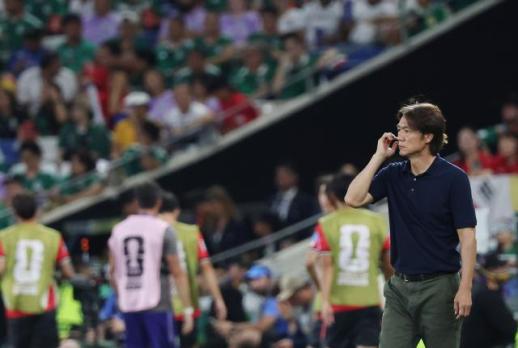 Hong Myung-bo's Team Keeps Hope Alive for Round of 32 After Spain's Win 2026 FIFA North Central America World Cup Group H saw Spain secure a victory over Uruguay, keeping Hong Myung-bo's team in contention for the Round of 32.Spain won 1-0 against Uruguay on June 27 (Korean time) at Estadio Guadalajara in Mexico. With two wins and one draw, Spain topped Group H and advanced to the knockout stage, while Uruguay, with two draws and one loss, was eliminated.Spain dominated the match overall, and the decisive goal came from Alex Baena in the 42nd minute of the first half.At the same time, Cape Verde drew 0-0 with Saudi Arabia. With three draws (3 points), Cape Verde moved from third to second place in the group, pushing Uruguay down to third and securing a spot in the Round of 32. The island nation of Cape Verde, with a population of 520,000, is making its World Cup debut and has made history by reaching the knockout stage for the first time.With Spain's victory and Cape Verde's advancement, South Korea remains in seventh place among the eight teams competing for the Round of 32 as a third-place team. In this World Cup, the top eight third-place teams will advance to the knockout stage.Hong Myung-bo's team will be watching the G Group matches at noon and the L, K, and J Group matches on June 28, hoping to secure a spot in the Round of 32.* This article has been translated by AI. 2026-06-27 11:40:00
 -
 Hong Ik-pyo: Meeting Between Presidents Lee and Moon Planned Since Inauguration Hong Ik-pyo, Chief of Staff to the President, stated that the upcoming luncheon between President Lee Jae-myung and former President Moon Jae-in, scheduled for July 1, has been in the works since the beginning of Lee's administration.In a Facebook post on June 27, Hong noted, "Due to a hectic national agenda aimed at normalizing South Korea, this meeting has not taken place until now."He added, "I have been coordinating the schedule, and finally, both individuals are available on July 1 for the luncheon. I expect this meeting with former President Moon to be a meaningful opportunity to hear his insights on restoring livelihoods, promoting national unity, and ensuring the success of a government that prioritizes the people's sovereignty."Hong emphasized, "The achievements of the past year were made possible by the foundations laid by the administrations of Kim Dae-jung, Roh Moo-hyun, and Moon Jae-in. Now is the time to create changes that the public can feel in their daily lives based on those achievements."Earlier, the Blue House announced on June 25 that President Lee would invite former President Moon to the Blue House for a luncheon on July 1.In political circles, some analysts suggested that President Lee's meeting with former President Moon might be an effort to manage factional conflicts within the ruling Democratic Party ahead of its upcoming convention. Hong's comments appear to clarify any misunderstandings regarding the purpose of the meeting.* This article has been translated by AI. 2026-06-27 11:00:00
 -
 U.S. Eases Restrictions on Anthropic's 'Mythos 5' AI Model The U.S. government has relaxed restrictions on the use of Anthropic's artificial intelligence (AI) model, 'Mythos 5.' This change comes just two weeks after the Trump administration imposed export controls on the model.On June 26, the U.S. Department of Commerce announced that it would allow Anthropic to provide 'Claude Mythos 5' (referred to as Mythos 5) to trusted partners.According to anonymous sources, this easing of restrictions will enable over 100 companies and institutions, including those on the Fortune 500 list, to access Mythos 5. Verified companies, along with their foreign employees and foreign employees at Anthropic, will not need to obtain export licenses for Mythos 5.Previously, the Trump administration issued export control guidelines on June 12, blocking all foreign nationals from accessing Mythos 5 and another model, 'Fable 5,' citing national security concerns.As a result, Anthropic, which lacked the capability to verify users' nationalities, restricted access to both models for all users. This unprecedented and broad export control on advanced AI models raised concerns that it could undermine U.S. leadership in AI.Commerce Secretary Howard Rutnik stated in a letter to Anthropic that since June 12, the company has been working with the government to address related risks and has made significant progress. He emphasized that the government has worked diligently to ensure that the U.S. can maintain its position as a global leader in AI while safeguarding national security.* This article has been translated by AI. 2026-06-27 10:44:00
 -
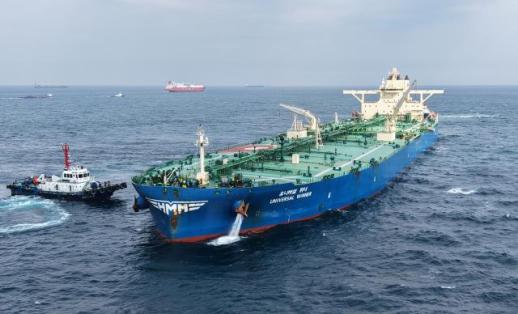 Two More South Korean Vessels Pass Through Hormuz Strait Amid Tensions Two additional South Korean vessels have successfully navigated through the Hormuz Strait, where they had been stranded due to the ongoing Middle East conflict.The Ministry of Oceans and Fisheries announced on June 27 that "two of our vessels waiting in the Hormuz Strait have passed through and are currently sailing normally." Both ships are carrying a total of four South Korean crew members. There are no South Korean vessels remaining at their destination.As a result, three South Korean vessels remain inside the Hormuz Strait. This includes the HMM Namoo, which is undergoing repairs in Dubai following an attack last month. In total, there are 43 crew members aboard South Korean vessels, including 13 South Koreans and 30 foreign crew members on other ships.The ministry stated, "Aside from the one vessel currently under repair, the remaining ships plan to navigate based on consultations with relevant countries and their own sailing schedules (including cargo loading)."At the end of February, the Iranian blockade of the Hormuz Strait left 26 South Korean vessels stranded. Following the signing of a memorandum of understanding (MOU) for peace between the United States and Iran, these vessels have been gradually departing the strait. However, tensions escalated after Iran attacked a Singapore-flagged cargo ship passing through the Hormuz Strait on June 26, prompting the United States to launch retaliatory airstrikes.* This article has been translated by AI. 2026-06-27 10:24:00
 -
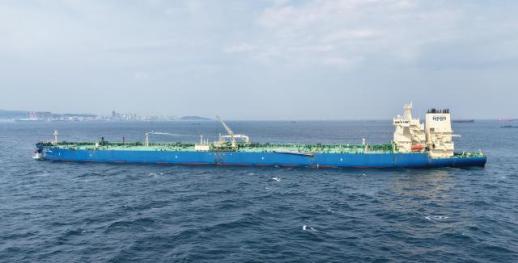 More ships run by Korean carriers exit Strait of Hormuz, 3 remain SEOUL, June 27 (AJP) - Two more South Korean-operated ships stranded inside the Strait of Hormuz have passed through the waterway and resumed normal navigation, Seoul’s Oceans Ministry said Saturday. Both vessels were carrying a total of four South Korean crew members, the ministry said. Neither ship is bound for South Korea. Their departure leaves three South Korean-operated vessels inside the strait, including the HMM Namu, which is undergoing repairs at a port in Dubai after being struck in early May. A total of 43 South Korean nationals remain aboard ships inside the strait, including 13 on South Korean-operated vessels and 30 on foreign ships. The ministry said it had provided diplomatic support through the Foreign Ministry and assisted the vessels with real-time monitoring and navigational information during their passage. Except for the vessel currently under repair, the remaining ships plan to transit the strait after consultations with relevant countries and in accordance with their operating schedules, including cargo-loading arrangements, it added. A total of 26 South Korean-operated ships were stranded inside the Strait of Hormuz after Iran closed the waterway following the outbreak of the Middle East war in late February. Two vessels were allowed to leave with Iran’s cooperation during the war. The remaining 24 have been gradually passing through the strait since the United States and Iran agreed to reopen the waterway as part of their peace deal. Although ships from various countries continue to leave the strait, security conditions remain unstable. The United States carried out airstrikes against Iran on Friday in response to an Iranian attack on a Singapore-flagged cargo ship transiting the Strait of Hormuz. 2026-06-27 10:17:46
 -
 Justice Minister Jeong Seong-ho Responds to Kim Geon-hee's 7-Year Sentence Justice Minister Jeong Seong-ho commented on the seven-year prison sentence handed to Kim Geon-hee, who was indicted on charges of bribery, stating it serves as a stern warning that public office should not be treated as a commodity. He described the ruling as a judgment against the political prosecution that previously dismissed similar charges under pressure from those in power.On June 27, Jeong posted on Facebook, noting that all charges, including the receipt of high-value jewelry and art in exchange for favors, were found guilty. He specifically mentioned the Dior bag, which had previously been overlooked by the prosecution under the Yoon Suk-yeol administration.Jeong criticized a small number of politically motivated prosecutors who have compromised the integrity of the justice system, stating, "The prosecution is facing a situation of de facto disbandment due to the actions of these individuals who have sold their souls to power and turned a blind eye to wrongdoing." He added that these prosecutors have trampled on the honor and pride of the majority of their diligent colleagues, eroding public trust in the judicial system and complicating necessary reforms.He urged these prosecutors to reflect on the harm they have caused to society and to take responsibility for their serious mistakes through ongoing special investigations. Jeong emphasized that significant changes are on the horizon for the criminal justice system and that the prosecution must strive for stronger reforms to regain public trust.He concluded by stating that the Ministry of Justice will work diligently for the people and ensure that the ultimate beneficiaries of judicial reform are the citizens.On June 26, the Seoul Central District Court's Criminal Division 21, led by Chief Judge Jo Soon-pyo, sentenced Kim Geon-hee to seven years in prison for receiving expensive jewelry and artworks in exchange for favors. The court also ordered the confiscation of items including a painting by Lee Ufan, a Vacheron Constantin watch, and a Van Cleef & Arpels necklace, along with a fine of 64.8 million won.* This article has been translated by AI. 2026-06-27 10:08:00