
Journalist

Lee Hugh
-
 Shinhan Securities Raises Lotte Wellfood's Target Price by 14% Amid Overseas Growth Shinhan Investment Corp. announced on May 11 that it has raised its target price for Lotte Wellfood from 140,000 won to 160,000 won, an increase of 14%, while maintaining its investment rating at 'Buy.' This adjustment is attributed to the company's improving performance driven by growth in overseas sales and cost efficiency in South Korea. Analyst Jo Sang-hoon from Shinhan Investment noted, "Despite ongoing cost pressures, Lotte Wellfood achieved surprising results in the first quarter due to increased domestic efficiency and rising overseas sales. It is particularly important to focus on the recovery of growth in overseas markets, especially in India and Kazakhstan." In the first quarter of this year, Lotte Wellfood reported consolidated sales of 1.027 trillion won, a 5.4% increase compared to the same period last year, while operating profit surged by 118.4% to 35.8 billion won, exceeding market consensus by 47%. Jo explained that domestic profitability improved significantly due to efforts to streamline low-margin SKUs and channels, enhance purchasing efficiency, and improve logistics. He added that overseas sales showed broad growth across all regions, driven by increased sales volume and price hikes. Looking ahead, Jo anticipates a reduction in cocoa price pressures. He stated, "Cocoa prices, which exceeded $10,000 per ton in the first half of last year, have dropped to around $3,200 this year. By the end of the second quarter, we expect the effects of improved margin spreads to be fully reflected in the results." He also expressed optimism about the company's operations in India, noting, "Following the merger of the frozen and dry food divisions last year, we expect synergy effects and increased efficiency. This will lead to expanded regional coverage and a strengthened Lotte brand image." Shinhan Investment forecasts that Lotte Wellfood's Indian subsidiary will achieve an average annual growth rate of 23% over the past five years, with a projected increase of 13.1% this year. The frozen food segment is expected to grow by 13.2%, while the dry food segment is anticipated to grow by 12.9%. 2026-05-11 07:57:18
 -
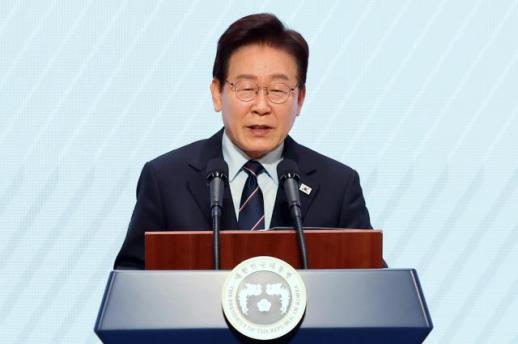 President Lee Considers Selling Opportunities for Non-Resident Homeowners On May 11, President Lee Jae-myung responded to concerns that the government's consideration of exceptions for land transaction permits for non-resident homeowners could effectively allow gap investment for homebuyers. He called such claims "close to unreasonable criticism." In a post on X (formerly Twitter), President Lee explained that the Ministry of Land, Infrastructure and Transport aims to provide equal selling opportunities for one-homeowners with tenants, similar to those for multiple homeowners. On May 10, Minister of Land, Infrastructure and Transport Kim Yoon-deok stated on his X account that the ministry plans to review exceptions for land transaction permits for non-resident homeowners from the perspective of fairness in selling opportunities. Currently, the government allows exemptions from the mandatory residence requirement for homebuyers only when purchasing properties from multiple homeowners in designated adjustment areas. In response to claims of reverse discrimination from non-resident homeowners, the government is considering extending this exemption to buyers of homes owned by non-resident one-homeowners. President Lee noted that for properties with tenants, buyers would be limited to those without homes and would be allowed to move in only after the existing lease period ends, with a maximum waiting period of two years. He added, "This means that we will provide selling opportunities for one-homeowners who cannot sell their properties due to tenant leases, allowing buyers to move in within two years after paying the deposit. To claim that this allows gap investment seems exaggerated." President Lee emphasized, "Escaping the real estate republic is an essential task for the normalization and sustainable development of our country. If real estate speculation resurfaces, who will benefit? I ask for your cooperation." * This article has been translated by AI. 2026-05-11 07:54:19
 -
 AI Server Demand Shifts Semiconductor Supply, Sparking Optimization Race in Gaming Industry As investment in artificial intelligence (AI) servers expands, the semiconductor supply is increasingly focused on server applications, leading to rising prices for consoles and gaming PCs. The gaming industry is shifting its focus from competing on high specifications to ensuring stable performance across a variety of environments, in response to users' longer device replacement cycles. According to industry sources, Nintendo will raise the prices of its console, the Nintendo Switch, starting May 25. The price of the Nintendo Switch OLED model will increase by 50,000 won, from 415,000 won to 465,000 won. The standard Nintendo Switch will rise from 360,000 won to 410,000 won, while the Nintendo Switch Lite will go up from 249,800 won to 279,800 won. Earlier, Sony Interactive Entertainment Korea (SIEK) announced a price increase for the PlayStation 5 (PS5). The base model will see a nearly 27% increase, from 748,000 won to 948,000 won. The higher-end PS5 Pro, which features enhanced GPU performance, AI-based upscaling, and high-resolution graphics processing, will rise from 1,118,000 won to 1,298,000 won, approximately a 16% increase. Microsoft is also gradually raising prices for its Xbox Series X and S consoles. The Series X has increased by about $200 in some countries compared to last year, while the more affordable Series S has seen a price rise of over 30%. In South Korea, the price has reached the upper 300,000 won range. This trend is rooted in the semiconductor supply structure, which has shifted to prioritize AI servers. As the era of 'agentic AI'—which can perform tasks and support decision-making—gains momentum, major global tech companies are ramping up investments in AI data centers. Consequently, leading semiconductor firms like NVIDIA, AMD, and Intel are increasing their production of server chips, while consumer supply is becoming more limited. Industry experts believe that this situation is unlikely to resolve quickly, suggesting that the burden of gaming hardware prices for consumers may persist over the long term. They particularly note the changing device replacement cycles. Traditionally, console replacement cycles were estimated at around five to six years, but with recent price hikes, more users may opt to keep their existing hardware for longer periods. As a result, game developers are finding it increasingly important to provide stable performance across a range of specifications rather than focusing solely on high-end PC environments. Recent major releases have faced user complaints regarding optimization issues, frame drops, and bugs shortly after launch, highlighting that performance stability is becoming a key evaluation factor alongside gameplay quality. For instance, Pearl Abyss is continuing its optimization efforts for the game "Crimson Desert," released in March, ensuring that it does not rely solely on the latest high-end hardware. The company is actively working on stabilization across different platforms, including consoles and PCs, while refining graphics options and improving frame rates. An industry insider stated, "In the past, the competition was centered around graphic quality, but moving forward, how reliably games run on limited hardware environments is likely to become a core competitive advantage. The restructuring of the semiconductor market around AI servers is influencing game development directions as well."* This article has been translated by AI. 2026-05-11 07:48:25
 -
 Myeongdong Saemaul Geumgo Partners with Punggi Saemaul Geumgo for Cooperative Growth Myeongdong Saemaul Geumgo is collaborating with Punggi Saemaul Geumgo in Gyeongbuk to create a cooperative growth model by sharing operational know-how. This initiative is notable as it focuses on building self-sufficiency among credit unions rather than offering mere one-time support, highlighting a case of trust recovery within the Saemaul Geumgo sector. In an interview on May 10, Chairman Cha Seong-yong stated, "It is not enough for just one credit union to succeed; we must grow together to earn the trust of the entire Saemaul Geumgo network. True cooperation involves creating a foundation for the other credit union to grow independently." As of the end of last year, Myeongdong Saemaul Geumgo reported assets of 447.3 billion won and a net profit of 2 billion won. Its delinquency rate stands at 3.64%, and its capital adequacy ratio is 6.79%, earning it a comprehensive management evaluation grade of 2. It is recognized as a strong credit union maintaining stable profitability and soundness in the competitive Myeongdong business district, which is home to many large financial institutions. The collaboration between Myeongdong and Punggi Saemaul Geumgos focuses on enhancing operational capabilities by understanding the unique conditions of urban and rural credit unions. Myeongdong Saemaul Geumgo is sharing its accumulated experience in loan management and customer relations with Punggi Saemaul Geumgo. The goal is to foster mutual understanding of the different business environments through staff exchanges, laying the groundwork for rural credit unions to grow independently. Chairman Cha emphasized, "Ceremonial events like gift-giving do not provide real assistance. The key is to share our strengths and weaknesses openly and find better operational strategies together." He believes that cooperation among credit unions is closely tied to the overall recovery of trust in the Saemaul Geumgo network. Following issues related to project financing and high-risk assets, risk management has been strengthened across the sector, and he argues that individual recovery efforts alone are insufficient. He stated that rural credit unions must grow steadily to enhance the overall image and trustworthiness of the Saemaul Geumgo network. The competitiveness of Myeongdong Saemaul Geumgo stems from its commitment to community cooperation. While Myeongdong is a prominent area filled with large banks and financial institutions, Myeongdong Saemaul Geumgo has built long-term trust relationships primarily with small business owners and self-employed individuals. Chairman Cha remarked, "The strength of Myeongdong Saemaul Geumgo lies not in its size, but in trust, relationships, and community cooperation." Specialized financial products also serve as a differentiating factor. Myeongdong Saemaul Geumgo has developed a mid-interest truck loan product aimed at those in the freight transportation sector. This initiative aims to provide relatively lower interest rates to truck owners who have been reliant on high-interest loans. Chairman Cha noted, "Truck loans could become a foundational industry for our credit union," adding that he and his staff have actively engaged in the field to establish this base. He stressed that a stable profit base is essential for sustainable cooperation. "We need to secure profitability to fulfill our public role reliably," he said, explaining that they are creating a structure to increase community contributions based on the credit union's profit scale. Myeongdong Saemaul Geumgo has also been involved in social contribution activities, such as providing health food support for the elderly, distributing supplies for heatwave preparedness, and sponsoring local welfare projects. Chairman Cha stated, "Saemaul Geumgo is a cooperative finance based on the spirit of mutual assistance. Beyond the growth of individual credit unions, the entire Saemaul Geumgo network must grow healthily together to establish itself as true social finance."* This article has been translated by AI. 2026-05-11 06:14:02
 -
 Green Elephant Revitalizes Hongseong's Downtown with Support from Saemaul Geumgo Saemaul Geumgo is expanding its role as a "local coexistence platform" that connects youth entrepreneurship with community revitalization, going beyond simple financial support. Leveraging its strengths as a community-based financial institution, it is creating a virtuous cycle in the local economy through funding and community connections.A prime example is the youth startup Green Elephant in Hongseong, South Chungcheong Province. Green Elephant produces meal kits using eco-friendly agricultural products contracted from over 30 local farms and delivers them in the early morning to the Hongseong area. Founded by Kim Man-i, the startup connects local agricultural products with consumers and young people.In its early stages, Green Elephant received 50 million won in funding from Hongju Saemaul Geumgo to establish its business. It later secured an additional 40 million won through the Saemaul Geumgo Central Association's Youth Local Support Project. The support extended beyond funding; Hongju Saemaul Geumgo also promoted and sold Green Elephant's products at its general meetings and member events.This collaboration has led to the revitalization of Hongseong's downtown area. The "Mujeong Market," a local commercial revitalization project, has been held nine times on Honggotong Street, attracting about 1,700 visitors. This initiative has transformed what was once a declining cultural and commercial center in Hongseong into a vibrant gathering place.The case of Green Elephant illustrates how local production, consumers, and finance can be interconnected in a virtuous cycle. Analysts suggest that local financial institutions are playing a platform role that goes beyond simple lending to connect entrepreneurship, distribution, and youth communities.The Hongseong MG Cooperation Center, established based on the private startup incubation facility Jelly's Lounge, is a notable example. This space has hosted 96 meetings for local creators, fostering collaboration among young residents.The MG Cooperation Center project is an initiative by the Saemaul Geumgo Central Association, in collaboration with the Ministry of the Interior and Safety and the Together Foundation, aimed at addressing local issues such as urban decline, agricultural overproduction, and youth isolation through youth entrepreneurship and community-based projects since 2024.The Saemaul Geumgo Central Association plans to expand its collaboration with youth village enterprises this year, selecting over 20 organizations to implement cooperative projects worth approximately 2 billion won. A representative from the Saemaul Geumgo Central Association stated, "We plan to actively promote community development through continuous cooperation with social solidarity economy enterprises."* This article has been translated by AI. 2026-05-11 06:12:20
 -
 Misconceptions About Albumin Supplements Recent interest in liver health and fatigue relief has led to an increase in the consumption of albumin protein supplements. Albumin is a key plasma protein synthesized in the liver, responsible for maintaining colloid osmotic pressure in the blood and transporting various substances, including drugs, hormones, and fatty acids, while also playing a role in antioxidant activity. A decrease in serum albumin can lead to symptoms such as edema, ascites, and general weakness, prompting some patients to believe that taking albumin supplements could raise their serum levels. Hypoalbuminemia is used as a clinical indicator related to the severity of chronic diseases, including cirrhosis. However, egg white-derived albumin products primarily contain ovalbumin, not human serum albumin. More importantly, whether albumin or other proteins are consumed, they are broken down into amino acids and small peptides by stomach acid, pepsin, pancreatic proteases, and intestinal mucosal peptidases before absorption. The structure does not allow for the direct entry of intact albumin molecules into the bloodstream to replenish serum albumin levels. In fact, there is limited evidence that large proteins or peptides are absorbed in physiologically significant concentrations in healthy adults; absorption mainly occurs in the form of amino acids and di-/tri-peptides. Clinically, it is rare for serum albumin levels to significantly increase in patients with cirrhosis when taking albumin supplements. In cirrhosis, hypoalbuminemia does not simply result from a lack of albumin intake but is a complex outcome of reduced protein synthesis by liver cells, fluid retention due to portal hypertension, blood dilution, systemic inflammatory responses, increased protein catabolism, and protein loss through the kidneys or intestines. Thus, oral albumin products are just one source of amino acids, similar to regular protein foods. While the absorbed amino acids can serve as building blocks for albumin synthesis in the liver, patients with already impaired liver function may not see an immediate increase in production from merely supplying these building blocks. The albumin used in medical settings is an intravenous formulation of human serum albumin, distinct in purpose and mechanism from oral albumin supplements. Intravenous albumin is used in specific complications of cirrhosis, such as preventing circulatory dysfunction after large-volume paracentesis, spontaneous bacterial peritonitis, and hepatorenal syndrome. This treatment aims to correct intravascular volume and colloid osmotic pressure, stabilizing circulatory function, and is not intended for nutritional supplementation or to simply raise albumin levels. Therefore, it is inappropriate to view albumin supplements as liver function enhancers or fatigue relievers. The term "albumin supplementation" used in product advertisements may mislead consumers into thinking that serum albumin is directly replenished. In reality, it should be understood as a form of protein supplementation that cannot replace disease treatment or liver function recovery. For liver health, accurately diagnosing underlying diseases and maintaining balanced nutrition is more important than consuming specific protein products at high costs. Patients with cirrhosis often experience muscle wasting and malnutrition, necessitating consultation with specialists and nutritional management. Generally, for patients with cirrhosis, a protein intake of about 1.2 to 1.5 grams per kilogram of body weight per day is recommended to prevent muscle wasting and improve nutritional status. However, patients with ascites, hepatic encephalopathy, or reduced kidney function require individualized dietary prescriptions based on their specific conditions. Common chronic liver diseases in South Korea include hepatitis B and C, metabolic fatty liver disease, alcoholic liver disease, and cirrhosis, all of which can progress to liver cancer. Particularly, liver cancer often presents with few early symptoms, making regular surveillance and screening crucial for patients with cirrhosis or chronic viral hepatitis. Symptoms such as pain in the upper right abdomen, weight loss, severe fatigue, and jaundice may indicate that the disease has significantly progressed. The National Cancer Information Center also identifies chronic hepatitis B and C, cirrhosis, alcoholic liver disease, and obesity and diabetes-related fatty liver disease as major risk factors for liver cancer. To prevent liver cancer, it is important to receive hepatitis B vaccinations, undergo hepatitis C screening and treatment, abstain from or limit alcohol consumption, maintain a healthy weight, manage diabetes and hyperlipidemia, and avoid unverified folk remedies and hepatotoxic medications. Patients with cirrhosis or chronic hepatitis should undergo regular liver ultrasounds and blood tests, and rather than relying on health supplements, it is advisable to consult specialists for treatment tailored to the causes and stages of their conditions.* This article has been translated by AI. 2026-05-11 06:09:14
 -
 Surprising Economic Growth Raises Interest Rate Concerns “While everyone expected the semiconductor market to improve, it was hard to predict it would get this good.” This remark came as the Bank of Korea announced its preliminary gross domestic product (GDP) figures for the first quarter of this year, symbolizing an unexpected relief for the economy. The economy grew by a solid 1.7% compared to the previous quarter, surpassing market expectations and signaling that South Korea has entered a robust growth phase. A closer look reveals even more surprising developments: private consumption, which had been sluggish, increased by 0.5% from the previous quarter, indicating a gradual recovery. Externally, the semiconductor sector is driving growth, while internally, private consumption is showing signs of a modest rebound, fueling hopes for economic recovery. However, beneath this impressive growth rate lie clear structural limitations. According to the Bank of Korea, the manufacturing sector played a crucial role in this quarter's growth, with semiconductors accounting for over 55% of the total contribution. This means that more than half of the 1.7% growth came from just one sector. In fact, excluding semiconductors, manufacturing production only increased by 0.2%, indicating stagnation. The chief economist at the Asian Development Bank noted that excluding the semiconductor boom and considering the ongoing high oil prices due to the Middle East conflict, South Korea's economic growth rate could face a downward pressure of 0.9 percentage points this year. This suggests that the benefits of the semiconductor boom have not been evenly distributed across employment, domestic consumption, and small businesses. The growth figures complicate the Bank of Korea's decision-making. The central bank has maintained its base rate at 2.50% for seven consecutive meetings, despite widening interest rate differentials with the U.S. and currency instability, reflecting a cautious approach due to rising numbers of marginal firms, household debt burdens, and concerns over domestic economic slowdown. However, with both high economic growth and upward pressure on prices now confirmed, the justification for maintaining the current rate has weakened. While the improved growth rate alleviates some downside risks, the prolonged conflict in the Middle East and rising international oil prices have intensified supply-side inflationary pressures. Currency pressures remain a concern as well. The unexpected growth has provided some comfort to the South Korean economy but has also raised the possibility of a shift in the central bank's policy. With the economy proving more resilient than expected, the focus of monetary policy may shift from defending growth to stabilizing prices and exchange rates. Recently, Bank of Korea Deputy Governor Yoo Sang-dae mentioned the potential for a change in policy signals, which the market interpreted as a hint at the resumption of interest rate hikes. The challenge is that the burden of tightening is not evenly distributed across the economy. Unlike the semiconductor-driven growth, there are still concerns about a weakening job market, the burdens on vulnerable borrowers, and deteriorating financing conditions for businesses. The average number of unemployed in the first quarter reached over one million for the first time in five years, highlighting a cold job market where the trickle-down effect is concentrated in only a few sectors. This reality calls for a more nuanced monetary policy from the Bank of Korea. Ultimately, monetary policy must be guided by larger risks. With both rising growth rates and upward price pressures confirmed, the Bank of Korea's room to maintain its current freeze has narrowed significantly. The figure of 1.7% now carries implications beyond mere growth statistics. An environment has emerged where the Bank can no longer remain in its previous stance of freezing rates. However, even if an interest rate hike becomes inevitable, there must be accompanying policy measures to support vulnerable borrowers and businesses facing worsening financing conditions. The message from the May Monetary Policy Committee is likely to mark a turning point, signaling the end of the prolonged freeze and the beginning of a tightening phase.* This article has been translated by AI. 2026-05-11 06:07:47
 -
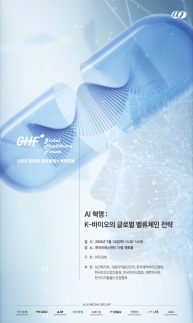 16th Global Healthcare Forum to be Held on May 14 Aju News Corporation (Aju Economy) will host the 16th Global Healthcare Forum on May 14. This year's forum will focus on the theme "AI Revolution: Global Value Chain Strategy for K-Bio," highlighting the structural changes brought by artificial intelligence (AI) in the pharmaceutical and biotech industries, as well as future responses to these changes. The forum will feature participation from government agencies, academia, and private companies, with in-depth discussions and presentations on topics including: △ AI Drug Development Platform Chemiverse: Present and Future △ Capturing Big Data for New Drug Development: AI 'Pharma 5.0' △ Policies Supporting the Globalization of K-Bio. This event aims to explore innovations and enhance competitiveness in both domestic and global pharmaceutical and biotech industries, and it encourages widespread interest and participation. ■Theme: AI Revolution: Global Value Chain Strategy for K-Bio ■Date: May 14, 2026 (Thursday) from 2:30 PM to 4:30 PM ■Location: Maehwa Hall, 19th Floor, Korea Press Center ■Hosted by: Aju Economy ■Sponsored by: Ministry of Health and Welfare, Ministry of Food and Drug Safety, Korea Pharmaceutical and Bio-Pharma Manufacturers Association, Korea Health Industry Development Institute, Korea Bio Association, Korean Pharmaceutical Association, Korea Digital Health Industry Association ■Contact: Aju Economy Forum Secretariat (02 767 1642)* This article has been translated by AI. 2026-05-11 06:06:41
 -
 Fans Line Up for 'B Mainstream Invitation' to See 'Heo Gwan-min' "It seems more important to not judge others based on their tastes than to refine your own preferences. Just because you've seen high-end or classic films doesn't mean you should show off," said Kim Min-kyung, an editor at Minumsa, during an interview before the 'B Mainstream Invitation' event on May 9. Joining her were rapper Heo Ki Shibaseki and drummer Kim Gan-ji, who added, "Watch a lot and enjoy a lot," and "When you like something, don’t worry about what others think."The trio, known as 'Heo-Gan-Min,' are featured in Toss's YouTube channel 'Moneygraphy,' where they engage in candid discussions about their diverse tastes in film, literature, and gaming. Their open dialogue resonates with younger audiences, creating a liberating atmosphere that encourages honesty over judgment. Interestingly, the entity behind this taste community is the financial platform Toss. Since launching its YouTube channel 'Moneygraphy' in September 2021, Toss has expanded its content to include economic and lifestyle topics. The 'B Mainstream Invitation' is a spinoff from the economic content series 'B Mainstream Economics.'Toss's focus on content that is less directly related to financial services aligns with its strategy to enhance brand experience. This approach aims to increase user engagement and foster a sense of intimacy with the platform.The offline talk show attracted over 1,500 participants, showcasing its popularity. Attendees expressed their enthusiasm in an open chat room, stating things like, "I will move my salary account to Toss," and "I signed up for Toss FacePay." Toss representatives noted that the scene of participants lining up from 2:30 PM for the 6 PM event was unusual for a financial company.Baek Soon-do, the producer behind the 'B Mainstream Invitation,' remarked, "For the brand, offline events are the most effective way to leave a strong impression of Toss. We have not yet started concrete discussions about Season 2 or future directions, but we plan to continue presenting engaging projects and content."* This article has been translated by AI. 2026-05-11 06:05:11
 -
 Saemaul Geumgo Strengthens Trust and Financial Stability Saemaul Geumgo Central Association is undertaking significant reforms aimed at enhancing financial stability and expanding its role in local finance. The organization is working to stabilize its delinquency rate and manage non-performing assets while strengthening its low-income finance functions to rebuild trust. As of the end of last year, the overall delinquency rate for Saemaul Geumgo was 5.08%, down 1.73 percentage points from 6.81% at the end of the previous year. This marks a recovery to the level seen at the end of 2023 (5.07%), continuing the trend of improving asset soundness. Despite recording a net loss of 1.2658 trillion won due to the sale of delinquent loans and the accumulation of loan loss reserves, this figure represents a reduction of 476.5 billion won compared to the previous year's loss of 1.7423 trillion won. In the second half of last year, the organization achieved a net profit of 62.9 billion won, indicating potential for recovery in profitability. The reform efforts gained momentum following the appointment of Chairman Kim In in December 2023, during a period when rising interest rates and a downturn in the real estate market had negatively impacted the overall soundness of the mutual finance sector. The situation was exacerbated by a wave of deposit withdrawals from Saemaul Geumgo, making organizational normalization and trust restoration key priorities. Chairman Kim prioritized enhancing soundness and organizational reform, initiating a comprehensive overhaul. Saemaul Geumgo is focusing on managing non-performing loans and strengthening risk management while pursuing mergers with 43 credit unions over the past three years to improve its financial structure. The Ministry of the Interior and Safety noted, "Despite the challenging business environment last year due to delays in real estate recovery and stricter lending regulations, active measures such as managing non-performing loans through asset management companies, establishing the Vision 2030 Committee, and implementing company-wide reforms have gradually improved key management indicators since July of last year." Chairman Kim, who successfully secured reappointment at the end of last year, has consistently emphasized the need for reform during events such as the founding anniversary and management evaluation meetings with Saemaul Geumgo chairpersons. In February, Saemaul Geumgo announced its 'Vision 2030,' outlining key objectives including enhancing soundness, restoring cooperative identity, and addressing local issues. The organization aims to achieve a turnaround to profitability by 2028 and reduce the delinquency rate to the 3% range by 2030. Saemaul Geumgo is also intensifying its role in local and low-income finance. Currently, the share of low-income finance stands at approximately 28.5%, with plans to expand this to 80%. The organization aims to provide a total of 1.8 trillion won in financial support through guarantees and other means to strengthen its support for local communities and vulnerable groups. Policy loans such as Saemaul Geumgo's Sunshine Loan, municipal agreement loans, and small business loans are steadily increasing, with amounts of 295.8 billion won in 2023, 312.3 billion won in 2024, and 405.2 billion won in 2025. In the first quarter of this year alone, 93.4 billion won in low-income finance was supplied. Efforts to expand support for local communities are also accelerating. This year, Saemaul Geumgo plans to enhance special guarantee loans for social economy organizations, including cooperatives and social enterprises, through its newly established Social Finance Division. The organization aims to utilize its nationwide branch network to support the self-sufficiency of local social economy organizations and contribute to revitalizing the local economy. Saemaul Geumgo will continue its support for over 20 social economy organizations this year while also expanding collaboration with existing partner companies. Starting in 2024, it will launch support programs for youth-led social enterprises. The organization is also addressing the crisis of regional extinction due to low birth rates and an aging population. It plans to strengthen community support initiatives, particularly in financially underserved areas outside the capital, to aid in the recovery of local communities.* This article has been translated by AI. 2026-05-11 06:03:24