
Journalist

Lee Hugh
-
 Minister Kim Jung-kwan: U.S. Investment Principles Based on Commercial Rationality Minister of Trade, Industry and Energy Kim Jung-kwan stated on May 10 that the fundamental principle for South Korean investments in the United States is "commercial rationality," adding that the U.S. side fully understands this aspect. Speaking to reporters after concluding his visit to the U.S. and Canada, Kim explained that his trip aimed to consolidate discussions on U.S. investment projects that had previously been held at the working level. From May 6 to 9, Kim visited Washington, D.C., where he met with key U.S. officials to discuss strengthening cooperation in the industrial and trade sectors, including a $350 billion investment project. The first U.S. investment initiative, known as Project 1, is expected to be unveiled following the enactment of the Special Act on U.S. Investments on June 18, when the Korea-U.S. Strategic Investment Corporation is launched. The leading candidate for this initial project includes the construction of a liquefied natural gas (LNG) export terminal in Louisiana and new energy infrastructure projects such as nuclear power plants. However, Kim urged patience regarding specific projects, stating, "Negotiations are currently ongoing, so please watch carefully as things develop." Regarding Coupang, he mentioned, "I actually brought up Coupang first and explained the South Korean government's basic stance on the matter. It seems that this provided an opportunity to clarify any misunderstandings that existed." Before his visit to the U.S., Kim traveled to Canada from May 5 to 6, where he held meetings with cabinet-level officials to discuss specific industrial and resource cooperation related to submarine projects. On the potential $60 billion submarine project in Canada, he remarked, "We are currently in a friendly competition with Germany, and I will do my best until the end to bring good news to our citizens without making any assumptions."* This article has been translated by AI. 2026-05-11 04:02:33
 -
 Prepaid Funeral Industry Shifts to Total Life Care Model Amid Regulatory Pressures The prepaid funeral industry is accelerating its transformation to overcome stricter regulations on advance payments. Companies are attempting to pivot to a 'total life care' model as a strategy to navigate government pressures. This includes expanding direct funeral home operations and diversifying revenue streams through services related to travel, weddings, and pet care. According to industry sources on May 10, the prepaid funeral sector has a unique accounting structure that differs from traditional manufacturing or service industries. Monthly payments made by customers are recorded as 'deferred revenue'—essentially liabilities—until funeral services are actually rendered. As the number of subscribers increases and cash inflow rises, the debt ratio on the books also increases, often leading to perceptions of financial instability. Additionally, to protect subscriber payments, companies are required to deposit 50% of advance payments into banks or mutual aid associations, effectively tying up half of their funds. Concerns are growing that if the National Assembly and the Fair Trade Commission implement further regulations on advance payment management, the entire prepaid funeral industry could face a severe liquidity crisis. In response to these structural limitations, companies are expanding into total life care services. Notable examples include conversion services linked to cruise travel, weddings, healthcare, and pet funerals. By allowing subscribers to use their accumulated advance payments for a variety of services beyond just funerals, companies are broadening the utility of their prepaid products. This approach enables consumers to access services during their subscription period, diversifying the revenue model that previously relied solely on advance payments. The recent aggressive push to build direct funeral home infrastructure is also part of this revenue diversification strategy. Direct funeral homes can generate additional income through services such as catering and funeral supplies, beyond merely providing a venue. Woojung Free Life secured 15 direct funeral home brands under 'Shilnakwon' last year and has opened a new 'Shilnakwon Seoul Jejung Funeral Home' in Guro-gu, Seoul, enhancing its network in the capital. Kyowon Life opened a funeral home in Chungju this year, expanding its direct funeral home network to eight locations nationwide, with plans to open another location in the second half of the year. Boram Funeral Services has established a stable offline service chain with a total of 13 direct funeral homes across the country. An industry insider stated, "As regulations on advance payment management tighten, companies that cling solely to traditional funeral services will struggle to survive. Ultimately, only those that can transition to revenue generation through direct funeral infrastructure and lifestyle-oriented new businesses will be able to cross the threshold of survival."* This article has been translated by AI. 2026-05-11 04:01:03
 -
 South Korea's Prepaid Funeral Industry Faces Stricter Regulations The South Korean government is implementing stringent reforms aimed at increasing transparency in the management of prepaid funds within the funeral industry. As the sector reaches a milestone of 10 trillion won in prepaid funds and 10 million subscribers, it finds itself at a crossroads between the need for enhanced transparency and the reality of declining profitability.According to industry sources on May 10, six legislative proposals are currently pending in the National Assembly, focusing on controlling the management of prepaid funds by funeral companies and restricting transactions with major shareholders and related parties. This comes amid growing consumer distrust in the prepaid funeral sector, fostering a consensus on the need for stronger protections for prepaid funds.The core objective of these proposals is to eliminate speculative management of prepaid funds, which are a key asset for funeral businesses. Key provisions include the formalization of principles for managing prepaid funds, prohibiting debt guarantees and collateral provision, and banning loans for equity purchases. Additionally, the proposals aim to enhance oversight of corporate governance by limiting credit extensions to major shareholders, prohibiting unfair internal transactions, and expanding obligations for board resolutions and disclosures.The Fair Trade Commission (FTC) has also announced plans to amend the Enforcement Decree of the Installment Transactions Act and revise guidelines for imposing fines on violators of the Act, with public notices issued between March and April of this year.Notably, there is a shift in the supervisory framework. The existing FTC-centric oversight system will now incorporate the expertise of financial authorities. According to a joint proposal by the FTC and the Financial Services Commission, the FTC will be able to request support from the Financial Services Commission when necessary, and the Financial Supervisory Service will have a legal basis to directly participate in investigations and inspections of funeral companies.While the funeral industry acknowledges the importance of consumer protection, there are concerns that these regulations could threaten business sustainability. The industry relies on managing prepaid funds received from consumers to generate profits. However, increased regulatory restrictions on fund management could significantly reduce operational flexibility.An industry representative stated, "As the number of subscribers grows, the unique accounting structure leads to increased liabilities on the books. If restrictions are placed on the management of prepaid funds, the burden of managing profitability will increase. Limitations on inter-company fund transactions and stricter capital soundness standards could weaken corporate competitiveness in the long term."As South Korea enters an aging society, the scale of the prepaid funeral industry is expanding. According to the FTC, as of March this year, the total amount of prepaid funds in the domestic funeral market reached 10.3348 trillion won, more than tripling from 3.520 trillion won recorded in 2015.Woojung Free Life, the industry leader, reported a cumulative prepaid fund of 2.9118 trillion won at the end of last year and became the first in the sector to surpass 3 trillion won in April this year. Boram Funeral and Kyowon Life are fiercely competing for the second position, with prepaid fund amounts of 1.657 trillion won and 1.6462 trillion won, respectively, as of last year.* This article has been translated by AI. 2026-05-11 03:57:13
 -
 Hyundai Aims for 550,000 HEV Sales in the U.S. to Challenge Toyota Hyundai Motor Group is poised to leverage its eco-friendly vehicle competitiveness to ascend to the top of the global automotive market. Following the Trump administration's elimination of electric vehicle subsidies, the U.S. is experiencing a significant shift toward hybrid electric vehicles (HEVs). Hyundai plans to narrow the gap with Toyota by capitalizing on its supply chain advantages in the HEV sector while strengthening its electric vehicle (EV) portfolio in Europe, where environmental regulations are tightening. Hyundai Chairman Euisun Chung has proposed a strategy of turning crises into opportunities, aiming to enhance competitiveness through rapid responses to local demand. According to industry sources on May 10, Hyundai's Meta Plant America (HMGMA) in Ellaville, Georgia, has commenced production of HEV vehicles. The first model produced will be the Kia Sportage HEV, which sold 63,000 units in the U.S. last year. Production will gradually expand to include popular HEVs such as the Hyundai Tucson, Santa Fe, Palisade, Kia Carnival, and Telluride. Originally designed as an EV-only facility, HMGMA has transitioned to a mixed production system to accommodate HEV manufacturing in response to local supply changes. With the start of HEV production, HMGMA's output is expected to increase to between 300,000 and 500,000 units annually. To achieve this, the plant will implement a second shift starting in September and plans to hire an additional 2,000 employees by the end of the year, doubling its workforce. Brent Sturph, HMGMA's chief operating officer, stated in a local media interview, "We can produce both EVs and HEVs, and we aim to add 500,000 units to our annual production capacity." Last year, Hyundai and Kia sold 1,836,172 vehicles in the U.S., with HEV sales increasing by 48.8% to 331,023 units. Following the repeal of the Inflation Reduction Act (IRA) in September, the U.S. is rapidly transitioning from EVs to HEVs. In fact, HEV sales in the U.S. rose by 10% year-over-year to approximately 650,000 units from the fourth quarter of last year to the first quarter of this year, while EV sales decreased by 8% to around 450,000 units during the same period. Last year, Toyota sold 1,183,248 HEVs in the U.S., compared to Hyundai Motor Group's 331,023 units. Despite a significant sales gap of over 850,000 units, Hyundai is increasing its presence through rapid growth and supply chain advantages. Hyundai's growth rate of 48.8% last year far surpassed Toyota's 17.6% growth. Industry insiders noted, "Toyota's inability to keep up with the rapid HEV transition in the U.S. has led to bottlenecks in popular models like the RAV4, resulting in a significant loss of demand. Additionally, Toyota's reliance on Asian supply chains for batteries and semiconductors remains high, while Hyundai has already established battery plants and mixed production bases for EVs and HEVs in North America, allowing for a quicker response to U.S. policies." Hyundai Motor Group plans to increase its HEV sales in the U.S. to 550,000 units this year, leveraging a more flexible HEV supply chain compared to Toyota. Hyundai aims to achieve this by launching a fully revamped Palisade, along with facelifts for the Santa Fe and Elantra, targeting 300,000 units, while Kia plans to contribute 250,000 units through the second-generation Telluride and additional models like the Seltos. The premium brand Genesis will also significantly expand its HEV lineup this year. An industry expert commented, "To break the established notion of 'hybrid equals Toyota' in the U.S., Hyundai must go beyond simply offering fuel-efficient vehicles. They need to showcase strong competitiveness in innovative extended-range electric vehicles (EREVs) and larger vehicle segments that appeal to local preferences. Especially under a potential second Trump administration, not only product offerings but also supply chain and localization of parts will be crucial, necessitating simultaneous efforts to stabilize production in the U.S."* This article has been translated by AI. 2026-05-11 03:55:20
 -
 Hyundai Faces Sales Decline in Turkey Amid EU Electrification Shift Hyundai Motor Company is experiencing challenges as it transitions to electrification in Europe. The Turkey plant, which previously produced only internal combustion engine vehicles, is undergoing a production line change ahead of its first electric vehicle, leading to a significant drop in sales. This decline reflects the transitional impact of aligning with the European Union's green regulations. According to Hyundai, its Turkey subsidiary (HMTR) sold a total of 39,116 vehicles in the first quarter of this year. This marks a decrease of 22,696 units compared to 61,812 units sold during the same period last year, representing a decline of approximately 36.7%. The drop in sales from the Turkey subsidiary far exceeds the overall sales decline for Hyundai. In the first quarter, Hyundai's total factory sales reached 547,626 units, down 13,560 units from 561,186 units during the same period last year. The more than 20,000-unit decline from the Turkey subsidiary diluted the increases from other production facilities. Notably, the poor performance of HMTR in the first quarter was primarily driven by a decrease in exports rather than domestic sales. Export volumes fell to 29,570 units in the quarter, down 21,930 units (43%) from 51,500 units in the same period last year. Domestic sales decreased from 10,312 units to 9,546 units, a drop of only 766 units (7%). Essentially, the decline in exports significantly impacted overall sales performance. The sharp decline in sales from the Turkey subsidiary is linked to Hyundai's transition of its European production system. Starting in August, the Turkey plant will begin producing the Ioniq 3, a strategic model for Europe, with sales commencing in September. Consequently, HMTR will inevitably reduce production of internal combustion engine vehicles as it prepares for the mass production of its first electric vehicle model. Adjustments to the existing internal combustion engine lineup have already begun. For instance, the small hatchback i10 was discontinued at the end of last year as part of the electrification strategy. Sales of the i10, which reached 8,577 units by July last year, plummeted to just 20 units by December. There have been no sales of the i10 this year. The reduction in existing models and the preparation for new electric vehicle production have created a temporary sales gap. Looking ahead, the role of the Turkey subsidiary is expected to expand as a production hub for electric vehicles. HMTR, which has traditionally produced internal combustion engine compact cars like the i10 and i20 for Europe, will enhance its electrification production capabilities with the launch of the Ioniq 3. Most of the vehicles produced at this facility have been exported to major European markets, making the transition of the Turkey plant's vehicle types directly relevant to Hyundai's sales strategy in Europe. The increasing emphasis on green policies across European countries also underscores the urgency for Hyundai to accelerate its electrification transition. Enhancing local production capacity is crucial for ensuring regulatory compliance and supply stability. With the Ioniq 3, Hyundai's electrification strategy in Europe is expected to gain momentum. An industry insider stated, "Given the stringent environmental regulations in Europe, it is essential to shift the local production system toward electric vehicles. The short-term performance decline of the Turkey subsidiary can be viewed as a transitional phenomenon during this line change process."* This article has been translated by AI. 2026-05-11 03:53:37
 -
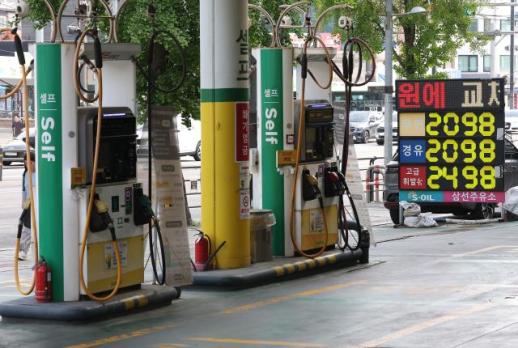 One Month After Gas Station-Refinery Cooperation Pact, Concerns About Effectiveness Grow Amid rising oil prices due to the conflict in the Middle East, the "Social Dialogue Cooperation Agreement between Gas Stations and Refineries to Overcome the Middle East Crisis" was signed a month ago under the leadership of the ruling party. However, concerns about its effectiveness have emerged. Although the agreement includes provisions to abolish the post-settlement system and ease exclusive transactions, the specific implementation criteria remain unclear. According to a report by Aju Economy on May 10, many gas stations are reportedly unaware of the agreement's details. Critics argue that measures intended to stabilize oil prices and improve the oil distribution structure have not been effectively applied on the ground, leading to confusion. The key points of the cooperation agreement, signed on April 9, include changing the existing full purchase contracts to a mixed contract that stipulates purchasing "at least 60%" and abolishing the post-settlement system, which had been a major complaint from gas stations, although it can still be allowed upon request. However, the refining industry claims that the agreement has not significantly changed existing trading practices. An industry insider stated, "There are hardly any substantial changes compared to before," adding that the post-settlement system was originally optional and that exclusive contracts could be renewed annually. One of the main concerns for the refining industry is the issue arising from the easing of the "60% exclusive contract volume." If gas stations displaying a specific refinery's brand are allowed to sell up to 40% of products from other companies, it could lead to unclear quality control and accountability. An industry representative expressed, "The biggest practical concern is how to allocate responsibility if issues arise with the quality and quantity of products mixed with those from other companies while displaying a specific refinery's logo," adding that there is also a dilemma regarding whether to provide the same marketing services and benefits to mixed-selling gas stations as those offered to branded facilities. While the government and lawmakers expedited the signing of the agreement, the lack of detailed guidelines on how to implement it on the ground has been identified as a problem. An industry representative noted, "We are currently in discussions to implement the agreement's related contents." In contrast, a gas station representative stated, "We were not even properly informed that the cooperation agreement was signed," expressing that the lack of official communication made it feel like mere media play. With even the gas stations directly involved not receiving information about the agreement, there are criticisms that the political sphere is merely highlighting the achievement of signing the agreement under the pretext of stabilizing oil prices and promoting cooperation. Key issues remain unresolved, including accountability for quality due to the easing of exclusive contracts, standards for post-settlement after its abolition, and brand management for mixed-selling gas stations, but specific follow-up coordination at the government level is still lacking. A gas station representative remarked, "While we agree with the intention to alleviate the burden on people's livelihoods amid oil price instability, we have no idea if it will be effective. The agreement will be meaningless if not implemented, so we hope to see measures applied on the ground as soon as possible."* This article has been translated by AI. 2026-05-11 03:51:57
 -
 Controversy Surrounds Samsung Union Leader Amid Strike Threat As Samsung Electronics faces the largest strike threat in its history, a moral controversy surrounding the union leadership is intensifying. Choi Seung-ho, chairman of the Samsung Group Corporate Labor Union (Corporate Union), is under scrutiny for his inappropriate remarks and allegations of creating a blacklist of union members who do not participate in the strike, leading to growing criticism of his qualifications even within the union.On May 10, industry sources reported that Choi responded harshly to a union member in the community, saying, "Are you part of the executive committee? Why are you acting like a rat?" and indicated that the member would be expelled. Despite the member's request for an opportunity to explain, Choi publicly stated, "I will change your status to a non-member and discuss your permanent expulsion with the executive committee." This behavior has been criticized by some members as an oppressive tactic that stifles free expression within the organization.The internal conflict within the union is deepening due to Choi's 'communication breakdown' approach, which excludes differing opinions. The second union, the National Samsung Electronics Labor Union (Jeonsamno), sent a formal letter on May 7 requesting an apology for Choi's threatening remarks regarding the exclusion of member feedback from negotiations.Jeonsamno criticized Choi's actions, stating, "This goes beyond personal attacks and seeks to erase the voices of our members from the negotiation table," adding that it severely undermines trust among workers and between unions. They demanded that Choi apologize and demonstrate a proactive attitude to restore inter-organizational trust.Earlier, on May 4, the third union, the Samsung Electronics Labor Union Donghaeng, which focuses on the DX sector, announced it would withdraw from joint negotiations, stating, "The Corporate Union has ignored and excluded our union's opinions while abusing its majority status." They also accused Choi of ongoing derogatory remarks that could be classified as insults under criminal law.Choi's inappropriate behavior is not a new issue. Amid the looming threat of the largest strike in the company's history, he faced backlash for taking a vacation to Southeast Asia at the end of last month, which many employees viewed as irresponsible. The government is also closely monitoring the situation.Choi previously issued a public apology after making remarks that appeared to belittle other unions while advocating for the demands of his own. In response to comments from President Lee Jae-myung targeting the Samsung Electronics union, Choi remarked in the union community, "This is about LG Uplus. They are asking for 30%, while we should settle for a reasonable level of 15%." However, when comparing the requested bonuses, the average demand from Samsung Electronics' semiconductor division is around 600 million won per person, while the LG Uplus union's request falls short of 30 million won per person. This led to a backlash from the LG Uplus union, prompting the Corporate Union to express sincere apologies and bow their heads in response.* This article has been translated by AI. 2026-05-11 03:48:25
 -
 Samsung Management and Labor Meet Amid Ongoing Disputes Over Bonuses Samsung Electronics' management and labor representatives have resumed talks under government mediation, navigating a significant strike threat—the largest in the company's history. However, substantial challenges remain, including disagreements over bonuses, conflicts within the union, and ongoing legal disputes, making a swift resolution unlikely.According to industry sources, the superior enterprise labor union at Samsung Electronics (superior enterprise union) will engage in post-adjustment discussions with management at the Central Labor Relations Commission in Sejong City for two days starting May 11, following a meeting with the Gyeonggi Provincial Labor Office. This marks the first dialogue between the two sides in 45 days since their last meeting in March.While post-adjustment talks lack legal binding power, they typically involve the labor commission facilitating a final agreement with the consent of both parties. This session will be conducted under a 'single mediator procedure' led by a jointly recommended commissioner.Despite returning to the negotiation table, significant differences over bonuses persist. Management proposes to allocate 10% of operating profit as a bonus fund if the semiconductor (DS) division achieves top sales and operating profit in the domestic market, moving away from the previous cap of 50% of annual salary. They also suggested guaranteeing up to 75% bonuses for the system LSI and foundry divisions, which are currently facing chronic losses.Conversely, the union demands the complete elimination of the bonus cap and the allocation of 15% of operating profit for bonuses. With projections indicating that Samsung Electronics' operating profit could reach up to 350 trillion won this year, if the union's demands are met, bonuses for employees in the DS division could average around 600 million won each. This would require a total bonus fund of approximately 45 to 50 trillion won, exceeding last year's research and development expenditure of 37.7 trillion won by about 32%.Internally, the union is experiencing fractures as members from different divisions have conflicting interests. The mobile and consumer electronics (DX) divisions, which are struggling with poor performance, face significant challenges in justifying bonuses comparable to those of the memory division. The Samsung Electronics Labor Union Together, which primarily represents the DX division, has formally requested that issues affecting DX members be included in negotiations.Some union members are advocating for a portion of the bonus fund to be distributed as a common bonus across all divisions, aiming to alleviate internal discord under the principle of 'One Samsung.' However, the superior enterprise union, which holds the negotiating power, has distanced itself from this proposal, stating it is not under consideration for this year's negotiations. With over 70% of union members belonging to the DS division, the strategy appears to focus on maintaining a compensation system based on divisional performance.The challenge remains that even if post-adjustment talks reach an agreement, the potential for strikes persists. In 2024, after the first strike in Samsung's history, internal dissent led to a general strike despite a labor-management agreement. Concerns are growing that similar 'post-agreement turmoil' could recur. Consequently, a second hearing on the injunction against strike actions is scheduled for May 13, which could be a critical turning point.If the court grants the injunction sought by management, the union could lose significant momentum for a strike. Conversely, if the court denies the request, the union may gain a strong justification to escalate strike actions. The Suwon District Court has indicated it will deliver its decision by May 20 at the latest.An industry insider remarked, "If no dramatic concessions are made in this hard-won final negotiation, Samsung Electronics risks facing its largest production disruption in history, entangled in legal disputes and the turmoil of strikes. Both sides need to prioritize practical survival over mere posturing for their respective positions."* This article has been translated by AI. 2026-05-11 03:47:56
 -
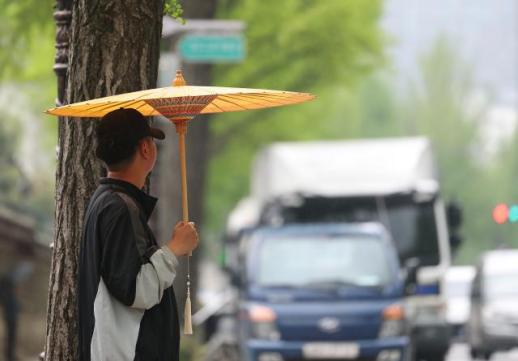 Rain Expected Across South Korea on Monday; Bring an Umbrella On Monday, May 11, spring rain is expected across various regions of South Korea.According to the Korea Meteorological Administration on May 10, rain is forecasted to begin in the capital region and central areas in the morning, while northern North Jeolla and northern and central North Gyeongsang provinces will see rain starting in the afternoon. The capital region and some areas in Gangwon Province are expected to experience a lull in rainfall by night.Expected precipitation includes 5 to 10 mm in Seoul, Incheon, Gyeonggi Province, and the five islands of the West Sea; 5 to 20 mm in inland and mountainous areas of Gangwon; around 5 mm on the eastern coast of Gangwon; and 5 to 30 mm in Daejeon, Sejong, South Chungcheong, and North Chungcheong provinces, as well as in Daegu and North Gyeongsang. Jeju Island is expected to have mostly clear weather.Morning low temperatures nationwide are forecasted to range from 9 to 16 degrees Celsius, while daytime highs are expected to reach between 19 and 25 degrees Celsius. Sea waves are predicted to be 0.5 to 1.5 meters in the East and West Seas, and 0.5 to 1.0 meters in the South Sea.In the offshore waters (about 200 km from the coastline), wave heights are expected to be 0.5 to 2.0 meters in the East and South Seas, and 0.5 to 2.5 meters in the West Sea.* This article has been translated by AI. 2026-05-11 03:47:13
 -
 'Salmon's Eye' Surpasses 3 Million Viewers, Becomes Second-Biggest Korean Horror Film The film 'Salmon's Eye' has surpassed 3 million viewers, making it the second-highest-grossing horror film in South Korea's box office history. According to the Korean Film Council's integrated ticketing system, 'Salmon's Eye' exceeded 3 million viewers as of the afternoon of May 10. This achievement surpasses the record set by the 2018 film 'Gonjiam: Haunted Asylum,' which previously held the second spot. 'Salmon's Eye' quickly gained traction after exceeding its break-even point of 800,000 viewers shortly after its release, reaching 1 million viewers within just ten days. The film continued to attract audiences steadily, ultimately reaching the milestone of 3 million viewers. The horror film depicts a filming crew that encounters something dark and mysterious in a reservoir after capturing an unidentified figure on a road view. Directed by Lee Sang-min, the film has garnered attention as an immersive horror experience. Director Lee Sang-min expressed his gratitude through the film's distributor, Showbox. He stated, "Recently, I've been enjoying doing things I've always wanted to do, like spending the whole day reading at the library, watching movies I've wanted to see, or reading comics at a bookstore. I also traveled with friends not long ago. I love walking, and the nice weather has allowed me to enjoy long walks lately." He also thanked the audience, saying, "As with any film, especially horror, I believe it is completed thanks to the viewers who experience it together in theaters and scream along with us. I sincerely thank all the viewers who helped complete 'Salmon's Eye' and supported Team 'Salmon's Eye.'" Since its release, 'Salmon's Eye' has gained popularity as an experiential horror film, showcasing the strength of Korean horror cinema by surpassing the break-even point and attracting 3 million viewers this year.* This article has been translated by AI. 2026-05-11 03:45:58