

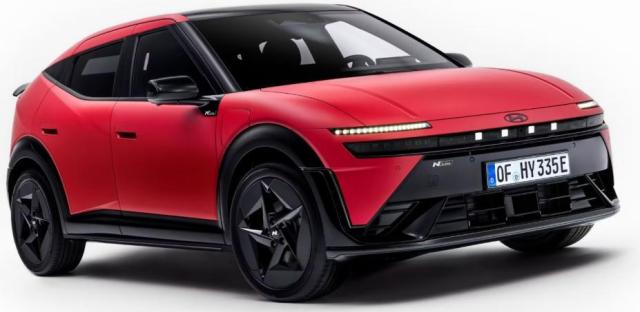
Hyundai Motor Company is experiencing challenges as it transitions to electrification in Europe. The Turkey plant, which previously produced only internal combustion engine vehicles, is undergoing a production line change ahead of its first electric vehicle, leading to a significant drop in sales. This decline reflects the transitional impact of aligning with the European Union's green regulations.
According to Hyundai, its Turkey subsidiary (HMTR) sold a total of 39,116 vehicles in the first quarter of this year. This marks a decrease of 22,696 units compared to 61,812 units sold during the same period last year, representing a decline of approximately 36.7%.
The drop in sales from the Turkey subsidiary far exceeds the overall sales decline for Hyundai. In the first quarter, Hyundai's total factory sales reached 547,626 units, down 13,560 units from 561,186 units during the same period last year. The more than 20,000-unit decline from the Turkey subsidiary diluted the increases from other production facilities.
Notably, the poor performance of HMTR in the first quarter was primarily driven by a decrease in exports rather than domestic sales. Export volumes fell to 29,570 units in the quarter, down 21,930 units (43%) from 51,500 units in the same period last year. Domestic sales decreased from 10,312 units to 9,546 units, a drop of only 766 units (7%). Essentially, the decline in exports significantly impacted overall sales performance.
The sharp decline in sales from the Turkey subsidiary is linked to Hyundai's transition of its European production system. Starting in August, the Turkey plant will begin producing the Ioniq 3, a strategic model for Europe, with sales commencing in September. Consequently, HMTR will inevitably reduce production of internal combustion engine vehicles as it prepares for the mass production of its first electric vehicle model.
Adjustments to the existing internal combustion engine lineup have already begun. For instance, the small hatchback i10 was discontinued at the end of last year as part of the electrification strategy. Sales of the i10, which reached 8,577 units by July last year, plummeted to just 20 units by December. There have been no sales of the i10 this year. The reduction in existing models and the preparation for new electric vehicle production have created a temporary sales gap.
Looking ahead, the role of the Turkey subsidiary is expected to expand as a production hub for electric vehicles. HMTR, which has traditionally produced internal combustion engine compact cars like the i10 and i20 for Europe, will enhance its electrification production capabilities with the launch of the Ioniq 3. Most of the vehicles produced at this facility have been exported to major European markets, making the transition of the Turkey plant's vehicle types directly relevant to Hyundai's sales strategy in Europe.
The increasing emphasis on green policies across European countries also underscores the urgency for Hyundai to accelerate its electrification transition. Enhancing local production capacity is crucial for ensuring regulatory compliance and supply stability. With the Ioniq 3, Hyundai's electrification strategy in Europe is expected to gain momentum.
An industry insider stated, "Given the stringent environmental regulations in Europe, it is essential to shift the local production system toward electric vehicles. The short-term performance decline of the Turkey subsidiary can be viewed as a transitional phenomenon during this line change process."
* This article has been translated by AI.
Copyright ⓒ Aju Press All rights reserved.