
Journalist

Lee Hugh
-
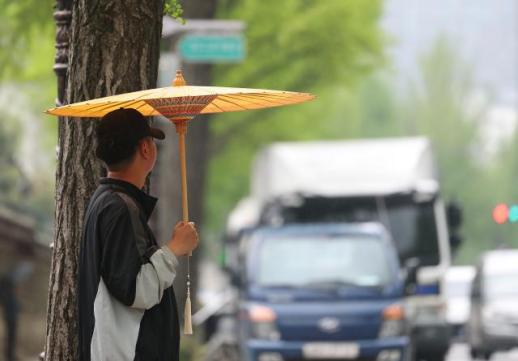 Rain Expected Across South Korea on Monday; Bring an Umbrella On Monday, May 11, spring rain is expected across various regions of South Korea.According to the Korea Meteorological Administration on May 10, rain is forecasted to begin in the capital region and central areas in the morning, while northern North Jeolla and northern and central North Gyeongsang provinces will see rain starting in the afternoon. The capital region and some areas in Gangwon Province are expected to experience a lull in rainfall by night.Expected precipitation includes 5 to 10 mm in Seoul, Incheon, Gyeonggi Province, and the five islands of the West Sea; 5 to 20 mm in inland and mountainous areas of Gangwon; around 5 mm on the eastern coast of Gangwon; and 5 to 30 mm in Daejeon, Sejong, South Chungcheong, and North Chungcheong provinces, as well as in Daegu and North Gyeongsang. Jeju Island is expected to have mostly clear weather.Morning low temperatures nationwide are forecasted to range from 9 to 16 degrees Celsius, while daytime highs are expected to reach between 19 and 25 degrees Celsius. Sea waves are predicted to be 0.5 to 1.5 meters in the East and West Seas, and 0.5 to 1.0 meters in the South Sea.In the offshore waters (about 200 km from the coastline), wave heights are expected to be 0.5 to 2.0 meters in the East and South Seas, and 0.5 to 2.5 meters in the West Sea.* This article has been translated by AI. 2026-05-11 03:47:13
 -
 'Salmon's Eye' Surpasses 3 Million Viewers, Becomes Second-Biggest Korean Horror Film The film 'Salmon's Eye' has surpassed 3 million viewers, making it the second-highest-grossing horror film in South Korea's box office history. According to the Korean Film Council's integrated ticketing system, 'Salmon's Eye' exceeded 3 million viewers as of the afternoon of May 10. This achievement surpasses the record set by the 2018 film 'Gonjiam: Haunted Asylum,' which previously held the second spot. 'Salmon's Eye' quickly gained traction after exceeding its break-even point of 800,000 viewers shortly after its release, reaching 1 million viewers within just ten days. The film continued to attract audiences steadily, ultimately reaching the milestone of 3 million viewers. The horror film depicts a filming crew that encounters something dark and mysterious in a reservoir after capturing an unidentified figure on a road view. Directed by Lee Sang-min, the film has garnered attention as an immersive horror experience. Director Lee Sang-min expressed his gratitude through the film's distributor, Showbox. He stated, "Recently, I've been enjoying doing things I've always wanted to do, like spending the whole day reading at the library, watching movies I've wanted to see, or reading comics at a bookstore. I also traveled with friends not long ago. I love walking, and the nice weather has allowed me to enjoy long walks lately." He also thanked the audience, saying, "As with any film, especially horror, I believe it is completed thanks to the viewers who experience it together in theaters and scream along with us. I sincerely thank all the viewers who helped complete 'Salmon's Eye' and supported Team 'Salmon's Eye.'" Since its release, 'Salmon's Eye' has gained popularity as an experiential horror film, showcasing the strength of Korean horror cinema by surpassing the break-even point and attracting 3 million viewers this year.* This article has been translated by AI. 2026-05-11 03:45:58
 -
 State-Owned Banks Face Employee Exodus Amid Wage Disparities State-owned banks, once regarded as 'jobs for life,' are losing their appeal. Lower salaries compared to commercial banks and ongoing discussions about relocating to regional areas during election seasons are contributing to a rise in employee turnover.According to data from the Public Institution Management Information Disclosure System, Alio, the turnover rate for male employees at the Industrial Bank of Korea reached 9.0% last year. This marks a threefold increase from 3.0% in 2021. In contrast, the turnover rate for female employees rose slightly from 1.5% to 1.6% during the same period. The turnover rate at IBK Industrial Bank also increased, with male turnover rising from 1.7% in 2021 to 6.2% last year, while female turnover went from 1.0% to 1.3%. Similarly, the Export-Import Bank of Korea saw its male turnover rate increase from 3.2% to 4.1%, and female turnover rise from 0.7% to 2.6%.As employee departures increase, the average tenure at these banks is decreasing. The average length of service at the Industrial Bank fell from 199 months in 2021 to 185 months last year. IBK's average tenure decreased from 209 months to 195 months, while the Export-Import Bank's average tenure dropped from 155 months to 151 months.The rising turnover rates at state-owned banks can be attributed to wage disparities with commercial banks. Last year, the average salary for employees at these state banks was 115.94 million won, approximately 4 million won lower than the average salaries at the four major commercial banks: Kookmin, Shinhan, Hana, and Woori.The issue of relocating financial public institutions to regional areas during election seasons has also accelerated employee departures. Since the push for the Industrial Bank's relocation to Busan began in 2022, the number of resignations increased from 30 to 100. Ahead of this year's local elections, candidates for the Daegu mayoralty from both major parties have pledged to relocate IBK to Daegu, with the Export-Import Bank and the Korea Deposit Insurance Corporation also under consideration for relocation.Additionally, the less favorable wage peak system at state-owned banks has impacted employee retention. While commercial banks offer retirement incentives and educational funds for children equivalent to two to three years' salary, employees opting for voluntary retirement at state-owned banks receive only 45% of their salary during the wage peak period as severance pay.* This article has been translated by AI. 2026-05-11 03:44:27
 -
 Tensions Rise Between Jo Guk and Kim Yong-nam Over Pyeongtaek Election Tensions are escalating between Jo Guk, leader of the Innovation Party, and Kim Yong-nam, the Democratic Party candidate, as they prepare for the Pyeongtaek by-election. The conflict has now expanded into a broader party-level dispute. On May 10, Democratic Party spokesperson Park Ji-hye issued a written briefing stating, "Jo and the Innovation Party should focus on long-term, unifying politics for a decisive victory." She added that the actions of Jo and the Innovation Party during the Pyeongtaek by-election are raising concerns among citizens who hope for unity within the progressive camp. She emphasized, "While promoting a 'Zero People Power' policy, targeting Kim only serves to create division within the progressive camp. Jo and the Innovation Party should direct their criticisms towards the candidate endorsed by the People Power Party, which has not properly apologized for its internal conflicts." In response to the Democratic Party's remarks, the Innovation Party expressed discomfort. Spokesperson Im Myung-hee stated, "We are committed to unifying politics with the Democratic Party, but Kim must clarify whether the belief that 'the state should protect the lives and safety of its citizens' is misguided, rather than attacking Jo or the Innovation Party." She also expressed regret over Kim's comments labeling Jo a criminal, stating, "This reflects the very political prosecution that the public has rejected, which is deeply regrettable." She pointed out that the true meaning of a decisive victory is that it benefits everyone. Meanwhile, the Pyeongtaek race has drawn candidates from the progressive camp, including Jo, Kim, and Kim Jae-yeon, the leader of the Progressive Party, raising concerns about vote fragmentation. On the conservative side, former three-term candidate Yoo Yi-dong and Hwang Kyo-ahn, leader of the Liberty and Innovation Party, have also announced their candidacies. Currently, the likelihood of a unified front appears low, suggesting a competitive three-to-two dynamic that may favor the conservative camp.* This article has been translated by AI. 2026-05-11 03:43:00
 -
 Mongolia Emerges as a New Battleground for K-Distribution Mongolia is emerging as a battleground for South Korea's retail industry. With a young demographic and the popularity of K-content, businesses are expanding beyond convenience stores and large supermarkets to include private brand (PB) specialty stores and restaurant franchises. According to data from the Korea Customs Service on May 10, South Korea's exports to Mongolia rose from $271.16 million in 2020 to $660.46 million last year. This marks a more than twofold increase over five years, reflecting a consistent upward trend in exports during this period. Analysts attribute this export growth to the influence of K-content. In Mongolia, where over 60% of the population of approximately 3.5 million is under the age of 34, the popularity of K-content has led to a surge in exports of South Korean consumer goods, including cosmetics and food products. Cosmetic exports skyrocketed from $31 million in 2023 to $45 million last year, while exports of K-food items such as ramen, snacks, and seasoned seaweed grew by 8%, 40%, and 38%, respectively. Recognizing Mongolia's growth potential, South Korean retailers are intensifying their efforts to penetrate the market. E-Mart plans to open three No Brand specialty stores in Mongolia this year. The company entered the Mongolian market in 2016 as a master franchise and currently operates six stores. E-Mart aims to expand its business by establishing No Brand as a separate specialty store. To facilitate this, it signed a business agreement with SKY Hypermarket LLC, the operator of E-Mart in Mongolia, at the end of last month. The goal is to increase the number of No Brand specialty stores to 15 by 2028 and to establish a dedicated logistics cluster, with plans to expand to 50 stores within ten years. The K-distribution wave in Mongolia is prominently represented by convenience stores. BGF Retail's CU has been operating 556 stores since entering Mongolia in 2018, while GS25, which entered in 2021, has expanded to 292 stores, increasing its market share. These stores have positioned themselves as key cultural spaces for Mongolia's 2030 generation by offering differentiated products such as Korean-style instant foods like tteokbokki and gimbap. Restaurant franchises and beverage brands are also accelerating their entry into the Mongolian market. CJ Foodville's Tous Les Jours, which entered Mongolia in 2016, operates 24 stores and has sold over 1.7 million cakes in ten years. MegaMGC Coffee, known for its affordable coffee, opened its first store in May 2024 and has expanded to eight locations in just over two years. Lotte Chilsung Beverage's beer brand, Crush, which entered the market in 2024, is now available in over 2,000 locations, including convenience stores and large supermarkets. This has contributed to a nearly 90% increase in Lotte Chilsung's beer exports to Mongolia last year compared to the previous year. The strong performance in exports to Mongolia has also led to a 40% increase in global beer exports last year. An industry insider noted, "Mongolia is a new emerging market that the South Korean retail industry is focusing on to reduce its dependence on China. With convenience stores and large supermarkets already established, competition for market share among franchises, PBs, and beverage brands is expected to intensify in the future."* This article has been translated by AI. 2026-05-11 03:41:06
 -
 Park Min-sik and Han Dong-hoon Open Campaign Offices in Busan Amid Tensions The campaign offices of Park Min-sik, the People Power Party candidate for the June 3 by-election in Busan's North District, and Han Dong-hoon, an independent candidate, opened simultaneously on May 10, sparking a competitive atmosphere. The People Power Party leadership, including Jang Dong-hyuk, attended Park's opening to showcase their support, while Han's event focused on local residents. The Democratic Party candidate, Ha Jung-woo, also launched his campaign office on the same day, marking the start of the election battle.At the opening of Park's office in the Daehyang Building, Jang stated, "Isn't it time to renew the People Power Party?" He emphasized that someone like Park, who has steadfastly upheld conservatism, should lead the party's transformation rather than those who sow seeds of conflict and division. Jang acknowledged the disappointment among voters due to internal strife within the party, asserting that Park Min-sik is needed, someone who truly loves the party, rather than those who seek to exploit it. He also claimed, "To prevent the tax bomb that will explode after the election, we need a true fighter like Park Min-sik who knows how to fight properly."Jang dismissed Han, stating, "He is someone who should not be in politics and does not know how to do politics," criticizing him as a candidate supported by Lee Jae-myung, who he accused of damaging the country.The event saw significant attendance from the party leadership, including Jang and floor leader Song Eon-seok, as well as senior members like Kwon Young-se, Kim Ki-hyun, Na Kyung-won, and Ahn Cheol-soo. Busan mayoral candidate Park Hyung-jun and former Minister of Land, Infrastructure and Transport Won Hee-ryong were also present.Meanwhile, Han's campaign office opening took place about a 10-minute walk away. Members of the pro-Han faction did not attend, as the People Power Party leadership had previously warned that supporting a candidate outside their party would lead to disciplinary action, prompting Han to discourage attendance.The audience at Han's event was primarily made up of local residents and supporters. Han remarked, "Today's opening is different from other events." He explained that he had initially planned to gather influential figures for a media showcase but changed his mind after meeting a local woman who had made him a rice ball lunch. He stated, "We transformed our opening into a festival with the residents," pledging to develop the North District and rebuild conservatism while stopping the current administration's excesses.Han's opening intensified the election competition, with notable attendees including Jeon Jae-soo, the Busan mayoral candidate serving as Han's campaign chair, former Busan mayor Moon Jeong-soo, honorary campaign chair Kim Young-chun, and Congressman Kim Young-jin. Han expressed his commitment, saying, "As a son of North District, I will dedicate my expertise in artificial intelligence to the future of our district."* This article has been translated by AI. 2026-05-11 03:38:55
 -
 Iran Warns Ships from Countries Complying with US Sanctions Will Face Difficulties in Hormuz Iran's military has warned that vessels from countries adhering to U.S. sanctions against Iran will face challenges in passing through the Strait of Hormuz. On May 10, Mohammad Akraminia, a spokesperson for the Iranian Army, stated in an interview with the state-run IRNA news agency that countries imposing sanctions on Iran following the U.S. precedent will undoubtedly encounter difficulties in navigating the Strait of Hormuz. Akraminia claimed that due to military confrontations with the U.S. and Israel, Iran has no choice but to leverage the "geopolitical potential" of the Strait of Hormuz. He emphasized that Iran is currently exercising its sovereignty over the waterway. He added that all vessels wishing to transit the strait must now coordinate their actions with Iran, suggesting that this move could provide significant advantages to the country. The spokesperson also indicated that if adversaries were to attack Iran again, the country would respond with new means. He warned that any renewed aggression against Iran would face a "surprising response," which would include new weapons, tactics, and battlefields. Amid these tensions, military strains surrounding the Strait of Hormuz are escalating once more. According to TASS news agency, on the night of May 7, tensions rose as the U.S. and Iran exchanged attacks in the Gulf region. Iranian state television reported that the U.S. attacked an Iranian oil tanker, prompting Iran to claim it retaliated by targeting three U.S. destroyers near the Strait of Hormuz. Additionally, reports have emerged that Iran has deployed lightweight submarines for the first time to control shipping in the Strait amid its ongoing conflict with the U.S. According to semi-official Mehr news agency, Rear Admiral Shahram Irani, commander of the Iranian Navy, stated that the deployment of submarines is being increased in response to the threats, capabilities, and needs in the Strait of Hormuz. Irani referred to the Iranian submarines as the "dolphins of the Persian Gulf," emphasizing that their primary capability is to operate stealthily in the depths of the strait and intercept and sink all types of hostile vessels. This development indicates Iran's intention to use its control over the Strait of Hormuz as leverage in negotiations for a ceasefire with the U.S.* This article has been translated by AI. 2026-05-11 03:37:21
 -
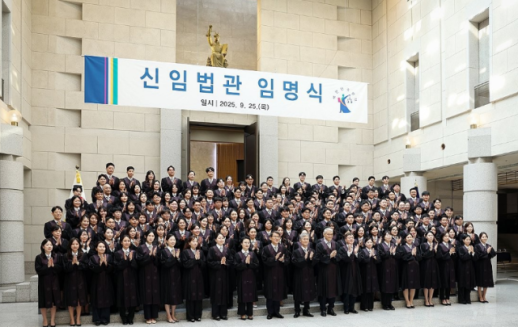 Record Number of Prosecutors Apply for Judgeships Amid Court Reforms As the implementation of judicial reform legislation aimed at abolishing the prosecution office approaches in October, there is a notable increase in the departure of prosecutors. Resignations, leaves of absence, and special prosecutor assignments have surged, with the number of experienced judges applying for judgeships reaching an all-time high. According to the legal community on May 10, the number of former prosecutors applying for judgeships in the 2026 judgeship appointment process exceeded last year’s record of 48 applicants. Reports indicate that there are around 280 applicants from within the prosecution, with over 100 passing the initial document screening. The Court Administration Office stated, "We cannot disclose the exact numbers, but they will be made public after the hiring process concludes in October this year." The trend of increasing applications from former prosecutors has been evident in recent years. The number rose from 7 in 2018 to 12 in 2019, 22 in 2020, 26 in 2021, and 36 in 2022. Although it dipped to 28 in 2023 and 25 in 2024, it surged to 48 last year, and this year is expected to surpass that record. Legal experts attribute this increase to growing organizational instability as the abolition of the prosecution office and the establishment of the Serious Crimes Investigation Agency and the Prosecution Agency approach in about five months. Ongoing national investigations into prosecution practices and proposed special prosecutor laws have contributed to a decline in morale within the organization. The exodus of prosecutors is manifesting in various ways. According to the Ministry of Justice, 69 prosecutors have resigned so far this year. Over the past year and four months, a total of 244 prosecutors have left the prosecution. Additionally, 57 prosecutors took leaves of absence in the first quarter of this year, already reaching half of last year's total of 132 leave-takers. The number of prosecutors dispatched to special prosecutor teams has also increased. Since the beginning of the Lee Jae-myung administration, 67 prosecutors have been assigned to special prosecutor teams. If the proposed special prosecutor for fabricated charges by the Democratic Party is realized, an additional 30 prosecutors may be dispatched. With the simultaneous rise in resignations, leaves, and dispatches, concerns about staffing shortages in frontline prosecution offices are growing. Reports indicate that some district prosecution offices have seen their staff reduced to half of their capacity. There are fears that if the trend of experienced judges applying for positions continues, it will inevitably disrupt prosecution operations.* This article has been translated by AI. 2026-05-11 03:35:42
 -
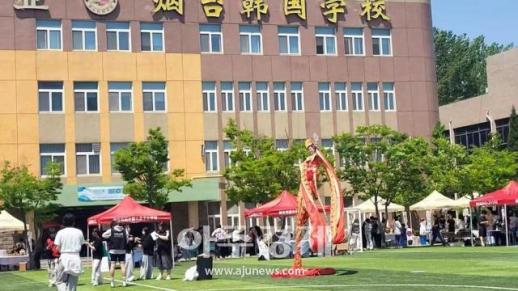 Students and Businesses Collaborate at Yantai Korean International School's Global Science Festival Yantai Korean International School, led by Foundation Chairman Kim Jeong-gu and Principal Lee Nak-jong, successfully held a large-scale international integrated festival, demonstrating new possibilities for future global education models. On May 9, the school hosted the '2026 Global Science Festival KISY' across its campus. The event garnered significant attention as an international educational platform that integrates science, culture, and industry, receiving enthusiastic responses from students, parents, and business representatives. Notably, the festival was characterized as a 'student-led experiential event,' where students actively participated in planning and operations. They designed and managed 13 science experience booths in physics, chemistry, and life sciences, explaining and demonstrating scientific principles to visitors. The festival showcased a global perspective typical of an international school. The playground and gym featured experience zones for advanced Chinese ICT technologies, including drones, robots, unmanned fire trucks, and thermal cameras. Huawei's corporate exhibition and various future industry content attracted students' attention. Additionally, the 'Korean Business Pavilion,' featuring companies such as Hyundai Infracore, Atomy, Idotech, and Eastar Jet, provided students with an indirect experience of real industrial environments for career exploration. AgriTech Global Danford, led by Chairman Kim Jeong-gu, presented the most eye-catching booth, attracting considerable interest from students and parents. The exhibition content, which integrated life sciences and future industries, was praised for enhancing the event's atmosphere. The K-Culture zone also emerged as a popular area at the festival. Activities included hanbok experiences, K-beauty, diary decorating, and tarot card readings, along with an oral examination program from a leading Korean dental implant clinic, drawing many students and parents. The event was attended by key figures from Korea and China, including Ryu Chang-soo, Consul General of the Republic of Korea in Qingdao, Chai Jianwei, Deputy Director of Laishan District in Yantai, Kim Jeong-gu, Chairman of Yantai Korean International School, Kim Jeong-ho, President of the Yantai Korean Chamber of Commerce, and Gong Dimun, Deputy Director of the Sino-Korean Industrial Technology Research Institute, adding significance to the international exchange educational festival. Principal Lee Nak-jong stated, "This festival was a process where students went beyond simply learning science to explaining and connecting concepts themselves. I hope this event, involving Korean and Chinese businesses, inspires students to dream bigger and broaden their horizons toward the world." Vice Principal Ji Eun-gyeong, who oversaw the event, remarked, "It was impressive to see students at the center of operations, solving problems and collaborating. This event confirmed the potential for the school to establish itself as an international educational platform connected to the local community." Student Council President Kim Chae-eun added, "Preparing the booths taught us the importance of collaboration and communication. It was a special time to experience the diverse cultures and technologies of Korea and China in one place." Looking ahead, Yantai Korean International School plans to further expand its student-led integrated education and corporate collaboration models to foster global future talent.* This article has been translated by AI. 2026-05-11 03:33:53
 -
 BTS Captivates Mexico City with Historic Performance at Zocalo On May 6, a convoy of black vehicles slowly entered the heart of Mexico City. As news broke that BTS had arrived, the atmosphere in the city changed dramatically. Fans flocked to the airport early in the morning, with many holding purple light sticks and waiting for hours. Each time the vehicles moved, the sound of phone lights and cheers echoed along the streets, with police motorcycles clearing the way and security vehicles following closely behind. It was a scene reminiscent of a visit from a foreign head of state. Zocalo Square, located in the center of Mexico City, is a space of power. Overlooking the square is the presidential palace, and the massive national flag waves in the wind, surrounded by layers of memories of revolution, independence, protests, and crowds. This is the closest place to the heart of Mexico as a nation. This week, a somewhat unusual scene unfolded in that very heart. Young people dressed in purple began to fill the area in front of the presidential palace. Some painted the South Korean flag on their faces, while others shouted "I love you" in broken Korean. The city buzzed with a mix of Spanish, English, and Korean, resembling the eve of a national festival. Finally, over 50,000 people erupted in cheers, waving their arms as BTS appeared alongside Mexican President Claudia Sheinbaum on the palace balcony. It was a sight typically reserved for state visits. Mexico City was the most streamed city for BTS music in March, with 714,212 streams over the month. The three concerts at Estadio GNP Seguros sold out quickly, and the local chamber of commerce estimates that the events will generate an economic impact of approximately 1.86 billion pesos, or about $140 million. However, these figures only capture the scale of the excitement, not its intensity. The real spectacle began at night. As the stadium lights dimmed on May 7, a brief silence was followed by the sounds of traditional Korean music. In that moment, as thousands held their breath and gazed at the stage, the first beat of a new song, "Hooligan," broke through the darkness. The crowd of 65,000 erupted in unison, the silver glow of light sticks illuminating the night sky, and the stadium shook with a massive sing-along. Two young girls embraced each other in tears, while strong male fans sang the chorus with their arms around each other. Despite the noise from nearby aircraft taking off and landing, it was drowned out by the cheers of the crowd. The climax of the concert came during the song "Body to Body" from the album "Arirang." As the heat of the stage momentarily paused, the chant began with just a few voices. "Arirang, Arirang, Arariryo..." The song quickly spread like a wave. Under the Mexican night sky, thousands of young people sang "Arirang" in perfect Korean pronunciation. The scene was strangely unfamiliar yet oddly poignant. It was not merely a crowd singing along to a foreign song; it felt as if they were discovering a melody that had long existed in their hearts. This fervor had already been hinted at the previous week in Tampa, Florida. Tampa is not a global cultural capital like New York or Los Angeles. With a population of 400,000, it is not traditionally considered a core market for K-pop. Yet, BTS sold out all three shows at Raymond James Stadium, hotels were booked solid, and the city implemented what was described as "Super Bowl-level traffic control" during the concert period. Even more interesting was the diversity of the audience. It was not just the stereotypical "teenage female fandom." There were elderly women with gray hair, families with young children, and a mix of Hispanic, White, Black, and Asian male fans. Local fans remarked, "This is not just an idol concert; it feels like a festival for the entire city." Why is North America so captivated by BTS and K-pop right now? On the surface, the reasons are clear: the rise of platforms like YouTube, TikTok, and Instagram, high-quality performances, and BTS's unique closeness with their fans. However, that alone does not suffice. The more fundamental reason may lie in the resonance of emotions. Latin culture is rooted in intense rhythms and collective fervor. Reggaeton, salsa, street festivals, and cheer culture all have structures that simultaneously explode with sorrow and joy. Similarly, Korean pop culture centers around a collective emotional energy known as "heung." The unique emotional spectrum of Korea, which intertwines sorrow and joy, restraint and explosion, resonates remarkably well with Latin fiesta culture. Though the languages differ, the rhythms that prompt the body to respond are the same. Adding to this is the narrative surrounding BTS. They are not a group that emerged from cultural centers like the U.S. or the U.K. They rose to the top from a small Asian country that was once considered peripheral. This narrative provides a strong emotional connection for audiences in Latin America, who have long remained on the fringes of Western culture. They see their own shadows reflected in the success story of another marginalized group. Thus, when young people in Mexico sing "Arirang" in Korean, it is not merely an expression of fandom. It may be a process of discovering emotions that have been outside the mainstream. Originally, "Arirang" was a song sung while watching someone leave. Throughout the years of colonization, war, poverty, and displacement, Koreans sang this folk song. It encapsulated both resignation to survive and the will to keep moving forward. A century ago, Korea was a country that imported culture. Koreans sang along to American and Japanese music, longing for the Western center, and the Korean language was close to a peripheral language. Yet now, that song resonates across the Pacific, reaching the other side of the world. The true meaning of the Korean Wave is not merely that Korean content has been exported globally. It lies in the fact that the emotions of a country once too small and distant for anyone to heed are now shaking the hearts of people on the other side of the globe. This is why the night in Mexico will not be easily forgotten. * This article has been translated by AI. 2026-05-11 03:31:23