
Journalist

Lee Hugh
-
 Mongolia Emerges as a New Battleground for K-Distribution Mongolia is emerging as a battleground for South Korea's retail industry. With a young demographic and the popularity of K-content, businesses are expanding beyond convenience stores and large supermarkets to include private brand (PB) specialty stores and restaurant franchises. According to data from the Korea Customs Service on May 10, South Korea's exports to Mongolia rose from $271.16 million in 2020 to $660.46 million last year. This marks a more than twofold increase over five years, reflecting a consistent upward trend in exports during this period. Analysts attribute this export growth to the influence of K-content. In Mongolia, where over 60% of the population of approximately 3.5 million is under the age of 34, the popularity of K-content has led to a surge in exports of South Korean consumer goods, including cosmetics and food products. Cosmetic exports skyrocketed from $31 million in 2023 to $45 million last year, while exports of K-food items such as ramen, snacks, and seasoned seaweed grew by 8%, 40%, and 38%, respectively. Recognizing Mongolia's growth potential, South Korean retailers are intensifying their efforts to penetrate the market. E-Mart plans to open three No Brand specialty stores in Mongolia this year. The company entered the Mongolian market in 2016 as a master franchise and currently operates six stores. E-Mart aims to expand its business by establishing No Brand as a separate specialty store. To facilitate this, it signed a business agreement with SKY Hypermarket LLC, the operator of E-Mart in Mongolia, at the end of last month. The goal is to increase the number of No Brand specialty stores to 15 by 2028 and to establish a dedicated logistics cluster, with plans to expand to 50 stores within ten years. The K-distribution wave in Mongolia is prominently represented by convenience stores. BGF Retail's CU has been operating 556 stores since entering Mongolia in 2018, while GS25, which entered in 2021, has expanded to 292 stores, increasing its market share. These stores have positioned themselves as key cultural spaces for Mongolia's 2030 generation by offering differentiated products such as Korean-style instant foods like tteokbokki and gimbap. Restaurant franchises and beverage brands are also accelerating their entry into the Mongolian market. CJ Foodville's Tous Les Jours, which entered Mongolia in 2016, operates 24 stores and has sold over 1.7 million cakes in ten years. MegaMGC Coffee, known for its affordable coffee, opened its first store in May 2024 and has expanded to eight locations in just over two years. Lotte Chilsung Beverage's beer brand, Crush, which entered the market in 2024, is now available in over 2,000 locations, including convenience stores and large supermarkets. This has contributed to a nearly 90% increase in Lotte Chilsung's beer exports to Mongolia last year compared to the previous year. The strong performance in exports to Mongolia has also led to a 40% increase in global beer exports last year. An industry insider noted, "Mongolia is a new emerging market that the South Korean retail industry is focusing on to reduce its dependence on China. With convenience stores and large supermarkets already established, competition for market share among franchises, PBs, and beverage brands is expected to intensify in the future."* This article has been translated by AI. 2026-05-11 03:41:06
 -
 Park Min-sik and Han Dong-hoon Open Campaign Offices in Busan Amid Tensions The campaign offices of Park Min-sik, the People Power Party candidate for the June 3 by-election in Busan's North District, and Han Dong-hoon, an independent candidate, opened simultaneously on May 10, sparking a competitive atmosphere. The People Power Party leadership, including Jang Dong-hyuk, attended Park's opening to showcase their support, while Han's event focused on local residents. The Democratic Party candidate, Ha Jung-woo, also launched his campaign office on the same day, marking the start of the election battle.At the opening of Park's office in the Daehyang Building, Jang stated, "Isn't it time to renew the People Power Party?" He emphasized that someone like Park, who has steadfastly upheld conservatism, should lead the party's transformation rather than those who sow seeds of conflict and division. Jang acknowledged the disappointment among voters due to internal strife within the party, asserting that Park Min-sik is needed, someone who truly loves the party, rather than those who seek to exploit it. He also claimed, "To prevent the tax bomb that will explode after the election, we need a true fighter like Park Min-sik who knows how to fight properly."Jang dismissed Han, stating, "He is someone who should not be in politics and does not know how to do politics," criticizing him as a candidate supported by Lee Jae-myung, who he accused of damaging the country.The event saw significant attendance from the party leadership, including Jang and floor leader Song Eon-seok, as well as senior members like Kwon Young-se, Kim Ki-hyun, Na Kyung-won, and Ahn Cheol-soo. Busan mayoral candidate Park Hyung-jun and former Minister of Land, Infrastructure and Transport Won Hee-ryong were also present.Meanwhile, Han's campaign office opening took place about a 10-minute walk away. Members of the pro-Han faction did not attend, as the People Power Party leadership had previously warned that supporting a candidate outside their party would lead to disciplinary action, prompting Han to discourage attendance.The audience at Han's event was primarily made up of local residents and supporters. Han remarked, "Today's opening is different from other events." He explained that he had initially planned to gather influential figures for a media showcase but changed his mind after meeting a local woman who had made him a rice ball lunch. He stated, "We transformed our opening into a festival with the residents," pledging to develop the North District and rebuild conservatism while stopping the current administration's excesses.Han's opening intensified the election competition, with notable attendees including Jeon Jae-soo, the Busan mayoral candidate serving as Han's campaign chair, former Busan mayor Moon Jeong-soo, honorary campaign chair Kim Young-chun, and Congressman Kim Young-jin. Han expressed his commitment, saying, "As a son of North District, I will dedicate my expertise in artificial intelligence to the future of our district."* This article has been translated by AI. 2026-05-11 03:38:55
 -
 Iran Warns Ships from Countries Complying with US Sanctions Will Face Difficulties in Hormuz Iran's military has warned that vessels from countries adhering to U.S. sanctions against Iran will face challenges in passing through the Strait of Hormuz. On May 10, Mohammad Akraminia, a spokesperson for the Iranian Army, stated in an interview with the state-run IRNA news agency that countries imposing sanctions on Iran following the U.S. precedent will undoubtedly encounter difficulties in navigating the Strait of Hormuz. Akraminia claimed that due to military confrontations with the U.S. and Israel, Iran has no choice but to leverage the "geopolitical potential" of the Strait of Hormuz. He emphasized that Iran is currently exercising its sovereignty over the waterway. He added that all vessels wishing to transit the strait must now coordinate their actions with Iran, suggesting that this move could provide significant advantages to the country. The spokesperson also indicated that if adversaries were to attack Iran again, the country would respond with new means. He warned that any renewed aggression against Iran would face a "surprising response," which would include new weapons, tactics, and battlefields. Amid these tensions, military strains surrounding the Strait of Hormuz are escalating once more. According to TASS news agency, on the night of May 7, tensions rose as the U.S. and Iran exchanged attacks in the Gulf region. Iranian state television reported that the U.S. attacked an Iranian oil tanker, prompting Iran to claim it retaliated by targeting three U.S. destroyers near the Strait of Hormuz. Additionally, reports have emerged that Iran has deployed lightweight submarines for the first time to control shipping in the Strait amid its ongoing conflict with the U.S. According to semi-official Mehr news agency, Rear Admiral Shahram Irani, commander of the Iranian Navy, stated that the deployment of submarines is being increased in response to the threats, capabilities, and needs in the Strait of Hormuz. Irani referred to the Iranian submarines as the "dolphins of the Persian Gulf," emphasizing that their primary capability is to operate stealthily in the depths of the strait and intercept and sink all types of hostile vessels. This development indicates Iran's intention to use its control over the Strait of Hormuz as leverage in negotiations for a ceasefire with the U.S.* This article has been translated by AI. 2026-05-11 03:37:21
 -
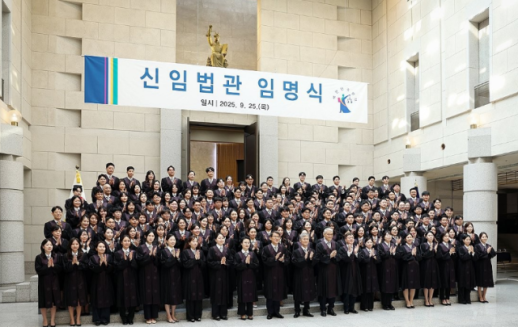 Record Number of Prosecutors Apply for Judgeships Amid Court Reforms As the implementation of judicial reform legislation aimed at abolishing the prosecution office approaches in October, there is a notable increase in the departure of prosecutors. Resignations, leaves of absence, and special prosecutor assignments have surged, with the number of experienced judges applying for judgeships reaching an all-time high. According to the legal community on May 10, the number of former prosecutors applying for judgeships in the 2026 judgeship appointment process exceeded last year’s record of 48 applicants. Reports indicate that there are around 280 applicants from within the prosecution, with over 100 passing the initial document screening. The Court Administration Office stated, "We cannot disclose the exact numbers, but they will be made public after the hiring process concludes in October this year." The trend of increasing applications from former prosecutors has been evident in recent years. The number rose from 7 in 2018 to 12 in 2019, 22 in 2020, 26 in 2021, and 36 in 2022. Although it dipped to 28 in 2023 and 25 in 2024, it surged to 48 last year, and this year is expected to surpass that record. Legal experts attribute this increase to growing organizational instability as the abolition of the prosecution office and the establishment of the Serious Crimes Investigation Agency and the Prosecution Agency approach in about five months. Ongoing national investigations into prosecution practices and proposed special prosecutor laws have contributed to a decline in morale within the organization. The exodus of prosecutors is manifesting in various ways. According to the Ministry of Justice, 69 prosecutors have resigned so far this year. Over the past year and four months, a total of 244 prosecutors have left the prosecution. Additionally, 57 prosecutors took leaves of absence in the first quarter of this year, already reaching half of last year's total of 132 leave-takers. The number of prosecutors dispatched to special prosecutor teams has also increased. Since the beginning of the Lee Jae-myung administration, 67 prosecutors have been assigned to special prosecutor teams. If the proposed special prosecutor for fabricated charges by the Democratic Party is realized, an additional 30 prosecutors may be dispatched. With the simultaneous rise in resignations, leaves, and dispatches, concerns about staffing shortages in frontline prosecution offices are growing. Reports indicate that some district prosecution offices have seen their staff reduced to half of their capacity. There are fears that if the trend of experienced judges applying for positions continues, it will inevitably disrupt prosecution operations.* This article has been translated by AI. 2026-05-11 03:35:42
 -
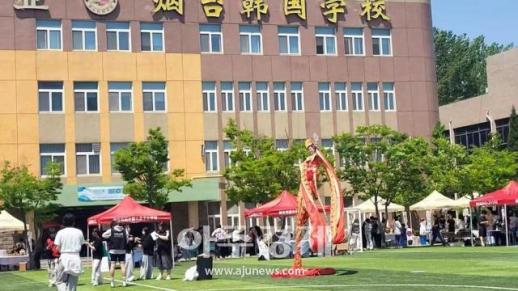 Students and Businesses Collaborate at Yantai Korean International School's Global Science Festival Yantai Korean International School, led by Foundation Chairman Kim Jeong-gu and Principal Lee Nak-jong, successfully held a large-scale international integrated festival, demonstrating new possibilities for future global education models. On May 9, the school hosted the '2026 Global Science Festival KISY' across its campus. The event garnered significant attention as an international educational platform that integrates science, culture, and industry, receiving enthusiastic responses from students, parents, and business representatives. Notably, the festival was characterized as a 'student-led experiential event,' where students actively participated in planning and operations. They designed and managed 13 science experience booths in physics, chemistry, and life sciences, explaining and demonstrating scientific principles to visitors. The festival showcased a global perspective typical of an international school. The playground and gym featured experience zones for advanced Chinese ICT technologies, including drones, robots, unmanned fire trucks, and thermal cameras. Huawei's corporate exhibition and various future industry content attracted students' attention. Additionally, the 'Korean Business Pavilion,' featuring companies such as Hyundai Infracore, Atomy, Idotech, and Eastar Jet, provided students with an indirect experience of real industrial environments for career exploration. AgriTech Global Danford, led by Chairman Kim Jeong-gu, presented the most eye-catching booth, attracting considerable interest from students and parents. The exhibition content, which integrated life sciences and future industries, was praised for enhancing the event's atmosphere. The K-Culture zone also emerged as a popular area at the festival. Activities included hanbok experiences, K-beauty, diary decorating, and tarot card readings, along with an oral examination program from a leading Korean dental implant clinic, drawing many students and parents. The event was attended by key figures from Korea and China, including Ryu Chang-soo, Consul General of the Republic of Korea in Qingdao, Chai Jianwei, Deputy Director of Laishan District in Yantai, Kim Jeong-gu, Chairman of Yantai Korean International School, Kim Jeong-ho, President of the Yantai Korean Chamber of Commerce, and Gong Dimun, Deputy Director of the Sino-Korean Industrial Technology Research Institute, adding significance to the international exchange educational festival. Principal Lee Nak-jong stated, "This festival was a process where students went beyond simply learning science to explaining and connecting concepts themselves. I hope this event, involving Korean and Chinese businesses, inspires students to dream bigger and broaden their horizons toward the world." Vice Principal Ji Eun-gyeong, who oversaw the event, remarked, "It was impressive to see students at the center of operations, solving problems and collaborating. This event confirmed the potential for the school to establish itself as an international educational platform connected to the local community." Student Council President Kim Chae-eun added, "Preparing the booths taught us the importance of collaboration and communication. It was a special time to experience the diverse cultures and technologies of Korea and China in one place." Looking ahead, Yantai Korean International School plans to further expand its student-led integrated education and corporate collaboration models to foster global future talent.* This article has been translated by AI. 2026-05-11 03:33:53
 -
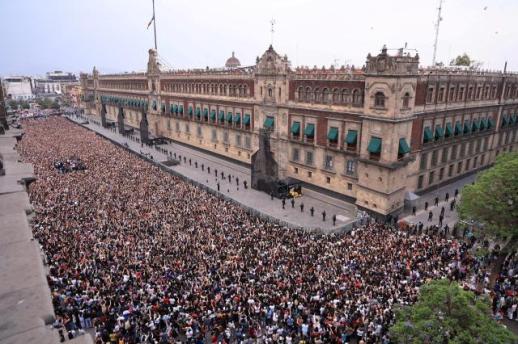 BTS Captivates Mexico City with Historic Performance at Zocalo On May 6, a convoy of black vehicles slowly entered the heart of Mexico City. As news broke that BTS had arrived, the atmosphere in the city changed dramatically. Fans flocked to the airport early in the morning, with many holding purple light sticks and waiting for hours. Each time the vehicles moved, the sound of phone lights and cheers echoed along the streets, with police motorcycles clearing the way and security vehicles following closely behind. It was a scene reminiscent of a visit from a foreign head of state. Zocalo Square, located in the center of Mexico City, is a space of power. Overlooking the square is the presidential palace, and the massive national flag waves in the wind, surrounded by layers of memories of revolution, independence, protests, and crowds. This is the closest place to the heart of Mexico as a nation. This week, a somewhat unusual scene unfolded in that very heart. Young people dressed in purple began to fill the area in front of the presidential palace. Some painted the South Korean flag on their faces, while others shouted "I love you" in broken Korean. The city buzzed with a mix of Spanish, English, and Korean, resembling the eve of a national festival. Finally, over 50,000 people erupted in cheers, waving their arms as BTS appeared alongside Mexican President Claudia Sheinbaum on the palace balcony. It was a sight typically reserved for state visits. Mexico City was the most streamed city for BTS music in March, with 714,212 streams over the month. The three concerts at Estadio GNP Seguros sold out quickly, and the local chamber of commerce estimates that the events will generate an economic impact of approximately 1.86 billion pesos, or about $140 million. However, these figures only capture the scale of the excitement, not its intensity. The real spectacle began at night. As the stadium lights dimmed on May 7, a brief silence was followed by the sounds of traditional Korean music. In that moment, as thousands held their breath and gazed at the stage, the first beat of a new song, "Hooligan," broke through the darkness. The crowd of 65,000 erupted in unison, the silver glow of light sticks illuminating the night sky, and the stadium shook with a massive sing-along. Two young girls embraced each other in tears, while strong male fans sang the chorus with their arms around each other. Despite the noise from nearby aircraft taking off and landing, it was drowned out by the cheers of the crowd. The climax of the concert came during the song "Body to Body" from the album "Arirang." As the heat of the stage momentarily paused, the chant began with just a few voices. "Arirang, Arirang, Arariryo..." The song quickly spread like a wave. Under the Mexican night sky, thousands of young people sang "Arirang" in perfect Korean pronunciation. The scene was strangely unfamiliar yet oddly poignant. It was not merely a crowd singing along to a foreign song; it felt as if they were discovering a melody that had long existed in their hearts. This fervor had already been hinted at the previous week in Tampa, Florida. Tampa is not a global cultural capital like New York or Los Angeles. With a population of 400,000, it is not traditionally considered a core market for K-pop. Yet, BTS sold out all three shows at Raymond James Stadium, hotels were booked solid, and the city implemented what was described as "Super Bowl-level traffic control" during the concert period. Even more interesting was the diversity of the audience. It was not just the stereotypical "teenage female fandom." There were elderly women with gray hair, families with young children, and a mix of Hispanic, White, Black, and Asian male fans. Local fans remarked, "This is not just an idol concert; it feels like a festival for the entire city." Why is North America so captivated by BTS and K-pop right now? On the surface, the reasons are clear: the rise of platforms like YouTube, TikTok, and Instagram, high-quality performances, and BTS's unique closeness with their fans. However, that alone does not suffice. The more fundamental reason may lie in the resonance of emotions. Latin culture is rooted in intense rhythms and collective fervor. Reggaeton, salsa, street festivals, and cheer culture all have structures that simultaneously explode with sorrow and joy. Similarly, Korean pop culture centers around a collective emotional energy known as "heung." The unique emotional spectrum of Korea, which intertwines sorrow and joy, restraint and explosion, resonates remarkably well with Latin fiesta culture. Though the languages differ, the rhythms that prompt the body to respond are the same. Adding to this is the narrative surrounding BTS. They are not a group that emerged from cultural centers like the U.S. or the U.K. They rose to the top from a small Asian country that was once considered peripheral. This narrative provides a strong emotional connection for audiences in Latin America, who have long remained on the fringes of Western culture. They see their own shadows reflected in the success story of another marginalized group. Thus, when young people in Mexico sing "Arirang" in Korean, it is not merely an expression of fandom. It may be a process of discovering emotions that have been outside the mainstream. Originally, "Arirang" was a song sung while watching someone leave. Throughout the years of colonization, war, poverty, and displacement, Koreans sang this folk song. It encapsulated both resignation to survive and the will to keep moving forward. A century ago, Korea was a country that imported culture. Koreans sang along to American and Japanese music, longing for the Western center, and the Korean language was close to a peripheral language. Yet now, that song resonates across the Pacific, reaching the other side of the world. The true meaning of the Korean Wave is not merely that Korean content has been exported globally. It lies in the fact that the emotions of a country once too small and distant for anyone to heed are now shaking the hearts of people on the other side of the globe. This is why the night in Mexico will not be easily forgotten. * This article has been translated by AI. 2026-05-11 03:31:23
 -
 Preference for Reconstruction Over Remodeling Persists Despite Expanded Authority for Special Cities In South Korea's special cities, including Suwon, Goyang, and Yongin, a new law allowing local governments to directly handle apartment remodeling plans has passed the National Assembly. However, there is a growing preference for reconstruction over remodeling in the field, raising concerns about the limited effectiveness of this policy. On May 7, the National Assembly approved the Special Act on Support for Special Cities, which expands the authority of cities with populations over one million. The law adds the establishment and modification of basic plans for apartment remodeling to the responsibilities of special city mayors, eliminating the need for approval from provincial governors. The basic plan for apartment remodeling allows for an increase of up to 15% in the number of units and aims to manage the concentrated demand for relocation that may arise from remodeling projects. It serves as a comprehensive framework for implementing project phases, incorporating resident feedback, and distributing demand. Currently, mayors of cities with populations over 500,000, excluding Seoul, metropolitan cities, and special self-governing cities, must obtain approval from provincial governors when establishing or modifying basic plans for apartment remodeling, as stipulated in Article 72, Section 4 of the Housing Act. For instance, Suwon City must submit its basic plan, approved by the Urban Planning Committee, to Gyeonggi Province for final approval after consultations with relevant departments. With the removal of this approval process, there are expectations that local governments will be able to implement support measures more quickly and in line with regional conditions. In fact, local governments have been proposing directions to promote remodeling. Suwon City has indicated that there is a lack of substantial support measures even after the enactment of the ordinance and has suggested establishing a remodeling support center. Similarly, Yongin City has proposed guidelines for applying government policies related to longevity and modular construction methods in its basic plan. However, the atmosphere on the ground shows a significant gap between expectations and reality. In first-generation new towns such as Bundang, Ilsan, Pyeongchon, Sanbon, and Jungdong, many projects aimed at remodeling are facing delays and internal conflicts, leading to a shift toward reconstruction. This trend is weakening the market dynamics in key areas of Gyeonggi Province, which were once considered the backbone of the remodeling market. Ilsan New Town exemplifies this shift. The Muncheon Village 16th district, which gained initial approval for its remodeling project, has become embroiled in internal disputes, with calls for the dissolution of the association and a halt to the project. On the same day, the Gangseon Village 14th district, which also received approval for its association establishment, decided to dissolve its remodeling association during a general meeting last year, effectively abandoning the project. As uncertainties regarding profitability and speed increase during the project process, residents are increasingly leaning toward reconstruction. Recent easing of reconstruction regulations and expanded floor area incentives have improved the viability of these projects, while remodeling is limited to a maximum increase of 15% in the number of units, restricting the number of units available for sale. While the expansion of authority for special cities is seen as a meaningful step in establishing a regulatory framework, the actual implementation of projects remains a separate issue. A resident from a remodeling project in Goyang City stated, "Even if the procedures are expedited, what matters is how much more we can earn. Nowadays, with the easing of reconstruction regulations, the profitability appears more favorable, and discussions about reevaluating the project direction are ongoing among residents." Nonetheless, some areas continue to pursue remodeling as an alternative. The eligibility period for remodeling is 15 years after completion, compared to 30 years for reconstruction, and it is relatively free from restrictions such as limitations on the transfer of membership rights. In Suwon's Yeongtong District, remodeling projects are actively underway, particularly for apartments over 25 years old. Following the Shinseong, Shin-an, Ssangyong, and Jinhung (Private Complex 5) projects, the Maetan Dong South Apartments received project approval at the end of last year with a floor area ratio of 307%. Additionally, in Yongin's Suji District, a total of six complexes, including Suji Ttireche Apartments, have received project approval.* This article has been translated by AI. 2026-05-11 03:29:07
 -
 KOSPI Hits Record High Amid Surge in Short Selling Activity As the KOSPI continues its upward rally, funds betting on stock declines through short selling are rapidly increasing. The balance of stock lending transactions has surpassed 180 trillion won for the first time, indicating an unusual trend where short selling expands even amid a rising market. According to the Korea Financial Investment Association and the Korea Exchange, as of May 7, the balance of stock lending transactions reached 179.67 trillion won, and on May 6, it was recorded at 180.63 trillion won, marking the first time it exceeded 180 trillion won. Samsung Electronics and SK Hynix topped the list of the top 10 stocks with the highest lending balances, at 21.71 trillion won and 21.66 trillion won, respectively. The lending balance refers to the amount of stocks borrowed by investors for short selling or hedging that has not yet been repaid. It is typically interpreted as an indicator of funds waiting for short selling. Additionally, major stocks with significant short selling positions include Hyundai Motor, HD Hyundai Heavy Industries, and Hanmi Semiconductor. Hyundai Motor's short selling balance is approximately 1.68 trillion won, while HD Hyundai Heavy Industries has seen its balance nearly double to about 1.38 trillion won compared to the previous month. Hanmi Semiconductor also has a short selling balance of about 1.33 trillion won, making it a notable stock for short selling bets. The short selling balance represents the amount of actual short positions that have not yet been closed. While the lending balance indicates potential future short selling, the short selling balance reflects the actual bets against stock prices. Retail investors are also continuing to bet on declines using inverse exchange-traded funds (ETFs), which profit when the index falls. According to the exchange, the KODEX 200 Futures Inverse 2X ETF saw a net purchase of about 529.9 billion won by individual investors over the past month, placing it among the top ETFs for net purchases. The trading volume is also substantial. The recent monthly average trading value of the KODEX 200 Futures Inverse 2X ETF is approximately 5.06 trillion won, with a single-day trading volume of about 546 billion won on May 8. The trading volume has exceeded 4.2 billion shares, establishing it as a leading short-term trading stock in the domestic ETF market. However, as the KOSPI continues to rise, actual returns from these investments have been disappointing. The recent one-month return for the KODEX 200 Futures Inverse 2X ETF is around -43%, and over three months, it has shown a decline exceeding 66%. This reflects the inverse structure of the ETF, which moves in the opposite direction of the KOSPI's rise. Market analysts note that despite the ongoing rally, trading in inverse ETFs remains steady. This suggests a coexistence of investor demand for both expectations of index increases and preparations for potential short-term corrections, leading to a divergence between the spot market and the derivatives and ETF markets.* This article has been translated by AI. 2026-05-11 03:27:26
 -
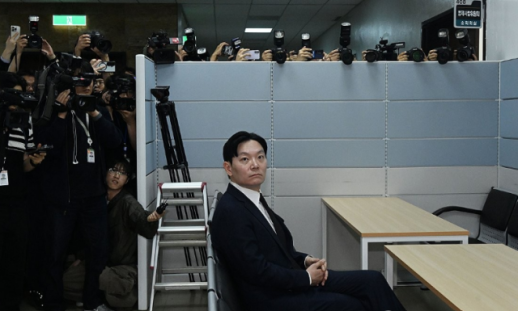 Prosecutor Park Sang-yong Faces Disciplinary Review Over Salmon Party Allegations Prosecutor Park Sang-yong, who is under scrutiny for alleged coercion of testimony related to a "salmon party" during the investigation into the Ssangbangwool North Korea remittance case, is expected to face disciplinary action soon. According to legal sources on May 10, the Supreme Prosecutors' Office plans to hold a disciplinary committee meeting as early as May 11 to discuss Park's case. The committee can summon the subject of the investigation if deemed necessary, but Park stated he has not received any notification. He has expressed a desire for an opportunity to explain himself and plans to wait at the Supreme Prosecutors' Office starting the morning of May 11 for the committee's proceedings. The disciplinary committee consists of 5 to 9 members, including both external figures from the legal, academic, media, and business sectors, as well as internal members. While the Attorney General is not obligated to follow the committee's recommendations, they have generally adhered to its decisions in the past. Even if the committee decides on the disciplinary action and its severity, there are still procedural steps before a final decision is made. If the Attorney General determines that disciplinary action is warranted, they must submit a request to the Ministry of Justice at least 17 days before the statute of limitations expires. Subsequently, the Minister of Justice, who chairs the prosecutor disciplinary committee, will decide on one of five levels of discipline: reprimand, suspension, demotion, dismissal, or termination. According to the Prosecutor Disciplinary Act, all disciplinary actions except for reprimands are executed by the President, who holds the appointment authority, upon the Minister of Justice's recommendation. If a judge or prosecutor is dismissed as a result of disciplinary action, they are barred from practicing law for three years. During the review process by the prosecution and the Ministry of Justice, the level of discipline may change. In a related case, former prosecutor Kim Sang-min, who held a book launch event while still in office and expressed intentions to run for the National Assembly, faced a suspension request from former Attorney General Lee Won-seok in January 2024. The Ministry of Justice recommended a dismissal, which is two levels higher than suspension, but the disciplinary committee ultimately decided on a three-month suspension. The Minister of Justice can also initiate disciplinary requests, leading to situations where the Supreme Prosecutors' Office may deem disciplinary action unnecessary, yet the Ministry of Justice re-evaluates the case. While Park denies the allegations of testimony coercion, criticism from the ruling party has intensified, suggesting that the investigation was manipulated. Controversy is expected to continue even after the disciplinary decision is made.* This article has been translated by AI. 2026-05-11 03:25:41
 -
 U.S. Proposes Ceasefire to Iran, But Talks Stall Amid Sanctions The United States has proposed a ceasefire to Iran and is awaiting a response, but discussions to end the U.S.-Iran conflict remain stalled as Iran has not provided an immediate reply. While seeking a diplomatic solution, the U.S. continues to impose sanctions and maintain a maritime blockade, with Iran warning of retaliation against attacks on its vessels. According to Reuters on May 9, the U.S. is waiting for Iran's response to the ceasefire proposal. President Donald Trump expressed optimism on May 8, stating he expected to receive Iran's answer that evening. In an interview with French media, Trump reiterated his expectation for a prompt response from Iran. Margo Hadad, a reporter for France's LCI, shared on social media platform X (formerly Twitter) that Trump indicated he anticipated hearing from Iran "very soon" during their conversation. However, a day later, there were no signs of movement from Iran regarding the proposal. The ceasefire offer includes provisions to officially end the war before addressing sensitive issues such as Iran's nuclear program. Currently, the U.S. and Iran appear to be discussing a framework where they would first declare an end to hostilities, followed by negotiations over the opening of the Strait of Hormuz, limitations on Iran's nuclear program, and the lifting of sanctions against Iran over a 30-day period. A key point of contention is how to handle Iran's nuclear program. In a PBS interview last week, Trump claimed that any agreement with Iran would involve the transfer of Iran's stockpile of enriched uranium to the U.S. and a halt to operations at Iran's underground nuclear facilities. Russian President Vladimir Putin has also suggested that, if necessary, Russia could store Iran's enriched uranium as part of a ceasefire agreement. However, it remains uncertain whether Iran will respond promptly to the U.S. proposal. Some analysts suggest that Iran may be stalling to extract further concessions from the U.S. As Trump prepares for a visit to China for a U.S.-China summit on May 14-15, he continues to express optimism about reaching a deal. In contrast, analysts believe that Iran has little incentive to quickly accept U.S. demands, given that a ceasefire is already in effect. The Guardian reported that diplomats who have dealt with Iranian negotiators noted that Iran tends to act as if it has ample time during negotiations. U.S. Intensifies Pressure on Iran In response, the U.S. is seeking diplomatic solutions while also ramping up pressure on Iran. The U.S. Treasury announced on Friday that it would impose sanctions on 10 individuals and entities that assisted Iran's military in acquiring weapons and materials for Shahed drones. The sanctions include several individuals and companies based in China and Hong Kong. Military tensions surrounding the maritime blockade continue. The U.S. military is blocking Iran's trade routes through a maritime blockade, while Iran has warned that it will retaliate against U.S. bases and vessels of hostile forces if its ships are attacked in the Strait of Hormuz. U.S. Central Command (CENTCOM), which oversees U.S. forces in the Middle East, stated via X that as of today, it has altered the routes of 58 commercial vessels and neutralized four ships to prevent entry and exit to Iranian ports since April 13. In response, Iran has vowed to take strong action if its tankers and commercial vessels are attacked. According to AFP, the Islamic Revolutionary Guard Corps (IRGC) warned that any attack on Iranian tankers or commercial ships would lead to severe retaliation against U.S. bases and enemy vessels in the region.* This article has been translated by AI. 2026-05-11 03:23:50