
Journalist

Lee Hugh
-
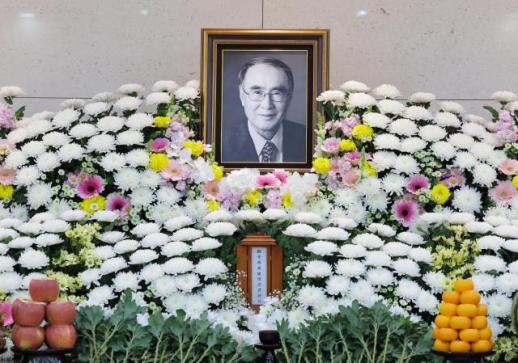 Remembering Lee Hong-koo: A Statesman and Scholar Lee Hong-koo, a distinguished elder statesman and scholar of South Korea, passed away on May 5, 2026, at the age of 92. He played a significant role in South Korea's modern history, contributing to academia, politics, and diplomacy. Born in 1934 in Kaesong, he attended Gyeonggi High School and Seoul National University, later studying at Emory University and Yale University. After returning to Korea, he served as a professor of political science at Seoul National University for 20 years. He held various key positions, including Minister of National Unification under the Roh Tae-woo administration, Deputy Prime Minister and Minister of Unification and Prime Minister under the Kim Young-sam administration, and Ambassador to the United States under the Kim Dae-jung administration, making him a rare figure who was trusted by all three governments following democratization. His passing signifies more than the loss of a former prime minister; it marks the departure of a scholar who maintained the dignity of public discourse and a sense of balance in governance as South Korea navigated through industrialization, democratization, division, the Cold War, globalization, and financial crises. Lee Hong-koo's identity is difficult to encapsulate in a single phrase. He was a scholar, diplomat, prime minister, politician, and writer, but above all, he was a gentleman who upheld the dignity of public language. He was not a politician who raised his voice to overpower others, nor was he a combative figure. His words resonated because they were rooted in scholarship, moderation, and a profound consideration for the nation. As a prominent scholar, he taught Western political thought at Seoul National University, covering topics from Plato to the social contract theory, liberalism, and democracy. His lectures were described as intellectual dramas, filled with vigor and scholarly elegance, demonstrating that politics is not merely a struggle for power but a discipline that questions the fate of humanity and communities. Lee's life was intertwined with both grand historical events and personal connections. His father's birthplace was Odae-ri in Sangju, Gyeongsangbuk-do. The fact that a man born in Kaesong, who studied at Yale and walked through the halls of power in Seoul and Washington, had humble roots in Sangju serves as a reminder that his life was not just a record of power and positions but a long journey intertwined with family, hometown, roots, and memories. As a professor at Seoul National University for two decades, he laid the foundation for political science in Korea. Earning a Ph.D. in political science from Yale, he was a rare intellectual capable of interpreting Western political thought alongside the realities of Korean politics. During a time when Korean society was grappling with the aftermath of war, authoritarianism, the Cold War, division, industrialization, and democratization, political science was not merely theoretical; it was a practical discipline questioning how to build a nation, control power, and harmonize freedom and order. Lee's political science was precisely at this intersection. He entered public service in 1988 with the Roh Tae-woo administration, serving as Minister of National Unification. He viewed inter-Korean relations not merely as ideological confrontations but as opportunities to rethink the long-term and gradual restructuring of order on the Korean Peninsula. His proposal for a 'Korean Commonwealth' later became the backbone of the inter-Korean unification plan. The inter-Korean unification plan announced in 1989 is one of his most significant legacies. It advocated for a gradual and peaceful unification based on the three principles of independence, peace, and democracy, moving beyond the logic of confrontation and absorption. Importantly, this was not a unilateral vision but a unification policy developed through consensus between the ruling and opposition parties. This reveals Lee's political philosophy. He did not speak of unification in incendiary terms, nor did he consume it as a radical slogan. Instead, he sought to design unification through the language of institutions, agreements, peace, and democracy. Aware of the pain of division, he was not impatient, and while believing in the necessity of unification, he did not ignore reality. This was the strength of a scholar turned public servant. He prioritized structure over emotion, institutions over slogans, and consensus over confrontation. Under the Kim Young-sam administration, he was again appointed as Minister of Unification and Deputy Prime Minister, eventually becoming Prime Minister in December 1994. This was a tumultuous period for the civilian government, tasked with establishing democratic institutions following military authoritarianism, promoting globalization, and managing both the potential and crises in inter-Korean relations. Notably, a summit between the two Koreas was nearly realized in 1994 but was thwarted by the sudden death of Kim Il-sung, a moment that could have marked a significant turning point in modern Korean history. For Lee, the prime ministership was not merely an honor. He had to manage the national tragedy of the Sampoong Department Store collapse. His swift response to the disaster, rushing to the scene upon hearing the news during an official dinner, demonstrated that he did not merely speak of responsibility. Reflecting on his tenure, he remarked, “I feel more responsibility than achievement.” This statement encapsulates his view of public service: it is a position of accountability before being a place of prestige. Power is not merely to be exercised but to be shouldered. Lee entered politics in 1996 as a representative of the New Korea Party and became a member of the 15th National Assembly. He also ran in the presidential primaries but withdrew midway, realizing the high barriers of realpolitik. He expressed a desire to discuss policies but lamented that political competition often prioritized party allegiance over the merits of policies. This sentiment remains relevant today, as contemporary Korean politics often leans more towards factionalism, attacks, and electoral calculations than on policy debates. Thus, Lee's failure was not merely a personal setback; it highlighted how difficult it has been for Korean politics to embrace dignified policy competition. After the inauguration of the Kim Dae-jung administration, Lee was once again called to serve the nation. In the wake of the financial crisis, South Korea urgently needed to restore its international credibility. President Kim Dae-jung asked him to serve as Ambassador to the United States, a politically challenging choice. However, he prioritized the nation's needs over personal discomfort. Although he was a representative of a conservative party, he accepted the role in a progressive government, placing the country above party interests. This aspect truly reflects the stature of Lee Hong-koo. He was able to serve in all three administrations after democratization—Roh Tae-woo, Kim Young-sam, and Kim Dae-jung—because he possessed trust that transcended party lines, a sense of balance in governance, and the ability to set aside personal interests in times of crisis. Lee's conservatism was not narrow or factional; it was characterized by dignity, moderation, and institutional integrity. He sought to base politics on rationality rather than anger, to mediate conflicts rather than exacerbate them, and to emphasize responsibility over ideological excess. In today's polarized political landscape, his brand of conservatism stands out. True conservatism is not about clinging to the past but about safeguarding institutions and responsibilities to prevent the community from collapsing. Lee embodied this principle as a politician. Even after leaving public office, he remained active, serving as an advisor to the JoongAng Ilbo and writing the 'Lee Hong-koo Column,' providing dignified insights on political issues, inter-Korean relations, and foreign affairs. Through the Seoul International Forum, he offered alternatives to international and security issues. He remained a scholar until the end, a knowledgeable voice, and a respected elder in discussions. He particularly emphasized decentralization and dialogue, believing that distributing the excessive powers concentrated in the presidency would enhance the nation's overall capacity. This was not merely a call for constitutional reform but a vision to strengthen democracy through the moderation of power and the distribution of responsibility. He trusted sustainable institutions over strong leaders and valued institutional balance over individual goodwill. This conclusion arose from both his scholarly intuition and his experiences in public office. Lee Hong-koo was a rare type of leader. He transitioned from academia to politics without losing his scholarly integrity, held a central position of power without sacrificing his dignity, and engaged in party politics while maintaining the balance of a national elder. He lacked the harsh rhetoric of incitement but possessed a deep persuasive language. He did not adopt an authoritarian demeanor but instead exhibited a listening attitude. He embodied the restraint of a scholar rather than the ruthlessness of a competitor. Today, we are not merely bidding farewell to an individual politician; we are parting with an era of political civility. He stood quietly yet responsibly at various positions as South Korea traversed the paths of war and division, authoritarianism and democratization, the Cold War and post-Cold War, financial crises and globalization. He consistently sought to maintain balance and consider the long-term sustainability of the nation. The life of the late Lee Hong-koo poses profound questions for today's politics: What is politics? What should power be used for? Can ideology take precedence over the community? Are words weapons that wound people, or bridges that persuade society? Lee Hong-koo's life quietly answers these questions. Politics is the art of managing conflict, power is a position of responsibility, and ideology should be a tool for the nation, not a weapon that divides it. Words become public discourse only when they retain their dignity. Born in Kaesong, educated at Yale, teaching at Seoul National University, and traversing the Blue House, Prime Minister's Office, and embassies to the realms of media and forums, his life was ultimately a long journey of a single individual. At the end of this journey, we remember the magnitude of dignity over power, the depth of responsibility over position, and the refinement of public language over political victories. Lee Hong-koo has now departed from our midst. However, the dignity of his public language, the attitude of rationalism, the faith in institutions, and the politics of responsibility that prioritized the nation will endure. In an era of division, his restraint is missed, and in a noisy age, his calm voice is longed for. He was not a loud voice in the political arena but a steady presence at every historical juncture. The eternal gentleman, former Prime Minister Lee Hong-koo. We pay deep respect to the life of the late scholar, public servant, diplomat, and elder statesman. May he rest in peace. Our condolences. 2026-05-07 09:34:51
 -
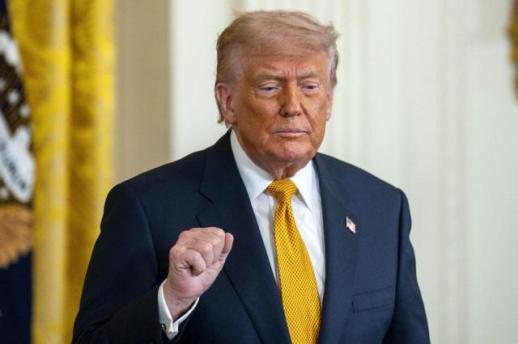 Trump says Washington 'closing in on a deal' with Iran to end months of conflict SEOUL, May 7 (AJP) - U.S. President Donald Trump on Wednesday raised hopes that the U.S. is "closing in on a deal" with Iran to end the prolonged conflict in the Middle East. In a phone interview with PBS News, Trump said, "I think it's got a very good chance of ending," suggesting that the deal could be reached before his trip to China for a summit with Chinese President Xi Jinping next week. But he left some doubt, saying, "I felt that way before with them, so we'll see what happens." He then warned that the U.S. would resume bombing Iran if no deal is reached. "If it doesn't end, we have to go back to bombing the hell out of them." "But it's getting very close. If they agree, it's over, and if they don't agree, we bomb," he added. When asked whether Iran would export its highly enriched uranium, possibly to the U.S. as part of the deal, Trump replied, "No, not perhaps. It goes to the United States." He also confirmed that Iran would agree not to operate its underground nuclear facilities. His comments came several hours after American news website Axios reported that Washington and Tehran are working on a "one-page, 14-point memorandum of understanding (MOU)" that would "declare an end to the war in the region and the start of a 30-day period of negotiations on a detailed agreement to open the strait, limit Iran's nuclear program and lift U.S. sanctions." Later in the day, during a press availability at the White House, Trump again said, "We've had very good talks over the last 24 hours and it's very possible that we'll make a deal up there," adding that Iran "badly" wants to make a deal. He also reiterated that Iran cannot have a nuclear weapon, saying it had "agreed to that among other things." But amid a war of words, it remains to be seen whether any deal will be reached to end the prolonged conflict, which began with U.S. and Israeli joint airstrikes against Iran in late February. Tehran says it is still reviewing the proposal, dismissing Trump's claims as a pressure tactic to push for a deal. 2026-05-07 09:33:26
 -
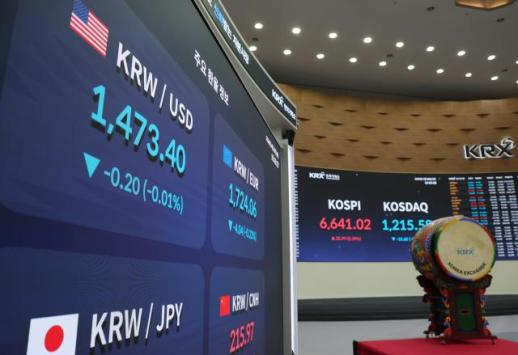 South Korean Won Strengthens to 1,440s on Easing Middle East Tensions The South Korean won strengthened into the 1,440s against the U.S. dollar for the first time in about 2 1/2 months as expectations of easing Middle East tensions revived risk appetite. In Seoul trading, the won was quoted at 1,447.9 per dollar as of 9:20 a.m. Thursday. The exchange rate opened at 1,448.6, down 6.5 won from the previous session, and fell into the 1,440s during intraday trading. It was the first time the rate returned to the 1,440s since Feb. 27, just before the outbreak of the Middle East war. Sentiment improved after renewed expectations for a final agreement between the United States and Iran, lifting risk-on moves across global markets. Overnight, U.S. President Donald Trump said in a media interview that he had “very good talks” with Iran over the past 24 hours and that “there is a very big chance” of reaching a deal. U.S. stocks rose broadly on optimism over negotiations to end the war. The Dow Jones Industrial Average gained 1.24%, the S&P 500 rose 1.46% and the Nasdaq composite climbed 2.02%. The dollar index, which measures the greenback against six major currencies, was up 0.021 at 98.029. Min Kyeong-won, an economist at Woori Bank, said markets are “betting on the possibility of a deal,” adding that continued foreign inflows into South Korean stocks could spur offshore selling and increase downward pressure on the exchange rate. She said demand for dollars from importers’ payments and residents’ currency conversions for overseas stock investment is supporting the downside. With Wall Street hitting fresh highs, she added, demand could return as residents seek to buy more U.S. stocks.* This article has been translated by AI. 2026-05-07 09:30:18
 -
 Davichi’s Kang Min-kyung denies using staff for solo Shanghai vlog, says she used tripod Davichi singer Kang Min-kyung has addressed criticism over how she filmed a YouTube video, denying claims that staff accompanied her on a solo trip. In a post on her YouTube channel, “Gyeong Mingyeong,” Kang said on the 6th that she has been “struggling to film vlogs on my own,” adding that it has now been nine years. “I’ve kept at it for nearly 10 years, so I thought people might recognize it by now, but I guess I still have a long way to go,” she said. She explained that one scene that drew attention was shot after she briefly set up a small tripod outside a restaurant so viewers could feel what she was feeling. Kang said the angle was possible because Shanghai, unlike parts of Europe, does not carry as high a risk of pickpocketing. She said she was offering a detailed explanation because some viewers questioned whether she had traveled with staff despite describing it as a solitary trip. “If it hadn’t been a trip I took alone, there would have been no reason to say it that way,” she said. Kang uploaded the video, titled “A solitary trip to Shanghai for the first time in 36 years,” to her channel on April 26. After a mid-video shot appeared to show someone filming her, some internet users raised suspicions that staff were present. Kang debuted in 2008 as part of Davichi. After the group scored a hit with its first album’s title track, “I Love You Even If I Hate You,” it released songs including “8282,” “Don’t Say Goodbye” and “Time, Stop.”* This article has been translated by AI. 2026-05-07 09:27:54
 -
 KT Overhauls Security Systems to Rebuild Customer Trust KT said Thursday it will push a sweeping overhaul of its companywide information security system, centered on a newly formed Information Security Office, as it works to restore customer trust. The company said it will shift to an always-on prevention and proactive response posture through an integrated governance structure led by its chief information security officer and chief privacy officer. KT said it will also upgrade customer protection and complaint-handling systems through its previously launched “Customer Protection 365” task force. The Information Security Office will coordinate with the task force to quickly review and respond to concerns involving customer personal data and to raise protection standards across technology, organization and processes. To strengthen outside expertise and objectivity, KT said it will form an external advisory committee and build a security ecosystem linked to the security industry and academia. KT said it will run a companywide consultative body to manage security risks across IT, network and service operations, and will revamp its end-to-end incident response process to enable faster, more consistent action. The company said it will bolster security management to keep pace with advances in artificial intelligence, including using AI agents for penetration testing. It also plans to enhance integrated security monitoring to improve threat detection and blocking, and to tighten controls across tangible and intangible assets such as in-home devices, outdoor base stations and software. KT said it will also reorganize its privacy protection framework, refining internal controls under the CPO and strengthening reporting to the board to raise compliance standards. Lee Sang-woon, KT’s CISO and an executive director, said, “Centered on the Information Security Office, we will build a trust-based foundation that can safely protect customers’ daily lives and data, and establish a security system that supports our transition into an AX platform company.” The measures follow a hacking incident involving an illegal small base station, or femtocell, that occurred in September last year. The cyberattack using the illegal femtocell exposed subscriber identification information for more than 20,000 users and caused more than 200 million won in unauthorized small-amount payment losses, the company said. In December last year, KT said it would invest more than 1 trillion won in information security over the next five years to restore customer trust and overhaul its protection systems. It also said it would raise annual information security spending from about 125 billion won to about 200 billion won starting in 2026, focusing on AI-based security technology and infrastructure upgrades. 2026-05-07 09:27:05
 -
 South Korea’s Kospi briefly tops 7,500, sets another intraday record South Korea’s benchmark Kospi briefly climbed above 7,500 early Thursday, setting another intraday record. According to the Korea Exchange, the Kospi was up 52.22 points, or 0.71%, at 7,436.78 as of 9:07 a.m. It opened at 7,499.07, up 114.51 points (1.55%) from the previous session, then extended gains and touched 7,500 shortly after the bell. Brokerages said profit momentum led by semiconductors and foreign investor flows were supporting further upside. Han Ji-young, a researcher at Kiwoom Securities, said the Kospi still has room to rise, led by market bellwethers such as chipmakers, as “the sustainability of foreigners’ ‘buy Korea’ trend — with net buying in the 6 trillion won range since May — is unfolding alongside improving profit momentum.” In trading flows, retail investors stood out as net buyers. Individuals bought a net 4.0082 trillion won in the main market, helping lift the index. Foreigners and institutions, meanwhile, sold a net 2.8396 trillion won and 1.2019 trillion won, respectively, in what appeared to be profit-taking. Most large-cap shares were higher, including Samsung Electronics (up 1.88%), SK hynix (0.81%), SK Square (1.01%), Hyundai Motor (5.64%), Doosan Enerbility (7.17%) and Samsung Electro-Mechanics (0.33%). LG Energy Solution fell 1.24%, while Hanwha Aerospace slid 3.07% and HD Hyundai Heavy Industries dropped 4.01%. The Kosdaq turned lower. As of the same time, the tech-heavy index was down 2.90 points, or 0.24%, at 1,207.27. It opened up 0.66 point (0.05%) at 1,210.83 but gave up gains and moved into negative territory. In the Kosdaq market, foreigners and institutions were net buyers of 57.8 billion won and 24.8 billion won, respectively, while individuals were net sellers of 73.5 billion won. Moves among top Kosdaq stocks were mixed. EcoPro BM rose 1.75%, Alteogen gained 0.55%, Kolon TissueGene jumped 8.78%, ABL Bio added 1.18% and LigaChem Bio climbed 2.49%. EcoPro fell 1.97%, Rainbow Robotics slipped 1.14%, Samchundang Pharm dropped 1.35% and Lino Industrial declined 1.29%. Overnight, U.S. stocks ended higher on expectations for negotiations to end the war between the United States and Iran. The S&P 500 and the Nasdaq Composite rose 1.46% and 2.02%, respectively, to record highs, while the Dow Jones Industrial Average gained 1.24%.* This article has been translated by AI. 2026-05-07 09:23:09
 -
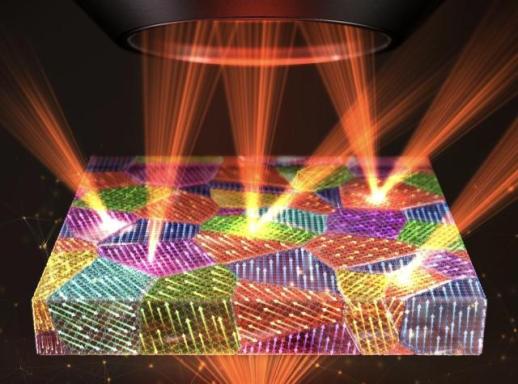 New imaging technique uses LED light to map material structures in 3D SEOUL, May 07 (AJP) - A joint research team has developed a new imaging technology that uses standard light-emitting diodes to look inside materials and map their complex internal structures in three dimensions. The method, called incoherent Dielectric Tensor Tomography, allows scientists to see how molecules are arranged without using high-powered lasers or destroying the sample, the Korea Advanced Institute of Science and Technology said Thursday. The project was a collaborative effort involving teams led by Professor Park Yong-keun at the Korea Advanced Institute of Science and Technology (KAIST), Professor Hong Seung-mo at Asan Medical Center, and Professor Jeon Seok-woo at Korea University. By precisely controlling the polarization and angle of the light-emitting diode (LED) light, the researchers performed 48 independent measurements to reconstruct a 3x3 matrix known as a dielectric tensor. This mathematical model describes how a material reacts to light from all directions, revealing its unique optical fingerprint. While previous versions of this technology relied on laser systems, they were often hindered by visual noise and were sensitive to tiny vibrations in the room. By switching to LED light, the team eliminated this noise and made the system stable enough for use in standard laboratories or industrial settings. In comparative tests, the incoherent Dielectric Tensor Tomography (iDTT) system visualized microscopic molecular arrangements that were previously obscured by noise in laser-based systems. The research team demonstrated the practical utility of the technique across several fields. They successfully visualized the 3D alignment of molecules within liquid crystal particles and performed observations of fibrosis in colon tissue without using chemical dyes. The system also automatically distinguished between different crystalline substances, such as quartz and calcium chloride, based solely on how they reacted to light. The iDTT technology is expected to have applications in materials science, semiconductors, pharmaceuticals, and biomedicine. In the pharmaceutical sector, it could serve as a tool for identifying drug polymorphs, which are different crystalline forms of the same molecule that can alter how a drug works in the body. In medicine, it provides a non-destructive way to analyze the environment around tumors by measuring the 3D orientation of collagen fibers. "This research presents the possibility of replacing material anisotropy measurements, which previously relied on large-scale facilities or destructive analysis, with small optical microscopes," Professor Park said, adding: "As LED-based measurement has become stable, it will become a new standard for non-destructive precision analysis in various industrial fields." (Reference Information) Journal/Source: Nature Photonics Title: Incoherent dielectric tensor tomography for quantitative three-dimensional measurement of biaxial anisotropy Link/DOI: https://bit.ly/48MKvF3 2026-05-07 09:22:25
 -
 LS Eco Energy Moves to Commercialize 400kV Extra-High-Voltage Cables, Targets U.S. Market LS Eco Energy is moving to commercialize high-end 400-kilovolt (kV) extra-high-voltage power cables as it steps up its push into the global power market, including the United States. The company said Wednesday that its Vietnam manufacturing unit, LS-VINA, will begin international certification and PQ testing for 400kV-class extra-high-voltage cables. It plans to complete a year of performance verification and long-term operating reliability evaluation, then start mass production in the second half of next year. PQ is a key process that evaluates long-term stability of an entire system on the assumption it will be used on an actual transmission grid. It is widely seen as a requirement for winning major global transmission projects. LS-VINA currently produces cables up to 230kV. The 400kV class has been a flagship extra-high-voltage product line produced by LS Cable & System. Once the project is completed, LS Eco Energy will secure an extra-high-voltage portfolio comparable to the LS Cable & System headquarters level, the company said. The 400kV class is used for national backbone transmission networks, large industrial complexes, AI data centers, and grid connections for offshore wind and solar power. It enables long-distance, high-capacity transmission and is a high value-added product category that requires strict quality and stability standards. Global demand for extra-high-voltage cables has been rising quickly as data center power needs grow and as the United States and Europe replace aging grids and expand transmission investment, the company said. Industry forecasts estimate annual U.S. electricity demand will rise from about 4,100 terawatt-hours (TWh) in 2024 to more than 5,000 TWh by 2030, driven by expanding AI data centers. LS Eco Energy recently secured U.S. certification for 230kV-class cables, laying the groundwork for market entry. If it also secures PQ for the 400kV class, it expects to be able to participate in bids for major global transmission projects, strengthening its competitiveness. A company official said, "Entering the 400kV class will be an opportunity to accelerate expansion into advanced markets and speed a shift to a profitability-focused business structure."* This article has been translated by AI. 2026-05-07 09:22:16
 -
 Trump Halted 'Project Freedom' After Saudi, Gulf Allies Withheld Base and Airspace Access U.S. President Donald Trump halted “Project Freedom,” an operation aimed at helping ships transit the Strait of Hormuz, after pushback from key Gulf allies, NBC News reported. NBC News, citing two U.S. officials, reported May 6 that Trump abruptly reversed his plan to support ships passing through the strait after core Gulf partners withdrew permission for U.S. forces to use their bases and airspace for the mission. According to the report, Trump announced Project Freedom over the weekend on Truth Social as a way to break Iran’s blockade of the Strait of Hormuz. The announcement was made without sufficient prior coordination with some Gulf allies and drew objections from Saudi Arabia’s leadership, the officials said. Saudi Arabia notified the United States that it would not allow U.S. aircraft to launch from Prince Sultan Air Base southeast of Riyadh or permit flights through Saudi airspace to support the operation, the officials said. The issue was not resolved despite a call between Trump and Saudi Crown Prince Mohammed bin Salman, and Trump had to pause the operation to regain access to critical airspace, the officials said. Project Freedom was designed to use U.S. military power to help ensure safe passage for ships if Iran threatened or attacked vessels transiting the strait. U.S. forces planned to provide surveillance assets, firepower and boarding teams to protect ships leaving the Persian Gulf. U.S. Central Command previously said two U.S.-flagged ships transited the strait as part of the operation. About 36 hours after the operation began, Trump ordered it halted. He said the pause would be brief to determine whether an agreement could be finalized and signed. U.S. military operations depend on Middle East allies Saudi cooperation is considered essential for U.S. operations. Prince Sultan Air Base hosts U.S. fighter jets, aerial refueling aircraft and air defense assets. One U.S. official told NBC News that for geographic reasons, using airspace along borders requires cooperation from regional partners and, in some cases, there is no alternative. NBC said military aircraft were expected to provide a “defensive umbrella” to protect ships during Project Freedom. Saudi Arabia and Jordan are important for basing aircraft, Kuwait for overflight, and Oman for overflight and naval logistics support. Analysts said that without adequate prior coordination with Gulf allies, any military operation tied to the Strait of Hormuz would be constrained. A Middle Eastern diplomat said the United States coordinated with Oman only after Trump’s announcement. “The U.S. coordinated with us after it made the announcement,” the diplomat said, adding, “We were not angry or furious.” A Saudi source, asked whether the announcement surprised Saudi leaders, said, “The issue is that everything is moving fast in real time.” The White House said regional allies were notified in advance. A White House official, asked whether some Gulf states were not informed beforehand, said, “Regional allies were notified in advance.” The pause also comes as talks on ending the war between the United States and Iran regain momentum. Iran’s Foreign Ministry said it is reviewing a new U.S. peace proposal and will discuss it with mediator Pakistan after completing its assessment. Trump said, “They want a deal,” and claimed there had been “very good talks” over the past 24 hours. In a PBS interview, Trump said a deal with Iran could be reached before he travels to Beijing for a meeting next week with Chinese President Xi Jinping. “I think there’s a very good chance it will end. And if it doesn’t end, we have to go back and bomb them like hell,” he said. Iranian hard-liners have warned against the U.S. proposal. Ebrahim Rezaei, spokesperson for Iran’s parliament National Security Committee, wrote on X that the latest proposal is a wish list until it becomes reality and said, “The U.S. will not obtain through a failed war what it did not obtain in direct negotiations.” Still, some in the region said diplomacy remains the likelier outcome. A Jordanian official told NBC News, “Iran does not have the economic means to keep this going,” adding, “The economy is collapsing and it cannot even pay wages.”* This article has been translated by AI. 2026-05-07 09:21:16
 -
 KB Kookmin Bank Expands Support for Youth Leaving Care Through KB Dream Home Program KB Kookmin Bank is expanding inclusive-finance efforts, including support for youth preparing to live independently after leaving care. The bank said May 7 it has selected sites for its KB Dream Home program, which supports these young people. KB Dream Home is a corporate social responsibility initiative that offers capacity-building programs such as job counseling and help obtaining professional certificates. The goal is to help participants build a foundation for independence while living in a more comfortable housing environment. The program is part of KB Financial Group’s “KB National Happiness Hope Project.” The bank said it completed renovation work last year at independent-living facilities in five regional areas, starting with South Chungcheong Province and including Gwangju, Mokpo, Daejeon and Jeonju. This year, the bank plans to continue support for facilities nationwide. One facility in Seoul and four in regional areas — including Wonju in Gangwon Province and Cheongju in North Chungcheong Province — were selected for upgrades. The bank said it will carry out tailored remodeling based on on-site inspections. The bank has also continued other youth-support programs. Last month, it said it would support 200 young people for one year with independence assistance funds, along with career exploration, certificate training and job consulting throughout the employment process. A bank official said the KB Dream Home program is intended to provide “a solid foundation” for young people beginning independent lives, adding that the bank will continue to expand inclusive-finance support so that “all people, including youth,” can be happier.* This article has been translated by AI. 2026-05-07 09:13:05